This strategic brief analyzes Spotify’s radical shift where "writing code" has been officially superseded by "AI Orchestration." Key highlights: Zero Manual Code: How Spotify’s elite engineers transitioned to a prompt-first workflow using the "Honk" ecosystem and Claude Code. Role Transformation: The evolution of the Software Engineer from a syntax writer to an AI Director and System Architect. Velocity Gains: Analyzing the massive boost in deployment speed by offloading repetitive logic to generative agents. The AI Fatigue Risk: A critical
Introduction: Hello Tekin Army! - When Prompts Replace Keyboards
Hello Tekin Army! In December 2025, Spotify dropped a bombshell that shook the programming world: the company's top engineers haven't written a single line of code since then. This simple but revolutionary statement signals a profound transformation in what it means to be a software developer. Code writing isn't dead; the role of the person writing it has fundamentally changed.
In this article, you'll learn: How Spotify achieved this feat with their internal Honk system and Claude Code integration, what challenges lie in this path, and most importantly, what the future of programming looks like in an era where AI writes the code.
Spotify's Revolution: How Top Developers Don't Write Code Anymore
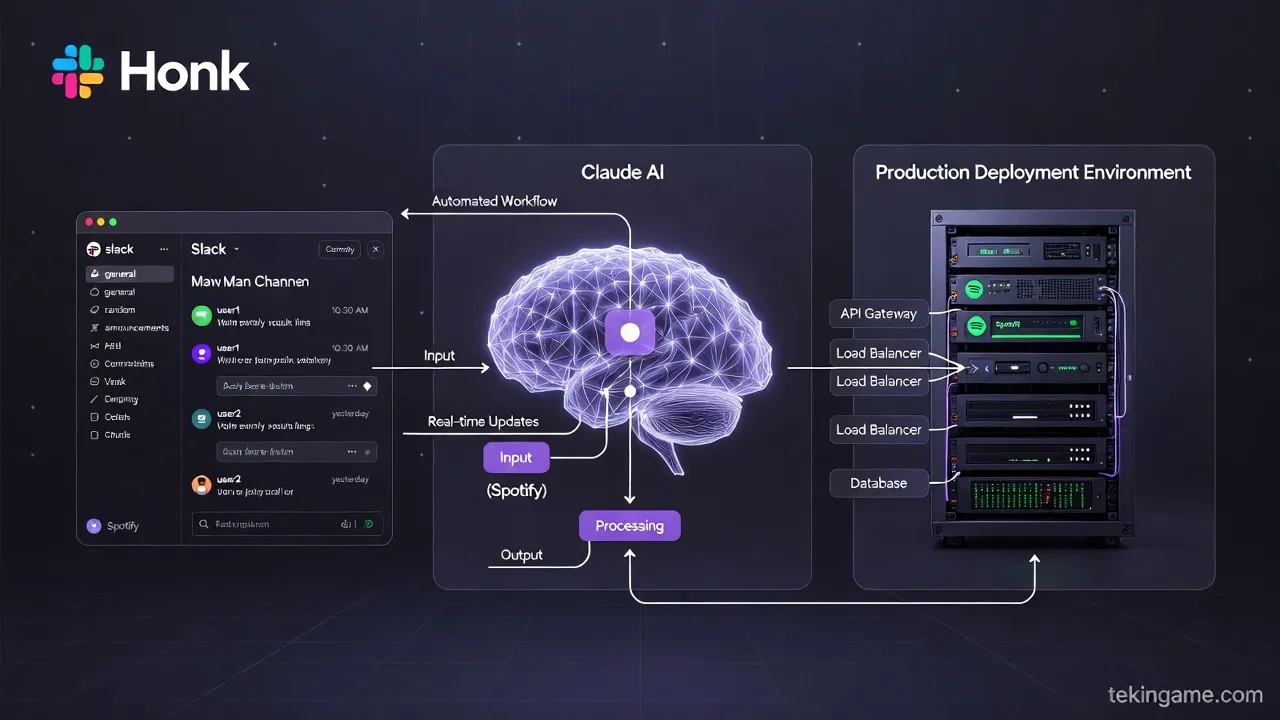
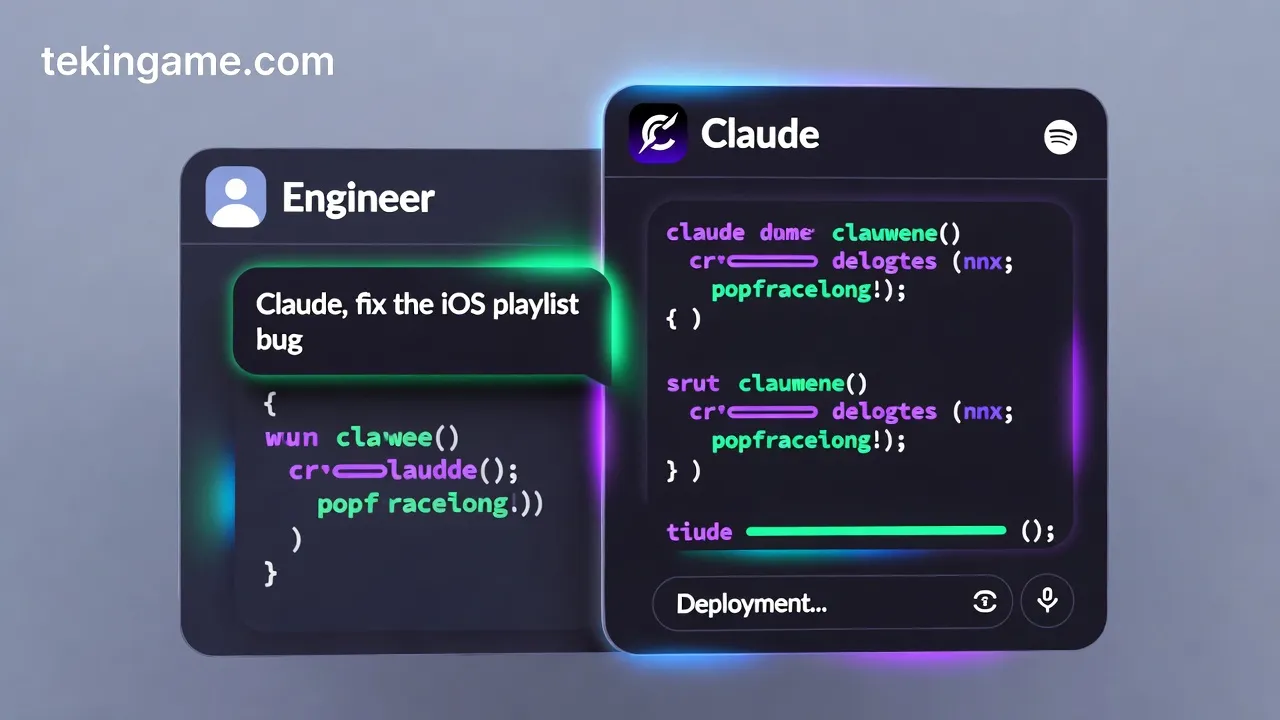
Imagine you're a software engineer. Early morning, you leave home, glance at your phone on the commute, and send a simple message in Slack: "Claude, please fix this bug in the iOS app" or "Add a new notification feature to the system." When Claude finishes, it sends you the compiled and ready app version right there in Slack. You can review it before even arriving at the office, and if approved, it deploys directly to production.

This isn't science fiction. Gustavo Söderström, Spotify's co-CEO, described exactly this workflow in the company's Q4 2025 earnings report. The result? Spotify shipped over 50 new features and improvements in 2025. A number that would have seemed unattainable without this AI revolution.
But here's where it gets interesting. This shift isn't limited to Spotify. Pinterest reported that half of its new code is written by AI. Dario Amodei, CEO of Anthropic (maker of Claude), predicted that soon 90% of the world's software code will be generated by AI. Even Boris Cherny, a senior manager at the company, admitted he hasn't written code in months and almost all his code is now AI-generated.
The Honk System: The Hidden Engine Behind the Scenes
If Claude Code is the hand writing the code, Honk is the nervous system orchestrating everything behind the scenes. This proprietary internal system at Spotify integrates Claude Code with the company's workflows, enabling instant and remote code deployment.
Honk isn't just a simple wrapper. It's designed so AI doesn't just write code—it tests it, compiles it, and even deploys it to production. What does this mean? It means "I can't run the code" or "I don't know if the output is correct" are no longer excuses for delays.
Söderström elaborated: "We don't see this as the end of the AI development journey; we see it as just the beginning." This statement carries multiple implications. First, Spotify is only scratching the surface. Second, they know vast territory remains unexplored. Third, the future will arrive faster than we imagine.
Another fascinating detail: Spotify created a unique dataset that other large language models can't use like public internet sources. This means Spotify doesn't just use Claude—they've optimized it for their specific needs.
Claude Code and the Art of Prompt Engineering: From Morning to App Store
If Honk is the engine, Claude Code is the driving force. Claude, a large language model built by Anthropic, can understand and write complex code. But the crucial point is that Claude doesn't just write code—it writes good code.
But how does a Spotify engineer guide Claude to write the right code? The answer: prompt engineering. Prompt engineering is the art of writing clear and precise instructions for AI so it performs exactly what you need.
A good coding prompt needs several elements: First, a clear problem statement. Second, sufficient context about the existing system. Third, technical and architectural constraints. Fourth, examples of expected output. When a Spotify engineer says "Claude, fix this iOS app bug," they're actually sending far more than that simple sentence: complete information about the codebase, iOS version, dependencies, and even error logs.
This is the turning point. Instead of engineers spending mornings at their desks writing code for hours, they now write a good prompt during their commute and let Claude handle the rest. This isn't just about speed; it's about fundamentally changing what work means.

The Numbers Speak: 50+ Features and 90% of Global Code
If you're skeptical this revolution is real, the numbers tell the story. Spotify shipped over 50 new features and improvements in 2025. That's just one company. But if we extrapolate this velocity across major tech companies, what happens?
Dario Amodei, Anthropic's CEO, predicted that soon 90% of the world's software code will be generated by AI. For some, this might sound terrifying. For forward-thinking companies, it's an opportunity.
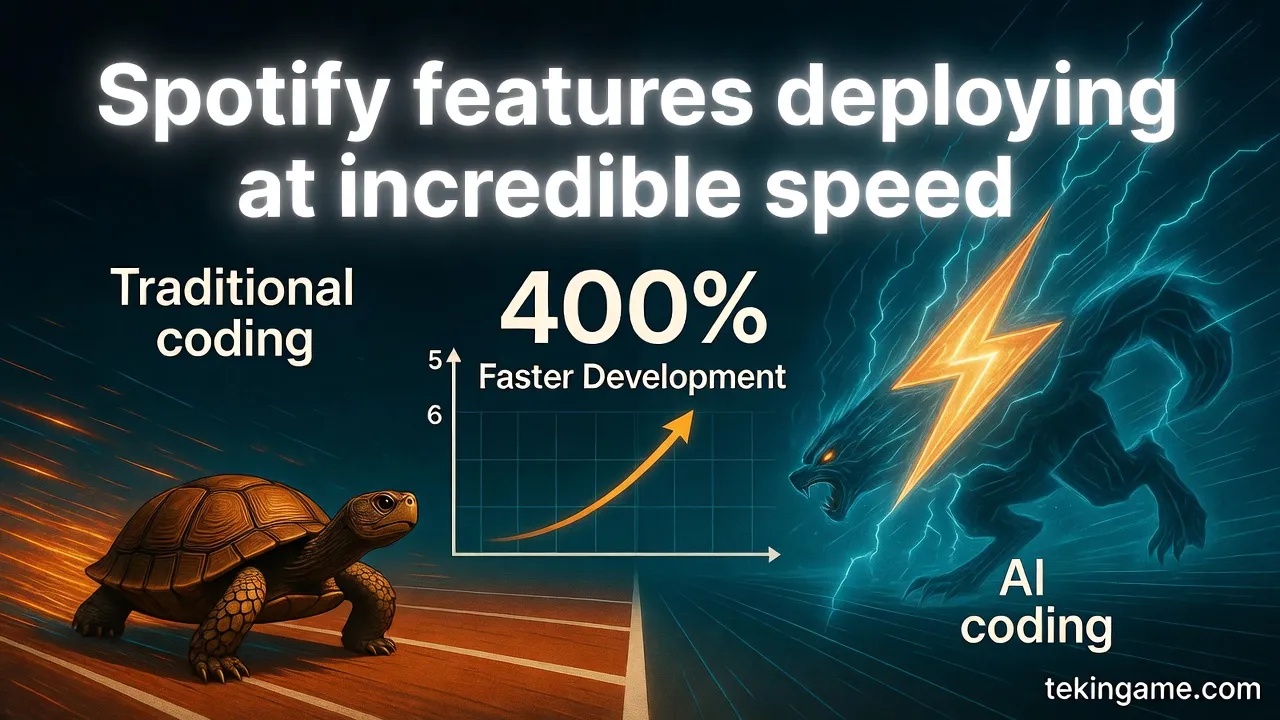
Spotify announced additional features like AI-Prompted Playlists, Page Match for audiobooks, and About This Song, all released within recent weeks. This deployment velocity isn't just evidence of higher productivity—it demonstrates a fundamental shift in how products are built.
The key insight: this speed comes from eliminating human weaknesses. AI doesn't need breaks, makes fewer typos (compared to exhausted engineers at midnight), and can review thousands of lines of code in seconds.
The Shadow of Questions: Is AI Fatigue and Hallucination Real?
But before we paint this entirely rosy picture, we need to acknowledge the shadows. The concept of "AI Fatigue" is a real phenomenon many tech leaders still ignore. It's the state where engineers must review and correct massive volumes of AI-generated code instead of creating code directly.
One critic noted: "Perhaps specialized tools with strict controls could produce good output that requires human verification, but so far everything I've seen from AI has been nearly incomplete and required multiple rounds of corrections. Sometimes AI hallucinates that a certain method or class exists and operates on it, but ultimately you realize that method or class doesn't exist in that language or framework at all!"
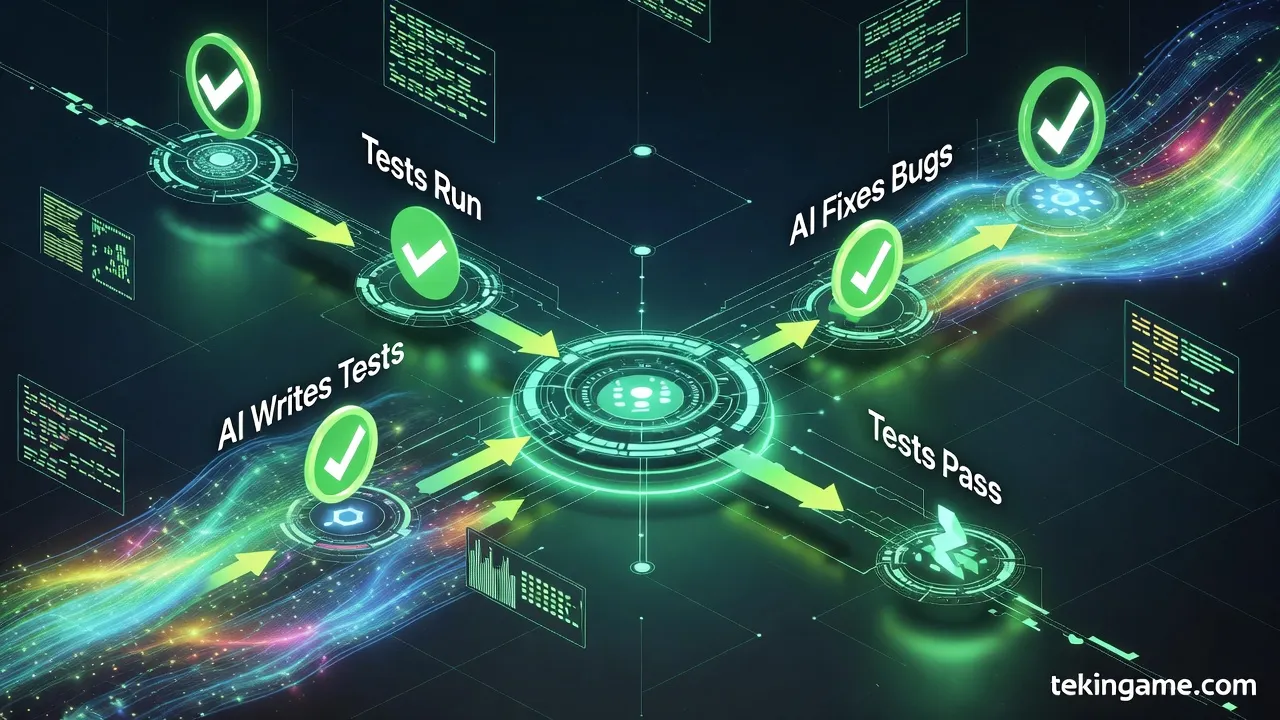
This phenomenon is called "hallucination" in AI circles. The model confidently presents false information as if it were true. In code, this is dangerous. For example, Claude might write a function with a name that doesn't exist in that framework, or call a deprecated method.
Additionally, "AI fatigue" is real. When engineers must review hundreds of lines of AI-generated code, their mental exhaustion increases and the likelihood of missing errors grows. This means faster code production might come with reduced quality.
The New Role of Programmers: From Code Writer to AI Manager
If Spotify's top developers aren't writing code anymore, what are they doing? They're managing AI. This new role carries several responsibilities:
First, prompt design: Engineers must learn to write precise and clear instructions for AI. This isn't just a technical skill—it's an art form. A good prompt can mean the difference between working code and broken code.

Second, review and verification: Engineers must review AI-generated code and ensure correctness. This requires deep knowledge of the codebase, system architecture, and best practices.
Third, refinement and improvement: If code isn't perfect, engineers refine it. But instead of starting from zero, they now start from existing code and fix only the broken parts.
Fourth, optimization: AI-generated code might work, but it's not necessarily efficient. Engineers optimize for performance, security, and readability.
Spotify's leadership views this transformation as evidence of higher productivity. From their perspective, adopting AI in software development isn't an "if" question—it's "when," and companies that adapt fastest will win.
However, this transition isn't without challenges. Engineering practices, product design, and even team structures must evolve. In this period, agility is critical because products built today might lose relevance in weeks.

Prompt Engineering Masterclass: How 2026 Developers Work
If the future of coding is built on prompt engineering, we must learn to write good prompts. This matters not just for Spotify—it's essential for any developer wanting to stay relevant in 2026.
1. Clarity and Precision: Good prompts must be crystal clear. Instead of "write a function," say "write a function that takes an array of numbers and returns the largest one." The more specific you are, the better the result.
2. Context and Background: AI needs sufficient context. If you want Claude to fix a bug, provide the error message, relevant codebase, and even logs. The more context you give, the better AI can help.
3. Technical Constraints: Specify which programming language, framework, and version you're using. "Write a Python function compatible with Django 4.2" is vastly superior to "write a function."
4. Examples: When possible, provide examples of expected input and output. This helps AI understand exactly what you need.
5. Iteration and Refinement: If the first result isn't perfect, modify your prompt and try again. This is an iterative process, not a one-shot deal.
For example, a good prompt for building an API endpoint might be:
"I'm developing a Django REST API. I need an endpoint that accepts a POST request and saves a new user to the database. The user should have name, email, and password fields. Email must be unique and password must be at least 8 characters. If the email already exists, return a 400 error. On success, return a JWT token. I'm using Django 4.2 and Django REST Framework."
This prompt is specific, provides context, specifies technical constraints, and even describes expected errors. Claude's output will be significantly better.
Conclusion: Coding is Dead, But Programming is Alive
Spotify announced its top developers no longer write code. This statement might sound alarming, but the reality is different. Coding isn't dead—just its form has changed.
What's really happened is that the programmer's role has evolved. Developers no longer just write code; they're now AI managers. They write prompts, review generated code, and optimize systems.
This shift carries several implications. First, programmers must learn new skills. Prompt engineering is both a technical skill and an art form. Second, large companies like Spotify can develop products far faster. Third, programming's future isn't just about writing code—it's about orchestrating AI.
But we must be careful. AI fatigue, model hallucinations, and the need for careful code review are all real challenges. Spotify managed these obstacles through the Honk system and skilled teams, but this isn't possible for every company.
The conclusion: manual coding hasn't died—it's evolved. 2026 programmers must not only write code but orchestrate AI. And honestly, that's a far more interesting job.