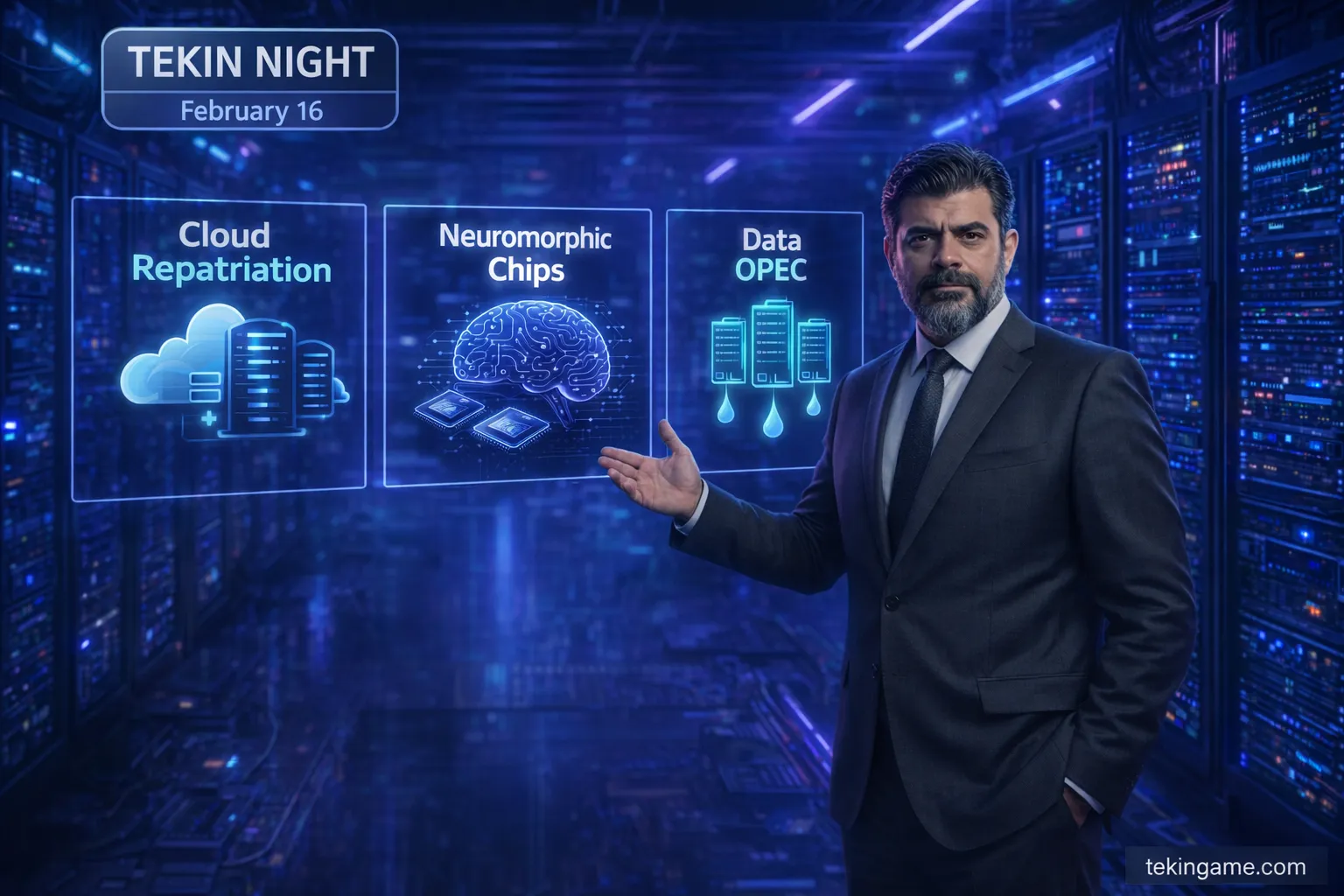
The night of February 16, 2026 begins with diverse news about new directions in artificial intelligence, cloud infrastructure, and forward-looking technology. From Oxide startup's strategic decision to build an alternative to public cloud, through Delhi as the center of AI diplomacy, to neuromorphic advances in robotics and Starlink expansion in Southeast Asia; these six news demonstrate deep transformation in the tech industry.
Tekin Night; February 16, 2026: From On-Premise Cloud to Autonomous Agents; 6 News Stories That Changed the Night
The night of February 16, 2026 begins with diverse news about new directions in artificial intelligence, cloud infrastructure, and forward-thinking technology. From Oxide Computer's strategic decision to build an alternative to public cloud, to New Delhi's transition into a global center for AI diplomacy, to neuromorphic breakthroughs in robotics and Starlink's expansion across Southeast Asia—these six stories represent a profound shift in the technology industry. Moreover, the wave of new gaming remakes and advances in intelligent automation of repetitive tasks form another segment of this technology night.
Six Stories of the Night: Executive Summary
1. Oxide and the Dream of On-Premise Cloud: Startup Oxide Computer has raised $200 million in Series C funding to create a combination of hardware and software that delivers the AWS experience within companies' own datacenters.
2. New Delhi, Hub of AI Diplomacy: The India AI Impact Summit is the launching point for serious negotiations between the United States, China, India, and other technology powers about the future of the industry.
3. Neuromorphic Chip: New technology in robotic vision reduces energy consumption and increases reaction speed.
4. Starlink in Vietnam: Satellite internet has now officially entered one of Southeast Asia's largest developing markets.
5. Wave of Remakes: Late February and early March will see dozens of new game titles for major consoles.
6. OpenClaw and Future Agents: A new generation of intelligent agents, beyond email and files, is now taking direct control of accounts and automating entire jobs.
1. Oxide Computer: On-Premise Cloud, a Revolution in Corporate Infrastructure
Oxide Computer, founded by Bryan Cantrill and Jess Frazelle, has now become a serious player in the industry with the $200 million Series C funding. This startup is selling something very specific: the experience of public cloud (AWS, Azure, GCP) delivered within companies' own datacenters.
The problem Oxide solves is very real. Many large enterprises, especially in sensitive sectors like government, banking, and data protection, cannot entrust their data to public clouds. On the other hand, building proprietary cloud infrastructure is extremely complex and expensive. Oxide offers a middle ground: standardized hardware combined with software that works like AWS.
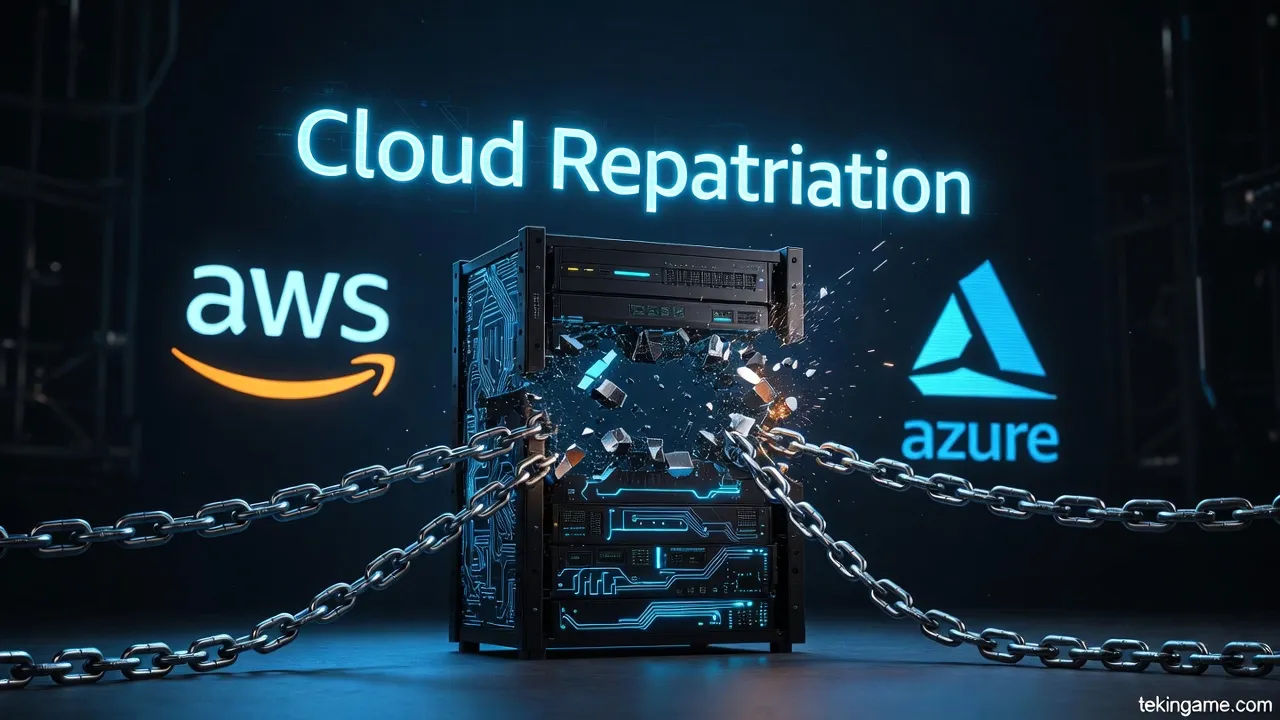
Oxide's underlying technologies rely on KVM, Rust, and Hypervisor architectures. This allows enterprises to leverage the logic of AWS (container orchestration, managed services, pay-as-you-go) without leaving their datacenters. The question Oxide answers is: why can't AWS-style infrastructure run on-premise?
Therefore, Oxide is not just selling hardware; it's selling a philosophy: cloud should be near the data, not the reverse. This approach will put significant pressure on public cloud providers and companies like Amazon and Microsoft to improve their on-premise offerings and standards.
Strategic Impact:
- Enterprises currently wanting AWS-in-datacenter capability should evaluate Oxide immediately.
- Amazon and Microsoft will likely introduce new services (OutpostsPro, Dedicated Regions) to compete.
- Oxide's business is remarkably defensible for 2-3 years until larger players can replicate it.
2. New Delhi, Global Center of AI Diplomacy
The India AI Impact Summit, held in New Delhi, demonstrates a fundamental shift in how the world approaches artificial intelligence. For the first time, major negotiations about technology's future are not happening in Silicon Valley or Beijing, but in India.
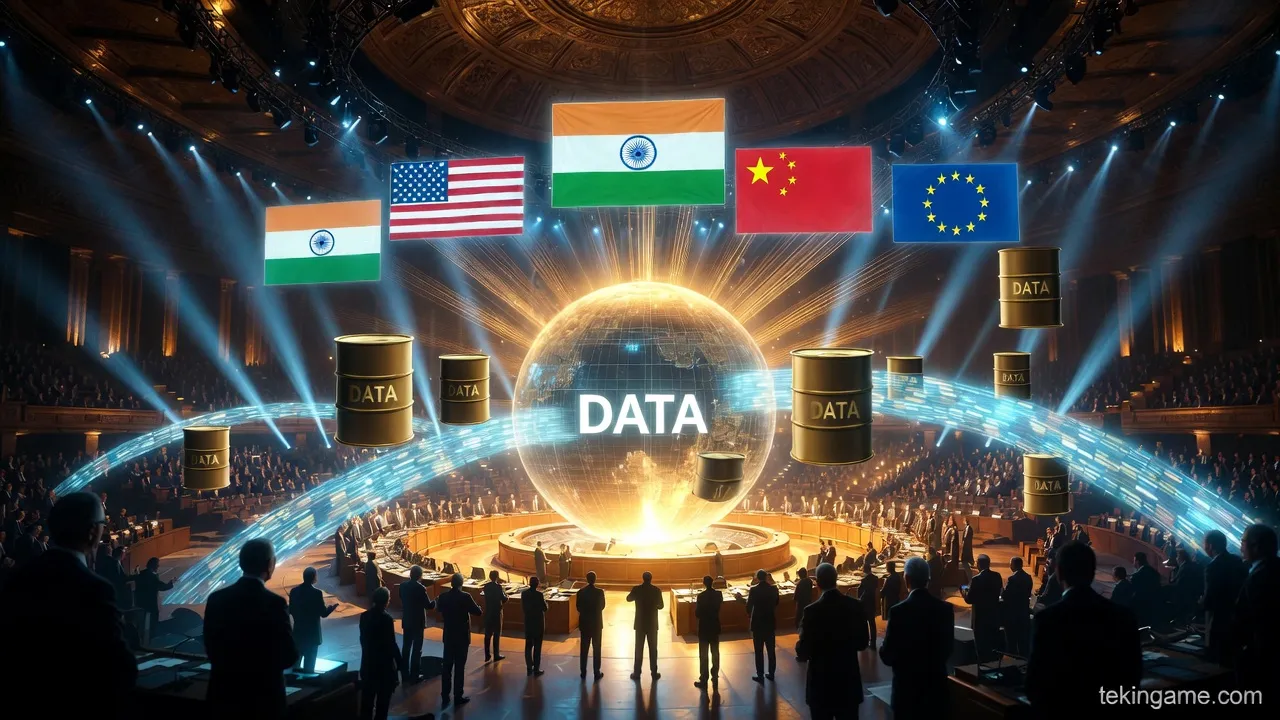
The presence of industry leaders like Sundar Pichai (Google), Sam Altman (OpenAI), and Jensen Huang (NVIDIA), alongside official representatives from the United States, Europe, China, and Israel, indicates this is far more than an ordinary conference. Political speeches, strategic agreements, and the definition of international standards for AI governance are on the agenda.
The key discussion topics include: 1) Building local AI infrastructure in each country, 2) Rules for exporting AI models, 3) Creating global standards for auditing and decision-making algorithms, and 4) Dividing global markets for cloud providers.
India plays a special role in this scenario. With over 1.4 billion people and meaningful R&D capacity, India can become the center for AI experimentation for third-world markets globally.
3. Neuromorphic Chip: Robot Vision Like Human Vision
One of the most significant breakthroughs of recent weeks has been the development of a new neuromorphic chip for robotic vision. Unlike traditional cameras that capture all frames at the same speed, this chip only activates when changes are detected in the image.
This approach is called Event-Based Vision and is inspired by how the human eye sees. Our eyes only pay attention to changes; if something remains still, we ignore it. This chip implements exactly that logic.
The benefits are enormous: 1) Energy consumption drops by up to 10x, 2) Processing latency (Latency) is nearly eliminated, and 3) Robots can react better in dynamic environments.
Practical applications range from autonomous vehicles to industrial robots, surveillance applications, and even neural prosthetics. This is a clear example of Hardware-Level AI—where AI algorithms are not just implemented in software but embedded in hardware foundations.
4. Starlink in Vietnam: Capturing Southeast Asia
SpaceX has now obtained official authorization to operate in Vietnam. This news might seem minor, but it is actually very significant. Vietnam is a market of over 98 million people and one of the world's most important manufacturing hubs.
Before Vietnam, Starlink had secured operating licenses in the Philippines and Indonesia. Now, with three major Southeast Asian countries, Starlink has established a powerful position to dominate satellite internet in the region.
This means enormous pressure on local mobile operators. Many of these operators have weak ground networks and cannot afford the high costs of upgrades. Starlink can bypass them and serve subscribers directly.
Elon Musk's strategy for Starlink is now clear: 1) Cover inactive regions, 2) Displace existing operators in mature markets, and 3) Create pockets of digital economy in developing markets.
5. Wave of Remakes and 2026 Exclusives
Late February and early March will see the gaming industry face an avalanche of new titles and important remakes. The updated release list includes Mario Tennis Fever, Ride 6, and new remasters/remakes of Yakuza and Ys X.
This focus on remakes and local exclusives signals a key strategy shift. The gaming industry is evolving: 1) AAA games are more important than ever, 2) Local licenses and cultural IP are highly valuable, and 3) Nintendo still relies on exclusive content.
PS5 Pro and Switch 2 must leverage these new waves to drive sales. After years of waiting for GTA VI and new Final Fantasy entries, gamers now want to experience local exclusives.
6. OpenClaw and the Next Generation of Autonomous Agents
The final and perhaps most important story of the night concerns OpenClaw's progress and its derivatives. The emphasis on OpenClaw shows that the tool is now moving beyond email and file management to direct account control, web application automation, and even complete job automation.
This is a turning point in technology's direction. We are moving from a world where AI can only answer and analyze, to a world where AI can decide and act. OpenClaw is the first example of this shift.
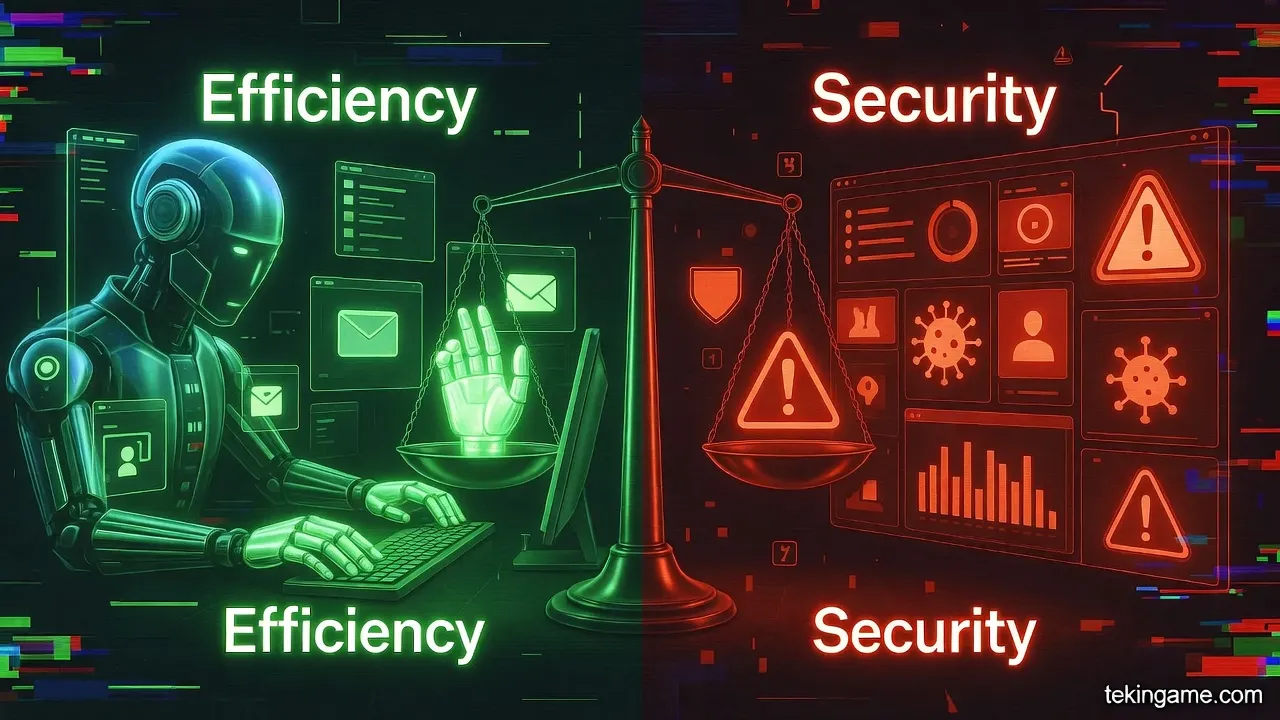
However, security concerns are significant. If an agent has full control over a banking account or can send sensitive emails, the risks of catastrophic failure are enormous. Therefore, OpenClaw and its more secure variants (Popebot, PicoClaw) must define extremely high security standards.
Conclusion: A Night That Changed the World
The night of February 16, 2026 was not an ordinary night. From strategic decisions in cloud infrastructure to global technology diplomacy, to fundamental breakthroughs in hardware and autonomous AI, this night marks an inflection point for how the world works.
We now live in a world where technology is not just a tool, but a decision-making tree. Startups, large corporations, and governments simultaneously compete to shape this future. February 16 is one of those nights where the history of technology gets rewritten.
Deep Strategic Analysis: Hidden Layers in Six News Stories
Layer 1: The War for Infrastructure and Data Control
If we viewed the first part of this night as just six separate stories, the reality is that these six stories tell a unified narrative: where things are built, who controls them, and how data flows.
Oxide wants to bring data closer to enterprises. New Delhi wants to maintain global control over AI. The neuromorphic chip processes visual data faster. Starlink transmits data to places that were previously impossible. Gaming remakes capture player behavioral data. OpenClaw provides direct control over data and accounts.
Here is the real war: control over data.
Layer 2: The Transformed Economic Equation
For the past two decades, money and economic scale grew with more chips, more servers, and more energy. But this generation of technology no longer follows that path.
Oxide says: "You cannot scale public cloud economically for your entire enterprise. We make it more local." This means fewer chips, but smarter ones.
The neuromorphic chip says: "You cannot process every frame. We only see changes." This means less energy, but better output.
Starlink says: "You cannot lay fiber where geography makes it impossible. We use satellites." This means no infrastructure costs, but service delivery.
OpenClaw says: "You cannot do every task with humans. We use agents." This means fewer workers, but better results.
The new economic equation is: Less Quantity + More Quality = Wealth Growth.
Layer 3: Technology Diplomacy and Armed Peace
The India AI Impact Summit is a demonstration of the shift in soft power. Two decades ago, if America decided on global technology standards, the world followed. Now, if New Delhi hosts a conference, America and China attend.
This change is rapid but historic. India, simply by having a market and human capital, managed to position itself at the international decision-making table. This is a lesson for all developing countries: you can position yourself if you can offer something others need.
India has 1.4 billion people. That is demand. India has cutting-edge technology. That is supply. India can define standards that touch 20% of global population. That is power.
Layer 4: New Players and Old Guard Defeats
Oxide Computer is a young startup, but the $200 million investment shows that giants (Amazon, Microsoft) cannot monopolize this market.
SpaceX is establishing itself as an internet provider. This threatens traditional mobile operators. Years ago, if you told a telecom operator "Starlink is a threat," they would laugh. Now, they are not laughing.
Nintendo and Sony are attempting to redefine themselves through gaming remakes with new consoles (Switch 2, PS5 Pro). This shows old players can still compete if they combine history and emotion with new technology.
OpenClaw is an open tool, but if governments or large corporations co-opt it, it could become a first-degree threat to employment.
Layer 5: Security and Privacy Concerns
These six stories come with serious security and privacy risks. Oxide: if a company keeps data locally, how do we guarantee hackers won't penetrate the internal network? Neuromorphic chips: if robots can see and record all changes, who guarantees cameras are not placed where they shouldn't be? Starlink: if SpaceX satellites cover the entire world, who controls what data is transmitted? Gaming remakes: if Sony and Nintendo collect behavioral data, who guarantees it won't be sold? OpenClaw: if an agent has full account control, who guarantees the agent itself won't attack?
Layer 6: Next Generation Wave and Generational Shift
Each of these six stories represents a technology generation. Generation 1 (1990-2005): Personal computers and internet. Makers: Apple, Microsoft, Intel. Generation 2 (2005-2020): Mobile and cloud. Makers: Apple, Google, Amazon. Generation 3 (2020-2035): AI and distributed cloud. Makers: OpenAI, DeepSeek, Oxide, SpaceX.
In this generation, old companies (Apple, Microsoft) are still powerful, but they are no longer absolute controllers. New players (startups and young tech companies) can be competitors.
The next generation wave is: Decentralization, Autonomy, and Local Control.
Conclusion: A Historical Inflection Point
The night of February 16, 2026 will be marked as a historical inflection point. Not just because of separate stories, but because of the pattern they reveal.
For the first time in technology history, the world is moving toward a new equation: less quantity, more quality, more decentralization, and more local control. This is not just a technology shift; it is a shift in the structure of global power.
Those who understand this change will be the leaders of the next generation. Those who don't will become followers.
Strategic Connections: How These Six Stories Connect to This Morning
One important point in analyzing Tekin Night is that every night connects to the morning of that same day. Tekin Morning today (February 16) covered six fundamental topics: 1) The AI debt crisis at Google and Meta, 2) India AI Impact Summit, 3) YouTube on Vision Pro, 4) The coding revolution at Spotify, 5) The OpenClaw war between Meta and OpenAI, and 6) PlayStation's 2026 roadmap.
Tekin Night today (February 16) also covers six topics: 1) Oxide and on-premise cloud, 2) New Delhi and AI diplomacy, 3) Neuromorphic chips, 4) Starlink in Vietnam, 5) The wave of gaming remakes, and 6) OpenClaw and autonomous agents.
Is this a coincidence? No. This is a connected story.
Connection 1: AI Debt and Infrastructure
This morning, Tekin Morning said Google and Meta are spending $30 billion on AI. Tonight, Tekin Night says Oxide wants to reduce these costs. Here is the answer: companies should know they can use Oxide to deploy AI internally without relying on public clouds (and their associated debt).
Connection 2: India AI and New Delhi
This morning, Tekin Morning said the India AI Impact Summit is a center for diplomacy. Tonight, Tekin Night emphasized that New Delhi can define standards that affect 20% of global population. This means today's decisions in New Delhi will impact tomorrow's Oxide, Starlink, and OpenClaw.
Connection 3: Vision Pro and Smart Wearables
This morning, Tekin Morning said YouTube is now on Vision Pro. Tonight, Tekin Night said neuromorphic chips improve vision. This means the future of smart wearables (like Vision Pro) will need neuromorphic chips to process all frames without draining batteries.
Connection 4: Spotify and OpenClaw
This morning, Tekin Morning said Spotify no longer wants manual coding. Tonight, Tekin Night said OpenClaw agents can now automate complete jobs. This means companies like Spotify can use OpenClaw to automate their AI systems if they choose.
Connection 5: PlayStation and Gaming Remakes
This morning, Tekin Morning said Sony is focused on Resident Evil Requiem. Tonight, Tekin Night said the wave of remakes is coming. This means Sony wants to use new versions of old games to attract players.
Connection 6: Starlink and Global Internet
This morning, Tekin Morning said global technology is changing. Tonight, Tekin Night said Starlink secured approval in Vietnam. This means internet is now truly global. Anyone, anywhere, can access data from OpenAI, Google, or DeepSeek. This is a technological earthquake.
Scenario: One Hundred Years From Now
If we look one hundred years forward, the night of February 16, 2026 will be recognized as the point in history when the world decided:
1. Make cloud local (Oxide)
2. Keep data distributed (Starlink)
3. Automate repetitive work (OpenClaw)
4. Equalize standards (India AI Summit)
5. Make hardware intelligent (Neuromorphic Chips)
6. Resurrect history (Gaming Remakes)
These six decisions will define the world that exists in 2126.
Final Message for Decision-Makers
If you are a decision-maker at a large company, take these six stories from the night of February 16 seriously:
- For Amazon and Microsoft: Oxide is a threat. You need a new strategy for on-premise cloud.
- For mobile operators: Starlink is a threat. You must provide better internet or you will be displaced.
- For software companies: OpenClaw is a threat. You must improve your AI or have fewer employees.
- For robotics and automotive companies: Neuromorphic chips are an opportunity. You should adopt them immediately.
- For gaming companies: The remake wave is an opportunity. You should remake old games.
- For governments and international organizations: India AI Summit is an opportunity. You should define new standards before it is too late.
The night of February 16, 2026 is history. And history forgets those who don't pay attention.
We are now in a place where technology is not just a tool. Technology is power. The power to decide. The power to act. The power to control.
On the night of February 16, the world redistributed this power. The question is: Are you ready?