
1. Beyond Glass: The Engineering Behind "Transparent MicroLED"
Let's start with the showstopper from last night's "First Look" event. Samsung has been toying with transparent displays for a decade, but previous Transparent OLED models always suffered from the same issue: they were "translucent," not invisible. They had a tint, and they struggled against ambient light.
The Transparent MicroLED panel unveiled last night is different. Let's get technical:
Pixel Architecture: Why is it Invisible?
In standard OLED panels, multiple layers (cathode, anode, organic layers, polarizers) stack up to block light transmission. With this new MicroLED tech, Samsung engineers have printed the microscopic LED chips (the light source) directly onto the glass substrate. The key is the Aperture Ratio.
Samsung has managed to shrink the size of each MicroLED pixel to the micrometer scale, leaving approximately 90% of the panel's surface area empty. The human eye sees the emitted light forming the image, but the brain ignores the microscopic spaces between the pixels, allowing you to see perfectly through the glass. The result isn't a screen; it’s a hologram suspended in a window.
The Modular Advantage
Crucially, this isn't one giant sheet of glass. It utilizes a modular tile design. Because MicroLEDs are inorganic and lack bezels, Samsung uses light refraction at the edges to make the seams between tiles vanish. This allows for displays of infinite size and irregular shapes.
2. Project Bongo Resurrected: iPhone 17 Air & Solid-State Tech
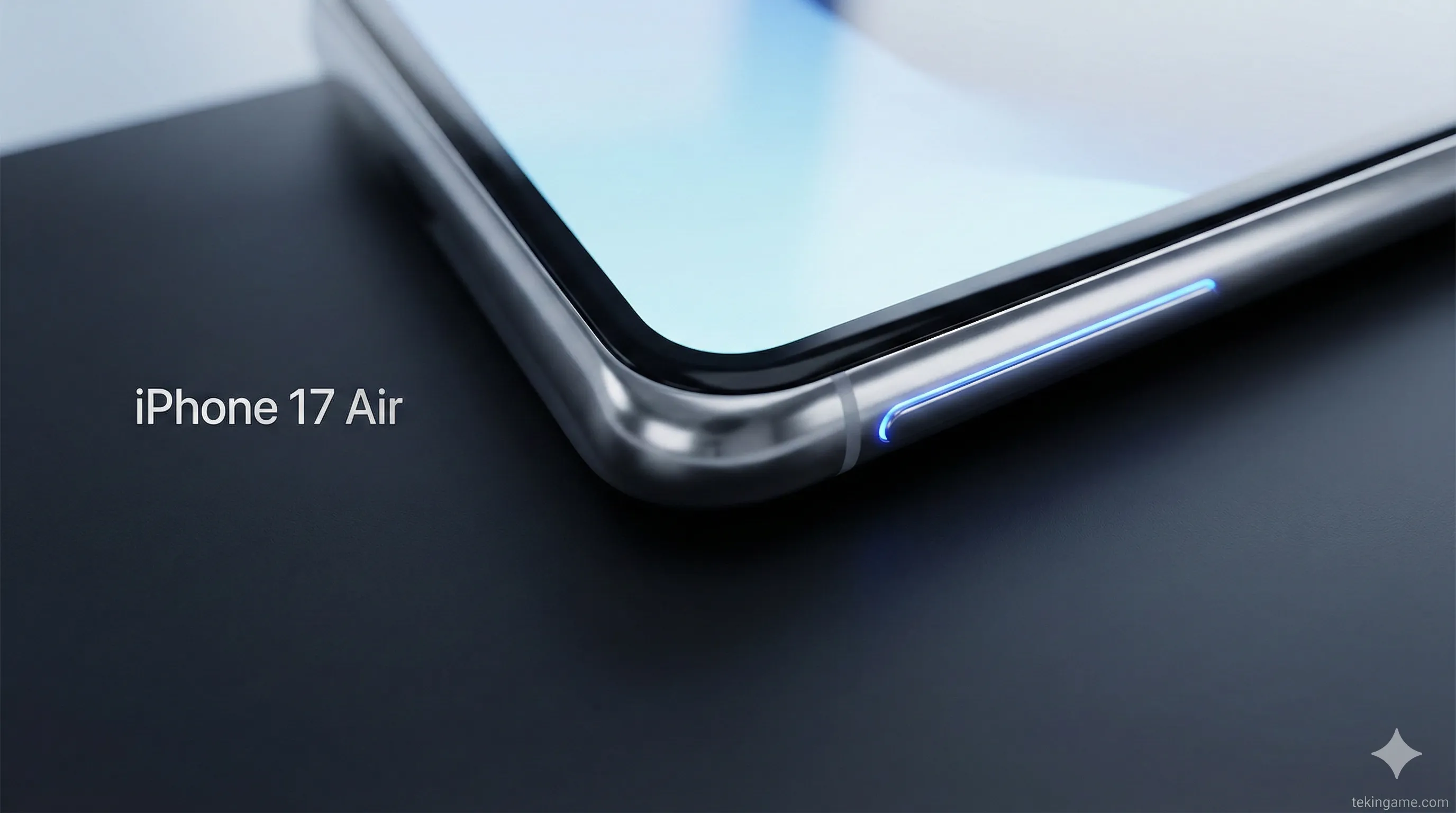
Veterans will remember "Project Bongo"—Apple's failed attempt to bring solid-state buttons to the iPhone 15 Pro. It was canceled due to manufacturing yields. Today, leaked CAD schematics from Foxconn confirm that Bongo is back for the iPhone 17 Air, and it is far more advanced.
The Haptic Illusion
Removing physical buttons isn't just for aesthetics; it's for durability and ingress protection (IP69 ratings). But humans crave tactile confirmation. How does Apple solve this?
- Strain Gauges: Instead of a mechanical switch that closes a circuit, the frame uses strain gauges that measure the deformation of the metal in Newtons. This prevents accidental presses (phantom touches) and allows for pressure-sensitive volume control (press harder to scroll volume faster).
- Localized Taptic Engines: The iPhone 17 Air allegedly features two additional, miniature Taptic Engines on the side rails. These motors deliver a high-frequency, sharp vibration (a "crisp click") in under 5 milliseconds. Your brain interprets this vibration as physical movement. It is the same magic used in MacBook trackpads—you think you are clicking, but the glass never moves.

3. Physics Wins: Why "Hall Effect" is a Revolution
The confirmation that the **Nintendo Switch 2** will utilize Hall Effect Joysticks is the biggest victory for consumer advocacy in gaming history. But why is this specific technology the "Silver Bullet" for drift?
The Old Problem: Resistive Potentiometers
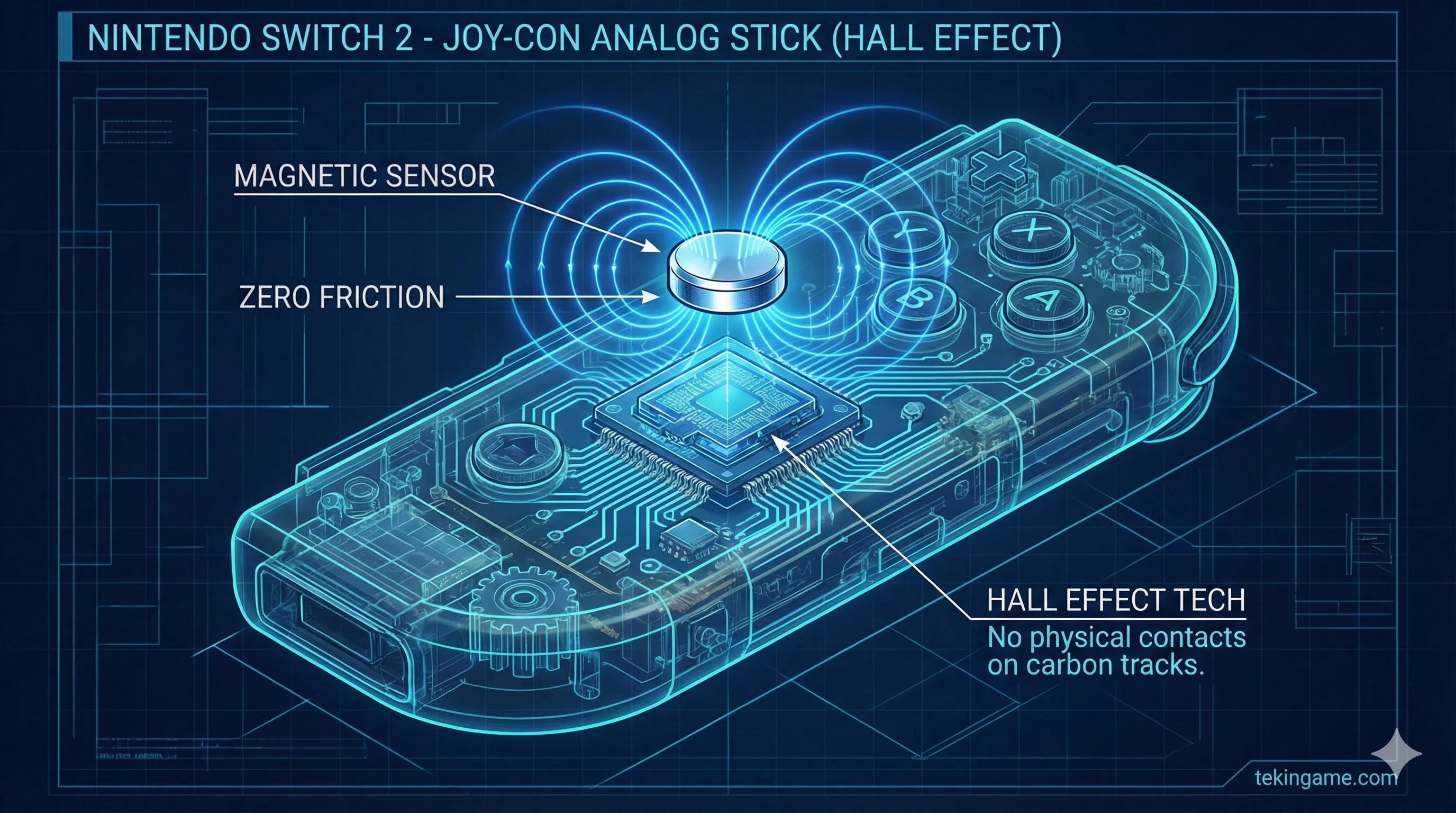
Current controllers (DualSense, Joy-Cons, Xbox) use potentiometers. These components rely on small metal wipers physically dragging across a resistive carbon track to measure position. The Failure Point: Friction. Over time, the metal scrapes the carbon, creating microscopic conductive dust. This dust confuses the sensor, causing it to register movement when the stick is centered (Drift).
The New Solution: Magnetic Fields
Hall Effect sensors (discovered by Edwin Hall in 1879) use magnets. A small magnet moves with the joystick, and a stationary chip measures the change in the magnetic field voltage. Because the components never physically touch:
- Infinite Durability: There is no friction, no wear, and no dust. The stick will theoretically last until the spring snaps.
- Zero Deadzone: Without the electrical noise caused by friction, Nintendo can shrink the software "Deadzone" to near zero, making the Switch 2 arguably the most precise console for shooters right out of the box.
4. Synthetic Cinema: Deconstructing Netflix's Sora Animation
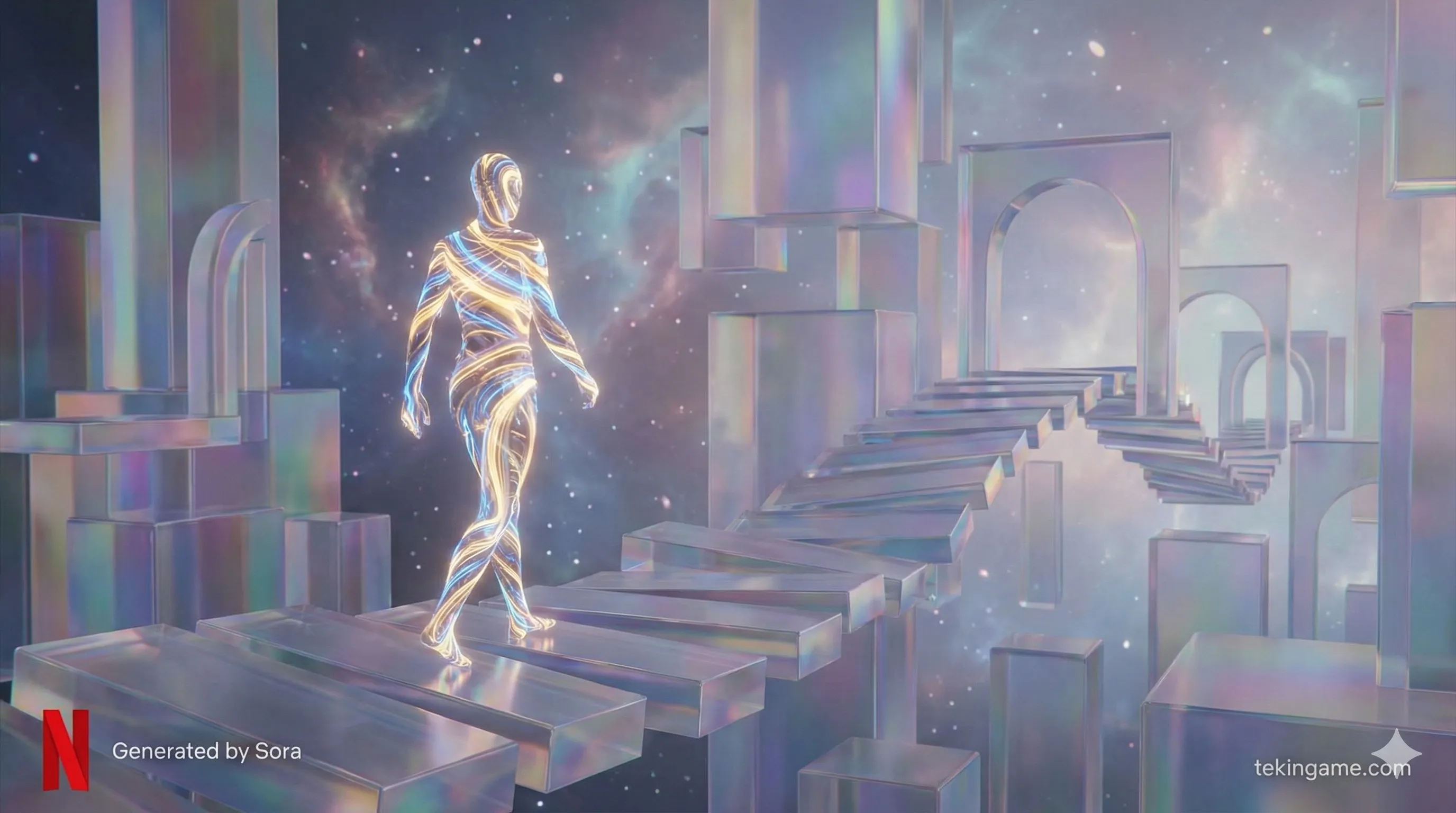
Netflix dropped a 3-minute short film titled "The Midnight Signal" this morning. The credits openly state: "Visuals generated mainly by OpenAI Sora." This is an earthquake for Hollywood.
Technical Observation: Object Permanence
The terrifying leap in this video is Object Permanence. In previous AI video models, if a character turned their head, their facial features would morph or melt. In this Sora-generated short, the AI understands 3D geometry. When the camera rotates around a car, the lighting shifts realistically (Ray-Tracing simulation), and the license plate remains consistent. This proves that Sora has moved beyond predicting pixels; it is now simulating a physics engine internally. Netflix is signaling to investors that they can cut production costs by 90%, a move that will undoubtedly ignite the next wave of union strikes.
5. The PC Economy: Analyzing Steam's 40 Million Record
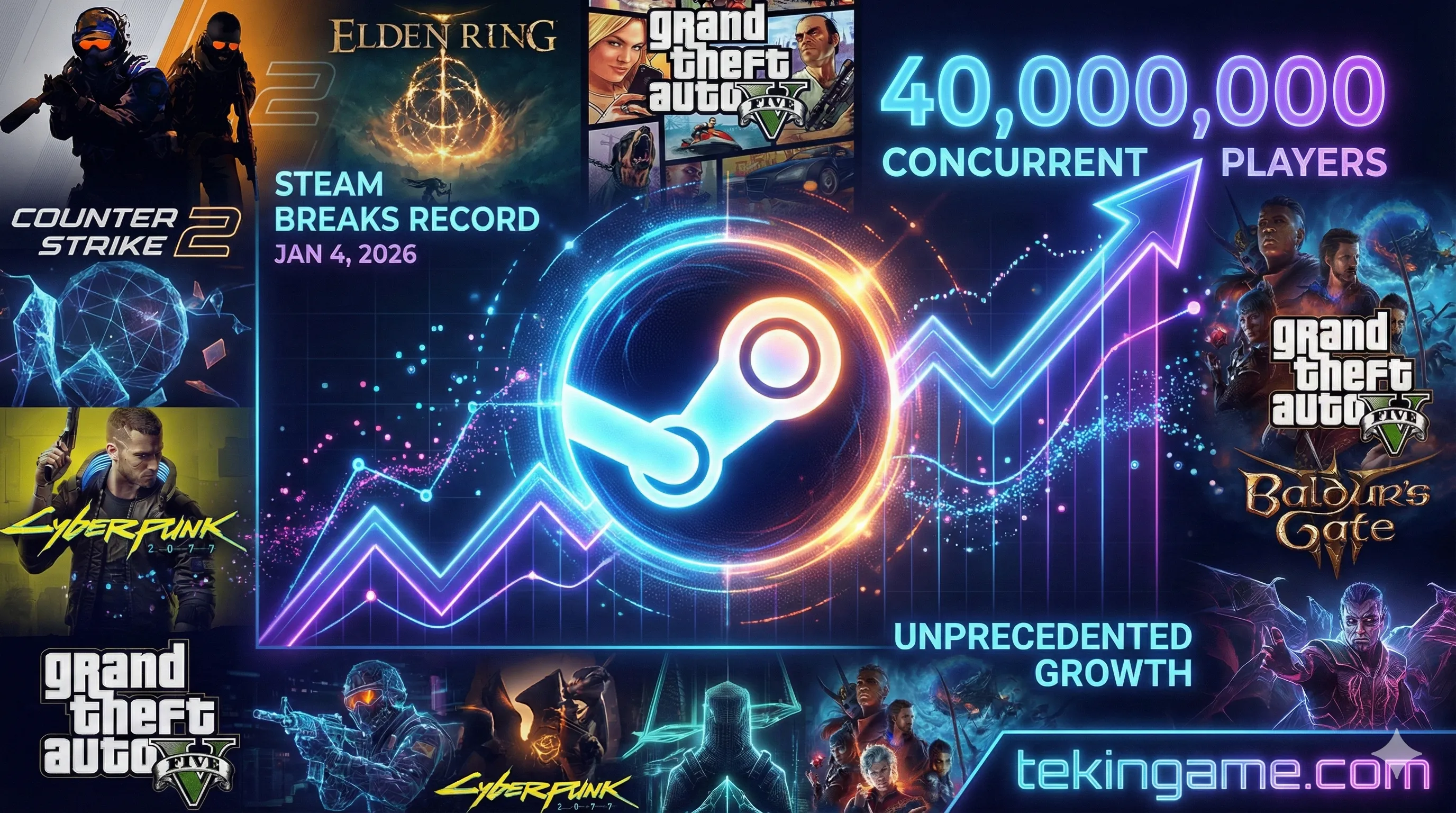
Steam passing 40 million concurrent users this weekend is not just a vanity metric; it is an economic signal. What drove this surge?
- The End of Exclusivity: Sony now publishes on PC. Microsoft treats PC as native ground. Steam has become the "Switzerland" of gaming—the neutral ground where all libraries converge.
- The Handheld Explosion: The saturation of devices like the Steam Deck OLED, Asus ROG Ally X, and Lenovo Legion Go means millions of users are now logged in during commutes or in bed, times when they previously would have been offline.
- Emerging Markets: Regional Pricing strategies have exploded Steam's popularity in Brazil, Eastern Europe, and Southeast Asia, where $70 console games are unaffordable, but Steam Sales offer a viable entry point.
6. Robotics & Fine Motor Skills: The Optimus Challenge
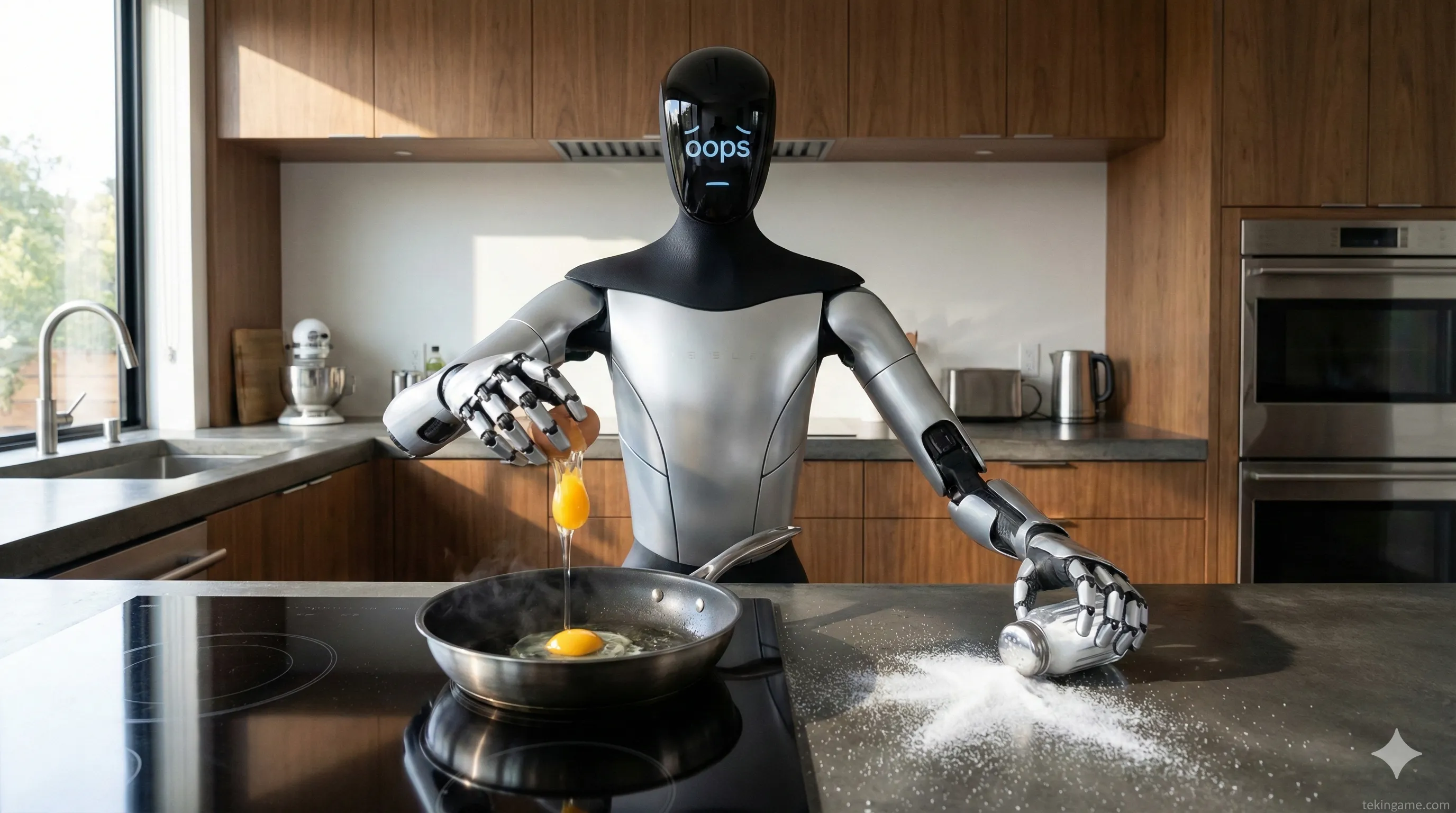
Finally, Elon Musk’s video of the Tesla Optimus Gen 3 cooking an egg. You might laugh at the salt spillage, but from a robotics engineering standpoint, cracking the egg was a monumental achievement.
Eggs are fragile. To crack one without crushing it requires Tactile Sensors capable of detecting pressure variances in grams, coupled with an End-to-End Neural Network that processes this feedback in real-time. Optimus wasn't "coded" to crack an egg; it learned by watching thousands of hours of human video data. The failure to pour salt correctly highlights that AI still struggles with "Granular Physics" (fluid/particle dynamics), even if it has mastered "Rigid Body" manipulation. The chefs are safe... for now.
7. Conclusion: A Monday for the History Books
This wraps up the Mega-Edition of Tekin Morning. Today we learned that the future of TV is invisible, controllers are finally using magnets to fight friction, and buttons are going extinct.
The pace of hardware innovation in January 2026 is blistering. Stay locked to TekinGame; our dedicated iPhone 17 Air Review is dropping in a few hours.