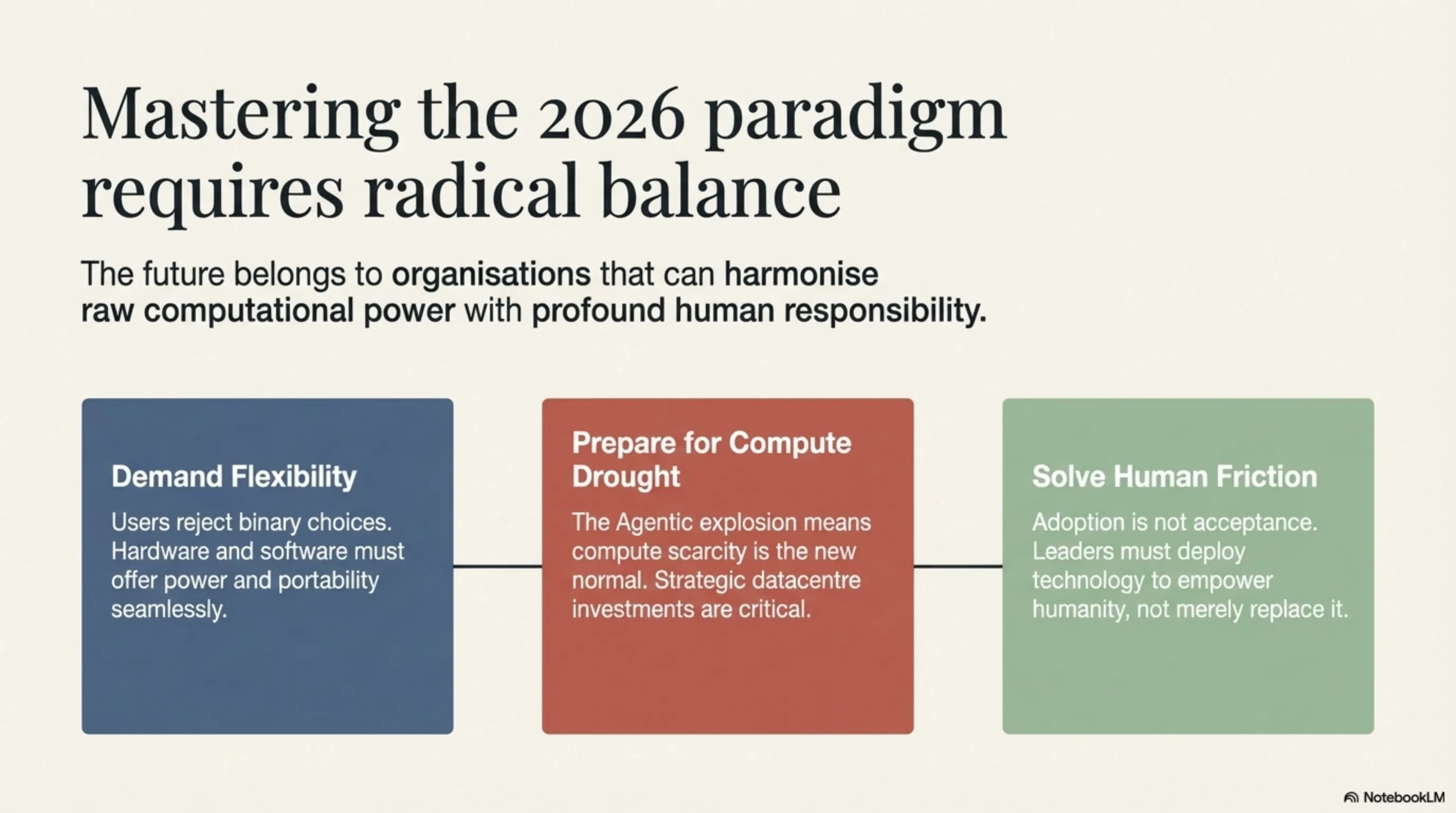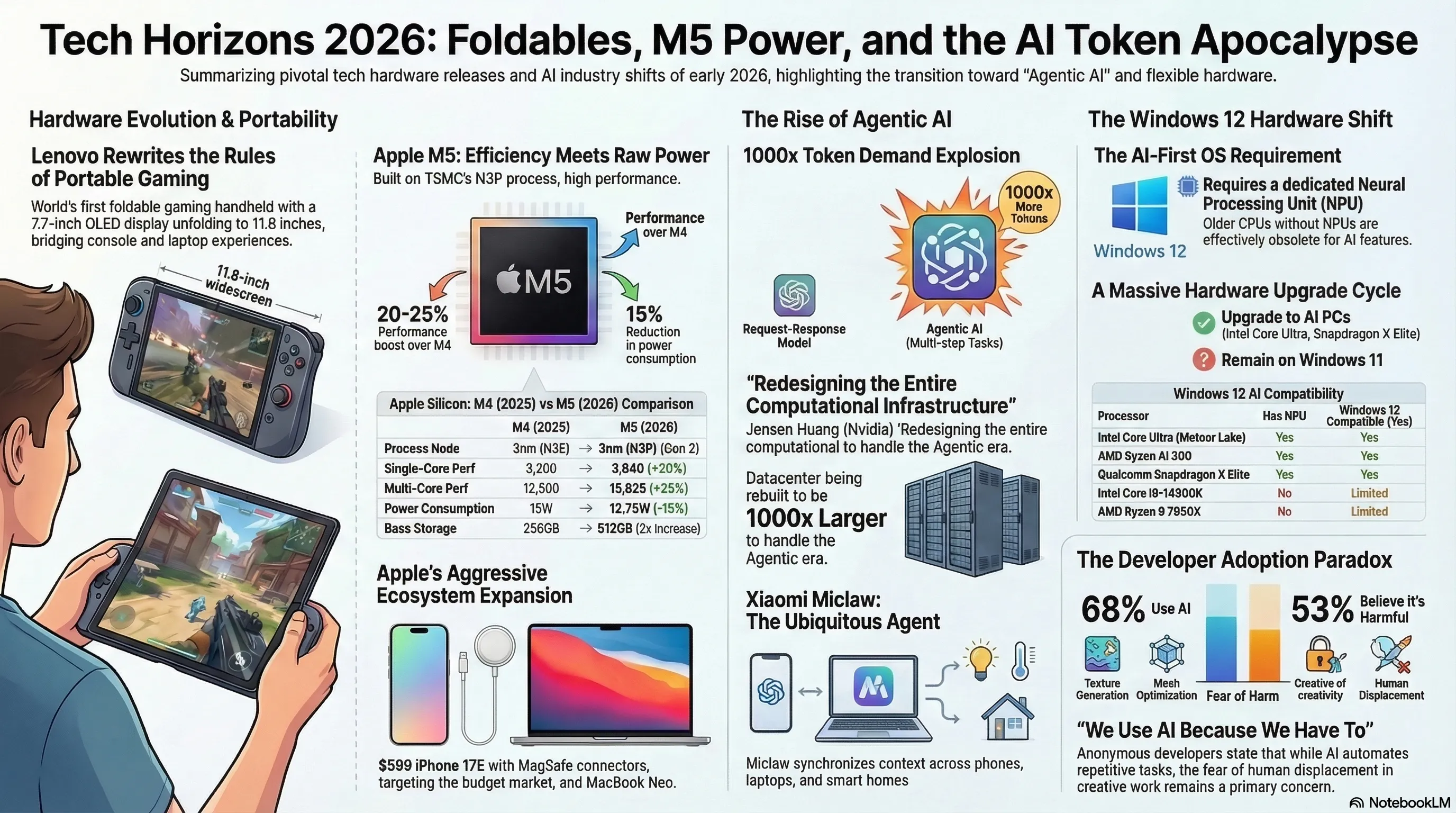
The morning of March 7, 2026 began with three major trends shaping the future of technology: physical flexibility, Agentic AI explosion, and the technology adoption paradox. Lenovo unveiled the world's first foldable gaming console at MWC 2026 Barcelona — a device with a flexible 7.7-inch OLED display that unfolds to 11.6 inches, effectively erasing the boundaries between Steam Deck, tablet, and laptop. With detachable controllers and hybrid architecture, this device demonstrates that the future of portable gaming lies in flexibility, not just raw power. We no longer want to choose between portability and power — we want both. Apple follows the same strategy. Apple's March event, held as a "Special Experience" in three cities, introduced the new MacBook Air with M5 chip — the world's fastest thin-and-light laptop with 20% single-core performance increase and 15% power consumption reduction. More interestingly, the iPhone 17E at $599 — the cheapest iPhone with MagSafe and Ceramic Shield 2. Apple is attacking the budget market to expand its ecosystem, and this is a major strategic shift. But the biggest news of the morning came from Jensen Huang, Nvidia's CEO. He declared that "Agentic AI" — artificial intelligence systems that operate autonomously — will increase token demand by 1000x. This is not a joke. When an AI agent must perform 100 different tasks (search, read, write code, test), each requires tokens. Multiply this by millions of users. The result? A demand explosion that brings our current infrastructure to its knees. This means one thing: GPU prices won't drop in the short term — they'll likely rise higher. Xiaomi has also entered the Agentic AI game. Miclaw — an experimental AI agent that can perform complex tasks across multiple devices and transfer context between them. You can start a task on your phone, continue on your laptop, and finish on your tablet — without needing to re-explain. This is direct competition with Google Assistant and Siri, but with one key difference: Miclaw is an "agent," not just an "assistant." Microsoft has also made a big decision: Windows 12 becomes an "AI-First Operating System." And this means a new requirement: to run Windows 12, you need a dedicated AI chip (NPU). This means millions of current computers without NPUs cannot run Windows 12. This decision is controversial — on one hand, Microsoft says AI is the future of computing. On the other hand, users claim this is "Planned Obsolescence." Finally, the GDC 2026 survey revealed an astonishing paradox: 68% of game development studios use AI, but 53% of developers believe AI is harming the gaming industry. How can the majority use something they think is harmful? The answer is simple: they have to — competitors are using it and they can't fall behind. But that doesn't mean they're happy about it. This morning taught us a big lesson: the future belongs to those who can combine flexibility, power, and responsibility. Not just building powerful technology, but building technology that makes life better. Lenovo and Apple showed that physical flexibility is the future. Jensen Huang warned that the Agentic AI explosion requires massive investments. And the GDC survey reminded us that technology must serve humanity, not replace it.
Good morning, Tekin Legion! From Lenovo's game-changing foldable handheld to Jensen Huang's warning about a 1000x AI token explosion — your March 7, 2026 tech breakfast is served.
Lenovo's Foldable Gaming Handheld: When Steam Deck Marries a Tablet
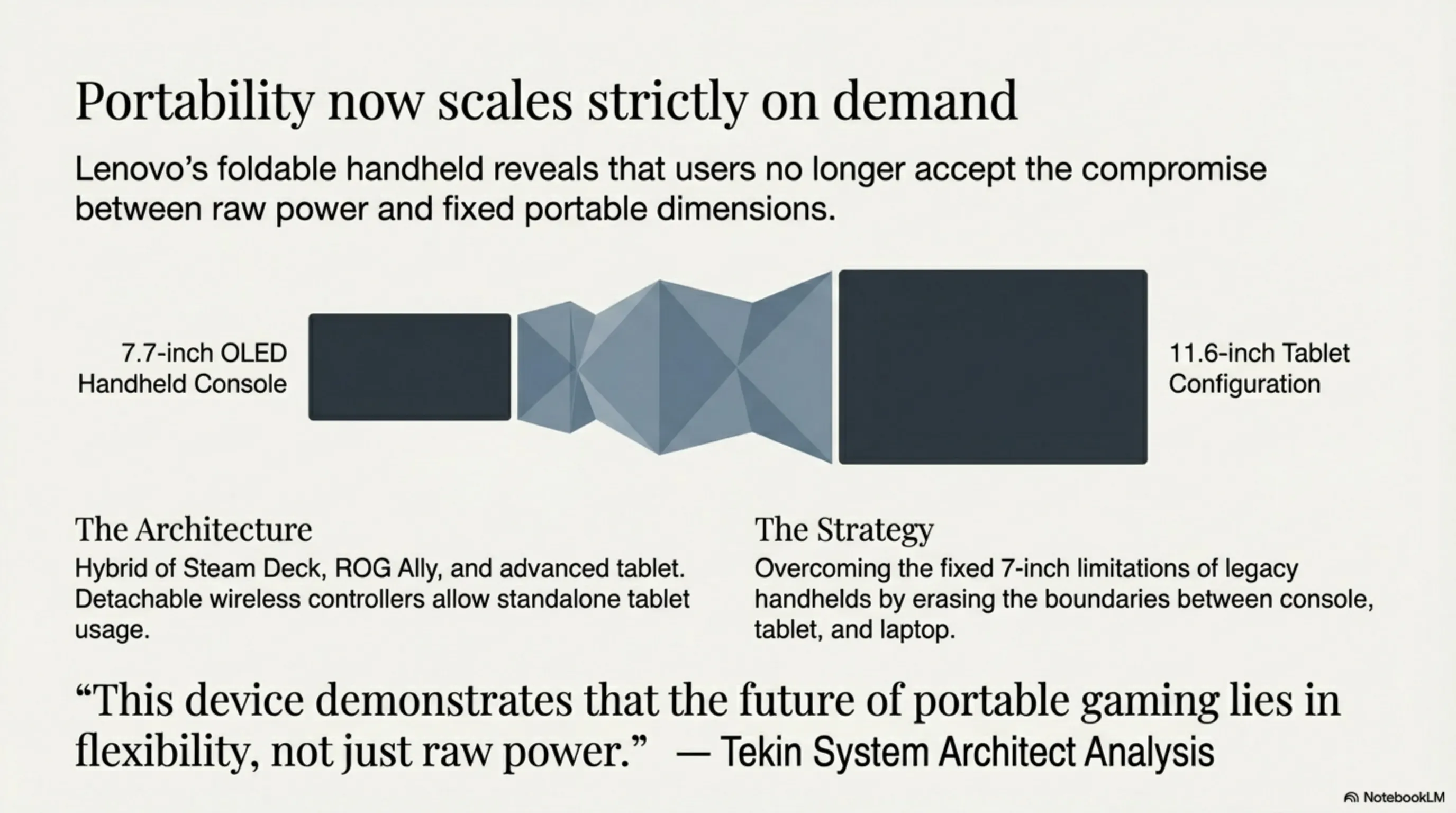
MWC 2026 Barcelona witnessed a genuine revolution in handheld gaming this year. Lenovo unveiled the world's first foldable gaming console, completely rewriting the rules of portable gaming. This device—a hybrid of Steam Deck, ROG Ally, and an advanced tablet—features a flexible 7.7-inch OLED display that unfolds to 11.6 inches, redefining what "portability" actually means in 2026.
The architecture is stunning: in folded mode, you have a compact handheld console that fits comfortably in a backpack. But when you unfold the display, you suddenly have an 11.6-inch gaming tablet delivering an experience approaching that of a laptop. Detachable controllers (similar to Nintendo Switch) give you the flexibility to use the device as a standalone tablet or with wireless controllers.
"This device demonstrates that the future of portable gaming lies in flexibility, not just raw power. Lenovo has effectively erased the boundaries between handheld console, tablet, and laptop." — Tekin System Architect Analysis
The competitive comparison is fascinating: Steam Deck and ROG Ally are both powerful devices, but their fixed 7-inch displays impose limitations. Lenovo's foldable screen gives you the choice of when you need maximum portability versus when you need a larger display. This is exactly what we discussed in our Nvidia Hardware Rebellion article: users no longer want to choose between power and portability—they want both.
Apple MacBook Neo M5: When Tim Cook Takes "Big Week" Seriously
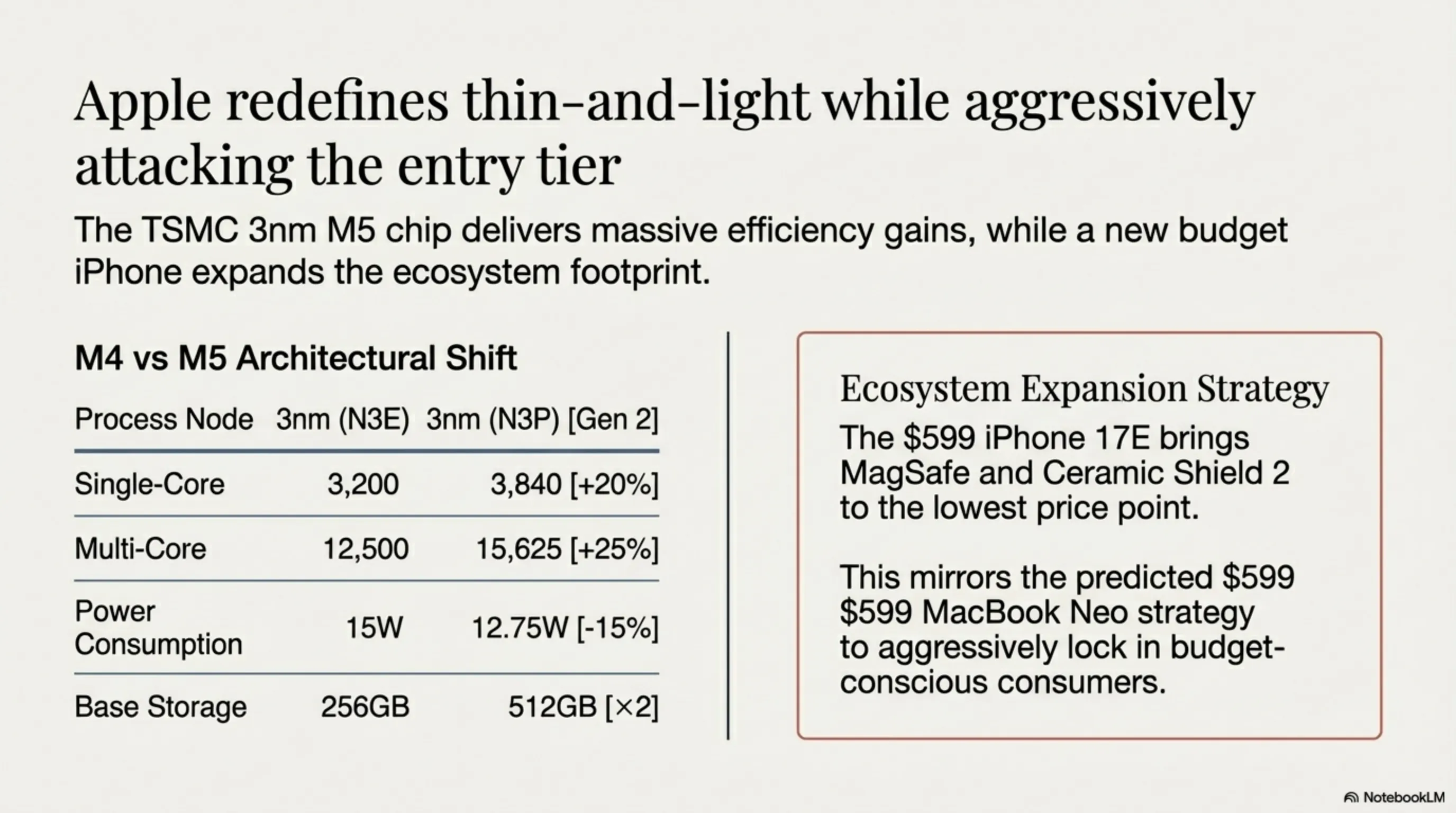
Tim Cook promised a "big week ahead," and he wasn't joking. Apple's March event, held as a "Special Experience" in New York, London, and Shanghai, was one of the most product-packed Apple events in recent years. The star? The new MacBook Air with M5 chip, claiming to be the world's fastest thin-and-light laptop.
The M5 chip is Apple's fifth-generation silicon, built on TSMC's second-generation 3nm architecture (N3P). Comparison with M4 shows M5 is approximately 20% faster in single-threaded tasks and 25% faster in multi-threaded workloads. More impressively, power consumption dropped 15%, translating to longer battery life.
| Specification | M4 (2025) | M5 (2026) | Change |
|---|---|---|---|
| Process Node | 3nm (N3E) | 3nm (N3P) | Gen 2 |
| Single-Core Performance | 3,200 | 3,840 | +20% |
| Multi-Core Performance | 12,500 | 15,625 | +25% |
| Power Consumption | 15W | 12.75W | -15% |
| Base Storage | 256GB | 512GB | ×2 |
But Apple didn't stop at MacBook Air. The iPhone 17E launched at $599—the cheapest iPhone with MagSafe support and Ceramic Shield 2. This is the exact strategy we discussed in last night's Tekin Night about the $599 MacBook Neo: Apple is attacking the budget market to expand its ecosystem.
Jensen Huang and the Token Apocalypse: 1000x Demand!
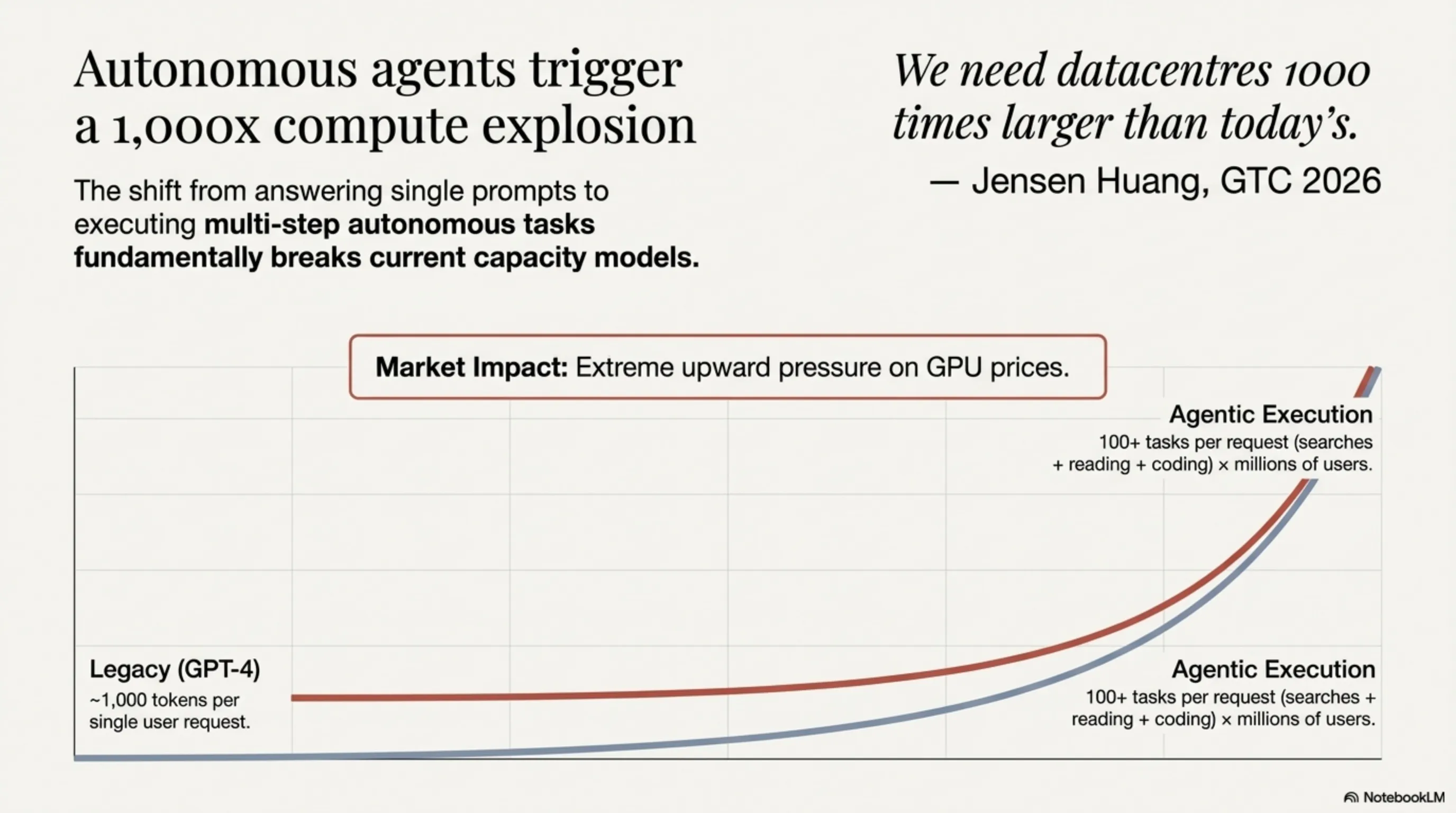
If you thought the GPU market was crowded now, wait until you hear what Jensen Huang, Nvidia's CEO, has to say. At a recent press conference, he declared that "Agentic AI"—artificial intelligence systems that operate autonomously—will increase token demand by 1000x. Yes, you read that correctly: one thousand times!
To understand this number, let's do some math. Assume a language model like GPT-4 consumes 1,000 tokens per request. Now imagine an AI agent that, instead of answering one question, must perform 100 different tasks: web searches, document reading, code writing, test execution, etc. Each task requires tokens. Multiply this by millions of users. The result? A demand explosion that brings our current infrastructure to its knees.
"This is no longer just about building faster GPUs. This is about redesigning the entire computational infrastructure. We need datacenters 1000 times larger than today's." — Jensen Huang, GTC 2026
This is exactly what we predicted in our Digital Employee War article: the Agentic AI era requires a quantum leap in computational power. And this means one thing: GPU prices won't drop in the short term. They'll likely rise even higher.
Xiaomi Miclaw: The AI Agent That's Everywhere
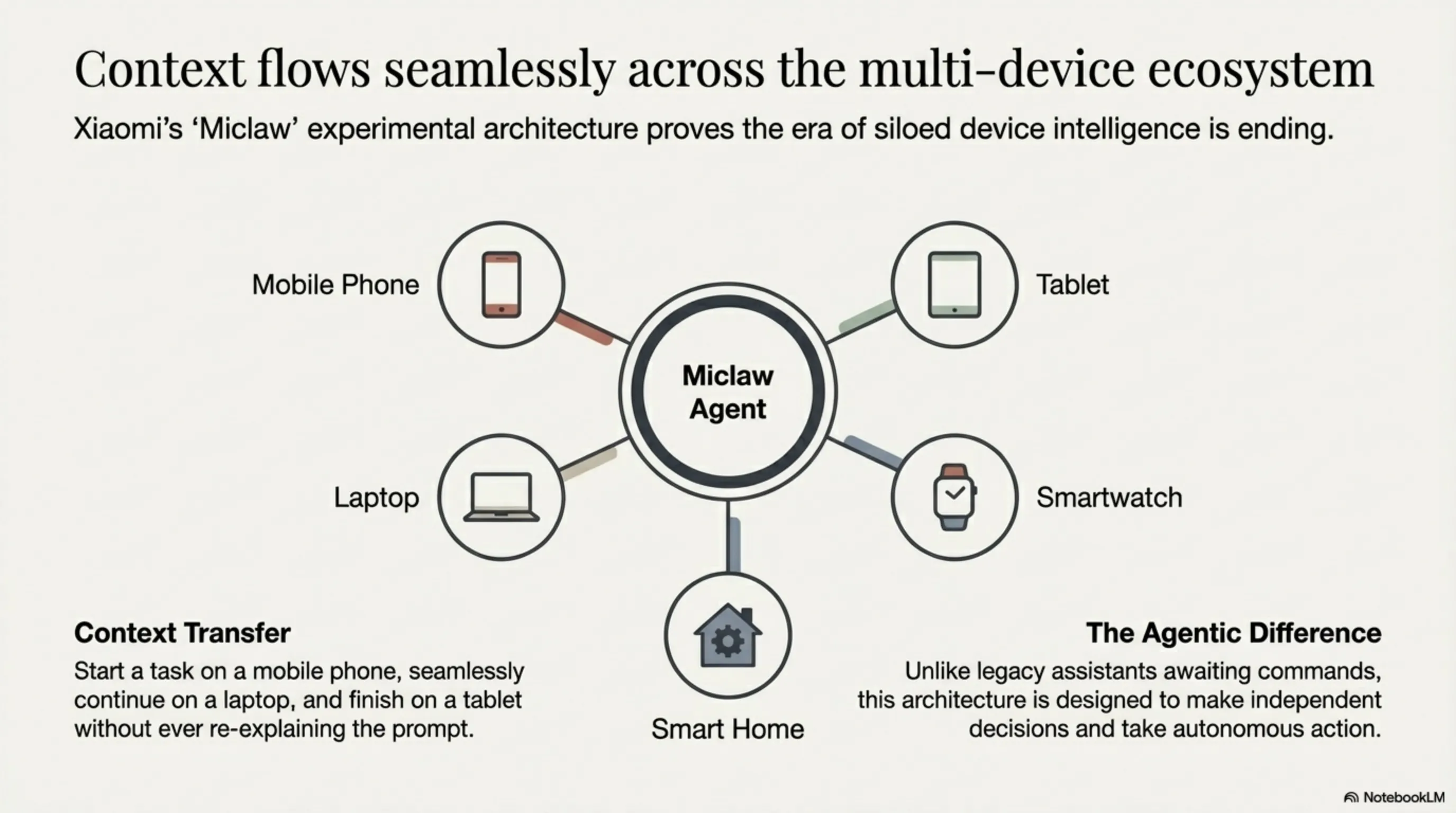
Xiaomi is testing an experimental AI agent called "Miclaw" that claims to perform complex tasks across multiple devices. What does this mean? Imagine an AI assistant that works not just on your phone, but on your laptop, tablet, smartwatch, and even your smart home—and they're all synchronized.
Miclaw is built on a "Multi-Device AI Agent" architecture that allows it to transfer context between devices. For example, you can start a task on your phone, continue on your laptop, and finish on your tablet—without needing to re-explain what you want.
This is direct competition with Google Assistant and Siri, but with one key difference: Miclaw is designed to be an "agent," not just an "assistant." Instead of merely responding to your commands, it can make decisions and take action independently. This is exactly what we discussed in our Gemini 3.1 Pro article: the Agentic AI era has begun.
Windows 12 AI Chip Requirement: Millions of PCs Just Became Obsolete!
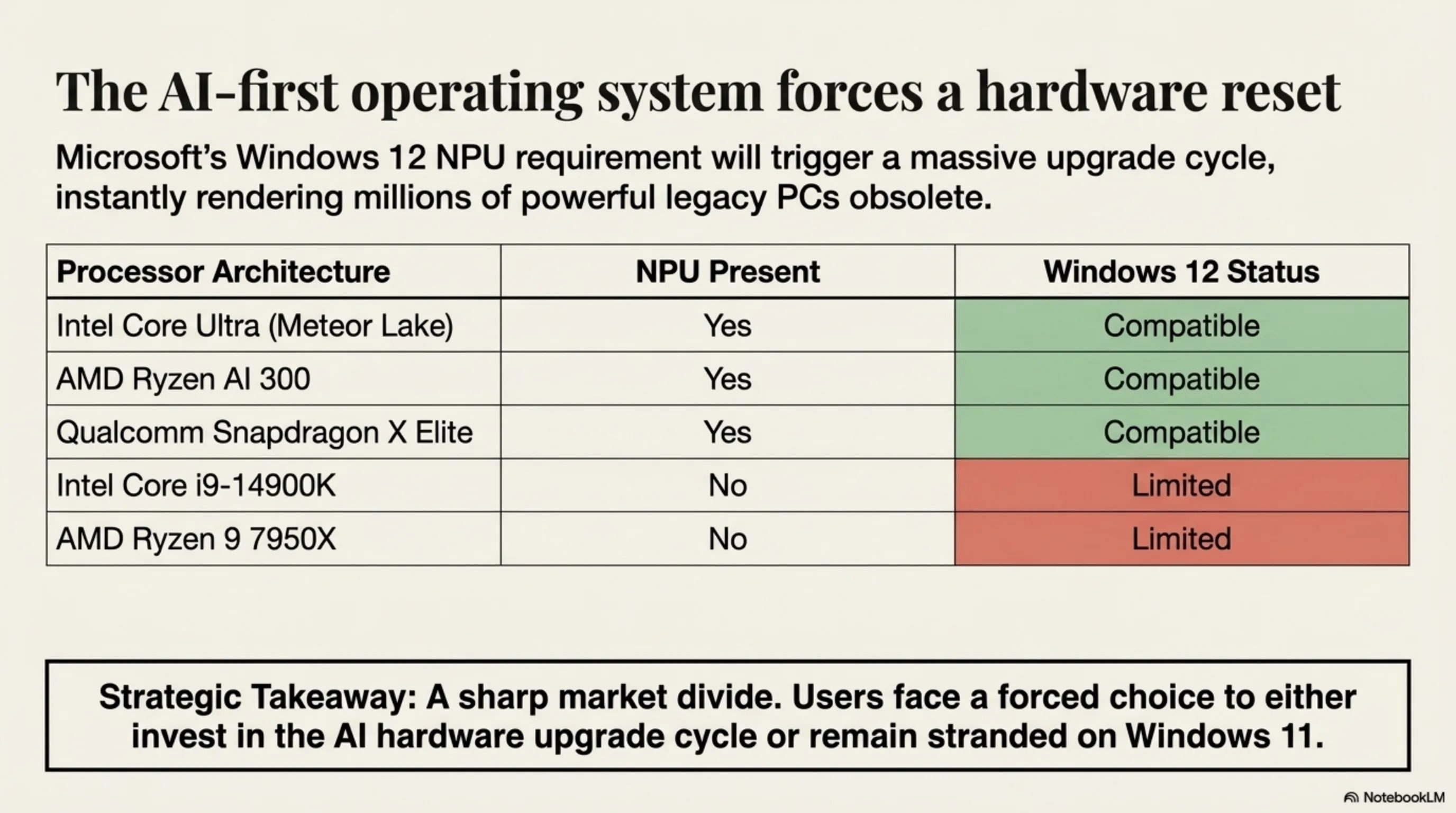
Microsoft has decided to transform Windows 12 into an "AI-First Operating System." And this means a new requirement: to run Windows 12, you need a dedicated AI chip (NPU). This means millions of current computers without NPUs cannot run Windows 12—or at least cannot use its AI features.
This decision is controversial. On one hand, Microsoft argues that AI is the future of computing and Windows must be ready for this future. On the other hand, users claim this is "Planned Obsolescence"—deliberately making old products obsolete to force people to buy new hardware.
| Processor | Has NPU? | Windows 12 Compatible? |
|---|---|---|
| Intel Core Ultra (Meteor Lake) | ✓ | ✓ |
| AMD Ryzen AI 300 | ✓ | ✓ |
| Qualcomm Snapdragon X Elite | ✓ | ✓ |
| Intel Core i9-14900K | ✗ | Limited |
| AMD Ryzen 9 7950X | ✗ | Limited |
The reality is that Microsoft is steering the industry toward "AI PCs." And this means a massive hardware upgrade cycle in the coming years. If your PC lacks an NPU, you'd better plan for an upgrade—or remain loyal to Windows 11.
GDC 2026 Paradox: Everyone Uses AI, But Everyone Hates It!
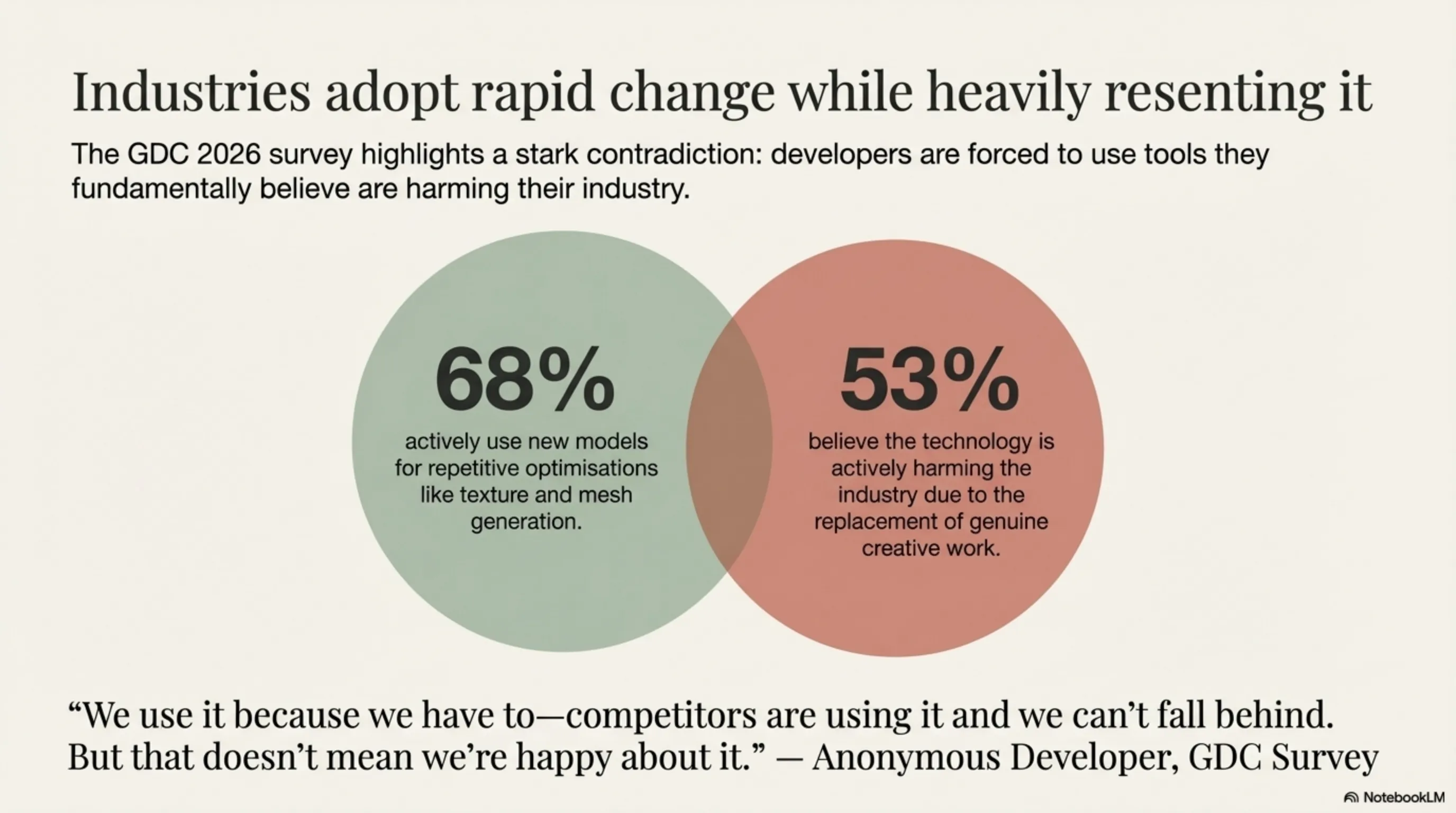
The GDC 2026 (Game Developers Conference) survey revealed an astonishing paradox: 68% of game development studios are using AI, but 53% of developers believe AI is harming the gaming industry. This is an obvious contradiction: how can the majority use something they think is harmful?
The answer lies in the different layers of this issue. On one hand, studios use AI for repetitive tasks: texture generation, mesh optimization, automated testing, etc. These tasks are time-consuming, and AI can do them faster. On the other hand, developers worry that AI will replace humans—not just in repetitive tasks, but in creative work too.
"We use AI because we have to—competitors are using it and we can't fall behind. But that doesn't mean we're happy about it." — Anonymous developer in GDC survey
This is exactly what we warned about in our Predatorgate article: technology can be both tool and weapon. AI can help developers build better games, or it can make them unemployed. The choice is ours in how we use it.
Morning Conclusion: The Future That Started Today
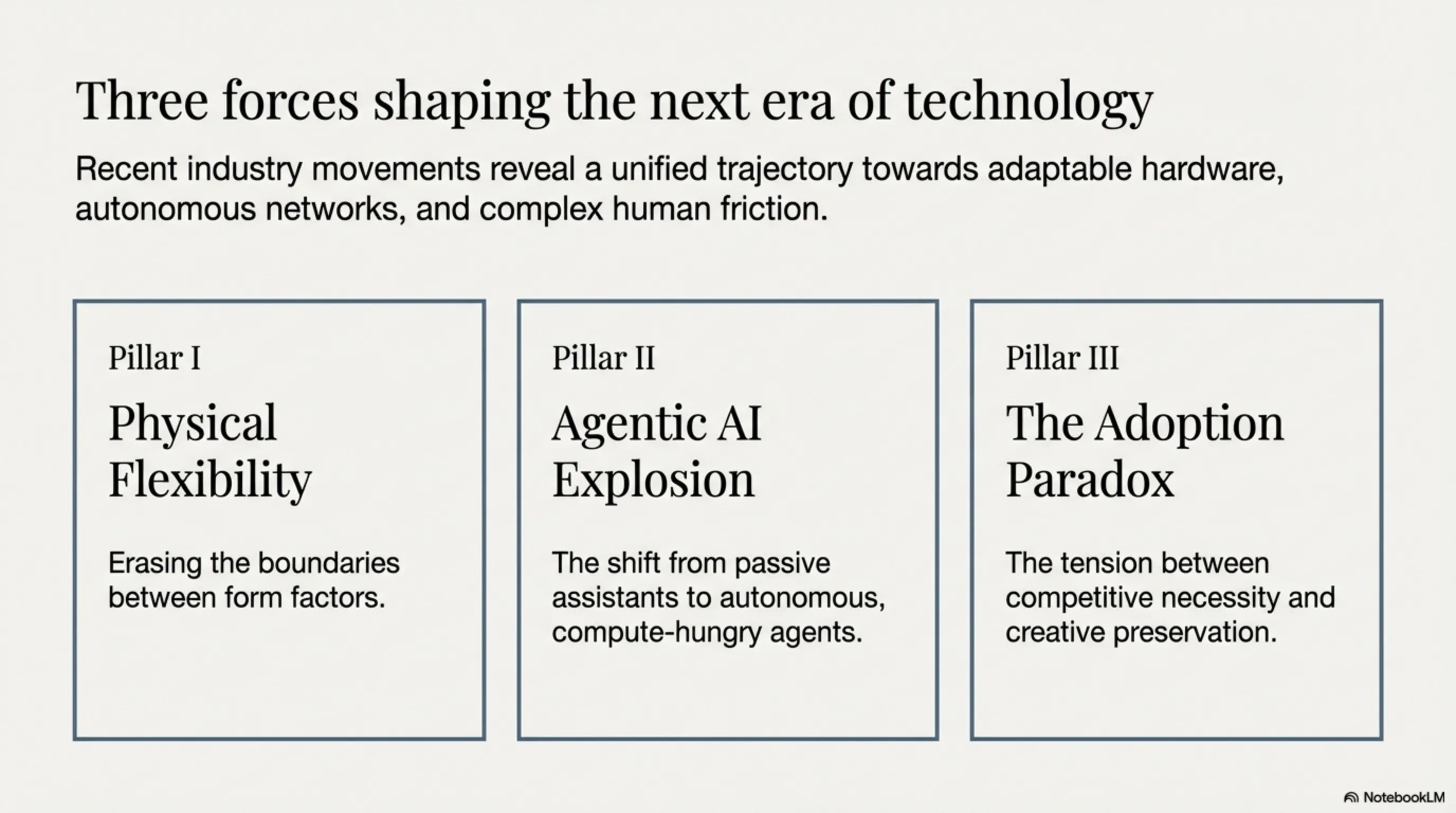
Legion, this morning we witnessed three major trends shaping the future of technology:
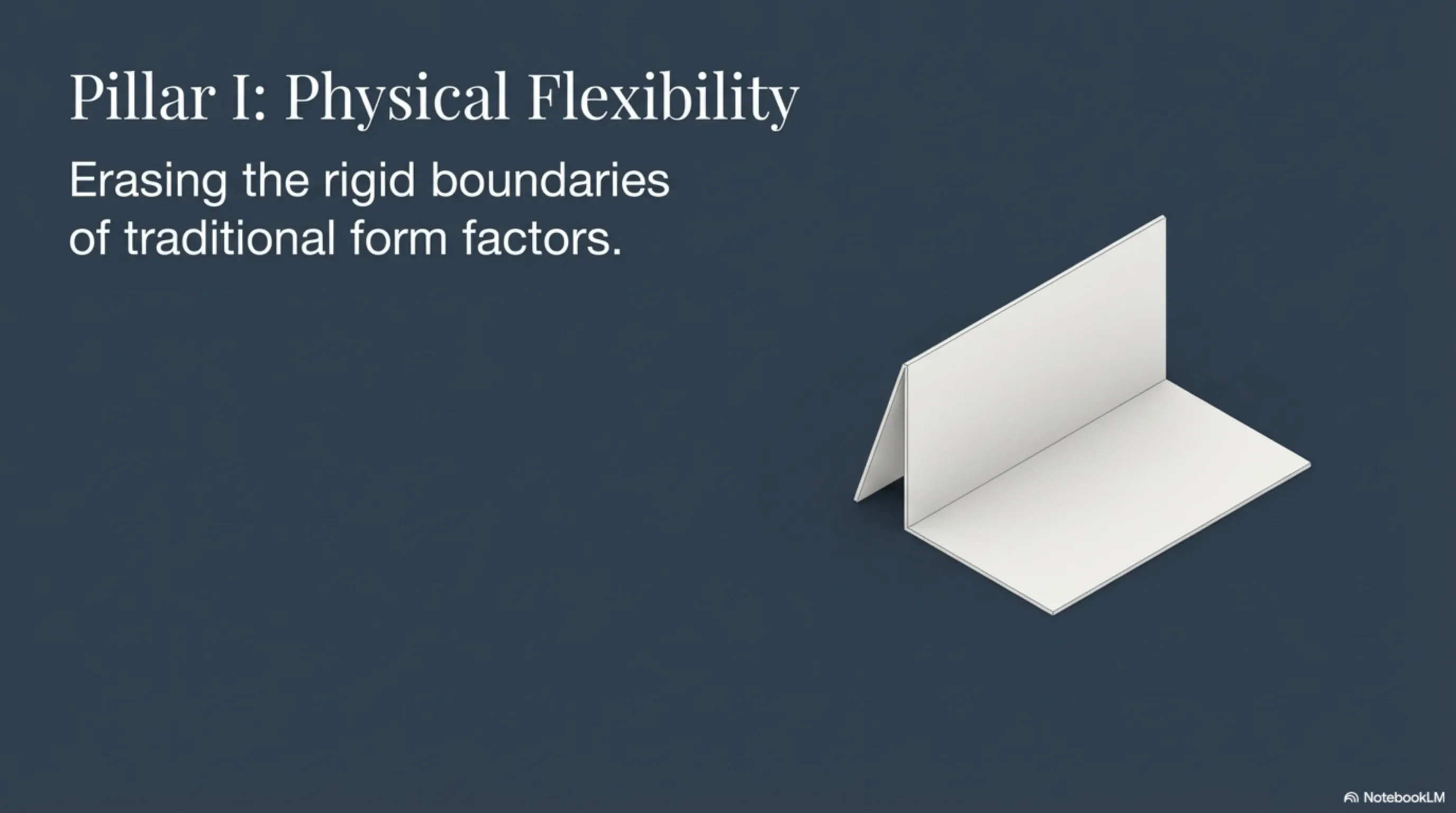
1. Physical Flexibility: From Lenovo's foldable handheld to Apple's versatile MacBooks—we no longer want to choose between portability and power. We want both.
2. Agentic AI Explosion: Jensen Huang's warning about 1000x token demand is no joke. We're on the verge of a fundamental transformation in computational infrastructure. This means massive investments in GPUs, datacenters, and energy.
3. Technology Adoption Paradox: The GDC survey showed we can simultaneously use a technology and hate it. This is a warning: technology must serve humanity, not replace it.
Final Message: The future belongs to those who can combine flexibility, power, and responsibility. Not just building powerful technology, but building technology that makes life better.
Tekin Morning Image Gallery