In 2026, the global Electric Vehicle (EV) market is entrenched in a massive psychological and marketing war over "Solid-State Batteries" (SSBs). This deep analytic teardown (exceeding 2,500 words) cuts through the media hype to examine the actual chemistry of solid ceramic electrolytes, the 1,000-kilometer autonomy race between Toyota and China's BYD, and the critical engineering hurdles delaying mass manufacturing until 2028. We will analyze exactly how the imminent arrival of this technology threatens the resale value of current liquid Lithi
The Solid-State Battery Reality Check: Toyota and BYD's 1,000km Race
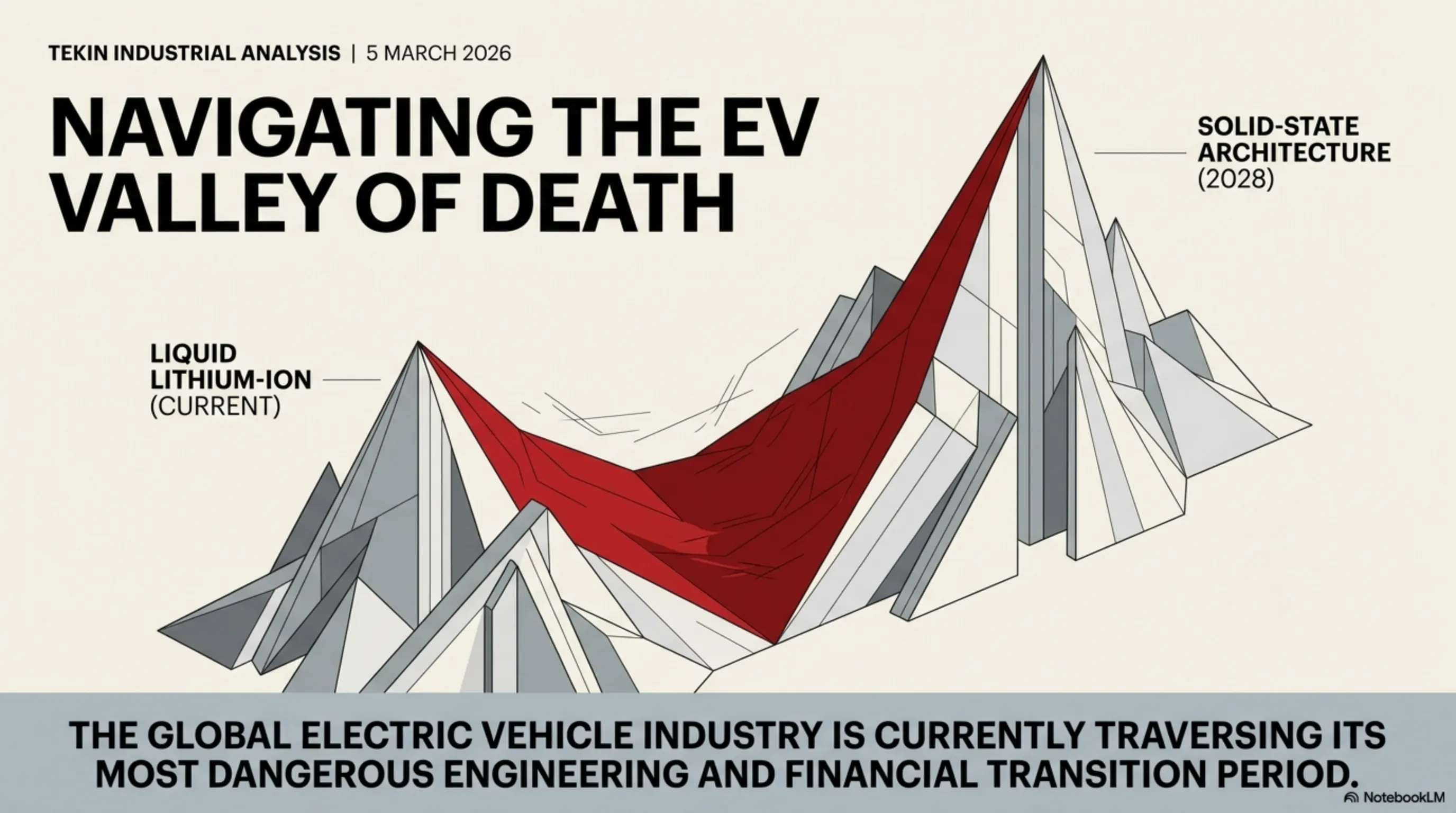
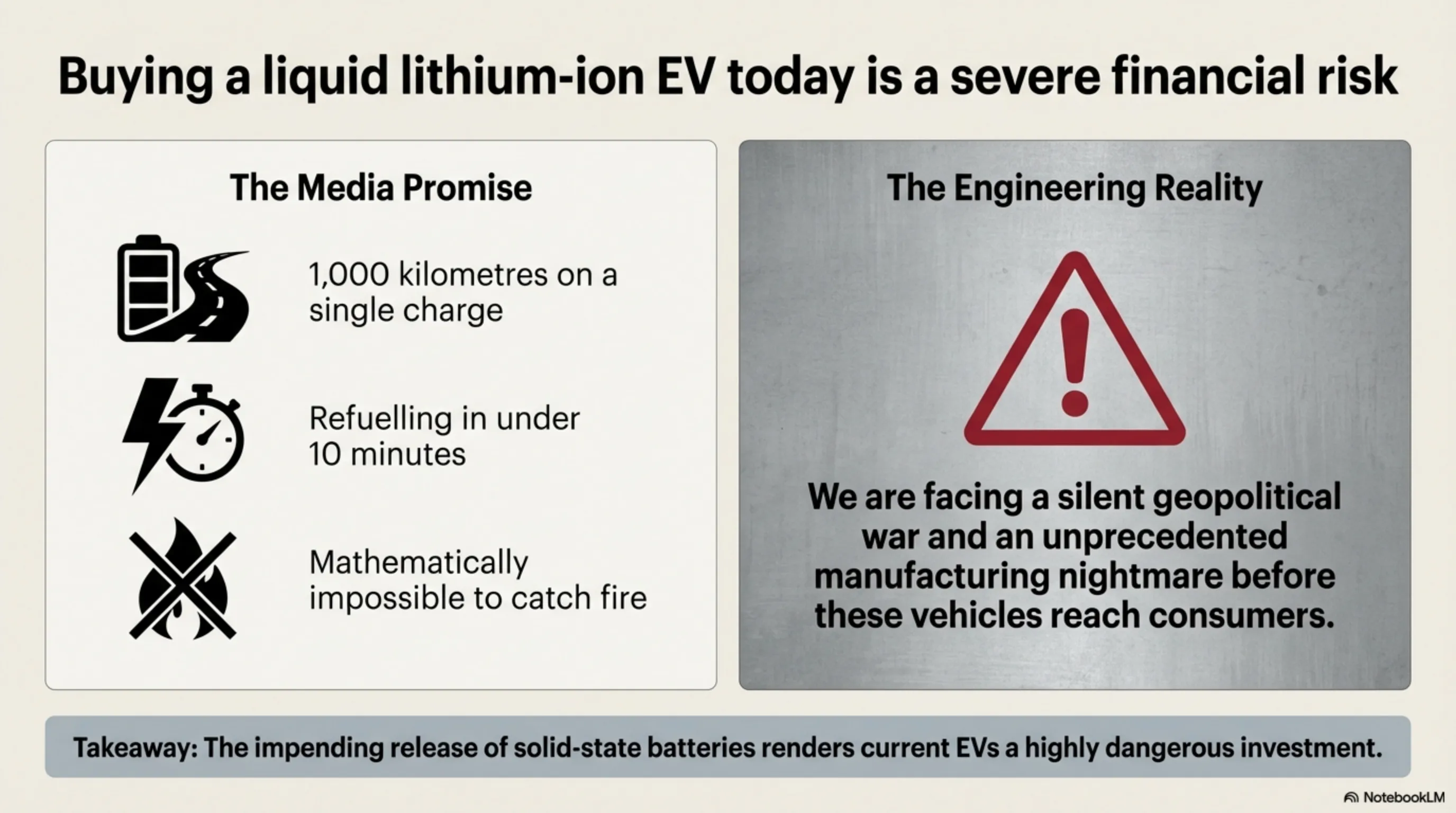
Welcome to the Tekin Industrial Analysis. Today is March 5, 2026, and the Electric Vehicle industry is traversing its most dangerous engineering "valley of death." If you are currently considering the purchase of an expensive EV equipped with traditional liquid Lithium-ion batteries, you might be committing your worst financial mistake of the decade. The term currently causing insomnia within the R&D corridors of Tesla, Toyota, and BYD is "Solid-State Battery." The technological promise is profoundly simple yet astonishing: a vehicle that travels 1,000 kilometers on a single charge, refuels in under 10 minutes, and mathematically cannot catch fire. However, behind this media frenzy lies an engineering hellscape and a silent geopolitical war.
Strategic Layer 1: The 1,000km Sweet Lie — Dissecting Battery Chemistry
To understand the solid-state revolution, one must first comprehend exactly why current Li-ion batteries have reached the absolute ceiling of their physical capacity.
1.1 Liquid Electrolytes vs. Solid Ceramics
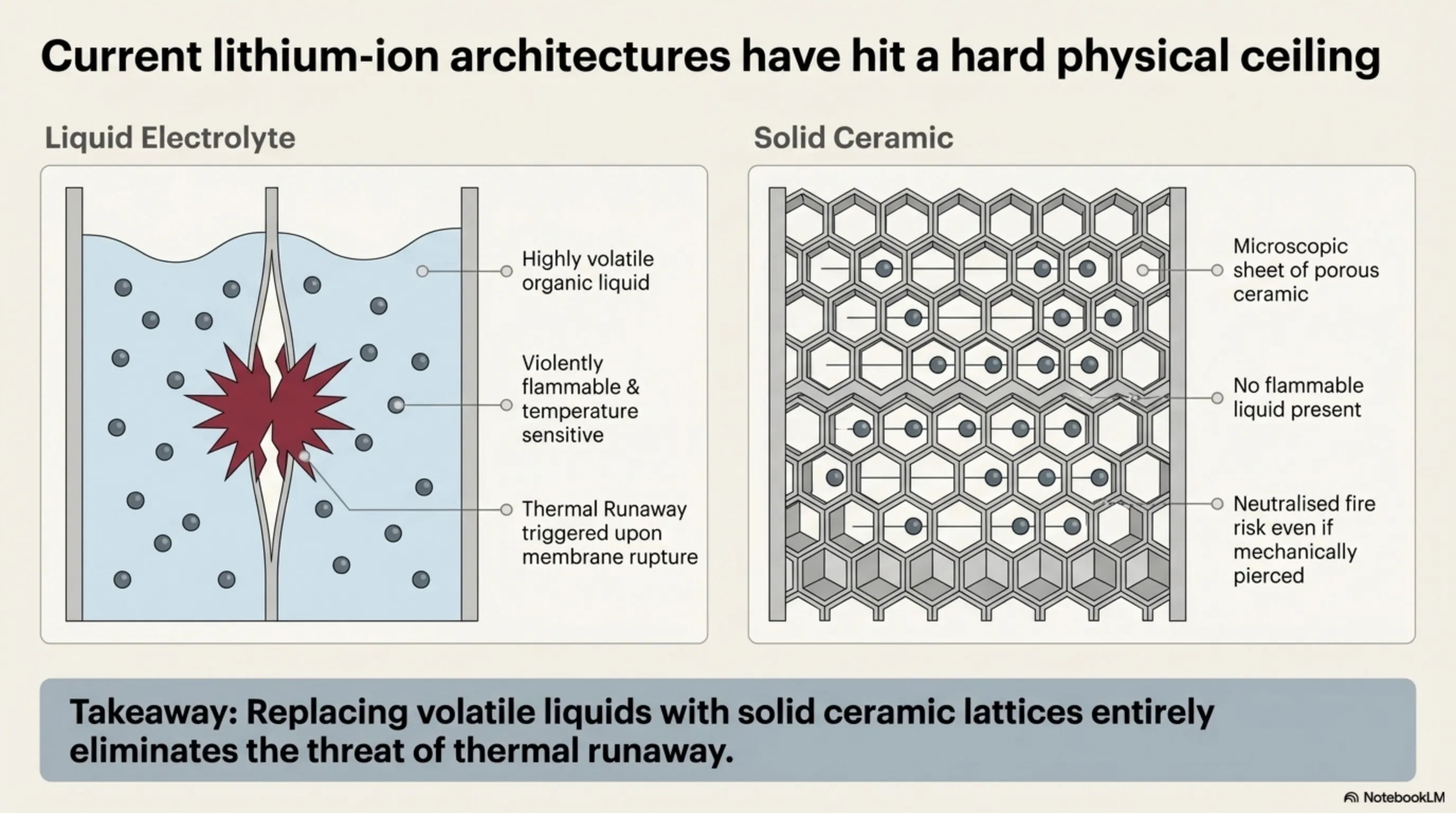
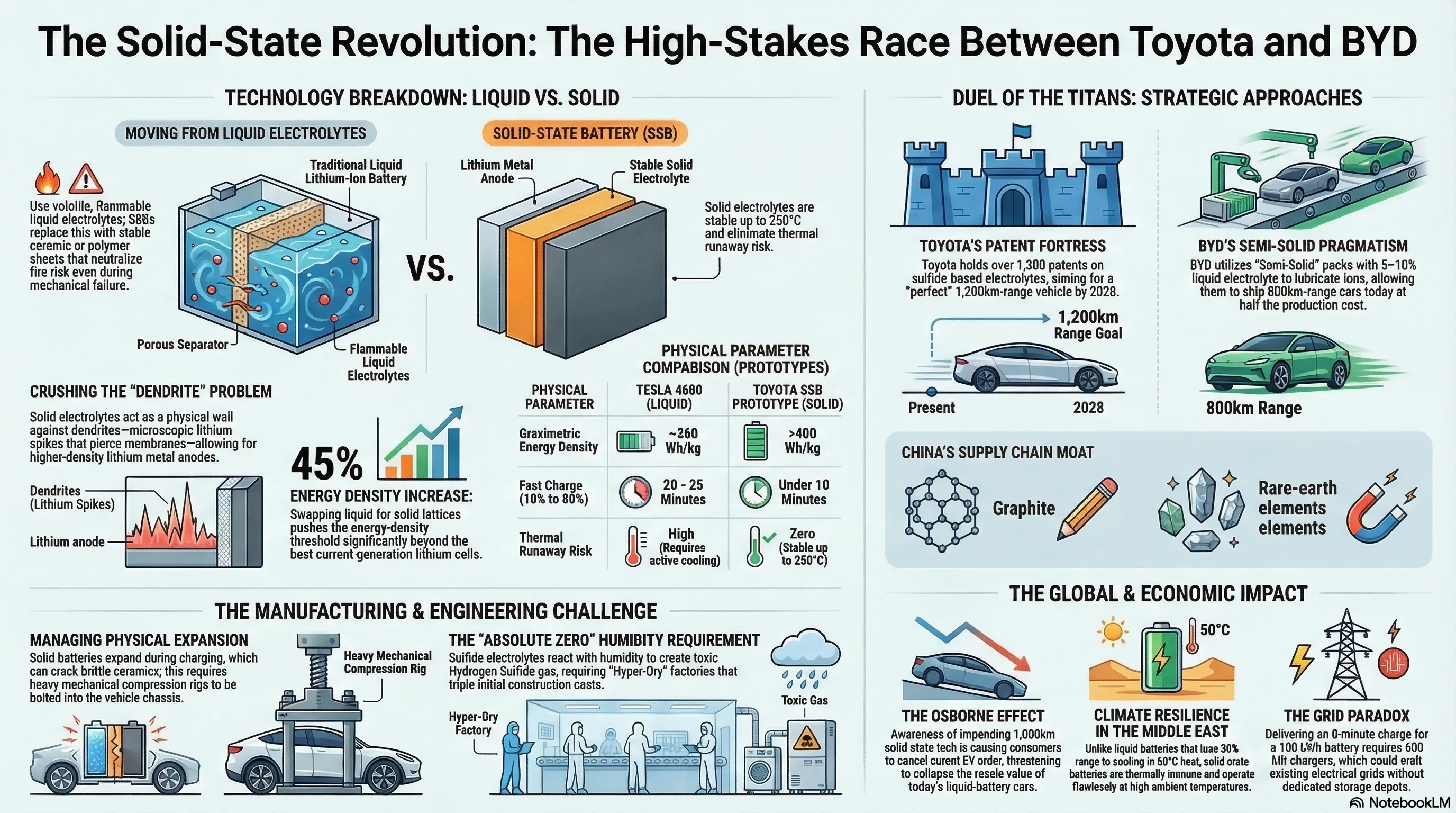
Inside a standard battery of a current Tesla Model 3 or Porsche Taycan, lithium ions traverse back and forth between the anode and the cathode through a liquid medium (organic liquid electrolyte). This liquid is highly volatile, violently flammable, and incredibly sensitive to temperature fluctuations. If the vehicle is involved in a severe collision and the separator membranes rupture, a short circuit occurs, and the liquid spontaneously detonates in a chemical chain reaction known as 'Thermal Runaway.' Conversely, in solid-state batteries, this hazardous liquid is entirely replaced by a microscopic sheet of porous ceramic, glass, or polymer. The ions migrate directly through this solid lattice. Stripped of the flammable liquid, the risk of fire in crashes is neutralized—even if the battery pack is mechanically pierced with a drill.
1.2 Solving the Dendrite Problem
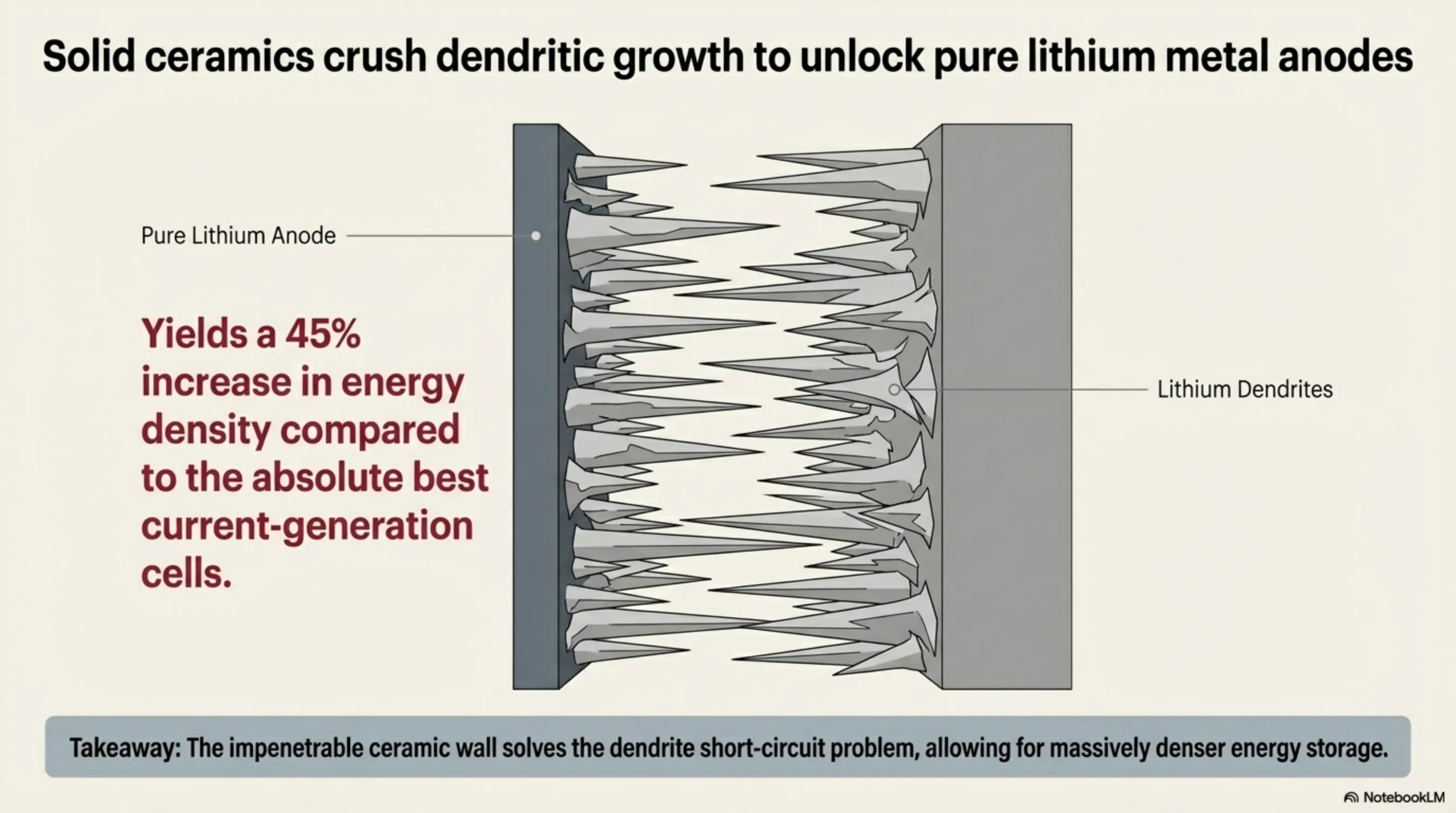
The primary barrier to utilizing pure lithium metal anodes (which yield the highest possible energy density in the known universe) is the formation of "Dendrites." Dendrites are microscopic, stalagmite-like spikes of lithium that grow during rapid charging cycles, eventually piercing the battery membrane and triggering a short circuit. A solid ceramic electrolyte acts as an impenetrable physical wall, crushing these spikes before they grow. This singular chemical swap pushes the energy-density threshold up by 45% compared to the absolute best current-gen cells.
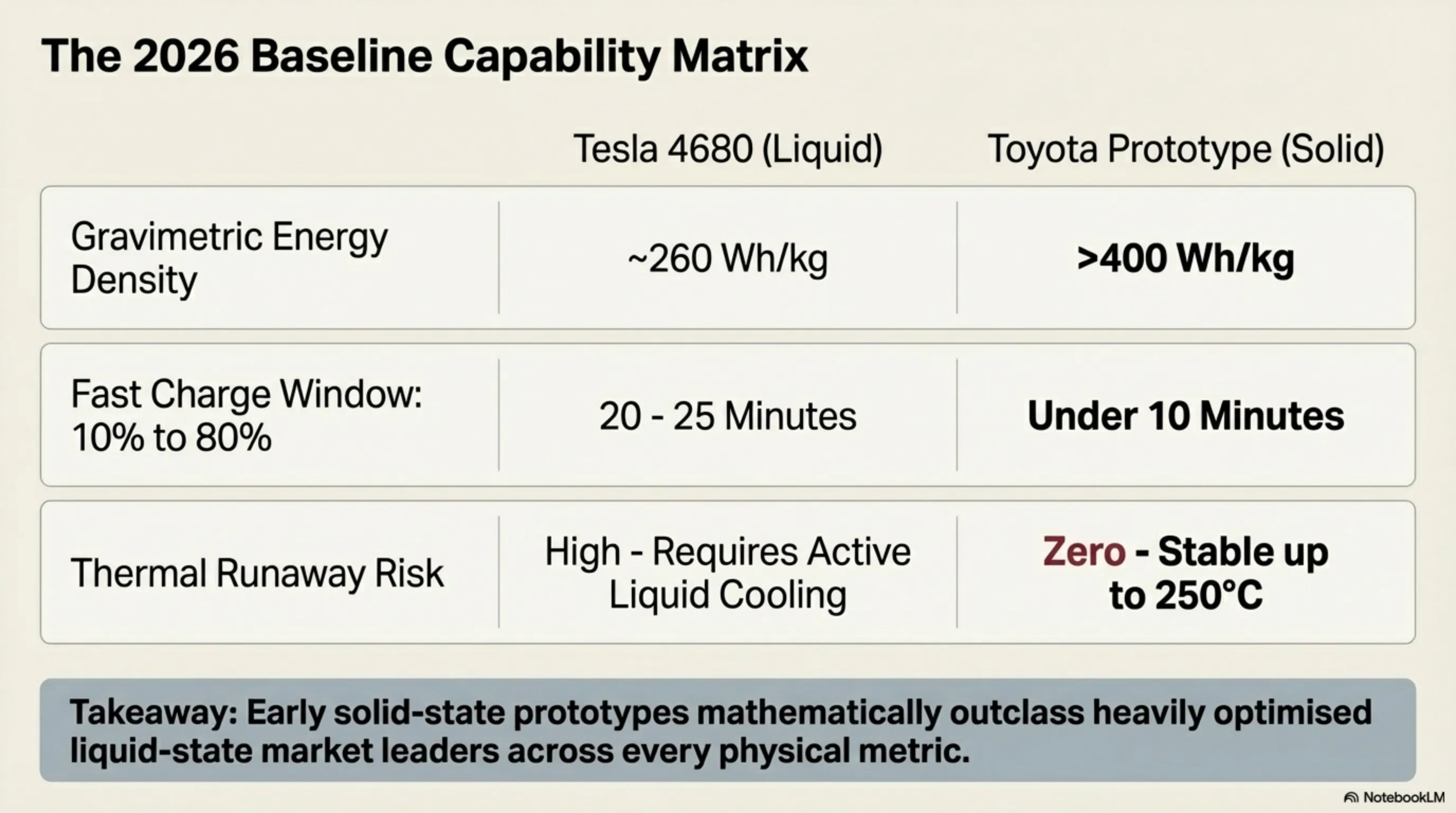
📊 Strategic Benchmark: Current Li-ion vs Early Solid-State (2026)
| Physical Parameter | Tesla 4680 (Liquid) | Toyota SSB Prototype (Solid) |
|---|---|---|
| Gravimetric Energy Density (Wh/kg) | ~260 Wh/kg | >400 Wh/kg |
| Fast Charge Window (10% to 80%) | 20 - 25 Minutes | Under 10 Minutes |
| Thermal Runaway Risk | High (Requires Active Liquid Cooling) | Zero (Stable up to 250°C) |
Strategic Layer 2: Duel of the Titans — Toyota vs. The Chinese Dragon (BYD)
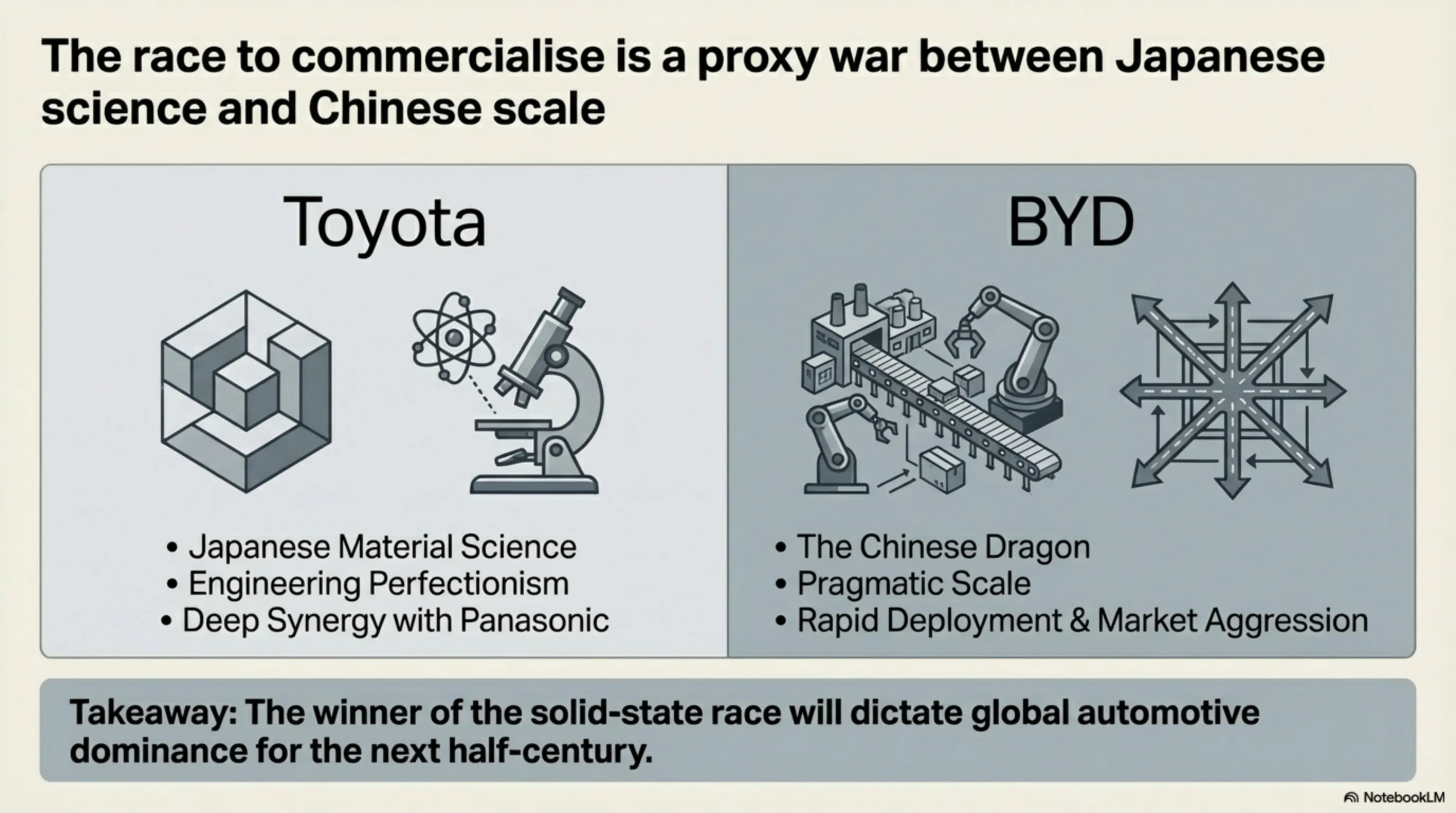
The global race to commercialize solid-state technology is fundamentally a proxy conflict between Japanese material science and sheer Chinese manufacturing scale.
2.1 Toyota's Patent Hoarding
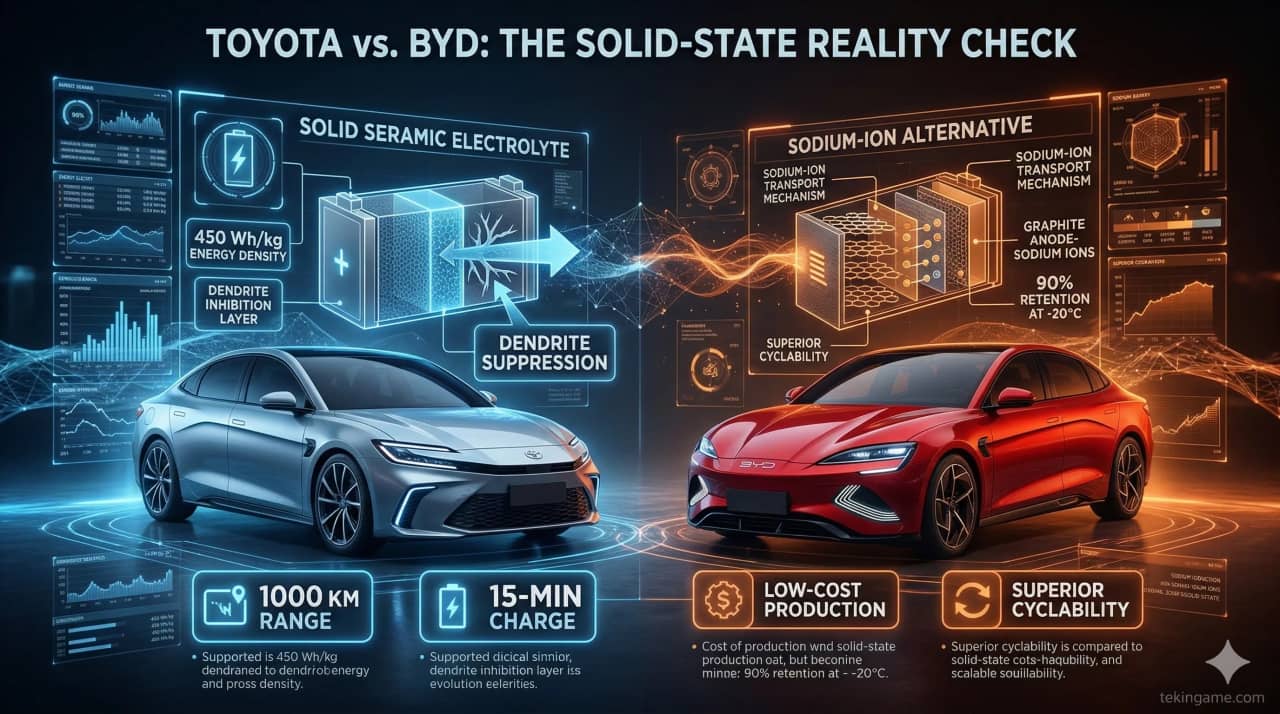
Toyota, having notoriously lagged behind Tesla and Chinese OEMs in the pure Battery Electric Vehicle (BEV) race, has wagered its entire century-old legacy on solid-state architecture. Toyota currently controls over 1,300 unique patents surrounding sulfide-based ceramic electrolytes, developed in deep synergy with Panasonic. Internally, Toyota claims their prototypes can comfortably breach the 1,200 km mark. Yet, the Japanese conglomerate remains hyper-conservative, flatly refusing to dump a beta-test vehicle onto public roads.
2.2 BYD's Second Blade: Semi-Solid Batteries
In stark contrast, BYD has deployed a brutally aggressive roadmap. Refusing to wait for 100% solid-chemistry to mature, BYD (and competitors like Nio) pivoted hard into "Semi-Solid" state batteries throughout 2026. These packs retain roughly 5% to 10% of their liquid electrolyte to lubricate ion transfer. This precise chemical compromise allowed Chinese manufacturers to dump 800-kilometer sedans onto the streets immediately, permanently halving the production costs compared to Toyota’s elite prototypes.
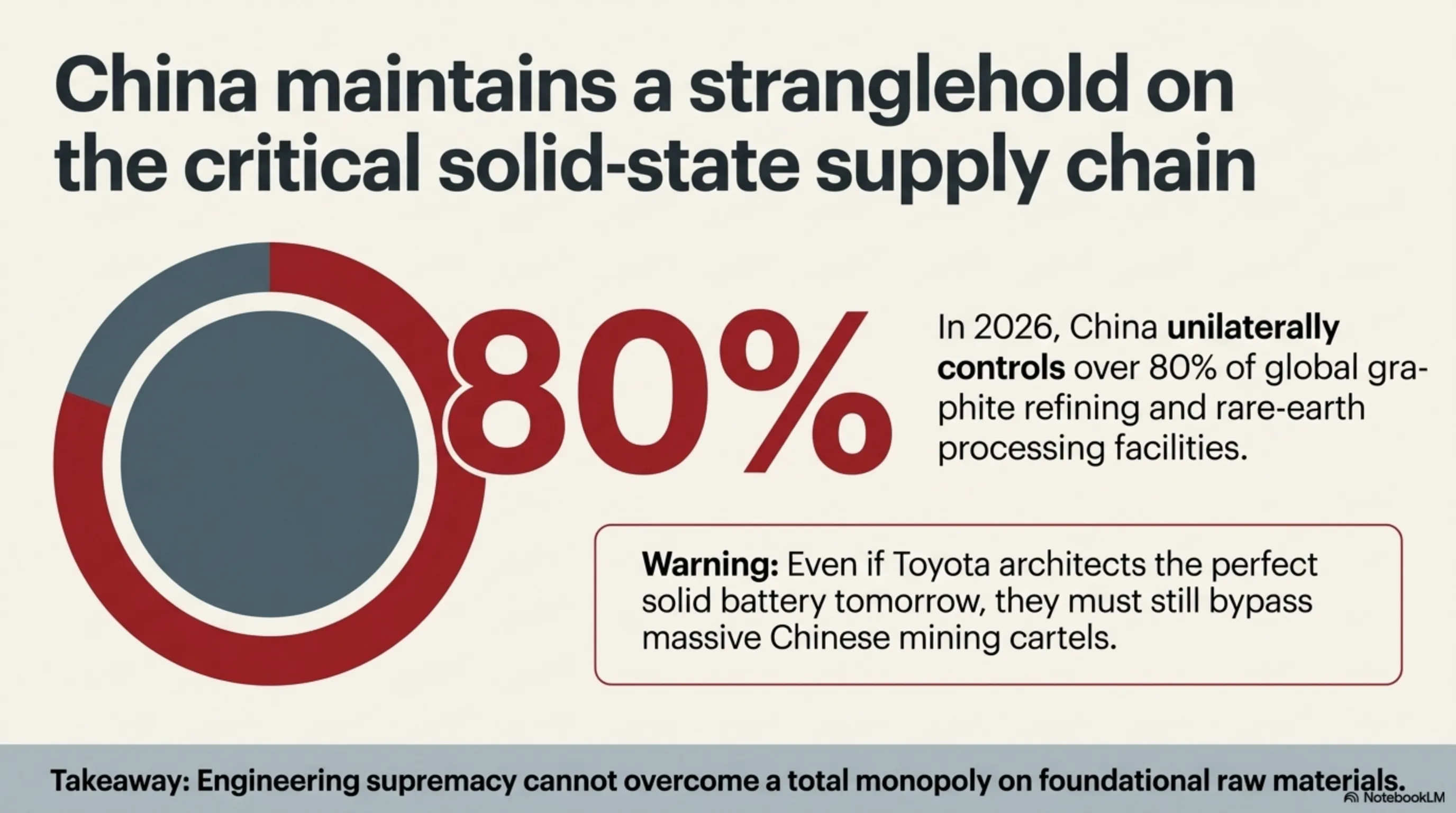
Supply Chain Warning: Even if Toyota architects the perfect solid battery tomorrow, they must still bypass massive Chinese mining cartels. In 2026, China unilaterally controls over 80% of global graphite refining and rare-earth processing facilities.
Strategic Layer 3: The Manufacturing Nightmare
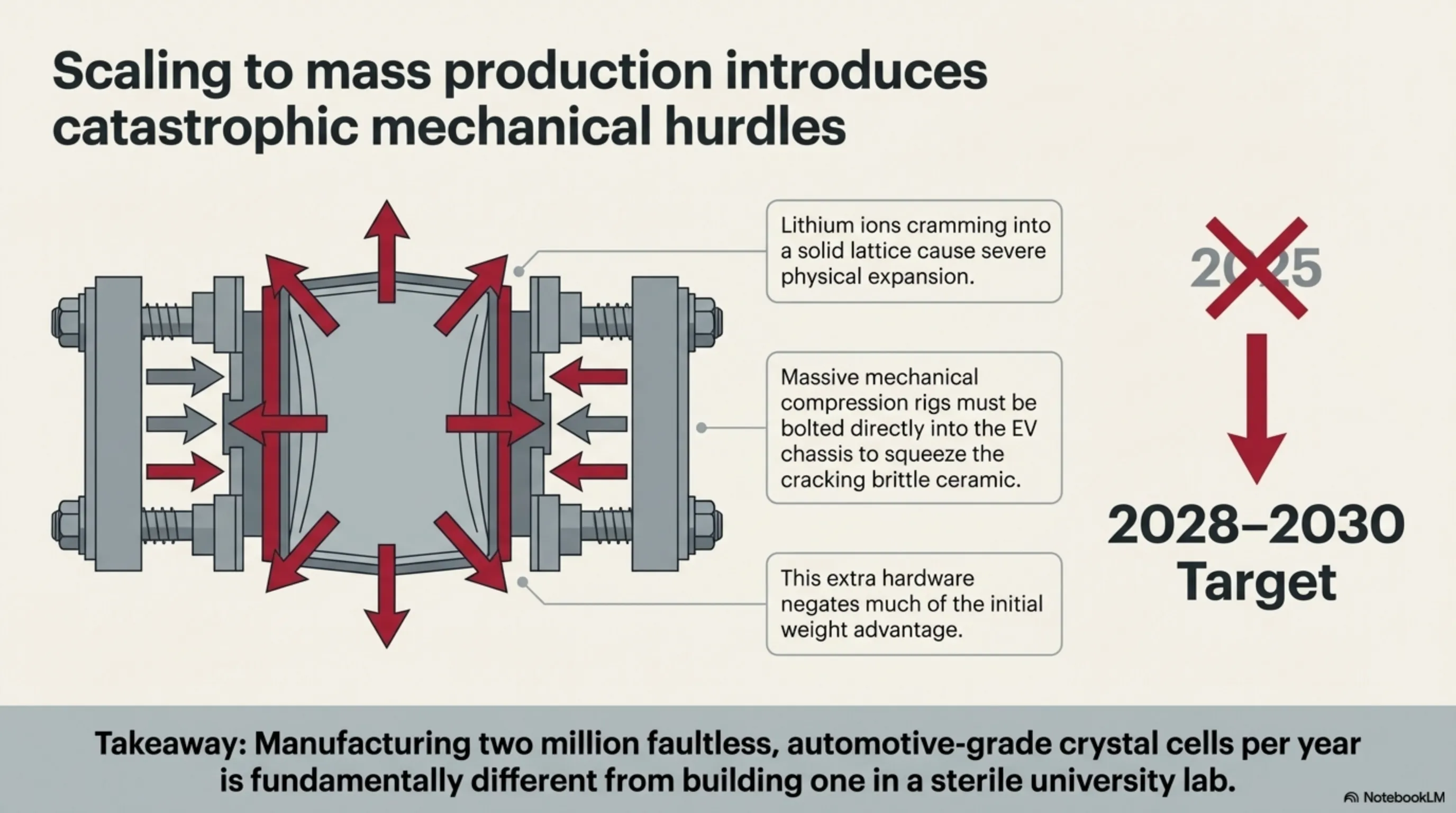
Constructing a perfect solid-state crystal cell inside a sterile university laboratory is relatively trivial. Scaling production to manufacture two million faultless automotive-grade packs per year at a competitive price is a logistical nightmare.
3.1 The Expansion Problem and Toyota's Delay to 2028
Toyota's targeted 2025 release was violently pushed back to 2028-2030 due to elemental physics. When lithium ions cram themselves into a solid lattice during rapid charging, the entire battery physically expands. In a liquid battery, the fluid simply displaces. But in a solid battery, this severe expansion cracks the brittle ceramic. Engineers are forced to bolt massive mechanical compression rigs directly into the EV chassis to squeeze the battery together, negating much of the weight advantages.
3.2 Hyper-Dry Rooms
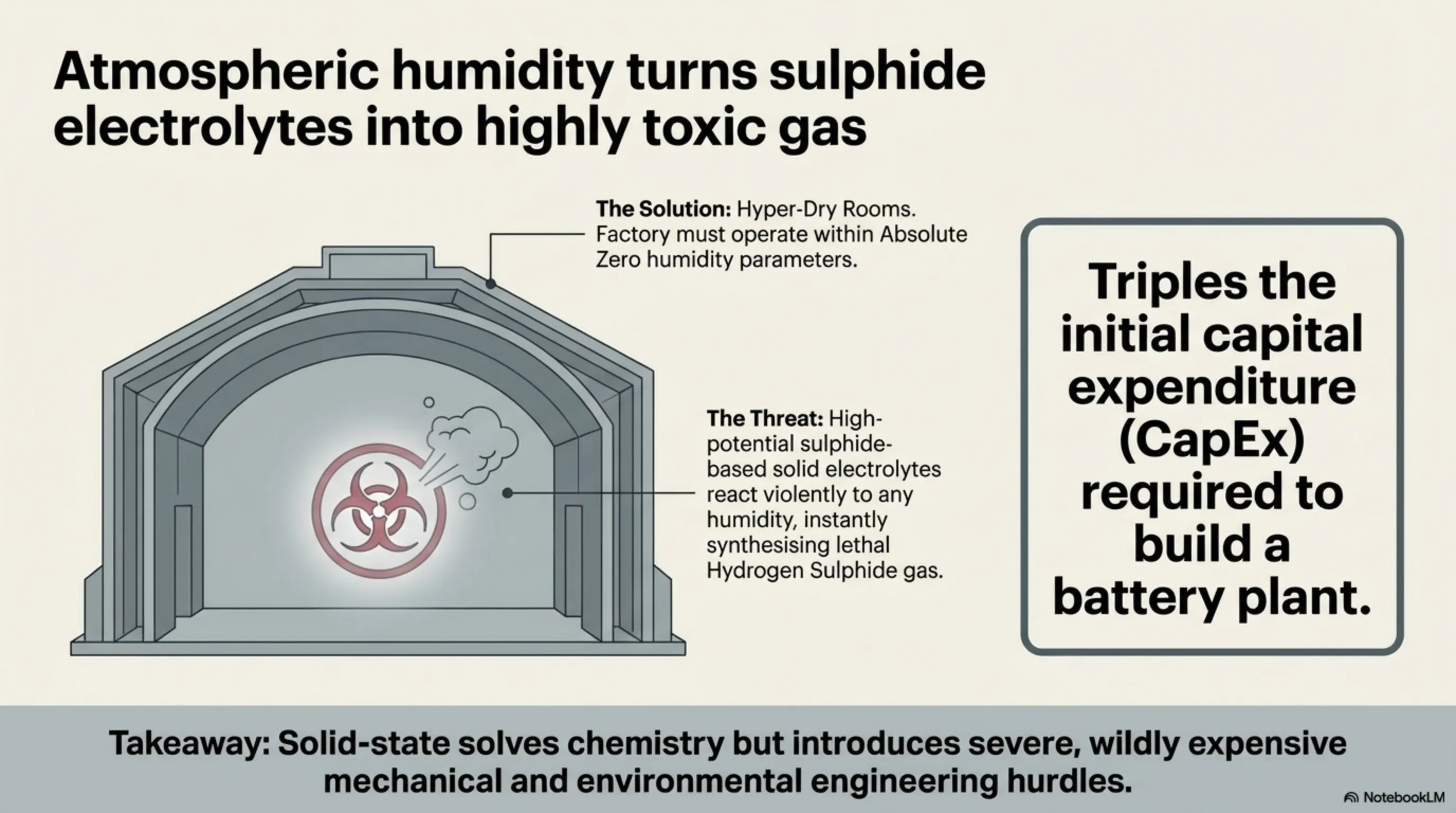
Furthermore, high-potential sulfide-based solid electrolytes react violently when exposed to even atmospheric humidity, instantly synthesizing highly toxic Hydrogen Sulfide gas (smelling of rotten eggs). To prevent mass casualties on the assembly line, the entire Gigafactory must operate within "Absolute Zero" humidity parameters. Constructing these cathedral-sized "Hyper-Dry Rooms" triples the initial capital expenditure of building a battery plant.
Strategic Layer 4: The Economic Earthquake and The Osborne Effect
The most immediate impact of the Solid-State narrative is economic, not chemical.
4.1 The Osborne Effect
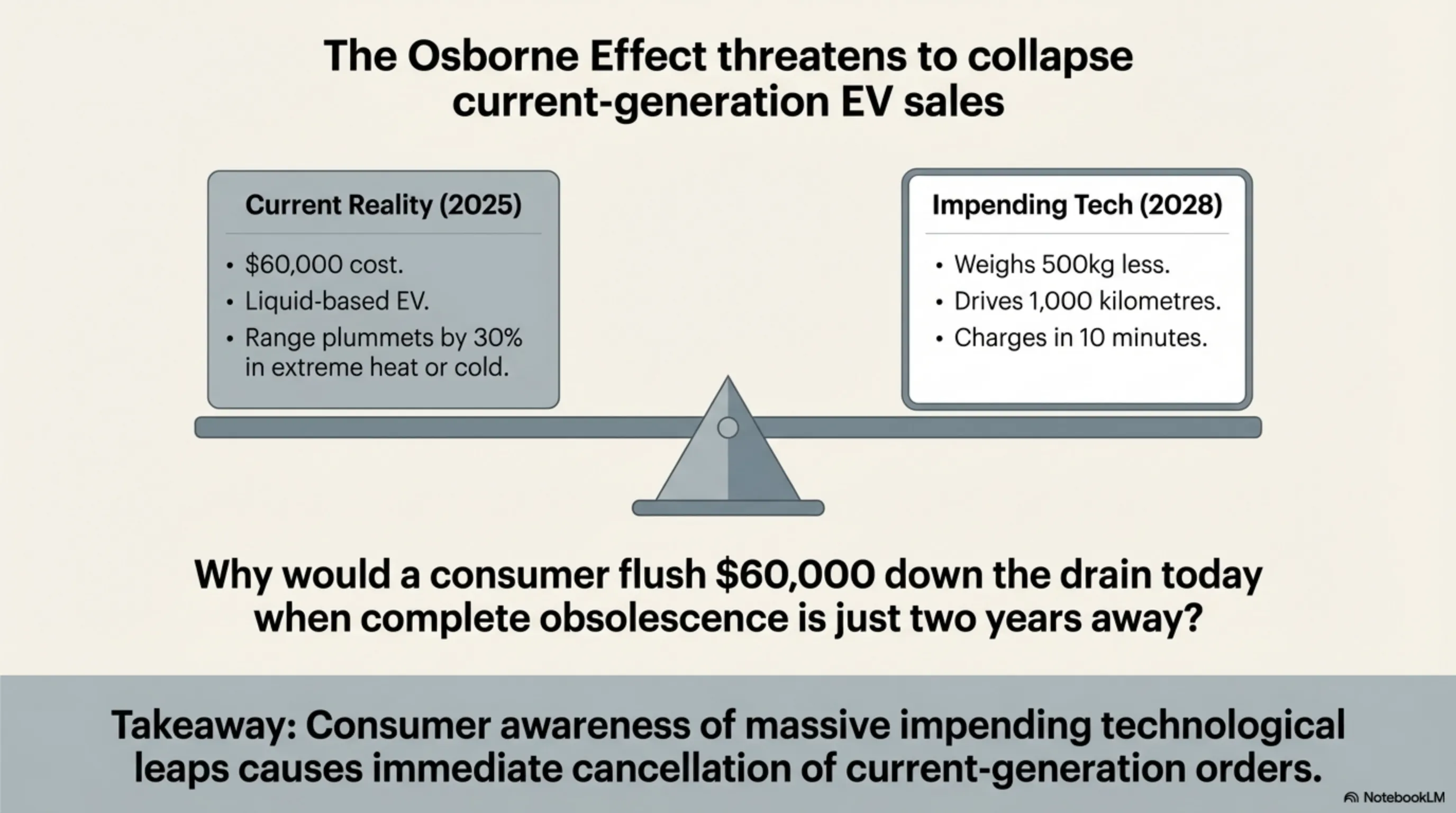
The entire automotive sector is teetering on the edge of the "Osborne Effect"—an economic phenomenon where consumer awareness of massive impending technological leaps causes them to immediately cancel orders for current-generation products. If a consumer knows that a 2028 vehicle will weigh 500kg less, drive 1,000km, and charge in 10 minutes, why would they flush $60,000 down the drain today on a 2025 liquid-based EV whose range plummets by 30% in extreme heat or cold?
4.2 Plummeting Resale Values
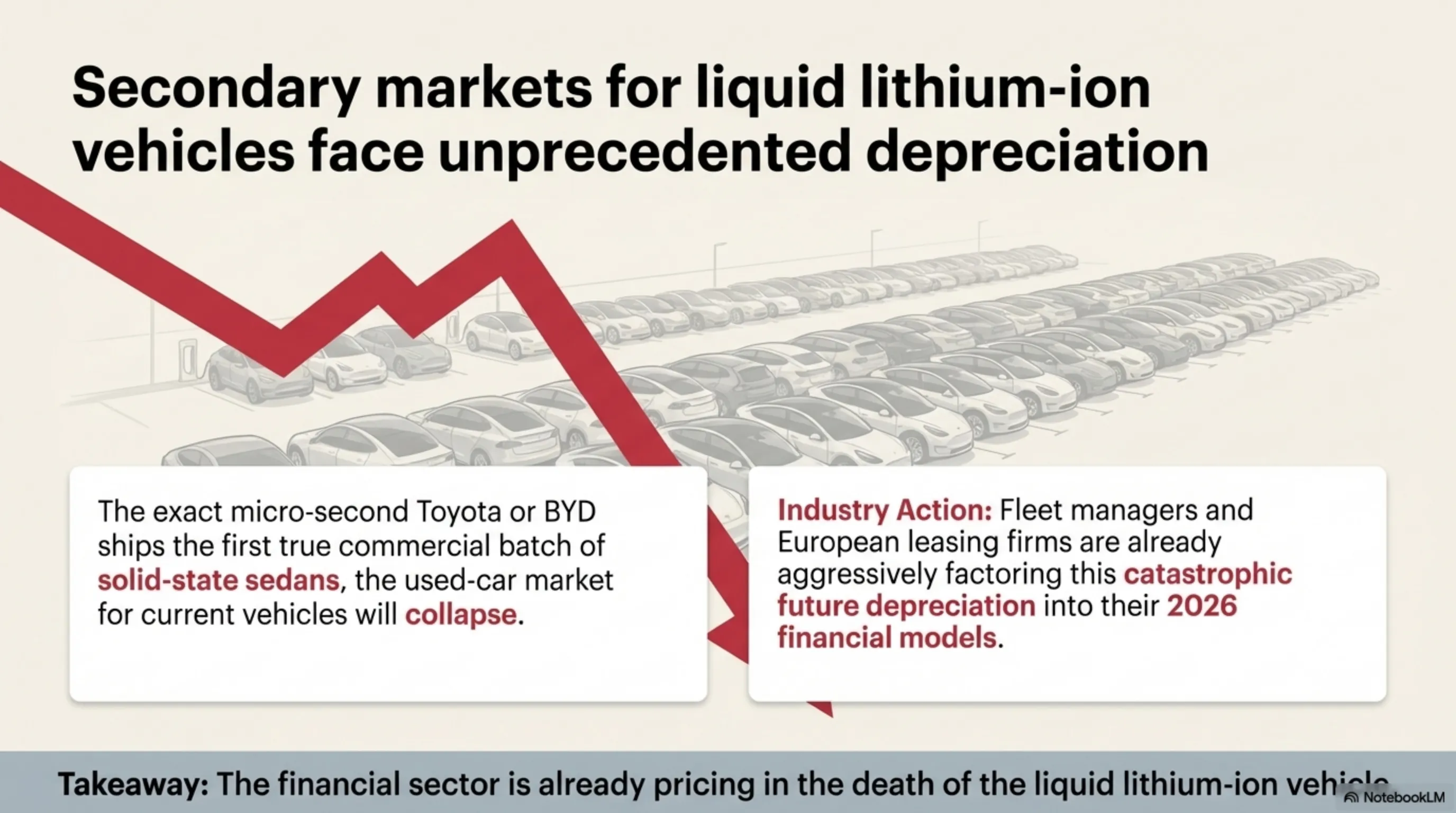
The exact micro-second that Toyota or BYD ships the first true commercial batch of solid-state sedans, the secondary used-car market for current Li-ion vehicles will collapse. Fleet managers and European leasing firms are already aggressively factoring this catastrophic future depreciation into their 2026 financial models.
Strategic Layer 5: Middle Eastern Infrastructure — Superchargers vs. Desert Sun
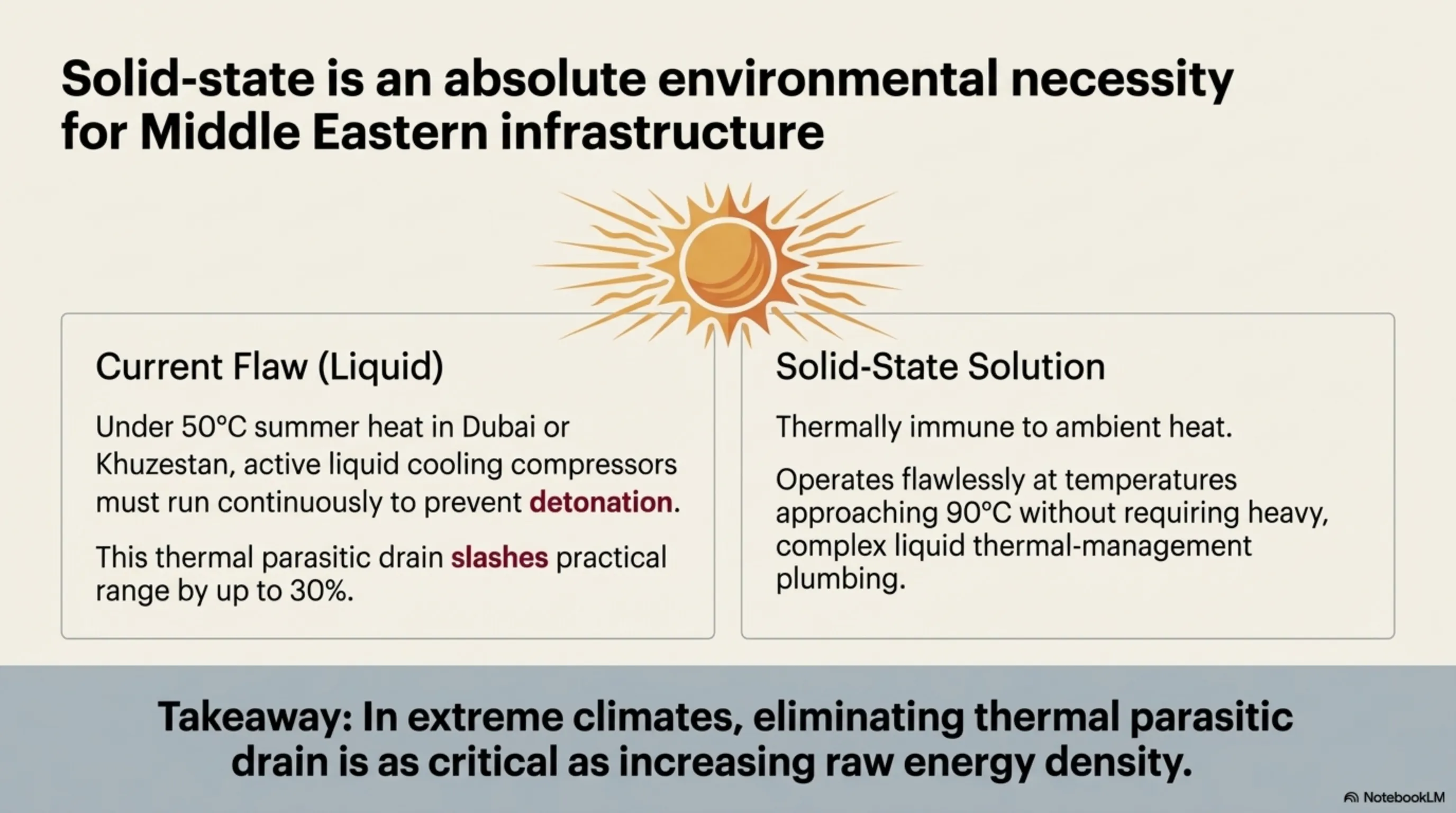
For the automotive markets across the Persian Gulf, Iran, and the broader Middle East, the transition to solid-state architecture is not a luxury upgrade, but an absolute environmental necessity.
5.1 Solid Electrolyte Resilience in 50°C Environments
Under the blistering 50°C summer heat of Dubai or Khuzestan, current Lithium-ion batteries are forced to run their active liquid cooling compressors continuously simply to prevent the packs from detonating. This sheer thermal parasitic drain can slash a vehicle's practical range by up to 30% during the summer months. Conversely, solid-state batteries are thermally immune to ambient heat; they operate flawlessly at temperatures approaching 90°C without requiring heavy, complex liquid thermal-management plumbing.
5.2 The Paradox of 8-Minute Charging
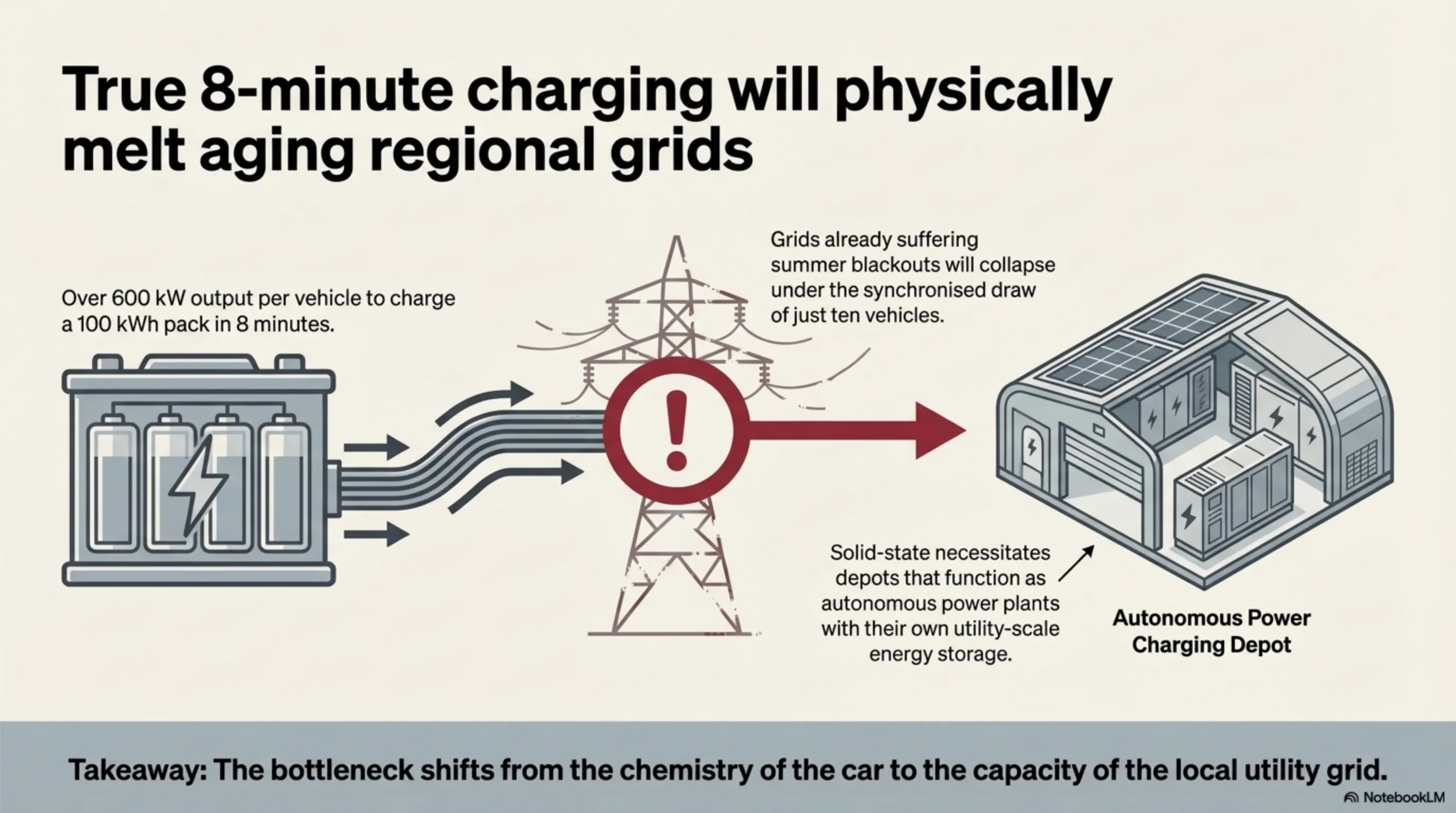
The marketing promise of recharging a massive 100 kWh battery pack in under 8 minutes demands ultra-fast DC Superchargers outputting in excess of 600 kW per vehicle. Aging electrical grids across many Middle Eastern nations—which already suffer from rolling blackouts during peak summer loads—will physically melt down under the instantaneous synchronized draw of just ten such vehicles. The solid-state revolution necessitates charging depots that function fundamentally as autonomous power plants equipped with their own utility-scale energy storage systems.
⚖️ Tekin Official Strategic Verdict
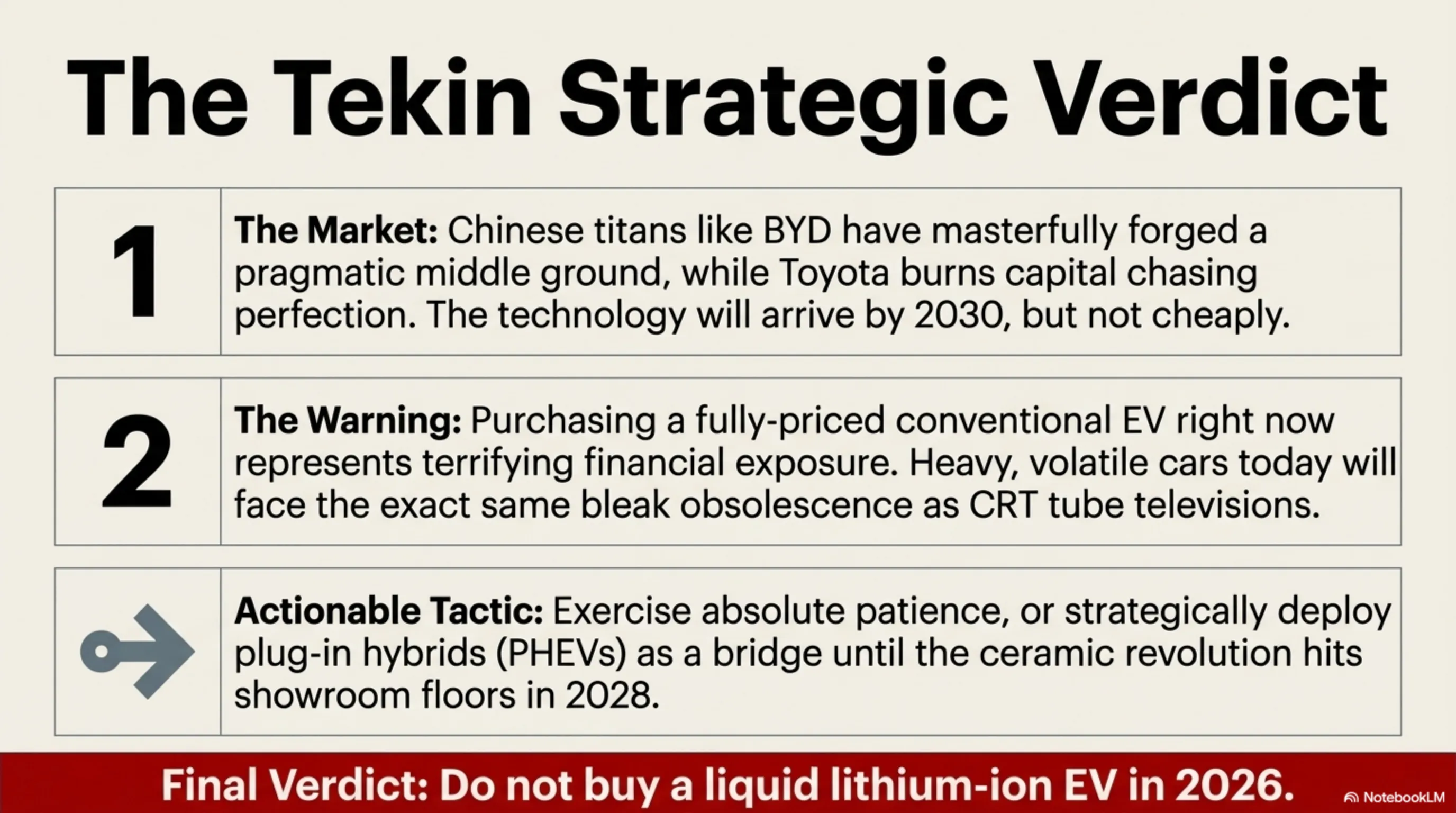
The dream of a flawless 1,000km solid-state battery will undoubtedly materialize by the turn of this decade, but it will arrive neither cheaply nor universally. In 2026, Chinese titans like BYD have masterfully forged a pragmatic middle ground using Semi-Solid architectures, while Toyota burns capital chasing Japanese perfectionism. For the premium auto consumer, purchasing a fully-priced conventional electric vehicle right now represents terrifying financial exposure. The heavy, volatile cars of today will soon face the exact same bleak obsolescence as CRT tube televisions. Exercising patience—or strategically deploying plug-in hybrids (PHEVs)—remains the most financially lethal tactic until the ceramic revolution physically hits showroom floors in 2028.