1. The Origins: From Bomb Disposal in Iraq to Living Rooms in New York
To understand the magnitude of this collapse, one must first appreciate the height of the summit. iRobot was not your typical consumer electronics startup born from a Kickstarter campaign. It was founded in 1990 by three brilliant MIT Artificial Intelligence Lab scientists: Colin Angle, Helen Greiner, and Rodney Brooks.
In the 90s and early 2000s, iRobot was effectively the robotics arm of the US military. It was their PackBot robots that searched through the rubble of the World Trade Center after 9/11 and later saved thousands of soldiers' lives in Iraq and Afghanistan by neutralizing Improvised Explosive Devices (IEDs). This company had military engineering DNA, not consumer appliance DNA.
When they launched the original Roomba in 2002, the goal was simple: democratize military-grade navigation algorithms to clean floors. The success was explosive. Consumers loved the idea of outsourcing the chore of vacuuming to a robot. By 2016, confident in their dominance, iRobot spun off their military division to focus entirely on the consumer market. A decision that looked brilliant then, but today appears to be the moment they exposed their flank.
2. The Technology War: Dogmatism on Cameras (vSLAM) in the Age of Lasers (LiDAR)
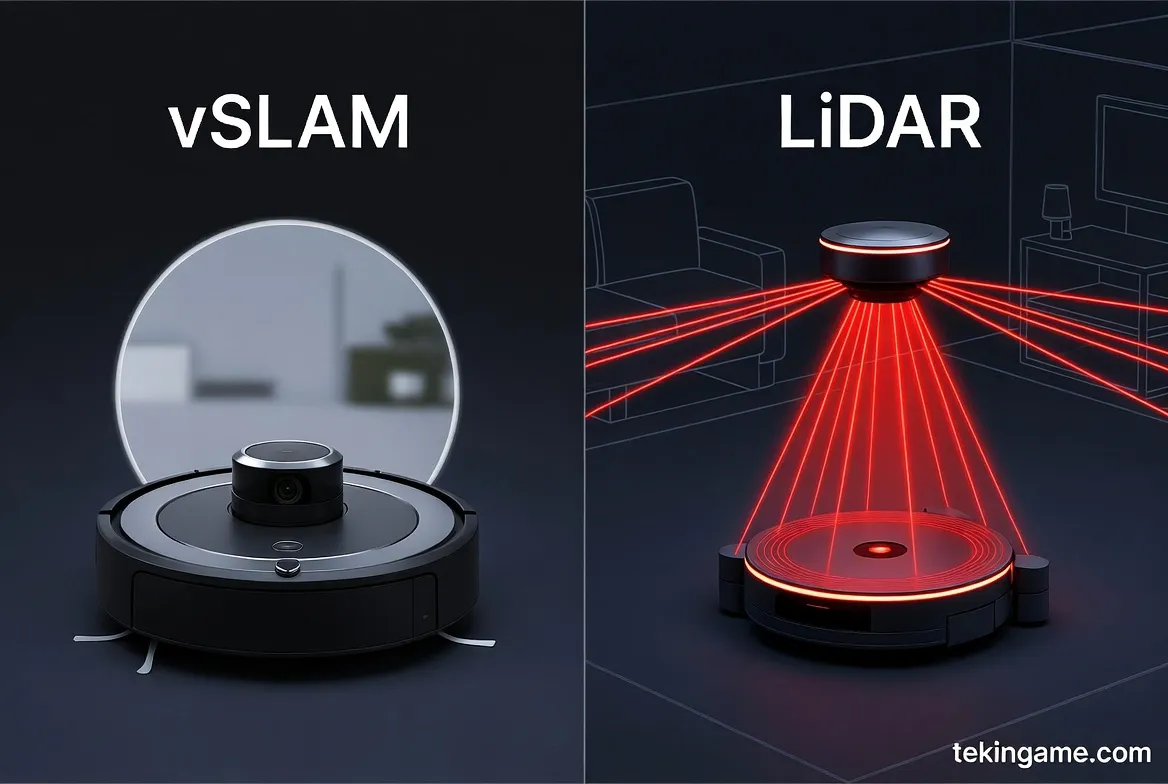
If we must pinpoint a single engineering reason for iRobot's death, it is "Technical Stubbornness." In the world of home robotics, there are two primary religions regarding navigation:
- vSLAM (Visual Simultaneous Localization and Mapping): The robot uses a camera (usually angled upwards or forwards) to take photos of the environment and identify landmarks to triangulate its position. This was the hill iRobot chose to die on.
- LiDAR (Light Detection and Ranging): A spinning turret on top of the robot fires thousands of laser beams per second to create a millimeter-accurate map of the room instantly. This was the weapon chosen by the competition.
Why did iRobot lose this war?
For years, iRobot executives argued that LiDAR was expensive, prone to mechanical failure, and unnecessary. They believed cameras provided "richer data." But the market reality was brutal:
1. Darkness: iRobot vacuums struggled or failed completely in dark rooms. Competitor’s laser robots worked with 100% precision in pitch black.
2. Mapping Speed: A Roborock could create a map of a 2,000 sq ft home in 5 minutes using "Quick Mapping." A Roomba j7 had to bump around for hours to learn the layout.
3. Obstacle Avoidance: Laser robots stopped *before* hitting the furniture. Roombas relied on the "Bumper Method"—essentially, "drive until you crash, then turn." By 2024, this felt archaic.
3. The Dragon's Ascent: How Roborock and Xiaomi Changed the Rules
Until 2018, iRobot was effectively sleeping at the wheel, releasing iterative updates with slightly better suction. Meanwhile, in Shenzhen, China, a revolution was brewing. Roborock (originally incubated by Xiaomi) released the S5, a robot that not only had LiDAR but could vacuum and mop simultaneously.
The Omni-Station Revolution:
The death blow landed when Chinese manufacturers introduced "All-in-One Omni Stations." By 2022, a flagship Chinese robot could:
1. Empty its own dustbin.
2. Wash its own mopping pads with hot water.
3. Refill its own water tank.
4. Dry the pads with hot air to prevent mold.
In contrast, what did iRobot have? The expensive Roomba Combo j9+, which only figured out how to lift its mop pad to avoid wetting carpets in late 2023. They were consistently two years behind the innovation curve. The consumer is smart; when they saw they could buy a "fully autonomous" robot for $1,000 from Roborock versus a $1,200 Roomba that still required manual maintenance, the brand loyalty evaporated.
4. The Amazon Trap: The Failed Acquisition that Paralyzed a Giant
In August 2022, news broke that seemed like a lifeline: Amazon intended to acquire iRobot for $1.7 billion ($61 per share).
Amazon's strategy was clear: they wanted the map data. Roomba robots possessed the floor plans of millions of homes. Amazon wanted to integrate this spatial data with their Alexa and Ring ecosystem to create the "Ultimate Smart Home."
The Regulatory Nightmare:
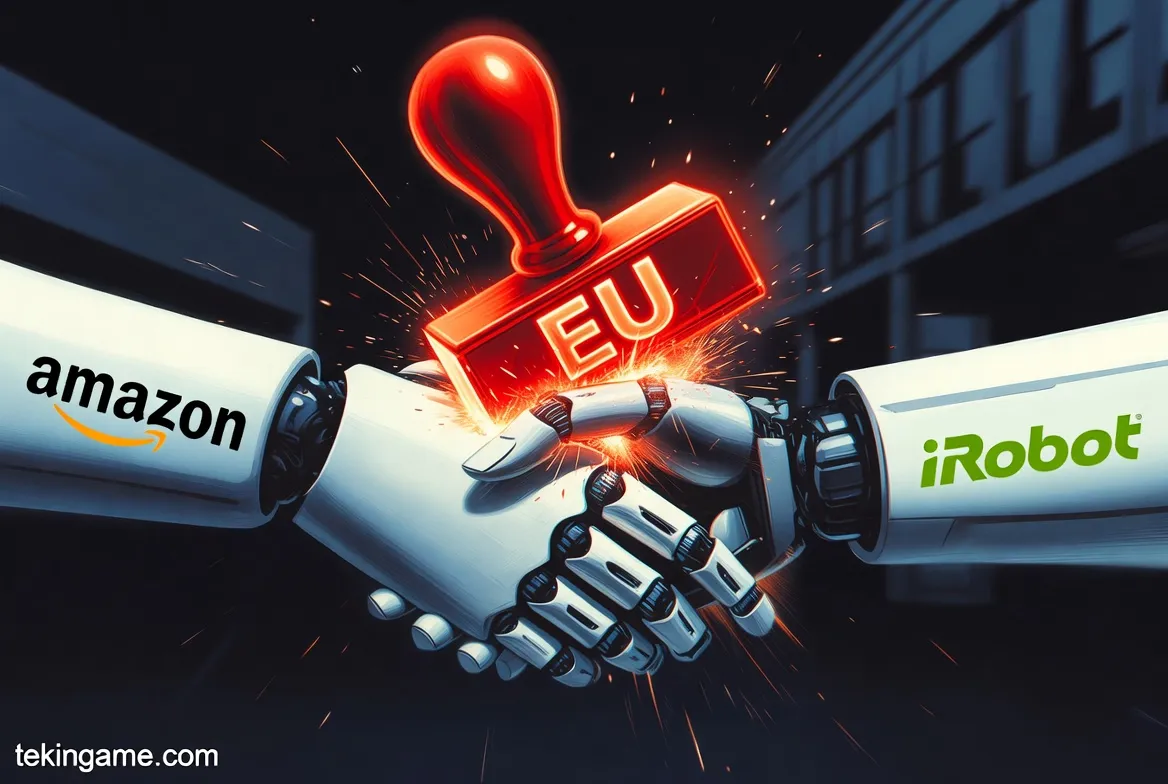
However, the European Commission (EU) and the UK’s Competition and Markets Authority (CMA) immediately intervened. Their concerns centered on "Privacy" and "Monopoly." Margrethe Vestager (EU Competition Commissioner) argued that Amazon could delist rival robot vacuums from its marketplace or bury them in search results once it owned iRobot.
This review process dragged on for over 18 agonizing months. During this critical period (mid-2022 to early 2024), iRobot was in purgatory:
❌ They couldn't execute long-term strategies (waiting for new owners).
❌ They couldn't raise capital or partner with other tech giants.
❌ Employee morale plummeted, and talent fled to competitors.
When Amazon finally walked away from the deal in January 2024 due to regulatory pressure, iRobot was left devastated. The stock crashed 40% in a single day. Colin Angle (Founder & CEO) resigned, and the company was forced to lay off 31% of its workforce. The $140 million termination fee Amazon paid was barely enough to keep the lights on for a few months.
5. The Market in 2025: No Country for Old Robots
Today, as we close out 2025, the robotic vacuum market has fully matured. Modern robots are no longer just "sweepers"; they are intelligent household servants.
- Direct Water Hookups: Kits that plumb the robot station directly into your home's water and sewage lines are now standard. iRobot never released a product with this capability.
- Robotic Arms (FlexiArm): Competitors like Dreame engineered robotic arms that extend from the robot's body to clean corners and under cabinets perfectly. Round Roombas still struggle with corners.
- Generative AI (GenAI): New robots speak to you naturally. You say, "It's dirty under the dining table," and the robot understands the context and location. iRobot's software platform (iRobot OS), while intelligent, fell behind the rapid advancements of Large Language Models (LLMs).
6. Five Critical Business Lessons from iRobot’s Collapse
The death of iRobot will be a case study in MBA programs for decades. What are the takeaways?
- First Mover Disadvantage: sometimes, being first makes you complacent. iRobot believed the brand "Roomba" was strong enough to sell inferior hardware. History (Nokia, BlackBerry, Kodak) proves that a brand without innovation is worthless.
- Don't Be Ideological About Tech: iRobot executives held a "religious belief" in cameras over lasers. They tried to dictate to the market rather than listening to it. The market is never wrong; engineers are.
- The M&A Trap: iRobot effectively paused innovation for two years hoping for Amazon's cash. Startups should never build their strategy solely on an "Exit" scenario. Always have a Plan B for survival.
- Data is a Double-Edged Sword: The very asset iRobot thought was its crown jewel (user home maps) became the poison pill that killed the acquisition. In the 2020s, data is no longer "the new oil"; it is "uranium"—valuable but radioactive.
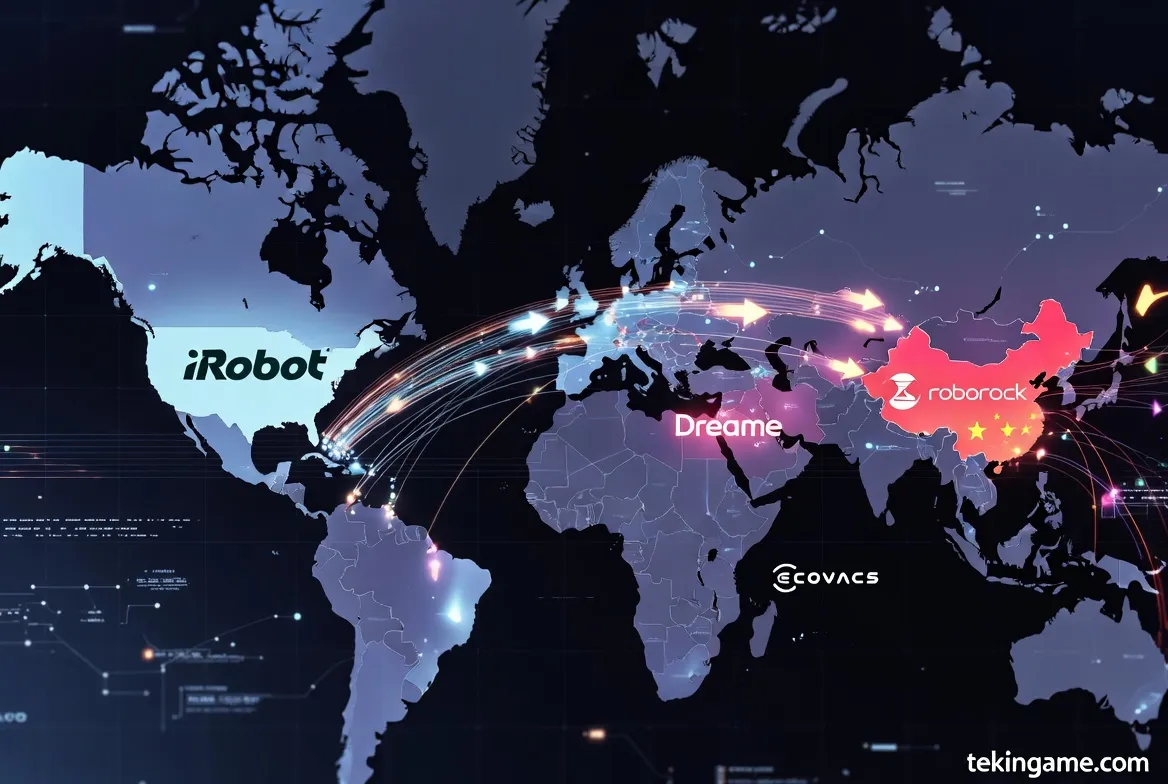
- Underestimating China: The traditional Western view that "China only copies" led iRobot to underestimate its rivals. Roborock and Ecovacs spent heavily on R&D and out-engineered the Americans.
- Speed Over Perfection: In tech, being late is often worse than being imperfect. iRobot waited too long to release a mop/vacuum hybrid, and by the time they did, the market had moved on.
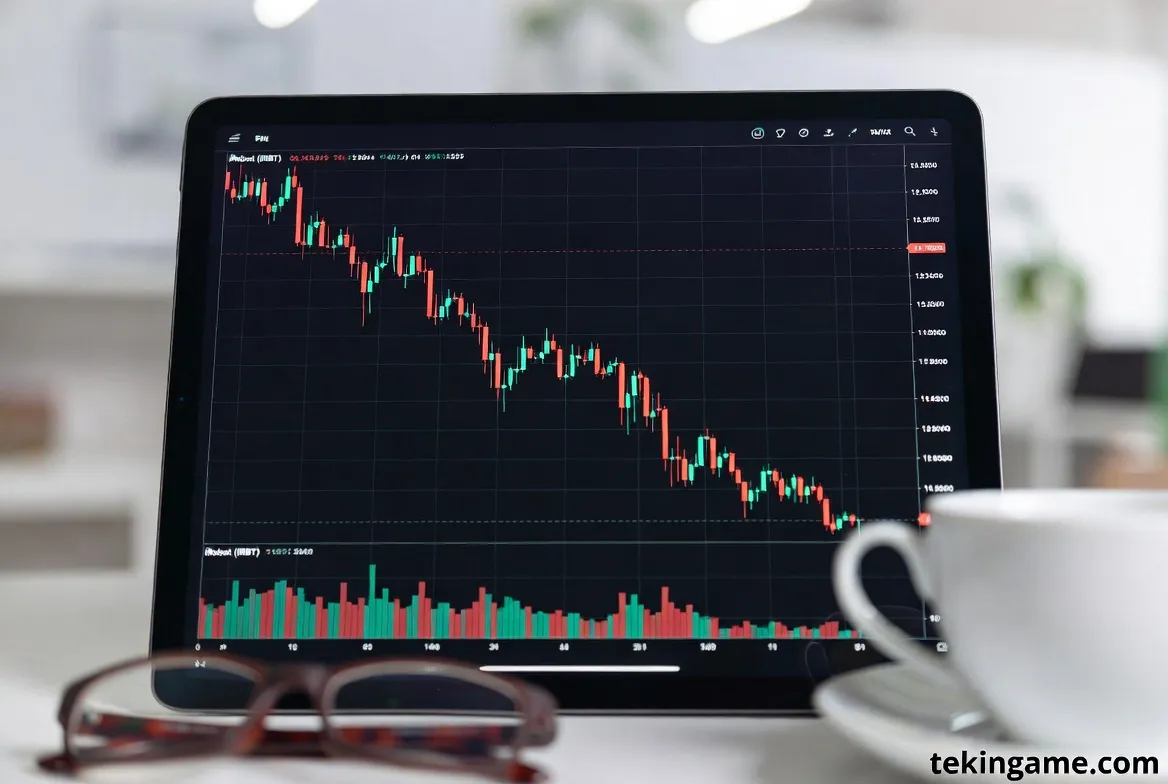
7. Conclusion: Goodbye to the Noisy Old Friend
Will the Roomba brand disappear completely? Unlikely. During the bankruptcy proceedings, a Private Equity firm or perhaps even a Chinese competitor (in a twist of irony) will likely buy the IP to slap the name on mid-range appliances.
But iRobot, the pioneering company born in the halls of MIT that brought robotics into our living rooms, died today. Their legacy remains in every smart home; every time your advanced Chinese robot quietly exits its dock to clean your home without bumping into a single wall, it is standing on the shoulders of a giant that lost its balance.
Goodbye, Roomba. Thank you for teaching us that we don't have to vacuum ourselves, and thank you for teaching us that in technology, no king rules forever.