1. The Horror Charts: Analyzing the 145% Spike in Spot Prices
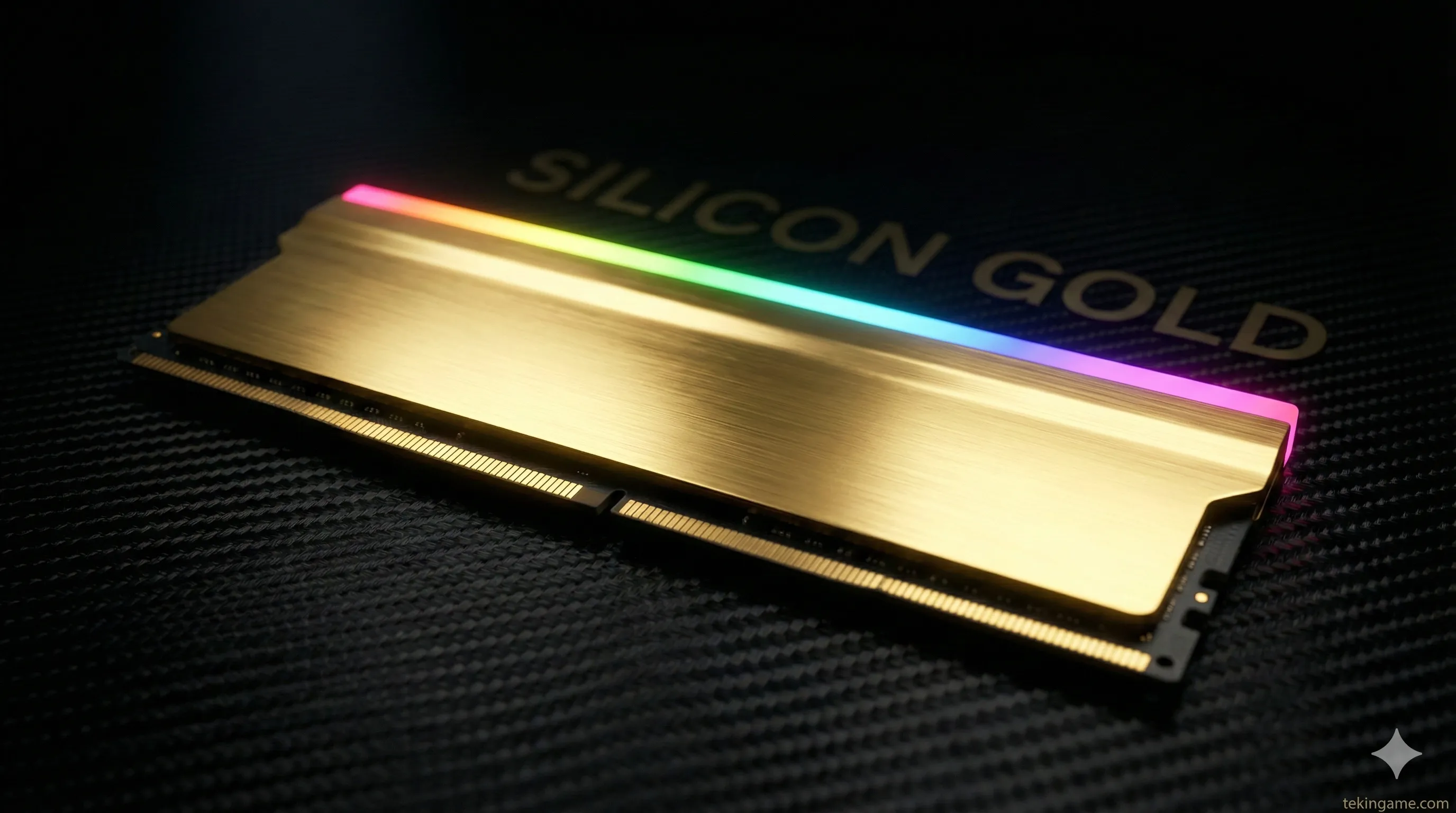
According to January 2026 TrendForce reports, the spot price for 8Gb DRAM dies has surged by 145% year-over-year.
This price hike affects every tier:
- Budget (DDR5-4800): Almost extinct as production lines halt.
- Performance (DDR5-8000+): Now priced as a luxury good.
- Next-Gen (DDR6): Launching with astronomical price tags and almost zero availability.
2. The "AI Tax": How HBM3E Choked the Supply Lines
The root cause is physics and profit. Manufacturing High Bandwidth Memory (HBM) for Nvidia's B200 AI chips requires a process called TSV (Through-Silicon Via).
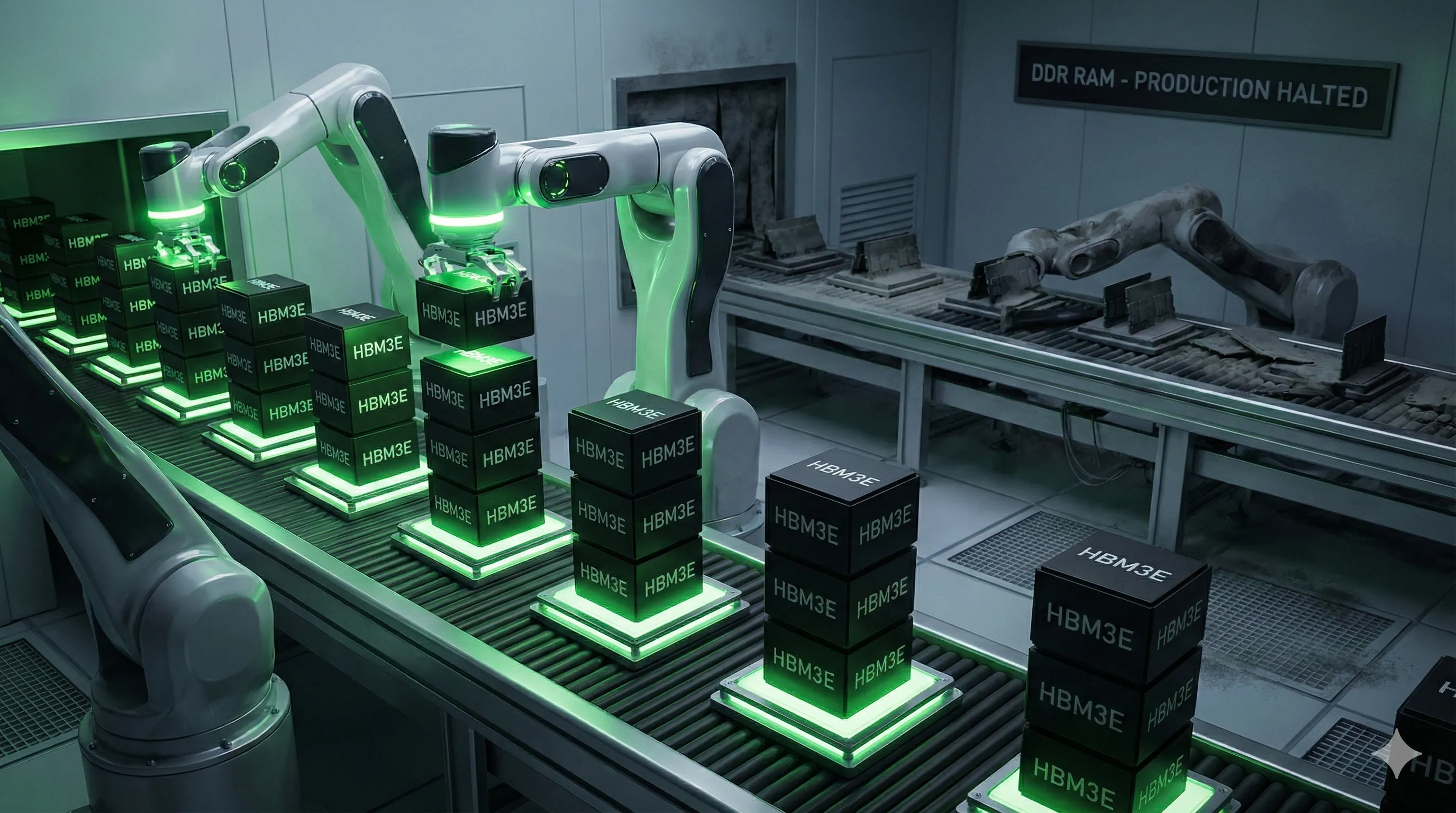
This process stacks memory dies vertically and drills microscopic holes through them with lasers. It is slow, complex, and consumes massive amounts of "Clean Room" capacity.
Samsung and SK Hynix faced a choice: Make DDR5 for gamers (Low Profit) or HBM3E for AI Servers (Massive Profit). They chose the latter, converting standard RAM production lines into HBM lines. The result? A 30% drop in global consumer RAM supply.
3. Windows 12 & The NPU: The Hunger for Shared Memory
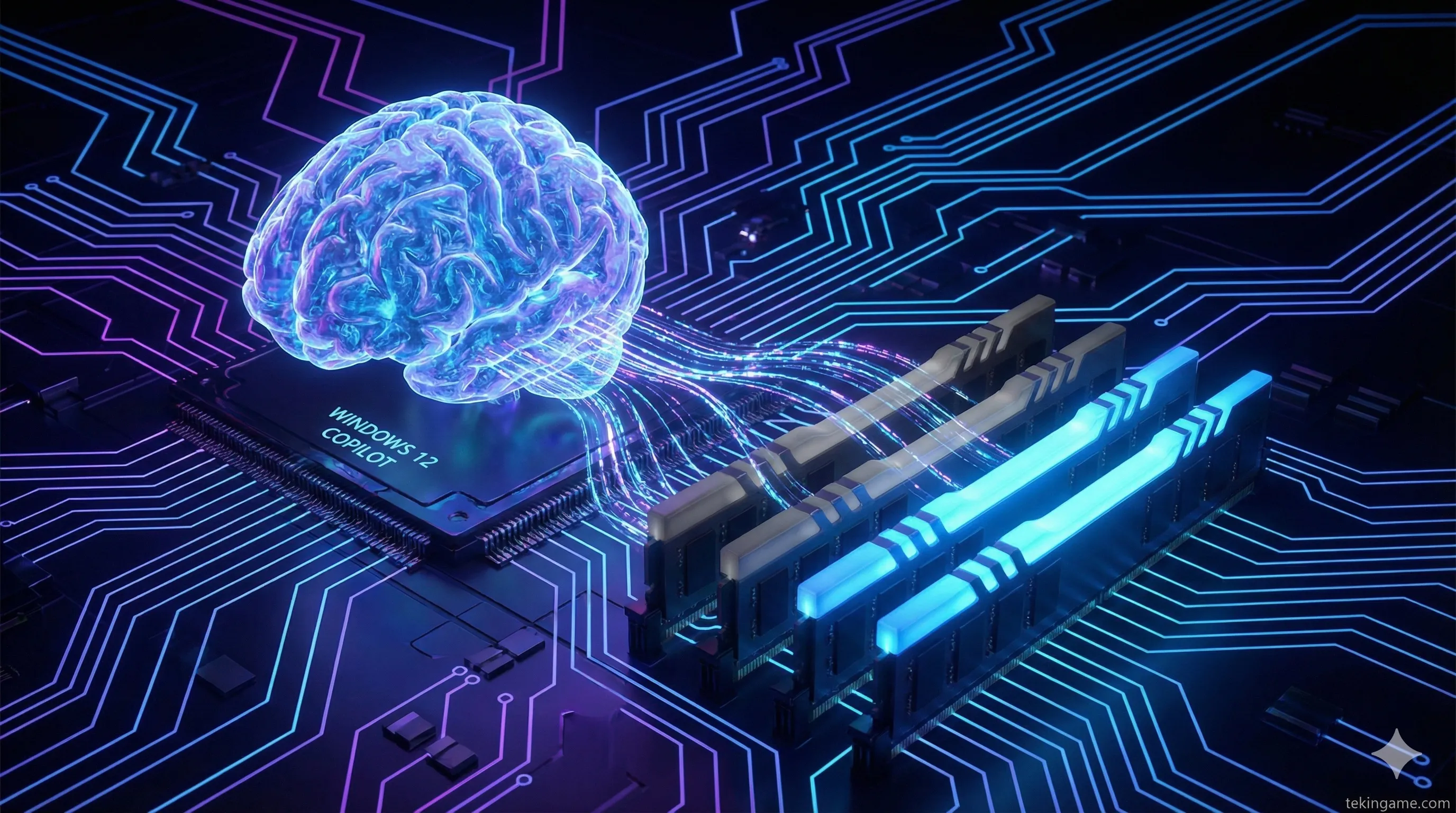
Microsoft changed the game with Windows 12. Features like "Copilot Pro Local" require Small Language Models (SLMs) to be constantly loaded in RAM.
Unlike a GPU, the Neural Processing Unit (NPU) does not have its own dedicated VRAM. It "reserves" a chunk of system RAM (Unified Memory Architecture).
This means on a 16GB system, the NPU might reserve 8GB, leaving only 8GB for the OS and apps. This architectural shift has effectively made 32GB the absolute minimum for a smooth experience, doubling demand overnight.
4. The CAMM2 Revolution: The End of Vertical Sticks
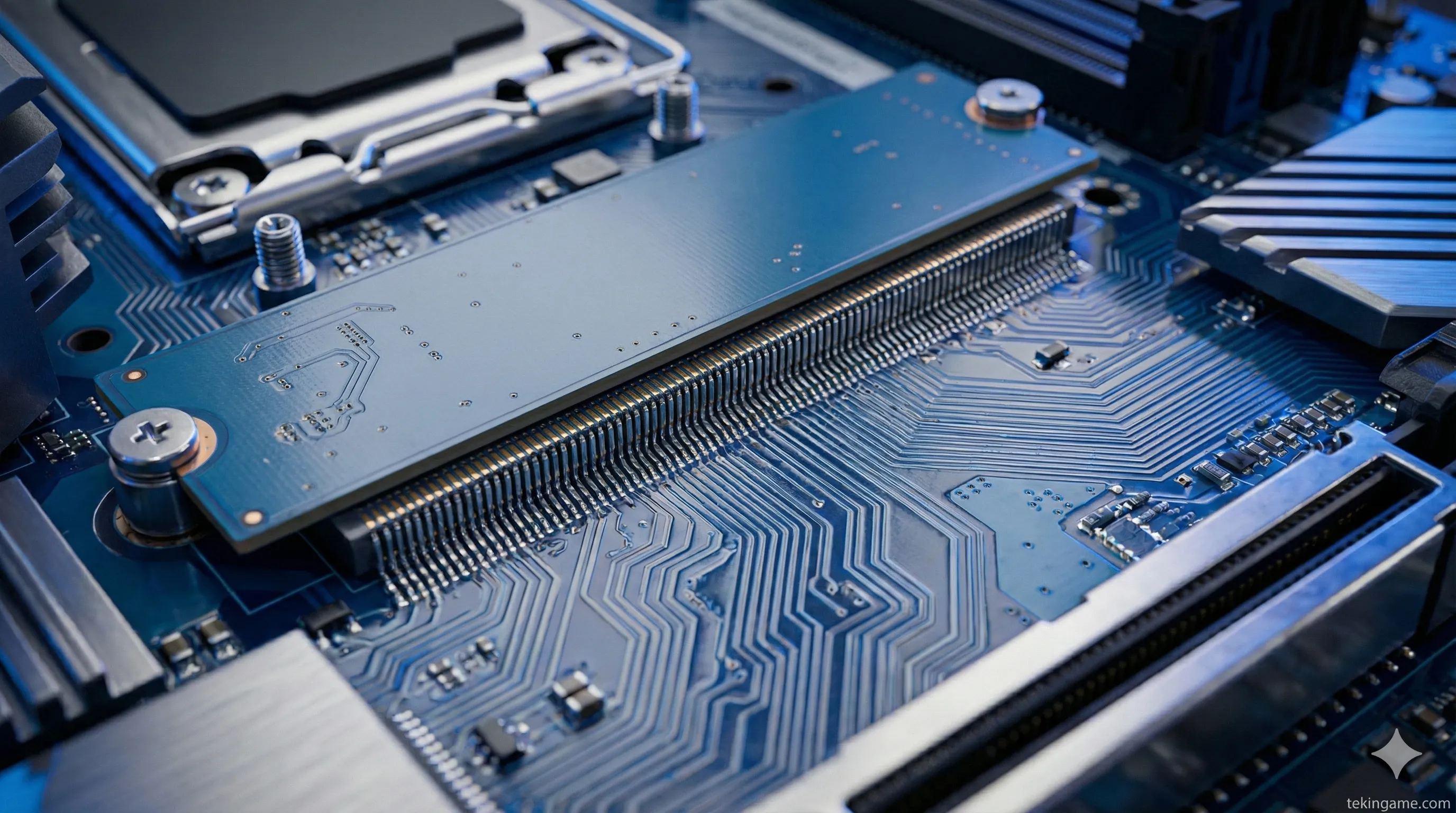
2026 marks the slow death of the DIMM form factor. Enter CAMM2 (Compression Attached Memory Module).
Instead of plugging vertically, this memory is a flat slab bolted onto the motherboard.
- The Good: Traces on the motherboard are 50% shorter, reducing electrical noise and allowing higher speeds.
- The Bad: It requires entirely new motherboards. You cannot reuse your old sticks. Plus, the manufacturing cost is significantly higher due to the complex connector mechanism.
5. Engineering Nightmares: DDR6 and PAM4 Signaling
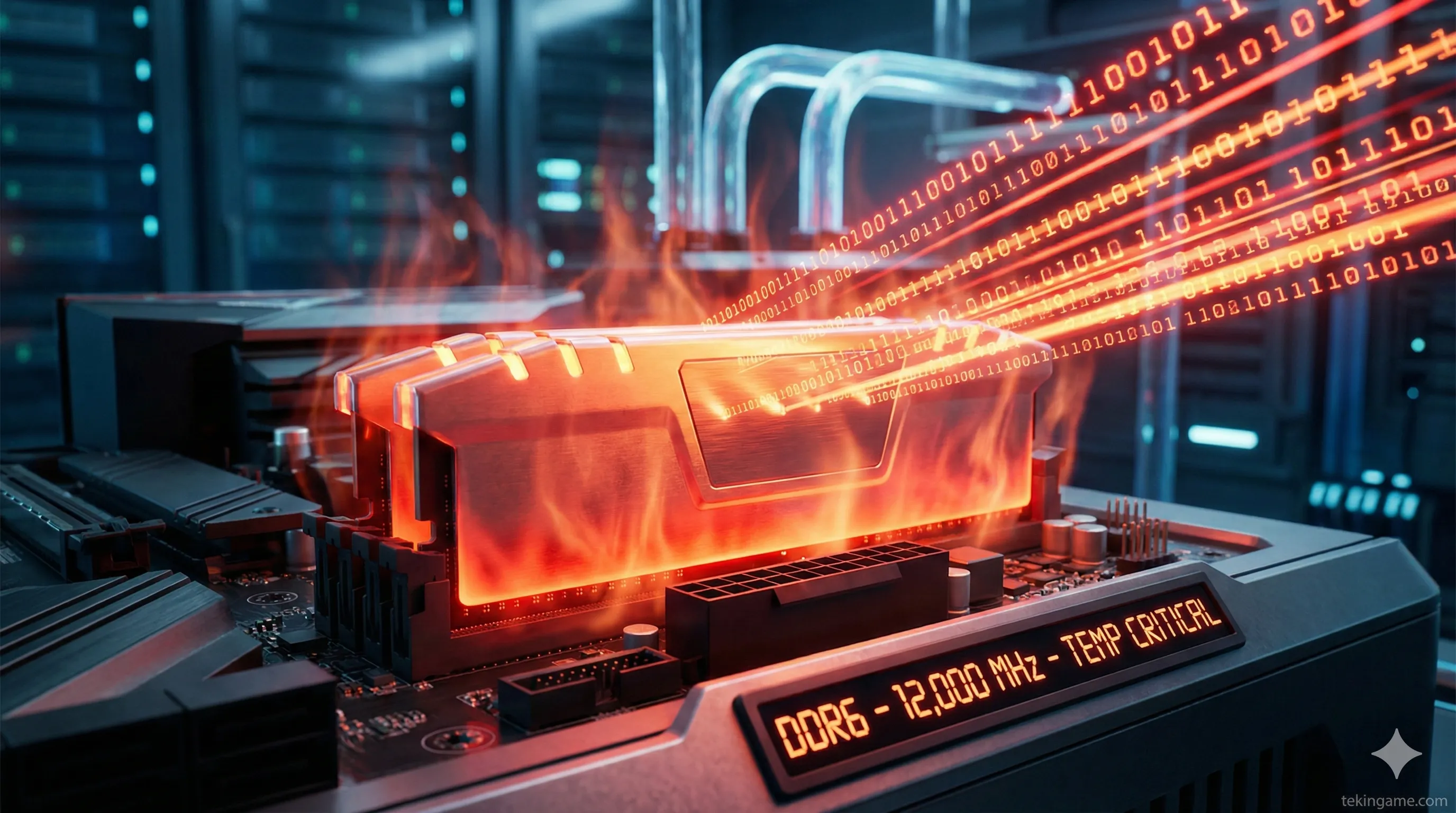
DDR6 modules launched this year target speeds of 12,800 MT/s. But getting there required a radical change in signaling called PAM4 (Pulse Amplitude Modulation 4-level).
Old RAM used binary (0 or 1). DDR6 uses 4 voltage levels (00, 01, 10, 11) to send twice the data. This requires expensive On-Die ECC (Error Correction) and advanced Voltage Controllers (PMIC) to prevent data corruption. This engineering complexity is why DDR6 costs 3x more than DDR5.
6. The "Soldered" Conspiracy
Laptop makers like Dell and HP are using this crisis to push Soldered RAM (LPDDR6X) even in pro machines.
By soldering the RAM, they claim "better efficiency," but the real reason is profit. They force you to pay $400 for an upgrade at the time of purchase because they know you can't upgrade it yourself later. The era of the "user-serviceable laptop" is ending.
8. Survival Guide: Smart Strategies
- Delay CAMM2: The first generation is always overpriced and buggy. Stick to mature DDR5 platforms for now.
- Capacity > Speed: For AI workloads, 48GB of mid-speed RAM (using non-binary 24GB sticks) is far better than 32GB of high-speed RAM.
- Beware of "Recycled" Chips: The grey market is flooded with "New" RAM sticks that are actually harvested from old server modules. Buy only from reputable brands.
9. Conclusion: The Outlook for 2027
The 2026 Memory Crisis is a harsh lesson in global supply chain fragility. We are learning how the voracious appetite of AI can starve the consumer hardware market.
Prices are expected to remain high until mid-2027, when new Fabs in Texas and Arizona come online. Until then, treat your old RAM sticks with respect; they are worth more than gold.