
1. The Blackwell GB202: Engineering Genius or Brute Force?
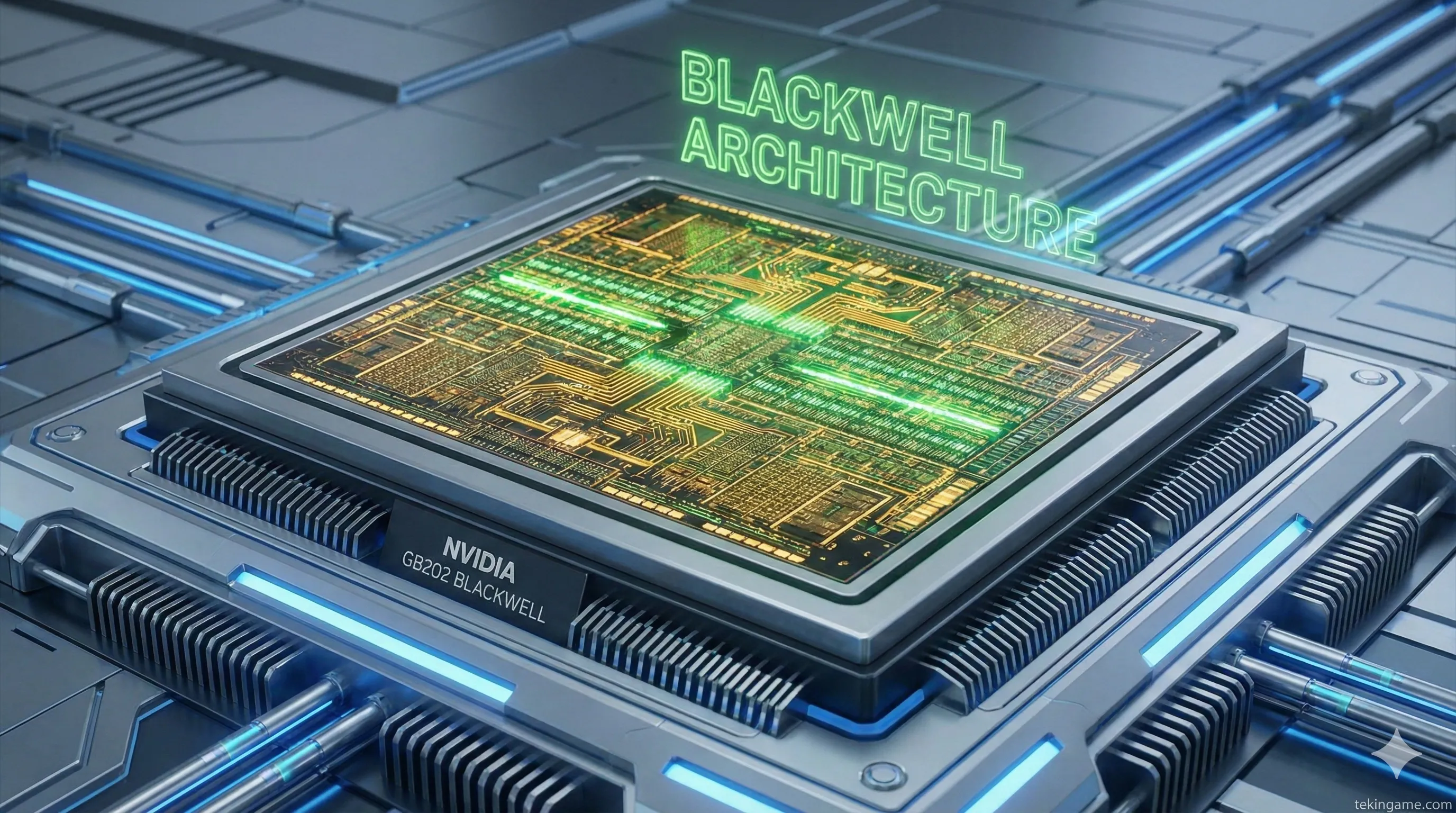
The beating heart of the RTX 5090 is the GB202 silicon, built on the Blackwell architecture. This isn't just a refresh; it is a fundamental restructuring of the GPU pipeline designed to cater to both hardcore gamers and AI researchers.
Transistor Density & Lithography
Fabricated on a custom TSMC 4N (refined 3nm class) process, the transistor density is terrifying. We are looking at a rumored 24,576 CUDA Cores—a roughly 33% increase over the RTX 4090’s 16,384 cores. Nvidia has essentially crammed a supercomputer onto a single die. While this allows for true 8K gaming without upscaling, packing this many transistors into a reticle-limited die size creates massive thermal challenges.

The L2 Cache Expansion
To keep these cores fed, Nvidia has reportedly doubled the L2 Cache to 128MB. This reduces the need for the GPU to fetch data from the VRAM, effectively increasing effective bandwidth and smoothing out 1% low frame rates in CPU-bound scenarios.
2. The 600W Crisis: Analyzing Thermal Density
Let’s address the elephant in the room: 600 Watts. That is more power than an entire mid-range gaming PC consumes. Why the massive jump?
- Frequency Scaling: Leaks suggest boost clocks are pushing past 2.9 GHz out of the box. The voltage curve required to sustain stable frequencies at this level is exponential, not linear. To gain that last 10% of performance, Nvidia is burning 30% more power.
- Transient Spikes: The 600W figure is the average sustained load. We must worry about "Transient Spikes" (micro-second power bursts) which could theoretically hit 1200W. This is what trips Over-Current Protection (OCP) on older power supplies.
The Cooling Conundrum: Air cooling is reaching its physical limit. To dissipate 600 Joules of heat per second, the heatsink needs immense surface area. If your case does not have hurricane-level airflow, the RTX 5090 will turn your chassis into an oven, thermally throttling your CPU and RAM in the process.
3. Connector Safety: Will the 12V-2x6 Stop the Fires?
The nightmare of the previous generation was the 12VHPWR connector melting. For the RTX 5090, Nvidia has adopted the revised ATX 3.1 standard: The 12V-2x6 connector.
What Changed?
The physical design has been inverted. The power pins are longer, and the sense pins (sideband signals) are shorter. The Safety Mechanism: If the cable is not plugged in 100% flush, the short sense pins will not make contact. The GPU firmware detects this "open circuit" on the sense pins and completely cuts power delivery. It simply won't turn on. This hardware-level fail-safe should theoretically prevent the high-resistance arcs that caused the 4090 meltdowns. However, pushing 600W through a single cable remains a high-stress engineering feat.
4. GDDR7 Memory: Breaking the Speed Barrier
The RTX 5090 marks the consumer debut of GDDR7 memory.
- Bandwidth: With speeds hitting 32 Gbps per pin on a likely 512-bit bus, we are looking at a total memory bandwidth of 1.8 TB/s. This is nearly double the throughput of the RTX 4090.
- Capacity: The card is expected to ship with 32GB of VRAM. While gamers rarely need this much, it is the "Holy Grail" for local AI generation. Running a 70B parameter LLaMA model entirely in VRAM is now possible on a consumer card.
5. Physical Dimensions: The Death of SFF
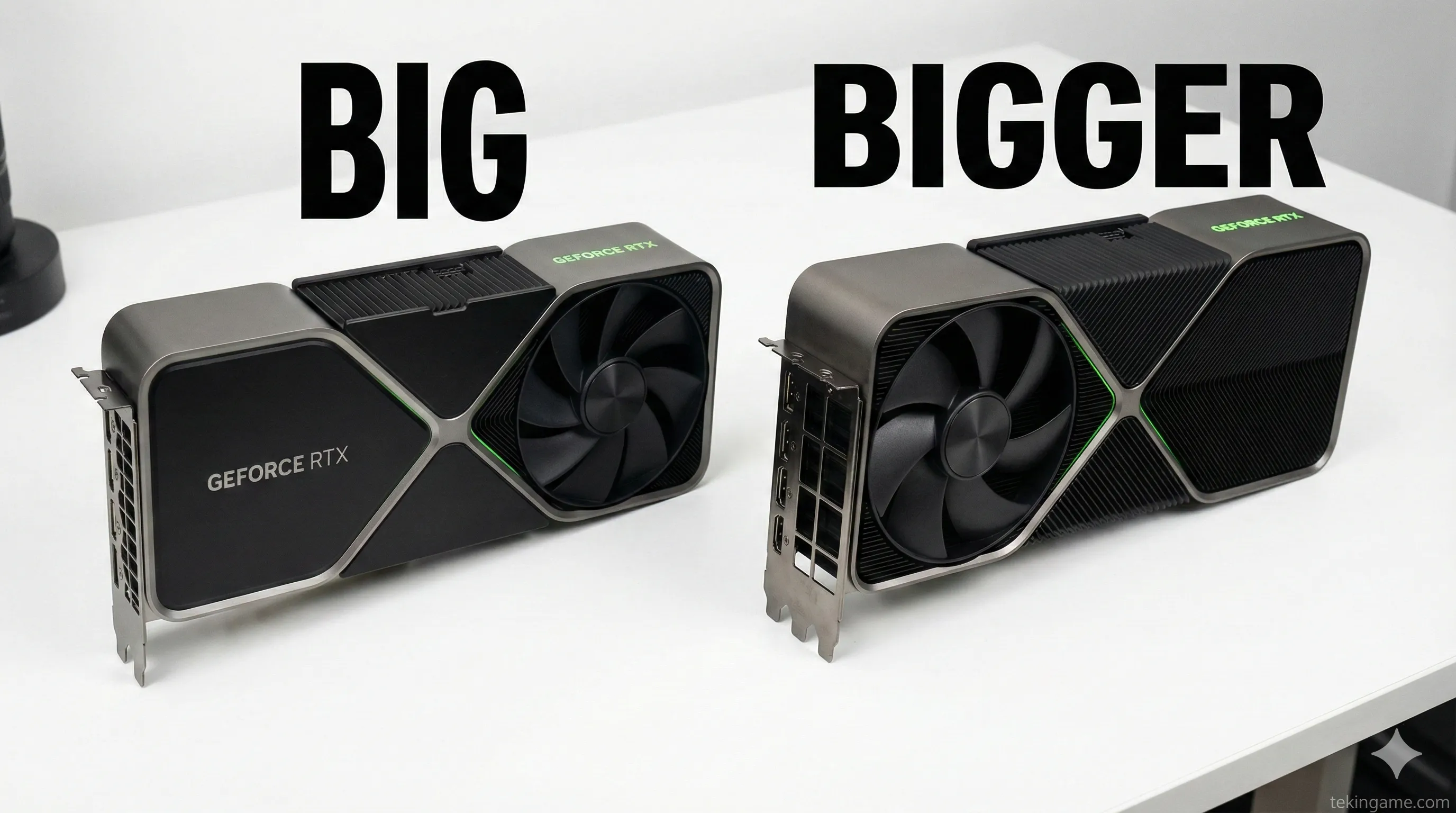
Founders Edition leaks show a massive 4-Slot Design. This card is not just thick; it is long and heavy.
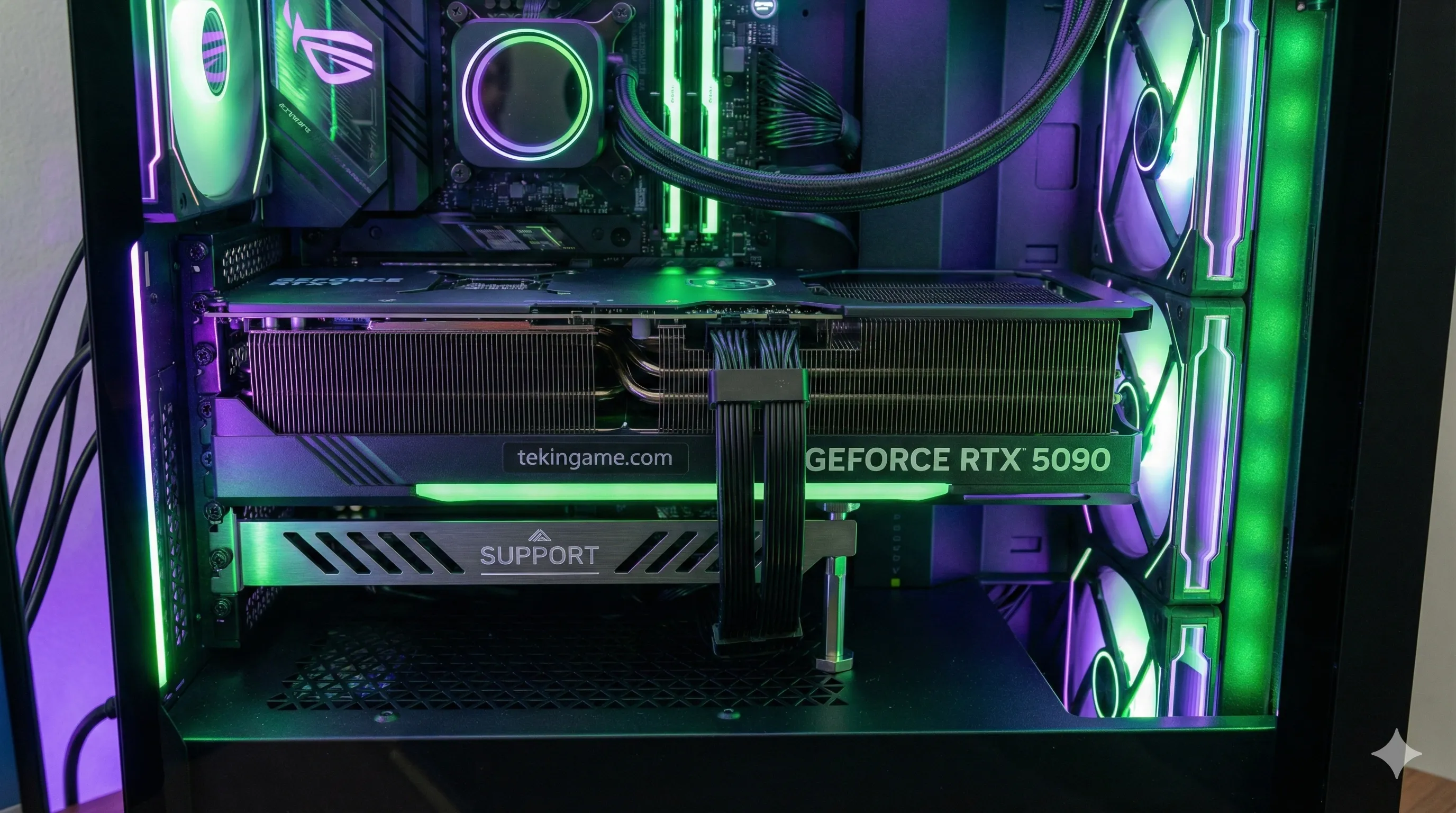
The Sag Problem: Weighing in at an estimated 3kg (6.6 lbs), this card is a structural hazard. Installing it horizontally without a support bracket is negligence; it will rip the PCIe slot off your motherboard. We expect Nvidia and partners to bundle industrial-grade support stands. If you have a Mini-ITX case, abandon hope now.
6. Price & Monopoly: Why AMD Left
AMD has officially stated they are not competing for the "performance crown" with RDNA 4. They are targeting the mid-range. This leaves Nvidia with a total monopoly on the high-end.
The Price Tag: Without competition, Nvidia can name its price. Analysts predict an MSRP of $1,999 to $2,499. Furthermore, because this card is so powerful for AI, "Prosumers" and startups will buy them in bulk, likely leading to shortages and scalping. If you want one, you are fighting against AI startups, not just other gamers.
7. Conclusion: The PSU Buyer's Guide
The RTX 5090 is an engineering marvel, but it is also a logistical headache. The Inspector’s PSU Recommendations:
- Minimum: 1000W (Only if paired with a low-power CPU).
- Recommended: 1200W ATX 3.1 (Native 12V-2x6 cable required).
- Ideal: 1600W Titanium (For overclocking headroom and silence).
This is not a graphics card for casual Fortnite. This is a semi-industrial component that happens to have a video output. Ensure your wallet—and your electrical wiring—is ready.