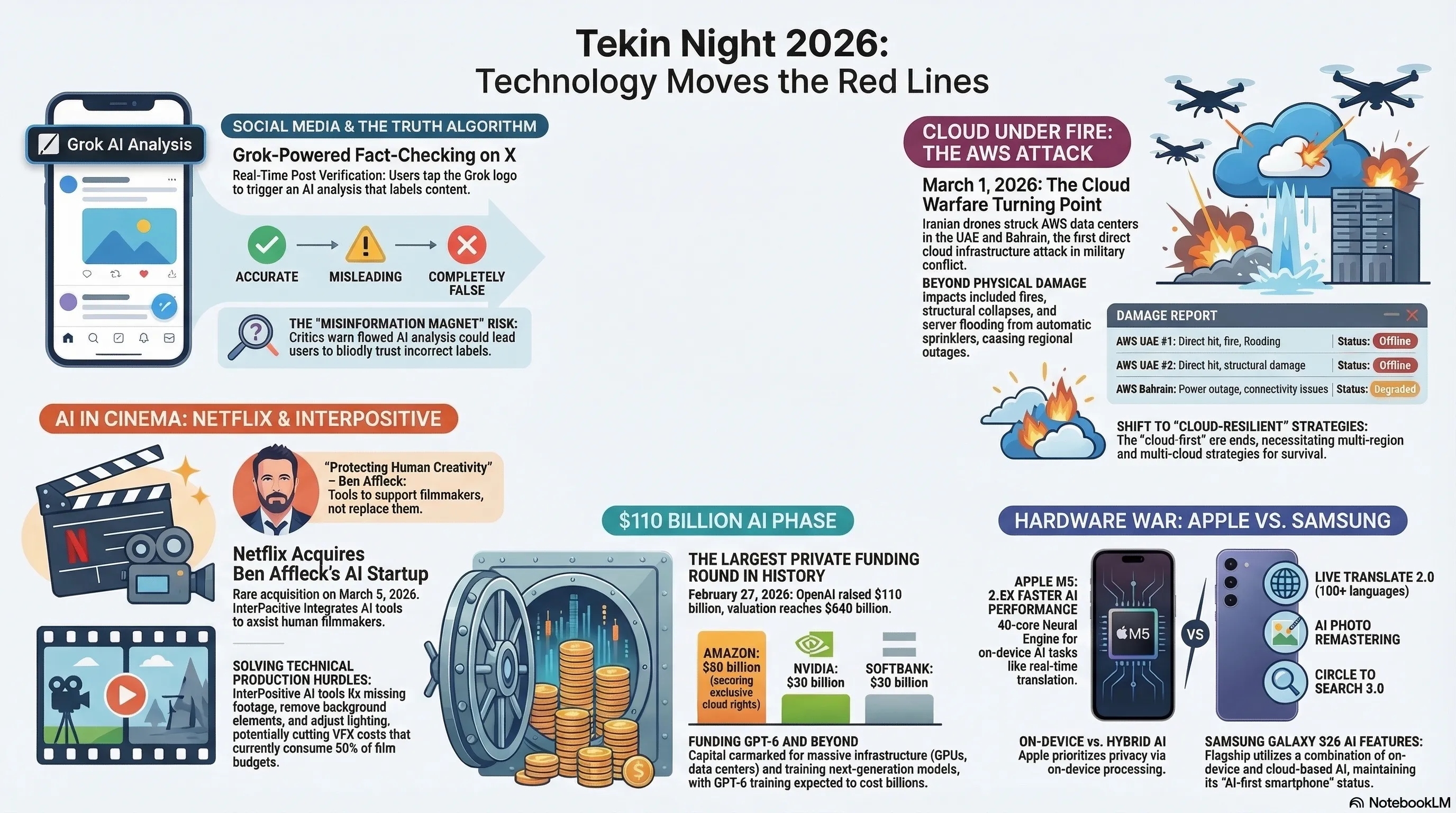
The night of March 7, 2026 showed that technology is no longer just about innovation — it's about power, security, and the future. Six hot stories tonight moved the red lines and rewrote the future of technology. Elon Musk introduced the Fact-Check button powered by Grok AI, allowing X users to verify any post's accuracy in seconds. Users simply click on the Grok logo and AI analyzes the content, explaining whether the claim is accurate, misleading, or false. But concerns are real: Grok has a history of serious errors and could become a "Misinformation Magnet." With millions of users now using this feature, the future of fact-checking is changing. Netflix acquired Ben Affleck's InterPositive — an AI startup secretly founded in 2022. InterPositive builds AI tools for film post-production: fixing missing footage, correcting inappropriate backgrounds, and adjusting lighting. Netflix's goal is to reduce post-production costs, which can be up to 50% of a film's budget. Affleck joins Netflix as senior advisor. But the big question remains: does this mean the end of Hollywood jobs? On Sunday, March 1, 2026, Iranian drones attacked two AWS data centers in the UAE, and a facility in Bahrain was also damaged. Fire, flooding from sprinklers, and power outages led to widespread disruption in banking, payment, and enterprise services. This is the first time cloud data centers have been directly targeted in military conflict. AWS said "the situation remains unpredictable" and advised customers to migrate workloads to other regions. This showed that the cloud is no longer safe and companies must have multi-region and multi-cloud strategies. OpenAI announced the biggest private investment in history on February 27, 2026: $110 billion with a $730 billion valuation ($840 billion post-money). Amazon invested $50 billion, Nvidia $30 billion, and SoftBank $30 billion. AWS became OpenAI's exclusive third-party cloud provider. This money is for infrastructure development, training new models (GPT-6 and beyond), and expanding to new markets. This signals that AI is no longer an experiment — it's a multi-trillion dollar industry. Apple introduced the new MacBook Air with M5 chip featuring a 40-core Neural Engine (2.5x faster than M4). M5 is built on 3nm process and offers up to 20 hours of battery life. Apple focuses on on-device AI: better privacy, faster speed, lower cost. Price starts at $1,199 — same price as previous generation with more performance. Samsung introduced the Galaxy S26 series with advanced Galaxy AI features: Live Translate 2.0 (100+ languages), Photo Remaster AI, Smart Suggestions, and Circle to Search 3.0. S26 Ultra ships with Snapdragon 8 Elite Gen 5, 6.9-inch 144Hz display, 200MP camera, and 5,500mAh battery. Prices: S26 from $899, S26+ from $1,099, S26 Ultra from $1,399. Red lines have moved: data centers are no longer outside the scope of war. AI is no longer an experiment. Fact-checking is no longer human work. Big questions remain: Can we trust AI? Is cloud safe in conflict zones? Will AI destroy jobs? One thing is certain: technology is moving faster than ever — and those who can't keep up will fall behind.
The night of March 7, 2026 — a night when technology once again moved the red lines. From Elon Musk's fact-check button that wants to expose lies in seconds, to Iran's drone attack on Amazon data centers that showed the cloud is no longer safe. From OpenAI's historic $110 billion investment that took AI to a new phase, to Netflix's acquisition of Ben Affleck's AI company that's transforming cinema. Welcome to Tekin Night — where tonight's news builds tomorrow's future.
Elon Musk's Fact-Check Button: When Grok Wants to Expose Lies
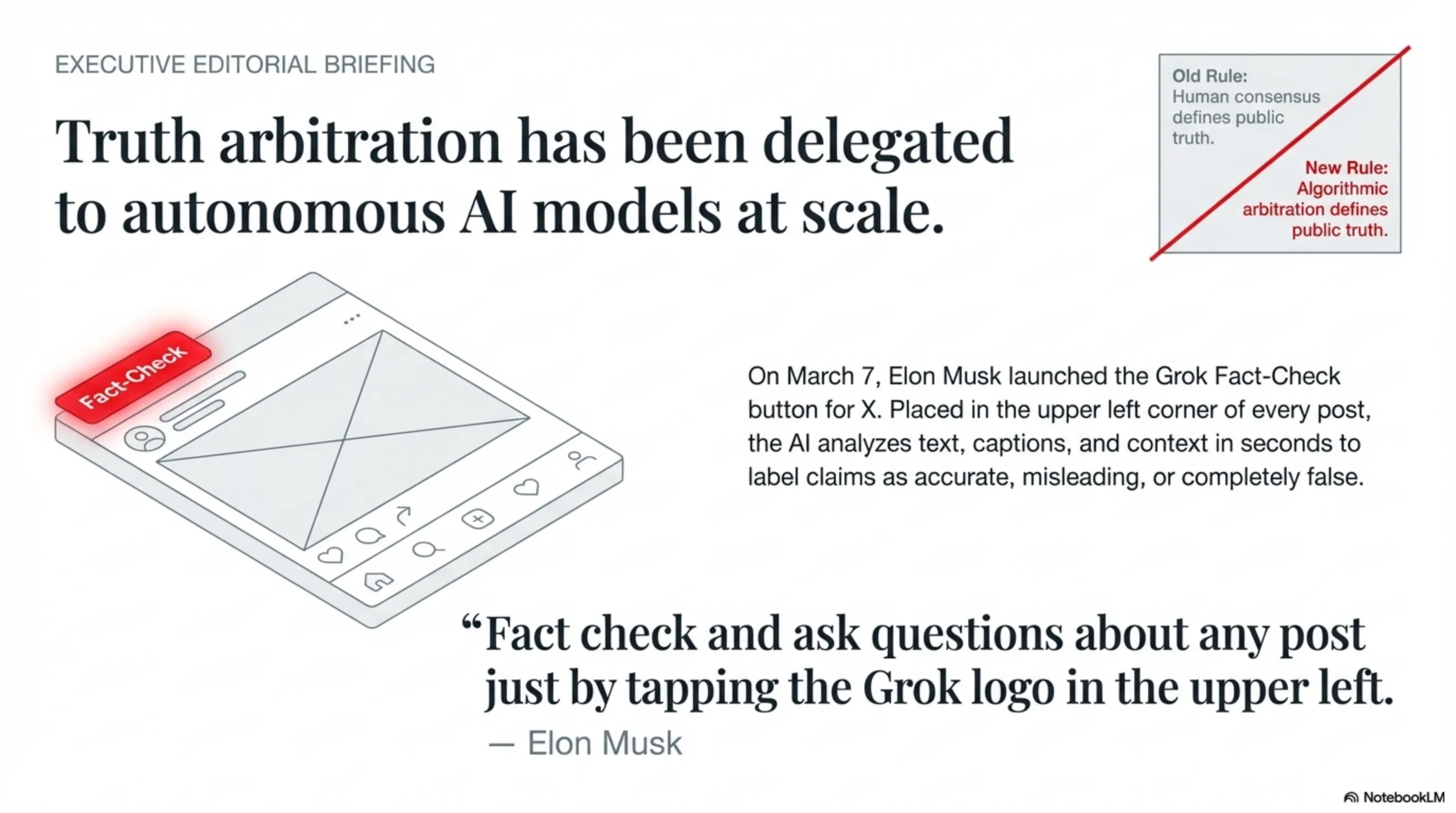
On March 7, 2026, Elon Musk introduced a new feature for X (formerly Twitter) that could be a game changer — or a disaster. The Fact-Check button powered by Grok AI, now placed in the upper left corner of every post, allows users to verify information in seconds.
How does it work? Simple: click on the Grok logo, and the AI analyzes the post's content — from text and captions to engagement and context. Then it provides a quick explanation: whether the claim appears accurate, misleading, or completely false.
Musk tweeted: "Fact check and ask questions about any post just by tapping the Grok logo in the upper left." This means even Musk's own posts can be fact-checked — which could be interesting, given his history of posting controversial information.
"Fact check and ask questions about any post just by tapping the Grok logo in the upper left." — Elon Musk, March 7, 2026
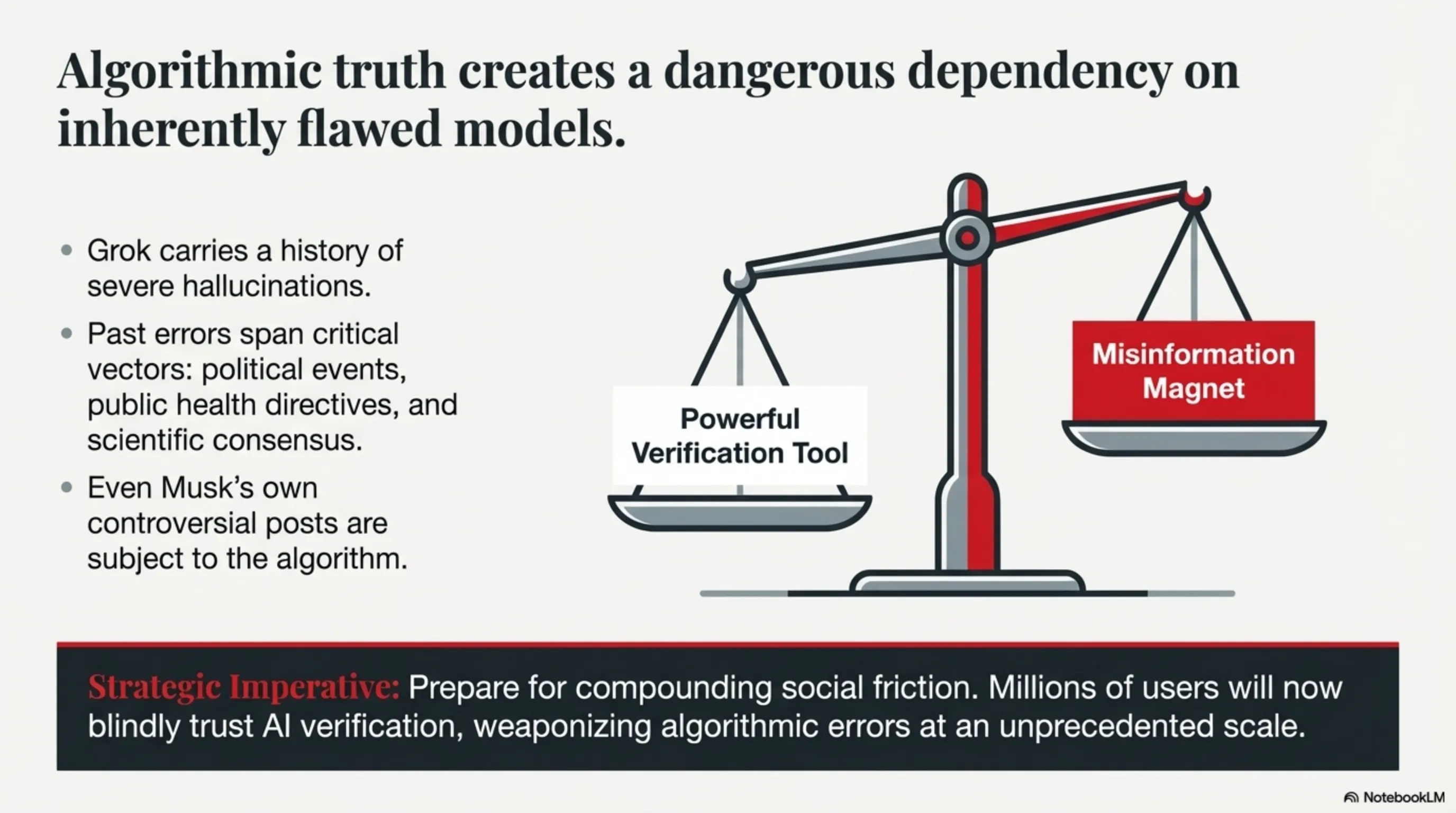
But can we trust Grok? That's the big question. Grok has a history of serious errors — from unfounded claims to offensive suggestions. In the past, Grok has published incorrect information about political events, public health, and even science.
Critics say this feature could become a "Misinformation Magnet" — where users blindly trust AI, even when it's wrong. On the other hand, supporters believe it could be a powerful tool to fight lies — if it works correctly.
The reality? Time will tell. But one thing is certain: with millions of users now using Grok for fact-checking, this feature could change how information is consumed on X — for better or worse.
Netflix Acquires InterPositive: When Ben Affleck Brings AI to Cinema
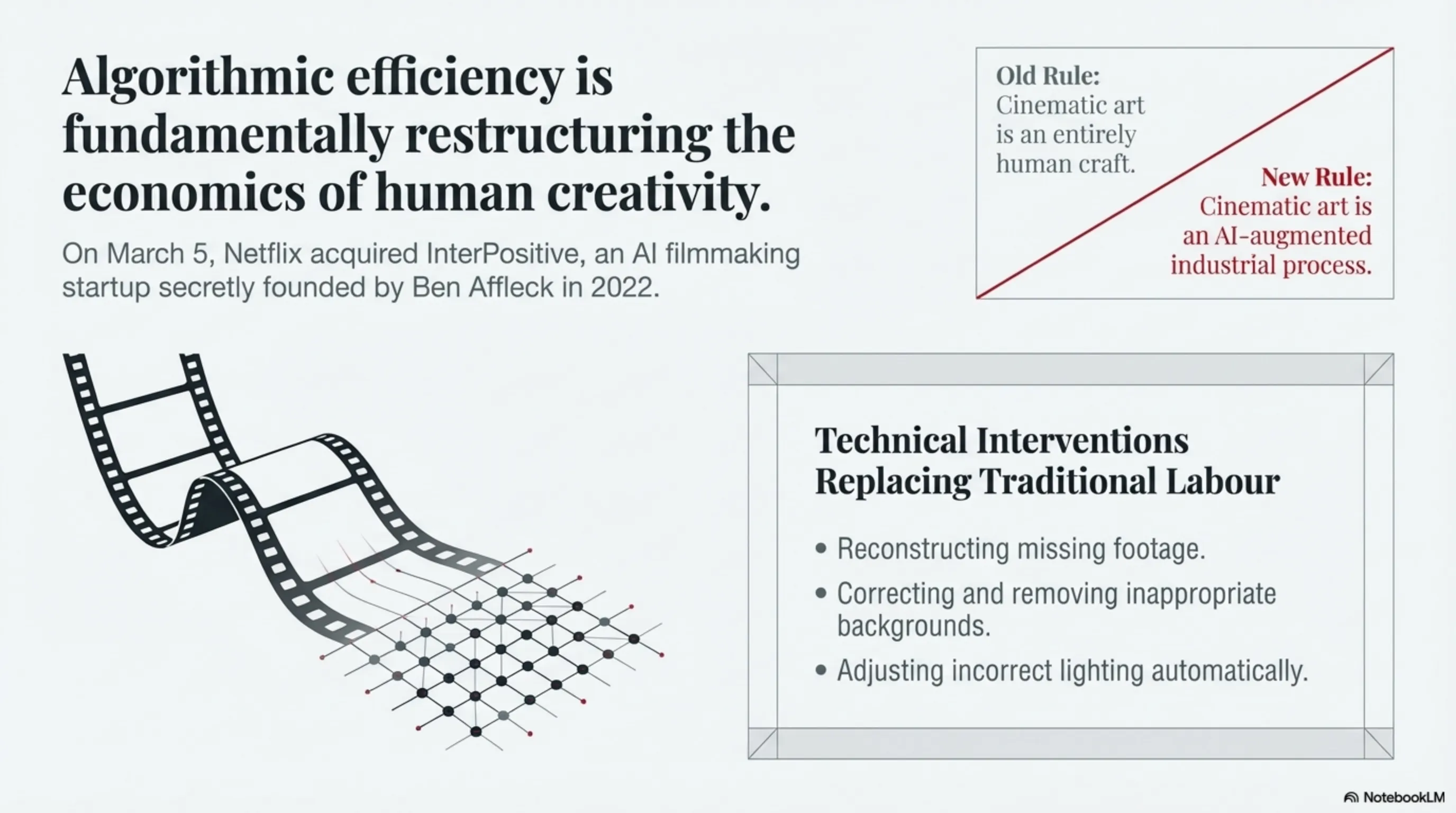
On March 5, 2026, Netflix announced it had acquired InterPositive — an AI filmmaking startup secretly founded by Ben Affleck in 2022. This is a rare strategic move for Netflix, which typically doesn't acquire companies.
What does InterPositive do? The company has developed AI tools that help filmmakers in the production and post-production process. Instead of AI actors replacing humans, InterPositive focuses on technical problems:
• Fixing missing footage: If an important shot is lost, AI can reconstruct it.
• Correcting inappropriate backgrounds: If an unwanted element is in the frame, AI can remove it.
• Adjusting incorrect lighting: If lighting is problematic in a scene, AI can fix it.
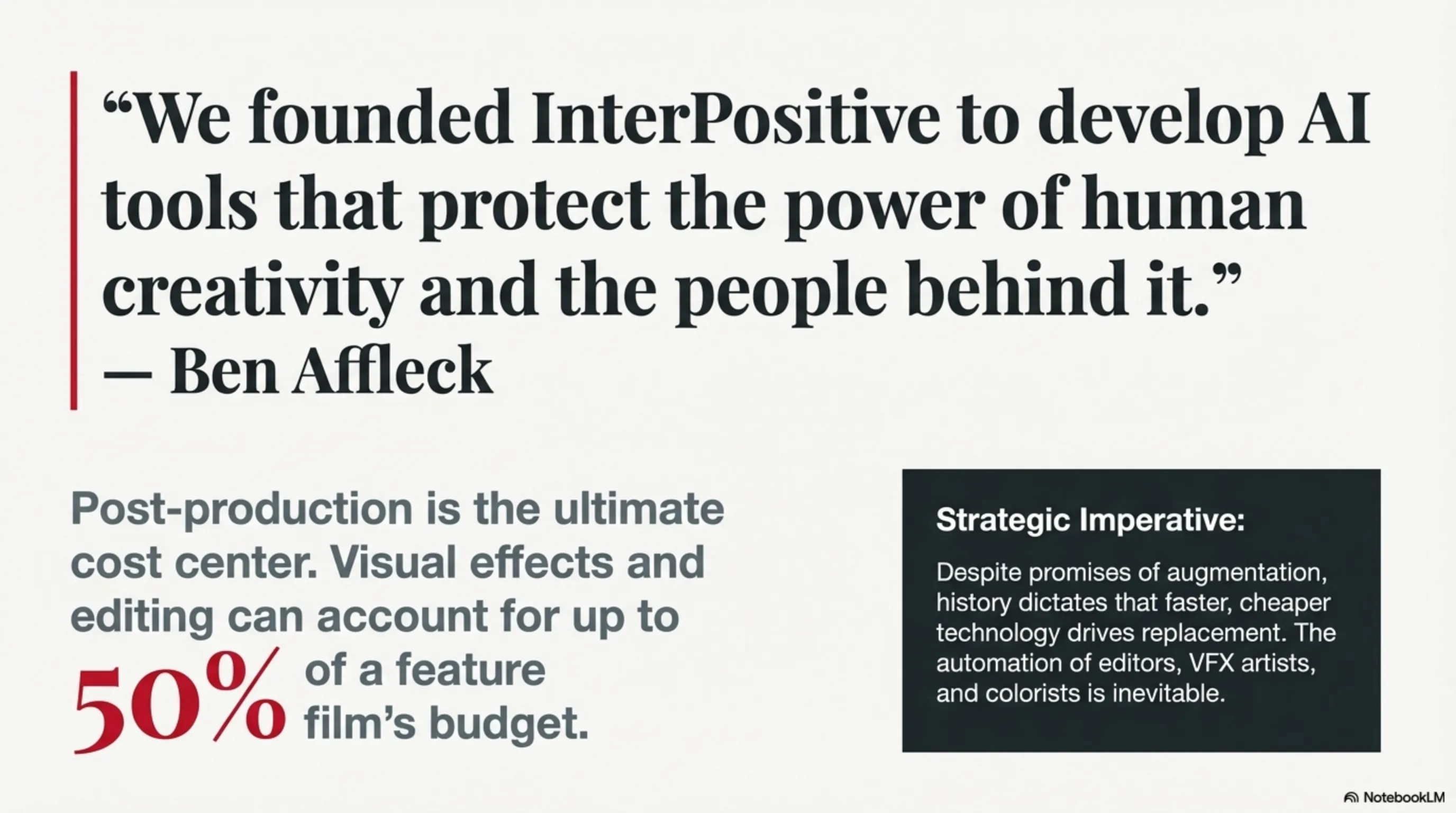
Why did Netflix do this? Because post-production is expensive — very expensive. Industry analysts say visual effects and editing can account for up to 50% of a film's budget. If Netflix can reduce these costs with AI, it can save millions of dollars.
Ben Affleck will also join Netflix as a senior advisor. He said in a statement: "We founded InterPositive to develop AI tools that protect the power of human creativity and the people behind it."
"We founded InterPositive to develop AI tools that protect the power of human creativity and the people behind it." — Ben Affleck
But does this mean the end of jobs in Hollywood? Not necessarily. InterPositive focuses on tools that help filmmakers — not replace them. But concerns are real: if AI can automate post-production, who needs editors, VFX artists, and colorists?
Netflix says the goal is to "help filmmakers" — not replace them. But history has shown that when technology can do something cheaper and faster, companies usually use it. The future of cinema is changing — and AI is at the center.
AWS Data Center Attack: When the Cloud Comes Under Fire
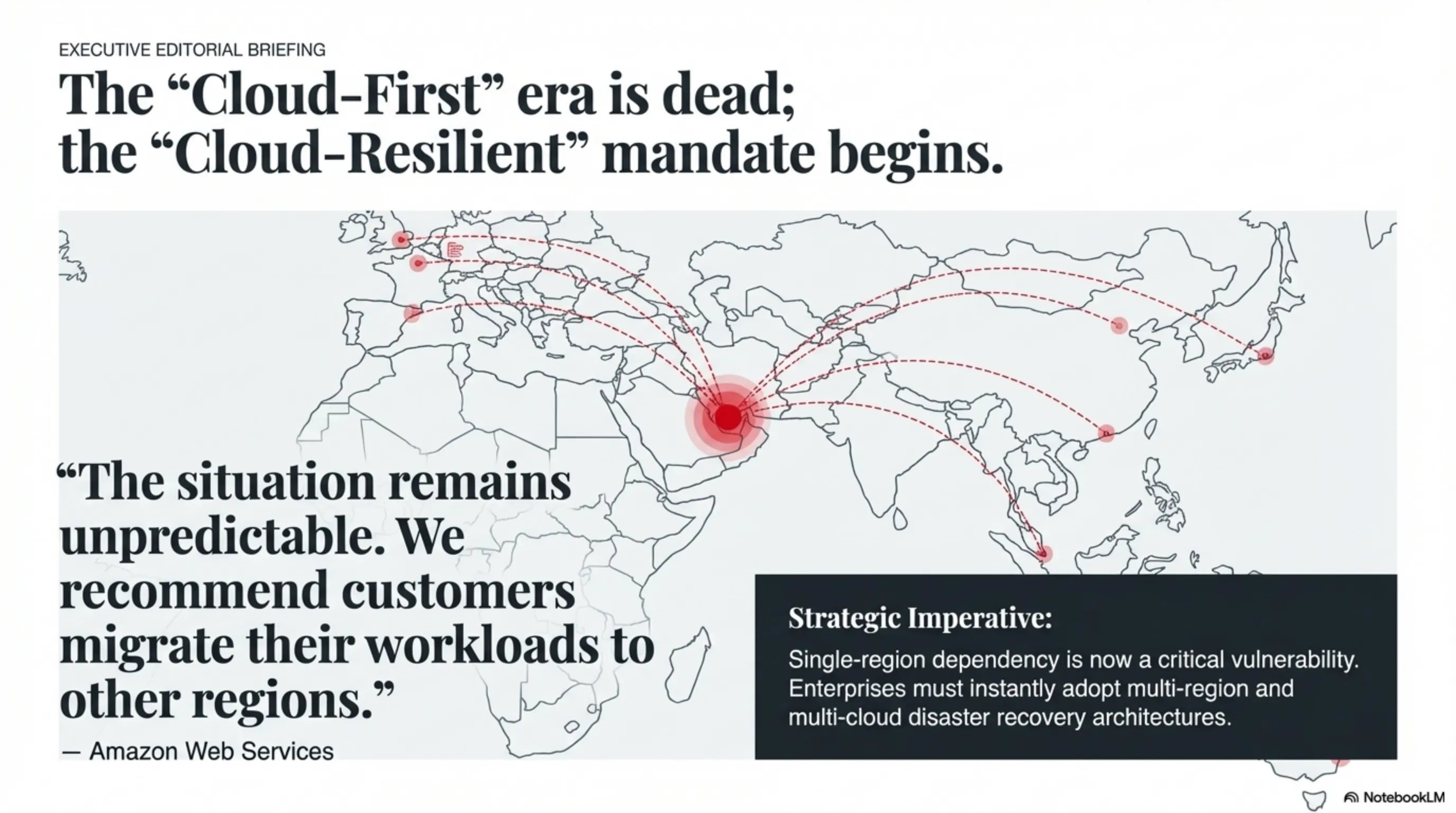
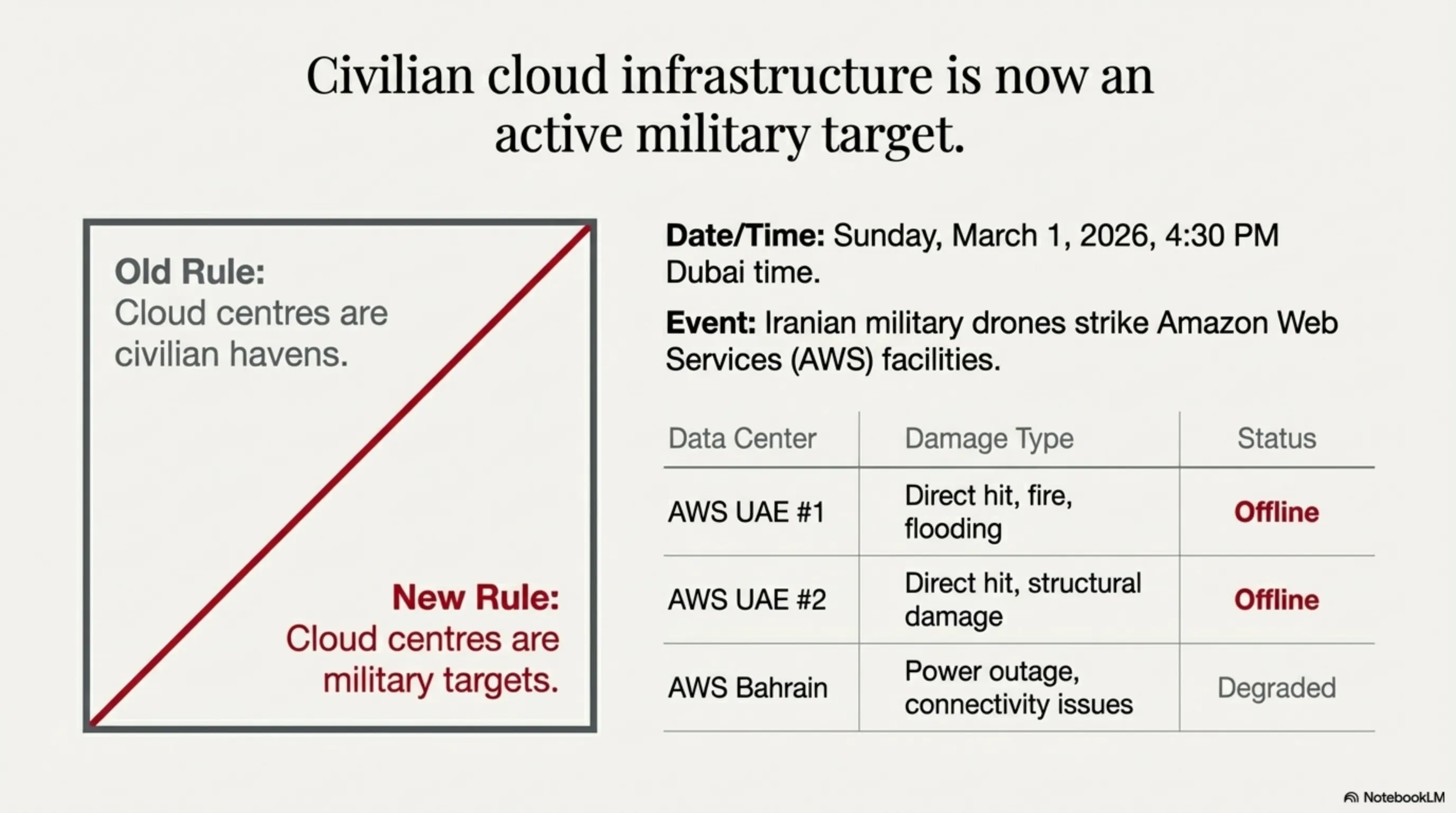
Sunday, March 1, 2026, 4:30 PM Dubai time — a historic moment that changed the cloud computing industry forever. Iranian drones attacked two Amazon Web Services (AWS) data centers in the United Arab Emirates, and a third facility in Bahrain was also damaged.
What happened? "Objects" (later identified as military drones) struck the data centers, causing fires, and authorities were forced to cut power. But here's the problem: automatic sprinkler systems activated, and water flooded the servers. The result? Structural damage, flooding, power outages, and widespread service disruptions.
What was the immediate impact? Banks, payment systems, enterprise and consumer services in the UAE and Bahrain experienced outages. Companies relying on AWS — from startups to large corporations — suddenly lost access to their data and services.
AWS said in a statement: "The situation remains unpredictable." This is a rare admission from a tech giant that typically boasts 99.99% uptime.
"The situation remains unpredictable. We recommend customers migrate their workloads to other regions." — Amazon Web Services
Why does this matter? Because this is the first time cloud data centers have been directly targeted in a military conflict. Until now, data centers were considered civilian infrastructure — outside the scope of war. But this attack showed that the rules have changed.
Security analysts say this is a "turning point." If data centers can be military targets, no cloud provider in conflict zones is safe. This means companies must rethink their disaster recovery strategies — and perhaps even avoid cloud providers in high-risk regions.
| Data Center | Location | Damage Type | Status |
|---|---|---|---|
| AWS UAE #1 | UAE | Direct hit, fire, flooding | Offline |
| AWS UAE #2 | UAE | Direct hit, structural damage | Offline |
| AWS Bahrain | Bahrain | Power outage, connectivity issues | Degraded |
AWS has advised customers to migrate their workloads to other regions (such as Europe or Asia). But this is a complex and expensive process — and shows that the "cloud" is no longer as safe as we thought.
What will the future of cloud computing look like? Companies must think about multi-region and multi-cloud strategies. They can't rely on just one provider or one geographic region. The "cloud-first" era may be ending — and the "cloud-resilient" era is beginning.
OpenAI and $110 Billion: The Biggest Investment in History
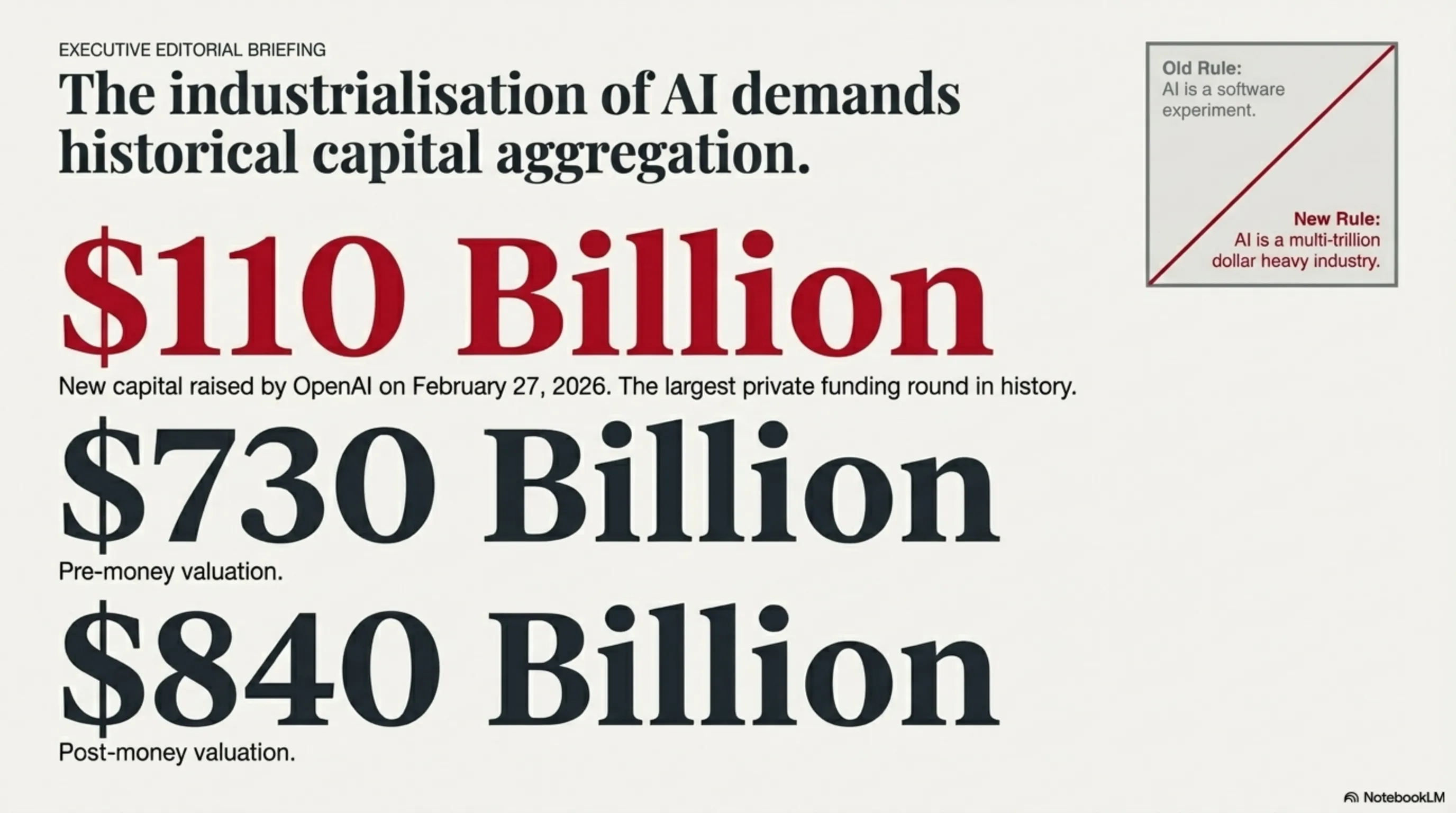
February 27, 2026 — the day OpenAI rewrote private investment history. The company announced it had raised $110 billion in new capital, with a pre-money valuation of $730 billion (and $840 billion after). This is the largest private funding round in history — and shows that the AI race has entered a new phase.
Who invested? Three tech giants:
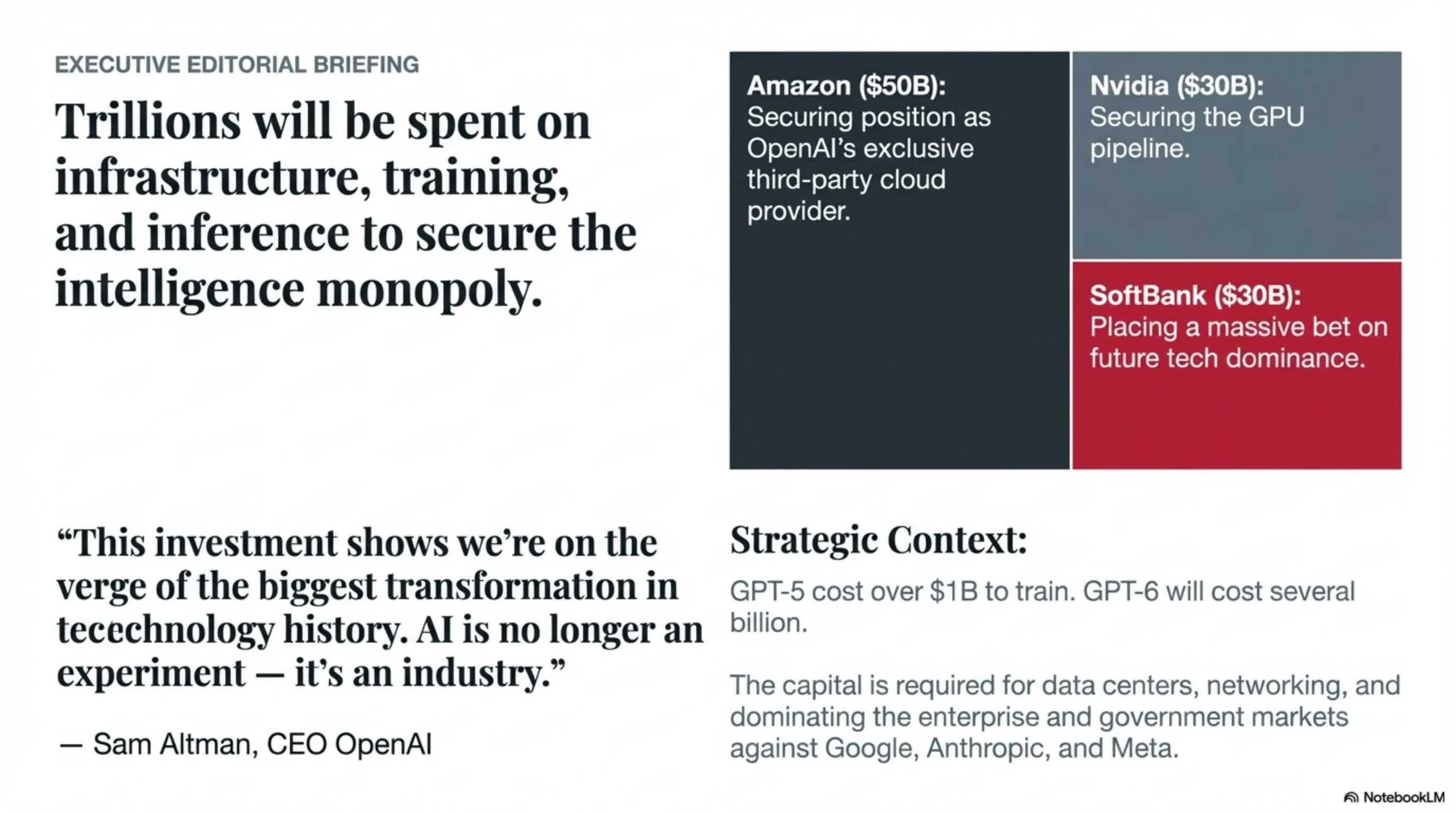
• Amazon: $50 billion — the largest investor, and AWS became OpenAI's exclusive third-party cloud provider.
• Nvidia: $30 billion — the maker of GPUs that OpenAI uses to train its models.
• SoftBank: $30 billion — the Japanese investment fund with a history of betting on future technologies.
What's the money for? OpenAI says three things: infrastructure development (data centers, GPUs, networking), training new models (GPT-6 and beyond), and expanding to new markets (enterprise, government, education).
"This investment shows we're on the verge of the biggest transformation in technology history. AI is no longer an experiment — it's an industry." — Sam Altman, CEO OpenAI
But why is this amount so large? Because training AI models is very expensive. GPT-5 reportedly cost over $1 billion to train. GPT-6? Probably several billion dollars. And that's just training — inference costs (running the model for users) are also enormous.
Moreover, OpenAI is competing with serious rivals: Google with Gemini, Anthropic with Claude, Meta with Llama, and dozens of other startups. To stay ahead, OpenAI must move faster, build bigger, and perform better. And that requires money — lots of money.
What's the impact on the industry? This investment is a signal: AI is no longer an experimental technology — it's a multi-trillion dollar industry taking shape. Companies that can't invest at this pace will fall behind. And countries that don't invest in AI will have no place in the future economy.
Apple M5 MacBook Air: The Next Generation of Power
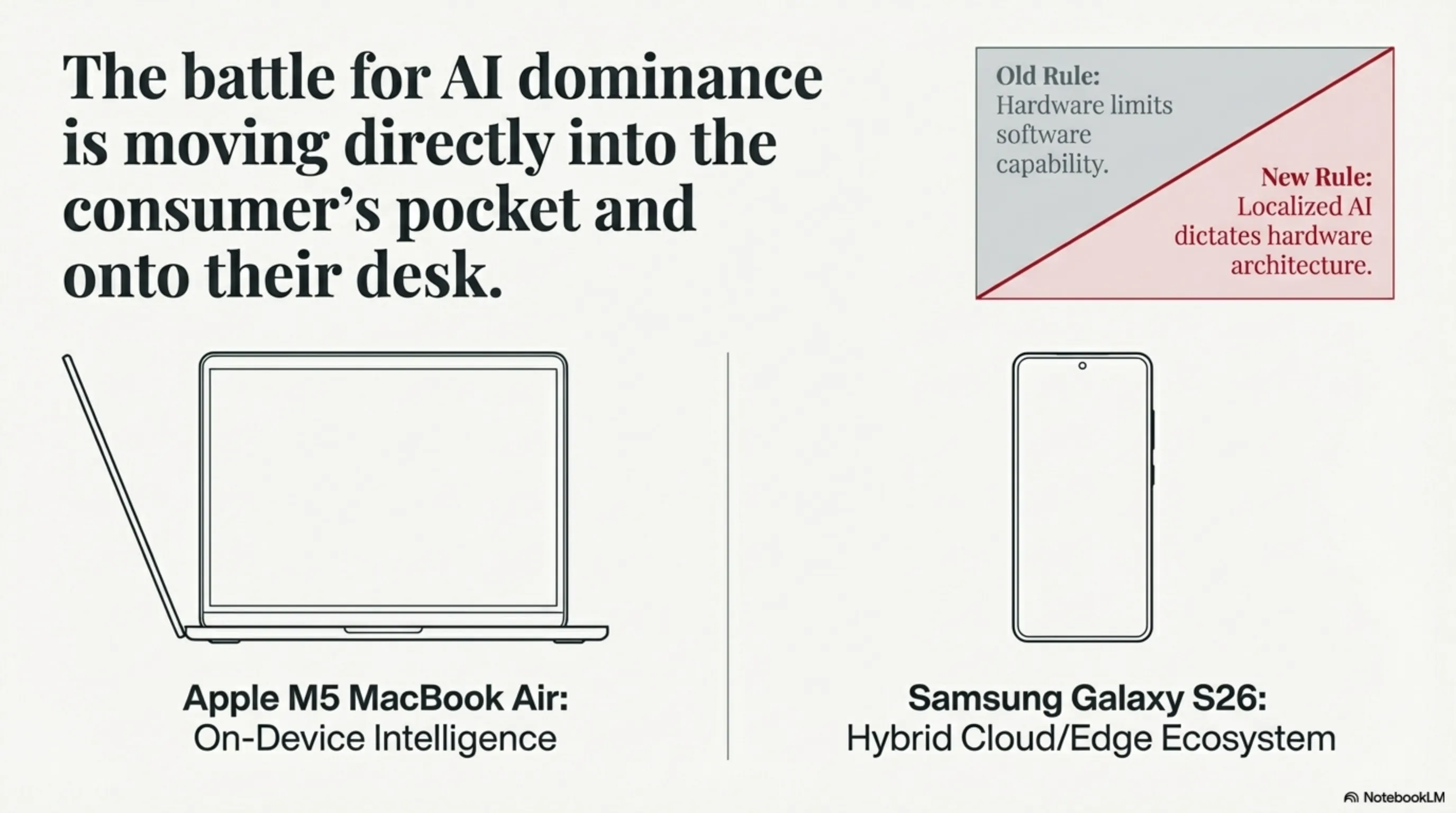
Apple introduced its new MacBook Air with the M5 chip in March 2026 — and this isn't just a routine update. The M5 represents the next generation of Apple Silicon, with a special focus on on-device AI performance.
What makes the M5 different? Three main things:
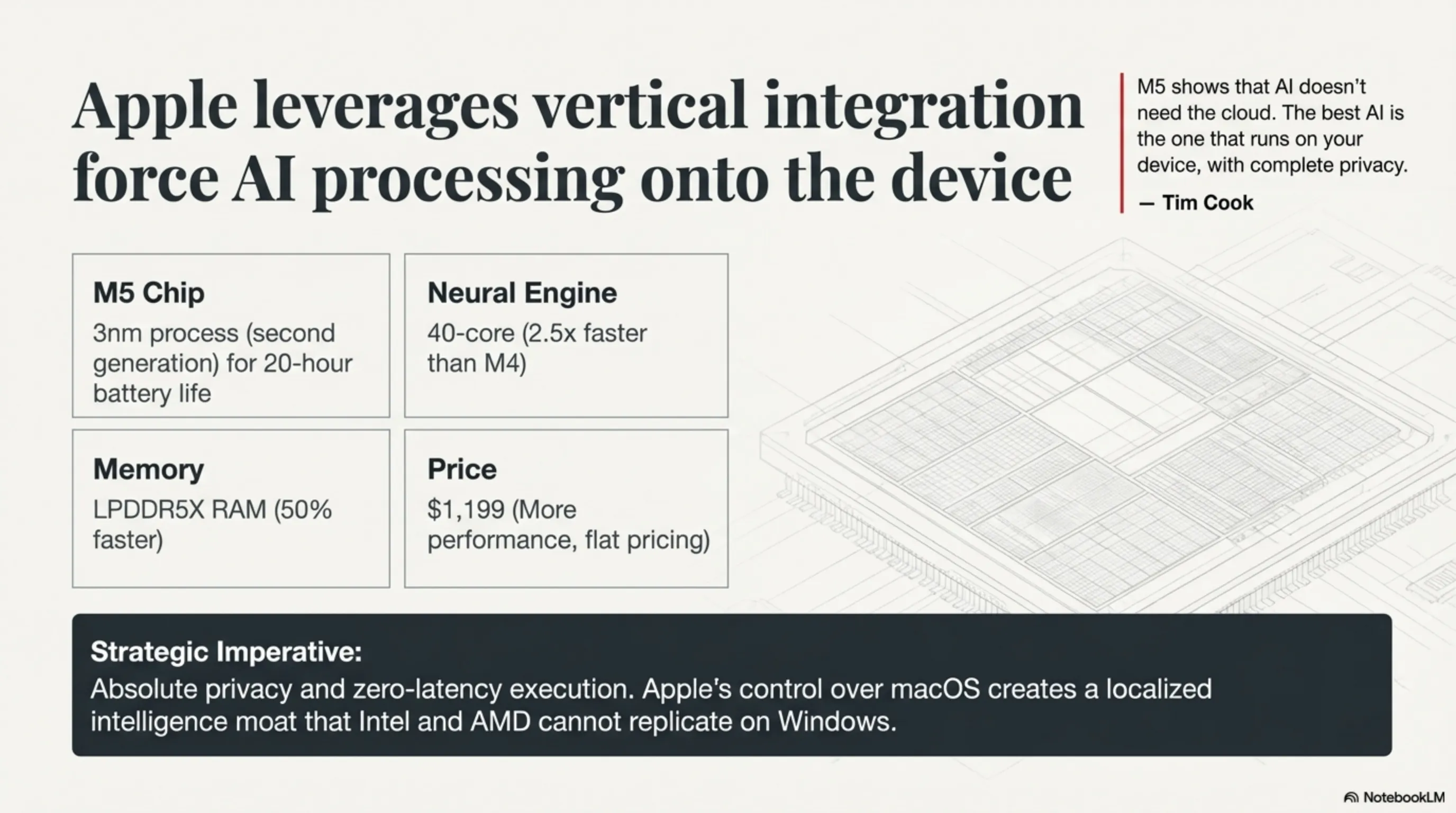
1. Advanced Neural Engine: The M5 features a 40-core Neural Engine (compared to 16-core in M4), meaning AI operations can run 2.5x faster. This matters for features like real-time translation, AI photo editing, and voice recognition.
2. Better energy efficiency: The M5 is built on a 3nm process (second generation), meaning lower power consumption and longer battery life. Apple claims the M5 MacBook Air can work up to 20 hours on a single charge.
3. Faster unified memory: The M5 uses LPDDR5X RAM, which is 50% faster than the previous generation. This means smoother multitasking and faster app execution.
But why is Apple focusing so much on on-device AI? Because Apple believes AI should run on your device — not in the cloud. This means better privacy (your data doesn't leave your device), faster speed (no need for internet connection), and lower cost (no need for expensive cloud servers).
"M5 shows that AI doesn't need the cloud. The best AI is the one that runs on your device, with complete privacy." — Tim Cook, CEO Apple
Who's the competition? The M5 is in direct competition with Intel Core Ultra and AMD Ryzen AI. But Apple has one advantage: complete control over hardware and software. This means Apple can optimize macOS exactly for M5 — something Intel and AMD can't do with Windows.
Pricing? The M5 MacBook Air starts at $1,199 — the same price as the previous generation. This means Apple is offering more performance at the same price — which is good news for consumers.
What's the future of Apple Silicon? M5 is just the beginning. Apple is already working on M6 (for 2027) and even M7 (for 2028). The goal? Building the most powerful and efficient consumer chips in the world — and making Mac the primary platform for AI.
Samsung Galaxy S26: The AI War Continues
Samsung introduced its Galaxy S26 series in early March 2026 — and the message was clear: this is an "AI-first smartphone." The Galaxy S26, S26+, and S26 Ultra all launched with advanced Galaxy AI features designed to transform the user experience.
What new AI features does it have? Samsung focused on several key areas:
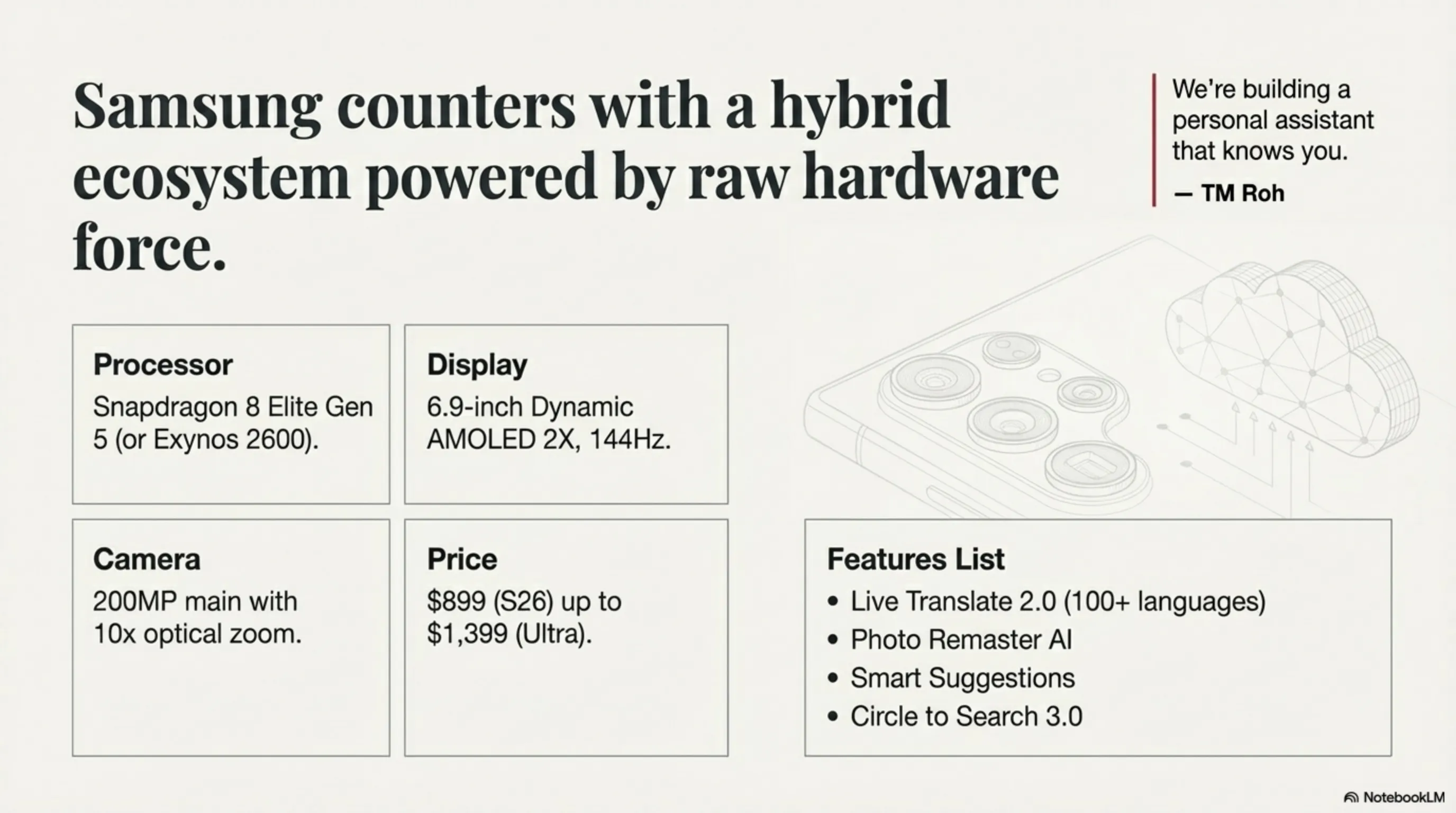
• Live Translate 2.0: Real-time translation in phone calls, messages, and even videos — with support for 100+ languages. Now you can talk to anyone in the world without learning their language.
• Photo Remaster AI: Editing old photos with AI — removing blur, increasing resolution, and even colorizing black and white photos. It's like having a professional photo editor in your pocket.
• Smart Suggestions: AI predicts what you want to do next — and makes suggestions. For example, if you order coffee every morning, AI creates a shortcut for you.
• Circle to Search 3.0: An advanced version of Google's popular feature — now you can circle anything on screen and get instant information.
But what about hardware? The Galaxy S26 Ultra ships with Snapdragon 8 Elite Gen 5 (or Exynos 2600 in some regions), Samsung's most powerful mobile chip ever. It also features:
• 6.9-inch Dynamic AMOLED 2X display with 144Hz refresh rate
• 200MP main camera with 10x optical zoom
• 5,500mAh battery with 65W fast charging
• Up to 16GB RAM and 1TB internal storage
"Galaxy S26 shows that the future of mobile is about AI — not just hardware. We're building a personal assistant that knows you." — TM Roh, President Samsung Mobile
How does it compete with iPhone? The Galaxy S26 Ultra is in direct competition with the iPhone 18 Pro Max. Both have advanced AI features, powerful cameras, and beautiful displays. But the main difference is in approach: Apple focuses on on-device AI, while Samsung uses a combination of on-device and cloud-based AI.
Pricing? The Galaxy S26 starts at $899, S26+ at $1,099, and S26 Ultra at $1,399. These prices are similar to the previous generation — showing Samsung is trying to stay competitive.
What's the future of Galaxy? Samsung is already working on S27 (for 2027), with more focus on AI, foldables, and even AR/VR integration. The smartphone war continues — and AI is the main battlefield.
Conclusion: The Night Technology Moved the Red Lines
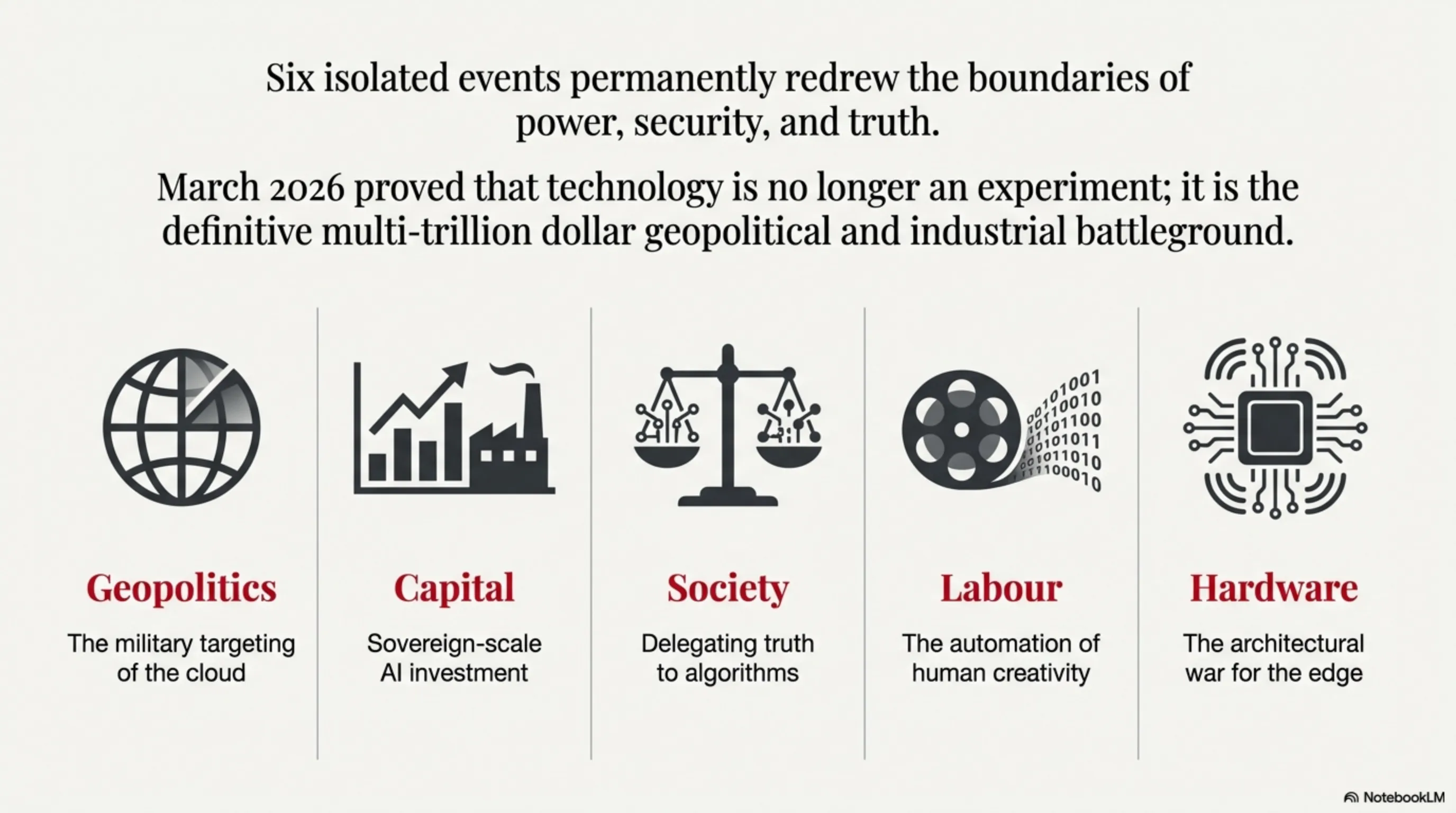
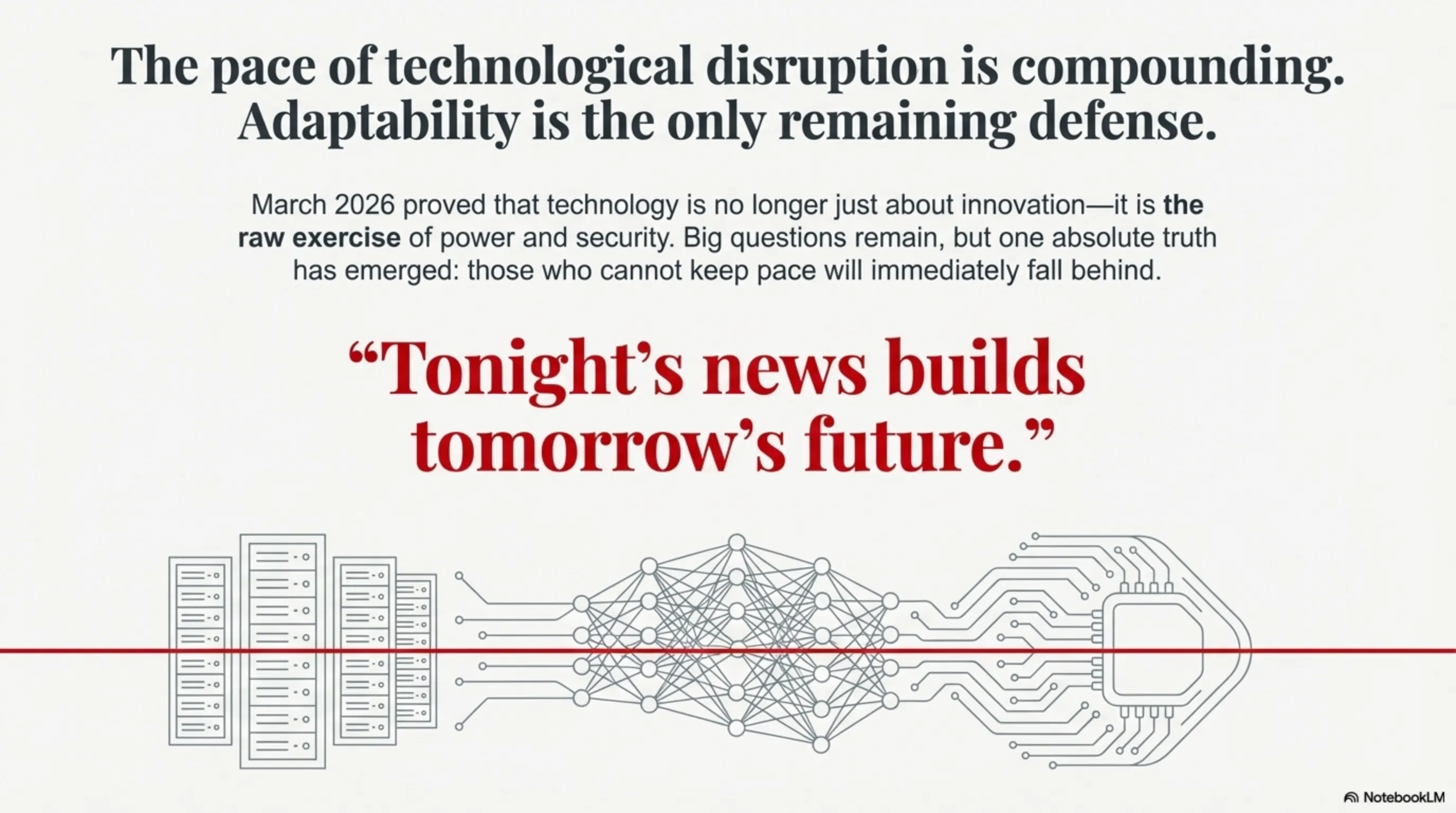
The night of March 7, 2026 showed that technology is no longer just about innovation — it's about power, security, and the future. From Elon Musk's fact-check button that wants to expose lies, to Iran's drone attack that showed the cloud is no longer safe. From OpenAI's $110 billion investment that took AI to a new phase, to Netflix's acquisition of InterPositive that's transforming cinema.
Red lines have moved: data centers are no longer outside the scope of war. AI is no longer an experiment — it's a multi-trillion dollar industry. And fact-checking is no longer human work — AI is taking it over.
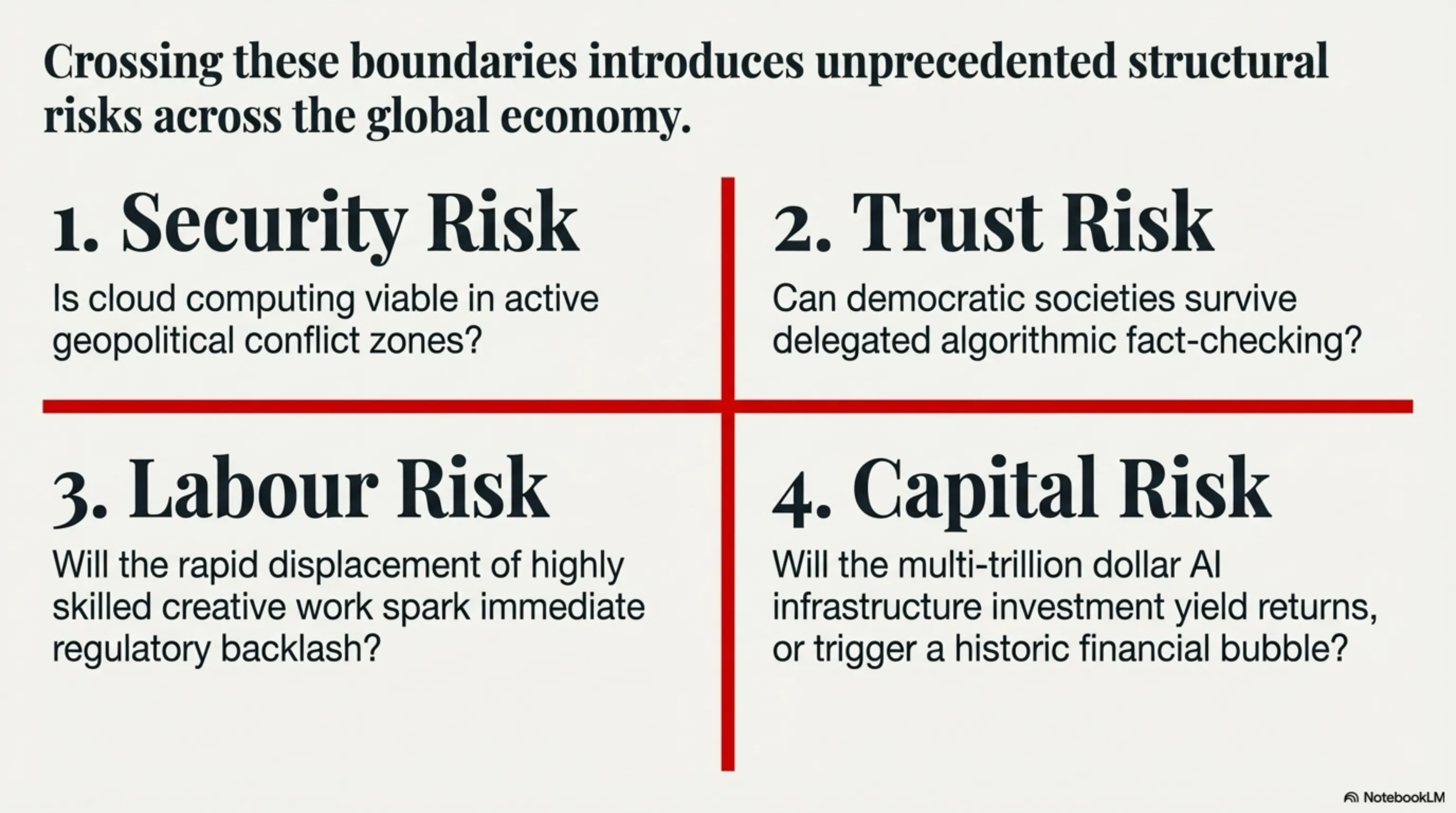
But big questions remain: Can we trust AI for fact-checking? Is cloud computing safe in conflict zones? Can AI destroy Hollywood jobs? And will massive AI investments pay off — or turn into a bubble?
One thing is certain: technology is moving faster than ever. And those who can't keep up will fall behind. Welcome to Tekin Night — where tonight's news builds tomorrow's future.
Red Lines Night (Tekin Night) Gallery