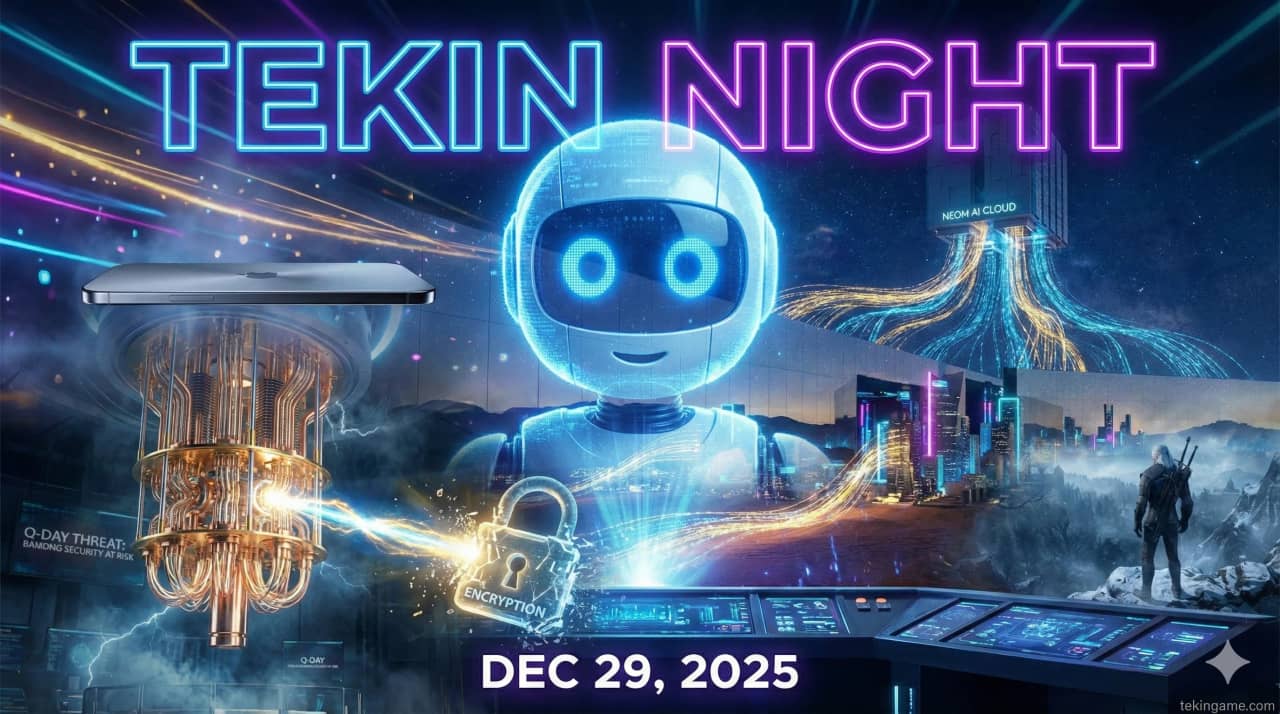
1. The Robotic Revolution: Google and Disney Align to Humanize Machines
Today, at a high-profile event in Mountain View, California, we witnessed something the tech world has been anticipating with a mix of excitement and existential dread. Major players like Google, in an unexpected collaboration with Disney's Imagineering division and several leading robotics startups, unveiled a new generation of humanoid robots that fundamentally change the rules of the game.
Beyond the Uncanny Valley
Until now, the robotics landscape was dominated by two extremes: the industrial, highly capable but soulless machines from Boston Dynamics, or the stiff, early prototypes like Tesla’s Optimus. Today’s reveal bridges that gap. Project leads explained that they are combining the "Brain of Gemini"—Google’s multimodal LLM for understanding language, context, and emotion—with the "Soul of Disney"—using animatronic principles to give robots fluid, expressive, and non-threatening body language.
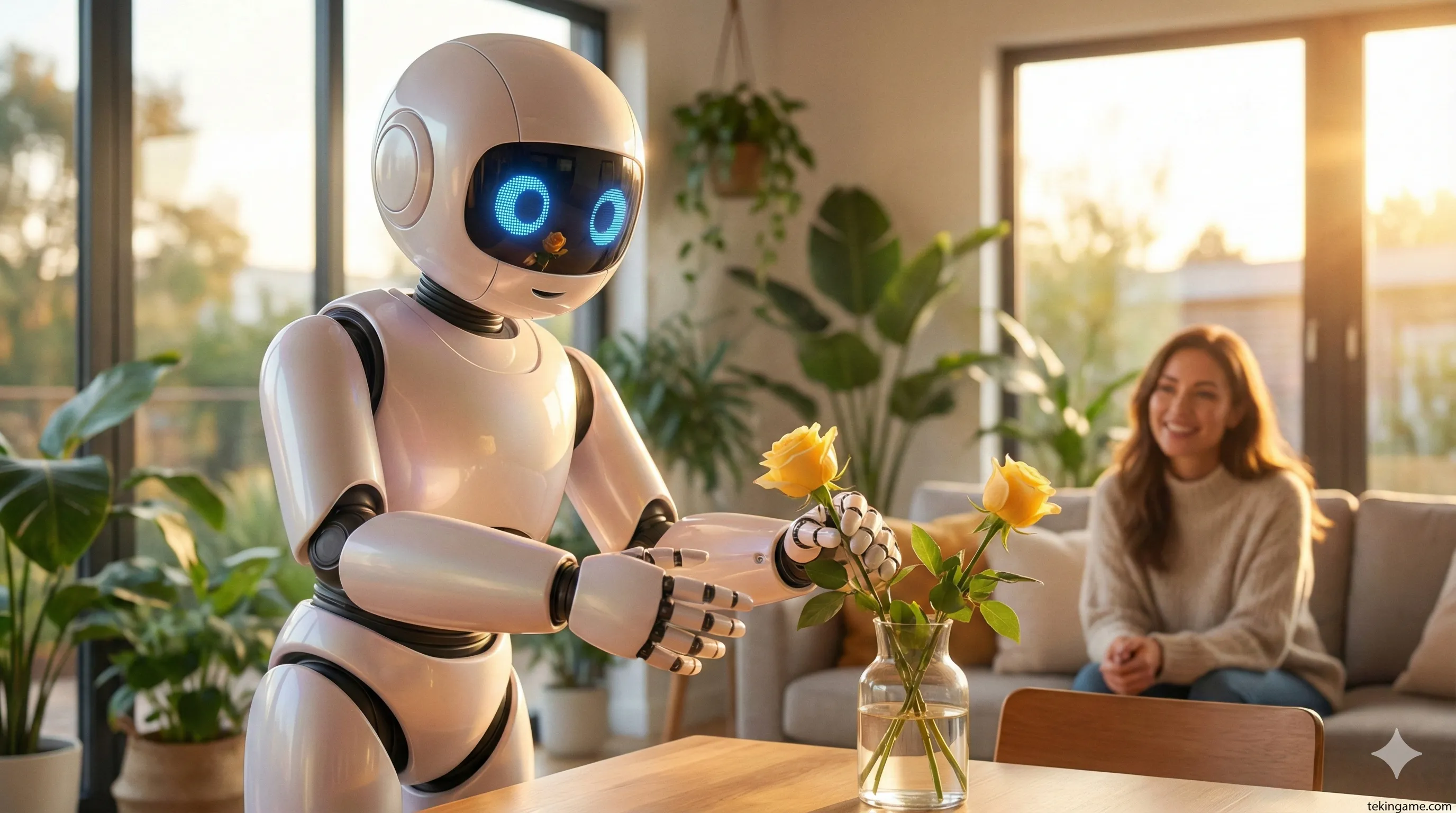
In the live demos, these robots didn't just execute complex physical commands (like "Please set the table, but be careful with that vase"); they reacted to the tone of the user. If a user shouted a command angrily, the robot adopted a submissive, de-escalating posture. If the user was sad, the robot’s movements became slower and more gentle. This "Emotional Intelligence Layer" is the missing link that has kept robots out of our homes until now.
Tekin Analysis:
Experts predict that 2026 won't be the year these robots enter average households, but it will mark their deployment in luxury hotels, high-end elder care facilities, and premium retail spaces. Google claims that by using "Vision LLMs," these robots don't need code for every movement; they can learn by watching. You show the robot how to make coffee once, and it replicates the motor function. This capability alone is set to ignite a fierce debate about labor displacement in the service industry throughout the coming year.
2. The Gulf's AI Infrastructure War: From 'Neom AI Cloud' to UAE's Smart Grid
While the West focuses on consumer robotics, a massive, capital-intensive infrastructure race is unfolding in the Middle East. Today, significant announcements from Riyadh and Abu Dhabi proved that regional strategists understand a crucial truth: Oil reserves are finite, but data is infinite.
Saudi Arabia: The Neom AI Cloud
Officials overseeing the futuristic gigaproject NEOM officially activated Phase 1 of the "Neom AI Cloud" today. This is not just a standard data center; it is one of the region's largest high-performance computing clusters, designed to host sovereign Arabic Large Language Models and manage the cognitive operations of the city itself. Saudi Arabia’s vision is for NEOM to be run by a central AI "brain" that manages traffic, energy consumption, security, and healthcare in real-time. The activation of this cloud infrastructure signals that NEOM is moving from glass models and concept videos to digital reality.
UAE: The AI-Powered Energy Grid
Simultaneously, the UAE Ministry of Energy and Infrastructure unveiled its National Program to integrate AI into the federal power grid. Part of the broader "UAE AI 2031" strategy, this project aims to eliminate human error in power plant management. The new systems will use real-time data analysis to predict power surges and demand spikes with near-perfect accuracy, dynamically allocating resources. The UAE claims this AI layer could reduce national energy costs by up to 15%. The message from both nations is clear: The Gulf intends to be the global hub for AI compute power, not just the world's gas station.
3. Mobile Rumors: Killing the 'Plus' to Birth the 'iPhone 18 Air'
If you are a fan of phones that are large yet impossibly light, the latest leaks from Ming-Chi Kuo and supply chain insiders will be music to your ears. New reports suggest that Apple is dissatisfied with the sales performance of the "Plus" models across the iPhone 14, 15, and 16 generations and is planning a radical shake-up of its lineup for 2026.
Enter the iPhone 18 Air
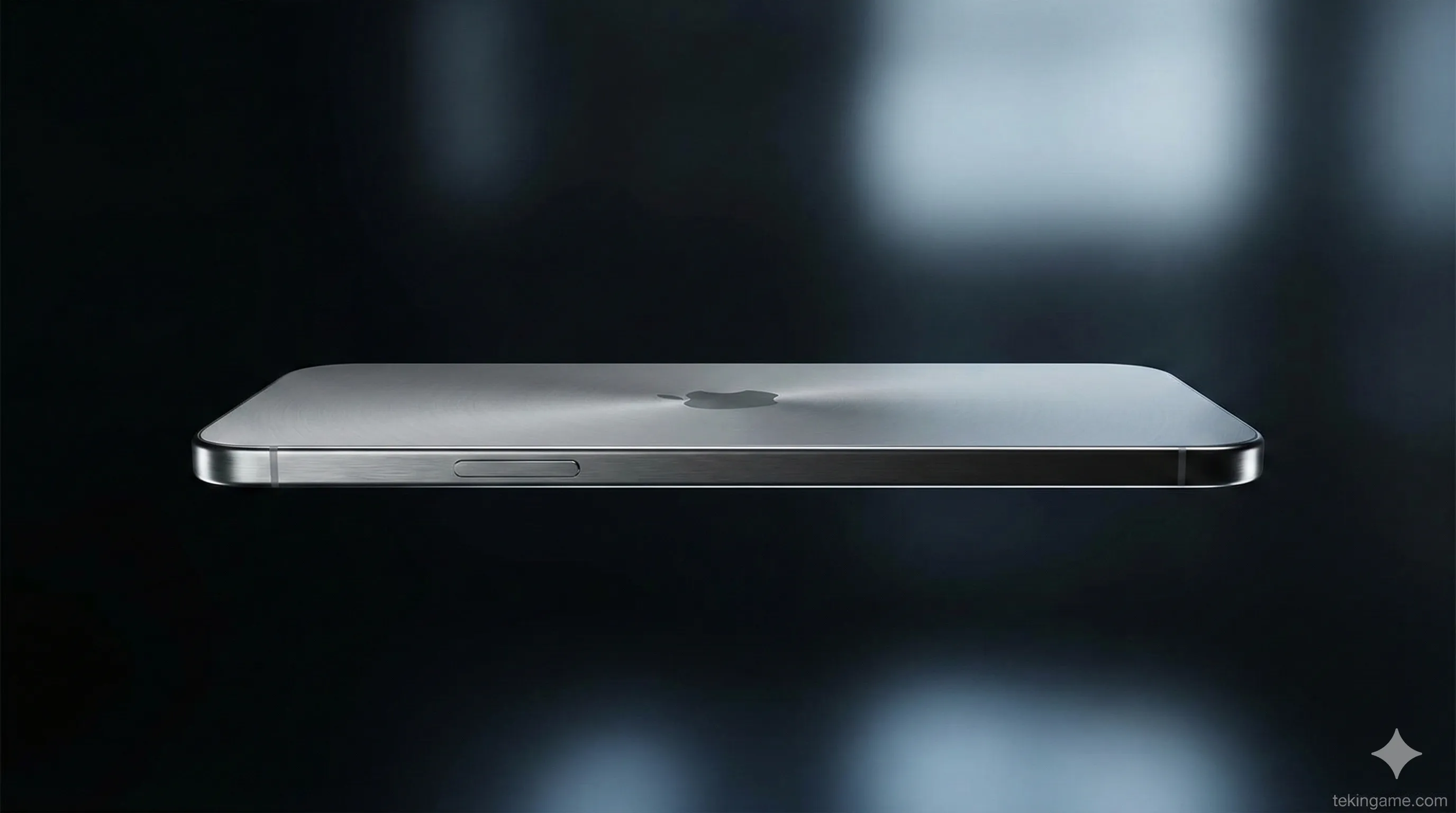
The new star of the show is tentatively named the iPhone 18 Air (or potentially "iPhone Slim"). Unlike the Plus, which was simply a base model blown up in size, the Air is designed to be a distinct premium product. The focus here is on "Form Factor" rather than "Raw Power." Leaks describe a chassis significantly thinner than any previous iPhone, utilizing a new titanium-aluminum alloy structure, and potentially removing the massive camera bumps that have plagued recent designs.

The Engineering Trade-off
However, thinness comes at a cost. Rumors suggest the Air model might feature only a single, ultra-powerful main camera, ditching the heavy telephoto lenses found on the Pro models. The device is expected to run on the A20 chip (built on TSMC’s 2nm process), which is critical not just for speed, but for thermal efficiency—allowing a smaller battery to last all day in such a thin frame. Apple seems to be targeting the "Style-Conscious" user who wants the most beautiful phone, rather than the "Pro" user who needs a pocket cinema camera.
4. The Quantum Threat: New Report Warns of 'Q-Day' for Banking Encryption
Following our morning deep-dive into crypto wallet security, a new technical report released today has sent a fresh wave of anxiety through cybersecurity circles. Published by a global consortium of security firms, the report warns that the development of Quantum Computers is accelerating faster than previous timelines suggested.

Why is this dangerous?
The digital security of our entire world—from your debit card PIN to the HTTPS protocol on websites and the private keys of Bitcoin—relies on mathematical problems (like prime factorization) that take classical supercomputers millions of years to solve. Quantum computers, however, could theoretically solve these problems in minutes. This event is known as "Q-Day."
"Harvest Now, Decrypt Later"
The report highlights a terrifying strategy currently being used by state-sponsored hackers: "Harvest Now, Decrypt Later." Bad actors are stealing encrypted data today and storing it, waiting for the day (perhaps 5-10 years from now) when a quantum computer is powerful enough to unlock it. While institutions like NIST are finalizing "Post-Quantum Cryptography" (PQC) standards, today's news is a stark warning to banks, cloud providers, and governments: The migration to quantum-resistant algorithms must start now, or 2030 will face a catastrophic security collapse.
5. Gamer's Hope: Project Polaris (The Witcher 4) Enters Full Production
After the bitter pill of the Rainbow Six Siege hack this morning, tonight brings some sweet news from Poland. Sources close to CD Projekt Red have signaled that development on The Witcher 4 (codenamed Project Polaris) is proceeding ahead of schedule and has officially entered the "Full Production" phase.
The Unreal Engine 5 Difference
The most exciting aspect for tech enthusiasts is the engine switch. Unlike Cyberpunk 2077, which was built on the proprietary and often troublesome REDengine, the new Witcher saga is being built on Unreal Engine 5. This means the developers are no longer fighting their own tools; they are leveraging the world's most advanced lighting (Lumen) and geometry (Nanite) systems out of the box. This shift allows the team to focus entirely on narrative, quest design, and world-building.
Industry analysts speculate that if the current velocity is maintained, we could see the first real gameplay reveal—and perhaps a release window—by early to mid-2026. While it remains unconfirmed if Geralt, Ciri, or a custom character will be the protagonist, knowing that one of the industry's best storytelling teams is building a true next-gen RPG on UE5 is enough to reignite the hype train. This game is expected to set the visual benchmark for open-world RPGs for the next decade.

6. Midjourney V7: The Generative King Goes 3D and Video
Finally, we close with news for the creators and artists. Strong rumors are circulating across Discord and X (formerly Twitter) that Midjourney V7 is imminent, with a potential launch window in the first week of January 2026.
According to leaks from beta testers, V7 is not just a resolution bump; it is a paradigm shift in "Spatial Understanding." The new model reportedly possesses a native understanding of 3D environments. This means generated images will have accurate depth maps, consistent lighting physics, and perfect perspective—a holy grail for concept artists and game developers who want to turn 2D generations into 3D assets.
Even more disruptive is the rumor of Video Generation capabilities. If true, Midjourney is entering direct competition with OpenAI's Sora and Runway Gen-3. If V7 can bring its signature artistic style and high fidelity to motion video—and solve the notorious text-rendering issues of previous versions—the creative toolkit for 2026 will be effectively complete. Expect full stress tests from the Tekin Game lab as soon as it drops.
The Late Night Verdict:
We end December 29 with a unique blend of modern fears (Quantum decryption and economic hacks) and futuristic hopes (Empathetic robots and next-gen worlds). Tomorrow is the final day before the New Year's Eve celebrations kick off, and we expect the "2025 Year in Review" news cycle to reach its peak. Get some rest; tomorrow is going to be a busy day.
Good Night, Tekin Army. ✨