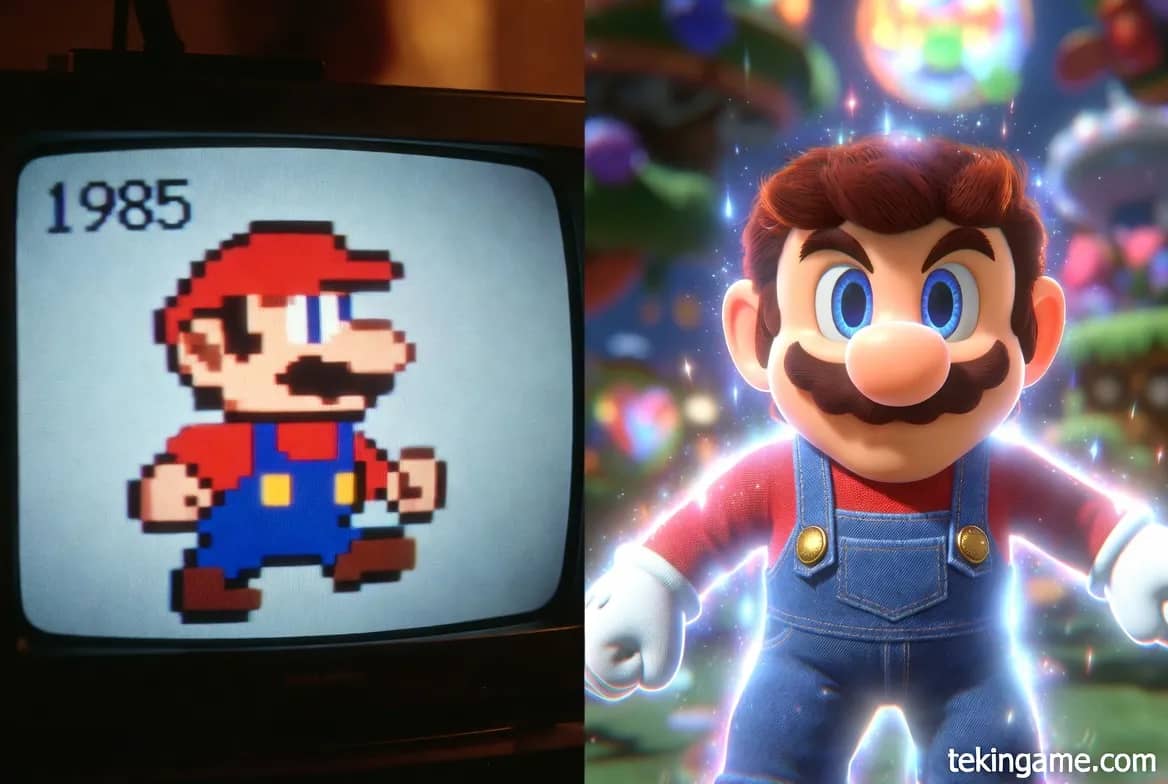
1. Introduction: When Majid Picks Up the Pen Again!
Hello, Tekin Plus family. Majid here, and today I want to take you on a long journey. Not a trip to the future and the strange technologies we usually talk about, but a trip to the past. To a time when "gaming" didn't have a complicated meaning. A time when our whole world was summarized in a 14-inch TV and a rectangular controller.
Today, we want to open the file on the heaviest and most important character in history. No, not Kratos. Not Master Chief either. Today is the Plumber's day. The man who, if he didn't exist, I probably wouldn't be here writing for you, and you wouldn't have a console to play with. Today we want to see how Super Mario pulled the gaming industry out of the grave and gave it CPR.
1.1. Why Mario isn't Just a Game
Mario is more recognized than Mickey Mouse. That's not a claim; it's a fact. According to surveys, Mario's face is more familiar to the world's population than many political leaders. Mario is the symbol of "Pure Joy" in the digital world. In an industry filled with war, gore, and dark stories, Mario is like a recess break that hasn't ended for 40 years. He taught us that no matter how small we are, with a mushroom we can grow big, and by jumping on problems, we can defeat them.
1.2. The Great Crash of 1983: The Day Games Died
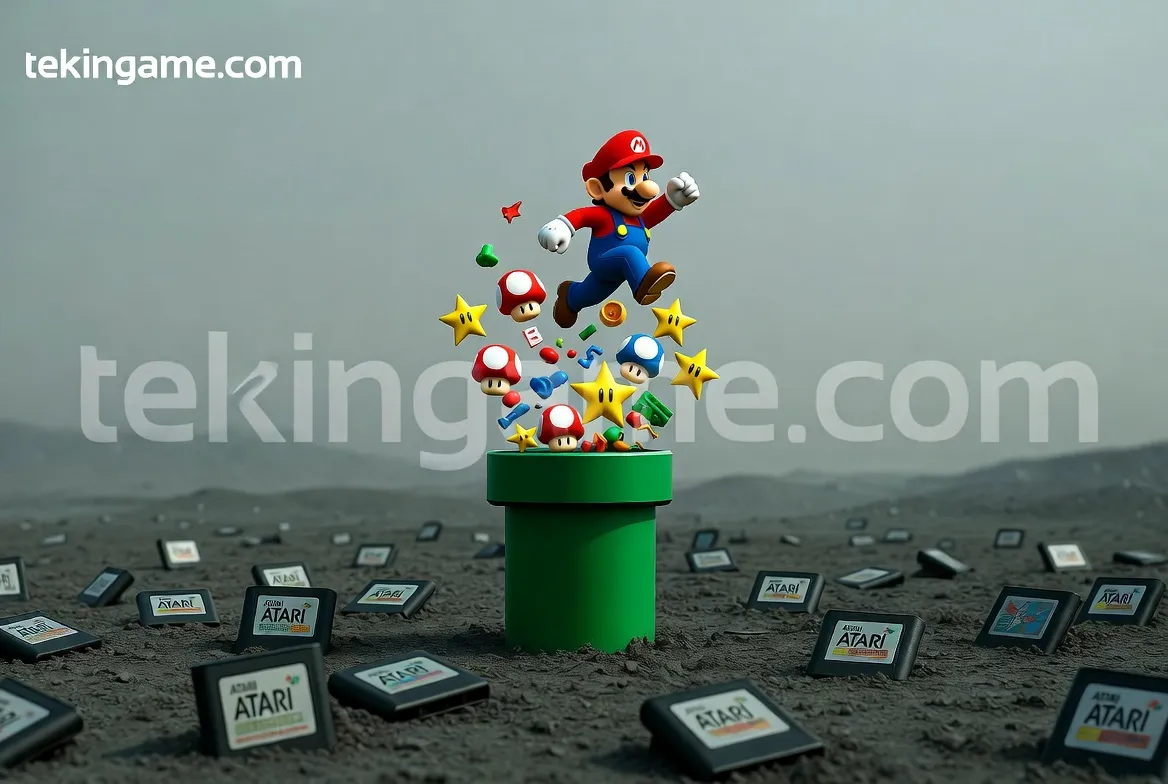
Let me paint a scary picture for you. USA, 1983. Stores were full of Atari game cartridges that no one was buying. The quality of games was terrible (heard of the E.T. disaster?). People had lost faith in "video games," saying it was just a passing fad that was over. Industry revenue dropped from $3 billion to $100 million! That's a 97% freefall.
In such a hopeless situation, a Japanese company that made playing cards (Hanafuda) decided to take a huge gamble. Nintendo sent an ugly grey box called the NES to America. No one had hope... until people popped the Super Mario Bros. cartridge into the machine.
2. Chapter 1: Birth of a Legend (1981-1985)
2.1. "Jumpman" vs. The Big Ape
Mario's story begins in 1981. Shigeru Miyamoto, a young designer at Nintendo, wanted to make a game based on Popeye, but they couldn't get the license. So, he had to create his own characters. An angry gorilla (Donkey Kong), a damsel in distress (Pauline), and a hero.
Our hero wasn't named Mario back then. They called him Jumpman. And his job wasn't plumbing; he was a carpenter! Donkey Kong exploded in arcades, but Jumpman still lacked an identity.
2.2. Why Mario? (The Angry Landlord Story!)
This is one of those stories that always brings a smile to my face. When Nintendo was setting up its US branch in Seattle, their finances were in shambles. The warehouse rent was overdue. One day, the landlord, Mr. Mario Segale, stormed into the office, shouting about the rent. To calm him down, Nintendo employees promised to name the character of their new game "Mario." And that's how Jumpman became Mario!
2.3. Super Mario Bros. (NES): The Formula That Changed the World
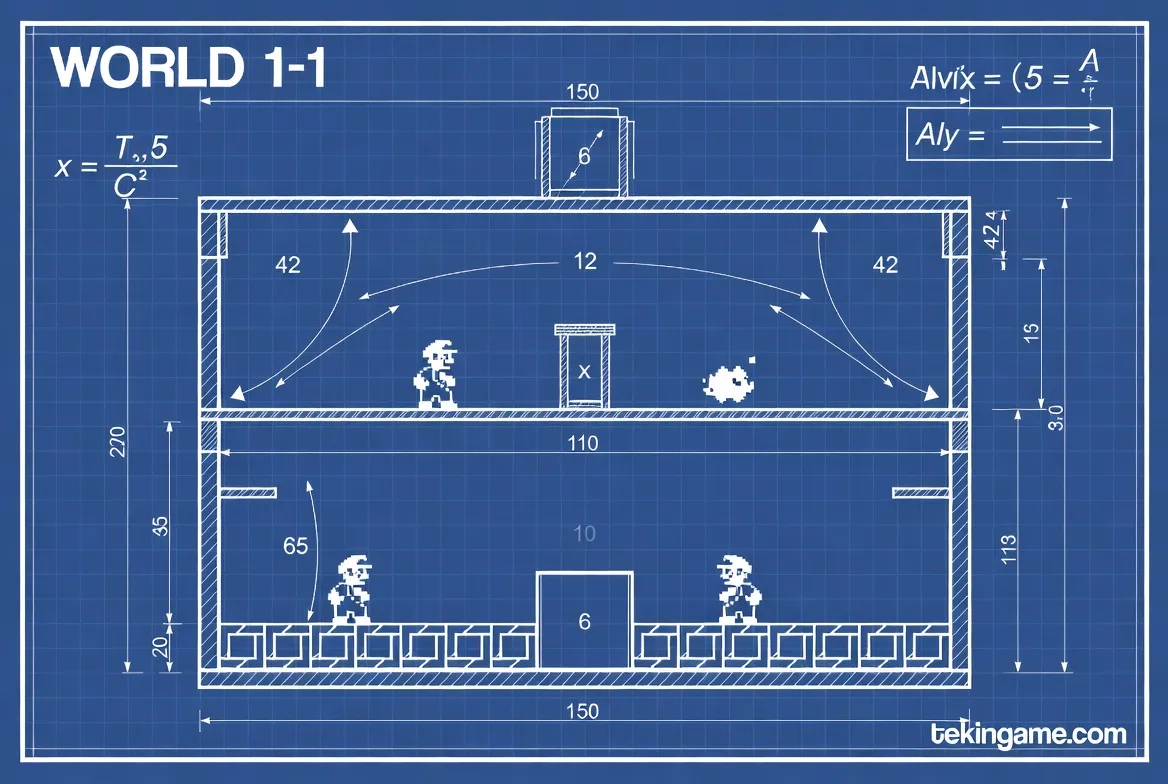
In 1985, Super Mario Bros. was released. This game changed everything. Before that, games were usually single-screen (like Pac-Man). But Mario "scrolled." You moved right, and the world was built before your eyes. Level 1-1 of this game is still taught in universities as a "Masterclass in Level Design." Without a single line of dialogue, the game taught you that mushrooms are good, Goombas are bad, and jumping is your only weapon.
3. Chapter 2: The Golden 2D Era (1988-1995)
3.1. Super Mario Bros. 3: Pure Perfection
If you ask me what the best 8-bit game in history is, I'd say Super Mario Bros. 3 without hesitation. Miyamoto went all out in this game. He introduced the World Map, new suits like the "Tanooki Suit" that allowed flight, and designed levels that remain challenging and engaging to this day. This game was so huge that a feature film (The Wizard) was made in the US just to promote it.
3.2. Console Wars: Mario vs. Sonic
In the early 90s, Sega entered the arena. The blue hedgehog (Sonic) was fast, cool, and made Mario look "slow and old." Nintendo had to answer. What was Nintendo's answer? Super Mario World on the SNES console.
3.3. Super Mario World: Enter Yoshi
Mario World had 16-bit graphics, vibrant colors, and most importantly: Yoshi. Miyamoto wanted Mario to ride a dinosaur for years, but the NES hardware couldn't handle it. On the SNES, this dream became reality. The combination of Mario and Yoshi doubled the gameplay mechanics. You could eat enemies, fly, and throw eggs. This game proved that Mario wasn't just a simple platformer; he was a complete entertainment package.
4. Chapter 3: The 3D Revolution (1996-2002)
4.1. Super Mario 64: The Lesson Nintendo Taught the World
In 1996, the gaming industry was confused. Everyone wanted to make 3D games but didn't know how. Cameras were confusing; controls were stiff. Until Super Mario 64 arrived.
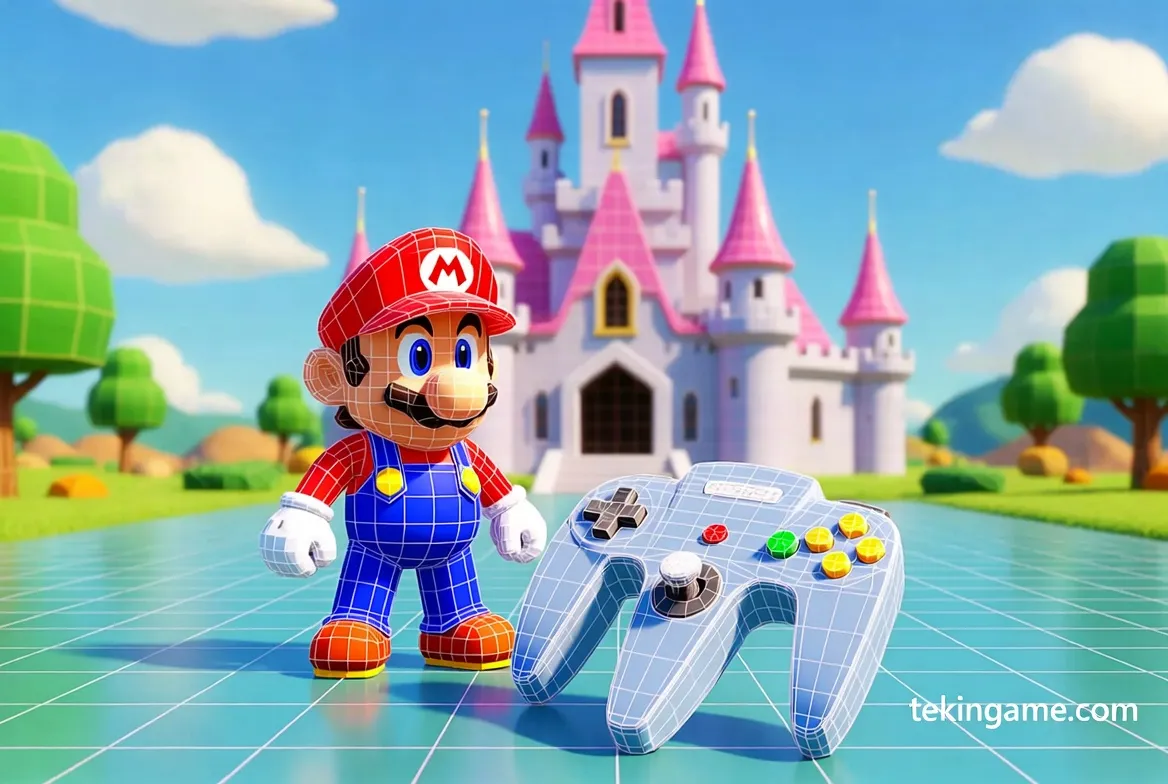
I still remember the first time I saw this game. Mario didn't just go left and right anymore; he moved in "depth." He could rotate 360 degrees. Peach's Castle courtyard was a playground just for us to run around and enjoy. With this game, Nintendo defined the standard for the third-person camera forever. If you play GTA today, you owe it to Mario 64.
4.2. The Analog Stick and Freedom
Along with Mario 64 came the N64 controller with that strange "Analog Stick." Before that, everyone played with a D-Pad. Mario taught us that for a 3D world, we need analog control to walk slowly or run fast.
4.3. Super Mario Sunshine: A Controversial Vacation
After the masterpiece 64, it was time for the GameCube and Super Mario Sunshine. This game was... how should I put it? "Weird." Mario had a water pump device (FLUDD) strapped to his back and had to clean an island. Some (like me) loved the water mechanics and summer atmosphere, but many said this isn't Mario. However, Sunshine showed that Nintendo isn't afraid to take risks.
5. Chapter 4: Back to Roots and Conquering Space (2006-2015)
5.1. New Super Mario Bros
Amidst the hype of 3D games, Nintendo realized many missed classic Mario. So, they released the New Super Mario Bros series on DS and Wii. These games were exactly the old formula but with modern graphics and 4-player capability. The result? Insane sales! Nintendo proved that good gameplay has no expiration date.
5.2. Super Mario Galaxy: A Masterpiece of Gravity
And then we come to Super Mario Galaxy on the Wii. I can boldly say this game is the most "creative" platformer in history. They sent Mario to space. You ran on tiny planets, gravity shifted, you walked upside down, and escaped black holes. The orchestral music was so epic you felt like you were watching Star Wars. Galaxy 1 & 2 were the peak of Nintendo's level design art.
6. Chapter 5: The Modern Era & Switch (2017-2025)
6.1. Odyssey: When Mario's Hat Came to Life
With the arrival of the Nintendo Switch, Mario needed a major shake-up. Super Mario Odyssey was a love letter to fans. Mario threw his hat (Cappy) and could possess enemies! You could become a T-Rex, a tank, or even a piece of meat! Odyssey revived that sense of "discovery" we had in Mario 64. The song "Jump Up, Super Star!" is still in my playlist.
6.2. Super Mario Wonder: Pure Madness
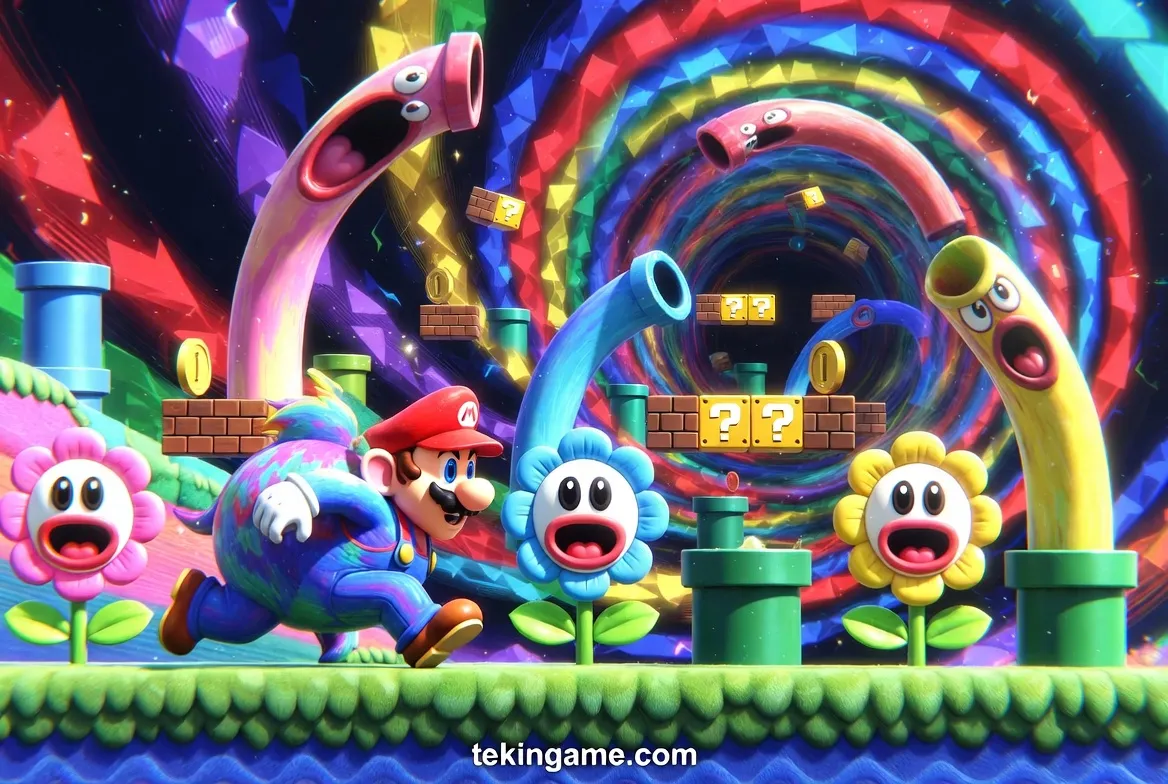
And finally, the latest masterpiece: Super Mario Bros. Wonder. After years of stagnation in the 'New' series, Wonder came and shook everything up. Talking flowers, turning into an elephant, and those "Wonder Flowers" that made the level go crazy (pipes moving, Mario stretching) when collected. This game showed that even after 40 years, Mario can still surprise us.
7. Technical & Design Analysis: Why Does Mario Always Feel "Right"?
7.1. The Kishōtenketsu Philosophy
Miyamoto uses a Japanese narrative structure called Kishōtenketsu in level design. What does it mean? 1. **Introduction:** You learn a new mechanic in a safe environment. 2. **Development:** You use the same mechanic in harder conditions. 3. **Twist:** A strange challenge is combined with that mechanic. 4. **Conclusion:** You prove your skill in a final challenge and grab the flag. This formula ensures Mario games never feel unfair. You are always learning without realizing it.
7.2. Jump Physics
Have you ever noticed how "good" jumping feels in Mario? It's not an accident. Nintendo spends months just on Mario's "acceleration," "gravity," and "friction." When Mario runs, he doesn't stop instantly; he slides a bit. When you hold the jump button, he goes higher. These nuances separate Mario from all other platformers.
8. Majid's Conclusion: Why Does Mario Never Age?
Well friends, we've reached the end of the line. 40 years have passed. Mario transformed from a handful of colored pixels into a cultural icon whose movie sells 1 billion dollars. What's the secret?
In my opinion, Mario's secret is "Honesty." Mario doesn't try to be a movie, doesn't try to tell a complex philosophical story. Mario just wants you to smile. He reminds us what "playing" actually means. In a world where everyone is chasing 8K graphics and Ray Tracing, Mario comes along with a red hat and a smiling mustache to prove that "Fun" is King.
I hope you enjoyed this historical journey. Whenever I get tired of violent and serious games, I go back to our own mushroom eater. Which version of Mario do you have the most memories with? Write to me in the comments, I read them all!
Yours truly, Majid Ghorbaninejad - Tekin Plus