1. The Tool Revolution: Why "Employee Count" No Longer Equals Quality
Until a few years ago, the formula was simple: Better Graphics = More Money. To build a highly detailed cliff face, you needed 10 senior 3D modelers working for a month.
But in 2026, the equation has changed. The Quixel Megascans library is free. AI can generate 4K textures in seconds. And Unreal Engine 5.4 handles Global Illumination automatically. This means small teams can now spend 90% of their time on "Gameplay" and "Story," rather than worrying about the polygon count of a single tree.
2. Game #1: Echoes of the Spire – When Dark Souls Meets Cyberpunk Architecture
- Developer: 3-Person Team (France)
- Engine: Unreal Engine 5.4
- Genre: Sci-Fi Soulslike
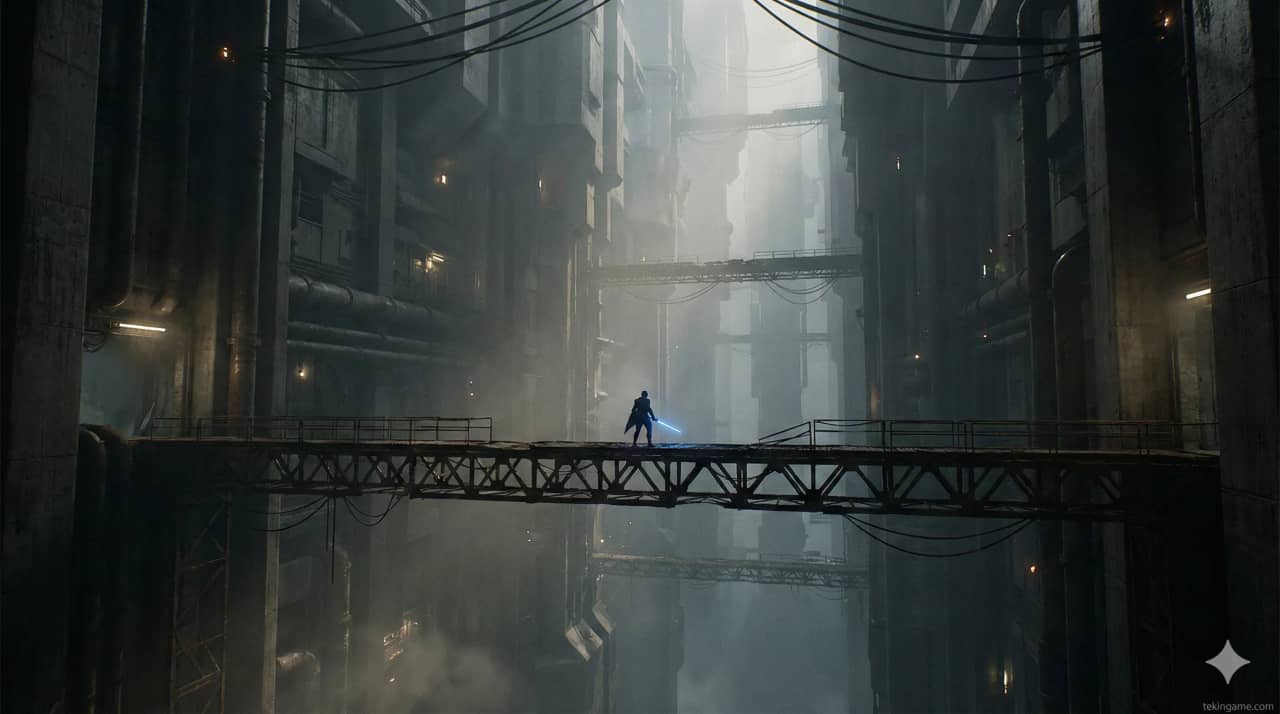
Imagine taking the precise combat mechanics of Elden Ring and placing them inside a colossal, neon-lit Megastructure similar to the anime BLAME!. Echoes of the Spire is a masterpiece of atmosphere.
The stunning aspect of this game is its scale. The camera zooms out at specific moments, making you feel like an ant against kilometer-high brutalist buildings. The team used Procedural AI to generate environments that seem endless. The combat is described as "fast, brutal, and laser-sharp." If you are tired of repetitive medieval castles, this is your medicine.
3. Game #2: Project: VANTABLACK – The Bodycam Shooter That Blurred Reality
- Developer: 1-Person Team (Ex-DICE Developer)
- Engine: Custom UE5 Build
- Genre: Hyper-realistic Bodycam Shooter
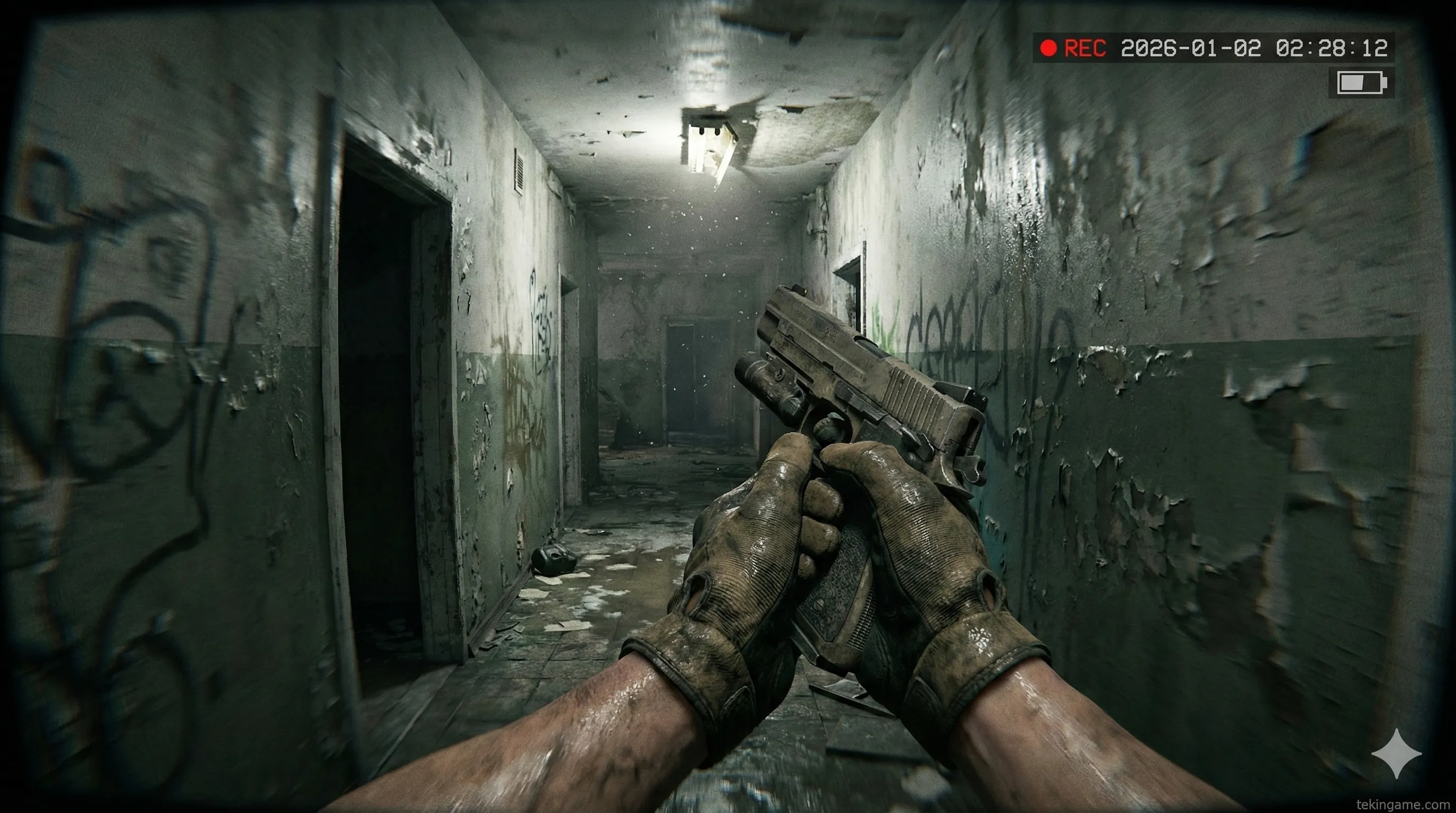
Remember how Unrecord broke the internet in 2023? The next generation has arrived. Project: VANTABLACK is a tactical shooter played from the perspective of a police bodycam.
The graphics are described as "terrifying." Not because of monsters, but because your brain struggles to distinguish if the video is real or a game. The hand movements, the camera shake while running, and the dirty, realistic lighting of urban environments have caused YouTube to age-restrict its trailers multiple times for "Real Violence." This game proves that one talented individual can challenge the entire Call of Duty team.
4. Game #3: Deep State – Espionage Sim with Real Generative AI NPCs

- Developer: 5-Person Team (London)
- Technology: Generative AI NPCs (LLM)
- Genre: Immersive Sim / RPG
This game isn't a rival to GTA's graphics, but to its AI. In Deep State, you are a spy infiltrating an organization. Here is the catch: No dialogue is pre-written.
All NPCs are powered by Large Language Models (LLMs). You can speak to a guard via your microphone, offer him a bribe, lie to him, or threaten him. He will react based on his generated personality and your words. This realizes the long-held dream of "Absolute Freedom" in gaming. The graphics are minimal and Noir, but the gameplay depth is an ocean.
5. Game #4: Forest of Liars – The Most Beautiful Vegetation in Gaming History
- Developer: Art Studio (Japan)
- Engine: Unreal Engine 5 (Nanite Heavy)
- Genre: Adventure / Puzzle
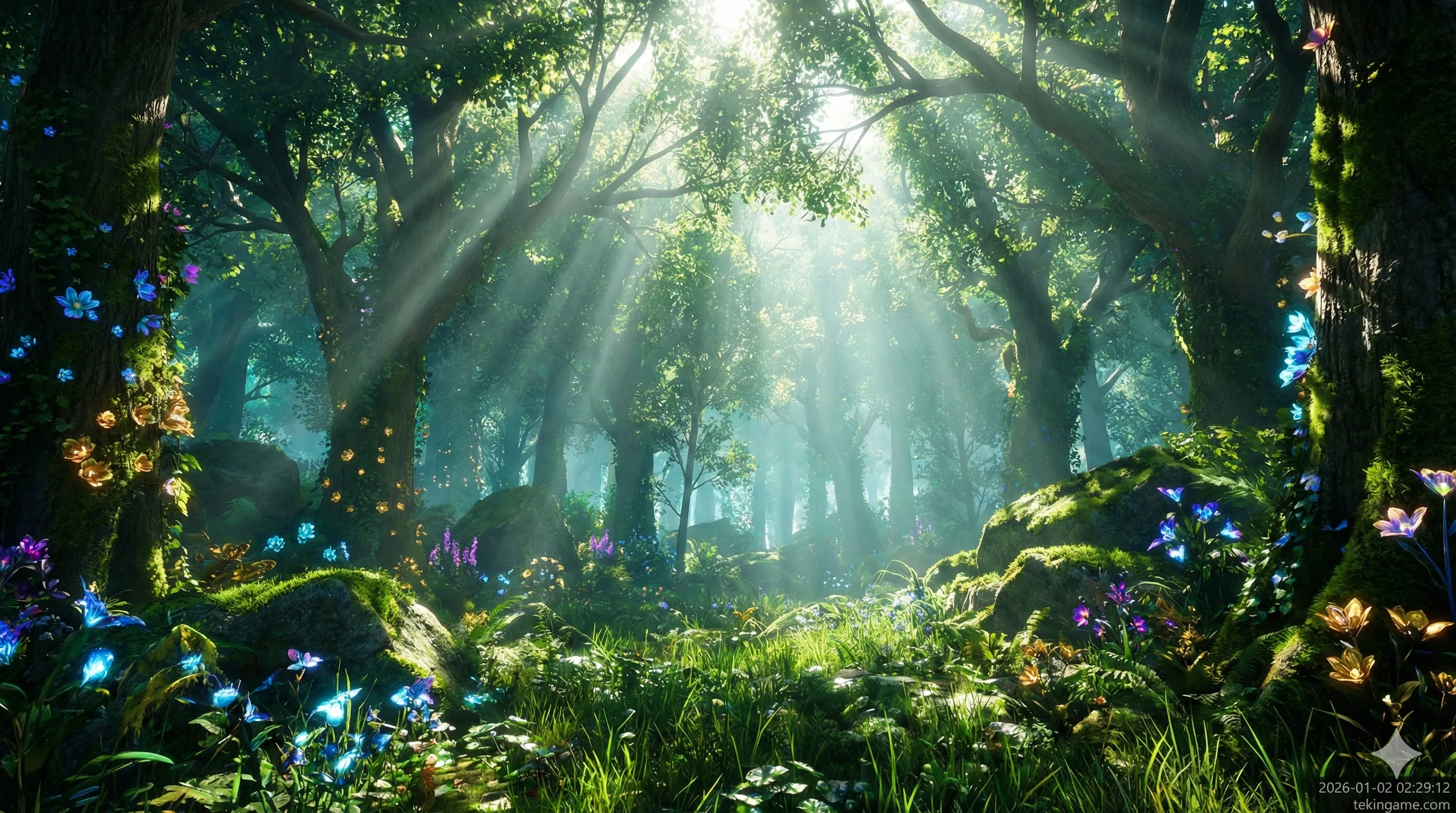
If you aren't looking for action and just want to treat your eyes, this is it. Forest of Liars utilizes Nanite technology to build a forest where "every single leaf" is an independent 3D model.
The vegetation density is so high it melts previous-gen GPUs. Lumen lighting makes you feel the warmth of the sun piercing through the branches. The gameplay involves solving environmental puzzles, but the main attraction is walking through a world that looks more beautiful than reality itself.
6. Game #5: Neon Drift – The True Rival to Need for Speed with Soft-Body Physics
- Developer: 4-Person Team (Car Enthusiasts)
- Engine: Chaos Physics Engine
- Genre: Open World Racing
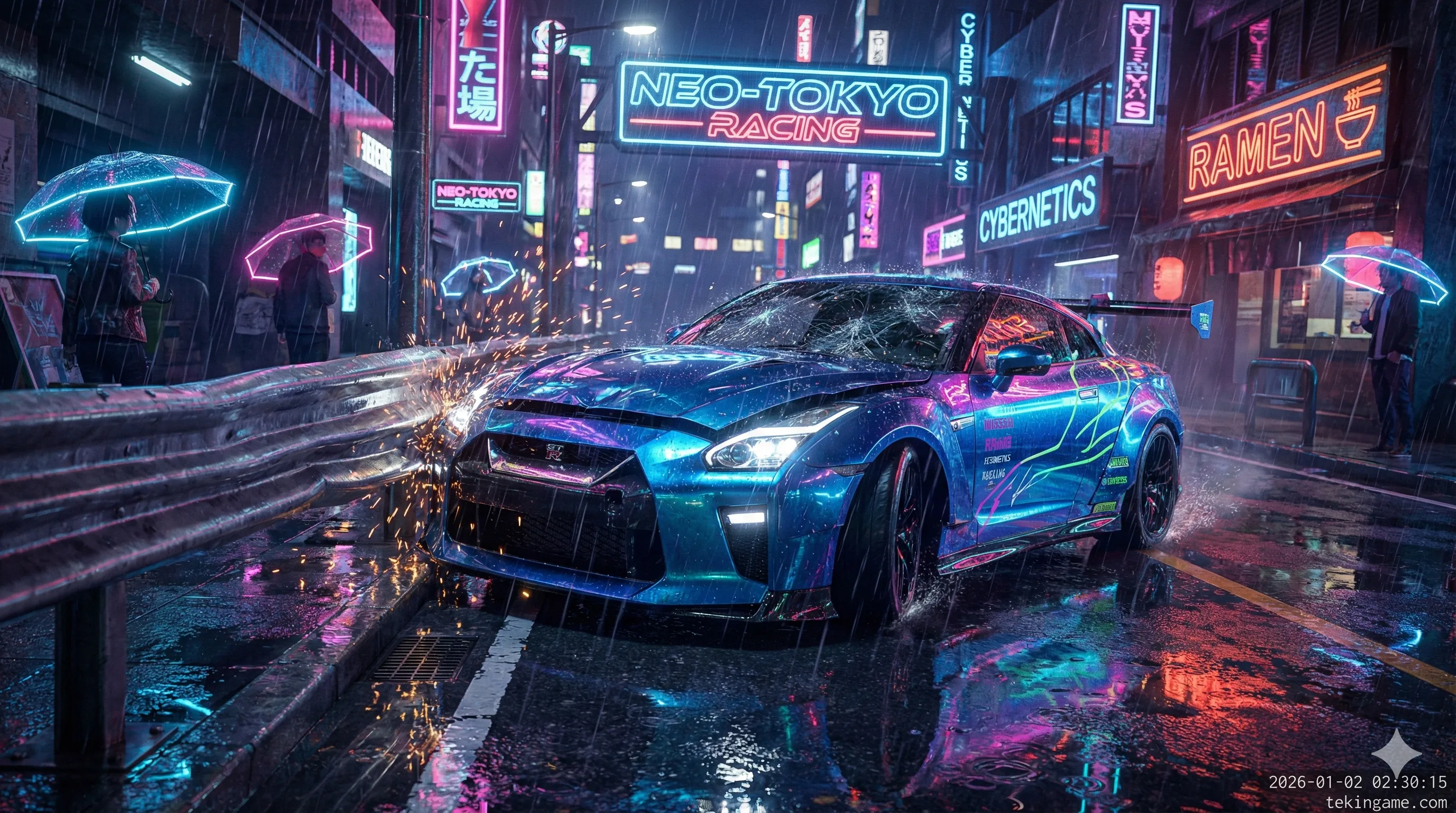
The Need for Speed series has been stuck in arcade physics for years. But Neon Drift is built by mechanical engineers. This game simulates a fictional, rainy Tokyo where car physics are brutally realistic.
The soft-body destruction system is similar to BeamNG, but with next-gen graphics. If you hit a guardrail at 200 km/h, your car crumples like a soda can. The neon reflections on wet asphalt are the best showcase of Ray Tracing we have seen. This is for those who take driving seriously.
7. The Value Proposition: Why Pay $30 for Soul Instead of $70 for Factory Products?
You might ask, why should I play these? The answer is one word: Soul.
AAA games are like factory products; polished but predictable. They are designed to please everyone. But the Indie games above take risks. They might have bugs, they might be short, but they offer an experience you won't forget for years.
Furthermore, these games usually cost between $25 and $40. For the price of one $70 Ubisoft title, you can buy two of these masterpieces and support independent creators who are building the future of the industry.
8. Conclusion: Supporting the Creative Madmen
2026 is a strange year. On one side, giants are stagnating and remaking the past. On the other, small teams are building the future with powerful tools.
Games like Project: VANTABLACK or Echoes of the Spire prove that "Creativity" is not limited by budget. Tekin Plus suggests: Add at least one of these to your Steam Wishlist this year. GTA VI's graphics might be great, but real innovation is happening elsewhere.