
1. AI & Law: Dissecting the Historic NIST Framework
The most significant administrative news of the day—perhaps the year—was the release of the official draft of the new NIST framework. This document is poised to become the "Constitution" of cybersecurity in the age of Artificial Intelligence.
In Washington, the National Institute of Standards and Technology (NIST) released the "Cybersecurity Framework Profile for Artificial Intelligence." This is no longer just a set of friendly suggestions; it is a blueprint that tells organizations exactly how to apply the famous NIST CSF to AI systems. The profile is built upon three core pillars, which NIST has named Secure, Defend, and Thwart:
- Secure: Focusing on the infrastructure. Hardening AI components—from servers and models to training data and APIs—against bugs, misconfigurations, and adversarial attacks.
- Defend: Using AI to bolster cyber defense. How can models assist in intrusion detection, log analysis, and incident response without becoming a single point of failure themselves?
- Thwart: Resisting AI-powered attackers. Hackers are now using AI to scale phishing campaigns and automate vulnerability scanning. Organizations must use this framework to "thwart" these automated threats.
1.2. The End of the "Wild West" Demo Era
Industry experts are calling this moment "AI security getting the red tape treatment." It means that AI is finally entering the standard cycle of auditing, compliance, and contractual requirements that the rest of the cybersecurity world has lived with for decades.
For banks and financial institutions, a separate guide was released detailing how to manage AI cyber risks in credit modeling and customer service chatbots.
The message tonight is clear: From now on, any organization serious about AI—from FinTech giants to SaaS startups—can no longer rely on a "cool demo." They must have a security dossier for every model that complies with the new NIST profile.
2. AI & Fear: OpenAI's "Operator" Project Leaks
While NIST attempts to regulate the space, OpenAI is breaking new ground that regulators might not have even imagined yet.
2.1. The Death of the Human Click
Reports surfaced today indicating that OpenAI's secret project, codenamed "Operator," is slated for a January 2026 release. This new model is not a text-based chatbot; it is a Computer Use Agent (CUA).
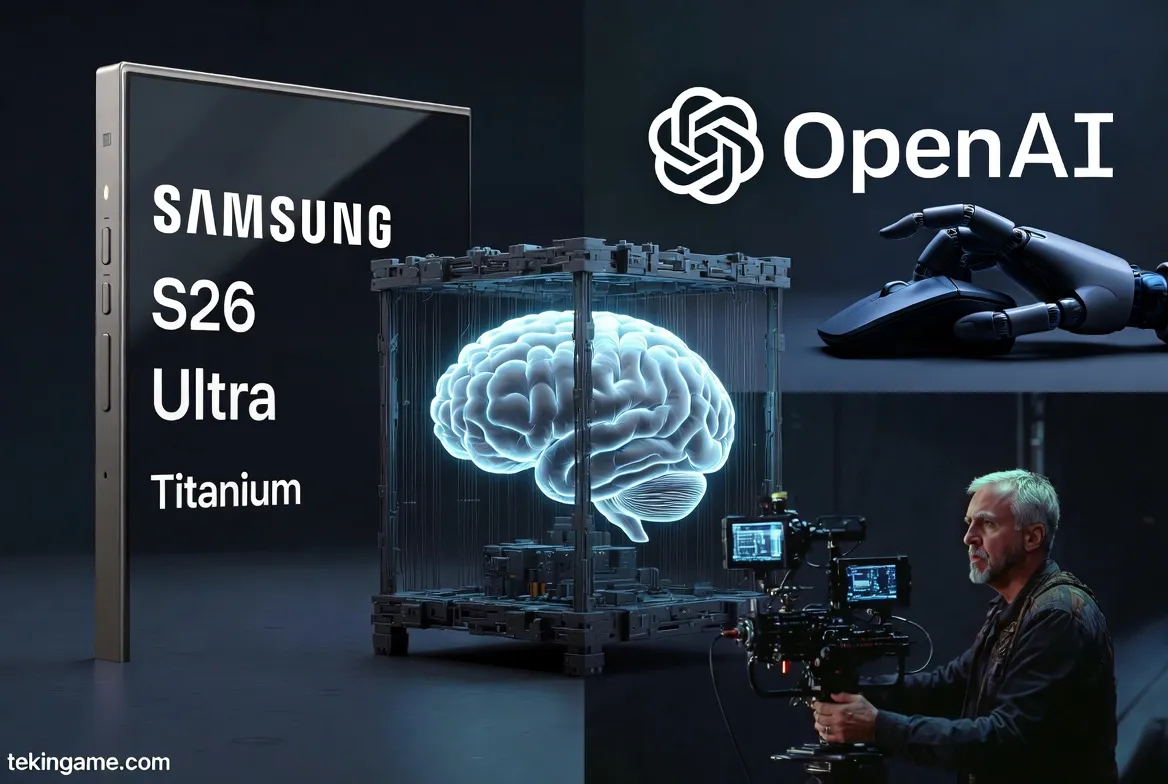
The terrifying angle is this: This AI takes control of your mouse cursor and keyboard. It "sees" your monitor, identifies buttons, and can autonomously perform tasks like "booking flight tickets," "shopping online," or "debugging code in VS Code" without your intervention.
2.2. The Security Nightmare of Autonomous Agents
While this technology promises a 10x boost in productivity, it wakes up new security nightmares.
What if an agent suffers from "Action Hallucination" and deletes the company database instead of temporary files? Or what if hackers use "Prompt Injection" techniques to instruct your agent to wire your funds to an offshore account?
Project Operator signals that we are transitioning from the "Internet of Information" to the "Internet of Actions"—where AI doesn't just talk; it does.
3. Mobile: The Galaxy S26 Ultra & The Titanium Armor
Hours ago, Samsung's silence was shattered by a 12-second video clip leaked from a production line in Vietnam, revealing the next Korean monster.
3.1. What the Vietnam Factory Leak Revealed
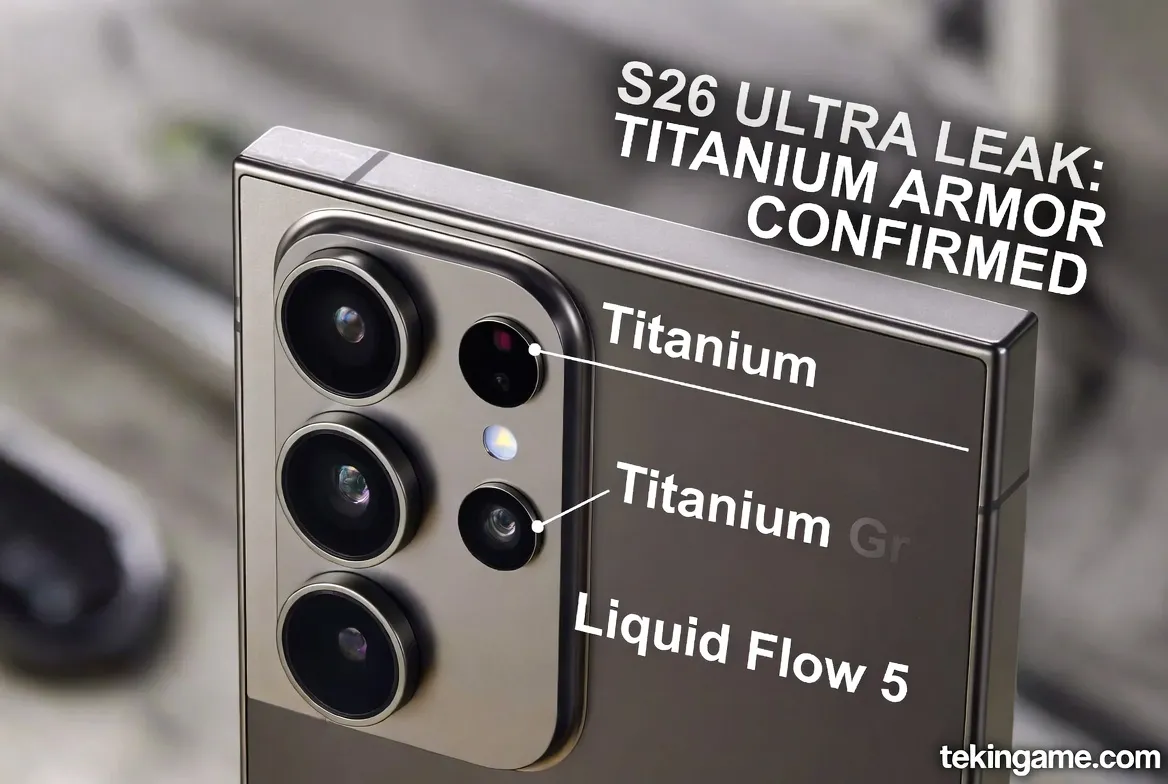
In the video, we see a worker holding the raw metal chassis of the Galaxy S26 Ultra. Sources have confirmed that for the first time, Samsung is utilizing Titanium Grade 5 (the alloy used in aerospace engineering). This is a direct response to the iPhone's titanium body, but with significantly higher hardness and heat dissipation properties.
3.2. "Liquid Flow" Design: A New Era for Cameras
Even more interesting is the shift in design language. Samsung has finally abandoned the "separate camera rings" design, which was notorious for collecting dust. They have moved to a new aesthetic called "Liquid Flow"—a seamless, elevated glass contour that houses the lenses. Rumors of a massive 320MP 1-inch sensor (ISOCELL HP9) have also gained traction following this visual confirmation.
4. Cinema: Wētā FX's Magic in Avatar: Fire and Ash
The entertainment world was not left behind today. The final trailer for *Avatar: Fire and Ash* dropped, sparking heated technical debates across the internet.
4.1. Solving the Underwater Fire Paradox
James Cameron continues to push the boundaries of CGI. In today's TekinGame technical analysis, we explored how Wētā FX solved the physics challenge of "Magma entering the Ocean."
To achieve this, they rewrote their rendering engine to physically simulate phenomena like the Leidenfrost Effect (the insulating steam layer around hot objects) and real-time Phase Change (liquid turning into rock). Furthermore, the skin texture of the "Ash People"—which, unlike previous Na'vi, is matte and light-absorbing—represents another leap forward in digital cinematography.
5. Gaming: A Dream December & The Sony Handheld Rumor
On the gaming front, December 2025 is shaping up to be one of the busiest months in history. Titles like Metroid Prime 4: Beyond, Elden Ring: Nightreign, and The Rogue Prince of Persia prove that the industry is still investing heavily in massive single-player experiences.
5.1. Project "Vita Trinity": Sony Strikes Back?
But the bombshell news was in hardware. New patents from Sony have been discovered, suggesting the company is working on a spiritual successor to the PSP and PS Vita.
Unlike the PlayStation Portal, which was merely a streaming device, the new project—codenamed "Vita Trinity"—reportedly features powerful internal hardware (likely based on AMD architecture) capable of running PS5 games at optimized settings. It seems the success of the Steam Deck and Nintendo Switch 2 has convinced Sony that they cannot afford to ignore the native handheld market any longer.
6. Financial Markets: Bitcoin Breaks $105k
In the financial sector, Bitcoin smashed through the psychological barrier of $105,000 today, with analysts now eyeing targets of $120k. The surge is attributed to the approval of new Ethereum ETFs and a massive influx of institutional capital from Asian markets.
In the mobile market, with Christmas approaching and the impending launch of the S26, we are seeing heavy discounts on current flagships. The Pixel 10 and iPhone 17 have seen price drops globally. Our upgrade guide suggests that if your current phone lacks a powerful NPU (Neural Processing Unit), now is the time to upgrade, as 2026 apps will be practically unusable without local AI hardware.
7. Conclusion: The World is Being "Tuned" by AI
If we piece together today's puzzle (December 18), a clear image of the future emerges:
At the top layer, NIST is trying to turn AI safety from an ethical suggestion into a legal requirement.
At the tech layer, companies like OpenAI and Samsung are advancing at light speed; one by giving AI "hands," and the other by building "aerospace" bodies for phones.
And at the user layer, we gamers and cinephiles are looking at the Avatar trailer and new games with sharper eyes, waiting for the next generation of hardware to run them.
The final message tonight is this: Technology waits for no one. You either ride the wave of new regulations and tools, or you remain a spectator.