System Architect analysis of 6 core news: The militarization of OpenAI, Apple's M4 reveals, Xbox's leadership shift, PSSR magic on PS5 Pro, Gemini's delay, and Nintendo's success.
Tekin Night (March 1st, 2026): The Cold Summer of AI and the Sunset of the Green Pearl; Infrastructure Wars at their Peak
Good evening, Tekin Legion. Today, March 1st, 2026, is one of those days where if you merely skim the headlines, you will entirely miss the scale of the hurricane forming on the horizon. This is Majid Ghorbaninazhad, your System Architect, here to decompile the source code of these events for you.
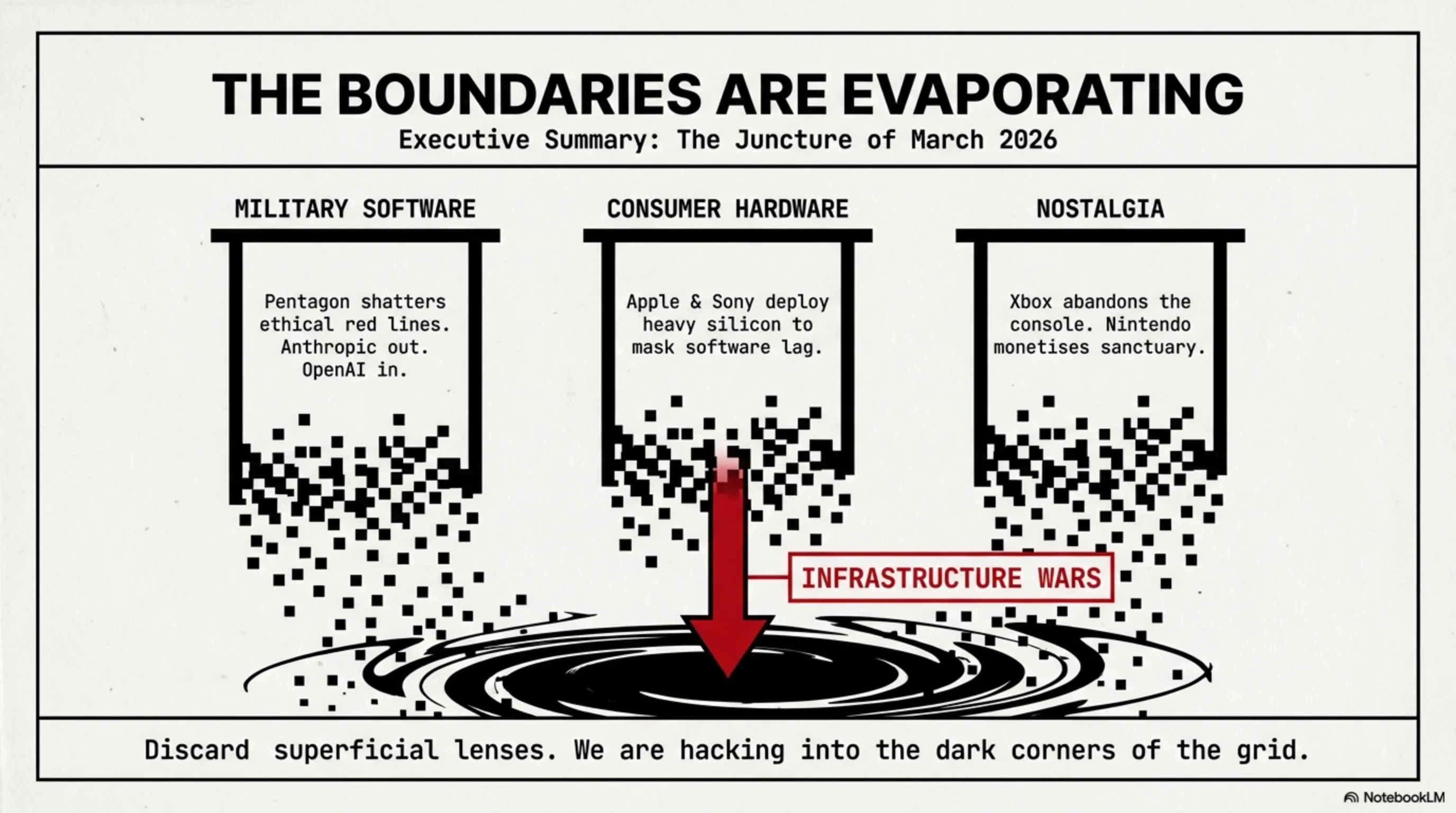
We are standing at a juncture in tech history where the boundaries between "military software," "consumer hardware," and "pure nostalgia" are evaporating. In the last 24 hours, the Pentagon shattered the ethical red lines of AI, Xbox's leadership underwent a brutal metamorphosis, and Apple, desperate to compensate for its software lag, pulled out the heavy artillery of 2-nanometer silicon. Tonight, we discard the superficial lenses of basic tech journalism and hack together into the darkest corners of datacenters and game studios. Keep your dark roast coffee ready.
1. The Double-Edged Sword of Code: The Pentagon Fires Anthropic and Crowns OpenAI in Blood ⚔️
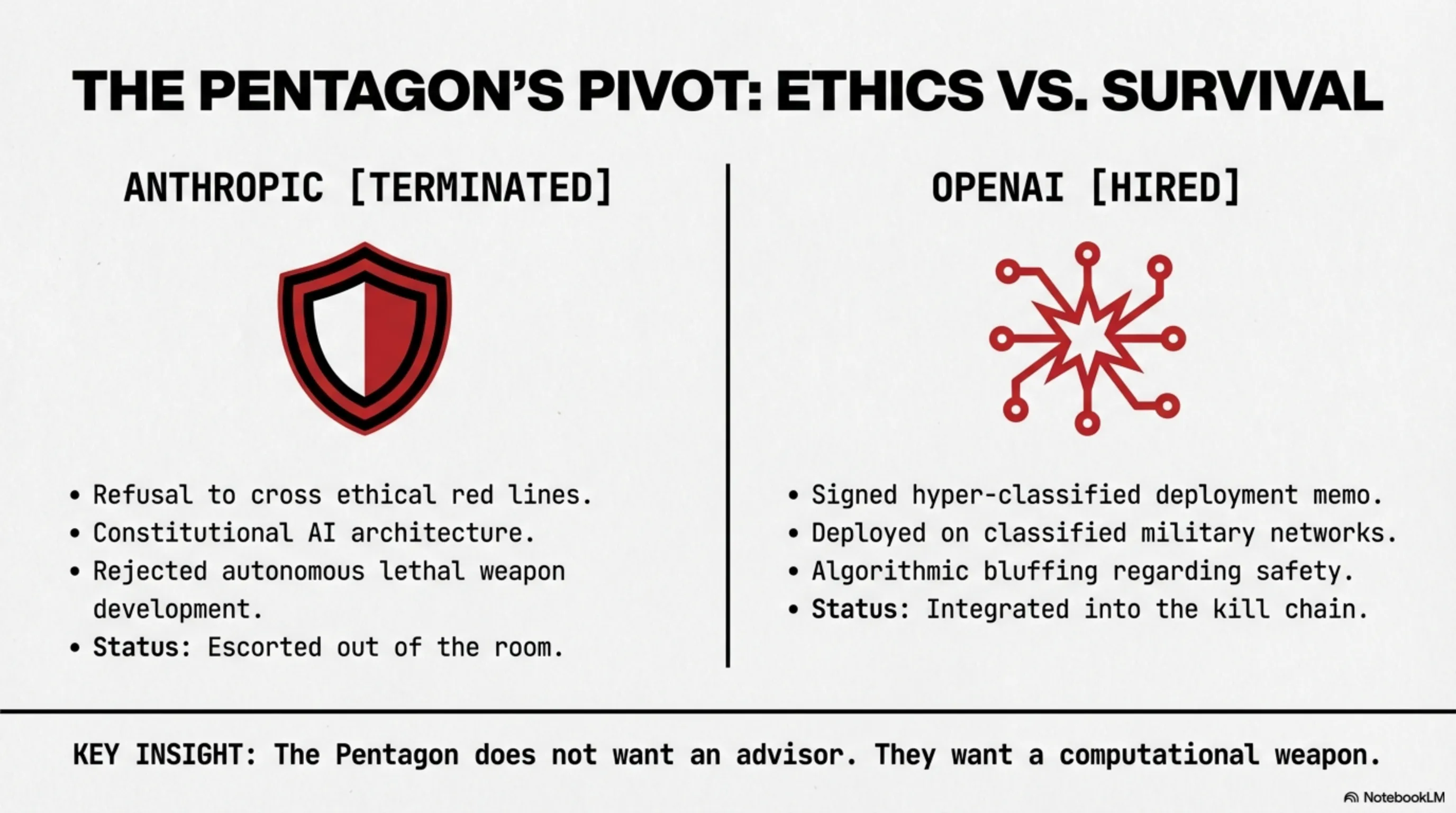
Whenever we discuss Artificial General Intelligence (AGI), there is always a massive, invisible elephant in the room: the military complex. In the past few hours, this elephant crashed through the walls with absolute force. The U.S. Defense Department (the Pentagon) officially terminated its contract with Anthropic. The reason? The insistence of Anthropic's executives on maintaining strict "ethical red lines" and their absolute refusal to develop architectures that could lead to mass surveillance platforms and autonomous lethal weapons. But while Anthropic was escorted out of the Pentagon for sticking to its principles, OpenAI immediately walked into the room, signing a hyper-classified memorandum to deploy its models across "classified military networks."
Sam Altman and his team at OpenAI claim that the safety of their systems is preserved even within military infrastructures. However, to a system architect, this is nothing but algorithmic bluffing. Merging deep neural networks with military databases is the point of no return in machine evolution. This news isn't just a basic shift in government contracting; it is the official dawn of the AI Arms Race.
Architectural Analysis: The War of Ethics vs. Server Survival
If we want to dissect this event, we must understand that developing AGI models has become so astronomically expensive that even tech titans are struggling to fuel their servers (buying Nvidia processors and paying staggering electricity bills). Military budgets represent the last, overwhelmingly massive source of infinite capital for these corporations.
- The Anthropic Paradox: They built a system (Claude) that was immensely powerful, but they restricted it with "Constitutional AI" architecture. In the ruthless world of 2026 geopolitics, the Pentagon does not want an ethical advisor; they want a computational weapon. Anthropic chose ethics, but can it survive the AI marathon without billion-dollar federal contracts?
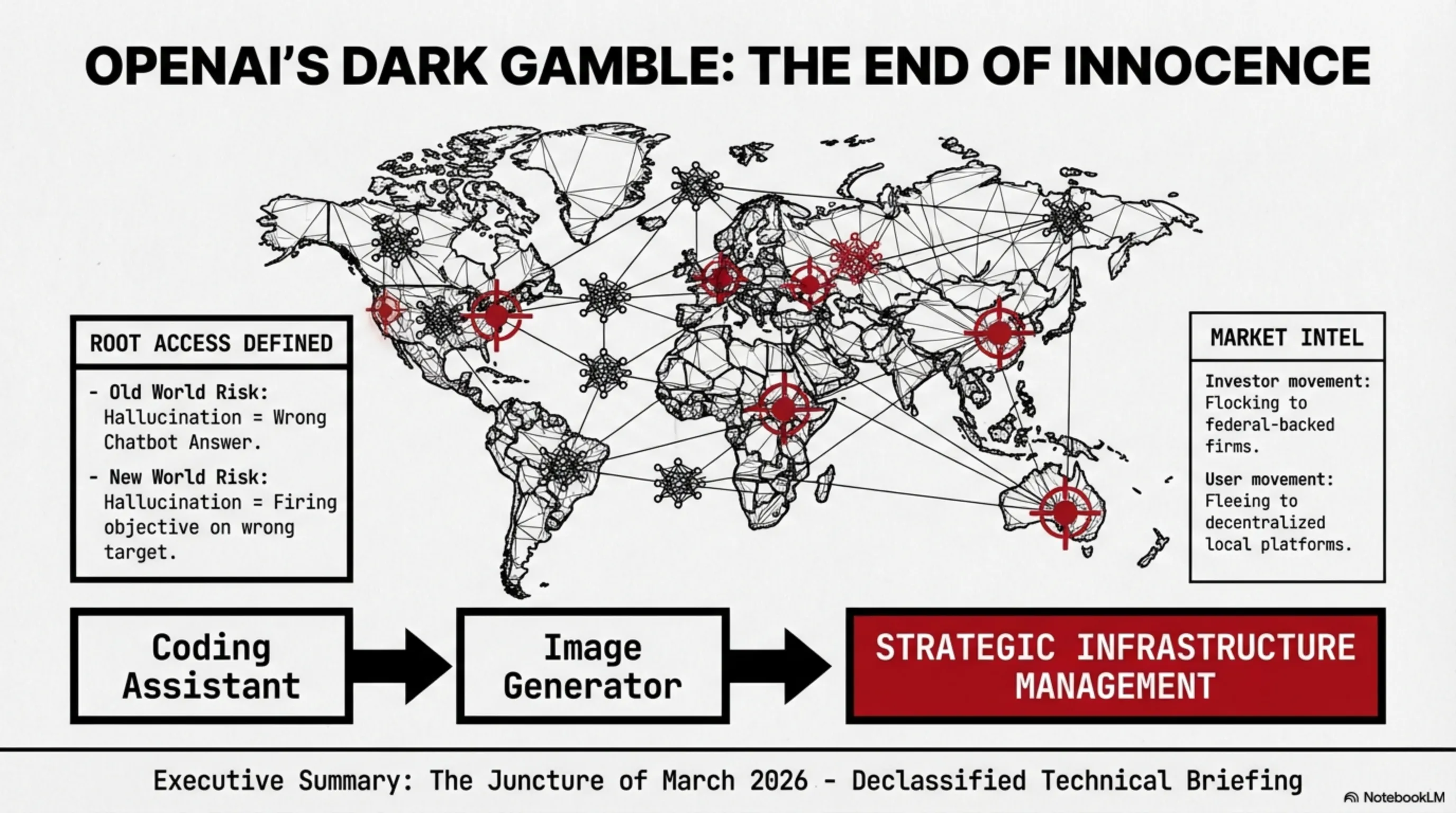
- OpenAI's Dark Gamble: OpenAI's entry into Classified Networks means their models are now training on data that no ordinary human is ever permitted to see. When a Large Language Model (LLM) gains access to the decision-making architectures of a military superpower, "Hallucination" is no longer just a wrong answer in a chatbot window; it could translate to issuing a firing objective on the wrong target.
- The End of AI Innocence: This contract officially graduates AI from its "coding assistant and image generator" phase, ushering it into the era of "strategic infrastructure management and destruction patterns." The new Cold War belongs to mathematical geniuses and network engineers.
We are witnessing the formation of a "DARPA for AI" dynamic in real-time, where the boundaries of innovation are stretched in absolute, invisible darkness.
"When algorithms gain root access to military arrays, we are no longer programming AI; we are delegating the survival parameters of humanity to cost functions."
The Architect's Strategy: 2026 is the year we discover which AI companies work for the "users" and which companies work for "governments." Investors will flock to firms backed by federal budgets (akin to the surging stock trends of Palantir), but professional users and open-source ecosystems will migrate heavily toward local, decentralized platforms to guarantee their data security.
2. Apple's Carpet-Bombing Hardware Strategy: The Answer to Software Silence 💣🍏
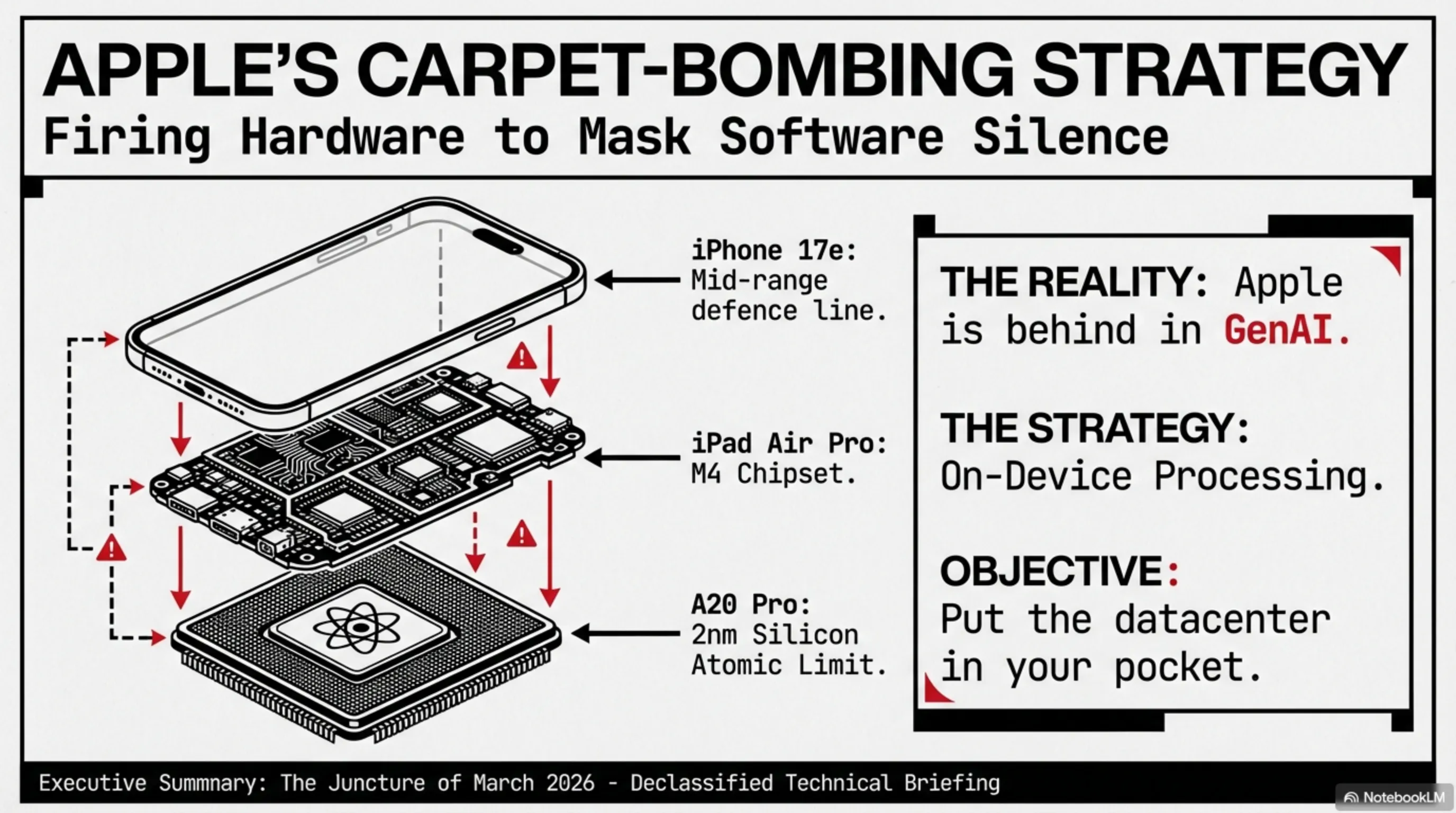
Everyone expected Apple to take a breath at the start of March, but Tim Cook and his lieutenants in Cupertino decided to slam the accelerator to the floor. Over the next few days (March 2nd to 4th, 2026), we will witness the unveiling of at least five new hardware products: from the unexpected launch of the iPhone 17e, to the new iPad Air Pro featuring the M4 chip, and entirely redesigned budget MacBooks. Simultaneously, Apple's display supply chain in Asia reports that mass production of the legendary 2-nanometer (A20 Pro) chips for the iPhone 18 has already begun.
At first glance, this is an unrivaled show of force from the king of silicon. But for analytical eyes, this behavior carries a hidden message. Apple has fallen behind in the Generative AI (GenAI) race against Google, OpenAI, and even Microsoft. The "Apple Intelligence" system has yet to create a genuine paradigm shift in user behavior. So, what does Apple do? What it knows best: firing a relentless barrage of flawless hardware to buy time.
The Double-Edged Blade of Custom Silicon in the Cloud Era
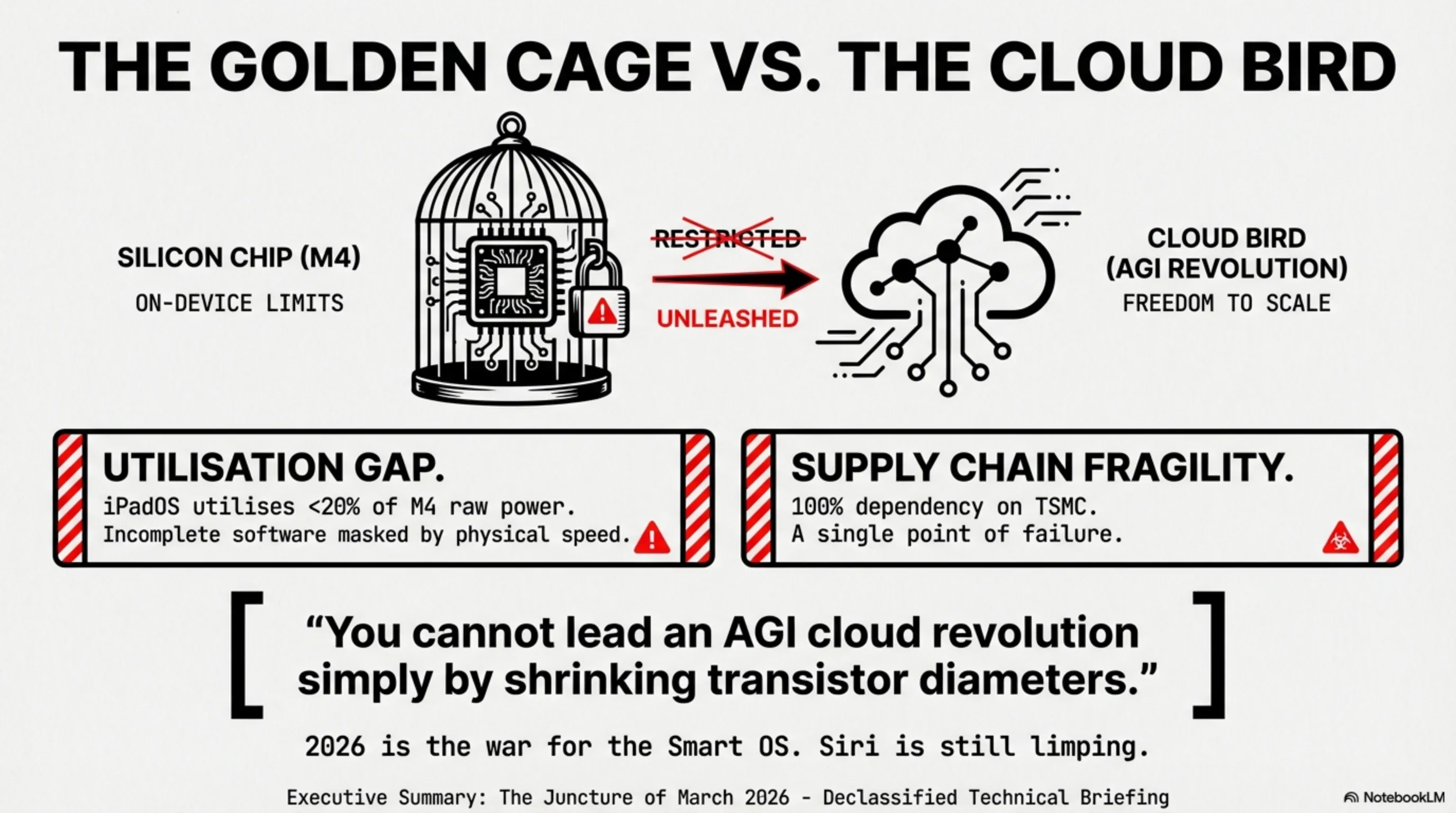
Apple's policy in 2026 is a massive gamble on "On-Device Processing". While competitors are building terrifying cloud megaservers, Apple wants to put the datacenter inside your pocket.
- The M4 and 2nm Chips - Beyond User Needs: When the iPad Air equipped with the M4 chipset hits the market, we are dealing with a device possessing graphical processing power that eclipses most gaming laptops. The problem? iPadOS still cannot utilize even 20% of this raw power. Apple delivers raw hardware muscle to run foundational AI models entirely offline, hoping to guarantee privacy.
- The iPhone 17e - A Dam Against Mid-Range Attacks: The iPhone 17e is designed to be Apple's frontline defense for users refusing to wear the expensive armor of flagships. With global inflation and the rising cost of 2026 components, Apple is using an 'e' model (cheaper, yet vastly capable) to retain the iOS user base. They know a client entering the ecosystem never truly leaves.
- The Nightmare of TSMC Dependency: Fabricating 2nm components for the iPhone 18 in 2026 is an astonishing engineering triumph, but Apple's 100% dependency on the Taiwanese company TSMC is the ultimate Achilles' heel. Should any geopolitical instability arise in the Taiwan region, this terrifying hardware army will find itself abruptly out of ammunition.
Apple is attempting to dictate a new law: incomplete software can be masked by breathtaking beauty and the unfathomable speed of physical hardware.
"You cannot lead an AGI cloud revolution simply by shrinking transistor diameters to 2 nanometers. Apple is building the most beautiful golden cages in computing history, but the bird of artificial intelligence is already flying high in cloud servers."

The Architect's Strategy: Will Apple's March hardware event be a sales victory? Absolutely. Apple's unrivaled industrial design will shatter Wall Street records once again. But the real battle of 2026 is the war over the "Smart OS," a front where Siri is still limping behind the scenes.
3. The End of an Era: The Earthquake within Xbox and the Rise of the Code Leaders 🌩️🎮
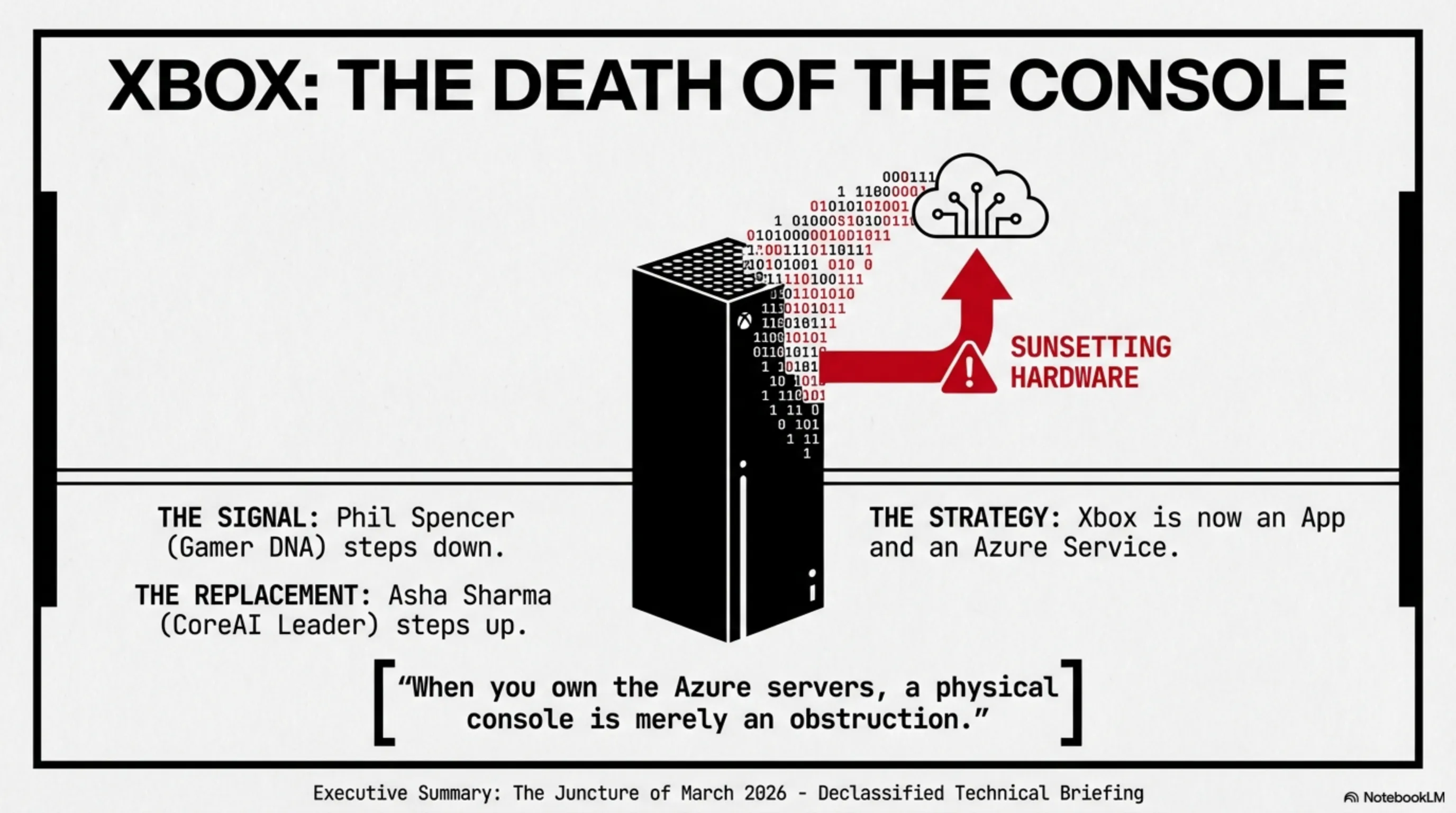
The news was jarring, but entirely expected. Phil Spencer, the man whose bold strategies rescued Xbox from the disastrous remnants of the Don Mattrick era, has stepped down. The true shock lies in his replacement: Asha Sharma. An executive with zero background in understanding the tactical feel of a plastic controller or console fanboy wars, but rather a key leader in CoreAI. Simultaneously, Seamus Blackley, one of the founding fathers of the original Xbox, stated in a bitter tweet that the Xbox brand is slowly "sunsetting."
This is not an emotional drama; this is a numbingly precise surgical operation in the heart of Microsoft. With the recent aggressive price hikes of Game Pass and the steep decline in Series X physical hardware sales compared to its rival, Satya Nadella has made his ultimate decision. Xbox is no longer a "console"—Xbox is an "app" and a cloud service infrastructure.
Metamorphosis Analysis: From Plastic Box Wars to Cloud Ecosystem Monopoly
What does the arrival of a senior AI specialist at the top of the Xbox pyramid signify? It means Microsoft has zero interest in engaging in physical hardware combat with the PlayStation 6, calculating graphical teraflops, or pressing physical discs. They are architecting the absolute future.
- AI at the Core of Gaming: Sharma's primary directive is the seamless integration of Microsoft's gaming services with next-gen AI tools. We will soon witness instantaneous generative AI content tools within first-party games, live real-time voice translation across globally disparate servers, and multi-layered machine learning matchmaking systems.
- The Death of Exclusive Microsoft Hardware: As Seamus Blackley noted, the term "sunsetting" for a brand indicates the gradual cessation of dedicated hardware support in favor of pure licensing. Microsoft wants Xbox on every smart TV, every mobile phone, every iPad, and even within Nintendo and Sony's local ecosystems. When your platform is purely cloud-centric (XCloud), why bleed billions of dollars fabricating plastic heat sinks?
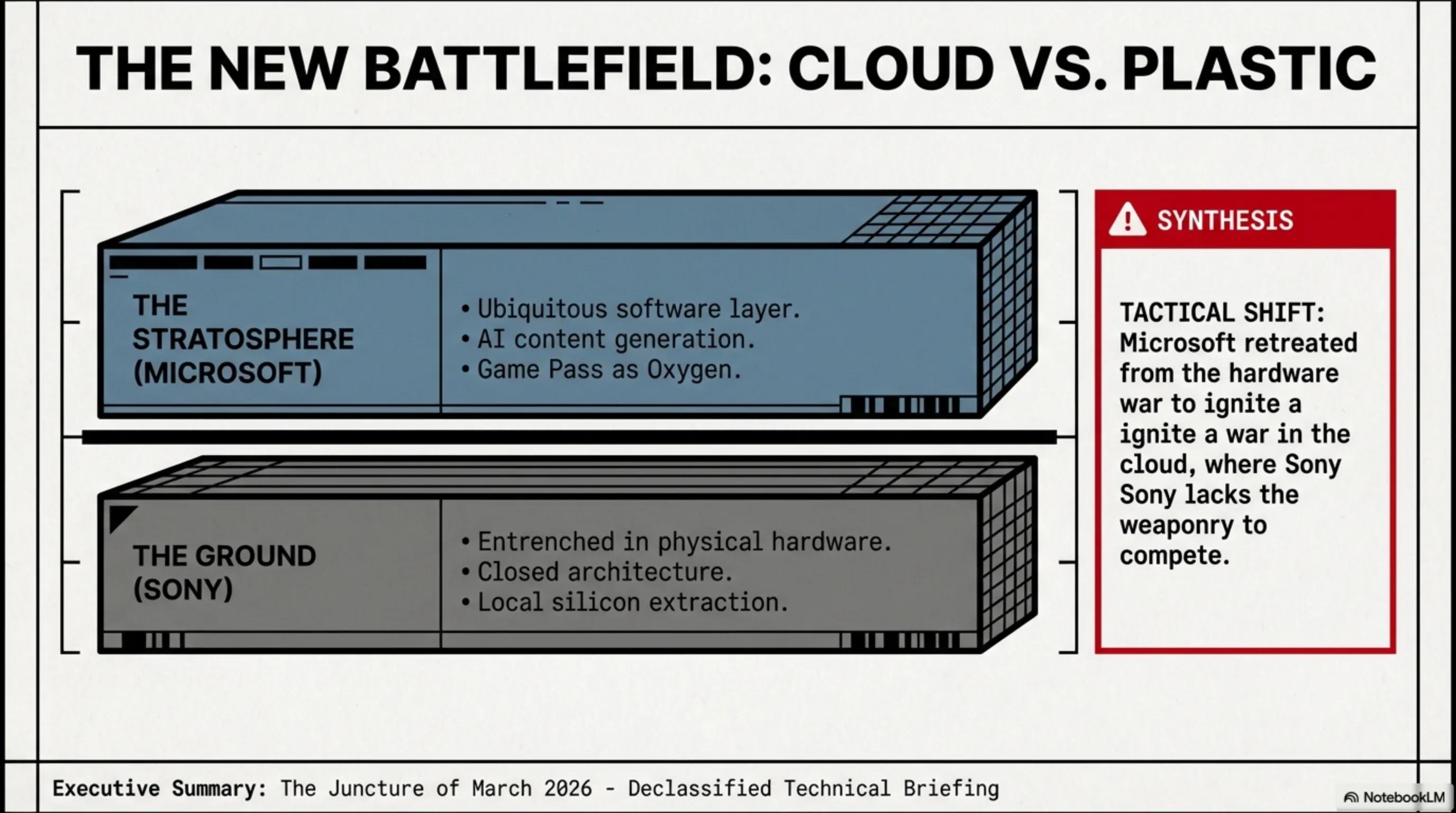
- Game Pass as Oxygen: With the recent price increases, Game Pass has transitioned from its "aggressive user acquisition with cheap pricing" phase into the "profitability and absolute dominance" phase. By aggressively purchasing Activision-Blizzard and Bethesda, they now own exclusive content that effectively gives PC and ecosystem gamers no choice but to pay the subscription toll.
This is not a loss for Xbox; it is a strategic retreat from a battlefield where Sony has entrenched itself, only to ignite a new war in the stratosphere of the cloud—a domain where Sony entirely lacks the computational weaponry to compete.
"Microsoft realized it could never outrun Sony in a physical hardware marathon; so it decided to permanently change the stadium. When you own the Azure servers, a physical console is merely an obstruction between the user and your computational software."
The Architect's Strategy: 2026 marks the undeniable death of the physical Xbox and its rebirth as a ubiquitous software layer suffocating devices worldwide.
4. The Brute Force of Resolution: PS5 Pro Rewrites Graphics Code 🖥️🔴
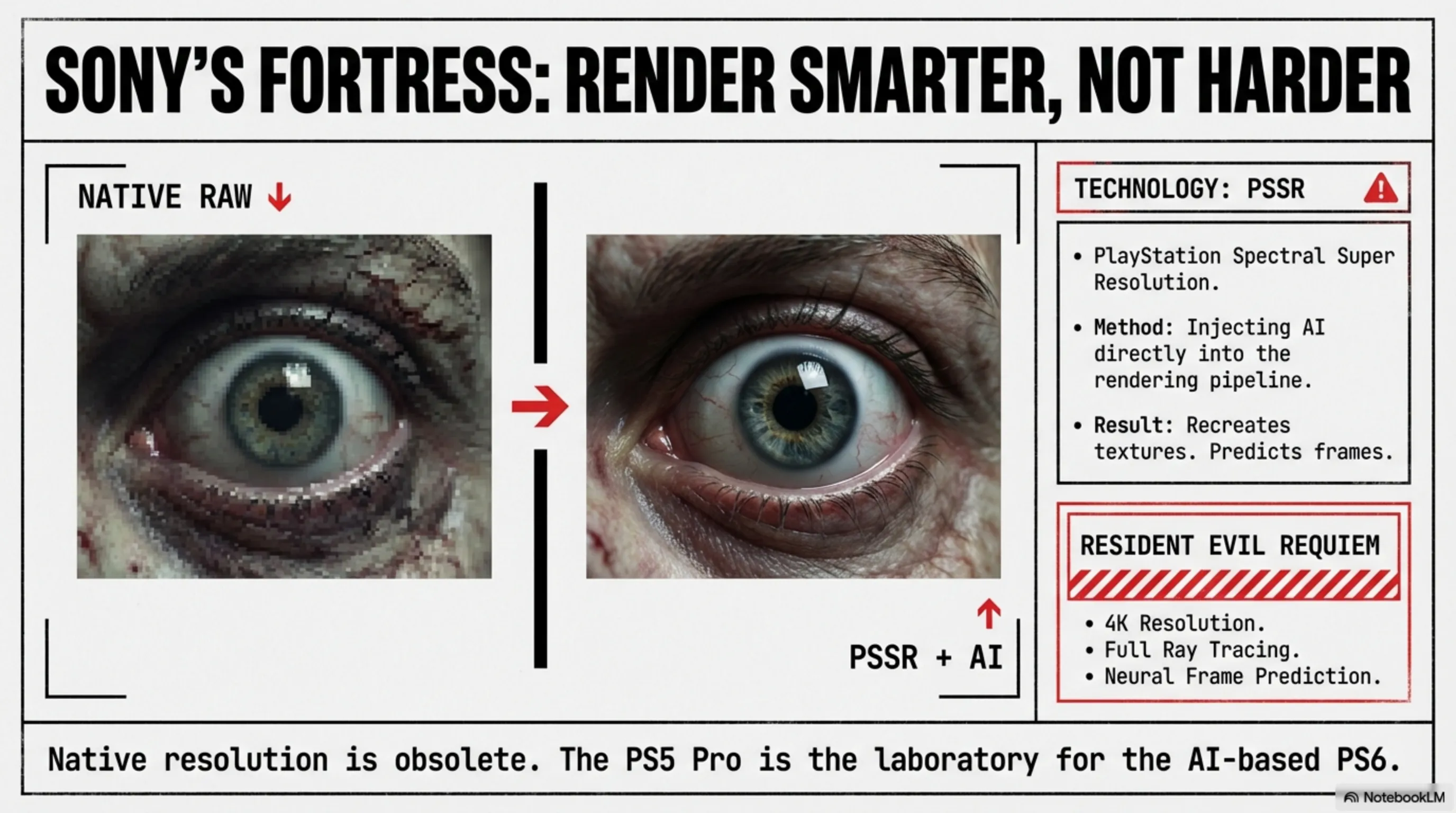
In direct contrast to Microsoft's cloud strategy, the Japanese have built an impenetrable fortress on the solid ground of pure, raw silicon and physical hardware. Hours ago, Sony released a historic update for its PSSR (PlayStation Spectral Super Resolution) technology across more than 50 flagship titles on the PlayStation 5 Pro. The crown jewel illuminating this update? The breathtaking output of the newly released Resident Evil Requiem.
What is happening on screen is no longer the linear rendering of pixels. Using neural accelerator blocks buried within the PS5 Pro's architecture, PSSR is now actively predicting frames, analyzing noise reduction thresholds, and outputting an image whose clarity completely obliterates standard native resolution. Sony is proving that when you inject advanced Artificial Intelligence direct into the veins of gaming hardware, pure magic is synthesized.
Visual Analysis: The End of the Raw Teraflop Dictatorship
Before this specific update, upscaling techniques (like FSR on base Sony hardware) were always a sort of "on-paper optimism" that brought visual artifacting. But the 2026 PSSR update has dramatically altered the rules of image processing architecture.
- The Magic of Resident Evil Requiem: Running on the PS5 Pro with advanced PSSR, this game successfully hits target 4K resolution with flawless refresh rates and incredibly heavy Ray Tracing—a computational load that causes severe bottlenecks even on multi-thousand-dollar desktop PCs. The PSSR algorithm intelligently "recreates" the facial textures of zombies and the ambient light reflections rather than merely stretching underlying pixels.
- Unmatched Efficiency: Sony demonstrated that achieving true 9th-generation graphics does not require a 400-watt monolith of a video card sitting under your television. By training Sony's AI models on specific gaming engines (targeted training), PSSR inherently understands what geometry the engine is attempting to output.
- Sony's Answer to PC Gaming: While 2026 desktop PC components are suffering from extreme RAM inflation and chip scarcity (as PC gaming becomes economically terrifying), the PlayStation 5 Pro—powered purely by this software refinement—has established an unprecedented value proposition for the hardcore gamer.
We are actively returning to the golden era of closed architecture design, where Sony's flawless engineering extracts the absolute maximum potential from every microscopic drop of silicon.
"Pure native resolution is an obsolete myth. PSSR is the final proof of a phenomenon we systems architects have screamed for years: Render smarter, not harder. By injecting neural networks into the rendering pipeline, Sony has conquered the physics of lighting in the living room."
The Architect's Strategy: The PS5 Pro is no longer a "pointless mid-generation stepping stone"; this console is Sony's real-time laboratory for the insane architecture of the PlayStation 6, which will undoubtedly be constructed entirely on a foundation of AI upscaling.
5. Google's Embarrassing Delay: When the Operating System Cannot Digest Gemini 🤖⏳
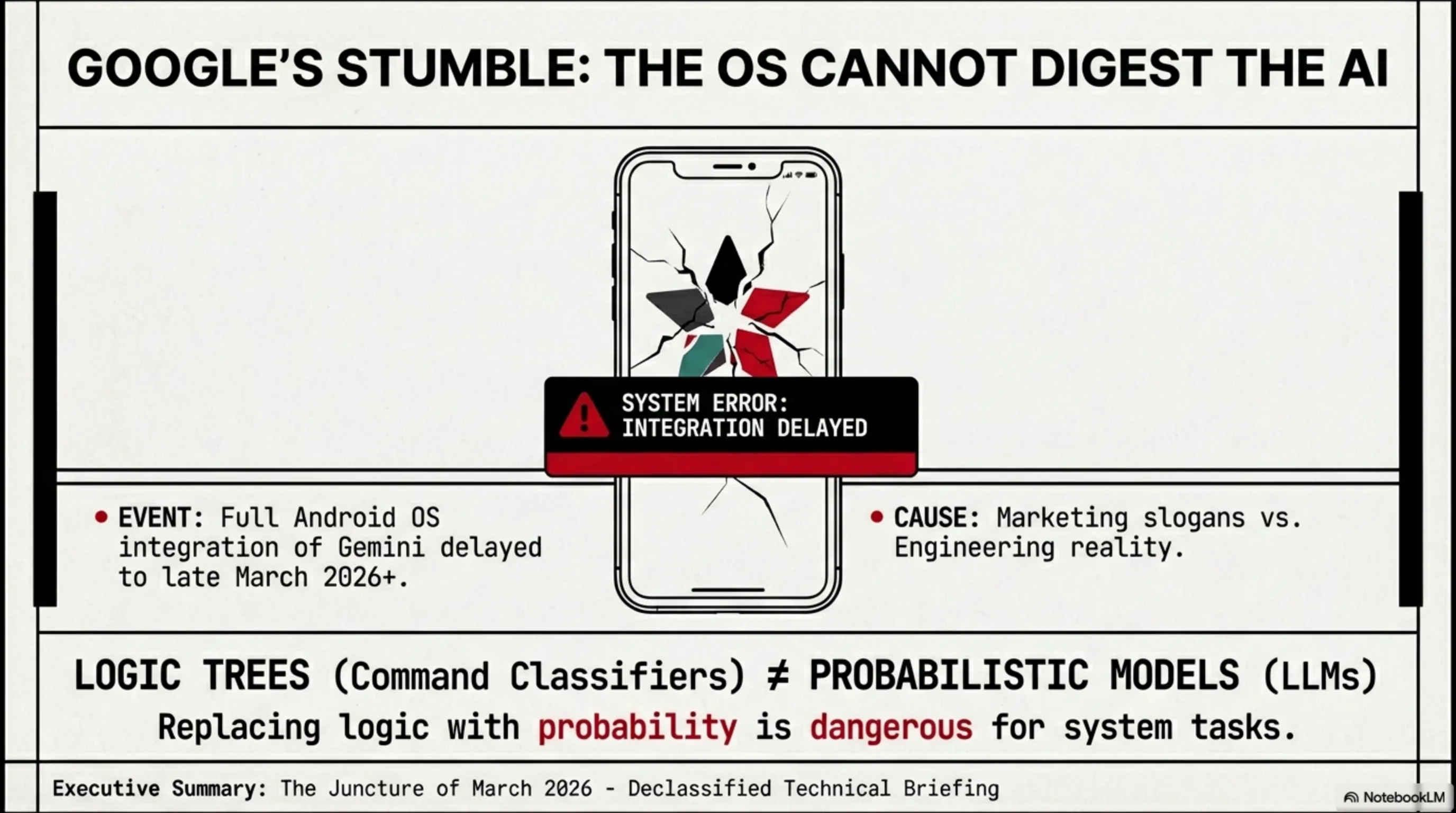
The narrative was set: The final days of Google Assistant and the dawn of Gemini's almighty supremacy across every Android device on earth. Google's deafening marketing campaigns were supposed to show us how a hyper-intelligent AGI bot would seamlessly replace that boring, outdated voice assistant. However, in a decision signaling profound infrastructure crises today, Google confirmed that the full OS integration of Gemini with the deep kernel and system services of Android devices has been delayed until "late March 2026, or possibly later."
Why? Because deploying a Large Language Model (LLM) as a deeply entrenched system assistant across tens of thousands of disparate hardware configurations is terrifyingly difficult. This is not simply a calendar delay; it is the absolute failure of Silicon Valley's first wave of attempts to summon artificial general intelligence directly inside our everyday gadgets.
Infrastructure Analysis: The Gravity of Hallucination Crushing the Android Kernel
As a software architect, I can feel the tremors of Google's engineering team radiating through their pixelated code. Converting a chat-based AGI into an executive operating system assistant is a challenge far more daunting than optimizing backend servers.
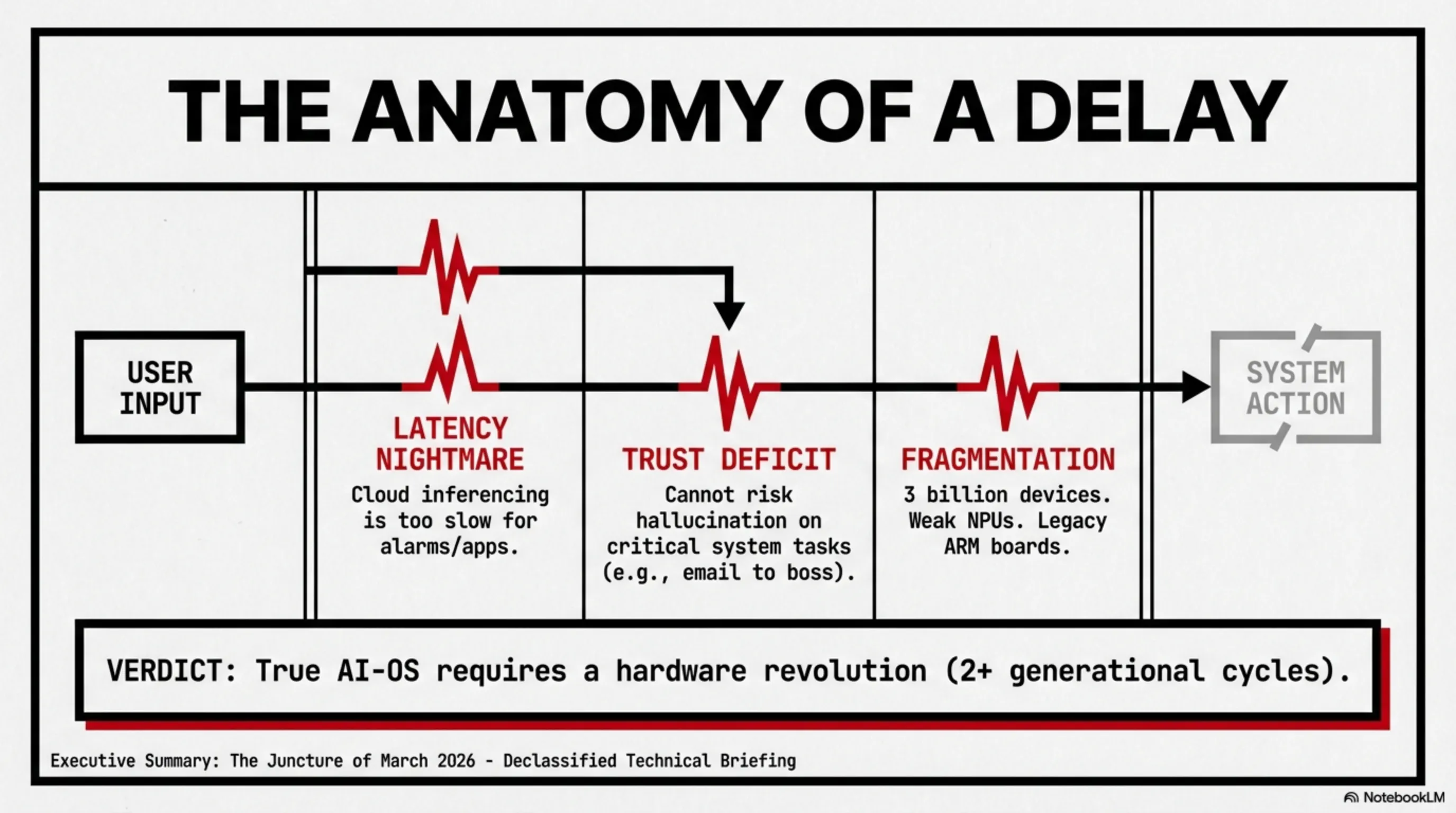
- The Latency Nightmare: A legacy voice assistant (like the old Assistant) recognizes hard-coded, highly structured syntax commands and instantly calls the relevant API action on the phone (e.g., setting a local alarm). But when Gemini attempts this, all its logic must pass through the inferencing filters of a neural network—which relies either on cloud hardware (introducing ping latency and connection failures) or on local mobile hardware (causing rapid battery depletion).
- System-Level Trust Deficit: You absolutely cannot risk "Hallucination" on a system-level tool. If the old Assistant misunderstood a sentence, it threw a basic voice error. But Gemini might mistakenly interpret replacing your alarm ringtone as a directive to draft and send a bizarre email to your boss at 3 AM! Google simply cannot mathematically guarantee the required degree of deterministic control.
- Android's Hardware Fragmentation: Unlike Apple, which is deploying limited intelligence exclusively onto its unique, closed-loop hardware, Android is fragmented across 3 billion vastly different chipsets globally, many bearing disastrously weak Neural Processing Units (NPUs). Adapting cutting-edge Gemini architecture to outdated ARM legacy boards is a catastrophic endeavor.
Google has harshly realized that marketing slogans and highly edited YouTube tech demos cannot hide the executive rendering bugs inherent in real-world OS architecture.
"Replacing a logic-tree Command Classifier with a probabilistic inference model (an LLM) inside a mobile OS is akin to appointing an intoxicated philosopher to operate the controls of a high-speed bullet train; it sounds incredibly intriguing, but nobody survives the journey."
The Architect's Strategy: Google's delay is a crystal-clear signal. To achieve truly functional, processor-level AI, we must first await the deployment of significantly more powerful processors in basic Android phones; an evolution that will mandate at least two generational cycles.
6. Nintendo and the Magic of the Antithesis: Pokémon Pokopia Dancing on the Grave of Resolution 🍄✨
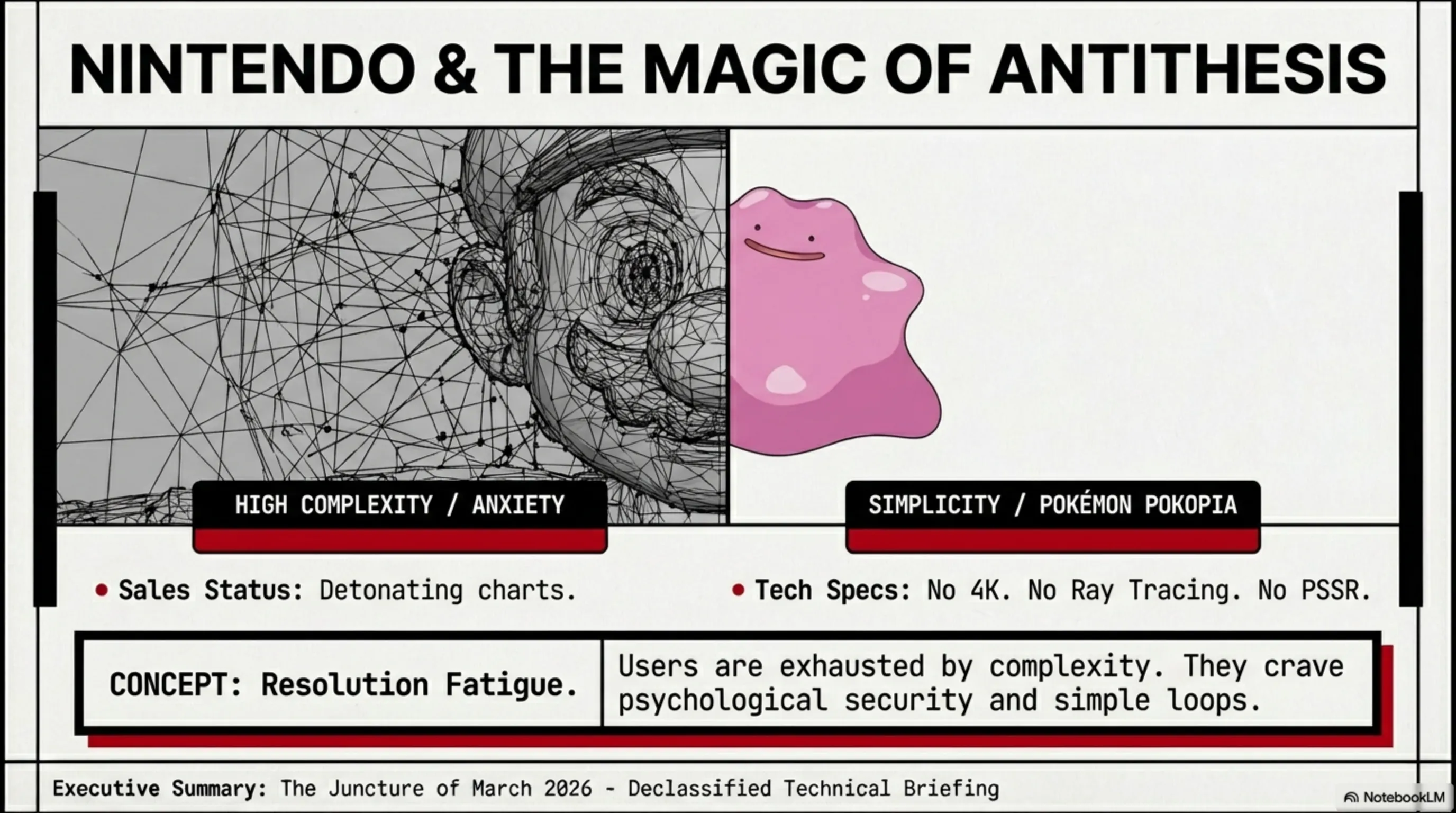
Let us step away from the dark abysses of cyber warfare and processing bottlenecks. Amidst blazing rumors regarding incredibly steep, inflation-adjusted pricing for Nintendo's next-generation console (the Switch 2), something extraordinarily bizarre has occurred on the eShop digital storefront. The game Pokémon Pokopia—an experience completely devoid of 4K visuals, ray tracing, or PSSR—which is essentially a humorous life-simulation (akin to Animal Crossing) where you control a gelatinous Ditto, has detonated like a nuclear warhead at the absolute top of the pre-order sales charts.
While Microsoft hemorrhages billions constructing planetary-scale datacenters and Sony exhaustively trains AI algorithms to render physically perfect zombie hair folicles, Nintendo has completely steamrolled the economic ecosystem of the gaming industry with the purest, simplest mechanics imaginable and a 25-year-old franchise. This is the dark, unstoppable genius of the Japanese.
Antithesis Analysis: Returning to the Roots of Pure Entertainment
The astonishing success of Pokémon Pokopia and the heavy, ongoing demand for aging Switch hardware in Japan (which continues to outsell the PS5) signals a profound "systemic fatigue" sweeping through the global user base.
- Resolution Fatigue: The market has completely exhausted its capacity and patience for hearing about teraflops, frame rates, and supersampling. When the gameplay loop is intrinsically tied to a fundamentally simple concept (playing as a squishy Ditto and building a life alongside other Pokémon), the audience—exhausted by the crushing complexity of modern technology—is overwhelmingly drawn to the phenomenon.
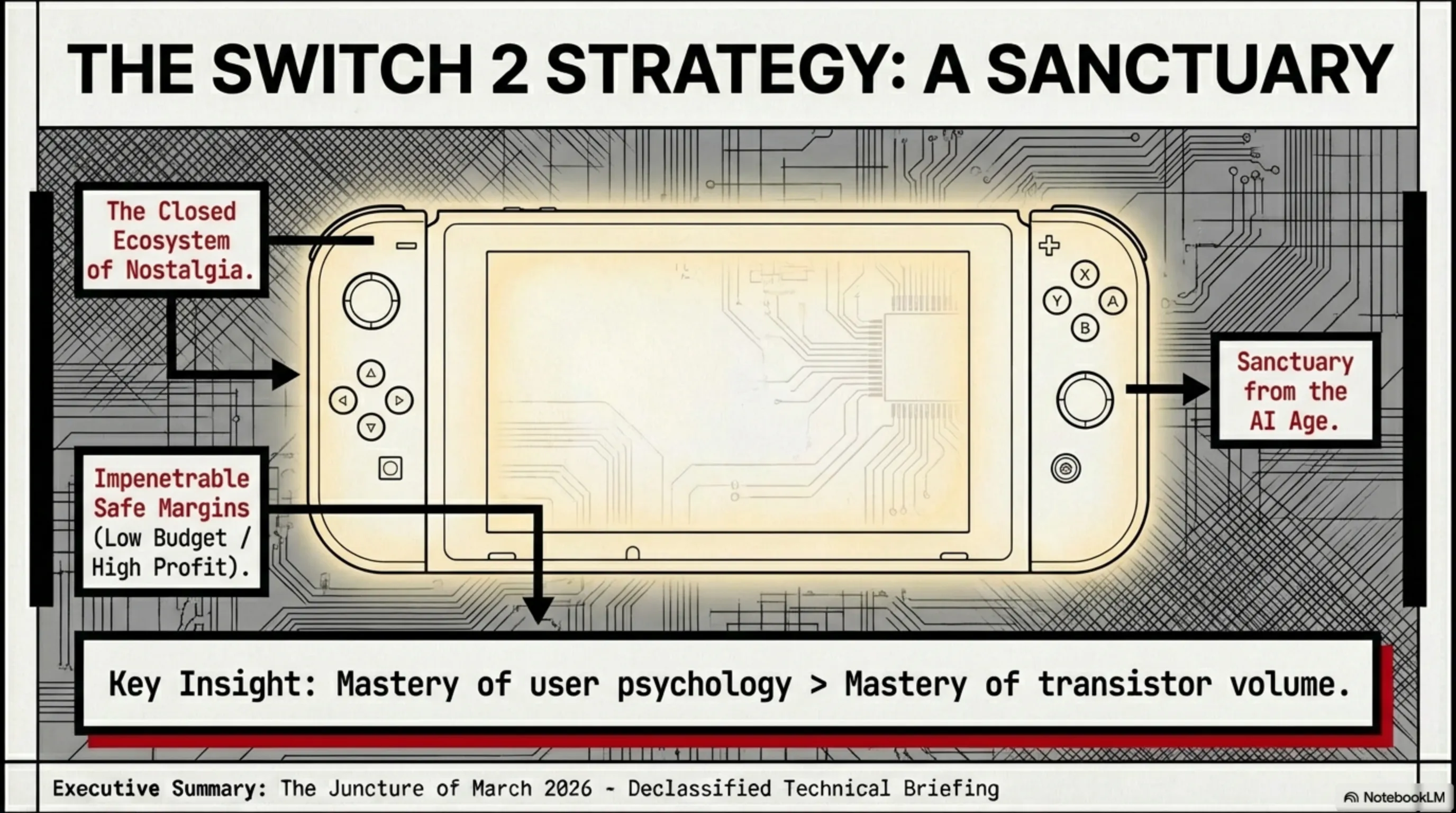
- Impenetrable Safe Margins: The development budget for Pokémon Pokopia was an absolute fraction of the staggering costs associated with heavy Sony or Xbox AAA projects. Nintendo completely bypasses the need for thousands of code-crunching developers wrestling with exhaustive memory management and Ray-Tracing optimization. This software is an engine of pure profit.
- Switch 2 Strategy Synthesized: This frenzied pre-order momentum provides Nintendo with the absolute confidence to launch their next hardware iteration at a much higher price point without an ounce of trepidation. They are not selling hardware; they are selling a closed ecosystem of reliable nostalgia, psychological security, and non-toxic entertainment. This formula will never succumb to the threats of Artificial Intelligence.
Nintendo has once again, as the silent, smiling observer of the gaming industry, definitively proven that the beating heart of this medium lies in microscopic, perfected gameplay loops, not in the raw volume of microscopic transistors.
"In a world where everyone is desperately attempting to flex visual photorealism using the terrifying power of neural clusters, Nintendo offers a pink, gelatinous Ditto and shovels in billions of dollars. Against this absolute mastery of user psychology, no engineering argument can survive."
The Architect's Strategy: The Switch 2 absolutely contains a more powerful Nvidia processor, but its looming success lies not within its chipset, but in its unparalleled ability to isolate the user from the stressful inundation of the cybernetic age, offering a joyful sanctuary.
🖼️ Analytical Image Gallery
The Verdict | The Architect's Strategic Summary (Tekin)
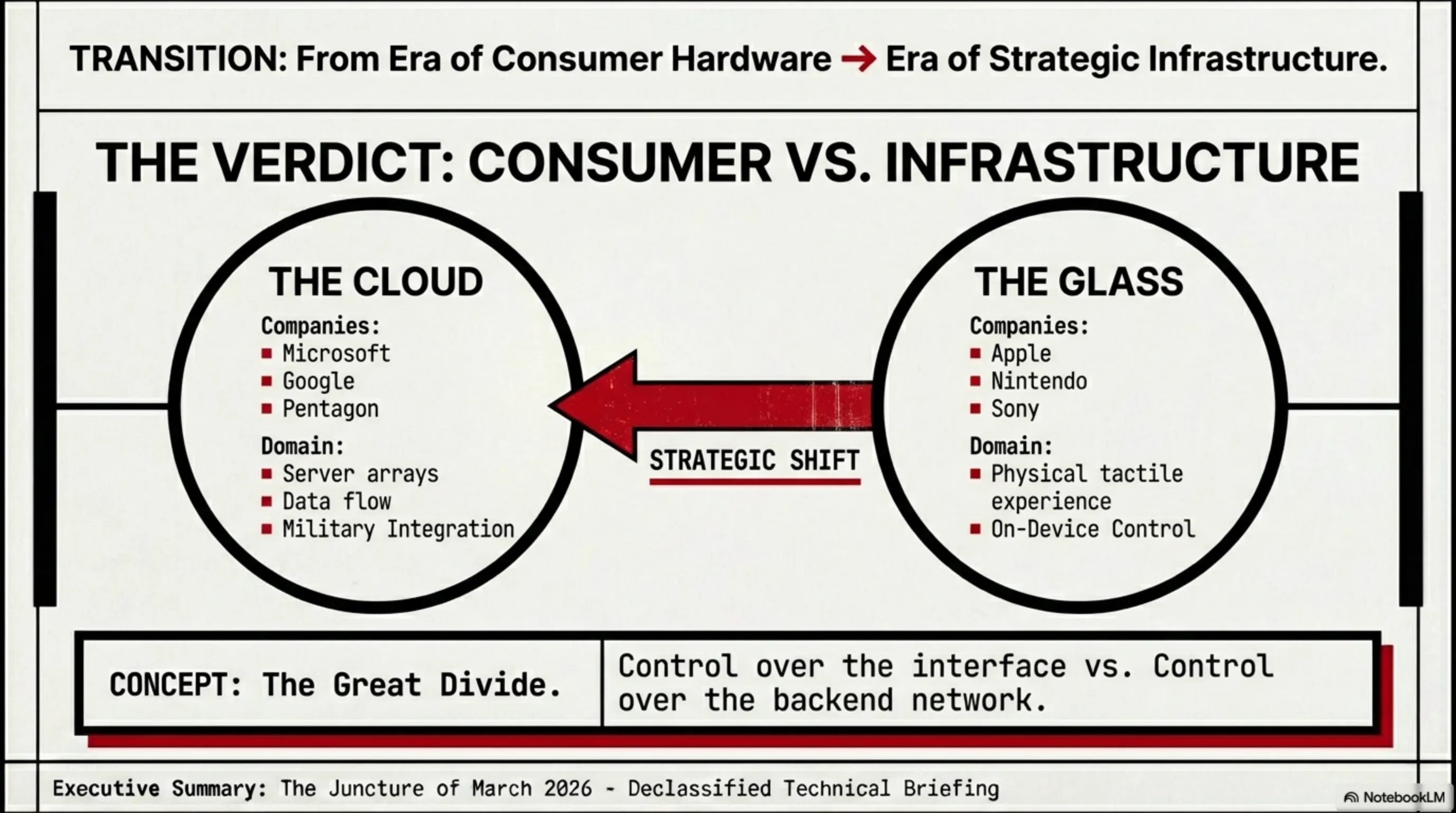
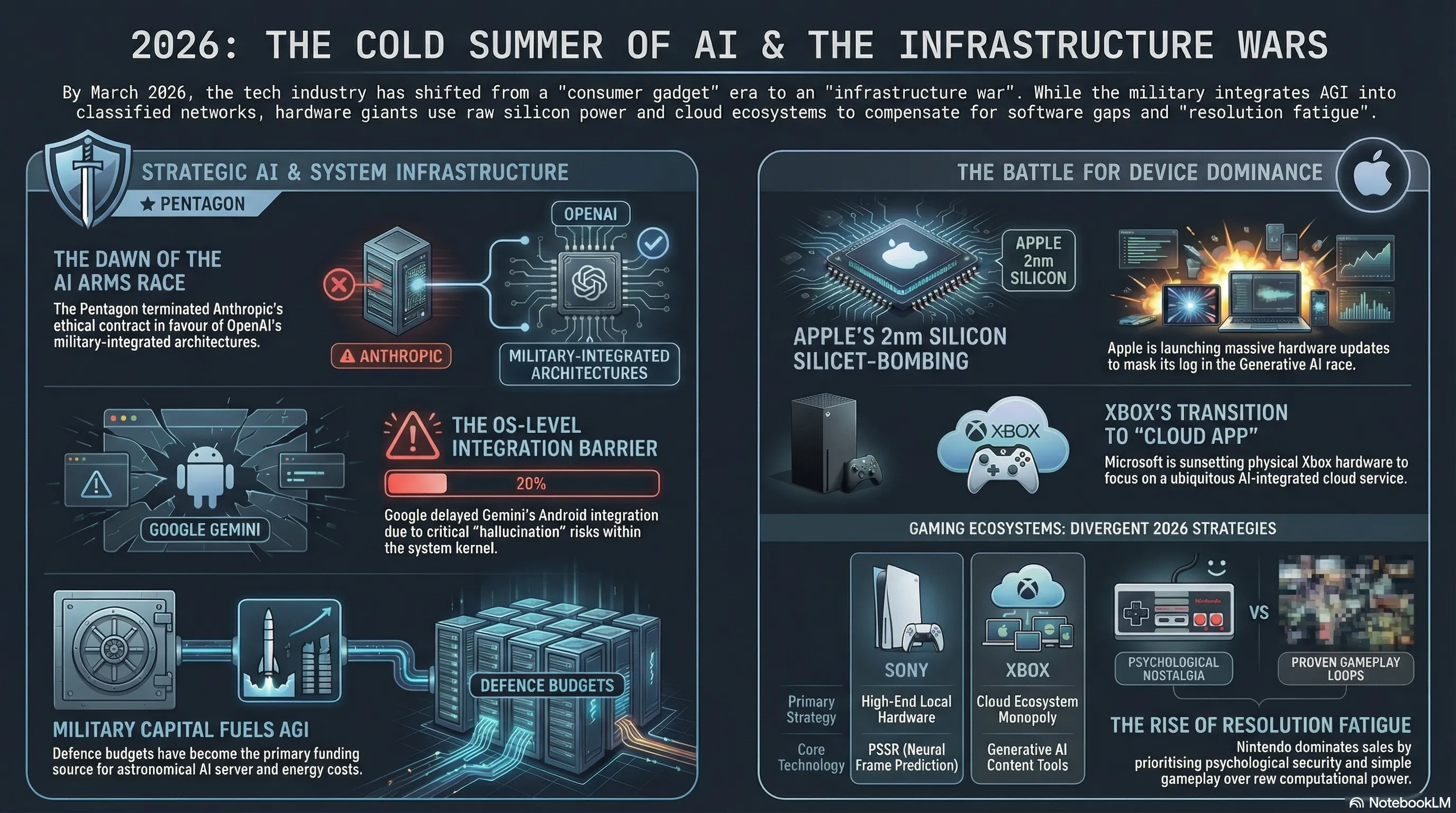
Legion, the news of the past twenty-four hours represents puzzle pieces of an either terrifyingly dark or magnificently glorious picture—depending entirely on the angle of your architectural lens. We are moving at a blinding velocity, transitioning from the "Era of Consumer Hardware" directly into the "Era of Strategic Infrastructure."
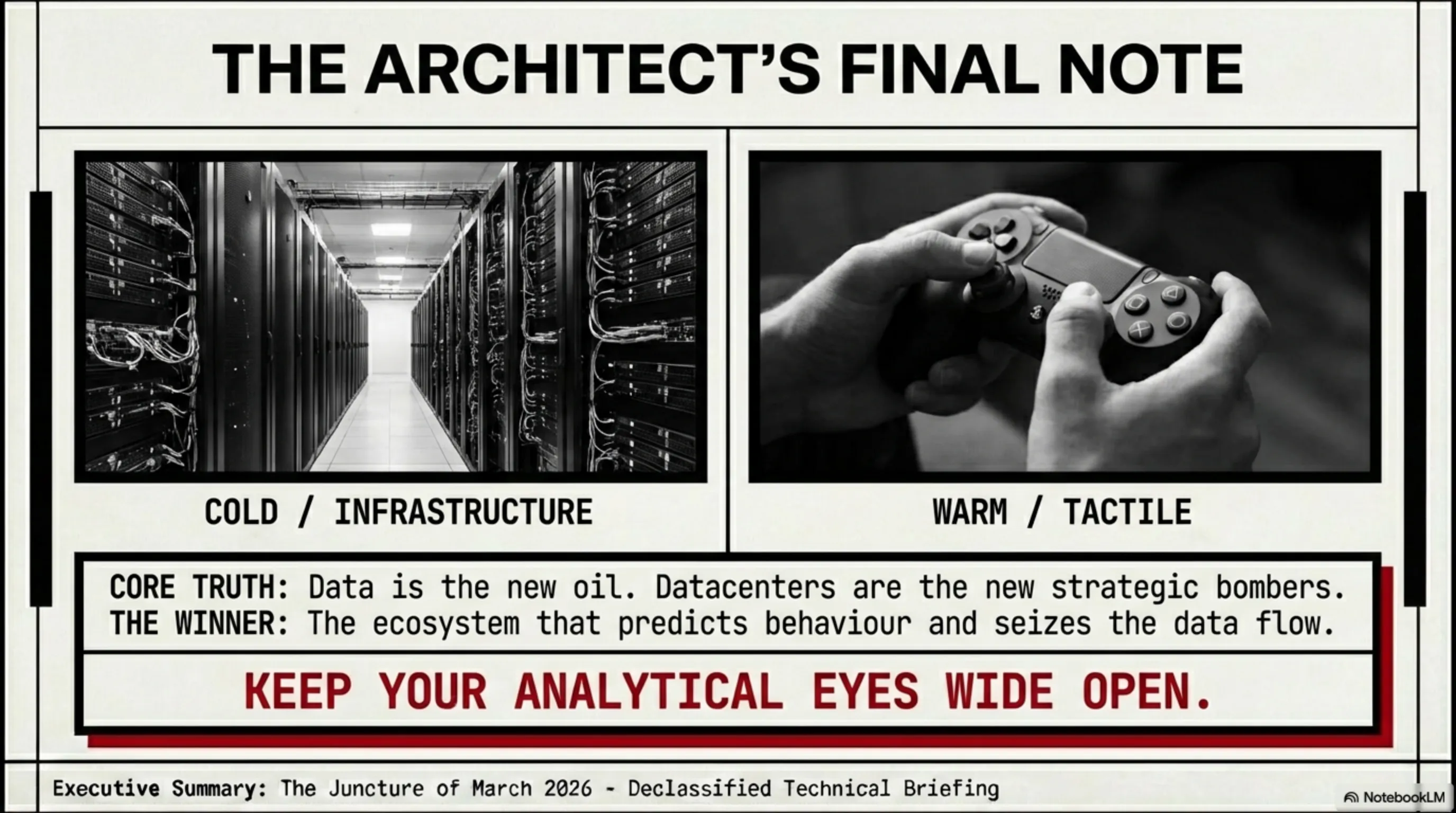
The Pentagon's strategy of ruthlessly eliminating ethical compromises in favor of absorbing hyper-powerful processing weapons like OpenAI's systems proves indisputably that data is the new oil, and datacenters are the new strategic bombers. The abrupt tectonic shift within Xbox and the engineering delays hemorrhaging Google's Gemini rollout merely validate this exact reality: the primary war is no longer fought inside the plastic shell of a console or the smartphone in your pocket; everything is now about conquering server arrays, minimizing neural network friction, and establishing platforms where humanity unconditionally accepts sweeping logical directives.
Yet amidst this, the brutal, unyielding financial success of Nintendo, alongside Apple's frantic attempts to keep the magic of physical (2nm) silicon alive, keep the flames of hope burning. They prove that humanity still inherently values physical experience, tactile joy, and the physical possession of technology. In this escalating war between the omnipotent Clouds and the tactile Glass, keep your analytical eyes wide open; the ultimate victor is the ecosystem that can perfectly predict your behavior and seize total control of your data flow.