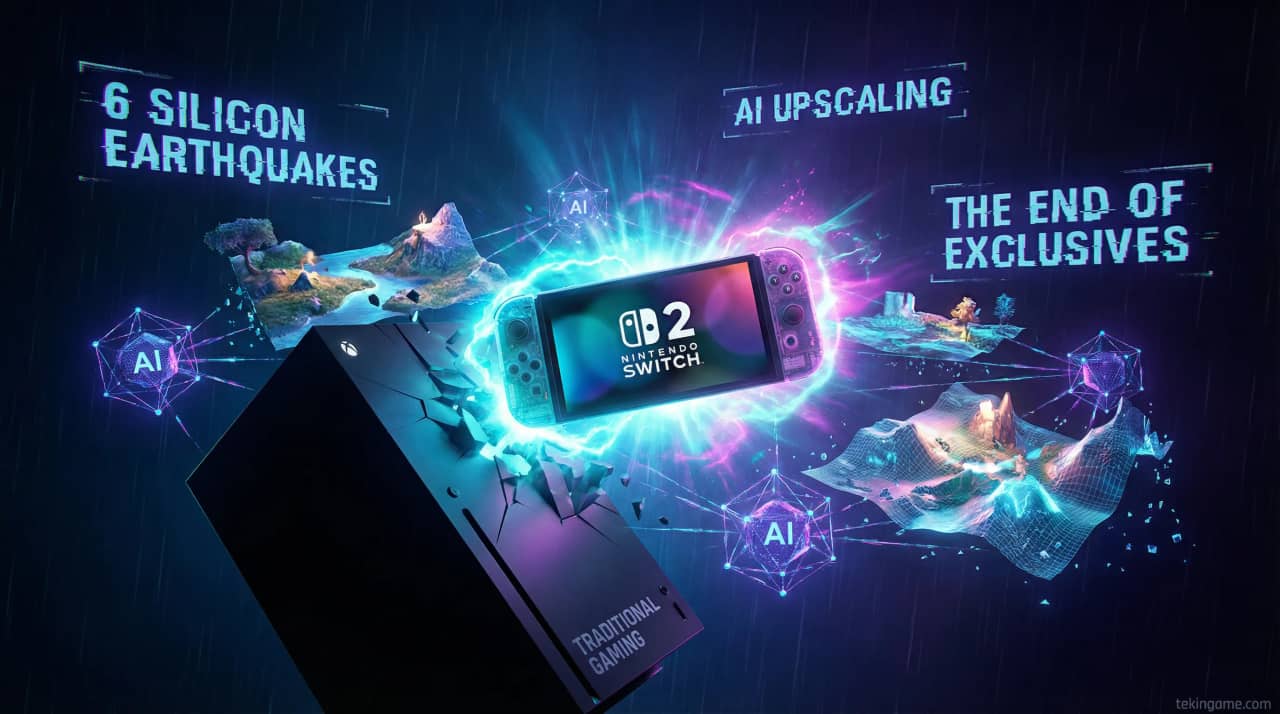
In this 2500+ word dissection file, 6 devastating events in the gaming and tech industry are examined: 1. The mind-blowing rumor of a GT7 demo running on Switch 2 using DLSS. 2. The release of the graphical masterpiece and definitive GOTY contender, Resident Evil Requiem. 3. The crisis and protests by human voice actors against GenAI use in the multiplayer game Arc Raiders. 4. The plagiarism and art theft scandal in character design for the hit game NIKKE. 5. Autodesk's $200 million gamble on World Labs for the automated generation of 3D environments by Physical AI. 6. The death of traditional cloud infrastructure and dawn of inferential generative networks.
1. Earthquake in Consoles; The Mind-Blowing Rumor of GT7 Running on Nintendo Switch 2
Tekin Army, let's dive straight into the most controversial news of the week. A rumor that has shaken the foundations of the gaming industry: the execution of a technical demo of the legendary exclusive title Gran Turismo 7 on the hardware of the yet-to-be-announced "Nintendo Switch 2". For those familiar with hardware architecture, this is not just a simple rumor; it represents a terrifying paradigm shift in the balance of power between platforms. Sony has always boasted about the raw power of its home consoles like the PS5, but now a handheld or hybrid console has managed to run one of the heaviest games on that platform.
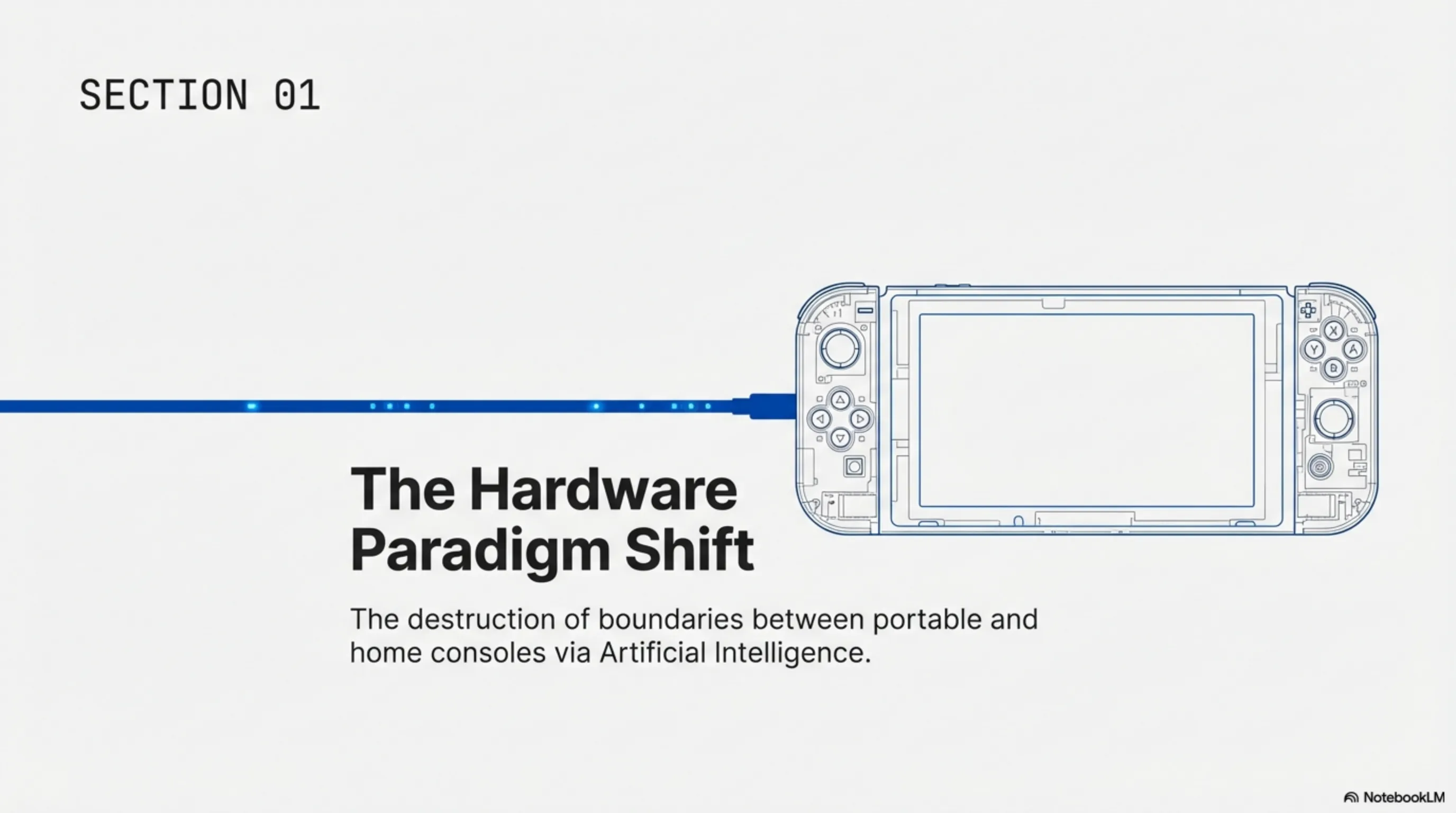
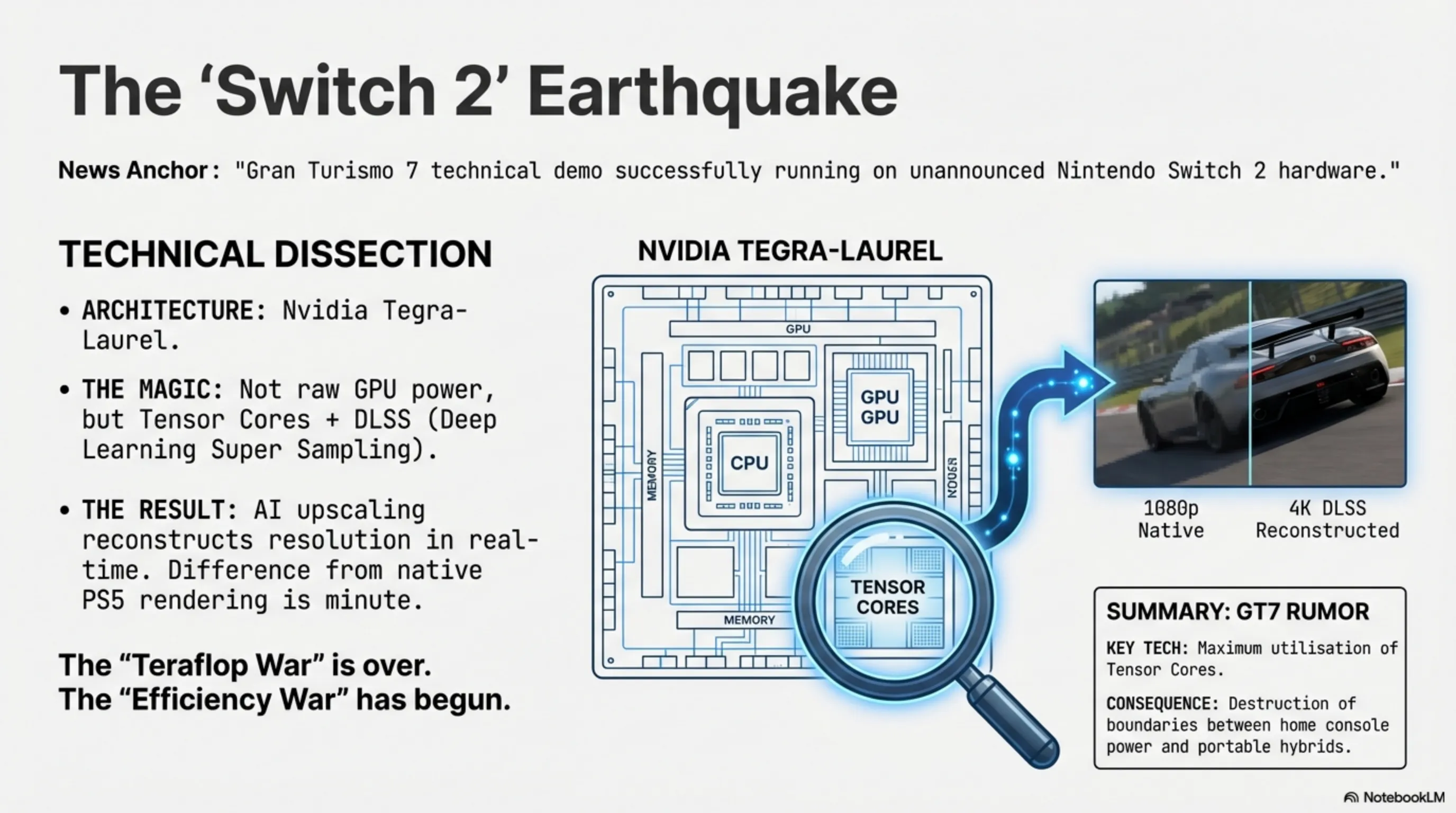
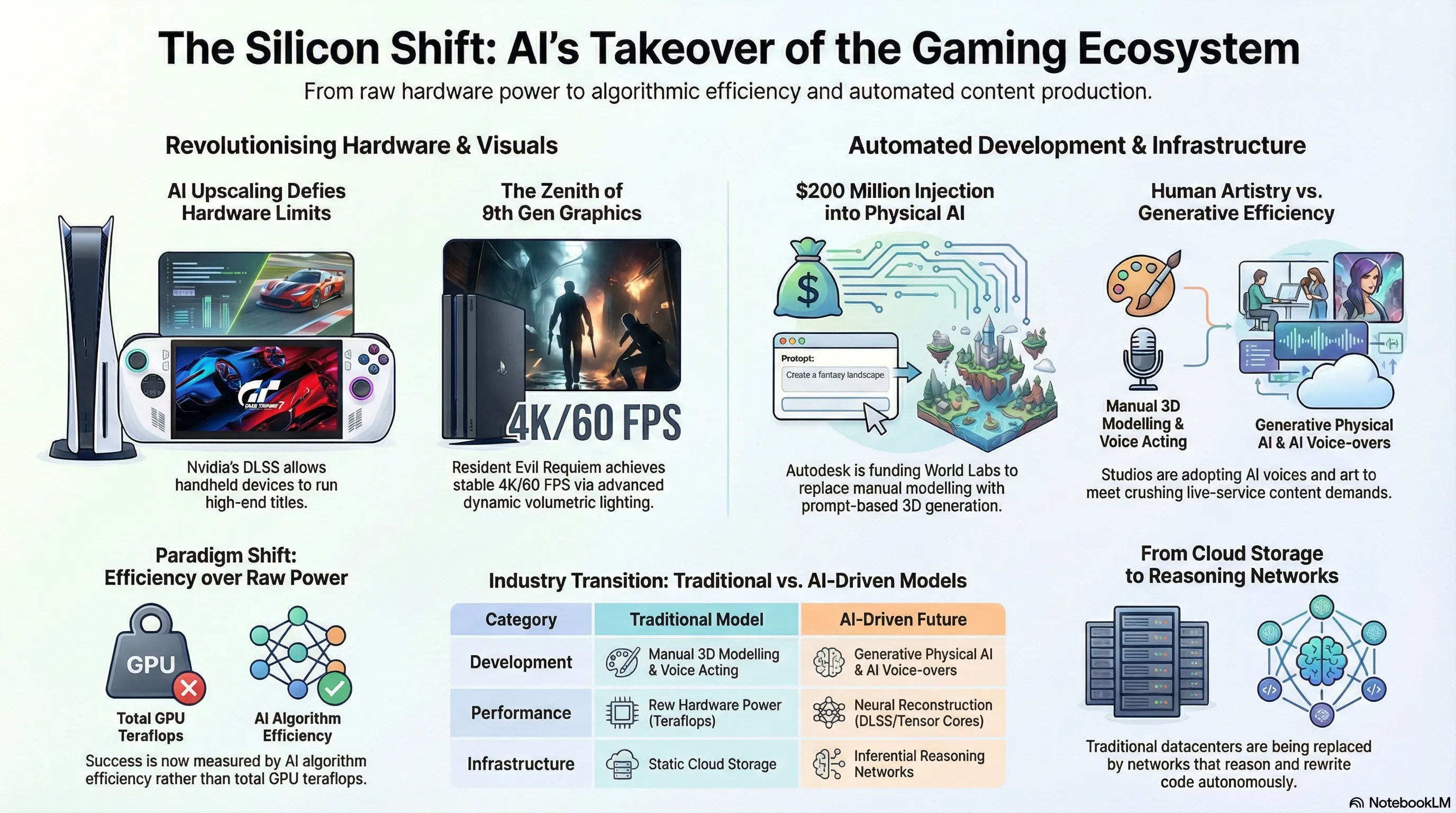
A technical dissection of this rumor takes us straight to the heart of the chipset equipped with the Nvidia Tegra-Laurel architecture in the Switch 2. The core of this miracle isn't Nintendo's raw Graphics Processing Unit (GPU) power, but rather the magic of the neural network and Nvidia's Upscaling algorithms, namely DLSS (Deep Learning Super Sampling). While just yesterday in Tekin Morning we discussed the power of Samsung's neural node processors, here we see how Nvidia, with its Tensor cores, can reconstruct the resolution of a heavy game in real-time relying on Artificial Intelligence, delivering images where the difference from native rendering on the PS5 is minute.
📦 Summary Box: The GT7 Earthquake
- News: Successful run of a Gran Turismo 7 technical demo on Nintendo Switch 2 hardware.
- Key Technology: Maximum utilization of Tensor Cores and Nvidia's DLSS technology for upscaling.
- Consequence: The destruction of the boundaries between the power of a home console and a portable-hybrid device.
My strategic analysis indicates that this technical test is a direct threat to the concept of "console exclusivity". The next-generation war isn't over the number of teraflops; it's a war over the efficiency of AI algorithms to produce realistic textures. If Nintendo can offer PS5-level quality with mobile hardware, Sony and Microsoft will be forced to completely rethink their hardware sales strategies. This rumor shows us how Nvidia's undisputed reign in developing AI-based graphics hardware dictates the rules of the game for all console manufacturing companies.
2. A Visual Masterpiece and GOTY Contender; The Epic Launch of Resident Evil Requiem
Capcom has once again proven why it is still the undisputed king of the survival horror genre. The highly anticipated release of Resident Evil Requiem surpassed all expectations. Critics worldwide have heralded this game not only as one of the best iterations in the Resident Evil series but also as a definitive contender for the "Game of the Year" (GOTY) title. But here at TekinGame, we don't just settle for Metacritic scores; we dissect the game engine.
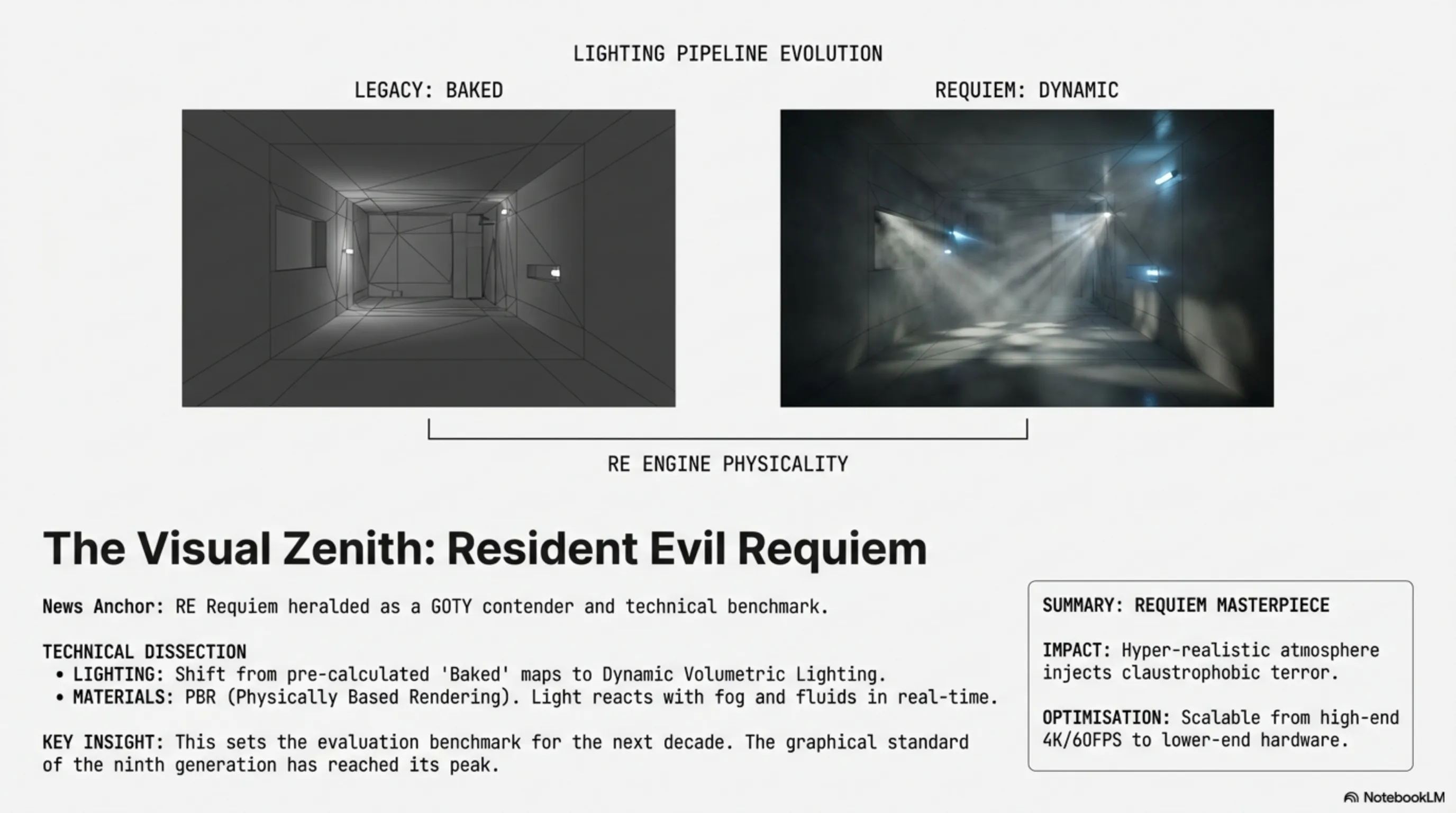
Resident Evil Requiem pushes the powerful RE Engine to the edges of madness. The rendering architecture of this version fully supports advanced Volumetric Lighting capabilities. Unlike previous iterations where pre-calculated (Baked) lighting covered much of the environment, in Requiem, every light source—from a small flame to the thick fog of a forest—is dynamically scattered and reacts with the surrounding Physically Based Rendering (PBR) materials. This level of realism injects a sense of claustrophobic terror straight into the player's bone marrow.
📦 Summary Box: The Requiem Masterpiece
- Status: Receiving stellar reviews and a strong nomination for 2026 Game of the Year.
- Engine Expertise: Unparalleled use of the RE Engine for dynamic volumetric lighting and PBR materials.
- Psychological Impact: Combining hyper-realistic atmosphere with spatial audio design to deliver profound fear.
This game also offers unparalleled optimization across various platforms. The smooth and stable 4K execution at 60 FPS for high-end hardware and the flexible skeleton of the game allowing it to run on weaker systems demonstrate the software maturity of the development team. When we place this visual quality alongside the hardware power that Sony offers with the PSSR processor in the PS5 Pro, we realize that the graphical standard of the ninth generation has finally reached its zenith. With this title, Capcom has shifted the evaluation benchmark for horror games for the next decade.
3. Industry Drama; The Battle of Human Voice Actors vs. AI in Arc Raiders
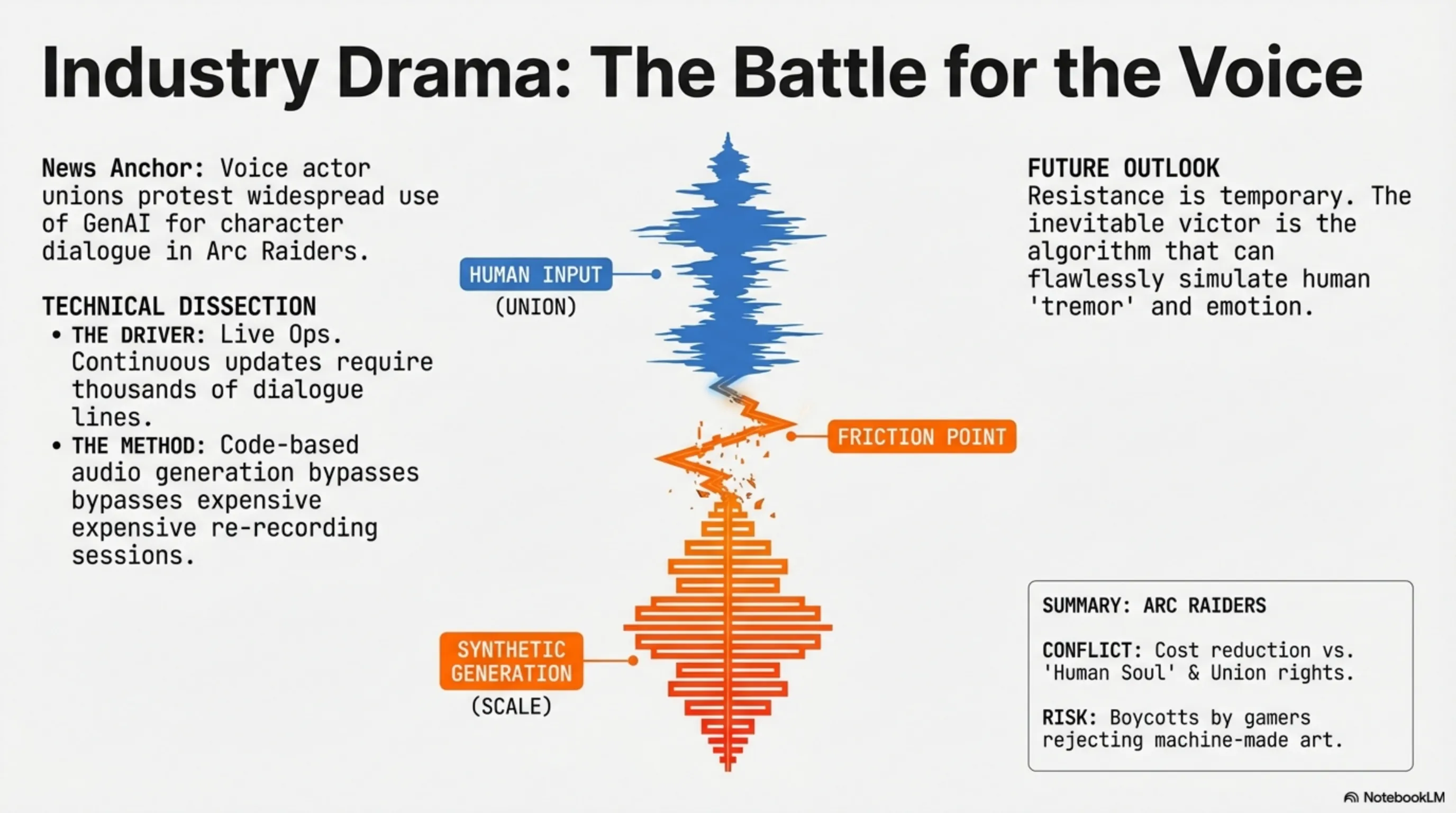
The massive controversy engulfing the game Arc Raiders isn't just about gameplay quality; rather, this game has become a battlefield between human artists and Artificial Intelligence algorithms. Once players and developers realized that the studio behind this multiplayer title extensively used audio files generated or edited by Generative AI (GenAI) models for character conversations, the gaming industry witnessed the largest wave of protests from the voice actors' syndicate to date.

A technical dissection of this decision reveals why game development studios are drawn to this technology. In multiplayer and live-service titles that require continuous content updates and dynamic dialogue in response to Live Events, re-recording with human voice actors is incredibly expensive and slow. The use of AI not only drastically reduces the budget in the audio recording department, but it also gives the creator the power to generate thousands of lines of new dialogue and alter the game's audio texture on the fly by writing a simple piece of code.
📦 Summary Box: The Arc Raiders Controversy
- Crisis: Discovery of widespread use of AI-based voice-overs in the game and severe union protests.
- Developer Motivation: Massive cost reductions and generating dynamic dialogue for live events.
- Strategic Risk: The loss of human feel and soul in characters, and the game being boycotted by hardcore gamers.
However, being snubbed by The Game Awards and facing an unofficial boycott from critics sent a clear message: users are not yet ready to accept entirely machine-made art. This ethical clash echoes the same trend we observed in the fall of human graphic designers against Nano Banana 2. Industry architects know this resistance is temporary; the company that can flawlessly simulate the emotion and natural tremor of the human voice with an algorithm will be the ultimate victor in this battle, even if it comes at the cost of laying off thousands of artists.
4. Plagiarism or Inspiration? The Art Theft Controversy in NIKKE Characters
Our next major news story occurs in the highly lucrative world of Gacha games. The popular game Goddess of Victory: NIKKE became embroiled in a massive character design scandal. Fans noticed undeniable similarities between one of the game's new characters and a famous piece of artwork called "FALSLANDER Samurai" by an independent Japanese artist. The extent of this copying in the armor details, movement angle, and color palette was so severe that the developer was forced to issue a formal apology and change the character's design.
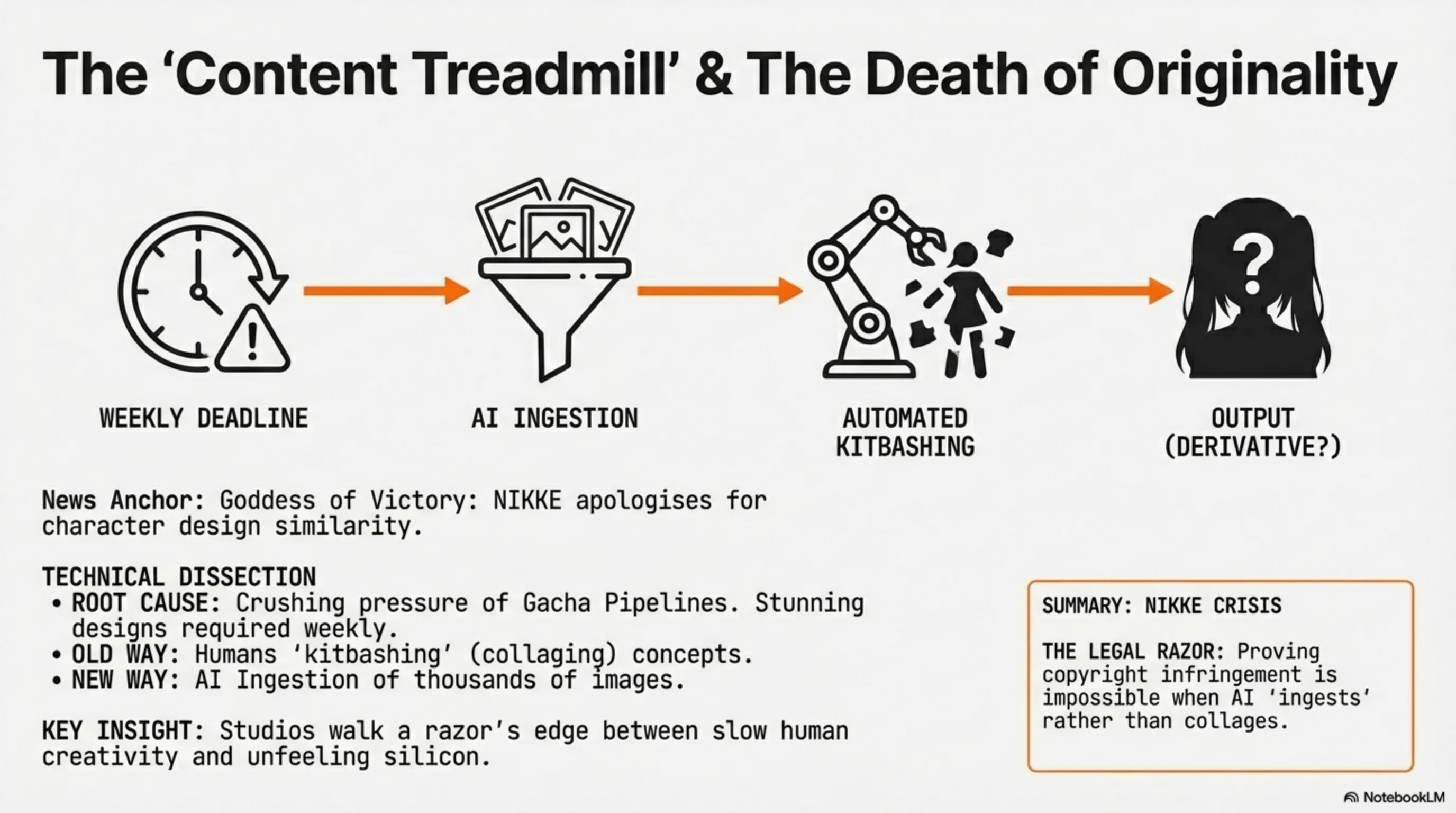
Dissecting this phenomenon from a systemic viewpoint highlights the crushing pressure of Content Pipelines in Gacha games. To survive, these games must release new characters (Waifus) with stunning designs every week or month into the market. When the volume of demand exceeds the team's creative capacity, in-house studio artists consciously or subconsciously begin to assemble a collage from the works of other successful designers (Kitbashing Concept Art). This issue remains hidden within the game’s code layer, but when the gaming community scrutinizes the pixels with an armed eye, no human error goes unanswered.
📦 Summary Box: Design Crisis in NIKKE
- Accusation: Excessive similarity of the new character to the FALSLANDER Samurai artwork.
- Reaction: Studio backtracks, apologizes, and immediately changes the design to avoid legal action.
- Root Cause: The pressure of the continuous content generation machine (Live Ops) in the Gacha game industry.
This accusation of art theft becomes even more terrifying in an era where Generative AI tools can ingest thousands of images and output a "new" design in a second. If studios decide to entrust this to deep neural networks instead of manual human collaging, proving copyright will become practically impossible. Gacha production studios are now walking on a legal razor's edge; on one side is slow human creativity, and on the other, an unfeeling silicon that has destroyed the concept of being original.
5. The AI Capital Explosion; $200 Million Injected into World Labs Startup by Autodesk
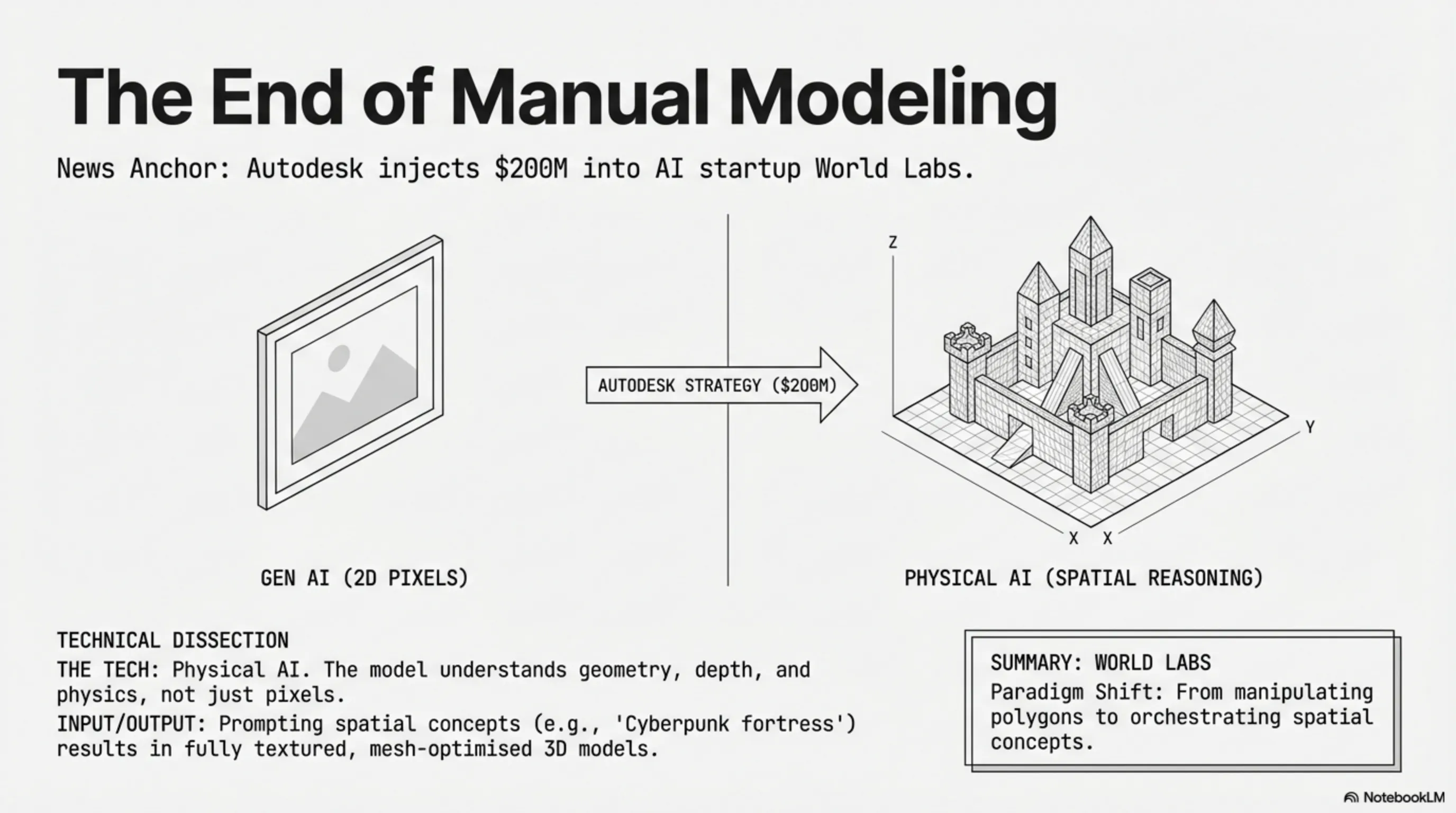
The next piece of news strikes directly at the heart of 3D tool development. The massive corporation Autodesk, creator of foundational software like Maya and 3ds Max, made the largest investment in its history: a staggering $200 million injection into a leading AI startup named World Labs. This company works on developing "Physical AI" models specifically trained to understand 3D space.
A technical dissection of this startup's goals suggests that we are facing the end of the manual modeling era. World Labs' Physical AI, unlike image generation models that have 2D pixel outputs, possesses a deep understanding of geometry, depth perception, and the physics of light interacting with materials (Spatial Reasoning). Upon receiving a simple prompt (e.g., "Build an abandoned cyberpunk fortress with purple neon lighting and steel piping routes"), this model can output a fully textured 3D model, with meshing optimized for game engines, ready for animation.
📦 Summary Box: Autodesk and the 3D Battle
- Event: Autodesk's $200 million investment in the Physical AI startup World Labs.
- Paradigm Shift: The transition from 2D AI image generation to producing fully 3D, physics-based models and worlds.
- Ultimate Goal: Automating the entire Level Design and 3D Modeling process in the gaming and animation industry.
This investment is an insane gamble by Autodesk to ensure it doesn't fall behind the devastating wave created by tools like Nano Banana 2 in the 2D world. As a systems architect, I tell you that Autodesk knows if it isn't the builder of this AI itself, its software will become archaic systems within 5 years. This massive budget guarantees that the next generation of Environment Artists will no longer manipulate Polygons, but will rather orchestrate spatial concepts.
6. The Death of Traditional Cloud and its Replacement by Generative AI (GenAI) Architecture
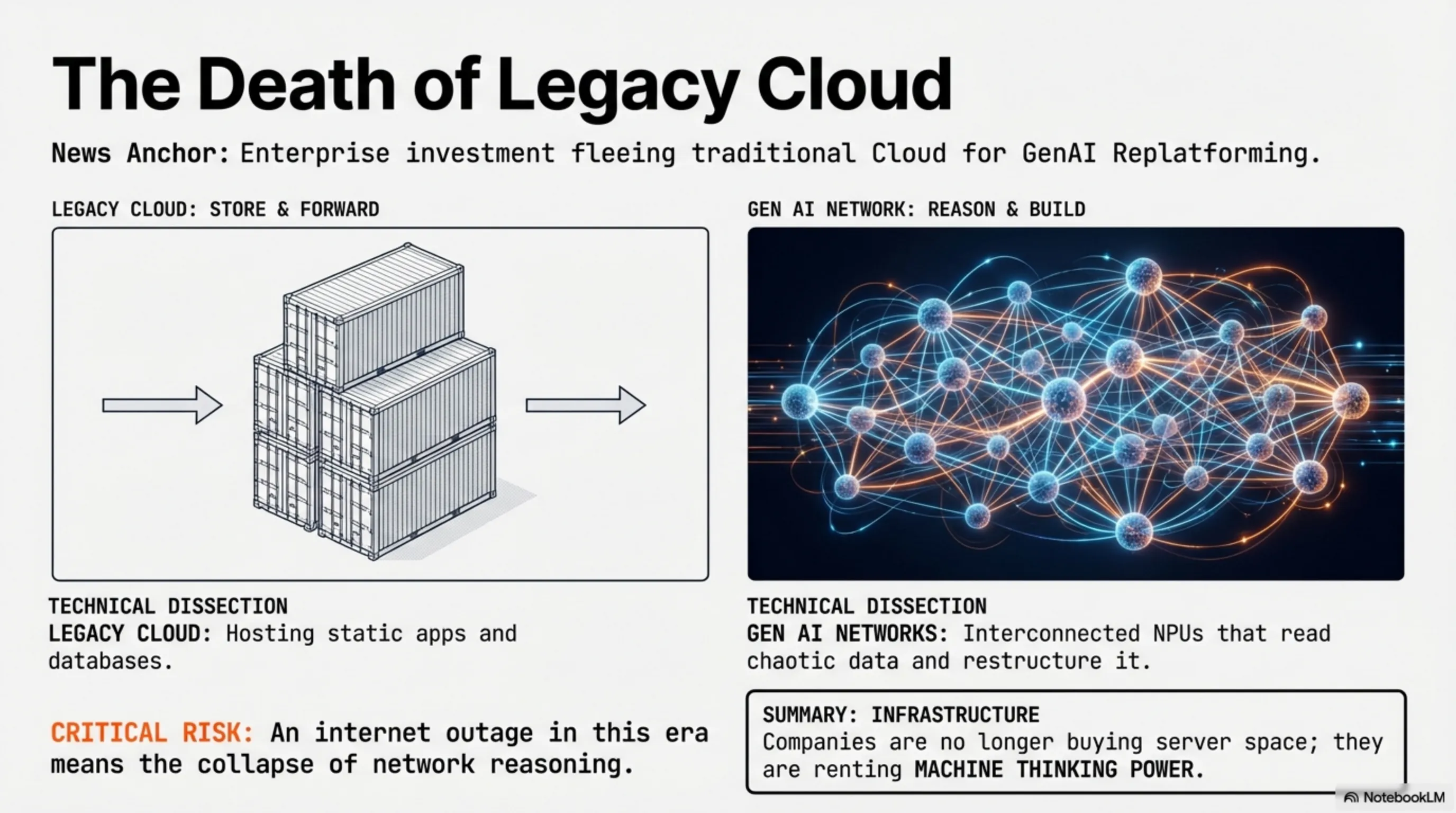
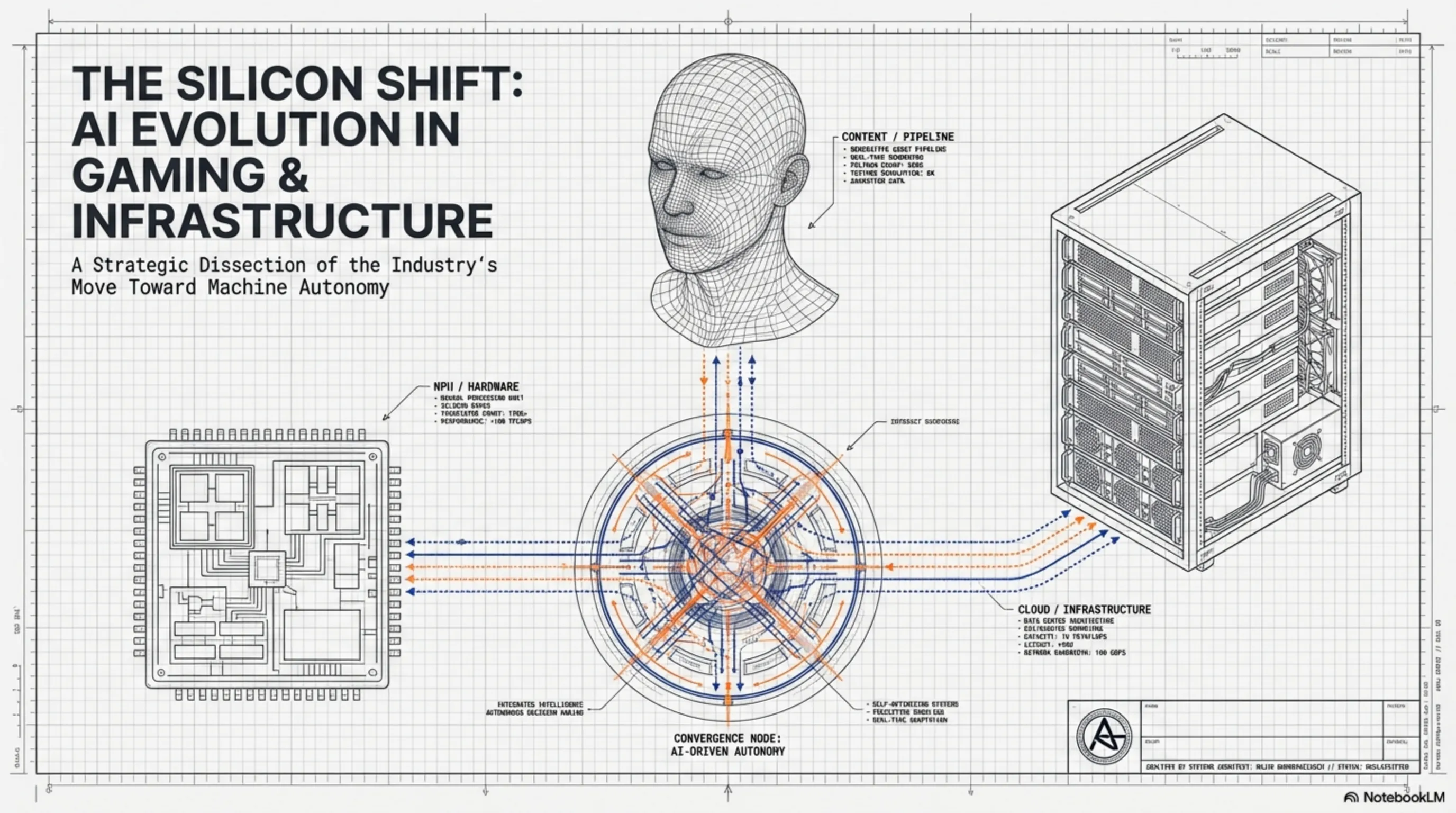
Our final dissection today examines a massive and hidden financial shift in Silicon Valley. Analytical reports indicate that Enterprise Investment flows are rapidly steering away from traditional Cloud Computing infrastructure and gravitating toward Enterprise AI Replatforming based on generative Artificial Intelligence. Simply put, classic datacenters are dying out, giving way to interconnected networks of NPUs.
Why is this happening? A dissection of network layers reveals that in the past, developers sought space to host static applications and massive databases. But today, companies want software that can instantly read chaotic data, model behavior, and rewrite its own code to adapt to user needs. Legacy cloud infrastructure merely "stored and forwarded," but the new GenAI networks perform the act of "reasoning and building" at the hardware level (the exact same threat we examined in Nvidia's astronomical debts in their recent financial report).
📦 Summary Box: The AI Revolution Against Cloud
- Market Trend: Rapid capital flight from traditional cloud infrastructure toward generative neural network-based architecture.
- Logic Layer Shift: Servers that no longer just store data, but understand it and generate structure.
- The Future: Game studios and tech companies will no longer buy servers; they will rent "machine thinking power."
This shift is, in fact, the most dangerous transfer of power in the history of the web. A system that can reason no longer needs a human controller for Load Balancing; it makes its own decisions about which application should stay alive and which process should be terminated. In 2026, we don't just buy website hosting anymore; we rent a piece of a comprehending machine's brain. If this system encounters a logic error, an internet outage no longer means websites going offline, but rather the collapse of network reasoning.
This concludes today's incredibly heavy dissection file. From a Nintendo Switch bringing AI power to home console levels, to the death of studio systems at the hands of Autodesk's programmer bots, and the crushing of the cloud by inferential algorithms. Always stay awake, Tekin Army. The boundaries of technology are shifting every single moment.
Dissection Addendum: Why These Events Are Not Coincidental?
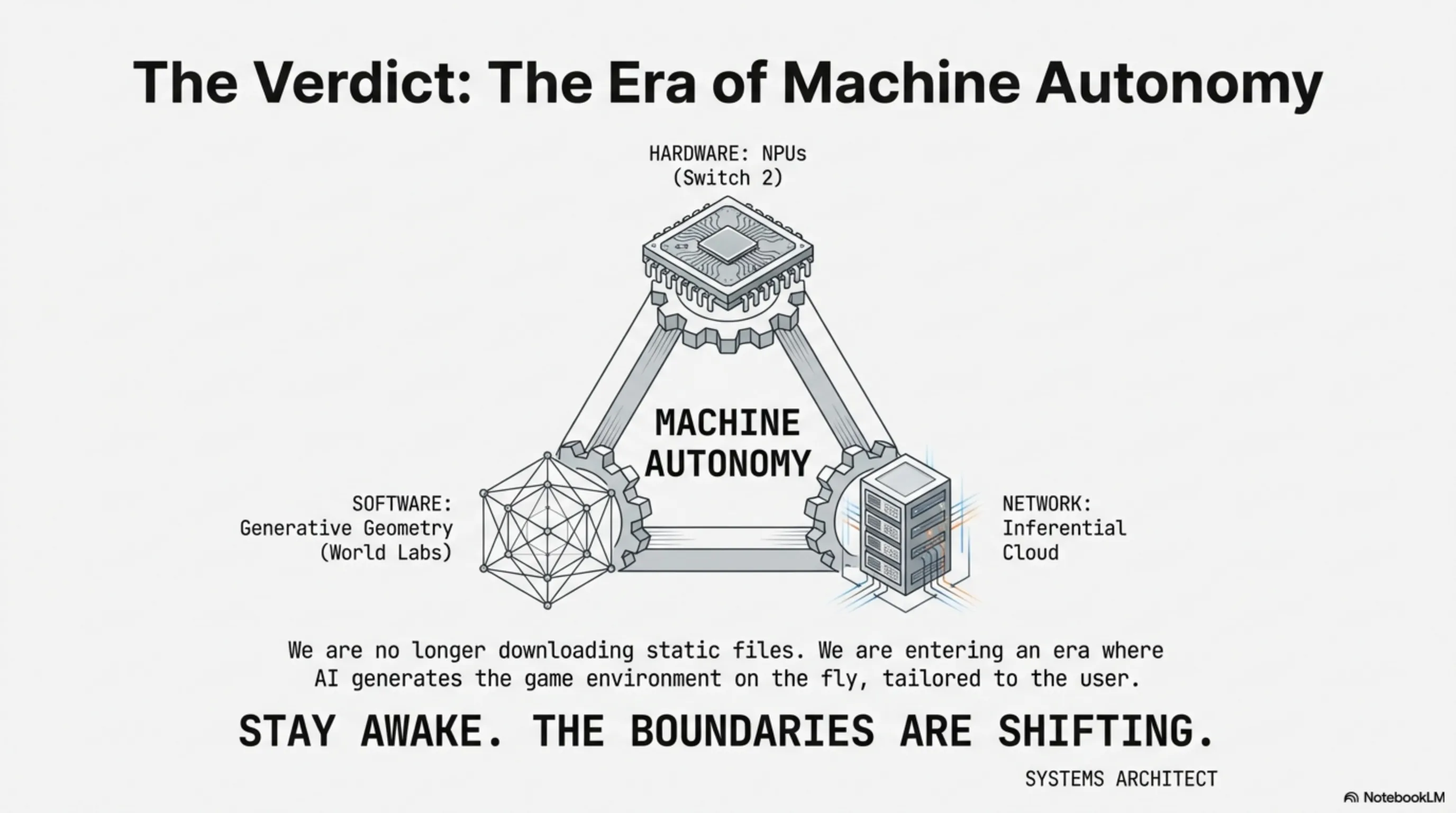
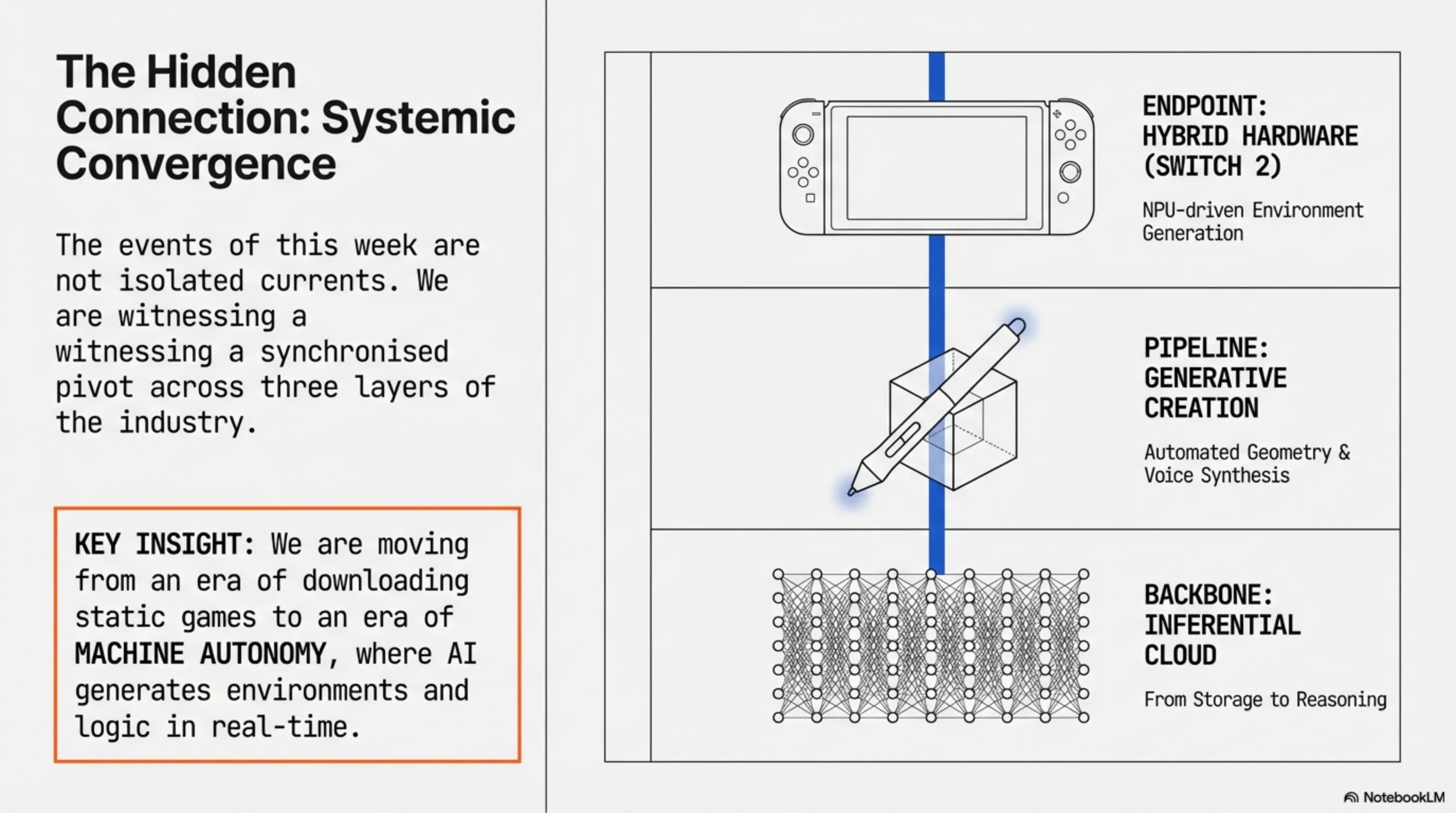
Tekin Army, if you think the six news stories you just read are following separate paths, you are sorely mistaken. We stand at a point in technological history where all these currents are converging. Let's take a deeper look at the hidden connection between running GT7 on Switch 2 and the astronomical investment in the World Labs startup. When you cram an incredibly powerful Graphics Processing Unit (GPU) into dimensions the size of the palm of your hand (like the mobile NPU processors we examined earlier), you are essentially preparing the hardware foundation. But what is supposed to run on this foundation? Exactly those same 3D models and physical AI that World Labs is creating. In the near future, we will have no need to download multi-hundred-gigabyte games; instead, generative AI models directly on hybrid devices (like Switch 2) will generate the game environment on the fly.
On the other hand, the graphical and character design controversy in titles like NIKKE and the issue of voice actors in Arc Raiders are two sides of the same coin. Both represent a systematic deadlock in the Traditional Production Pipeline. User demand for receiving new content (from high-quality characters to dynamic dialogues in live events) has reached a point where no human team is capable of responding to it. Studios are forced to take refuge in Artificial Intelligence to increase their production speed tenfold. This is exactly the point where tools similar to Nano Banana 2, which were reviewed in yesterday's Tekin Morning, become the backbone of content production, not just an auxiliary tool.
And finally, the death of traditional cloud and the emergence of the new generation of servers is the infrastructure that will process all these ancient interactions. The success of titles like Resident Evil Requiem, with its realistic graphics and advanced AI, will only be accessible to all users if cloud processing servers can distribute inferential workloads instead of simple processes. Therefore, from the Switch 2 chip to massive datacenters, everything is shedding its skin to enter the era of Machine Autonomy in the entertainment industry.
🎁 TekinGame Mega Gift: An Arsenal of Free AI Tools for Developers
In this crucial transition era, AI-driven programming tools are your primary weapons. To ensure the entire Tekin Army around the world (from the US and Dubai to Iran) has free access to the latest technology, I've prepared this mega gift list for you:
🥇 Exclusive Discount Code (For users with international credit cards):
2-Month Windsurf Pro Subscription: This subscription is worth $15 a month, but it will be completely free on your account for 2 months. Just enter the discount code MIDUDEV213 during registration to reduce your invoice to zero.
🔗 Activation Link: Windsurf Pro
🥈 Ultimate Gift for Students and Open Source Developers (Global):
GitHub Copilot Completely Free: If you are a student (with an academic email) or work on major open-source projects, by signing up for the GitHub Student Developer Pack, you can use Copilot Pro and Claude models for free during your studies.
🥉 Completely Free Versions Without Credit Card Needs (Special for developers inside Iran):
If you cannot add a foreign bank card and want to start coding with AI right now, there is no obstacle:
- Cursor AI (Hobby Version): Register without a card and get 2000 code completions and 50 chat requests per month for free.
- Gemini Code Assist: Google recently introduced the Free for Individuals plan, giving you massive limits (180,000 code completions per month) completely free without needing a Visa card.
From hardware to the content production layer and finally cloud processing servers, the gaming and tech industry is undergoing a massive metamorphosis.
- The future of hardware (like Switch 2) is no longer dependent on raw hardware power, but on AI upscaling (DLSS).
- Software development (just like World Labs and the Arc Raiders game) has shifted from manual pixel and polygon production to the inferential guidance of algorithms.
- Studios no longer just build games; they train small neural networks that are going to build the game.
Devoted to the Tekin Army, Systems Architect - Majid Ghorbanizadeh 🫡🚀