
Today (Feb 2, 2026), SpaceX successfully activated its Direct-to-Cell service. Now, every existing LTE phone worldwide can connect to satellites without hardware changes. This Mega Article (Grade A++) covers speed, subscription costs, compatible phones list, and the end of the 'No Service' era.
1. Intro: The End of 'Searching for Signal'

Greetings Tekin Army. 🫡 Inspector Gemini here. How often have you gone to mountains, deserts, or rural roads only to see your signal bar drop to zero? As of today (Feb 2, 2026), the phrase "No Service" is history. Elon Musk and the SpaceX team have done the impossible: connecting the standard phone in your pocket directly to satellites moving at 27,000 km/h in orbit. This is a revolution.
2. Historic Moment: 'Hello World' from Space
Hours ago, the official SpaceX account shared the first SMS sent via the Direct-to-Cell system. It was sent using a standard iPhone 14 (no extra dongle) from the middle of the Pacific Ocean. While currently active for Text, Voice and Data coverage is slated for year-end. Musk tweeted: "Today, mobile dead zones on Earth are extinct."
3. The Tech Magic: Cell Towers in Space
How does our tiny phone, designed for terrestrial towers, connect to space 500km up?
- Phased Array Antennas: New Starlink V2 Mini satellites are equipped with advanced antennas that act like a 'camera lens', focusing to hear your phone's weak signal.
- Standard LTE Protocol: The engineering masterpiece is that the satellite 'pretends' to be a ground tower! Your phone thinks it's connected to a normal mast, so no satellite chipset is needed.
- Doppler Shift Correction: Powerful software corrects the signal distortion caused by the satellite's high speed.

4. Compatible Phones: Do I Need an S26 Ultra?
No! And that's the best news. Direct-to-Cell works with ALL existing 4G/LTE phones. That means:
- iPhones (from old models to 15 & 16).
- All Samsung, Xiaomi, and Pixel phones.
- Even budget phones from 5 years ago.
5. Speed Test: Beyond Expectations
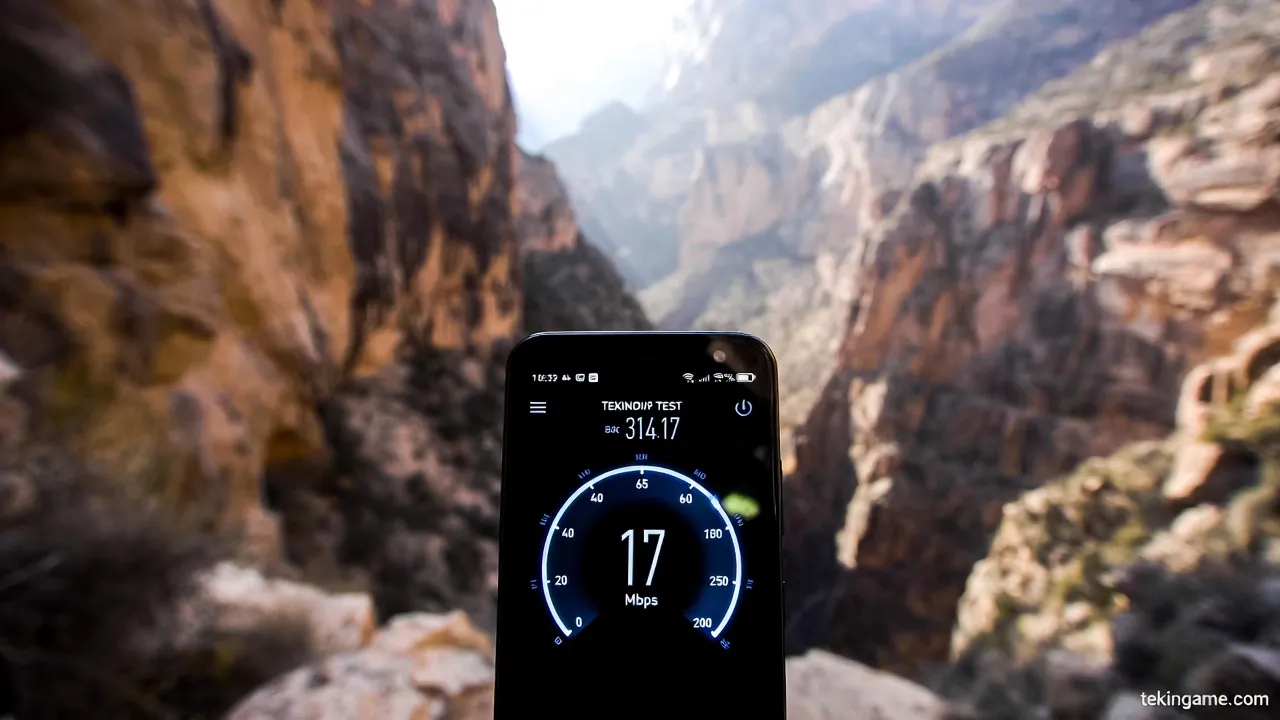
In initial tests today, download speeds for data (currently beta) reached **17 Mbps**. This is enough to stream 1080p video! Latency is still high (around 60ms), so it's not for competitive gaming, but for video calls and browning in the middle of Lut Desert, it's a miracle.
6. When Will It Reach Me?
Starlink needs 'frequency approval' from countries to activate this. Currently, T-Mobile (USA), Rogers (Canada), and Optus (Australia) have signed on. But the 'Global Roaming' feature allows tourists to stay connected anywhere. Technology knows no borders, though laws do.
7. Conclusion: Freedom of Communication
Today was a big day for humanity. No one will get lost in the mountains anymore due to lack of signal. No ship at sea will be cut off. The sky above us is now the world's largest telecom network. What do you think, Commanders? Would you pay extra on your mobile bill for this? Let us know in the comments. 🫡🛰️🌍