
1. Anatomy of a Cyborg: The Marriage of Honda's Engineering and Sony's Digital Magic
Until 2025, software in cars played a "supporting" role. But with the arrival of Afeela, we have officially entered the era of the SDV (Software Defined Vehicle). In this machine, the hardware (motor and wheels) is merely a platform for running software.
In the Sony Honda Mobility (SHM) project, the division of labor is stark: Honda is responsible for the mechanical platform and crash safety, while Sony has taken charge of the "senses" and the "brain." The result is a car that is constantly learning. You might go to sleep one night and wake up to find that via an Over-the-Air (OTA) update, your suspension has been optimized for snowy roads based on weather data.
2. Exterior Analysis: When the Car Body Becomes a Billboard
The first feature that catches the eye is the display strip on the front bumper, which Sony calls the Media Bar.
This strip isn't just for aesthetics; it is the AI's communication tool with the outside world. The car can text pedestrians ("Please Cross"), display charging status, or even show PlayStation game themes.
Security Analysis: While visually stunning, cybersecurity experts worry about "Visual Hacking." Imagine if hackers took control of this display to broadcast misleading signals (like a green light) to other drivers. In 2026, the body of your car no longer belongs solely to you.
3. Cockpit or Cinema? Panoramic Screens and Unreal Engine 5.4
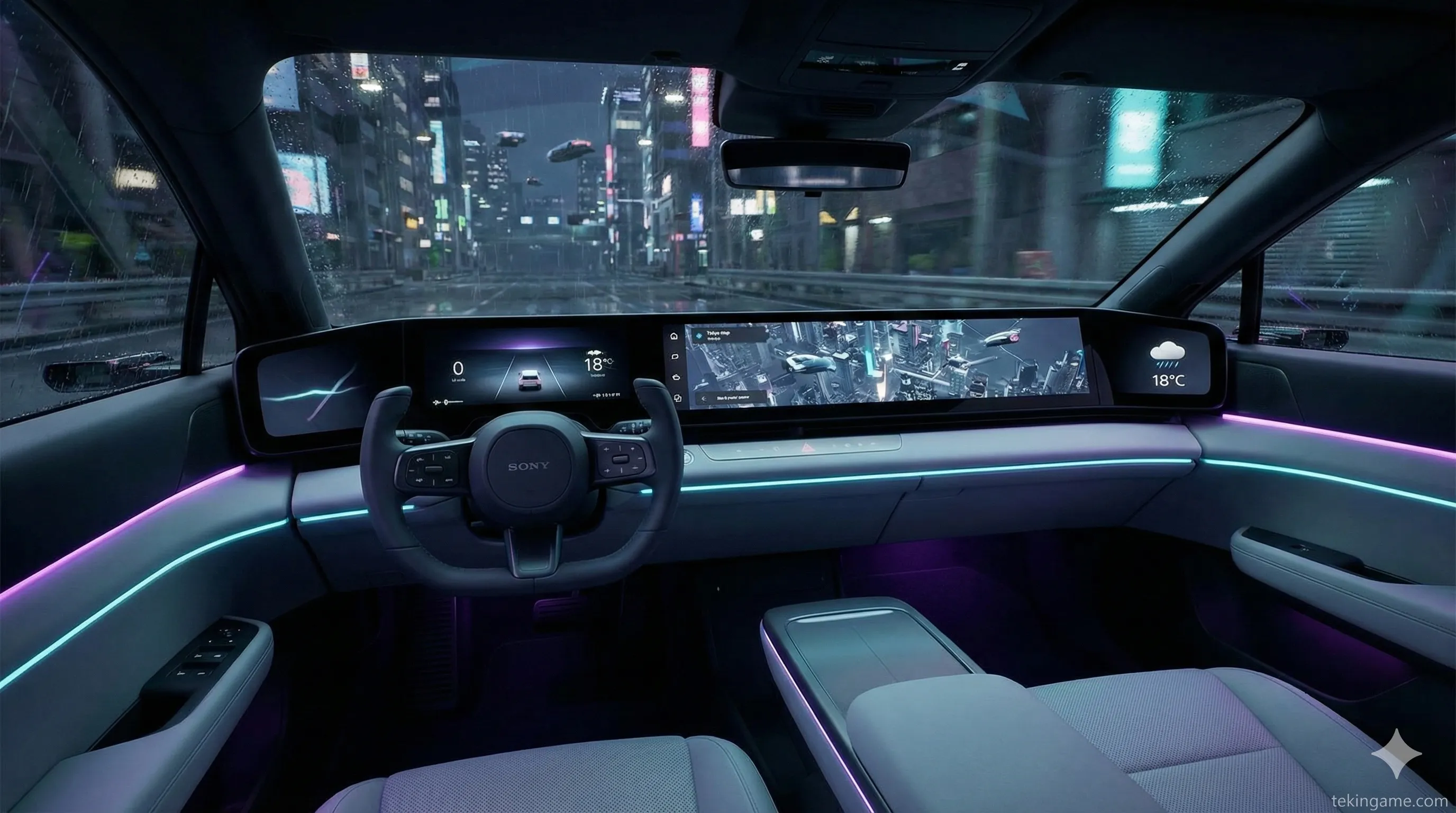
Inside the Afeela, physical buttons are extinct. A panoramic screen spans the entire dashboard. But the key is the UI graphics. Sony, in collaboration with Epic Games, built the entire interface using Unreal Engine 5.4.
This means the GPS navigation is no longer a boring 2D map; it is a photorealistic 3D world. When it rains outside, the virtual environment inside the screen rains too. Sony has effectively blurred the line between "Reality" and the "Metaverse" inside the cabin, designed to make passengers forget they are even in traffic.
4. The Mastermind: Dissecting the Snapdragon Ride Flex
The beating heart of the Afeela isn't its electric motor, but Qualcomm's "Digital Chassis." This is the first vehicle to utilize the unified Snapdragon Ride Flex platform.
The processing power of this system reaches a staggering 800 Teraflops (TOPS). For comparison, a PS5 console has about 10 teraflops. Why does a car need the power of 80 gaming consoles?
The answer lies in the simultaneous processing of 45 sensors and the execution of heavy Generative AI models. This chipset manages the infotainment, autonomous driving, and driver monitoring systems simultaneously with zero latency.
5. Generative AI: The Microsoft Azure OpenAI Partnership
Afeela's voice assistant isn't a simple command-taker like "Play Music." Sony partnered with Microsoft to integrate Azure OpenAI into the vehicle's core.
This "Digital Agent" holds natural conversations with you. It can detect your mood based on voice tonality and facial expression. If it senses stress, it warms the cabin lighting, plays soothing music, and softens the suspension. Your car is now your psychologist.
6. Level 3 Autonomy: A Detailed Look at the 45-Sensor Array
Safety in Afeela is built on the law of "Redundancy." The vehicle boasts 45 different sensors:

- LiDAR: A laser eye on the roof providing precise 3D mapping (unlike Tesla, which removed LiDAR).
- Cameras: 12 cameras providing 360-degree vision.
- Radar & Ultrasonic: For depth perception in poor weather conditions.
7. The Dark Side of AI: The Trolley Problem
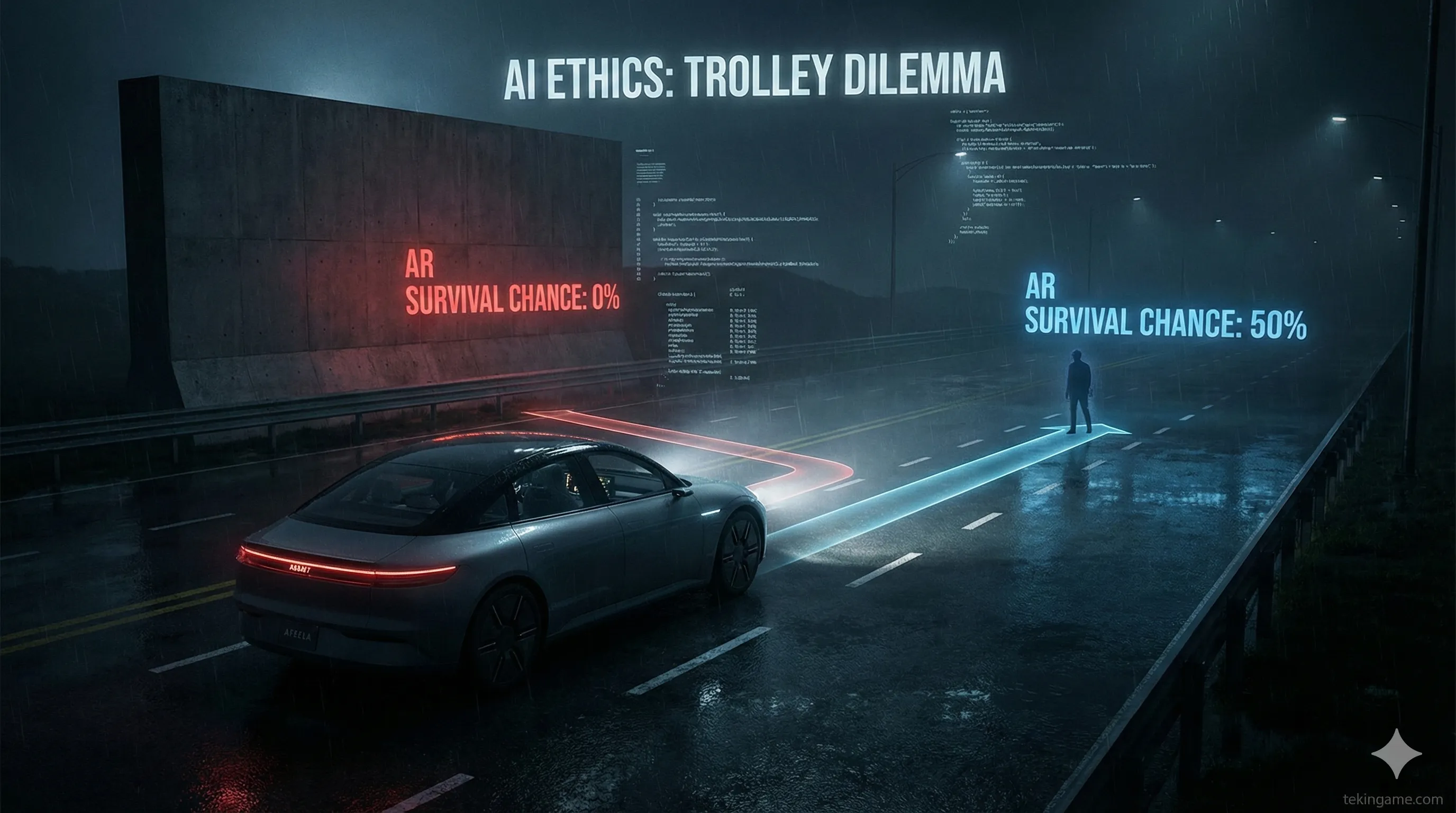
This is the heaviest discussion. When an algorithm controls the steering wheel, who bears the "Moral Responsibility"?
Imagine a child suddenly runs into the street. Braking is impossible. The car has two choices: hit the child, or swerve into a concrete wall (likely killing the driver).
A human reacts on instinct. An AI chooses based on code. Sony's programmers must write lines of code that assign value to life. Should the car always prioritize the occupant (the customer)? Or the pedestrian (society)?
There is no global law for this yet, and this "Legal Vacuum" is the most terrifying part of the autonomous future.
8. Cyber Security: Ransomware on Brakes
Anything "Smart" is hackable. Afeela is always connected to 5G/6G.
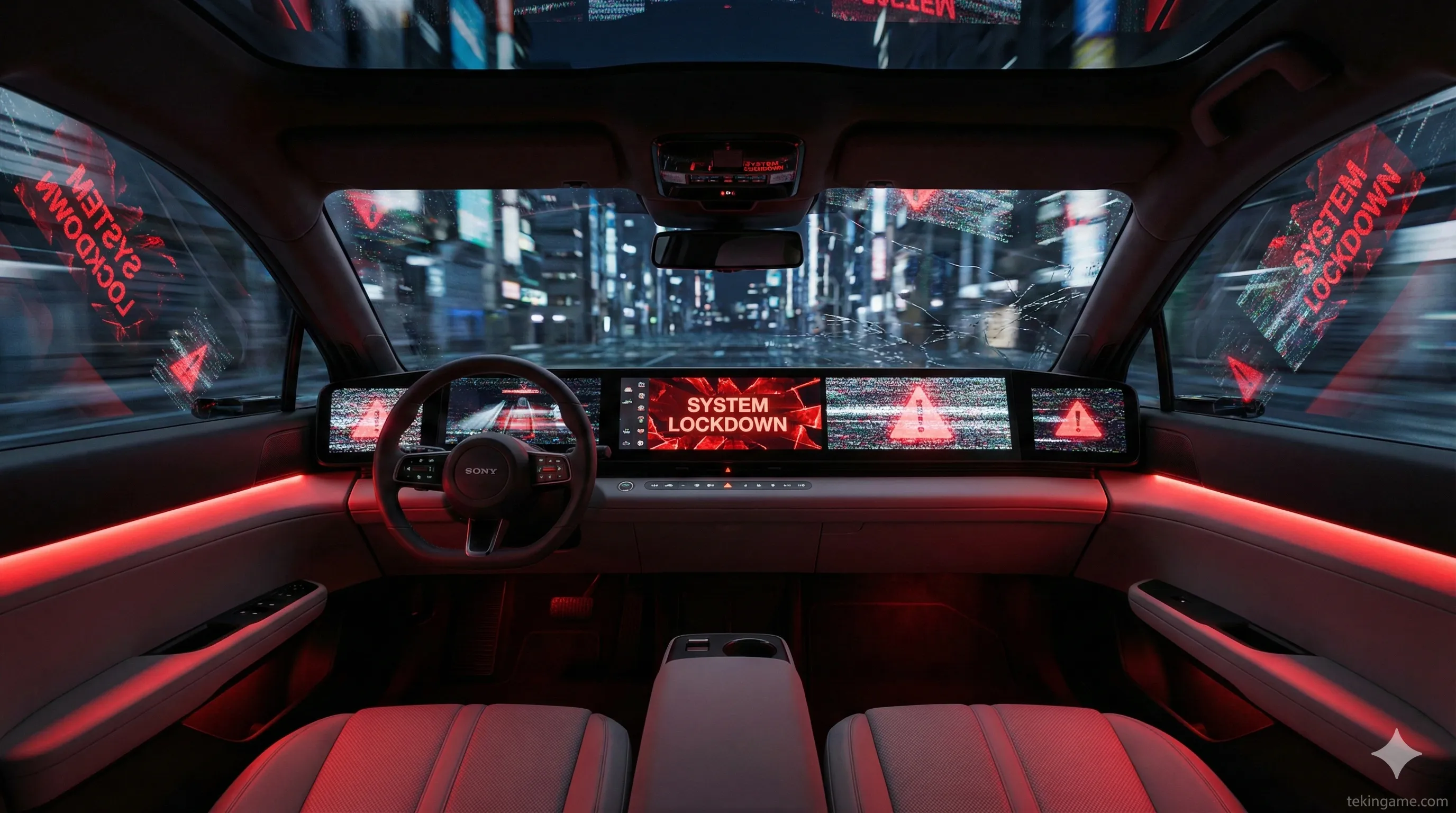
Researchers have shown that "Man-in-the-Middle" attacks can spoof GPS signals, leading autonomous cars to the wrong location. Worse, imagine ransomware that locks your electronic brakes (Brake-by-Wire) on the highway until you pay Bitcoin. Sony promises military-grade encryption, but history shows no system is impenetrable.
9. Mechanical Specifications
Let's not forget, it is still a car:
- Battery: 91 kWh Lithium-Ion pack.
- Charging: Supports DC Fast Charging up to 150kW.
- Powertrain: Dual Motor (AWD) producing 483 horsepower.
- Suspension: Double wishbone front and multi-link rear air suspension for a cloud-like ride.
10. Conclusion: Are We Ready to Surrender the Wheel?
The Sony Afeela is an engineering masterpiece. It represents the pinnacle of 2026 technology, offering unparalleled comfort and entertainment.
But simultaneously, it symbolizes the surrender of human agency to the algorithm. For those who hate traffic, it is a mobile paradise. But for those who love the "mechanical connection to the road," Afeela is a gilded cage. A cage full of sensors watching your every move, deciding your path for you.
2026 is the year we must choose: Do we want the comfort of AI, or the freedom of human error?