
In the unforgiving and fast-paced landscape of the video game industry, it is exceedingly rare to find a single title capable of inventing and subsequently perfecting an entirely new subgenre. Yet, in 2017, the small independent studio Mega Crit achieved exactly that with the release of the original Slay the Spire. By masterfully blending the calculated, mathematical mechanics of deckbuilding card games with the unpredictable, punishing nature of roguelikes, they forged a golden formula. In the years that followed, this blueprint was emulated b
When discussing the most influential independent (Indie) games of the last decade, it is fundamentally impossible to omit Slay the Spire. A game that initially entered the market with a simplistic aesthetic and seemingly complex mechanics rapidly evolved into a global phenomenon and a literal masterclass for game developers. Now, Mega Crit studio has returned with a groundbreaking announcement: Slay the Spire II will officially enter Early Access on March 5, 2026. This is not merely a safe sequel; the integration of a Co-op mode, a complete engine migration, the introduction of entirely new classes, and an overhauled progression system indicate that Mega Crit intends to redefine the very boundaries of the genre they created.
1. The Re-emergence of a Legend: Why Slay the Spire 2 is 2026's Biggest Indie News
In an industry that routinely witnesses the launch of dozens of games boasting hyper-realistic graphics, expansive open worlds, and astronomical AAA budgets, news regarding a 2D card game might seem peculiar to a casual observer. However, for hardcore PC gamers, streamers, and strategy enthusiasts, the reveal of Slay the Spire 2 is one of the most significant and strategically vital events on the 2026 calendar.
1.1. The Legacy of the First Game and the Birth of the Roguelike Deckbuilder
The original title was not just a commercial triumph with millions of copies sold worldwide; it fundamentally defined and matured the Roguelike Deckbuilder subgenre. Its addictive gameplay loop was built upon three unshakeable pillars:
- Risk vs. Reward: The constant dilemma of choosing dangerous map routes (featuring Elite bosses and perilous events) to acquire invaluable Relics, versus opting for safer paths merely to survive to the floor's end.
- Ruthless Resource Management: The crucial realization that in deckbuilders, sometimes the best strategy is to "skip" adding a new card to keep your deck lean, ensuring you draw your vital combo pieces faster.
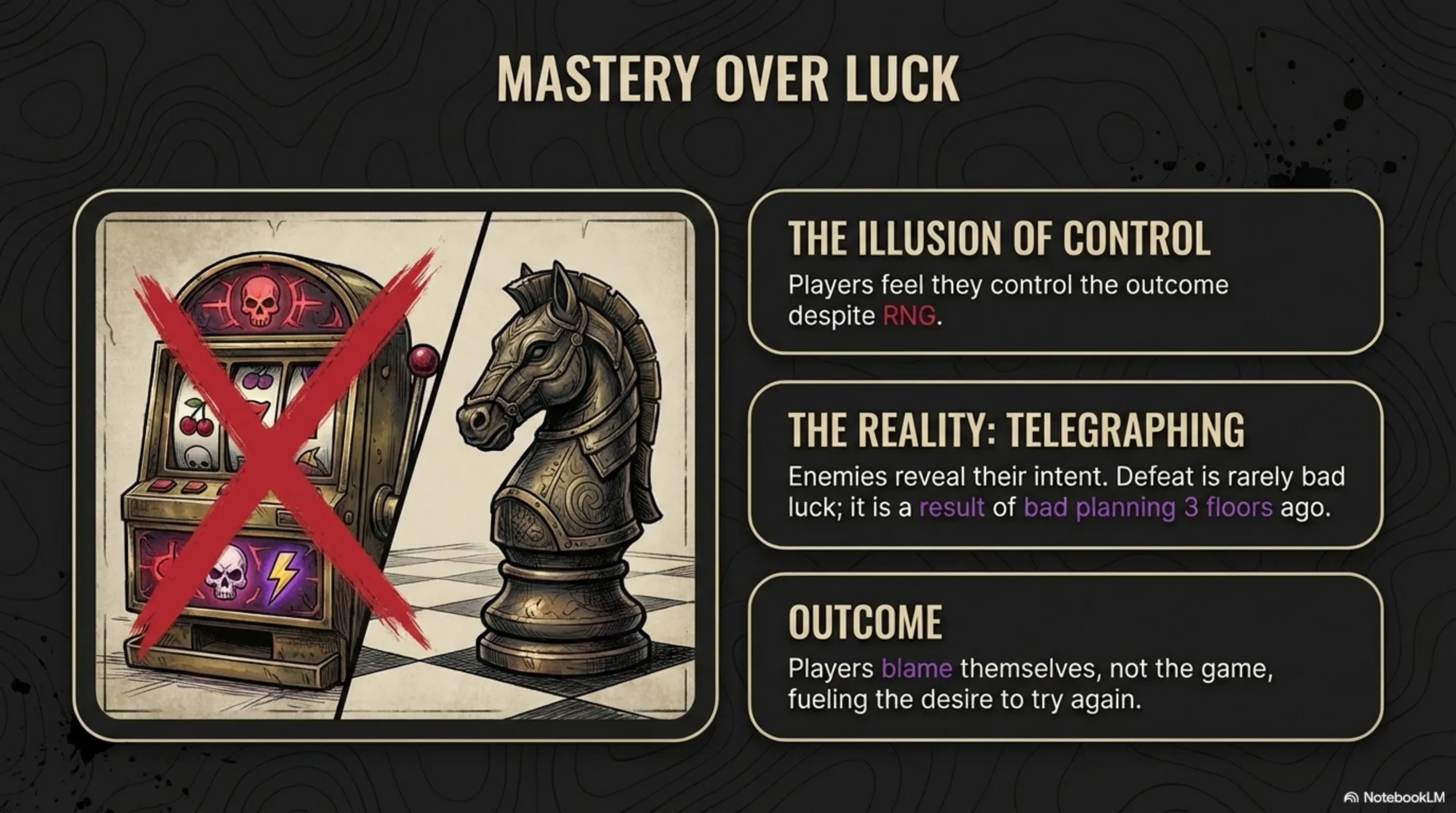
- Predictable Enemy AI (Intent Telegraphing): Unlike many games reliant on pure randomness, Slay the Spire broadcasted the enemy's exact next move and the precise amount of damage they intended to deal. Consequently, failure was never the fault of bad luck; it was the direct result of the player's flawed planning and miscalculations.
Highly acclaimed games such as Monster Train, Inscryption, Griftlands, and the recent sensation Balatro all owe a massive debt of gratitude to Mega Crit's ingenuity. Mega Crit remained silent for years, observing their competitors, and has now returned fully armed to remind the industry who the true monarch of this castle is.
2. From Rumor to Reality: The Early Access Release Date and Mega Crit's Strategy
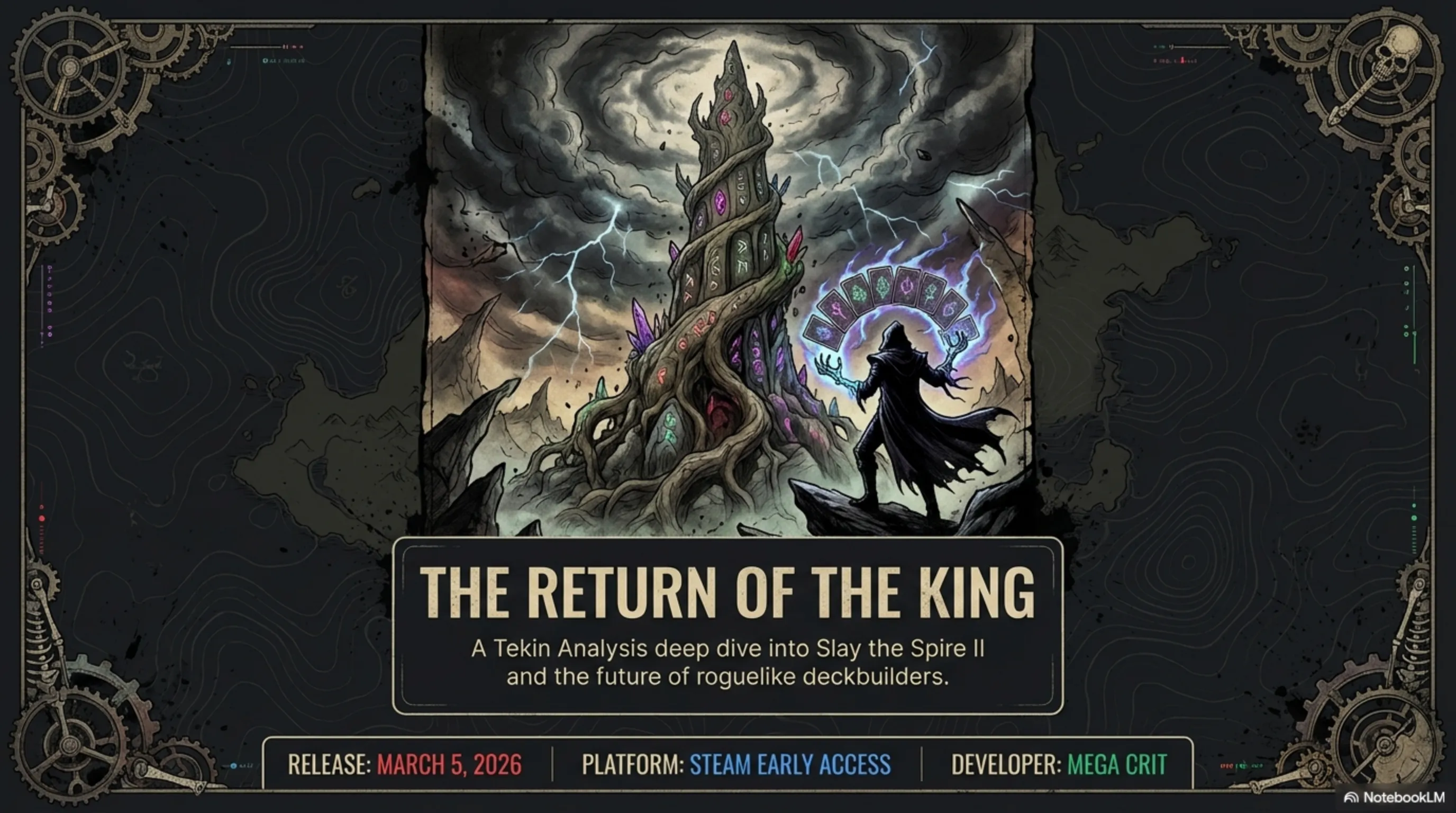
Mega Crit has always been celebrated for its transparent, honest, and community-driven approach. Unlike major publishers who develop projects behind tightly closed doors, it has been officially announced that Slay the Spire II will launch into Steam Early Access on March 5, 2026.
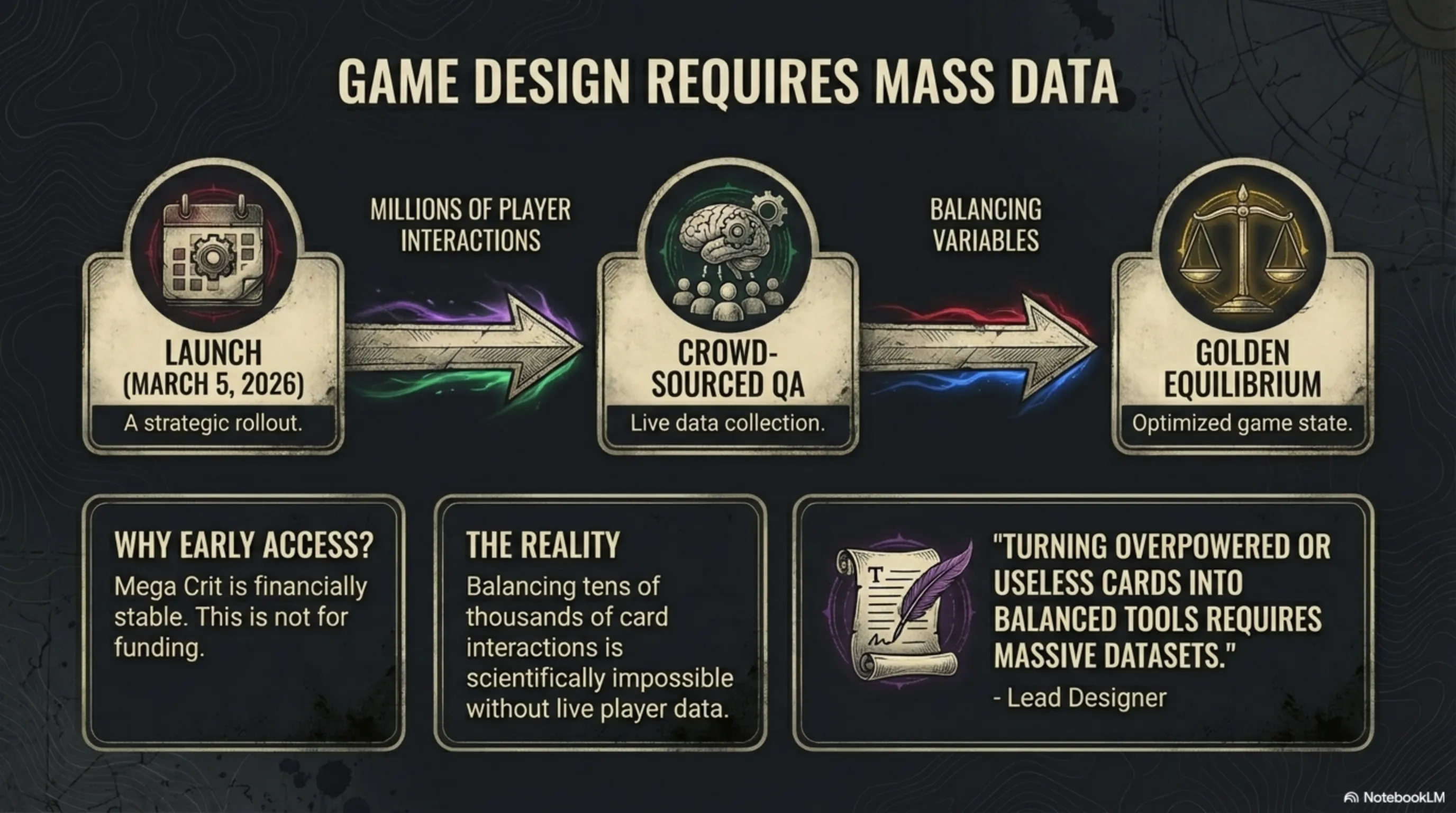
Why Early Access? (A Technical and Business Autopsy)
Many large studios utilize Early Access merely as a glorified pre-order system to secure funding. However, for Mega Crit—a financially stable and highly successful studio—this is a decision driven entirely by pure Game Design. Balancing a card game containing tens of thousands of variables and potential combinations is scientifically impossible without continuous feedback from millions of active players. The first game followed this exact trajectory. Cards that were notoriously Overpowered (OP) or utterly useless on launch day were gradually tuned into perfect, golden equilibrium using massive datasets gathered over months of constant updates. In the sequel, with the introduction of multiplayer dynamics and new character classes, the necessity for extensive testing and utilizing the player base as a Quality Assurance (QA) team has multiplied a hundredfold.
3. A Gameplay Revolution: How Does the Co-op Mode Work?
The undisputed bombshell of this announcement is the addition of a Co-op (Cooperative Multiplayer) mode. Strategic card games are inherently solitary, silent, and highly focused experiences; it is usually just you, your deck, and a merciless AI calculating numbers. How has Mega Crit transformed this isolationist experience into a thrilling, social, group activity?
3.1. Team Mechanics: Synergy, Sacrifice, and Accidental Sabotage!
In Slay the Spire 2's Co-op mode, two players (and potentially more in the future) enter the Spire simultaneously. Based on a frame-by-frame analysis of the release trailers and early Steam backend data, the Co-op system relies on several intricate foundations:
- Forked Paths: Players share a map but are not forced to move on the exact same nodes constantly. The team might decide that one player visits the Merchant to purchase key cards while the other battles an Elite to secure a team Relic. However, for the climactic Boss Fights on each floor, the team must converge into a single battlefield.
- Resource Pooling and Shared Buffs: While it remains unconfirmed if players share a singular Health Pool (HP), there will undoubtedly be mechanics for transferring Potions, passing specific cards, or establishing defensive covers for a vulnerable teammate.
- Status Effect Cross-Contamination: If Player A applies "Vulnerable" to an enemy, Player B can capitalize on that opening to deal double damage. This transforms the game from a solo puzzle into a tactical Role-Playing Game (RPG), where one player might adopt the role of the Tank while the other focuses solely on massive DPS (Damage Per Second).
| Class Combination (Co-op) | Strategic Team Role | Synergy Potential |
|---|---|---|
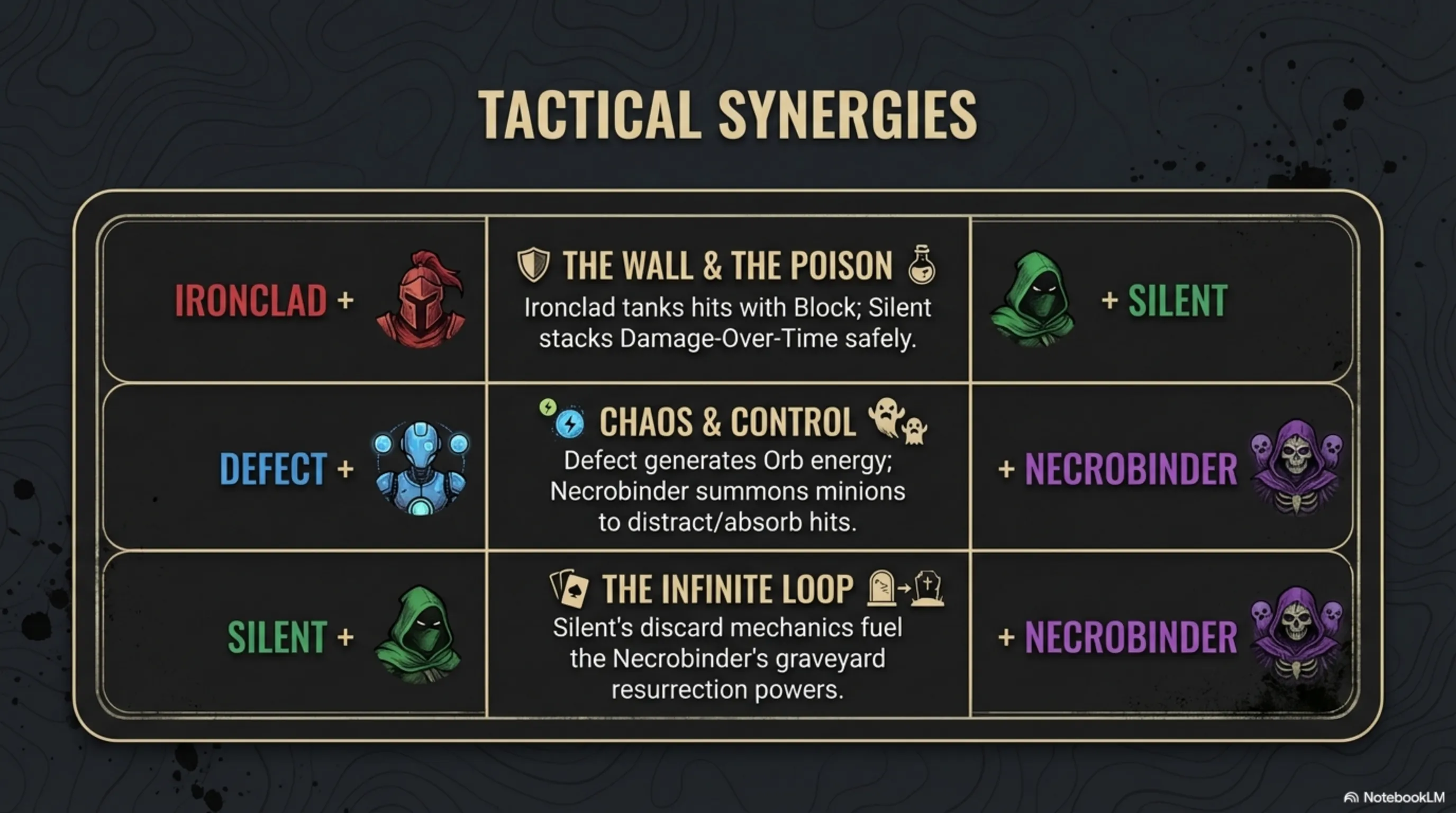
| Ironclad + Silent | Defensive Wall + Gradual Damage (Poison) | Extremely High. The Ironclad absorbs all incoming enemy damage using heavy Block cards, allowing the Silent to safely stack massive Poison debuffs over multiple turns. |
| Defect + Necrobinder | Energy Generation + Board Control (Summoning) | Unpredictable and Chaotic. The Defect generates a surplus of team energy via Orbs, while the new class (Necrobinder) summons minions to distract enemies and absorb targeted hits. |
| Silent + Necrobinder | Discard Engine + Graveyard Resurrection | Revolutionary! If the cards the Silent strategically discards can be utilized or resurrected by the Necrobinder, we will witness infinite loops and game-breaking mechanics. |
4. The Great Technical Migration: Why Fleeing Unity for Godot is a Masterstroke
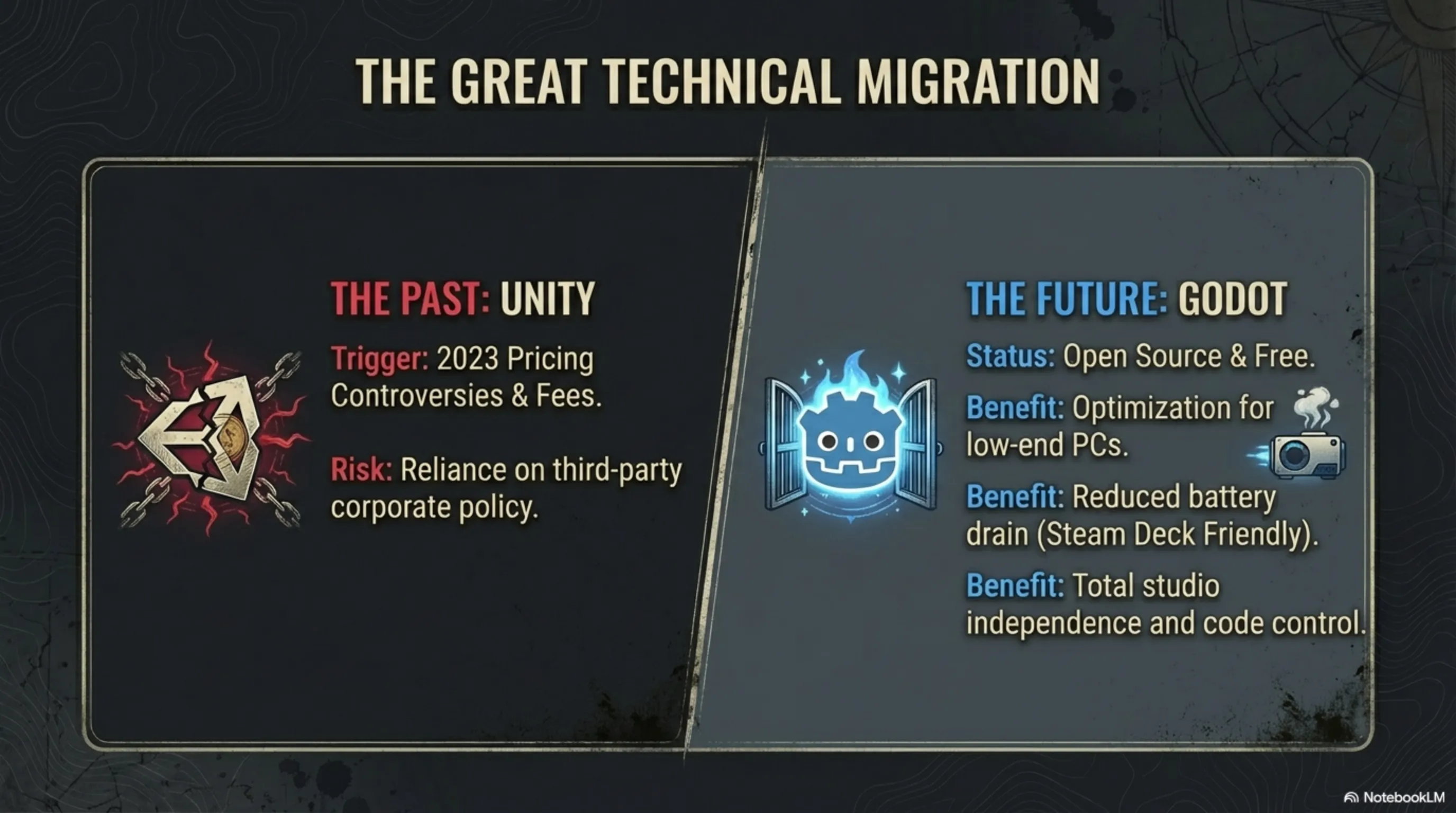
One of the most consequential peripheral stories impacting the broader gaming industry is the complete overhaul of the game's engine. The first iteration was built on the renowned Unity engine. However, following controversial decisions, bizarre pricing policies, and the infamous "Install Fee" proposed by Unity executives in late 2023, a tidal wave of fury swept through the indie developer community.
In a bold, expensive, and distinctly protesting maneuver, Mega Crit announced they had discarded all previous codebases and migrated Slay the Spire 2 entirely to the open-source, completely free Godot Engine. This decision is vital for the game's survival and player experience for several reasons:
- Stunning Performance Optimization: The Godot engine is significantly lighter, better optimized, and faster for 2D games than Unity. The game will run flawlessly on lower-end systems, loading times will drop to near zero, and battery drain on handheld consoles like the Steam Deck will be drastically reduced.
- Total Studio Independence: Mega Crit no longer has to fear sudden policy changes, financial extortion, or the potential bankruptcy of a third-party corporation. They retain total control over their source code and all generated profits.
5. Dissecting the New Class: Who is The Necrobinder?
The beating heart of any roguelike deckbuilder is the diversity of its classes and character builds. Alongside the return of beloved classic characters (the Ironclad and Silent are confirmed, likely with fresh art styles and reworked starting decks), Mega Crit has unveiled entirely new classes for the sequel.
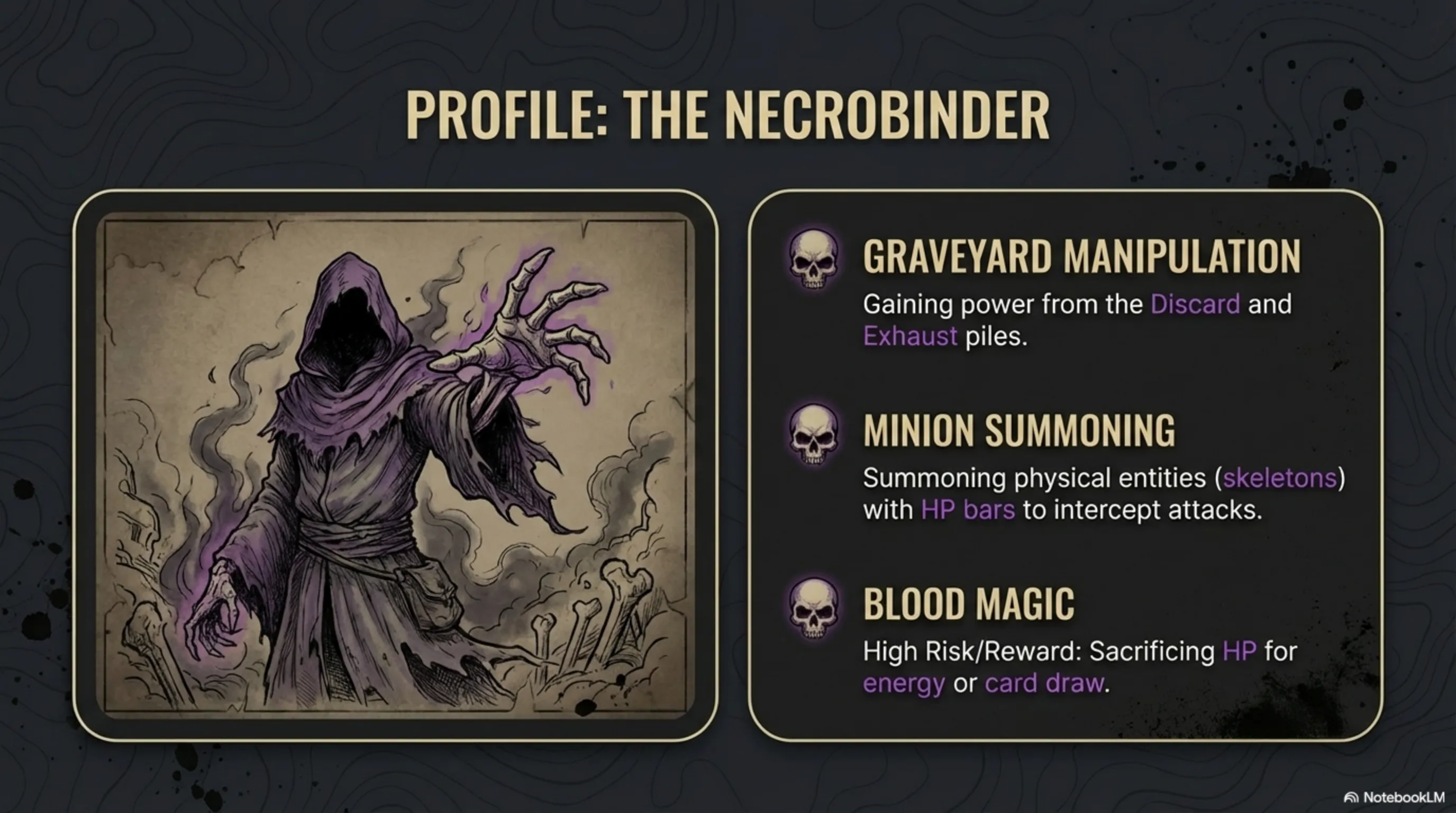
The undeniable star of the promotional material is a dark, enigmatic class named The Necrobinder. Visually, this character is draped in tattered cloaks and wields a magical, skeletal left hand. Regarding gameplay mechanics, the analysts at Tekin Analysis believe this class will revolve around three core axes:
- Powerful Discard and Exhaust Mechanics: Retrieving cards that have been removed from play or gaining power from the sheer act of burning cards. The Graveyard (Exhaust pile) will be just as important as the main draw pile for this class.
- Minion Summoning: Unlike the Defect, who summoned passive energy Orbs, it appears the Necrobinder will bring physical entities or skeletons onto the battlefield that possess their own HP bars and can intercept enemy attacks directly.
- Blood Magic (Sacrificial HP): Utilizing the character's own health pool to inflict devastating damage or draw additional cards in a single turn. This represents a massive risk/reward mechanic that hardcore players adore managing.
6. The Psychology of the Roguelike: Why Do We Get Stuck in the Spire for Hundreds of Hours?
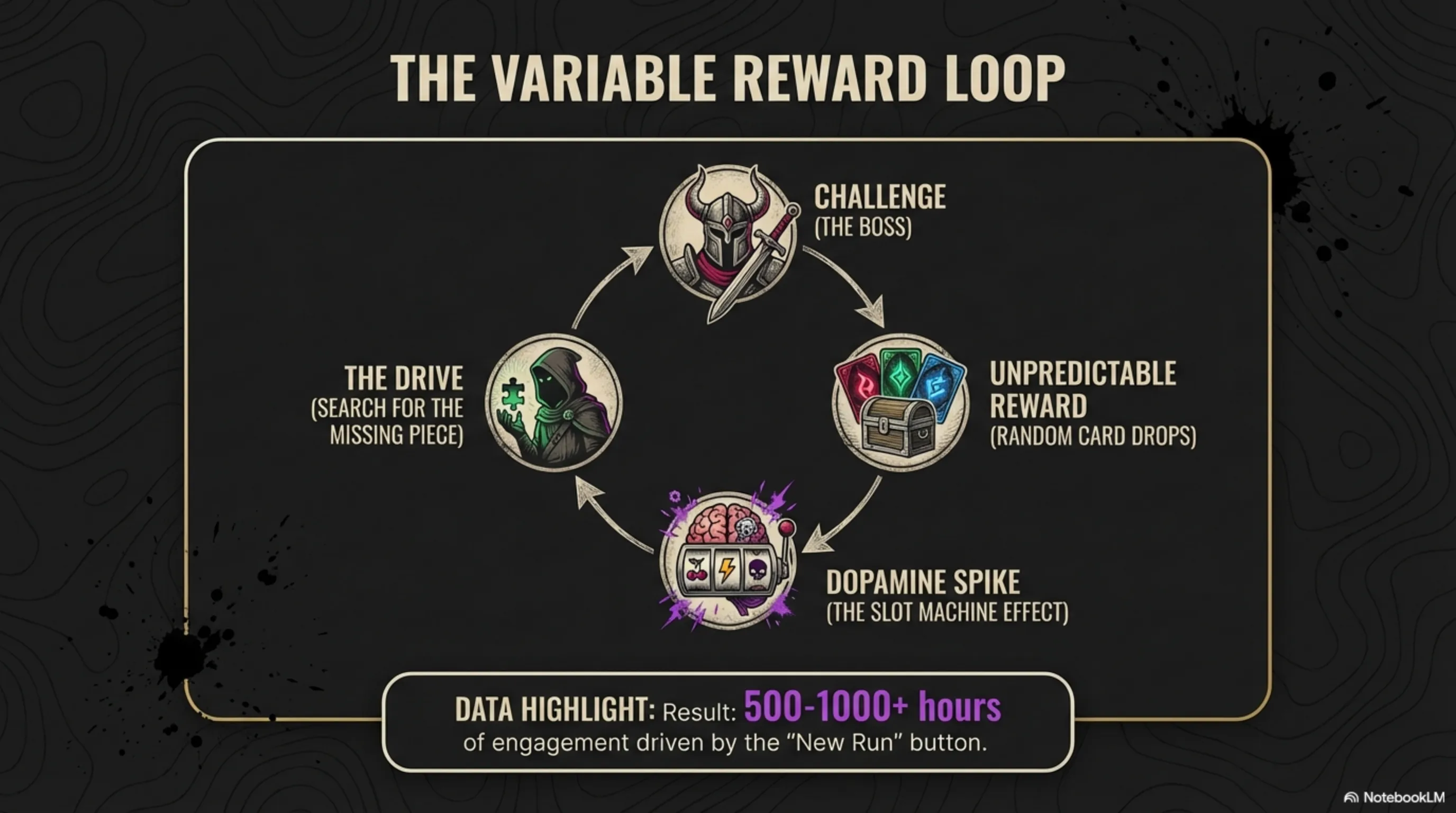
To truly comprehend the historical and cultural significance of Slay the Spire II, one must view it through the lens of Game Design Psychology. Why could a game with arguably mediocre graphics in its first iteration keep players glued to their monitors for 500 to 1,000 hours? The answer lies in a psychological concept known as the "Variable Reward Loop."
In behavioral psychology, unpredictable rewards (similar to the mechanics utilized in slot machines) trigger the highest dopamine release in the human brain. Mega Crit implemented this concept with the precision of a neurosurgeon. Every time you defeat a boss in the Spire, you are offered three random cards. You don't know what they will be, but your subconscious knows that one of them might be the exact missing piece of the puzzle that will double your deck's power. This insatiable thirst to find "that one specific card" or "that legendary Relic" compels the player to hit the 'New Run' button repeatedly, despite agonizing consecutive defeats.
6.1. The Illusion of Control and RNG Management
In many traditional card games, the player is ultimately a hostage to luck, or the RNG (Random Number Generation) system. If the dice roll poorly or you suffer a bad draw, you lose. However, Mega Crit's masterstroke was transforming the "illusion of control" into tangible, actionable control within the player's mind. Enemies clearly telegraph their "Intents"; therefore, when you die, you know it isn't the fault of a bad RNG system, but rather because three floors ago, instead of removing a weak Strike card, you greedily spent your gold on a useless potion!
7. Lessons from Competitors: The Impact of Balatro and Monster Train on the Sequel
Between 2017 and 2026, the roguelike deckbuilder market has not remained stagnant. Formidable games were released during this interval, and Mega Crit has undoubtedly placed them under their analytical microscope. Two primary competitors that have provided the most significant lessons during Mega Crit's absence are:
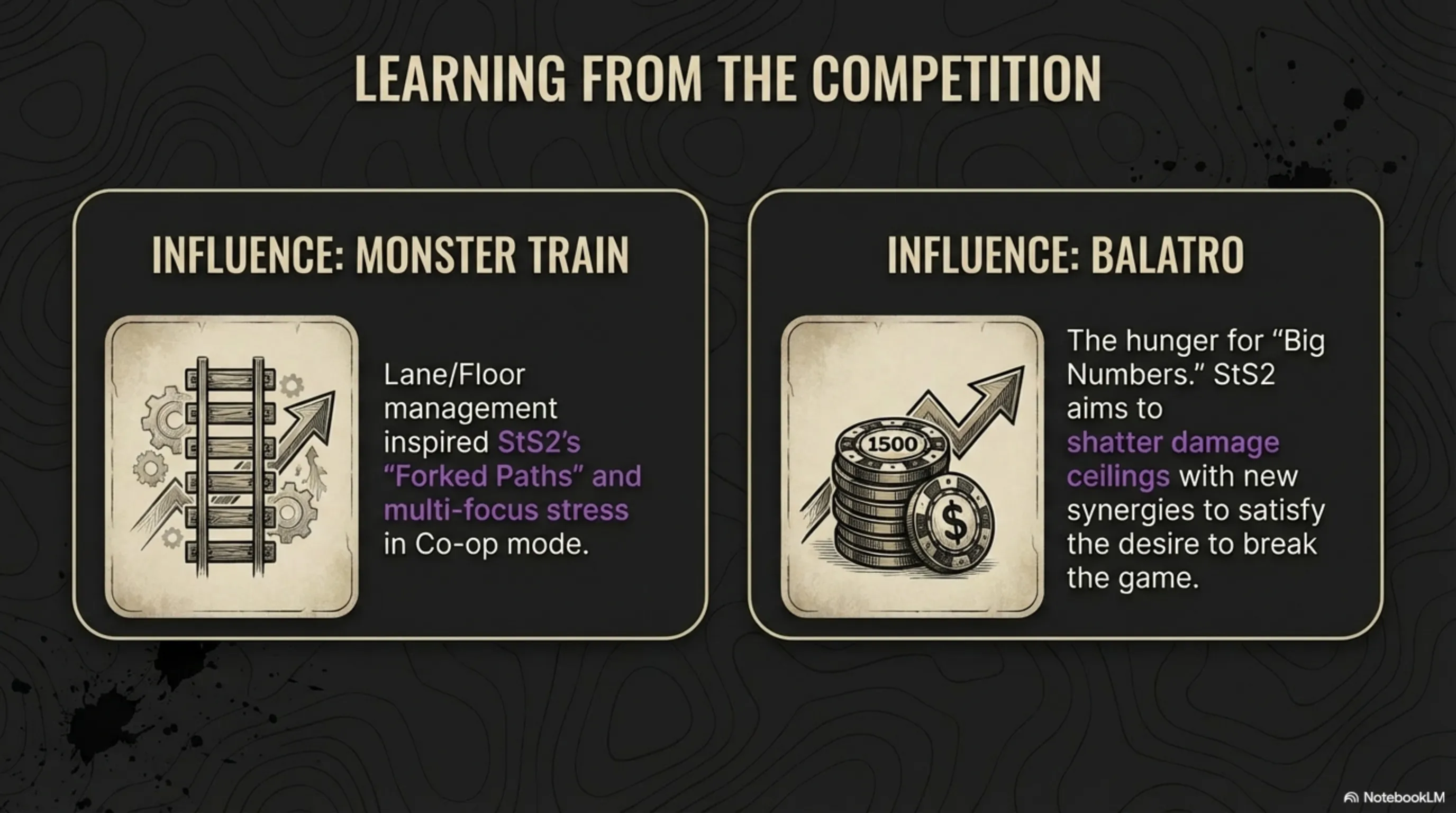
- Monster Train (Lane Management & Core Defense): This title demonstrated to designers that Tower Defense mechanics could be successfully merged with card play, forcing the player to focus on multiple floors (lanes) simultaneously. The introduction of forked paths in Slay the Spire 2's Co-op mode is likely inspired by this exact brand of stressful, multi-layered management.
- Balatro (Pure Addiction to Numbers): The unparalleled phenomenon of recent years that proved players have an insatiable desire for "Breaking the Game" and achieving astronomical Multipliers in their combos. One of the few critiques of the original Slay the Spire was that reaching million-point damage numbers was practically impossible in the late game. It is highly anticipated that the Necrobinder class or the insane Co-op synergies in the sequel will allow players to shatter the numerical ceiling and execute the wildest combos imaginable.
7.1. The Future of Modding in the Godot Paradise
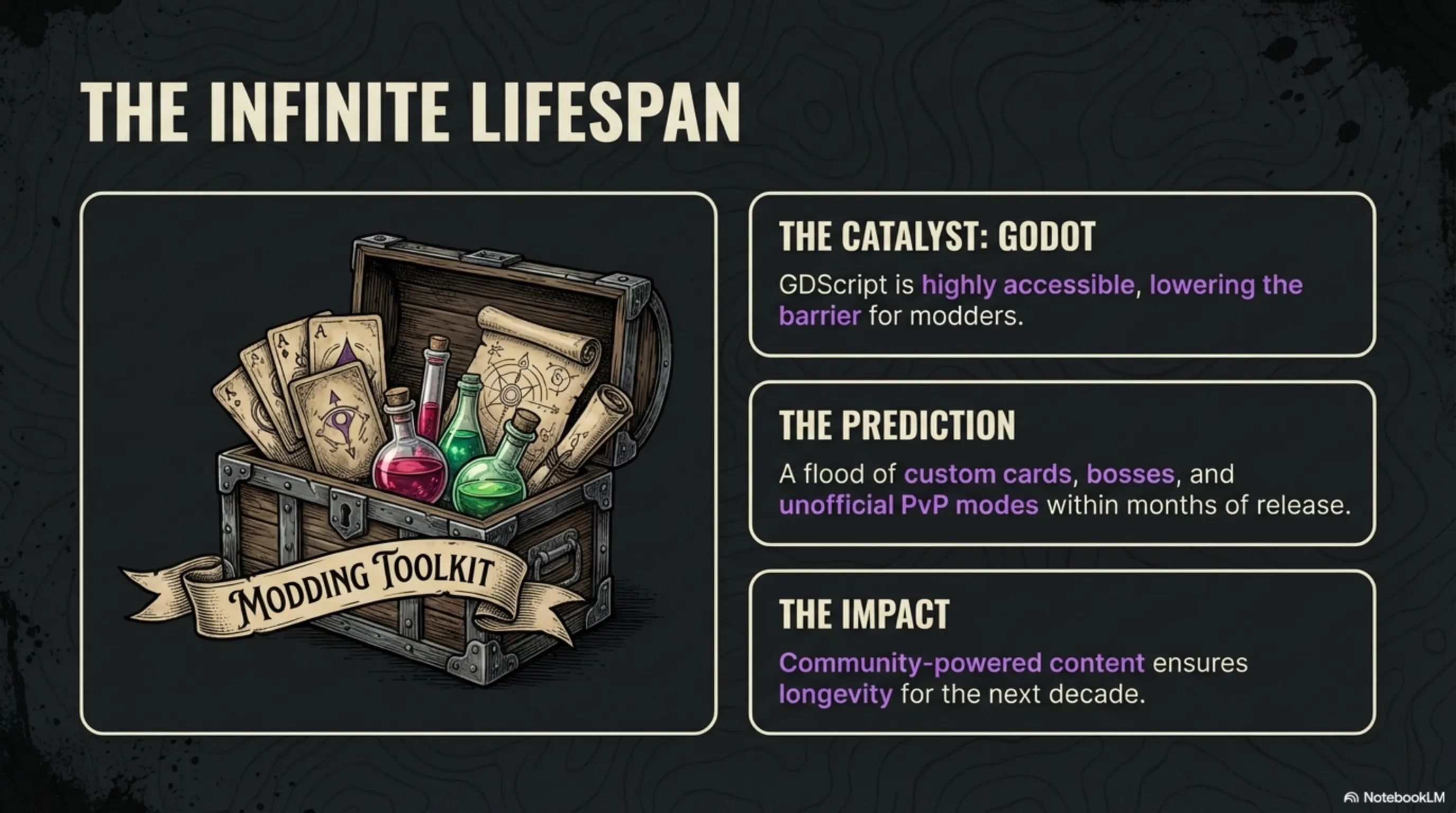
One cannot discuss Slay the Spire without acknowledging the infinite power of Mods. A primary reason for the original game's longevity was its robust modding ecosystem. With the transition to the Godot engine, we at Tekin Analysis predict that the community will introduce thousands of new cards, custom bosses, and even unofficial PvP (Player vs. Player) modes within months of the Early Access launch. Godot, with its highly accessible and powerful scripting language (GDScript), is an absolute paradise for programmers and modders, guaranteeing that Slay the Spire II's lifespan will endure for at least the next decade.
8. Market Analysis in 2026: The Game's Impact on the Industry and Content Creators
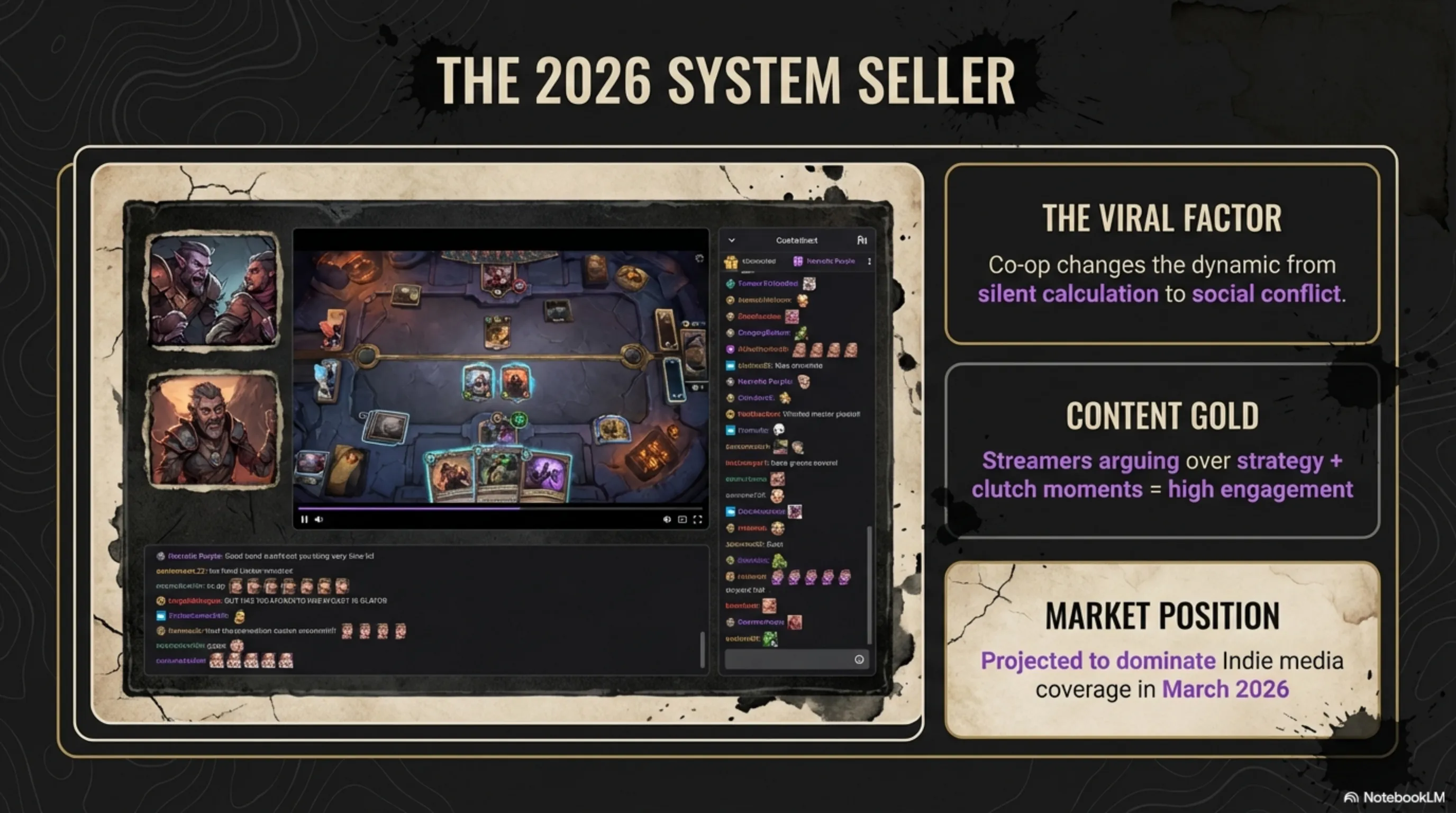
From a business perspective and an economic analysis of the gaming sector at Tekin Analysis, the release of Slay the Spire 2 is a definitive "System Seller" for the Steam platform. This title will command the absolute entirety of media attention within the Indie space this coming March.
The addition of Co-op functionality multiplies the game's viral potential on platforms like Twitch and YouTube a thousandfold. Streamers who previously played in isolation, interacting only with their chat, can now team up with fellow creators. Watching two streamers passionately argue over which card to play in a critical clutch moment, or witnessing an hour-long strategy crumble due to a single misclick by a teammate, is the flawless, magical formula for highly entertaining Content Creation.
9. Tekin Analysis Conclusion: Will the Crown be Reclaimed?
Mega Crit Studio has proven beyond a shadow of a doubt that they are not pursuing a quick "Cash Grab" or merely milking their established reputation. Instead of rushing to release a repetitive sequel with slightly enhanced graphics, they waited in silence for years to implement fundamental, high-risk concepts—such as a complete engine migration and the extraordinarily complex mechanics of Co-op—into a genre that demands mathematical perfection.
Slay the Spire II, launching on March 5, 2026, is not merely a new independent video game; it is a masterclass in Systems Design, a massive victory for advocates of open-source engines like Godot, and an unparalleled, addictive gift to the hardcore gaming community. The King of Roguelikes has not only returned, but this time, he has brought a new army of mechanics with him.
What is your take from the TekinGame newsroom? Do you believe adding a Co-op mode to a card game that demands intense focus and silence will be a successful innovation, or do you fear it might destroy the solitary, chess-like nature of the original? What new mechanics or classes are you hoping to see in the Early Access build? Share your expert analyses and opinions in the comments section with us and other hardcore PC gamers!
\n\n⚖️ نتیجهگیری معمار سیستم (Tekin Verdict)
بررسیهای عمیق دپارتمان تحقیقات ارتش تکین نشان میدهد که موضوع The Return of the Roguelike King: A Comprehensive Deep-Dive into Slay the Spire 2 & The Co-op Revolution صرفاً یک اتفاق گذرا نیست، بلکه تکه پازلی از یک تغییر معماری بزرگتر در صنعت تکنولوژی و سرگرمی است. ما در تکینگیم همواره این تحولات را زیر نظر داریم تا شما را در خط مقدم اخبار تحلیلی و بدون فیلتر نگه داریم.