
1. The Spec Sheet: RTX 5090 Ti vs. RTX 4090
Before diving into the architectural nuances, let’s lay the raw numbers on the table. The jump from Ada Lovelace (40-series) to Blackwell (50-series) is not just an iterative update; it is an industrial upscaling.
| Specification | RTX 4090 (Ada) | RTX 5090 Ti (Blackwell) | Delta |
|---|---|---|---|
| Architecture | Ada Lovelace (4nm) | Blackwell (3nm TSMC) | Finer Lithography |
| VRAM | 24GB GDDR6X | 32GB GDDR7 | +33% Capacity / +50% Speed |
| Memory Bandwidth | 1.0 TB/s | 1.8 TB/s | Nearly 2x |
| TDP (Thermal Design Power) | 450W | 600W | +150W Heat Output |
| Bus Interface | PCIe 4.0 x16 | PCIe 5.0 x16 | Future Proofing |
As you can see, the efficiency gains from the 3nm process were not used to lower power consumption; they were used to pack in more cores, resulting in a significantly hotter card.
2. Inside Blackwell: When AI Replaces Transistors

Named after mathematician David Blackwell, this architecture was designed "HPC-First" (High-Performance Computing) and then cut down for gamers. The secret sauce isn't just rasterization power; it's the silicon dedicated to AI.
The Neural Frame Gen Core
Previously, Tensor Cores handled DLSS upscaling and Frame Generation alongside other tasks. In the Blackwell architecture, Nvidia has introduced a dedicated silicon block solely for Real-time Frame Generation.
Why does this matter? It decouples frame generation from the rendering pipeline. This theoretically reduces the input latency penalty—the Achilles' heel of DLSS 3—to near zero in DLSS 4.0. The card doesn't just render pixels; it hallucinates them with perfect accuracy.
Monolithic vs. Chiplet
While AMD moved to a Chiplet design (similar to Ryzen CPUs) to save costs, the RTX 5090 Ti retains a massive Monolithic Die design. Nvidia prioritized the ultra-low latency of a single die over the manufacturing efficiency of chiplets. This massive single piece of silicon is harder to cool, contributing to the aggressive power requirements.
3. The Energy Crisis: Why 600W is Just the Average
The 600W TDP number printed on the box is misleading. That is the average heat the cooler needs to dissipate. The real danger for your hardware lies in "Transient Spikes."
Understanding Transients
Modern GPUs do not pull power in a flat line. In complex scenes—like a massive explosion in Cyberpunk 2077—the GPU can demand bursts of power that last only milliseconds but exceed the rated TDP by 2x.
For the RTX 5090 Ti, a 600W TDP implies transient spikes hitting 1000W to 1200W instantly.
The Consequence: If you are running an older 1000W PSU, even a high-quality one, these spikes can trip the Over Power Protection (OPP), causing your PC to hard shutdown to save itself.
Tekin Recommendation: For this card, an ATX 3.1 Certified Power Supply with at least 1200W (Platinum rated) is not a suggestion; it is a requirement.
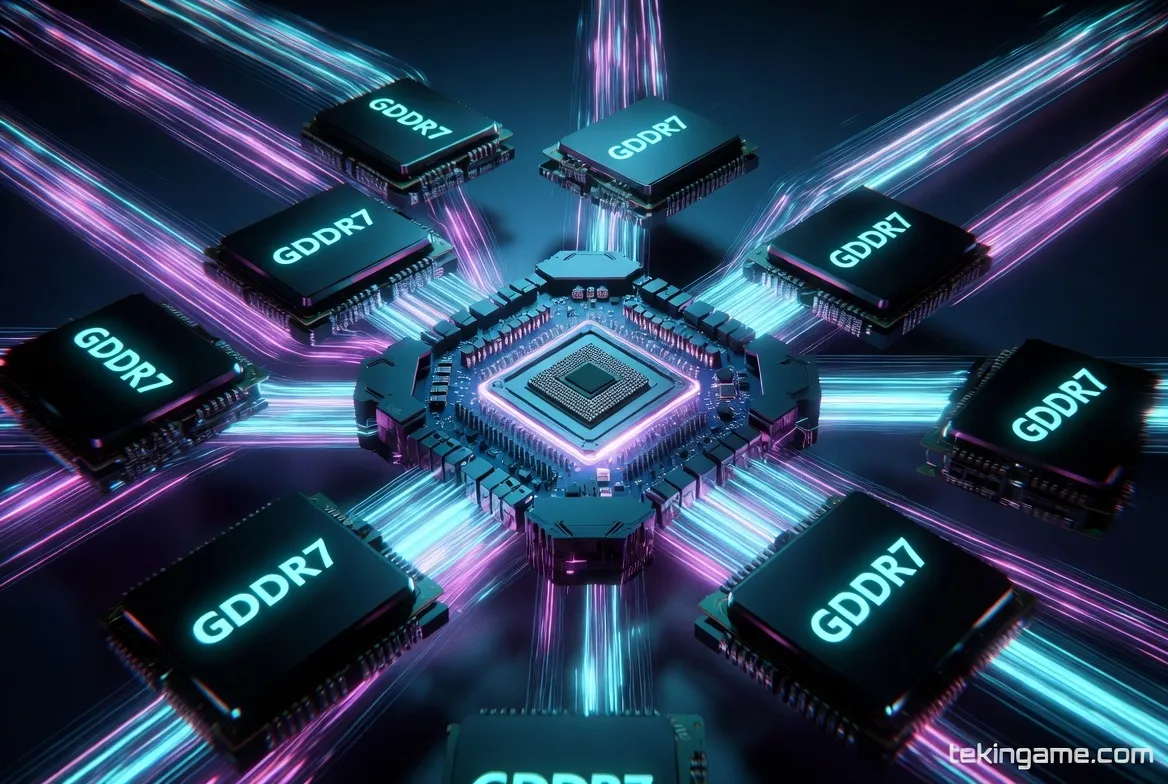
4. The GDDR7 Revolution: Bandwidth That Makes 8K Possible
The unsung hero of this generation is the memory. The shift to GDDR7 utilizes PAM3 signaling (Pulse Amplitude Modulation), allowing more data to be transmitted per clock cycle compared to the NRZ signaling of GDDR6.
With a memory bandwidth of 1.8 TB/s, the RTX 5090 Ti eliminates the bottleneck that plagued 4K and 8K gaming. Games like GTA VI, which will utilize uncompressed, high-fidelity textures, are thirsty for this bandwidth. For content creators, this means scrubbing through 8K video timelines will feel as smooth as 1080p.
5. The Connector Dilemma: Is the 12V-2x6 Safer?
The nightmare of the RTX 4090 launch was the melting 12VHPWR connector. Has Nvidia learned its lesson? Yes, and no.
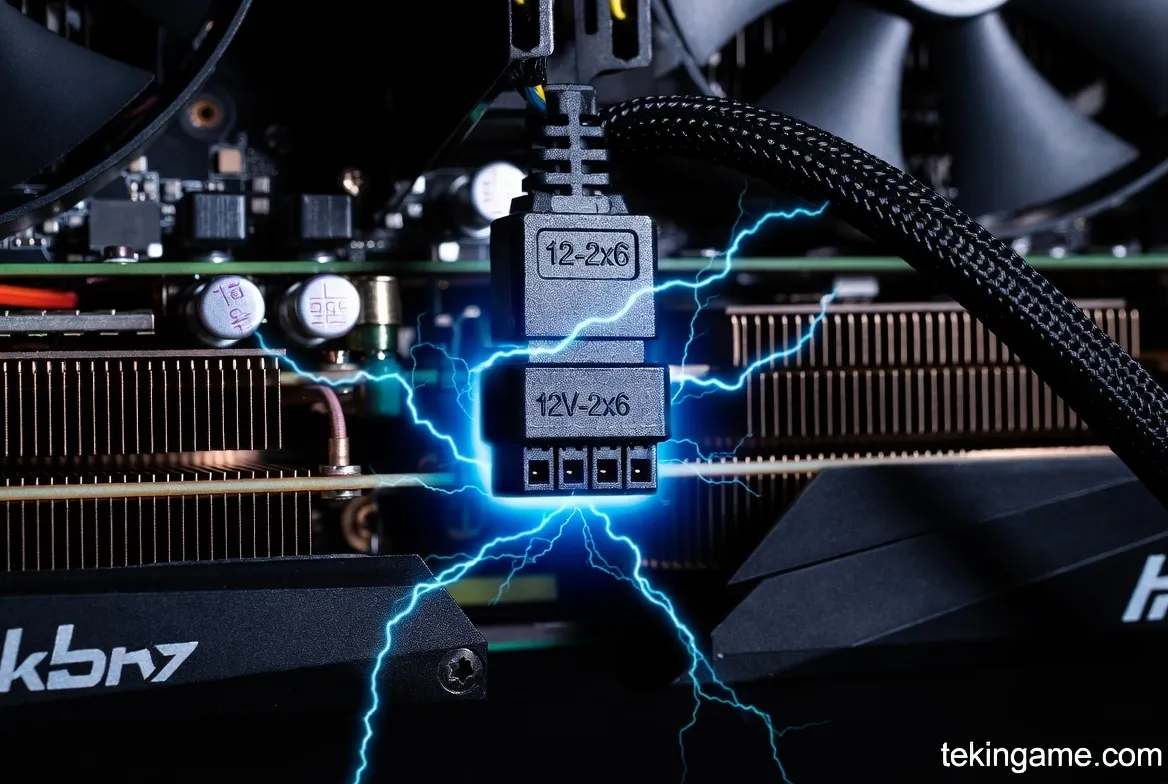
The 50-series uses the revised 12V-2x6 standard.
Safety Improvements:
- The sense pins are recessed (shorter). If the cable is not plugged in 100% flush, the sense pins won't make contact, and the card simply won't turn on. This prevents the "partial contact arcing" that melted 4090s.
- The terminal pins use a higher conductivity copper alloy to reduce thermal resistance.
However, pushing 600W through a single connector still carries physical risks. We strongly advise against using the "Octopus Adapter" (4x 8-pin to 12V-2x6) included in the box. A native cable from your PSU is mandatory for safety.
6. The Hidden Tax: Calculating the Cost of Support Hardware
Buying an RTX 5090 Ti isn't just a $2,500 expense. It triggers a cascade of necessary upgrades. Let's tally the "Blackwell Tax":
- The GPU: $2,499 (Estimated)
- New PSU: Your old ATX 2.0 unit is a fire hazard here. You need a native ATX 3.1 1200W unit. (Cost: ~$350)
- New Case: This card is rumored to be a 4-slot behemoth, exceeding 350mm in length. Most mid-towers cannot physically contain it. (Cost: ~$200)
- Room Cooling: 600W of heat is equivalent to a small space heater running at full blast next to your legs. Without air conditioning, your gaming room will become uninhabitable in the summer.
7. Verdict: Buy Now or Wait for the 5080?
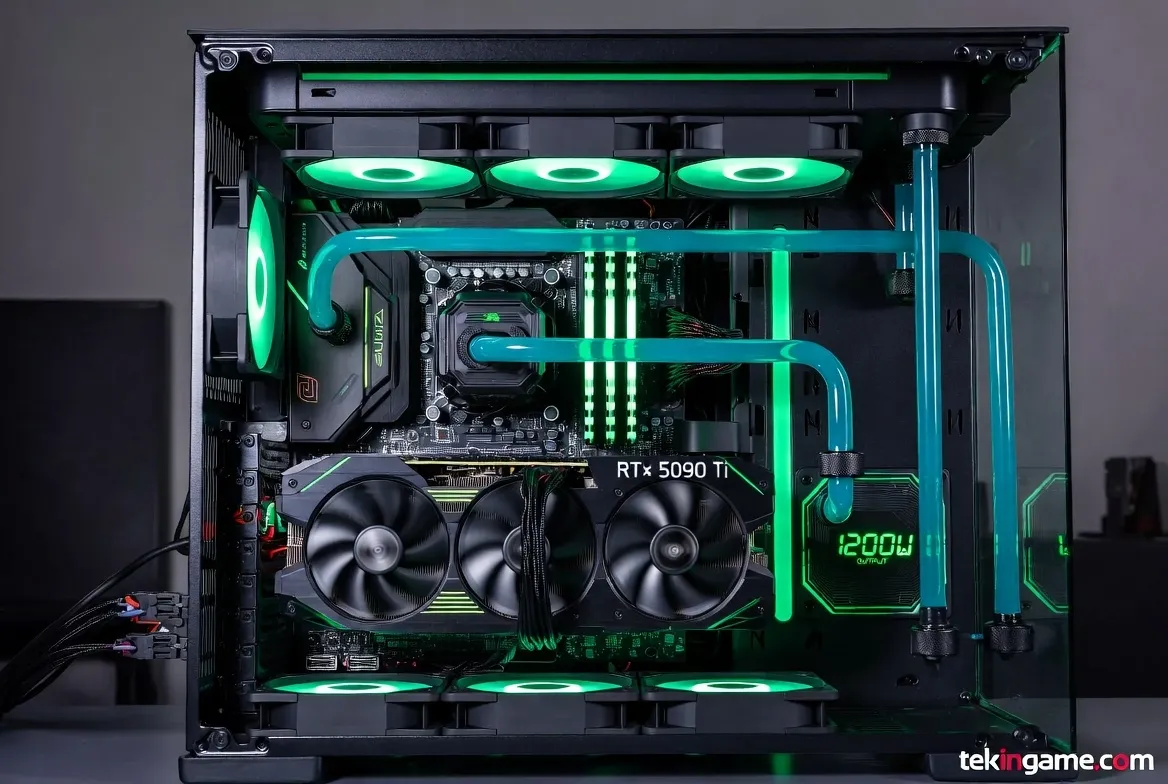
The RTX 5090 Ti is not a logical product; it is a statement of dominance. Nvidia didn't build this to be a bestseller; they built it so no one could touch them in benchmarks.
Who is this for?
1. Gamers with 4K 240Hz OLEDs or 8K displays.
2. AI Developers and Data Scientists working from home.
3. Enthusiasts who demand "Ultra Max" settings in GTA VI regardless of the cost.
For 99% of the Tekin Army, the sweet spot will likely be the RTX 5080, which offers the benefits of the Blackwell architecture (like the Neural Core) without requiring a dedicated power plant to run. But if you crave the absolute peak of silicon engineering and can stomach the electric bill, the 600W monster awaits.
What do you think? Is 600W too much for a consumer product, or is it the price of progress? Let us know in the comments.