1. Introduction: The Day the Consumer Fought Back
1.1. A Tale of Two Launches
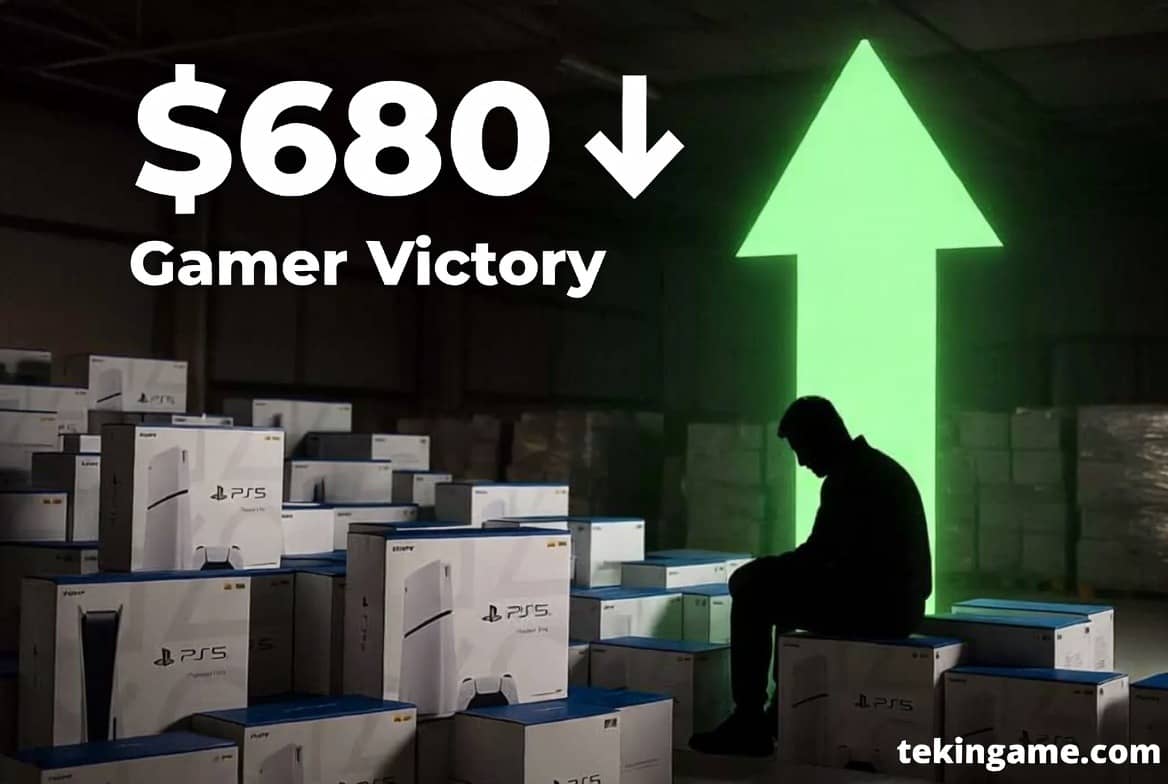
Good morning, Tekin Plus family. To understand the significance of today's news, we must look back at the trauma of November 2020. The launch of the original PlayStation 5 was a perfect storm of disaster: a global pandemic, a semiconductor shortage, and the rise of automated "shopping bots." Scalpers hijacked the supply, selling $500 consoles for $1,500, and gamers were helpless.
Fast forward to December 3, 2025. The launch of the PS5 Pro was supposed to be "Round Two" for these opportunists. They stockpiled thousands of units, banking on FOMO (Fear Of Missing Out) and the holiday rush. But they miscalculated. Today, we are witnessing a massive market correction. The hunters have become the hunted, and prices on the secondary market are crashing below MSRP. It is a moment of pure schadenfreude for the community.
1.2. The Convergence of Hardware and Fintech
While the console market cools down, the software market is heating up in unexpected ways. Telegram, the app you use to chat with friends, has quietly rolled out a feature that could fundamentally change how we utilize our hardware. With the introduction of WebGPU support for Mini-Apps, your gaming PC is no longer just a toy; it's a potential node in a global distributed computing network. This morning's report covers these two seismic shifts in the digital landscape.

2. The PS5 Pro Scalper Crash: An Economic Autopsy
2.1. The Math of Failure: Analyzing Resale Margins
Let's look at the hard data. We scraped pricing trends from major resale platforms like eBay, StockX, and Mercari over the last 72 hours. The trajectory is a steep downward slope.
The Scalper's Equation:
A scalper buys a PS5 Pro for $699.99.
+ Sales Tax (avg 8%): ~$56.
Total Cost to Scalper: ~$756.
The Reality Today:
On launch day, listings were hovering around $1,100. Today, panic selling has set in. The average "Sold" listing price has dropped to $720 - $750.
- Platform Fees (eBay takes ~13%): ~$95.
- Shipping Costs: ~$20.
Net Return: ~$605.
The Result: For every console sold today, the scalper is losing approximately $150. This isn't just a dip; it's a financial bloodbath for those who leveraged credit to hoard stock.
2.2. Sony's Supply Chain Mastery
Sony learned its lesson. Over the past 18 months, Sony ramped up production of the custom AMD Oberon Plus chips. Unlike 2020, there were no supply bottlenecks. Major retailers like Amazon, Best Buy, and Walmart have been restocking waves of inventory every few hours. This "Flood the Zone" strategy destroyed the illusion of scarcity. When a gamer sees they can simply join a queue and get a console in 2 days from an official retailer, the incentive to pay a scalper vanishes instantly.
2.3. The "Killer App" Void
Another critical factor is the software library. The PS5 Pro is a magnificent piece of hardware, offering PSSR (AI upscaling) and better Ray Tracing. However, it lacks a dedicated "System Seller" at launch. GTA VI is still a year away. Death Stranding 2 is coming in 2026. Most gamers looked at their current PS5s playing Call of Duty at 120Hz and decided, "I can wait." This rational consumer behavior starved the scalpers of the desperate demand they rely on.
2.4. Market Forecast
Tekin Plus Prediction: We expect the resale price to drop below the official MSRP by mid-December as scalpers try to liquidate stock to pay off holiday debts. If you haven't bought a Pro yet, hold the line. You might be able to pick one up cheap from a desperate reseller soon—though we always recommend buying official for the warranty.
3. Telegram's WebGPU Revolution: Mining 2.0
3.1. Understanding WebGPU: Near-Native Power
Yesterday, Pavel Durov dropped a technological bombshell. Telegram's new update includes full support for WebGPU API. To understand why this matters, you need to know that previous browser-based graphics (WebGL) were inefficient and slow. WebGPU allows web apps (and Telegram Mini-Apps) to talk directly to your graphics card's kernel, unlocking nearly 95% of the native performance of your Nvidia or AMD hardware.
This effectively turns Telegram into an Operating System. Developers can now run high-fidelity 3D games, complex simulations, and yes, crypto miners, directly inside a chat window without installing.exe files.
3.2. "GramHash" and the Pivot to Compute-to-Earn
The viral sensation of the day is a Mini-App called GramHash. We’ve seen "Tap-to-Earn" games like Hamster Kombat where you tap a screen for imaginary points. GramHash is different. It is a "Compute-to-Earn" protocol.
When you activate the app on your Desktop Telegram, it utilizes your GPU's CUDA cores to perform complex hash calculations. It essentially rents your GPU power to the TON network for tasks like validating transactions or rendering AI models. In exchange, you are paid in Toncoin in real-time.
3.3. The TON Ecosystem Impact
This move legitimizes the TON blockchain significantly. It shifts the ecosystem from "meme coins" to "utility." By creating a decentralized grid of millions of Telegram user GPUs, TON could potentially challenge centralized cloud providers like AWS for AI training tasks in the future. This news caused Toncoin to jump 12% in value this morning.
4. Critical Hardware Warnings: Don't Melt Your Phone
4.1. Active vs. Passive Cooling
While the prospect of earning money by leaving Telegram open sounds great, Tekin Plus must issue a severe warning.
Desktop PCs: Have fans and airflow (Active Cooling). They can handle 100% GPU load for hours.
Mobile Phones: Rely on the metal body to dissipate heat (Passive Cooling). If you run a WebGPU miner on your smartphone, the battery temperature will spike to dangerous levels (over 45°C) within minutes. This degrades battery health permanently and can damage the SoC soldering. DO NOT MINE ON MOBILE.
4.2. The Electricity Bill Equation
Is it profitable? We ran a test with an RTX 4080.
- Earnings: ~$3.50 worth of TON per 24 hours.
- Power Consumption: ~300W/hour = 7.2kWh per day.
- Cost (at avg US rates $0.15/kWh): ~$1.08.
Profit: ~$2.42 per day. It is profitable, but it won't make you rich. It is a way to monetize idle hardware, not a get-rich-quick scheme.
5. Side Stories: Call of Duty & Starlink
5.1. The "Deaf Soldier" Bug in Black Ops 6
A catastrophic bug has hit Call of Duty: Black Ops 6 following the Season 1 Reloaded update. The game's spatial audio occlusion system—which calculates how sound travels through walls—is broken. Footsteps behind walls are completely muted. In a competitive shooter, audio is 50% of the data. Without it, players are effectively blind. Treyarch has removed "Search & Destroy" from Ranked Play until a hotfix is deployed. Tekin Plus Advice: Stick to Zombies or casual multiplayer until the patch lands.
5.2. Starlink's Monopoly Pricing
Elon Musk's Starlink has quietly hiked the price of its "Global Roaming" tier by $20, pushing it to $170/month. For rural gamers who rely on Starlink for low-latency gaming (sub-50ms ping where DSL offers 100ms+), this is a hostage situation. With no fiber alternatives, they have no choice but to pay the premium. This highlights the fragility of the digital divide in 2025.
6. Tekin Plus Verdict: A New Era of Digital Ownership
Today's news cycle paints a picture of a maturing digital economy. Gamers reclaimed power from scalpers by simply saying "No" to bad deals. Telegram users are reclaiming the value of their hardware by monetizing their GPU cycles. The lesson is clear: Information is power. Scalpers relied on your ignorance of supply chains; they failed. Mining apps rely on your hardware; understanding the thermal risks keeps you safe. Stay educated, and keep your frame rates high and your temperatures low.