
1. The Legacy: Escaping Development Hell
To understand Metroid Prime 4, you must understand its pain. Announced at E3 2017 with just a logo, the game vanished. In 2019, Nintendo did the unthinkable: they publicly apologized, scrapped the entire project (reportedly developed by Bandai Namco), and handed it back to the original creators, Retro Studios.
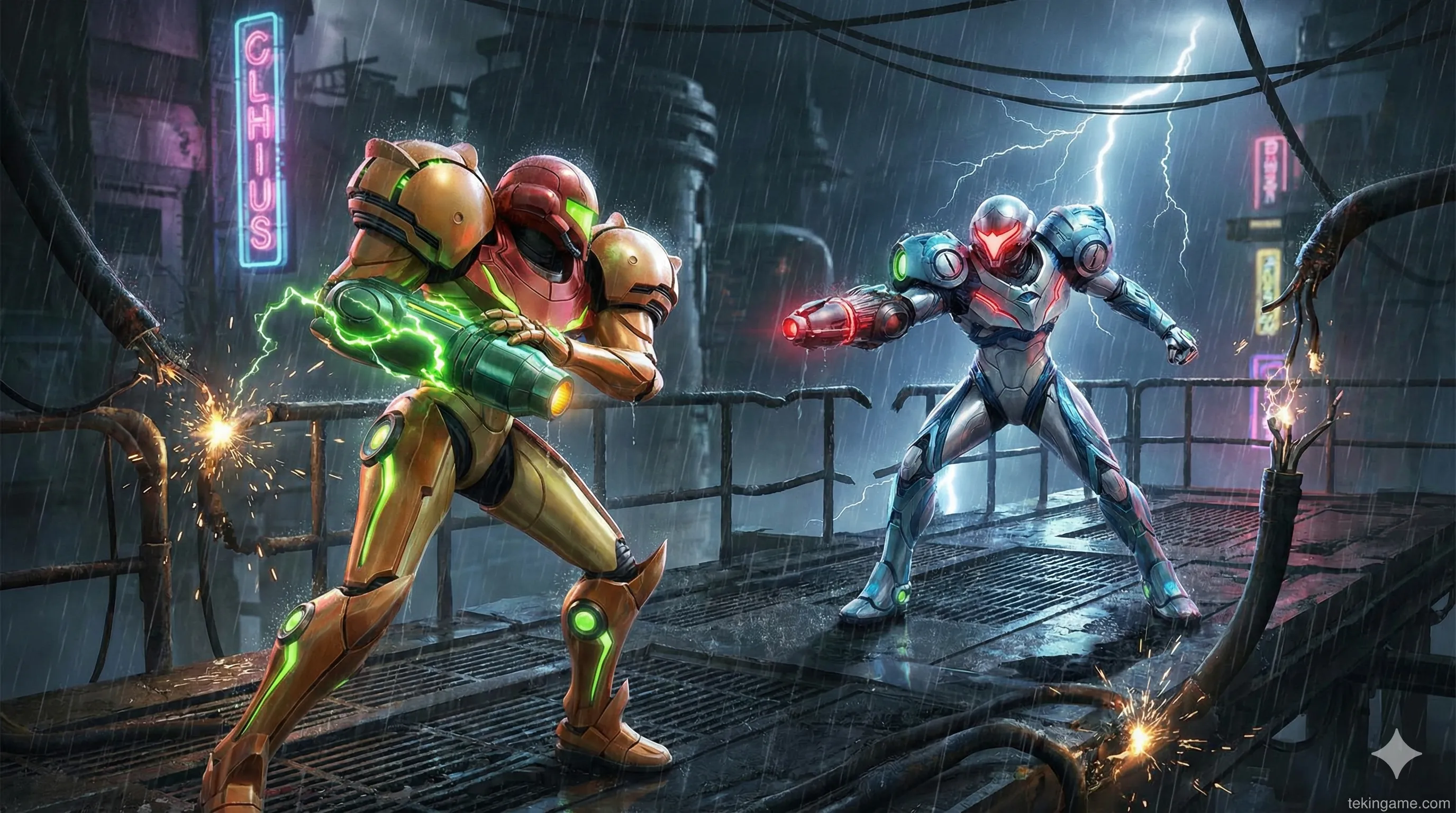
Playing the final product in 2025, you can feel that history in every pixel. This feels like a game that was polished to within an inch of its life. There are no bugs. No texture pop-ins. It is a testament to Nintendo’s philosophy: "A delayed game is eventually good, but a rushed game is forever bad."
2. Narrative & Atmosphere: The Sound of Silence
The Prime series has always been about isolation. Unlike the chatty AI companions of Halo or the cinematic dialogue of God of War, Samus Aran is a solitary hunter.
The Villain: Sylux Returns
The story picks up threads left dangling in 2006’s Metroid Prime Hunters. The bounty hunter Sylux, who hates the Galactic Federation and Samus equally, is finally the main antagonist.
Sylux is a fantastic foil to Samus. He uses stolen Federation tech, mimicking your abilities. The cat-and-mouse dynamic between Samus and Sylux across the galaxy adds a tension we haven't felt since the SA-X in Metroid Fusion.
Planet Viewros: A Grave for the Living
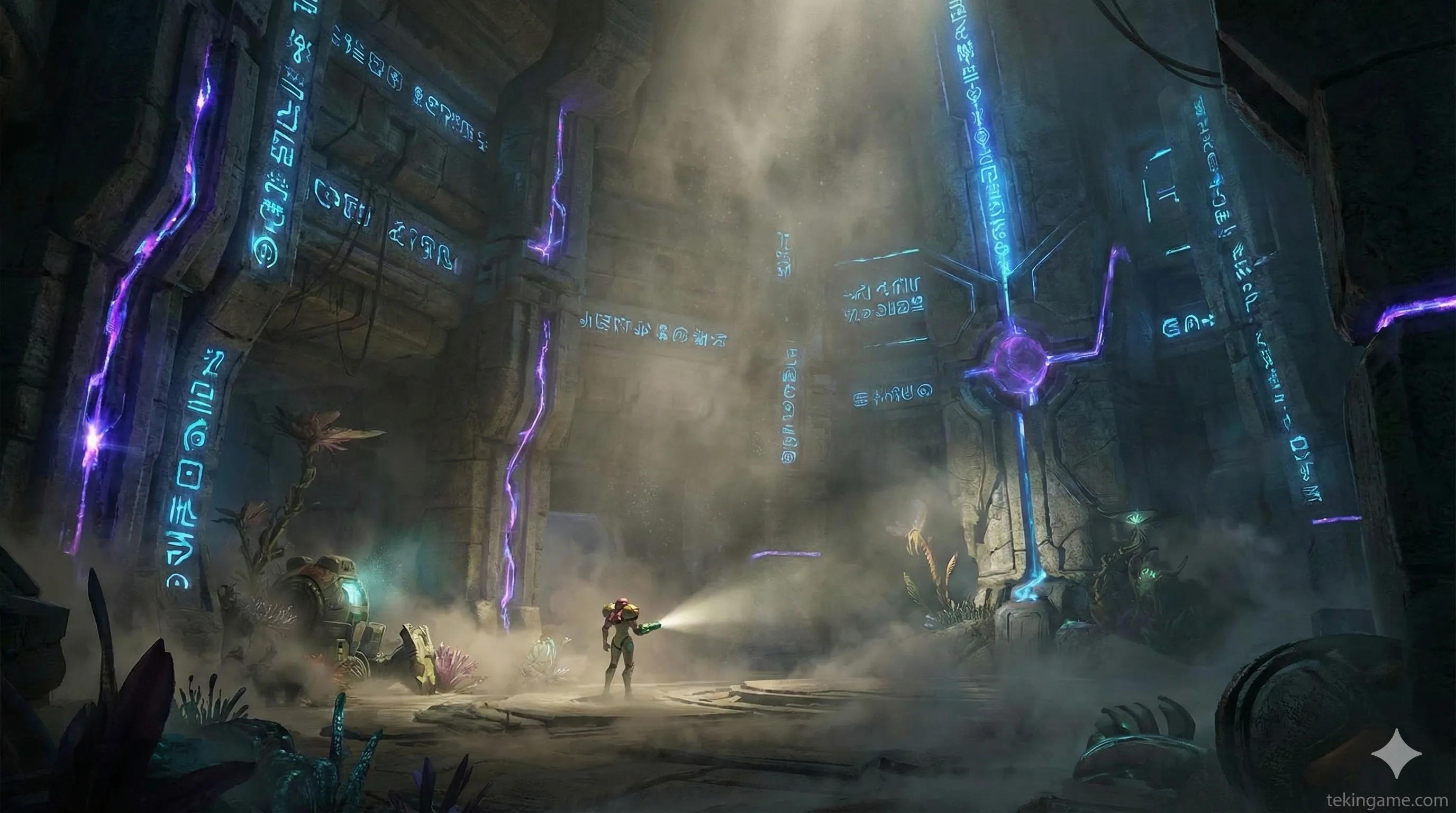
The setting, Planet Viewros, is a masterclass in atmospheric horror. It is the homeworld of the extinct "Lamorn" race—creatures of pure energy who transcended their physical bodies.
Scanning the ruins of their civilization reveals a tragic history of a society that unlocked the secrets of time, only to be consumed by it. The environmental storytelling is richer than ever. You aren't told the story; you discover it by scanning dead bodies and ancient murals.
3. Gameplay Evolution: Samus 2.0
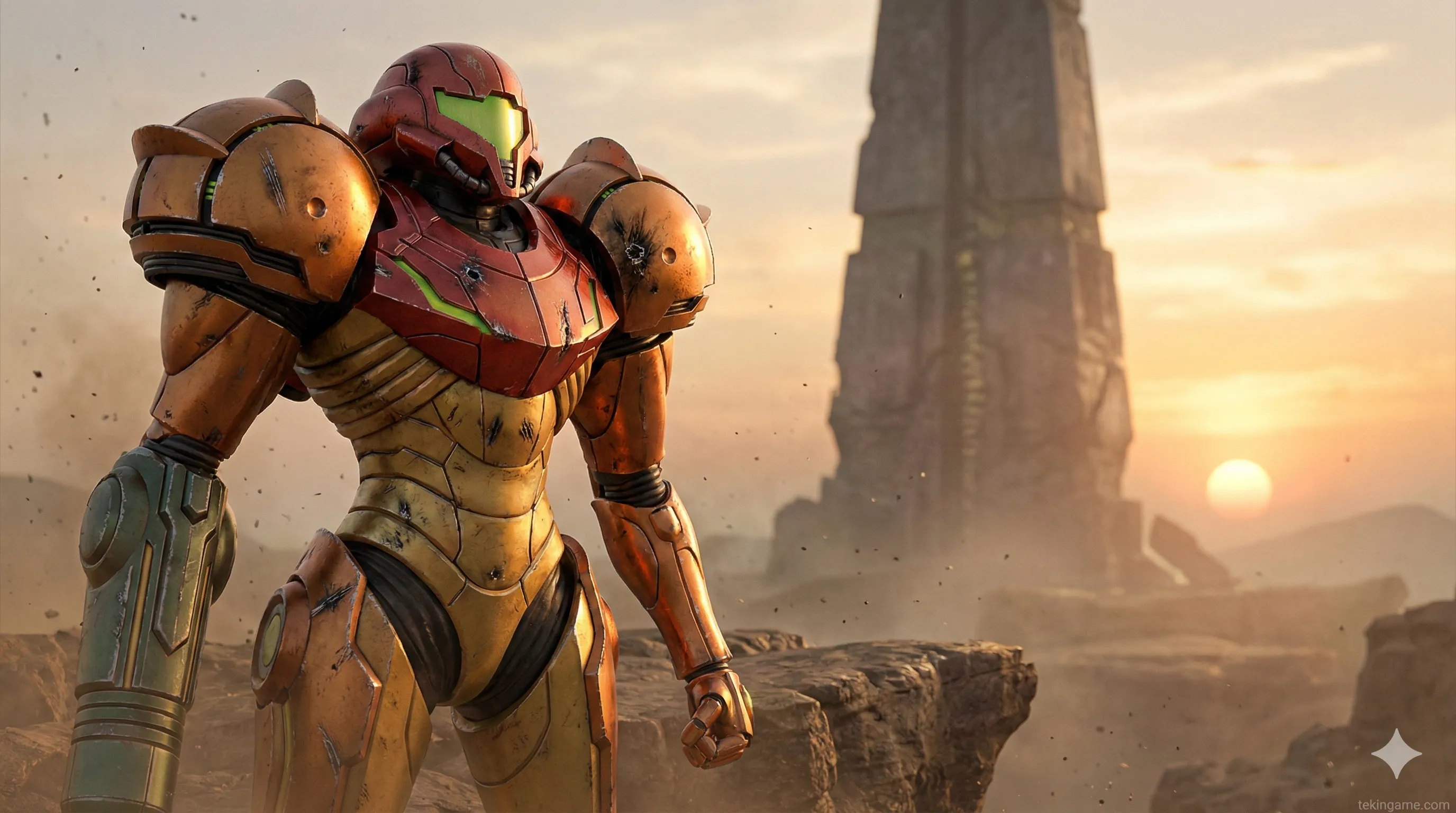
Core combat remains the familiar "Lock-on, Strafe, Shoot" dance. But Retro Studios has modernized the formula with two massive additions.
The Psychic Visor: Jedi Samus
Early in the game, Samus acquires a mysterious crystalline upgrade fused to her helmet. This unlocks the Psychic Visor.
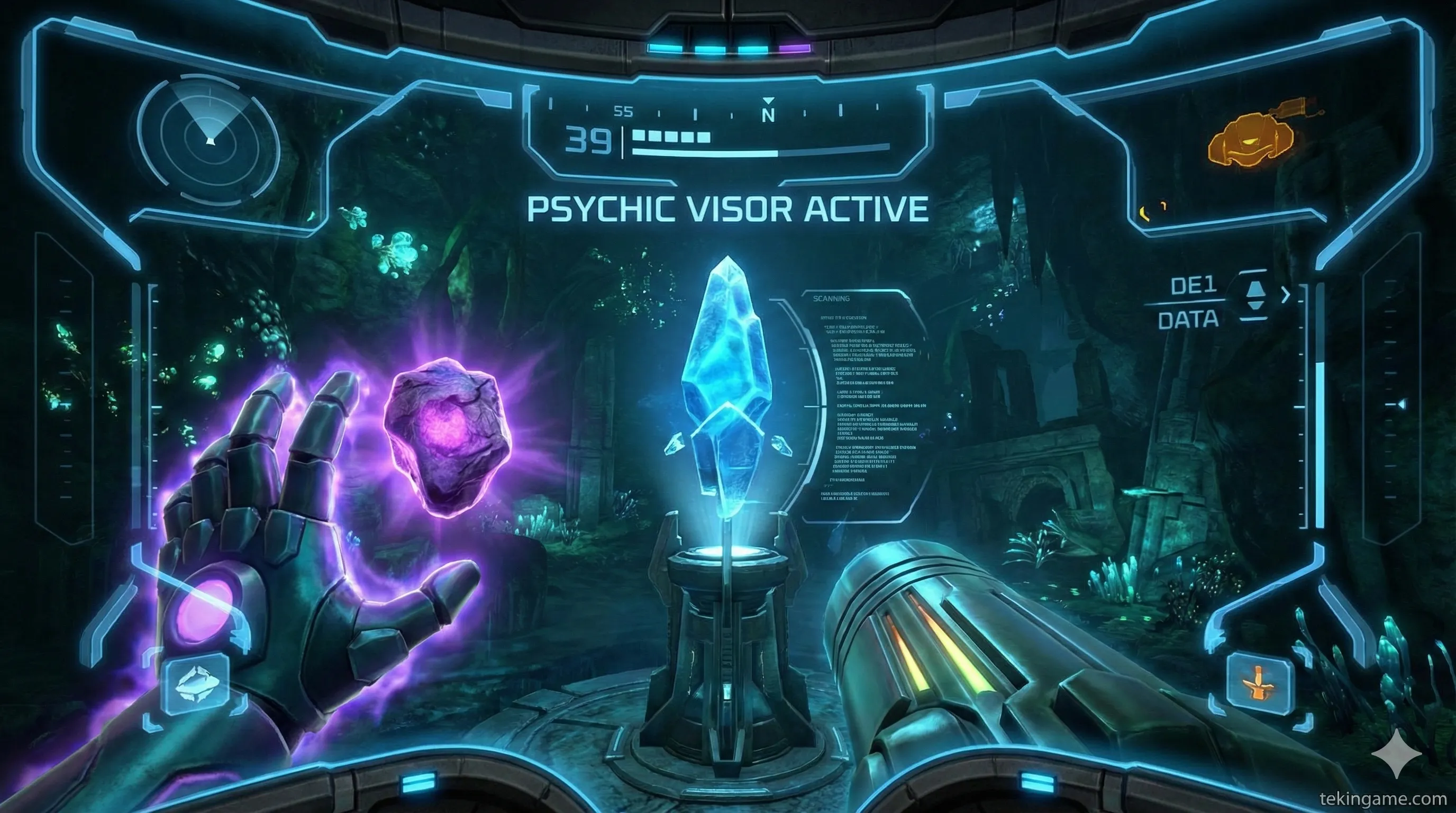
This isn't just a new way to see; it's a new way to interact. By expending "Aeion" energy, Samus can now:
1. Telekinesis: Rip shields out of Space Pirates' hands or pull platforms closer.
2. Time Shift: Create a localized "time bubble" that slows down fast-moving enemies or environmental hazards (like spinning fans).
Combining these abilities in combat feels incredible. Freezing a missile in mid-air and then throwing it back at a boss is a power fantasy I didn't know I needed in a Metroid game.
The Controversy: The Vi-O-La Vehicle
Here is the elephant in the room. For the first time, Samus has a ground vehicle: the Vi-O-La Hovercycle.
To accommodate this, the map design has shifted from tight, claustrophobic corridors to massive "Open Zones" (think Sonic Frontiers or Halo Infinite).
The Good: Crossing the Red Sands of Viewros at 200mph looks spectacular.
The Bad: It disrupts the pacing. Metroid is about intimacy—examining a wall for a hidden crack. Blasting past secrets at high speed feels antithetical to the series' DNA. It suffers from the "Arkham Knight Batmobile Syndrome"—forced vehicle combat sections that feel clunky compared to the on-foot gameplay.
4. Technical Analysis: The Switch 2 Showcase
I reviewed this game on the new Nintendo Switch 2 (Dev Kit Unit), and the results are staggering. It is the first game to truly utilize Nintendo’s new DLSS-equivalent custom upscaling chip.
Performance Modes
- Fidelity Mode (Docked): The game renders at an internal 1440p and upscales to a pristine 4K. We see genuine Ray Traced reflections on Samus’s visor and water surfaces. The lighting engine uses Global Illumination, making the neon caverns glow realistically. It runs at a locked 60fps.
- Performance Mode (Docked): Drops resolution to dynamic 1080p-1440p but unlocks the framerate to 120fps. If you have an LG OLED C4 or similar 120Hz TV, the fluidity is unmatched. It makes the fast-paced twitch shooting feel like a PC shooter.
The Miracle on Old Hardware
We also tested it on a 2021 Switch OLED. Remarkably, it runs. It targets 720p/60fps (docked) and uses aggressive dynamic resolution scaling. It looks blurry compared to the Switch 2 version, and load times are 4x longer, but the fact that it runs at all is black magic.
5. Level Design: Breaking the Corridor
The structure is a hybrid. You still have the classic "lock-and-key" progression (you need the Super Missile to open the Green Door), but the "hallways" connecting these doors are now vast open deserts or tundras.
While the open world feels a bit empty at times, the Dungeons (called "Vaults" in this game) are classic Retro Studios design. They are intricate, multi-layered puzzle boxes that require you to use every ability in your arsenal. The transition from the open, empty desert to a claustrophobic, dark Vault creates a fantastic rhythm of tension and release.
6. The Verdict: A Flawed Masterpiece
Metroid Prime 4: Beyond is a triumph. It successfully modernizes a 20-year-old formula without losing its soul. The visuals are a generational leap for Nintendo, and the new Psychic abilities add a layer of depth to combat that makes Prime 1 feel basic by comparison.
However, it is not perfect. The insistence on the vehicle mechanics drags down the second act, and the open-world segments lack the density of the linear corridors.
But when you are deep underground, surrounded by alien architecture, solving a physics puzzle while Kenji Yamamoto’s haunting synth music swells... there is nothing else like it.
Is it worth the $70 price tag? Absolutely.
Is it worth buying a Switch 2 for? Without a doubt.
Welcome back, Samus. We missed you.
(The King of FPA returns. A visual benchmark for Switch 2, held back slightly by forced vehicle sections.)
Pros: Stunning 4K visuals, Deep lore, Satisfying Psychic combat.
Cons: Vehicle handling is stiff, Open world can feel empty.