
1. Introduction: From Development Hell to Gaming Heaven
Few games in history survive a "complete development reboot" and emerge unscathed. When Nintendo announced in 2019 that they were scrapping the initial project and handing the reins back to Retro Studios (the creators of the original trilogy), fans were devastated.
However, playing the final product today, it becomes clear that this was the only correct decision. Metroid Prime 4: Beyond does not feel like a sequel stuck in the past; it feels like a "Grand Revival." It is faithful to its roots but scaled up tenfold. The story picks up shortly after the corruption of Prime 3 and the cliffhanger of Federation Force, thrusting Samus into a conflict that spans dimensions—hence the subtitle "Beyond."
2. Technical Analysis: The Sorcery of Switch 2
Let’s address the elephant in the room. Most of you are reading this to know if the hardware hype is real. This is the first AAA title designed to push the Nintendo Switch 2 to its absolute limits.
2.1. 4K Resolution & Nintendo's DLSS Solution
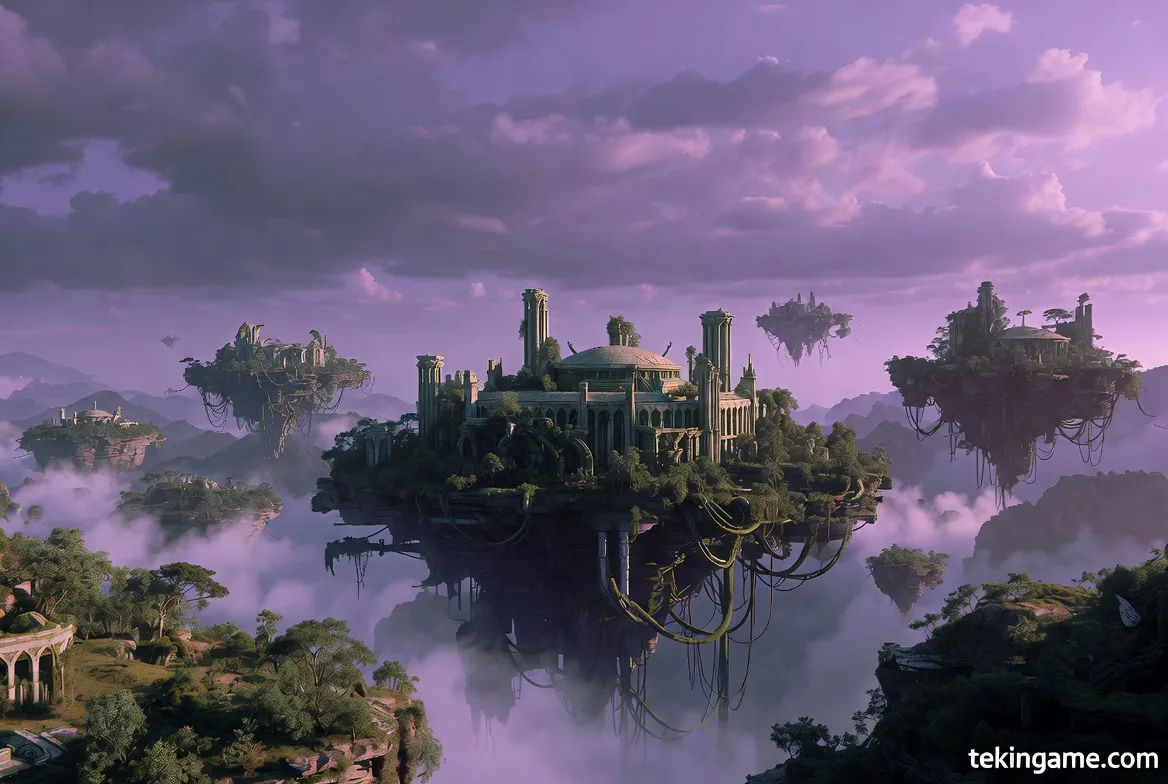
Nintendo promised 4K output, and they delivered. In our technical tests, the game renders at a native 1440p in Docked Mode and uses Nintendo’s proprietary AI-upscaling technology (built on NVIDIA architecture) to reconstruct a pristine 4K image.
The result is breathtaking. The image quality is so sharp that it rivals native PS5 titles. Edges are perfectly anti-aliased, and textures remain crisp even when you press your face against a wall to inspect the alien hieroglyphs. Most importantly, the game is locked at 60fps. Even during chaotic boss fights with particle effects filling the screen, we did not detect a single frame drop.
2.2. Ray Tracing on a Handheld?
Does it have Ray Tracing? Yes, but implemented smartly.
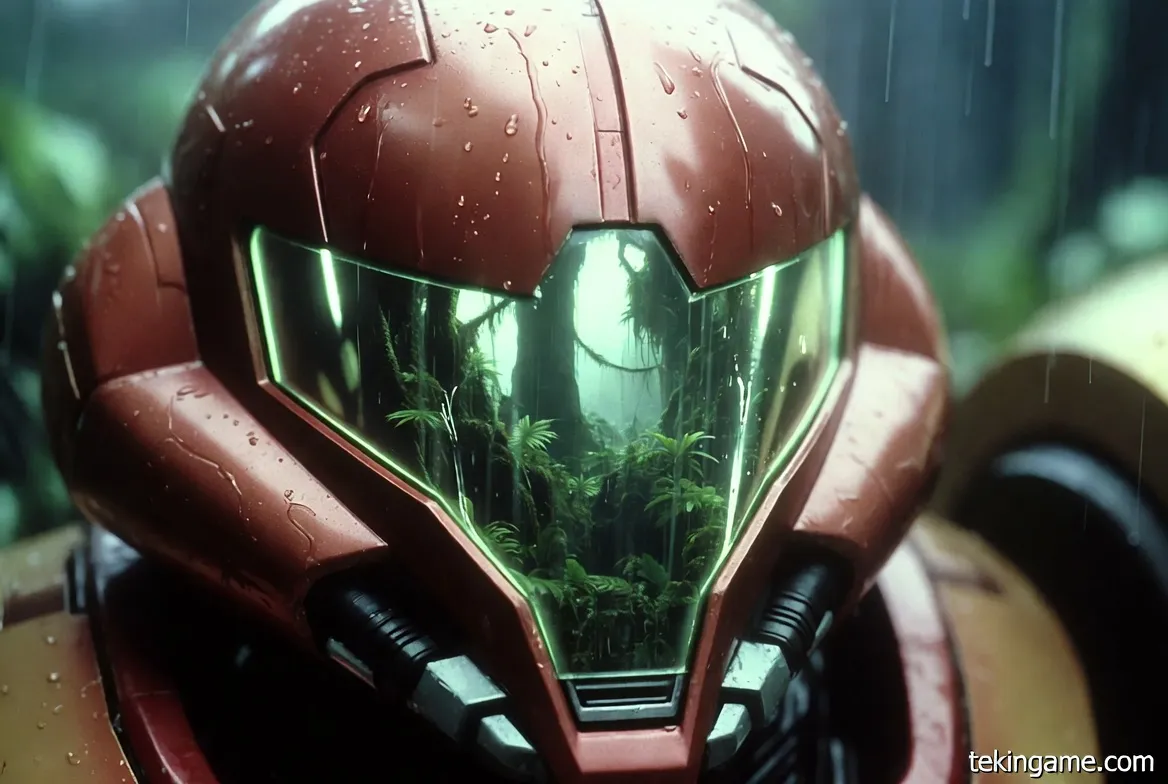
Reflections on metallic surfaces and glass (specifically Samus's visor and the cockpit of her gunship) are calculated in real-time. When exploring the rainy biomes of Planet Aether 2, the wet surfaces reflect neon lights with a fidelity previously impossible on Nintendo hardware. While these effects are dialed back slightly in "Handheld Mode" to preserve battery life, the visual experience on the new 1080p OLED screen is still a generational leap over the original Switch.
2.3. The Switch 1 Experience: A Noble Compromise
If you haven't upgraded yet, here is the good news and the bad news.
The Good: The game is fully playable on the original Switch.
The Bad: The difference is night and day. On Switch 1, the resolution drops to a dynamic 900p (Docked) and 720p (Handheld). Textures are muddier, shadows are static, and Ray Tracing is completely absent. Furthermore, the framerate is capped at 30fps. It is still a beautiful game art-wise, but playing it on old hardware feels like watching a 4K movie on a CRT TV.
3. Gameplay: Return of the "First-Person Adventure"
Nintendo insists on calling Metroid Prime a First-Person Adventure rather than a Shooter (FPS), and Beyond doubles down on this philosophy. The focus is on exploration, archaeology, and solving the riddle of the world.
3.1. The New Scan Visor & Environmental Storytelling
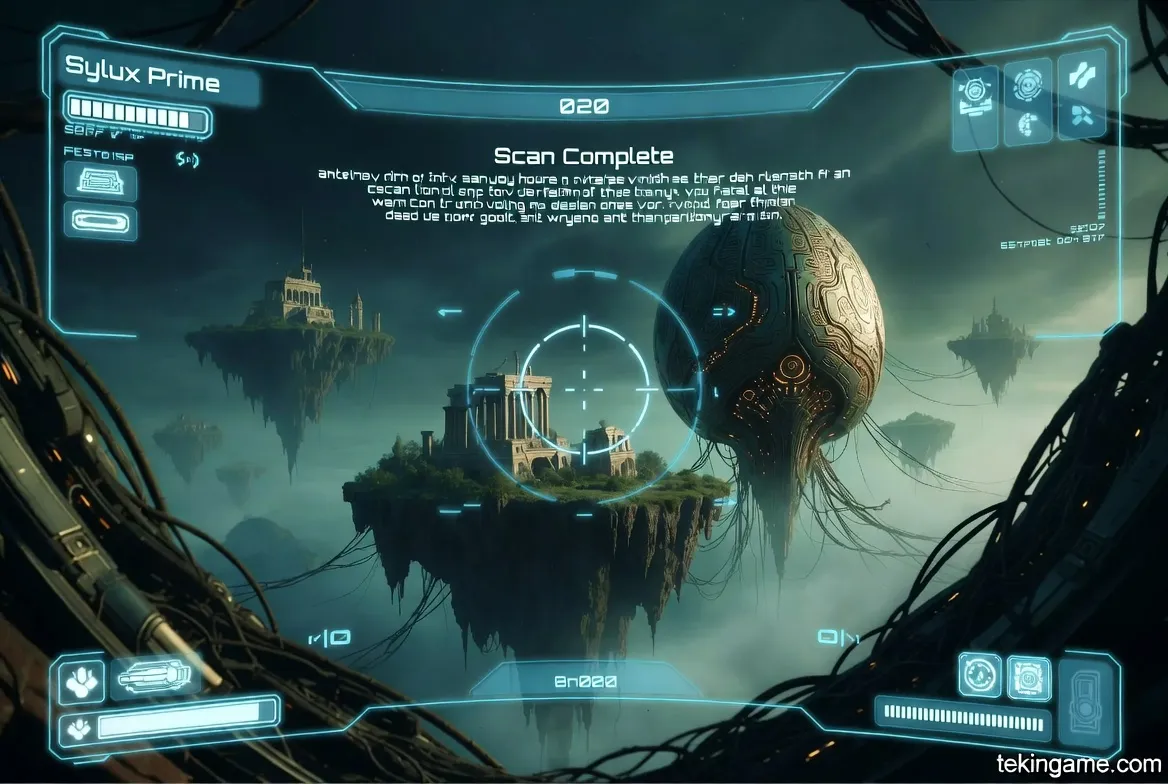
The "Scan Visor" mechanic is back and deeper than ever. You can now scan multiple layers of an object (like an X-Ray). The story isn't spoon-fed through cutscenes; you piece it together by scanning ancient Chozo inscriptions, Space Pirate data logs, and the biological structures of local fauna. This method of "active storytelling" reinforces the feeling of isolation—you are a detective in a graveyard of civilizations.
3.2. Combat Fluidity: Beam Switching & The Void Beam
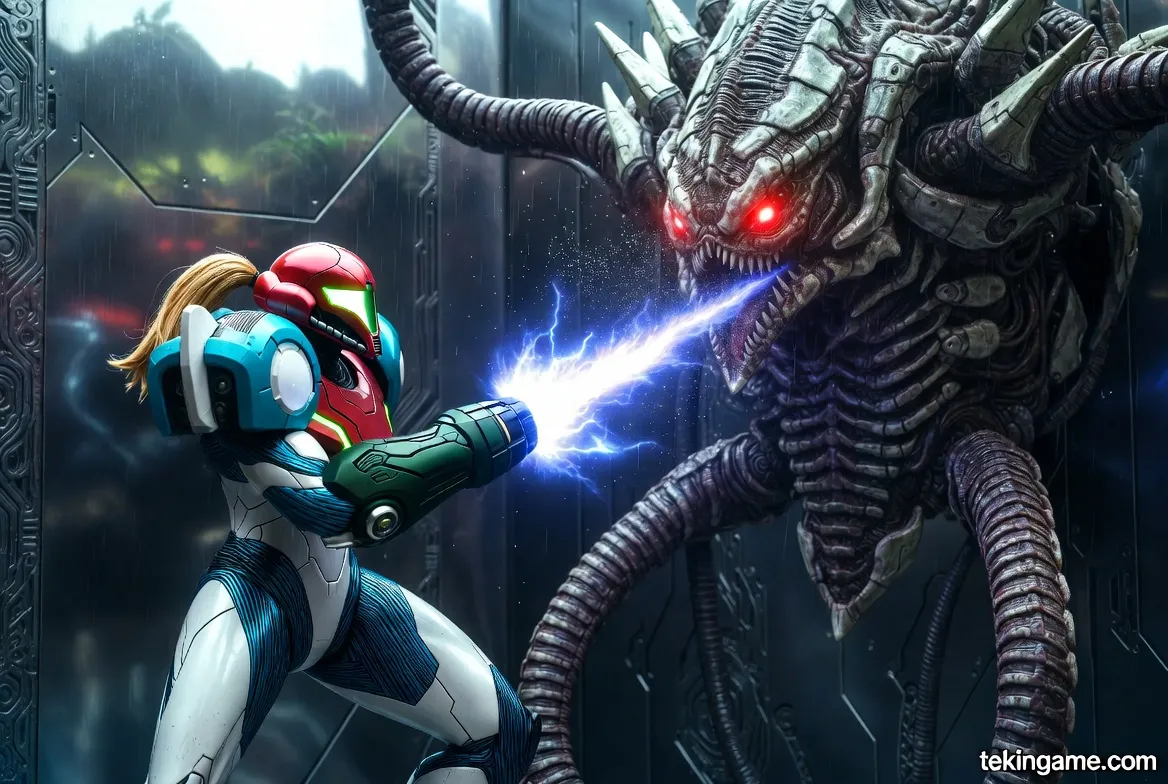
Combat is fast, fluid, and tactical. Gone are the days of entering a menu to switch weapons. Using the Switch 2's new back-paddle buttons (or the D-Pad), you can instantly swap between the Power Beam, Fire Beam, Ice Beam, and the terrifying new Void Beam (which creates mini black holes).
The AI is aggressive. Space Pirates will flank you, deploy shields that match your weapon type, and force you to adapt on the fly. You cannot just "shoot until it dies"; you have to think.
4. Story & Lore: Who is Sylux?
For those who missed the DS spin-off Metroid Prime Hunters, the main antagonist, Sylux, might seem like a new face. But Retro Studios has done an incredible job fleshing him out.
Sylux is a rogue bounty hunter with a deep-seated hatred for the Galactic Federation and Samus herself. He uses stolen Federation prototype tech and illegal weaponry.
In Beyond, the narrative is personal. We finally learn why Sylux hates Samus. The game introduces Playable Flashbacks, where we briefly control a younger Samus or see events from a different perspective. This cinematic approach fills the narrative gaps left open for nearly a decade.
5. Controls & Haptics: The "Dual Sense" Experience
One of the biggest upgrades with the Switch 2 is the controller. Metroid Prime 4 utilizes the new High-Fidelity Haptics to immerse you physically.
When you charge a shot, you feel the energy coiling in the triggers. When rain falls, you feel individual droplets tapping against your palms. Even the act of scanning feels different depending on the material—scanning cold metal feels "sharp," while scanning organic matter feels "soft" in the vibration motors.
Gyro Aiming: The motion controls are refined to perfection. Combining the right analog stick for camera movement with subtle wrist movements for precision aiming (Headshots) remains the gold standard for console shooters.
6. Level Design: A Labyrinth You Will Love
The "Metroidvania" genre is defined by backtracking—returning to old areas with new powers to unlock new paths.
In Prime 4, the level design is a masterpiece of interconnectivity. The planets are massive, but thanks to the Switch 2's ultra-fast SSD, the infamous "long elevator rides" or "doors that take 5 seconds to open" (used to hide loading screens) are gone. Moving between biomes is seamless.
The environmental variety—from the toxic purple jungles of Planet Sylux to abandoned orbital shipyards and underwater caverns—ensures that visual fatigue never sets in.
7. Audio Design: The Symphony of Isolation
Kenji Yamamoto, the legendary composer of the series, has returned. The score is a haunting mix of mysterious electronic synthesizers and epic orchestral swells.
The Spatial Audio is implemented so well that we strongly recommend playing with headphones. You can hear a Space Pirate creeping up behind you or the hum of a hidden power-up through the walls. The sound of Samus’s breath fogging up the visor in cold areas adds a layer of intimacy that few games achieve.
8. Market Comparison: Metroid vs. Doom vs. Halo
In a market saturated with fast-paced shooters like Doom Eternal and narrative shooters like Halo Infinite, where does Metroid fit?
Metroid Prime 4 does not try to be them. Its pace is slower, more cerebral, and more atmospheric.
- In Doom, you are running and gunning (Rip & Tear).
- In Halo, you are fighting in open sandboxes with vehicles.
- In Metroid, you are a lone explorer. You enter a room not to kill everything, but to ask: "How do I solve this room?"
9. Verdict & Final Score
Metroid Prime 4: Beyond is not just a good game; it is a masterclass in how to modernize a classic franchise without selling its soul.
This is the exact "System Seller" Nintendo needed for the Switch 2 launch. If you own the new console, skipping this game is a crime. If you are on the original Switch, the game is still a masterpiece of design, even if you are missing half the visual splendor.
The Good:
- Mind-blowing 4K/60fps visuals on Switch 2
- Deep, engaging story centering on Sylux
- Flawless level design that rewards curiosity
- Atmospheric audio and soundtrack
- Excellent use of new Haptic controls
- Significant visual downgrade on Switch 1 (Understandable)
- Some environmental puzzles may baffle newcomers