
1. The Lore: Deep Cuts from the 'Annihilation' Event
Let me put your mind at ease immediately: If your knowledge of Marvel is strictly limited to the MCU films, you might not recognize half the roster or the stakes here. And honestly? That is the game's greatest strength.
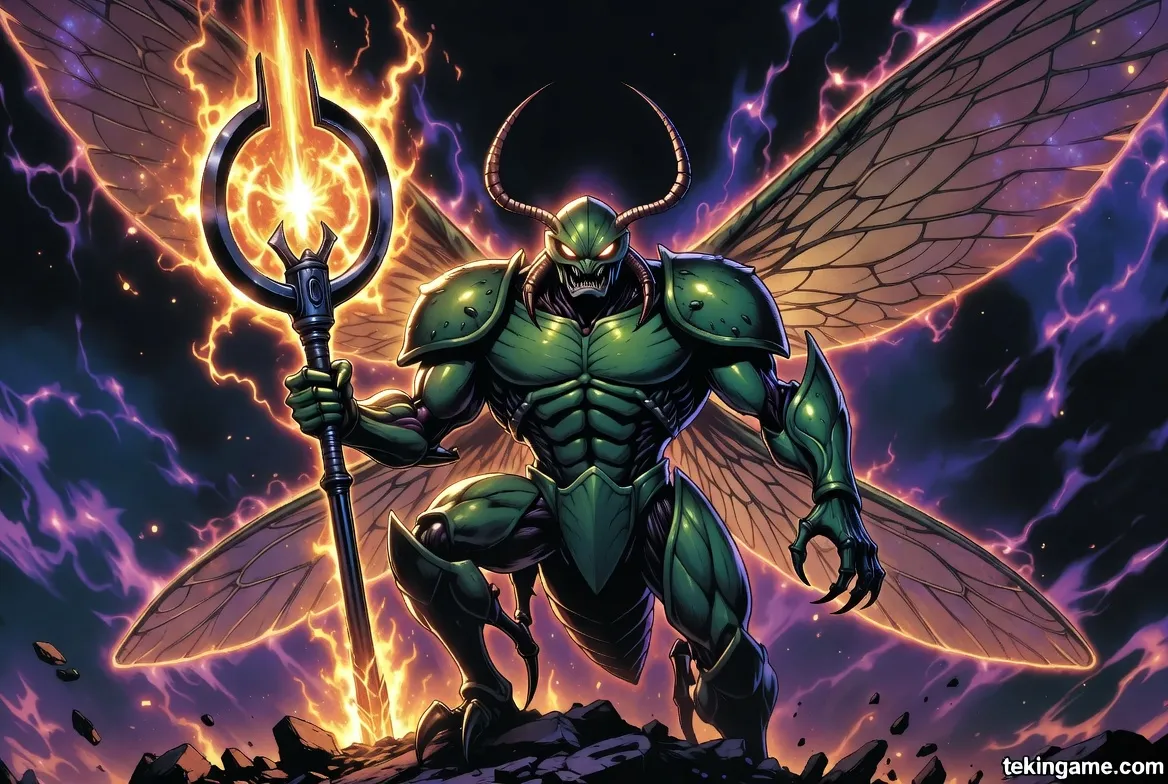
Instead of retelling the tired "Thanos collects stones" or "Kang breaks time" narratives, Marvel Cosmic Invasion adapts the legendary 2006 comic book event: Annihilation. The villain is Annihilus, the insectoid lord of the Negative Zone. His goal isn't complex philosophy; it is pure, unadulterated conquest. He unleashes the "Annihilation Wave"—an endless armada of bio-ships and bug soldiers—to consume our positive matter universe.
This setting allows the game to step away from the streets of New York (which we have saved a thousand times in other games) and takes us to locations like the Nova Corps homeworld of Xandar, the orbital prison Kyln, and the desolate rock of Arthos. The story is told through snappy, beautifully illustrated comic panels between levels. It’s simple, punchy, and perfectly captures the Saturday Morning Cartoon vibe.
2. The Gameplay Loop: A Dance of Death with Superpowers
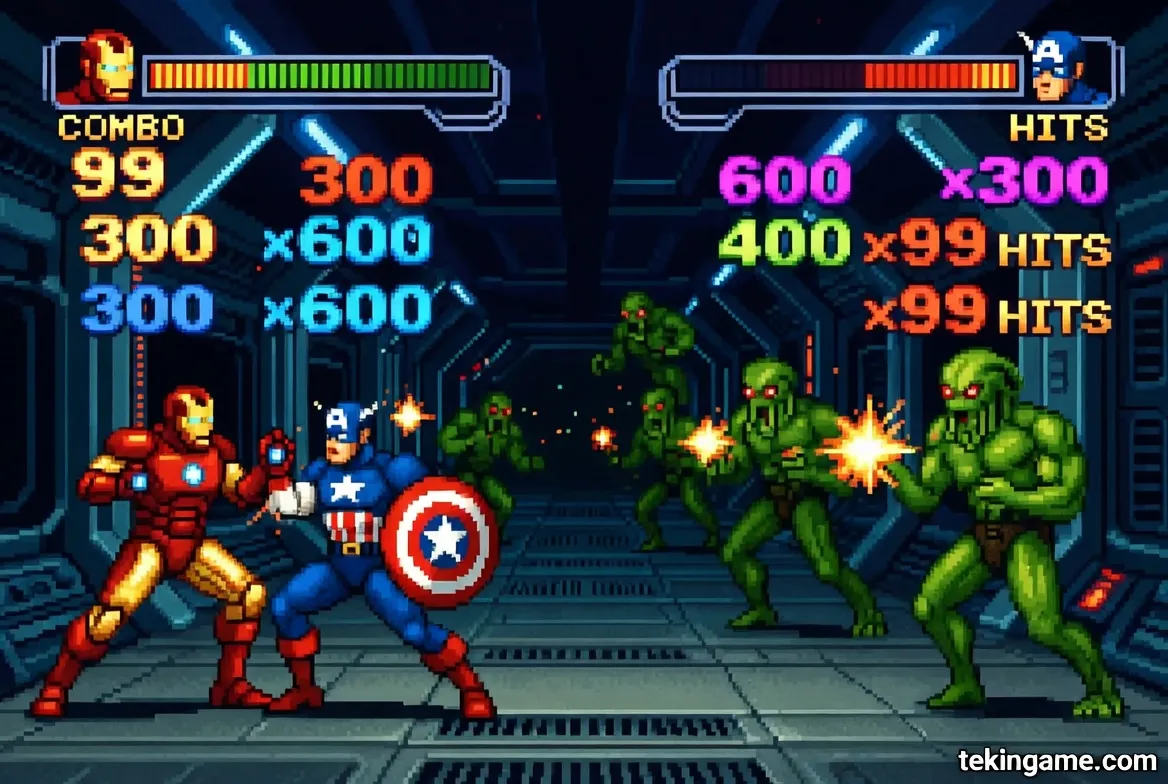
At its core, this is a side-scrolling Beat 'em up. You move right, you punch bad guys, you move right again. However, dismissing it as a button-masher would be a disservice to the surprising depth of its combat system.
The Tag-Team Mechanic
The game’s primary innovation is the "Instant Tag" system. You don't just pick one hero; you pick a duo (e.g., Star-Lord and Rocket Raccoon).
You can switch between them instantly, even mid-combo. This opens up fighting game-style juggles.
Example: You can use Star-Lord’s jet boots to launch an enemy into the air, instantly tag in Gamora, and have her slice the airborne enemy to ribbons before they touch the ground. Mastering this timing is essential for the harder difficulty settings.
The Cosmic Meter
Every hit you land builds up your "Cosmic Meter." Once full, you can unleash a screen-clearing "Ultimate." These aren't just damage dealers; they have utility.
For instance, Groot’s Ultimate covers the entire screen in roots, rooting enemies in place (Crowd Control), giving your team a moment to breathe or revive a fallen ally. Adam Warlock’s Ultimate, conversely, is a pure beam of destruction that melts boss health bars.
3. Roster Deep Dive: From Heavy Hitters to Speedsters
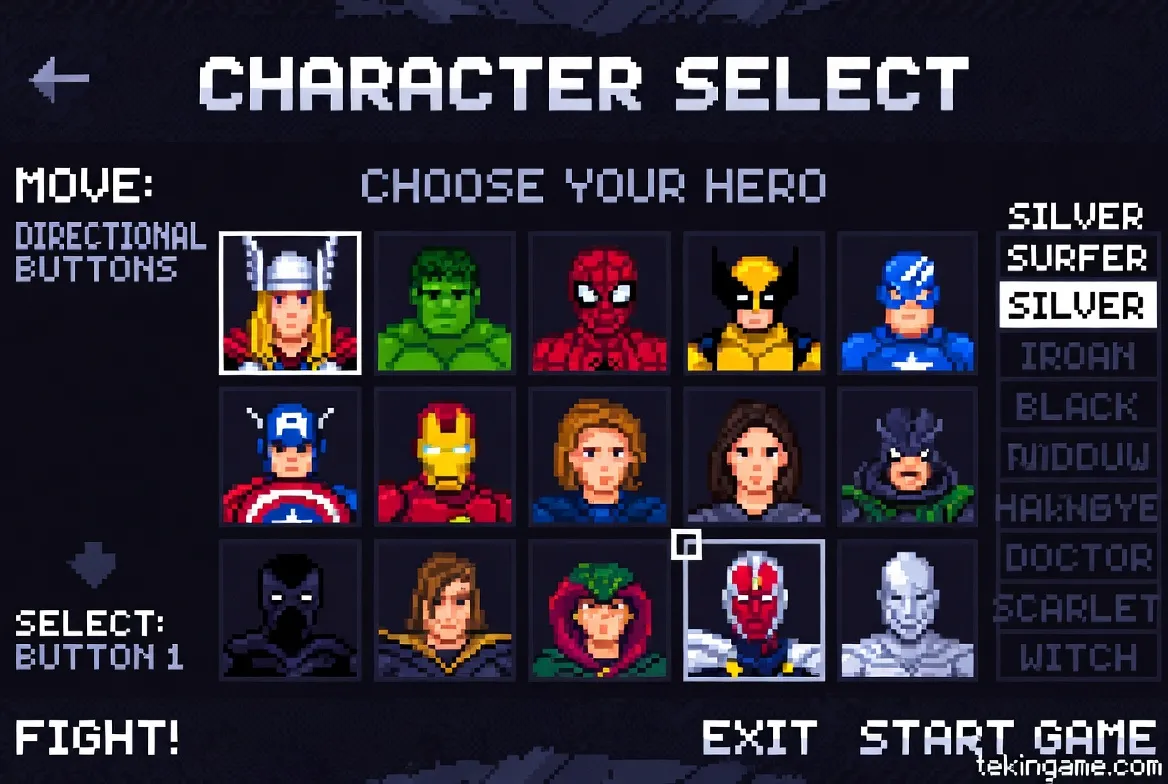
The game launches with a generous 15-character roster (plus 3 unlockable secret characters). Tribute Games has done an excellent job of making them feel distinct through archetypes:
- The Brawlers (The Tanks): Characters like Hulk, Drax, and The Thing. They are slow, have huge hitboxes, but they have "Super Armor" on their heavy attacks. They can grab enemies and use them as biological weapons against other enemies.
- The Blasters (Zoners): Characters like Iron Man, Cyclops, and Star-Lord. They struggle in close quarters but dominate from a distance. Their gameplay is almost like a "Shoot 'em up" (shmup) game, filling the screen with projectiles.
- The Speedsters (Glass Cannons): Characters like Gamora, Spider-Man, and Nova. They cannot take a hit, but they are fast. They rely on "dodge-canceling" and high combo counts to stay alive.
A nice touch for the fans: specific character pairings trigger unique dialogue. Pair Captain America with Winter Soldier, or Rocket with Groot, and you get banter that shows the developers really read the comics.
4. Level Design & Bosses: Hell in Deep Space
The campaign consists of 12 stages, each clocking in at around 15-20 minutes. The environmental variety is staggering. One moment you are fighting on the lush, alien jungles of a Kree planet, and the next you are surfing on the hull of a spaceship while dodging asteroids.
The Boss Fights:
This is where the game shines brightest. The bosses are not just "sponges" with lots of health; they are puzzles.
Fighting Ronan the Accuser requires you to memorize the rhythm of his Universal Weapon (hammer) shockwaves.
The battle against the Super-Skrull is a highlight; since he possesses all the powers of the Fantastic Four, you have to adapt your strategy on the fly as he switches from "Human Torch mode" to "Thing mode."
Critique: If there is a flaw, it’s the enemy variety in the late game. By level 10, you start seeing "palette swaps" (the same enemy but painted red instead of green) a bit too often. The AI aggression increases, but their move sets remain largely the same.
5. Visuals & Audio: A Neon-Soaked Synthwave Feast
Visually, Marvel Cosmic Invasion uses a modern 16-bit Pixel Art style. The pixels are chunky and nostalgic, but the engine running them is thoroughly modern.
The lighting effects are gorgeous. When Iron Man fires a Unibeam, the light reflects dynamically off the metallic floors and the water puddles. The "Negative Zone" energy crackles with a distinct, eerie green glow that pops against the dark backgrounds.

The Soundtrack:
You will want to download this OST. The composer has blended epic orchestral Marvel themes with high-tempo 80s Synthwave and electronic beats. It matches the frantic pace of the gameplay perfectly. When your combo counter goes above x50, the music dynamic layers kick in, adding more bass and drums, making you feel unstoppable.
6. The Co-op Experience: Friendship Ruining Chaos
The game supports up to 4 players via local couch co-op or online.
In 4-player mode, the game becomes absolute chaos. Between Iron Man’s lasers, Hulk’s smashes, and dozens of enemies on screen, you will often lose track of where your character is. But that is part of the charm.
There is a brilliant mechanic called the "Revive High-Five." If a teammate hits 0 HP, you have 10 seconds to run over and hit a button to "High Five" them back into the fight with partial health. It creates tense, screaming moments of "GET ME UP! GET ME UP!" that define a great party game.
7. The Verdict: Buy or Pass?
Marvel Cosmic Invasion is exactly what the gaming industry needed in late 2025: a pretentious-free, polished, and purely fun experience that doesn't try to sell you a Battle Pass or $20 skins on day one.
It is short (the campaign takes about 4-5 hours), but it is designed to be replayed. Leveling up characters unlocks new moves, and the "Arcade Mode" (permadeath) offers a challenge for the hardcore crowd.
TekinGame Score: 8.5 / 10
✅ THE GOOD:
- Fluid, addictive combat with deep tag-team mechanics.
- Excellent roster variety; every hero feels unique.
- Stunning pixel art mixed with modern lighting effects.
- The "Revive High-Five" mechanic makes co-op a blast.
❌ THE BAD:
- The story campaign is relatively short.
- Late-game enemies feel a bit repetitive (palette swaps).
- No cross-play support at launch (coming in a later patch).