
1. Design Anatomy: When "Air" Actually Means Air (5.1mm Thickness)
Let’s address the elephant in the room: Thickness. According to leaked CAD files, the iPhone 18 Air measures a staggering 5.1mm. For context, the infamous iPhone 6 (of "Bendgate" fame) was 6.9mm. How did Apple achieve this physics-defying number?
The answer lies in "Deletion." The USB-C female port assembly alone required about 2.5mm of vertical depth and significant internal clearance. By removing it, alongside the physical button mechanisms and SIM reader, Apple engineers have utilized a "Sandwich" logic board design.
True Unibody: The chassis is forged from a new alloy dubbed "Liquidmorphium" (an amorphous metal structure), claimed to be three times more rigid than Grade 5 Titanium. This material is critical to preventing the device from snapping in half in your pocket.
2. The Death of USB-C: How to Transfer Data & Debug Without Wires
The biggest fear for "Pro" users is data workflow. How do videographers shooting in ProRes transfer terabytes of footage without a cable?
📡 "AirDrop Pro" & The U3 Chip
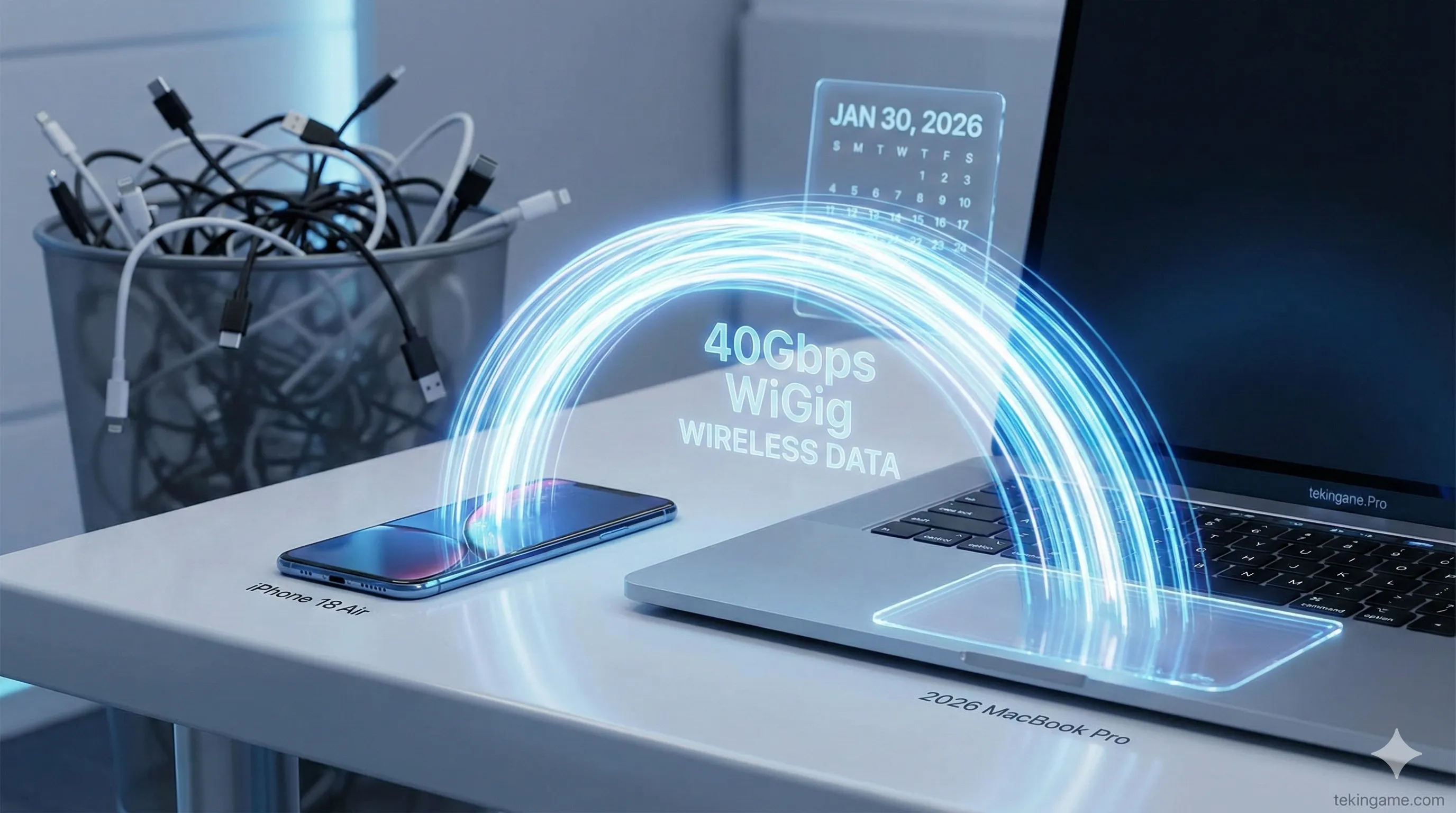
To replace copper, Apple heavily invested in the 60GHz wireless protocol (WiGig 2.0).
Transfer Speed: The new U3 Ultra Wideband chip can beam data at 40Gbps (matching Thunderbolt 4 speeds) to a MacBook or iPad, but only at close range (sub-10cm). You simply place the phone on the Mac's palm rest, and files "teleport."
Recovery Mode: What if the phone bricks? Apple has developed a hidden protocol called "OS Recovery over MagSafe." This allows the device to handshake with a PC via the wireless charging puck to flash firmware in emergencies.
3. MagSafe X Technology: 200W Inductive Architecture & Graphene Cooling
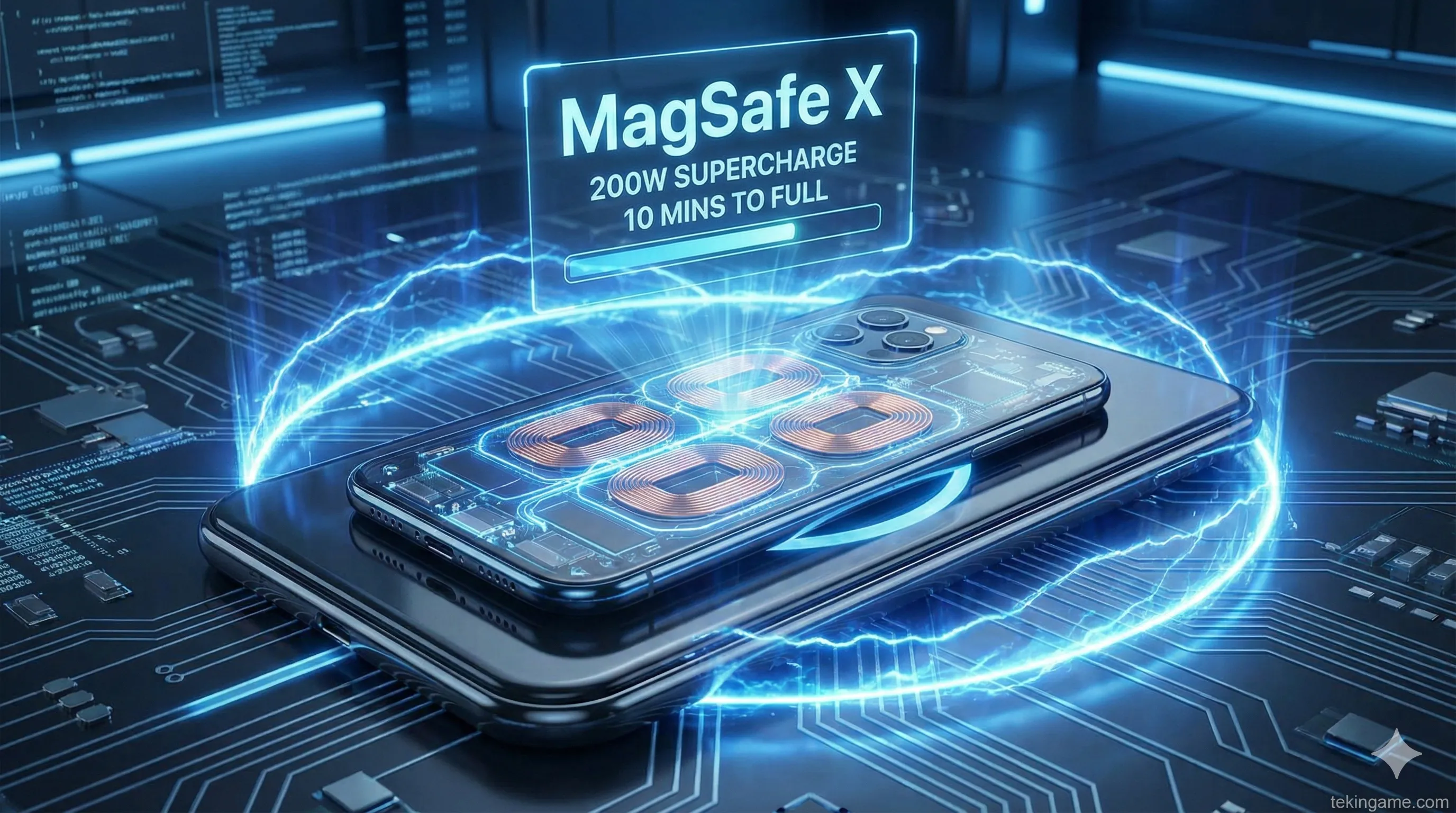
The Achilles' heel of wireless charging has always been "Heat" and "Slowness." The iPhone 18 Air introduces MagSafe X to solve this.
Quad-Coil Architecture:
Unlike current MagSafe which uses a single coil, the 'X' variant utilizes four nano-crystal coils distributed across the back of the device. This offers two advantages:
1. Heat Dissipation: Thermal energy is not concentrated in one hotspot.
2. 200W Speed: This system can charge the 3,800mAh Silicon-Carbon battery from 0% to 100% in under 10 minutes.
The catch? To achieve these speeds, you need the proprietary "Ceramic Charging Pad," which is rumored to cost $129 and is not included in the box.
4. The End of Buttons: Taptic Engine V4 & Pressure-Sensitive Frame
The rumor of button removal started with the iPhone 15 Pro but was scrapped due to technical hurdles. In the iPhone 18 Air, the tech has matured.
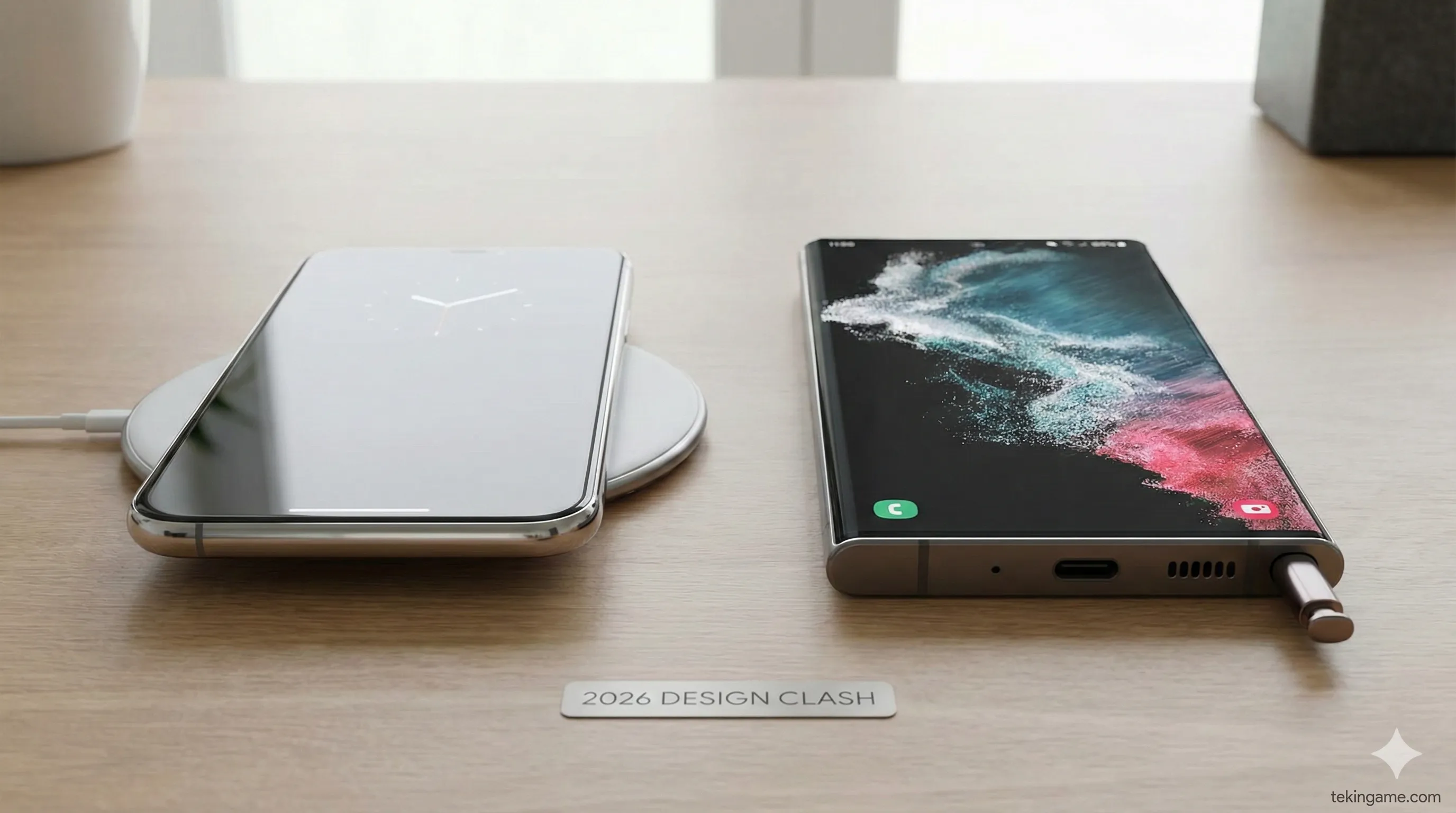
The sides of the phone are perfectly smooth. No protrusions. Instead, the frame is equipped with Capacitive Pressure Zones.
- 🔊 Invisible Volume: Sliding your thumb up or down the edge adjusts the volume (Haptic Slider).
- 📳 Action Zone: Squeezing a specific area triggers the Taptic Engine V4, creating a vibration so precise your brain interprets it as a physical "click," even though nothing moved.
5. Audio from Glass: Piezoelectric Screens & The Death of Grilles
To make the phone truly "hermetically sealed" (waterproof rating IP69K), Apple deleted the bottom speaker holes.
Using Crystal Sound OLED technology (similar to Sony Bravia TVs), the entire display panel acts as the speaker diaphragm. Sound is vibrated directly through the glass into your ear. While audiophiles might miss the bass of a physical chamber, for a 5mm device, early testers describe the clarity as "sorcery."
6. The Philosophy War: Galaxy S26 Ultra (Conservative) vs. iPhone 18 Air (Radical)
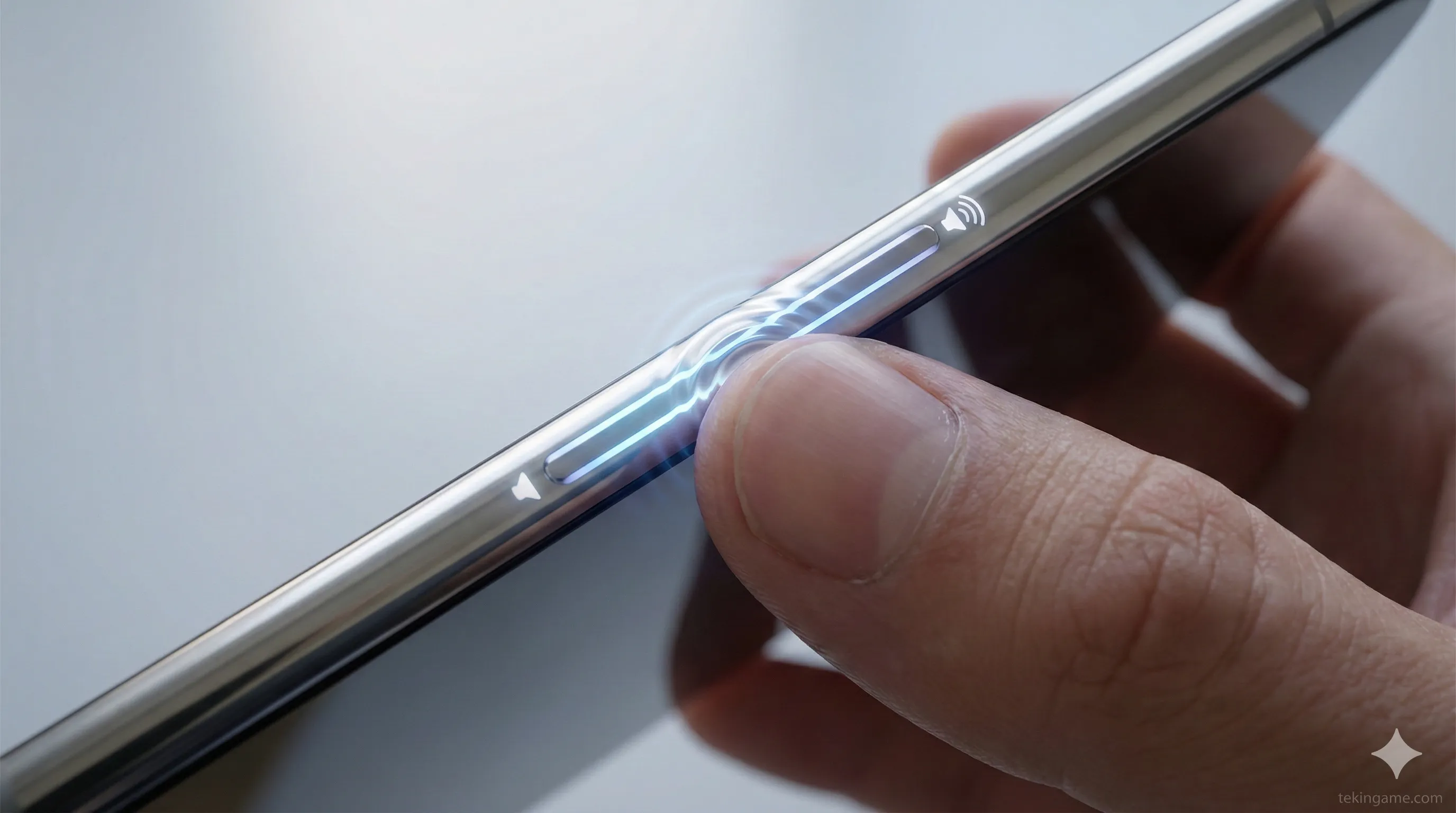
2026 marks the divergence of two tech religions:
| Feature / Flagship | Samsung Galaxy S26 Ultra | iPhone 18 Air |
|---|---|---|
| Connectivity | USB-C 4.2 (Ultra Fast) | Zero Ports |
| Charging | 100W Wired / 50W Wireless | 200W MagSafe X Only |
| Design Language | Thick, S-Pen, Functional | Ultra-Thin (5.1mm), Unibody |
| Target Audience | Power Users & Gamers | Minimalists & Futurists |
7. The Ecosystem Trap: Why You Must Bin Your Old Accessories
This is the harshest critique of the iPhone 18 Air. Killing the port means:
- Goodbye to lavalier mics that plug into USB-C.
- Goodbye to wired controllers (like the Backbone One).
- Goodbye to every wired power bank you own.
By doing this, Apple creates a multi-billion dollar vacuum for "MagSafe X Accessories." You will be forced to buy new wireless hubs, new dongles, and new docks. Critics argue this isn't "Courage," but pure "Greed" disguised as innovation.
8. Price & Release Date: The Cost of Entering the Wireless Future
Wall Street analysts predict the iPhone 18 Air will be notoriously difficult to manufacture due to the Liquidmorphium chassis and compact motherboard.
Estimated Price: The base model (256GB) is expected to start at $1,299. That is a $100 premium over current Pro Max models.
Release Date: September 2026. However, rumors suggest initial stock will be severely limited, as the yield rate for the button-less frame remains low.
🕵️♂️ Inspector's Final Verdict
The iPhone 18 Air is not a device we "need," it is a device Apple wants us to "desire."
Removing the charging port is burning the final bridge. If the 200W MagSafe X truly works without overheating, we might not miss the cable. But for professionals? This phone is a nightmare of dongles and wireless latency.
If you love bleeding-edge tech, prepare your wallet. But if you need your phone to actually "work" with existing gear, the Samsung S26 Ultra or the legacy iPhone 18 Pro (the thicker version which retains the port) might be the saner choice.
💬 The Discussion Pit
Are you willing to trade ports and buttons for pure thinness?
Can wireless charging ever truly replace the reliability of a cable? Drop your controversial takes below! 👇