
1. Phase Zero: The Mindset Shift (Why 2026 is the Golden Age of Dev)
In the past, game development was a discipline of "Specialists." You picked a lane—programmer, artist, or designer—and stayed there. But in 2026, game development is a discipline of "Management." You are no longer the miner chipping away at the rock with a pickaxe (manual coding); you are the Mine Manager directing the robots (AI) on where to dig.
The most critical skills you need this year are Prompt Engineering and Curatorial Taste. An AI can generate thousands of lines of code or hundreds of asset variations, but it doesn't know which one is "Fun." That is your job. You are the Creative Director. So, do not fear if your math is weak or you cannot draw a straight line. If you can imagine it, you can build it.
2. Phase One: Ideation & Lore (Brainstorming with Your AI Co-Founder)
Every great game starts with a "What if..." But transforming a mental spark into a comprehensive Game Design Document (GDD) is exhausted. This is where Large Language Models (LLMs) shine.
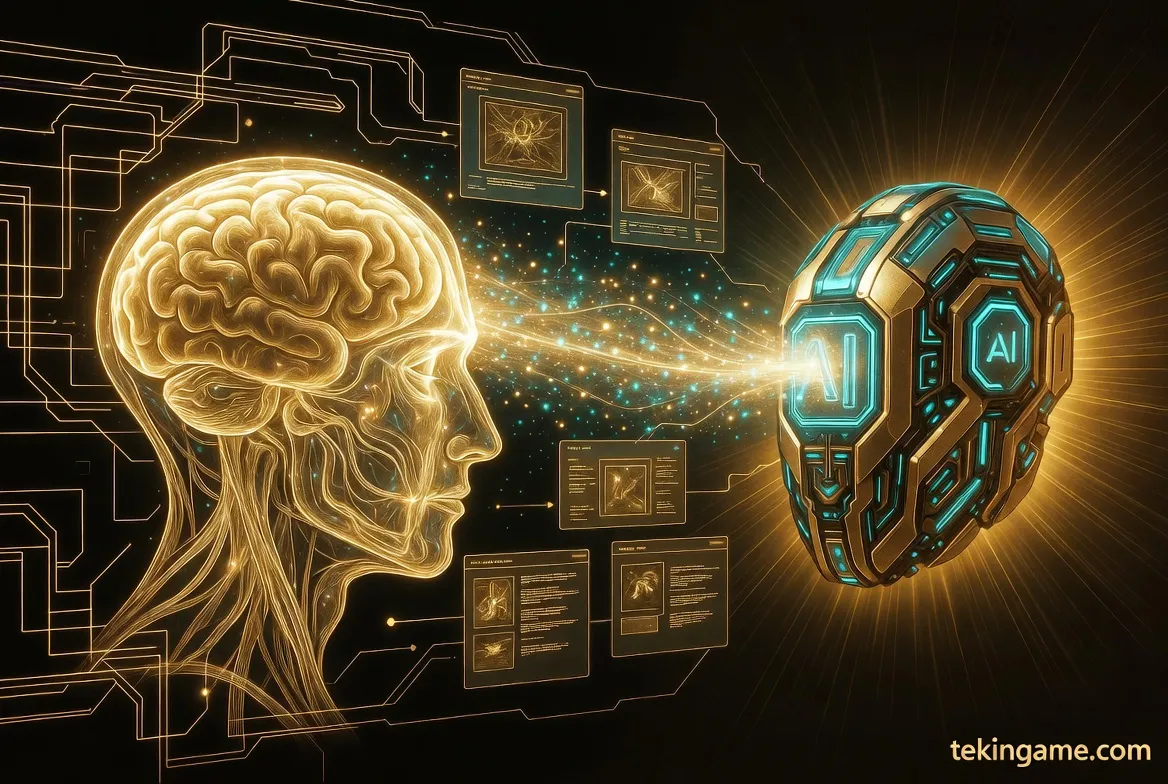
Brainstorming with ChatGPT-6 or Claude 4
Instead of staring at a blank page, treat the AI as your co-founder. Try a prompt like this:
"I have an idea for a survival horror game set on an abandoned space station, but I don't want the enemies to be generic zombies or robots. Give me 5 creative concepts for enemies based on cosmic horror and fungal infections, and suggest a unique core gameplay mechanic involving oxygen management."
The AI might suggest: "Enemies are former crew members whose suits are pressurized with hallucinogenic spores. The mechanic is that you must share your limited oxygen supply to 'cure' them or save it for yourself to survive." Suddenly, you have a game loop.
Infinite Branching Narratives
Writing dialogue for 100 different NPCs used to take months. Tools like Inworld AI allow you to create characters whose dialogue isn't pre-written scripts. You define their "Personality," "Backstory," and "Motivation," and they react to the player in Real-Time. This marks the end of repetitive "I used to be an adventurer like you" lines.
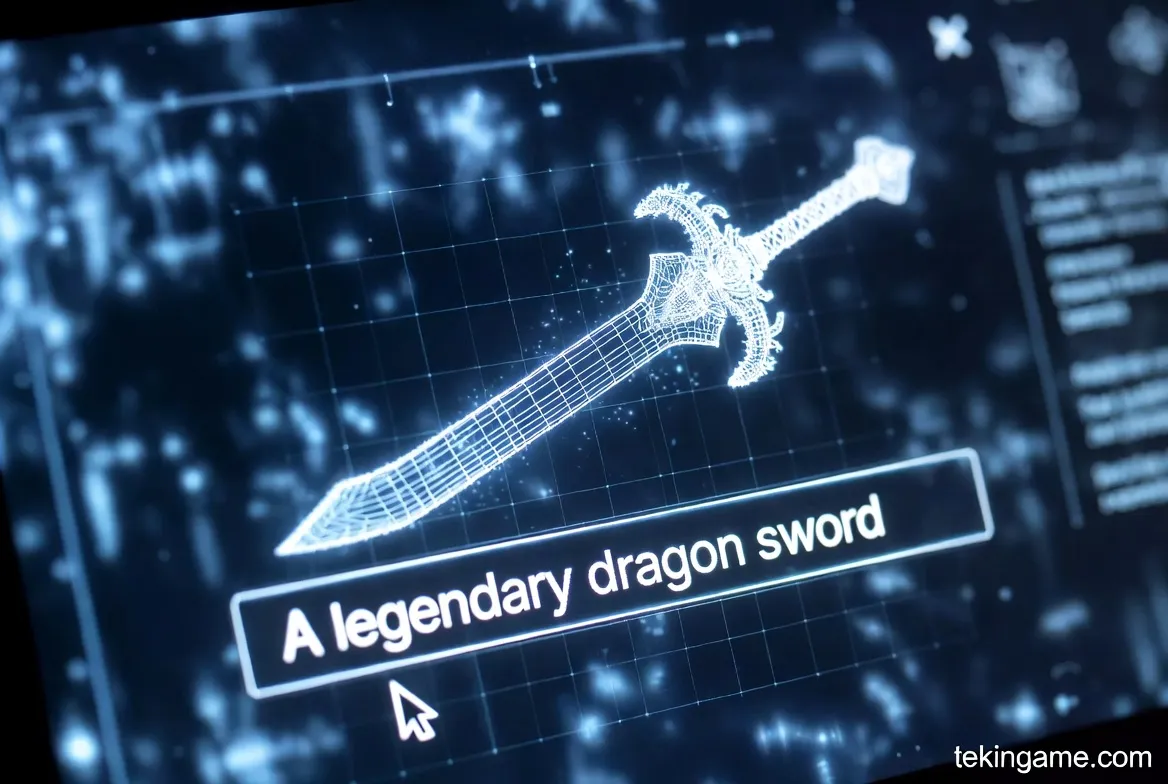
3. Phase Two: Art & Visuals (From Text Prompts to 3D Worlds)
This is where the magic happens. Previously, populating a game world required months of modeling, UV unwrapping, rigging, and texturing.
Concept Art with Midjourney V7
Before you build, you must visualize. Use Midjourney to establish the atmosphere and color palette.
Prompt: "Isometric view of a cyberpunk slum, neon purple lighting, rain-slicked streets, dense detail, Dark Souls atmosphere."
These images serve as the "North Star" for the visual direction of your project.
Text-to-3D Generation
In 2026, tools like Meshy, Luma AI, or Rodin have revolutionized asset creation. You upload your concept art or simply type a prompt, and within minutes, you receive a raw 3D mesh. While your Main Character might still require manual polishing or sculpting, for environmental assets—chairs, trees, debris, buildings, cars—these tools do 90% of the heavy lifting. You can fill an entire level with unique assets in a single afternoon.
4. Phase Three: Logic & Coding (Programming Without Writing Code)
The biggest barrier for artists and writers has always been code. "I'm not a math person," they say. Good news: in 2026, English is the hottest new programming language.
GitHub Copilot & Cursor
If you are using engines like Unity (C#) or Godot (GDScript), AI coding assistants are your best friends. You simply write a comment describing what you want:
"// Write a script that makes the player double jump when the Space bar is pressed twice, and plays a sound effect."
The AI writes the functional code beneath your comment instantly. You just need to review it.
Visual Scripting in Unreal Engine 5
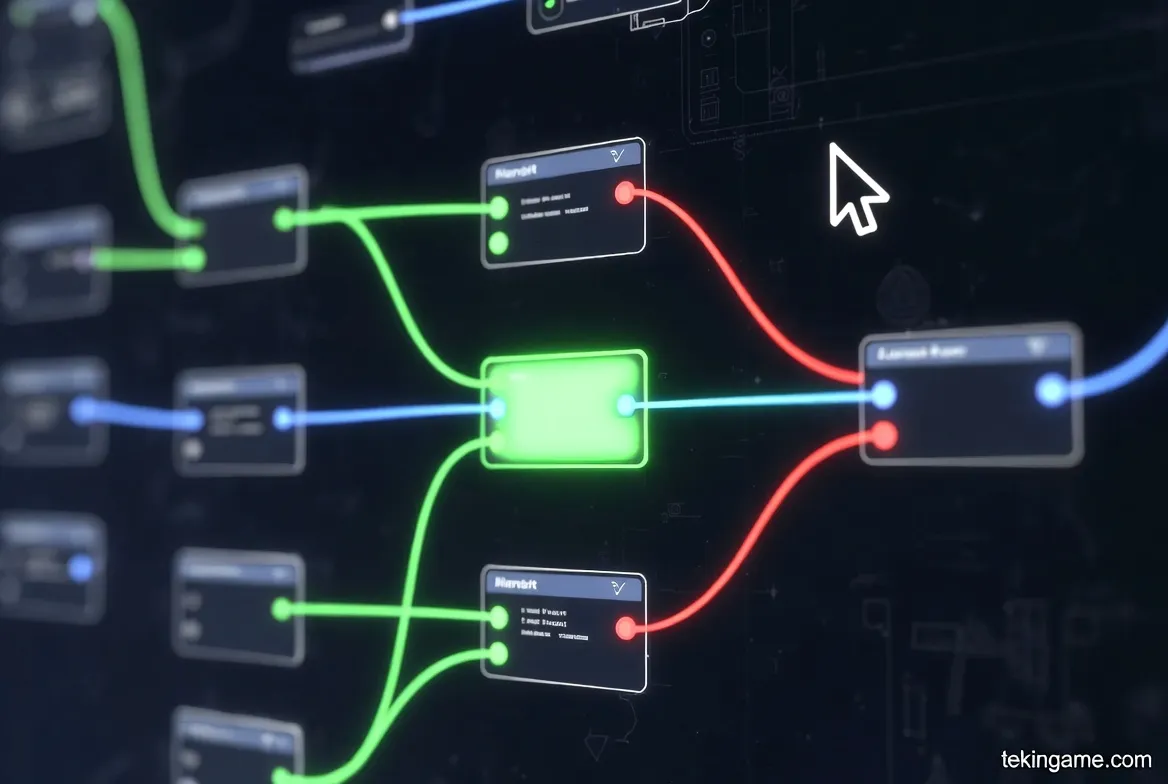
Unreal Engine uses "Blueprints," a visual system where you connect nodes with wires instead of writing text. Now, imagine an AI that connects these nodes for you. You explain the logic to the engine's AI assistant, and it arranges the Blueprint nodes to execute that logic. You are building complex gameplay mechanics by simply explaining them.
5. Phase Four: Audio & Soundscapes (An Orchestra in Your Laptop)
Sound is 50% of the gaming experience. A horror game without sound is just a dark comedy. AI has democratized high-end audio production.
- Adaptive Music: Tools like Suno or AIVA can generate original soundtracks that adapt to your gameplay. You can generate a "Calm Exploration" track and a "High-Intensity Combat" track with the same motif. The AI handles the composition, instrumentation, and mixing.
- Voice Acting: ElevenLabs technology in 2026 is indistinguishable from human speech. You can generate thousands of voice lines for your NPCs with distinct accents, emotional tones (whispering, shouting, crying), and pacing. This saves you thousands of dollars in studio time and hiring actors for minor roles.
6. Phase Five: The Assembly (Putting It All Together in Unreal Engine 5)
Now you have the text, the models, the code, and the sound. You need a "Game Engine" to assemble the puzzle.
Our recommendation for 2026 is unequivocally Unreal Engine 5.6. Why?
Because it is free (until you make your first $1 million) and features technologies like Nanite (which handles millions of polygons without performance loss) and Lumen (dynamic global illumination). This eliminates half the technical headaches of the past. You drop your AI-generated model into the scene, and the light bounces off it realistically. No more "Light Baking" that takes overnight to render.
7. Phase Six: Marketing & Publishing (How to Sell Your Creation)
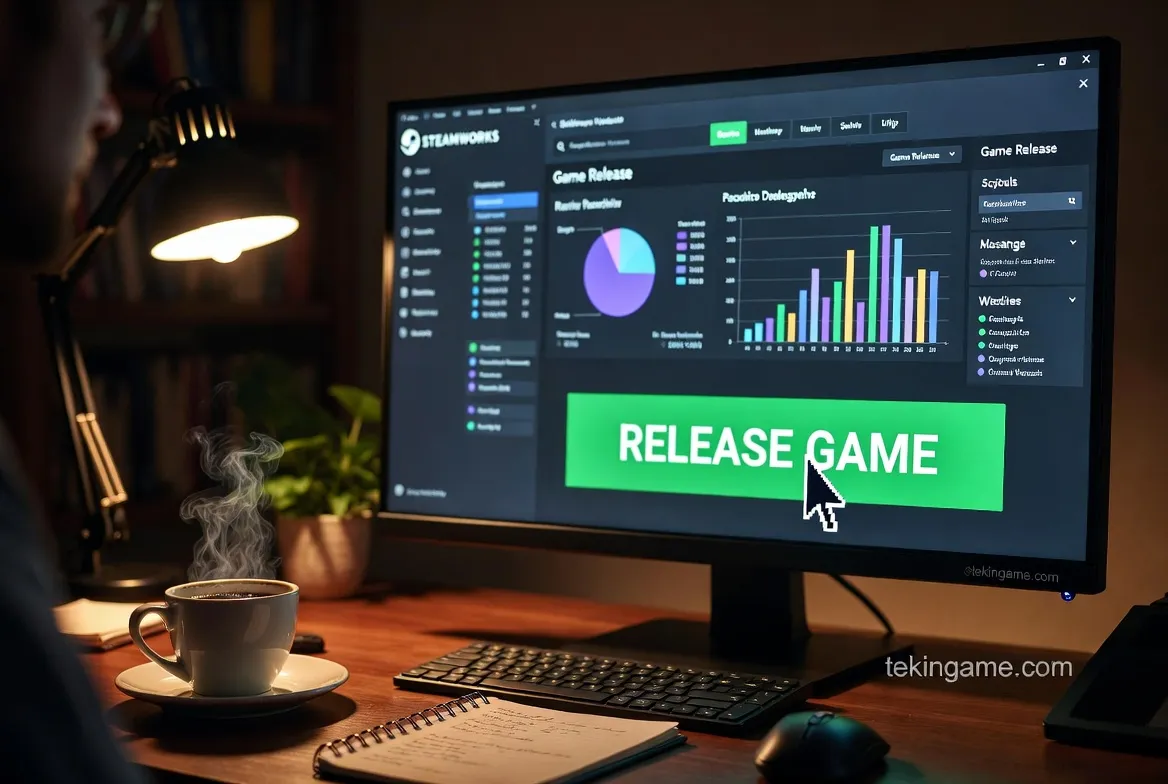
Making a game is one thing; selling it is another. Steam receives 50+ new games every single day. How do you stand out?
- AI Trailers: Use AI video editing tools like Premiere Pro AI or Sora to automatically cut your gameplay footage into a high-energy trailer synced to the beat of your music.
- Content Strategy: Ask ChatGPT to generate a "3-Month Social Media Content Calendar" for TikTok, Twitter/X, and Instagram. It can write the hooks, the captions, and suggest visual ideas.
- Steam SEO: Write your store description using SEO principles learned by AI. Ask it to optimize your text for keywords like "Psychological Horror" or "Co-op Survival" so your game appears first in search results.
8. The 2026 Toolkit: 5 Essential AI Apps You Need
- Scenario: The ultimate tool for generating consistent game assets (textures, icons, items) that match your specific art style.
- Promethean AI: An environment design assistant. Tell it "Build a messy 1990s teenager's bedroom," and it will populate the scene with assets automatically.
- Modl.ai: For QA (Quality Assurance) testing. AI bots play your game thousands of times to find bugs, glitches, and invisible walls, doing the work of a whole QA team.
- Charisma.ai: For breathing life into interactive storytelling and conversational NPCs.
- Skybox AI (Blockade Labs): Create stunning, 360-degree panoramic skyboxes for your game world with a single text prompt.
Final Words: Just Start
Commanders, the tools are ready. The knowledge is accessible. The only barrier remaining is the "Fear of Starting." Your first game doesn't need to be GTA VI. It might be a simple 2D platformer that takes 5 minutes to beat. But that game will be yours.
2026 is the year of the "Creator." Will you be a spectator or a player this year? The choice is yours.
If you could build a game right now with a snap of your fingers, what genre would it be? Drop your dream game ideas in the comments—you might find your future teammate right there!