
1. Introduction: From Moving Squares to Living Worlds
It is Monday evening, December 15, 2025. Let's take a brief respite from the breaking news of hacking scandals and stock market shifts to look backward.
If you show a 15-year-old today a clip of Pong—those two white lines batting a square "ball" back and forth—they likely won't believe that this was once the absolute pinnacle of human entertainment.
The path of computer graphics progress was not a straight line; it was a staircase. Every few years, a game would land on shelves that seemingly violated the laws of physics, a game that declared: "Forget everything you have seen before this moment."
Tonight at Tekin Plus, we have curated a list of 10 games that weren't just "pretty"—they were revolutionary. They brought hardware to its knees, defined new standards, and paved the road to the digital reality we enjoy today.
2. The 90s: The Birth of the Third Dimension
2.1. Doom (1993): The Grandfather of Shooters

Before Doom, the gaming world was largely flat. When id Software unleashed this masterpiece, gamers felt, for the very first time, that they were physically inside the monitor.
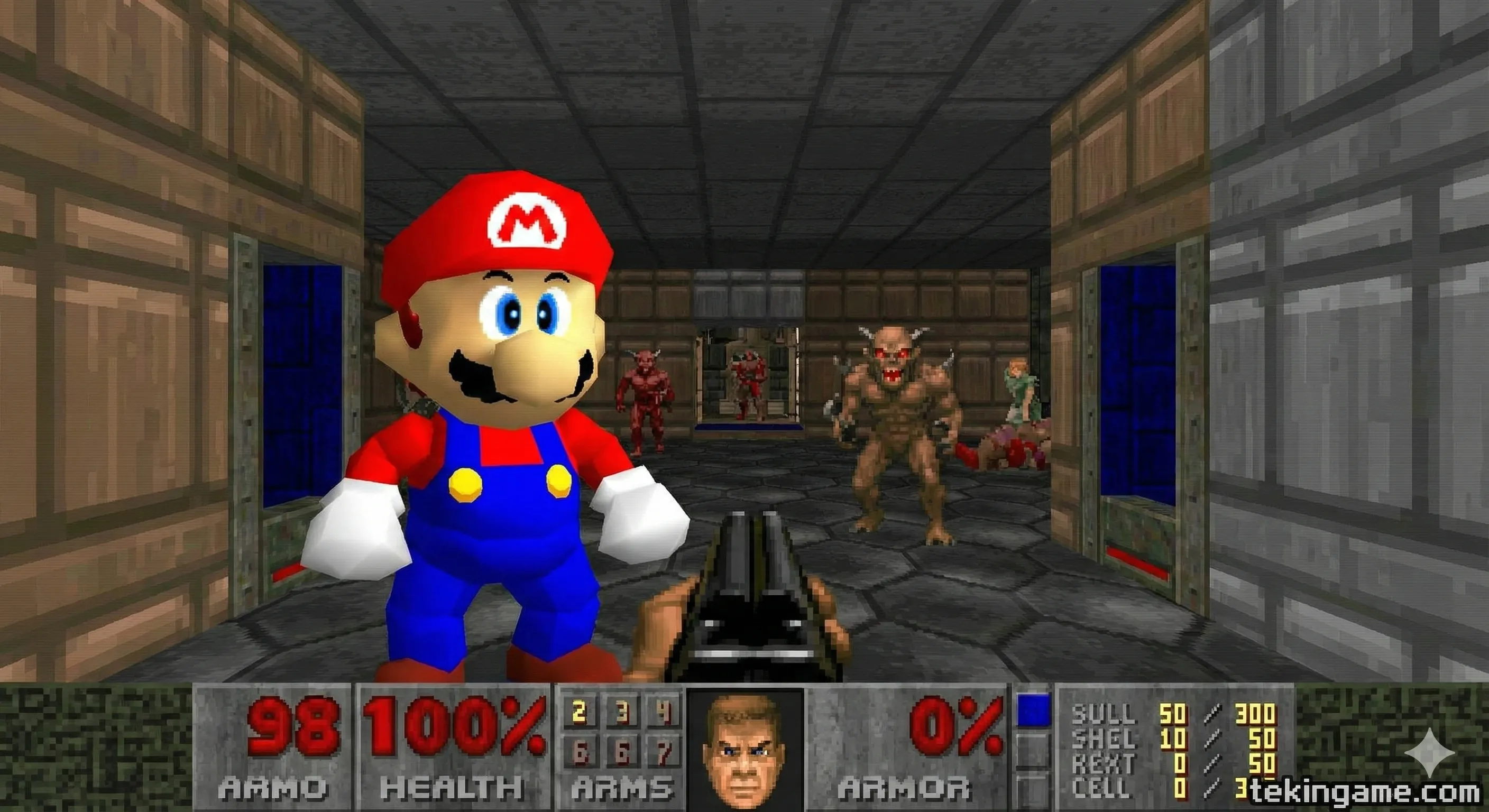
Technical Note: It is fascinating to remember that Doom wasn't actually 3D. John Carmack, a coding wizard, used a technique called Ray Casting. The game engine drew 2D vertical lines at different heights to simulate depth. The enemies were 2D paper cutouts (sprites) that always rotated to face you.
Yet, the illusion was perfect. It introduced the concepts of lighting, verticality, and texture mapping to the masses. It was the "Big Bang" of modern graphics.
2.2. Super Mario 64 (1996): Unlocking the Camera
If Doom was a 3D illusion, Super Mario 64 was the reality. With this title, Nintendo taught the world how to use an "Analog Stick."
Before Mario 64, we only moved left and right. Afterward, we could run into the "depth" of the screen. We could rotate the camera.
Mario's blocky, polygon-heavy model looks hilarious to us in 2025, but in 1996, seeing Mario’s shadow stretch and shrink based on the angle of the sun was nothing short of witchcraft. It established the rules for how a 3D character should move in a 3D space.
3. The 2000s: The War of Physics and Light
3.1. Half-Life 2 (2004): Physics and Emotion
2004 was the year Valve decided that objects in video games should have weight.
Prior to the Source Engine, crates were glued to the floor. In Half-Life 2, you could pick up a saw blade with the Gravity Gun and fling it at a zombie. Wood splintered, barrels floated in water realistically, and ragdoll physics made combat feel visceral.
But the real revolution was in the Faces. For the first time, characters like Alyx Vance conveyed complex human emotions—fear, sarcasm, warmth—using facial muscles, not just bobbing heads. It was our first step out of the "Uncanny Valley."
3.2. Crysis (2007): The Hardware Nightmare
Even now, 18 years later, the phrase "But can it run Crysis?" remains a legendary meme in the PC community.
Crytek built a game that essentially belonged to the future. It featured volumetric lighting (God rays) filtering through palm leaves, destructible vegetation that broke exactly where you shot it, and ocean water that looked real enough to drink.
The game was so demanding that no graphics card in 2007 could run it on "Ultra" settings. Crysis taught us that great graphics come at a heavy price, pushing hardware manufacturers like NVIDIA to innovate faster.
4. The 2010s: Insane Details
4.1. The Last of Us (2013): Cinema or Game?
At the tail end of the PlayStation 3 generation, Naughty Dog created a masterpiece that blurred the line between film and interactive entertainment.
While the technical specs were impressive, it was the Art Direction and Performance Capture that changed history. The way light bounced off damp, mossy walls; the way Joel’s eyes darted around in fear; the subtle animations of breathing. The Last of Us proved that pixels could make you cry. It shifted the industry focus from "more polygons" to "more fidelity."
4.2. Red Dead Redemption 2 (2018): Rockstar's Obsession
This game is the definition of "Detail." Rockstar Games spent years building a world where:
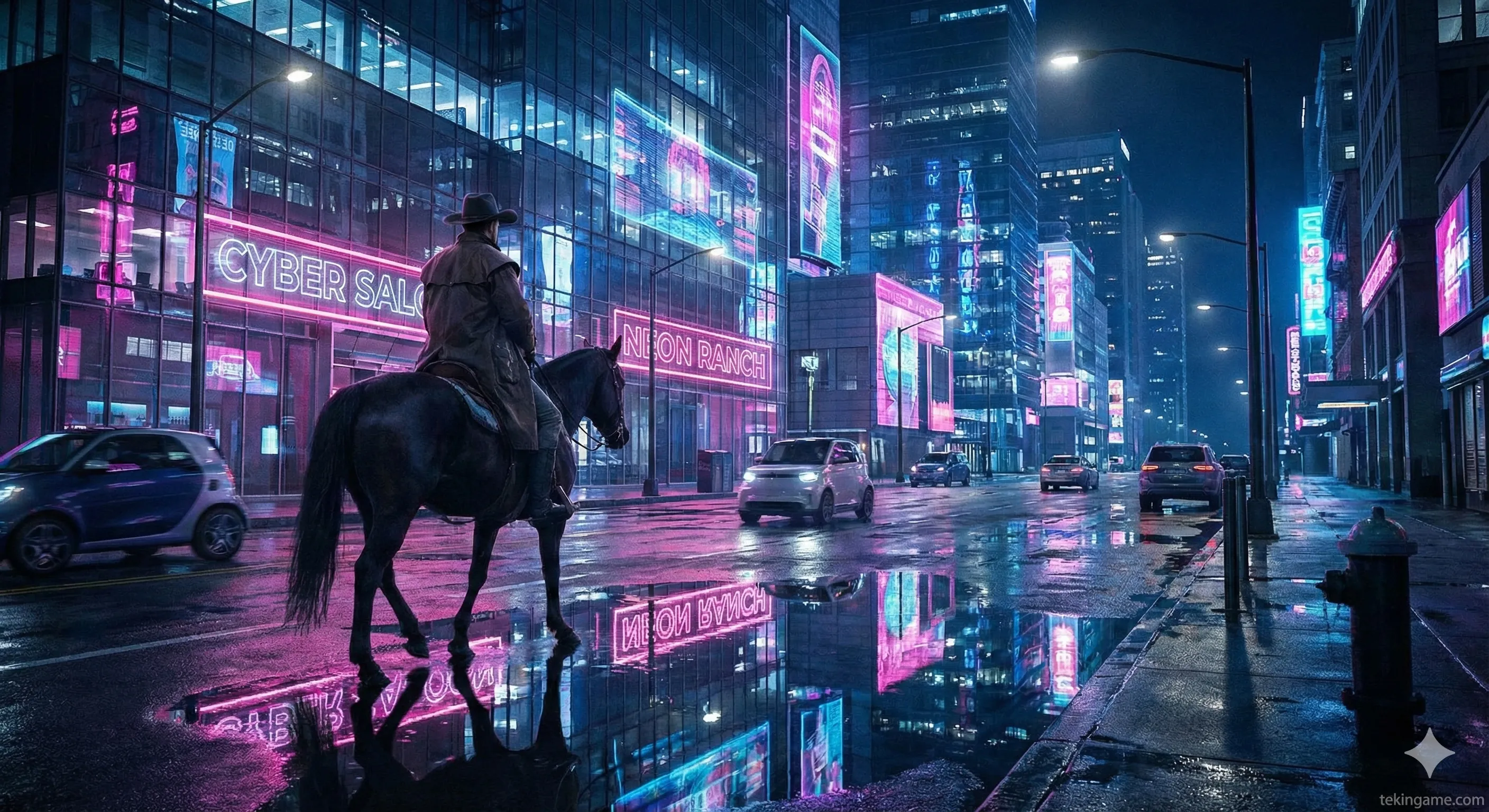
- Clouds are fully volumetrically rendered and shift with the weather (they aren't just a skybox image).
- Mud sticks to clothing, dries over time, and flakes off.
- Horse pupils react to changes in light.
- Snow deforms realistically under footsteps.
5. The 2020s: The Era of Ray Tracing
5.1. Cyberpunk 2077 (2020): The Neon City

Despite a disastrous console launch, the PC version of Cyberpunk 2077 was a technological torchbearer.
It was the first major AAA title to fully embrace Path Tracing (an advanced form of Ray Tracing). This meant that every photon of light in Night City was simulated.
Neon signs reflected accurately in puddles; shadows softened based on distance; light bounced off colored surfaces and tinted the room. It was heavy, requiring DLSS to run, but it showed us what "real" light looks like.
5.2. The Matrix Awakens (2021): Hello, Unreal Engine 5
This was technically a tech demo, but it shook the world. Epic Games unveiled Nanite (virtualized micropolygon geometry).
The demo proved that designers no longer needed to worry about "polygon counts." The city was built with billions of triangles, yet ran smoothly. It eliminated "LOD Popping" (where objects change quality as you get closer). It was the promise of a future where games would look identical to movies.
6. The Present (2024-2025): Absolute Photorealism
6.1. Senua's Saga: Hellblade II (2024)
Last year, Ninja Theory demonstrated just how close a digital human face can get to reality.
Using advanced photogrammetry and the Metahuman framework, distinguishing Senua from her real-life actress became nearly impossible. The way skin stretches over bone, the way tears pool in the eyes—Hellblade II remains the current benchmark for facial animation.
6.2. Clair Obscur: Expedition 33 (2025)
And finally, we arrive at the game released just this week, which has taken the charts by storm.
Why is Clair Obscur on this list? Because it proves that "Next-Gen Graphics" isn't just about realism; it's about Artistry.
The team at Sandfall Interactive leveraged Unreal Engine 5 not just to make rocks look real, but to make the world look like a moving oil painting. The usage of Lumen for dynamic global illumination in a surreal fantasy setting proves that even smaller studios can now produce visuals that rival Hollywood blockbusters. It is the culmination of 30 years of progress.
7. Conclusion: Where is the Next Station?
From the chunky pixels of Doom to the breathtaking vistas of Clair Obscur, we have come a long way.
Today, our concern is no longer "how many sides does this character's head have?" Our concern is "Atmosphere" and "Immersion."
With the advent of AI upscaling (DLSS, PSSR) and engines like UE5, the next 5 years will likely bring games that are indistinguishable from video footage. We are no longer watching the screen; we are stepping through it.
Which game on this list do you think is missing? What was the first game that truly shocked you with its graphics? Tell us in the comments below.