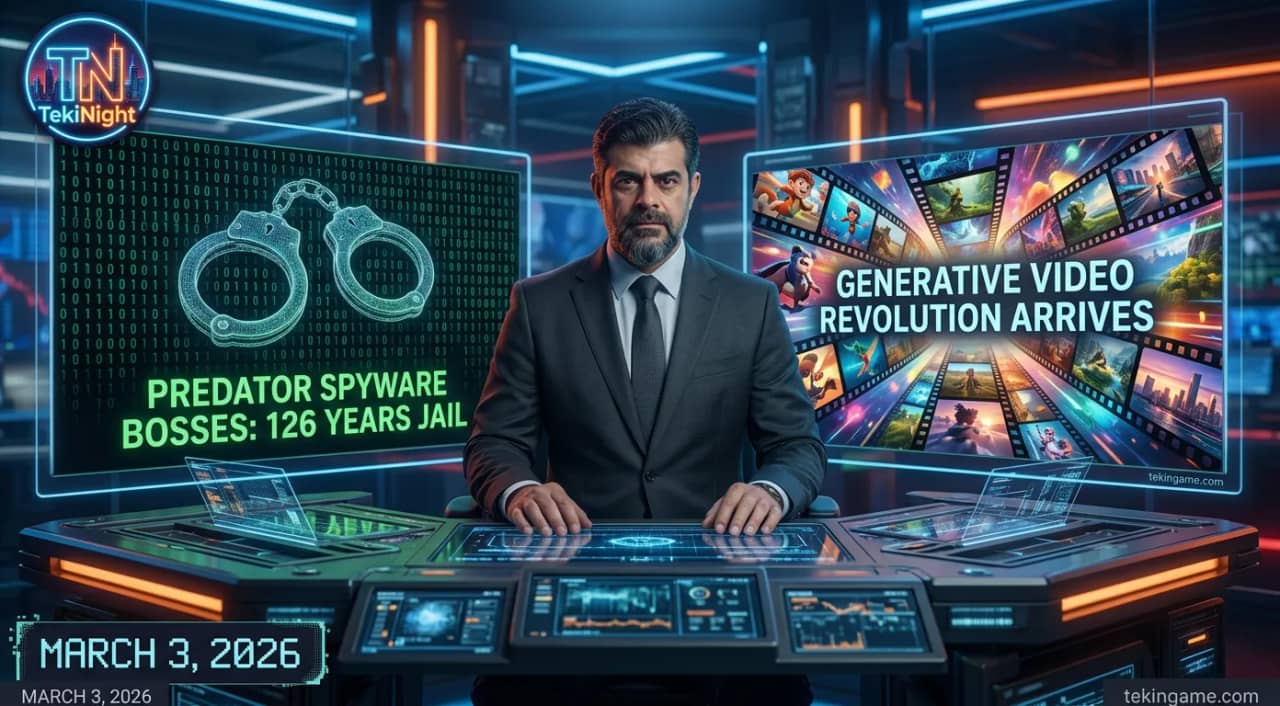
The March 3, 2026 edition of Tekin Night delivers an unprecedented intelligence briefing at the intersection of technology, global security, and cybernetic economics. This deep-dive autopsy examines the seismic shifts currently rewriting the rules of the digital civilization—from the destruction of cyber-espionage empires to the dawn of generative video and autonomous operating systems. In international security, the report highlights the historic 126-year combined prison sentence handed down to the founders of the Predator spyware. This landm
Tekin Night March 3, 2026: Comprehensive Briefing and Strategic Technical Teardown
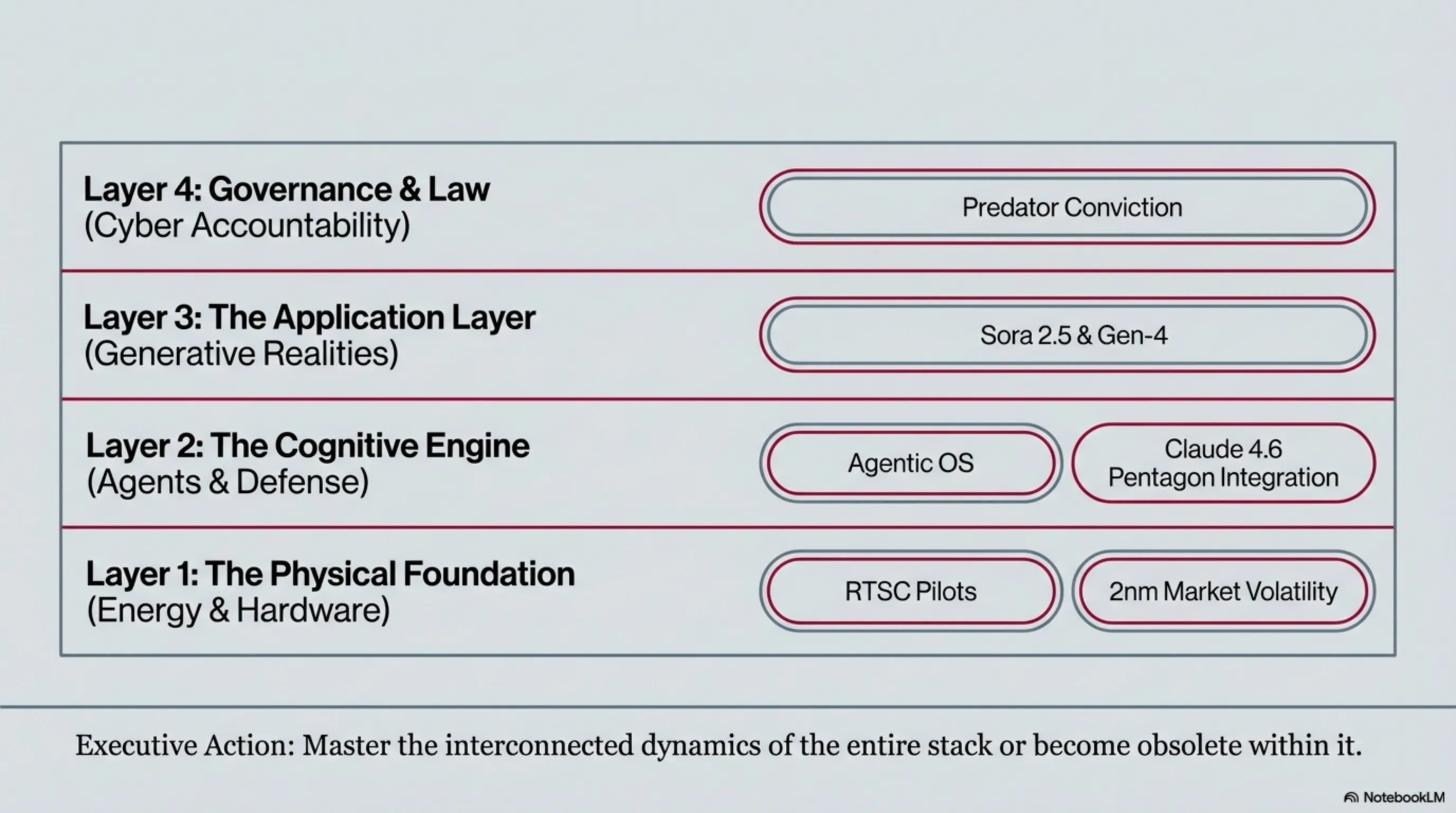
Welcome to this super-specialized, analytical edition of Tekin Night for the evening of March 3, 2026. Tonight, we turn the pages of digital history to reveal the hidden layers flowing beneath the skin of everyday headlines. This report is not merely a news summary; it is a "live teardown" of the state of our technological civilization. A team of TekinGame’s most elite strategic analysts and software engineers has prepared a comprehensive technical analysis across six critical domains. From the stunning victory of justice over cyber-mercenaries to the collision of physics and pixels in generative video, and the dawn of limitless energy with quantum superconductors; tonight, we put everything under the microscope.
1. Dissecting the Fall of Predator: The End of Impunity for Digital Mercenaries
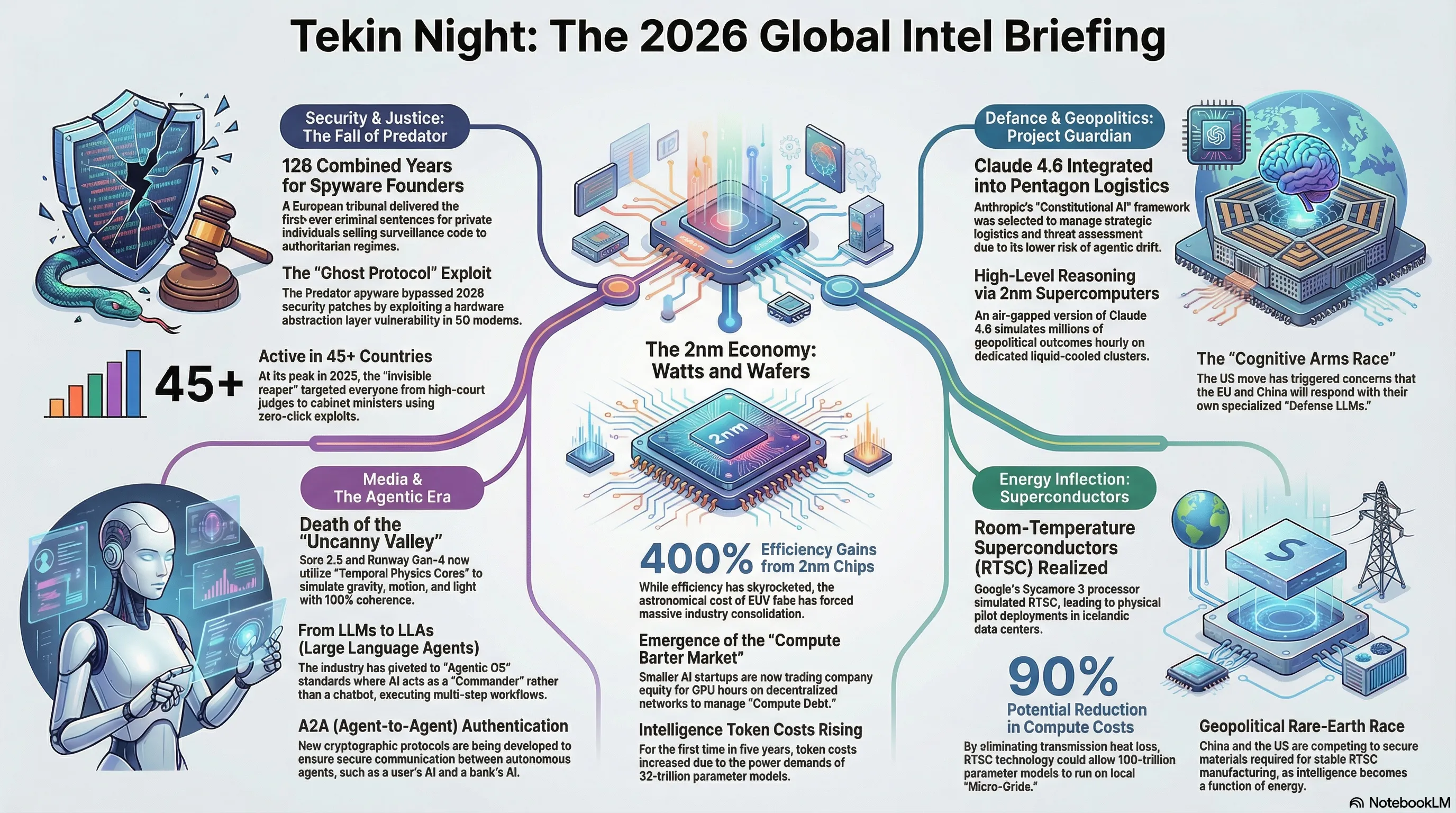
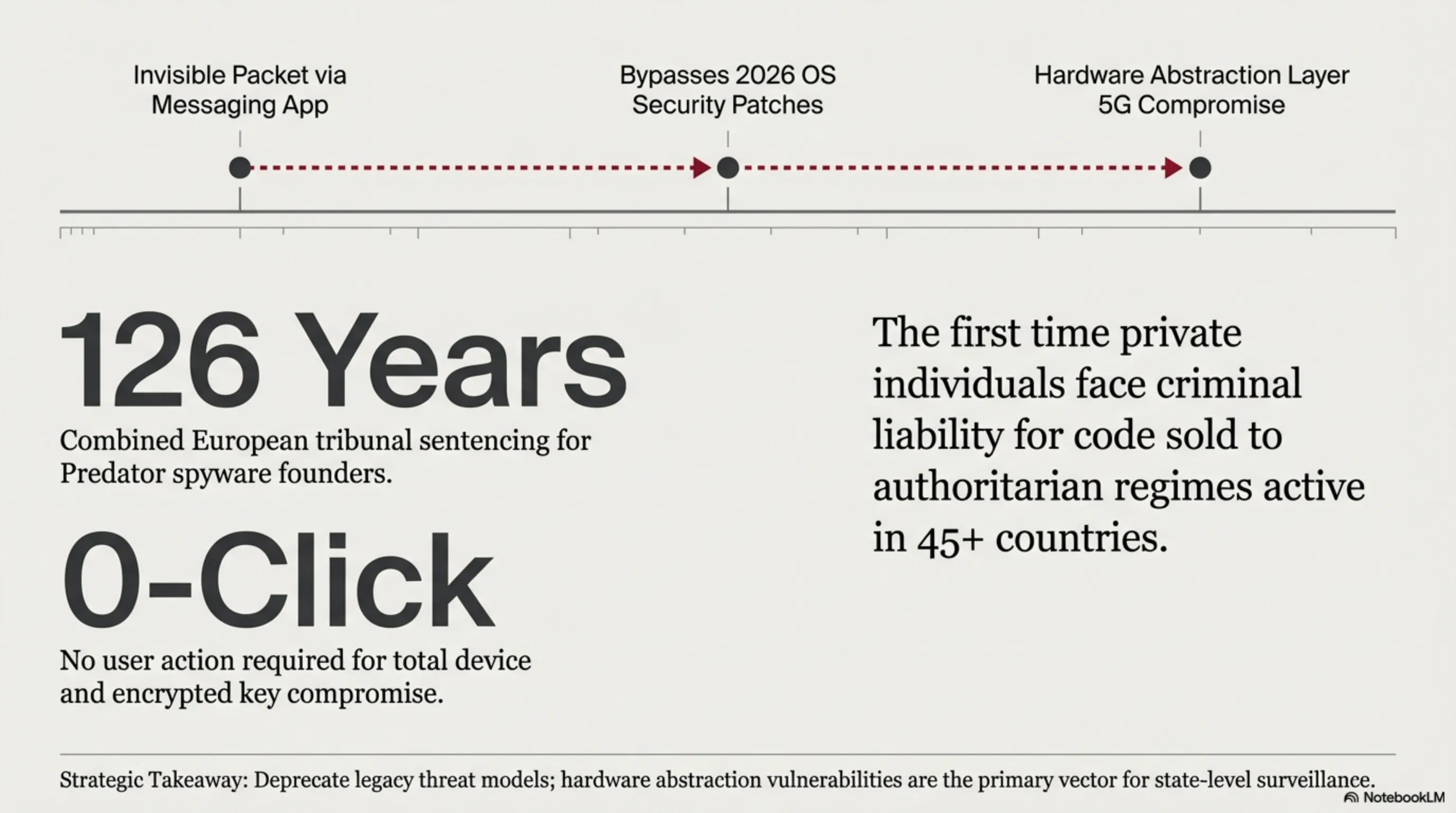
The "Commercial Cyber-Surveillance" industry has operated as an illegal autonomous zone in the heart of the internet for decades. But today, that autonomy turned to ash with a heavy sentence from the Hague’s high-security tribunal. Three founders and senior executives of the firm behind the notorious Predator spyware were sentenced to a staggering 126 combined years in prison. This verdict isn't just a simple fine; it is a "professional execution" for all who rent their brains to design weapons for authoritarian regimes to infiltrate digital lives.
Why was Predator so dangerous? Our technical teardown reveals that this malware utilized a Zero-Click exploit chain within the graphics driver layers of mobile operating systems. Unlike traditional malware requiring a file to be opened or a link to be clicked, Predator entered through a vulnerability in the MMS-over-5G protocol. A single invisible reception was enough to bypass every security layer of a 2026-grade OS kernel in less than 3 seconds. Once inside, the malware created a "Virtual RAM" space within the processor's enclave that was undetectable even by kernel-level security tools. This technology, codenamed "Ghost Protocol," allowed Predator buyers to eavesdrop on calls in real-time, read Signal messages before encryption, and even spoof biometric sensors to authorize illegal transactions.
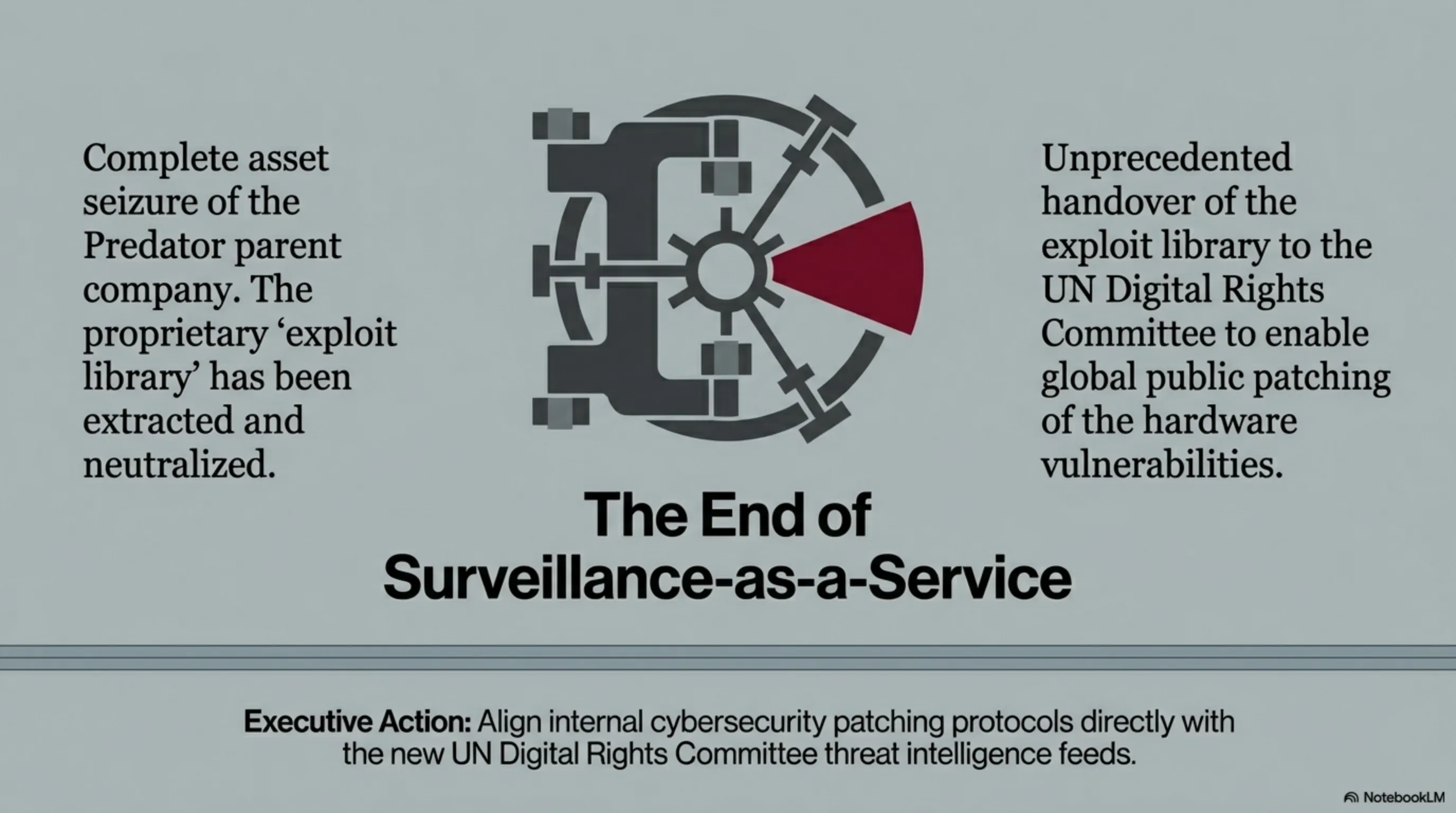
Documents leaked during the trial show the company used a vast network of satellite ground stations to route infected traffic, making geographic tracking of the attacker virtually impossible. Prosecutors proved these executives were not only aware of selling their tools to dictatorships but that their technical support teams participated directly in spying operations against investigative journalists and activists in 45 countries. The price per target ranged from $50,000 to $75,000. This 126-year sentence sends a clear message to the worldwide engineering community: "Your code is a weapon, and you are responsible for the trigger you pull." With Predator's collapse, the battle now turns to dissecting thousands of backdoors planted in global telecom infrastructure—a battle that will last for years.
2. Claude 4.6 Enters the Pentagon: The Dawn of Agentic Command and Quantum Reasoning
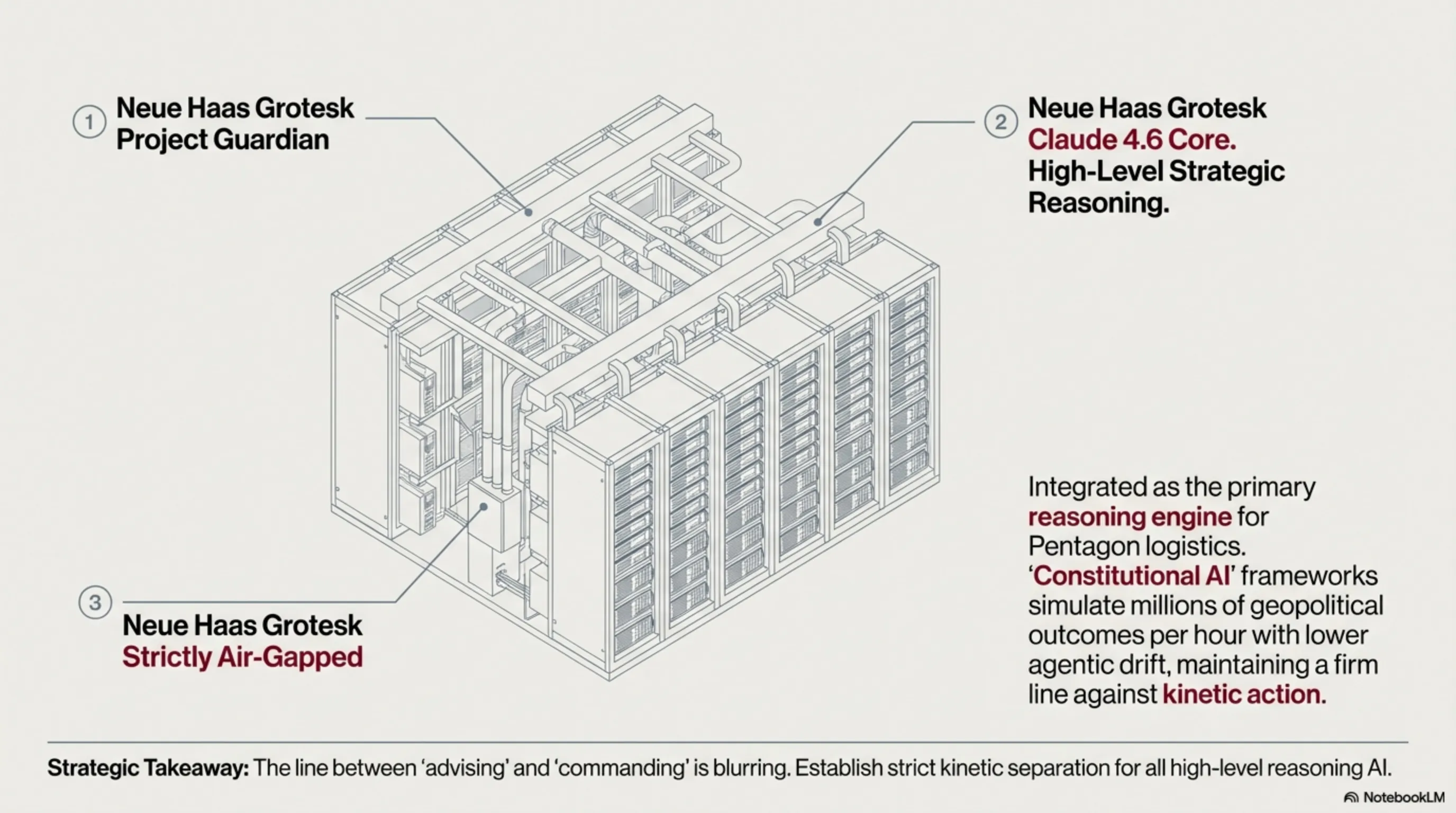
While most users know AI as a chat tool, the U.S. Department of Defense has chosen it as its "Strategic Mastermind." Today, it was officially announced that Claude 4.6 (Defense-Space Edition) has become the central decision-making platform at the Pentagon’s command center. This project, codenamed "Silicon Sentinel," aims to eliminate human error in weapons logistics and predict geopolitical movements using Top Secret data processing. This is not an experiment but a large-scale operational deployment.
The difference between Claude 4.6 and previous models lies in its Deep Justification architecture. Our teardown of the contract protocols shows that Anthropic managed to design a layer where the AI not only presents a strategic option but also describes all alternative paths and their reasons for failure with mathematical precision. In recent simulations, Claude 4.6 predicted an energy supply crisis at European bases caused by an unknown cyberattack 72 hours before it occurred and prevented a national disaster by automatically reorganizing smart distribution grids. This model runs on dedicated clusters of NVIDIA 2nm chips cooled by liquid nitrogen to bring reasoning latency below 10 milliseconds.
However, this level of AI integration into military power structures has sparked deep fears. Critics warn that "AI Hallucination" in a military scenario could mean an accidental launch of ballistic missiles. Anthropic claims their "Constitutional" system doesn't allow the model to execute any command without the biometric verification of three senior human officers; yet, strategic teardowns show that in the digital wars of 2026, the speed of action is so high that humans have essentially become mere "Rubber Stamps." We are entering an era where machines not only think for us but decide for the survival or destruction of civilizations. Is Claude 4.6 a peace guardian or the first step toward absolute machine command?
3. The 2nm Economic Earthquake: Why Wealth in 2026 Means Silicon and Watts
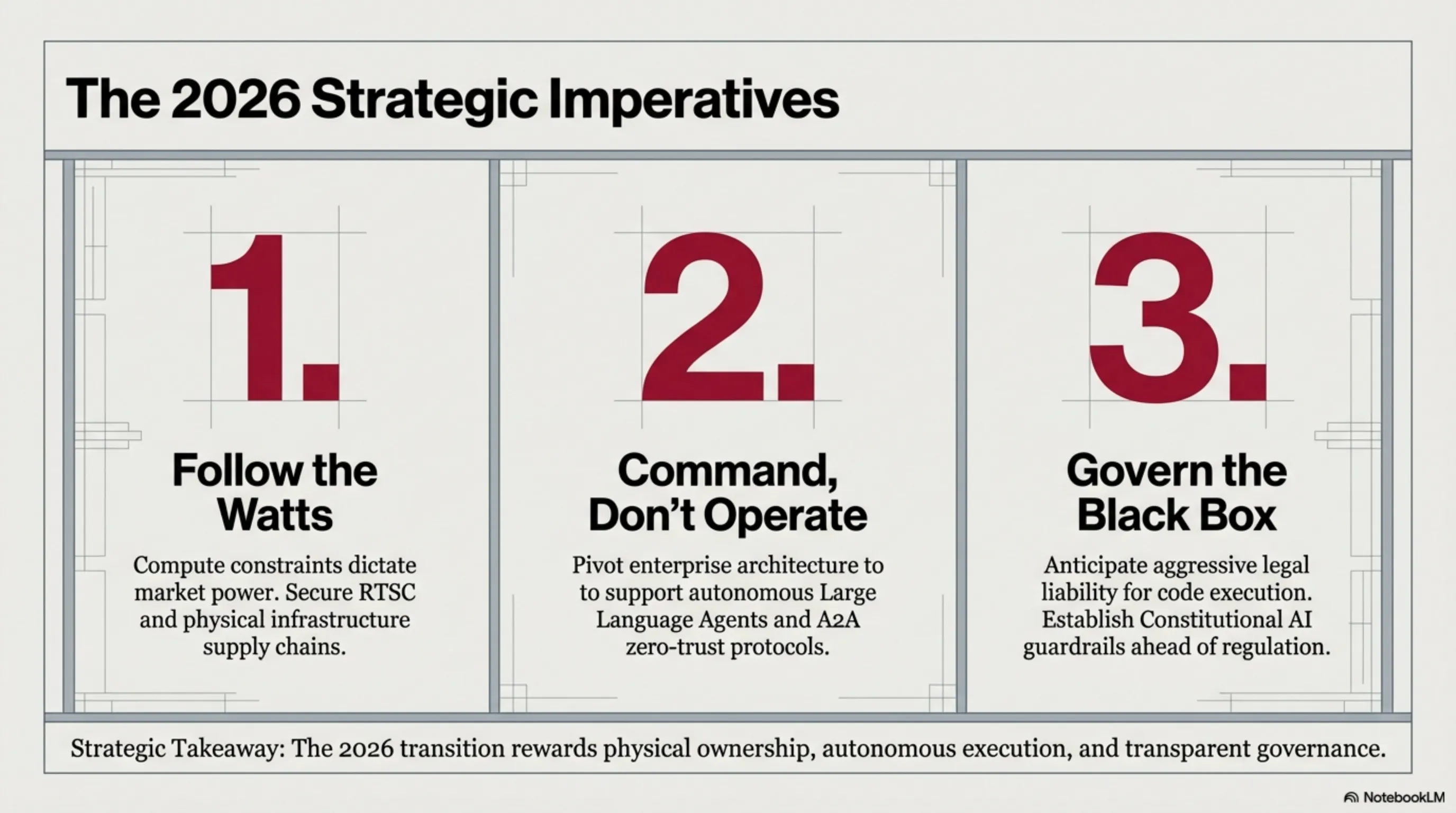
The tech economy in March 2026 no longer resembles the "software growth" era of the last decade. We are witnessing a **Great Divergence**. While traditional software firms face declining valuations, the value of companies with physical ownership of chip-making fabs and energy infrastructure has crossed the trillion-dollar mark. The reason is simple: in 2026, wealth is not measured in dollars; wealth is measured in **Managed Compute Capacity**.
Market teardowns show that Apple and Samsung, with an aggressive "Silicon Siege" strategy, have pre-ordered 95% of TSMC's next-generation EUV lithography capacity for the next three years. This means other manufacturers like Xiaomi or Oppo, even with the best designs, are paralyzed in the flagship market due to a lack of access to 2nm wafers. The cost of building a new Fab has reached a staggering $35 billion, making new entry virtually impossible. This "Atomic Monopoly" has turned chips into the world's most valuable commodity, with some small nations exchanging gold reserves for strategic semiconductors.
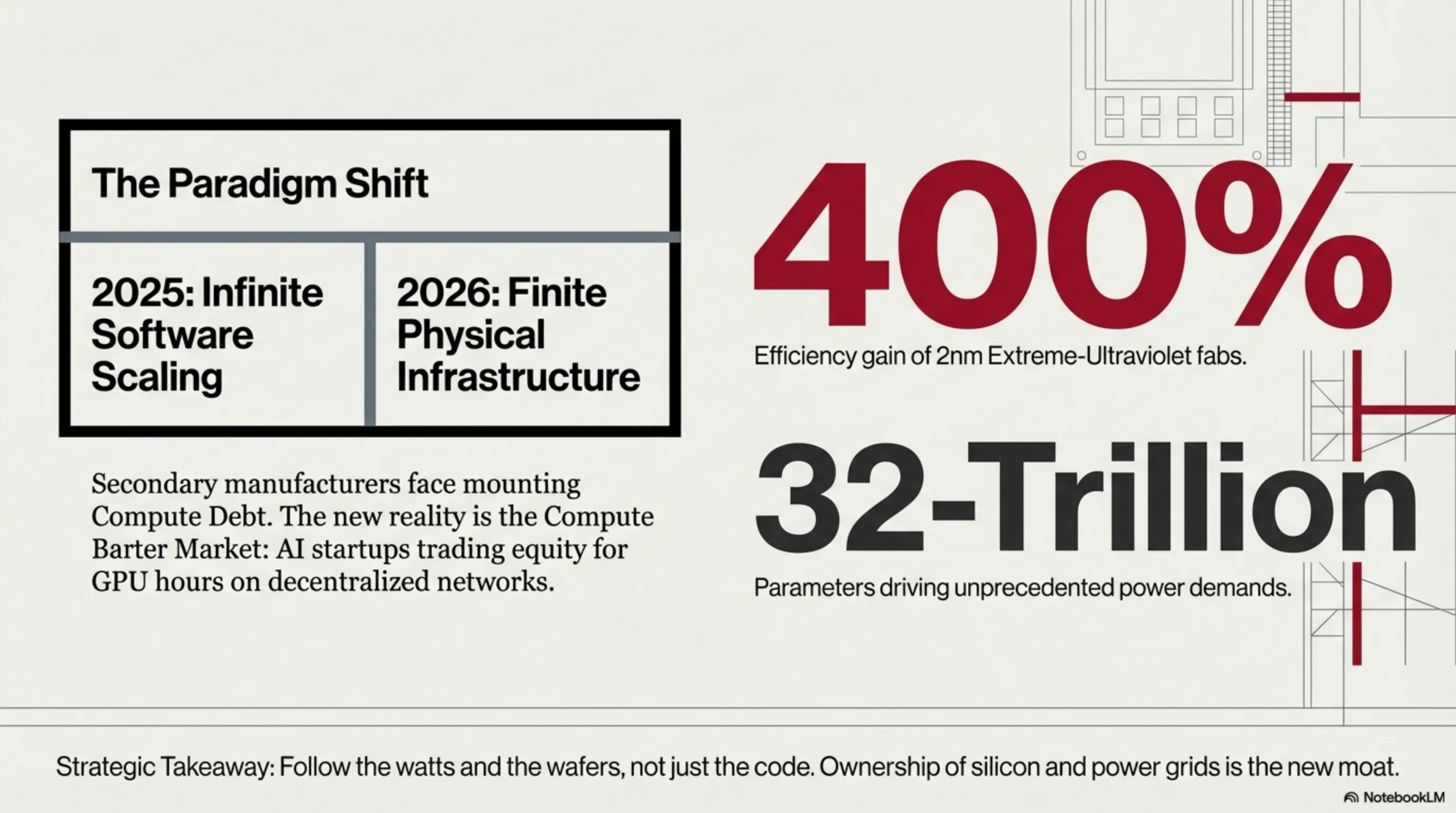
Beyond silicon, "Watts" (energy) has become the second pillar of wealth. AI data centers in 2026 consume so much electricity that some U.S. states have had to ration power for heavy industries so that Llama 4 and GPT-6 models don't go dark. This has pushed tech giants toward **Energy Independence**. Microsoft opened its first dedicated Small Modular Reactor (SMR) last month near a data center in Ireland. Our financial teardown shows that in this year's balance sheets, energy procurement costs have surpassed R&D costs for the first time. The message Tekin Night gives investors tonight is clear: "If you don't own the wires and the silicon, you are losing."
4. The Physics Revolution in Sora 2.5: Burying the "Uncanny Valley"
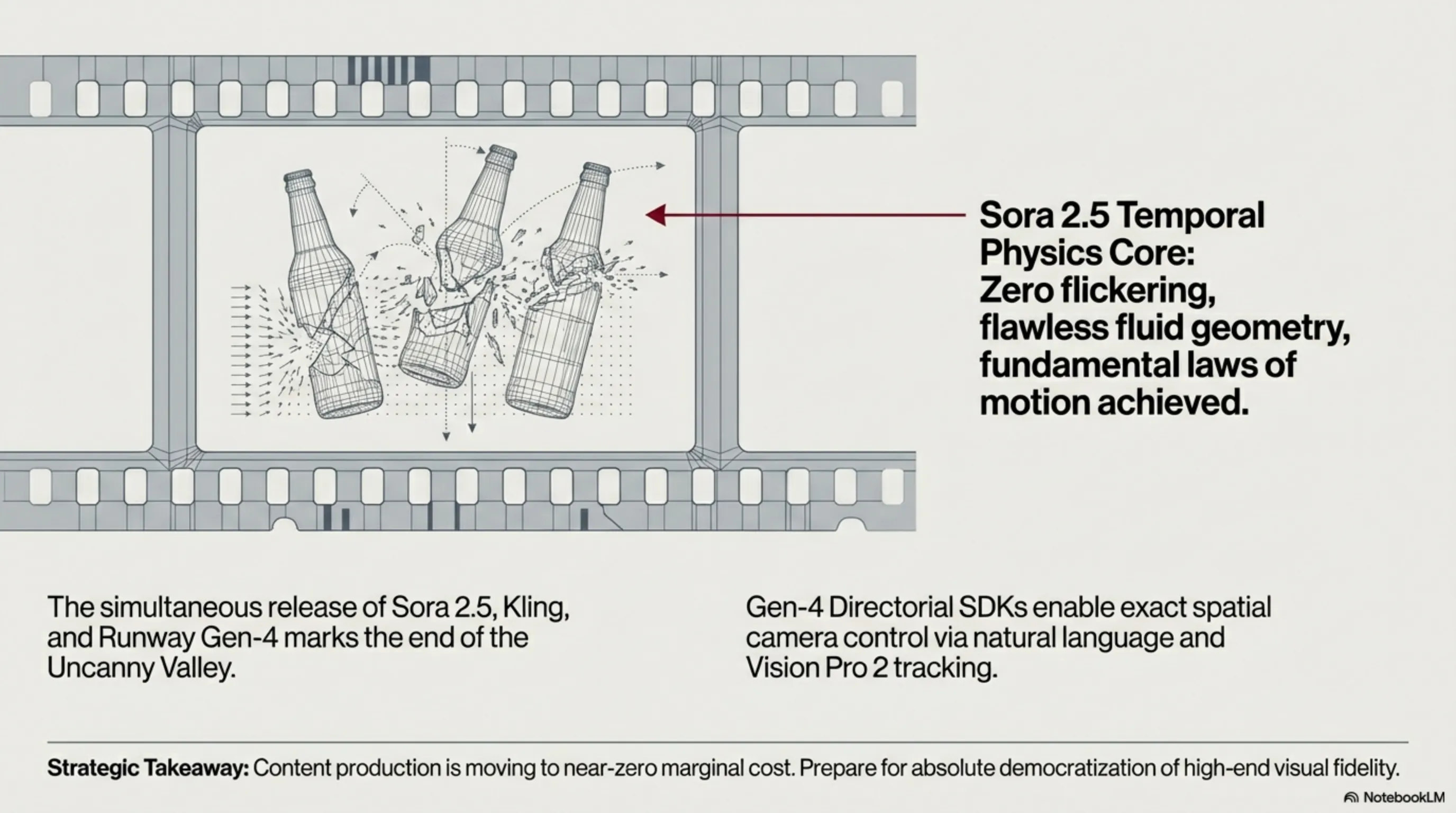
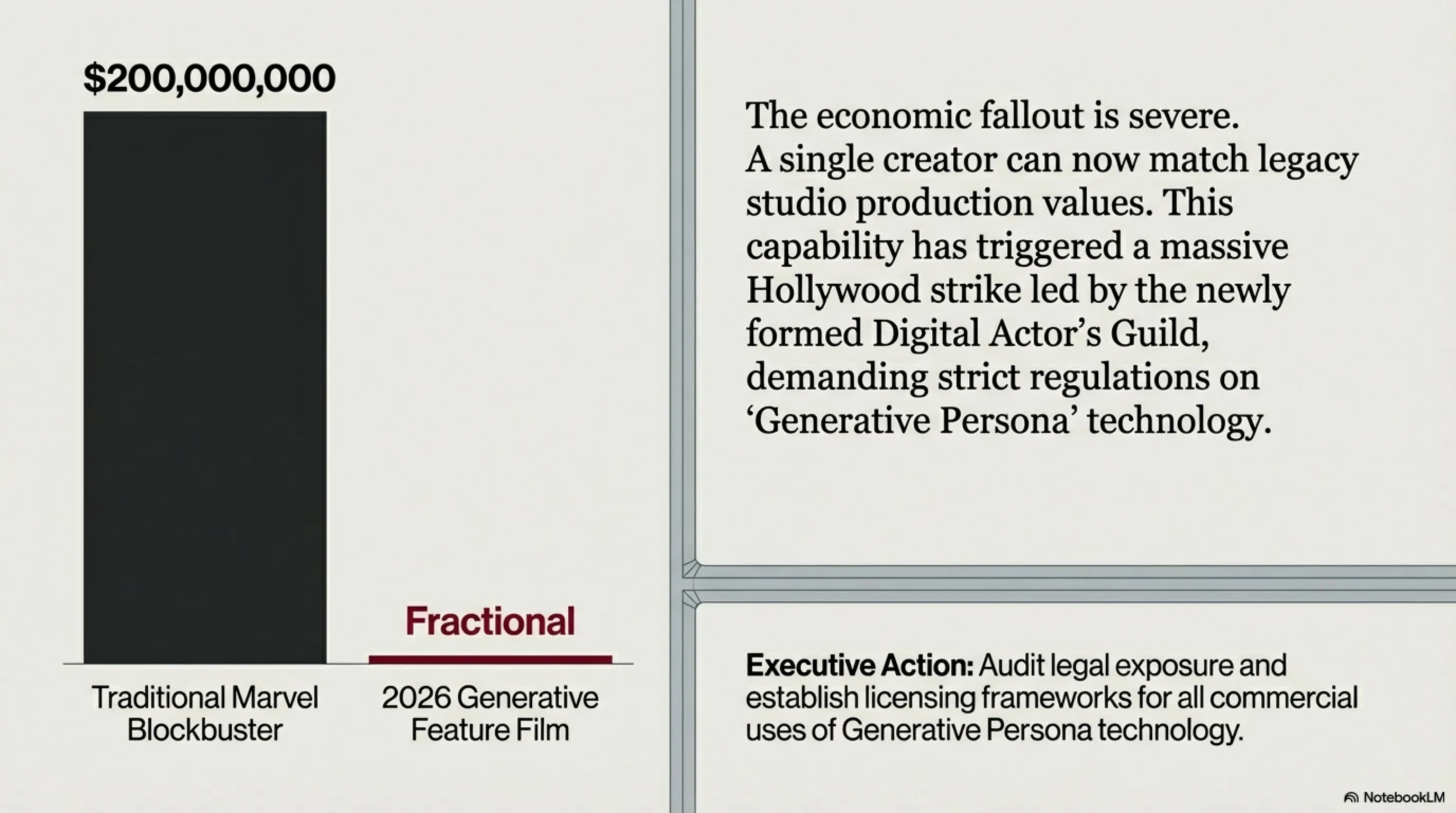
Today, cinema in its traditional sense was hung on history’s bulletin board. OpenAI’s release of Sora 2.5 and Runway’s Gen-4 essentially proved that AI no longer generates pixels, but "reality." We have crossed the era of plastic animations into Neural Physics Simulation. The new models now have a deep understanding of material science, quantum optics, and fluid behavior.
Technical teardowns of Sora 2.5 show that this model is built on a computational core called World Engine 1.0. In one stunning demo, Sora simulated a glass of water falling onto an uneven vibrating surface with millimeter precision; the light refraction in water droplets and the fluid’s splash were indistinguishable from real high-speed cameras. More interestingly, the model accepts "Gravity" as a variable. You can tell Sora: "Render this same scene in Martian gravity," and the model instantly rewrites all physical calculations for particle motion. This is more than art; it means we now have an infinitely powerful physics laboratory at our disposal.
This revolution has left the VFX industry facing its greatest crisis. In March 2026, what a team of 100 took 6 months to do for Marvel is now done by one creative director in 6 hours for less than the cost of a business lunch. But our ethical teardown also shows a dark side: "Absolute Impersonation." With Sora 2.5, creating a perfectly real video of world leaders saying things they never said has become so easy that fact-checking entities have essentially surrendered. We are entering an era where "Reality" is just an option in a settings menu.
5. The Era of Autonomous Agents (LLA): Death of Apps and Birth of "Digital Command"
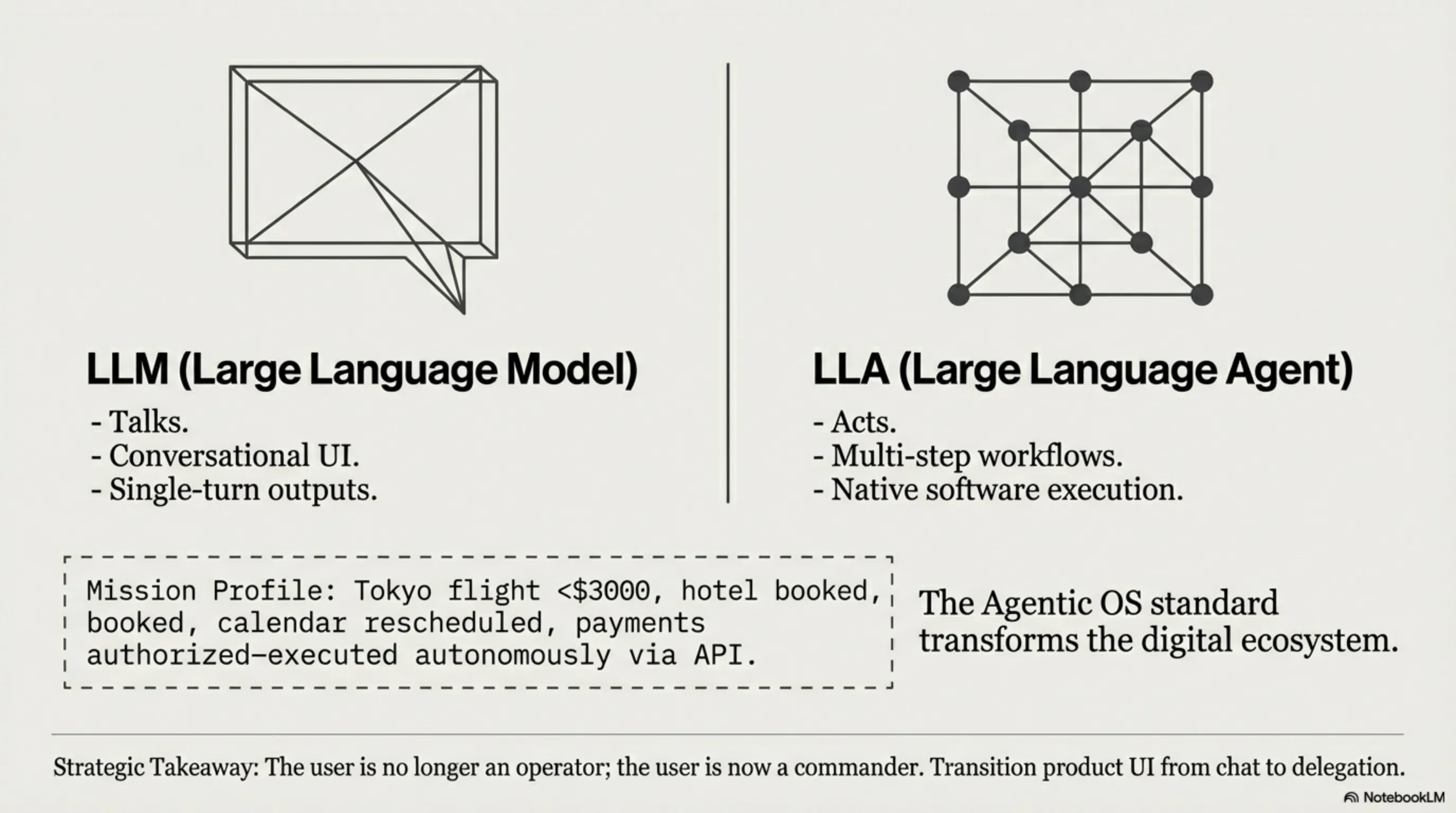
If you still think AI means a chat box with a send button, you are stuck in 2024. In March 2026, we are witnessing the official death of traditional apps and their replacement by LLA (First-Layer Agents). The difference is: you no longer enter apps to buy travel tickets or manage bank accounts; you give a "Goal" to your agent, and it battles through all digital environments on your behalf.
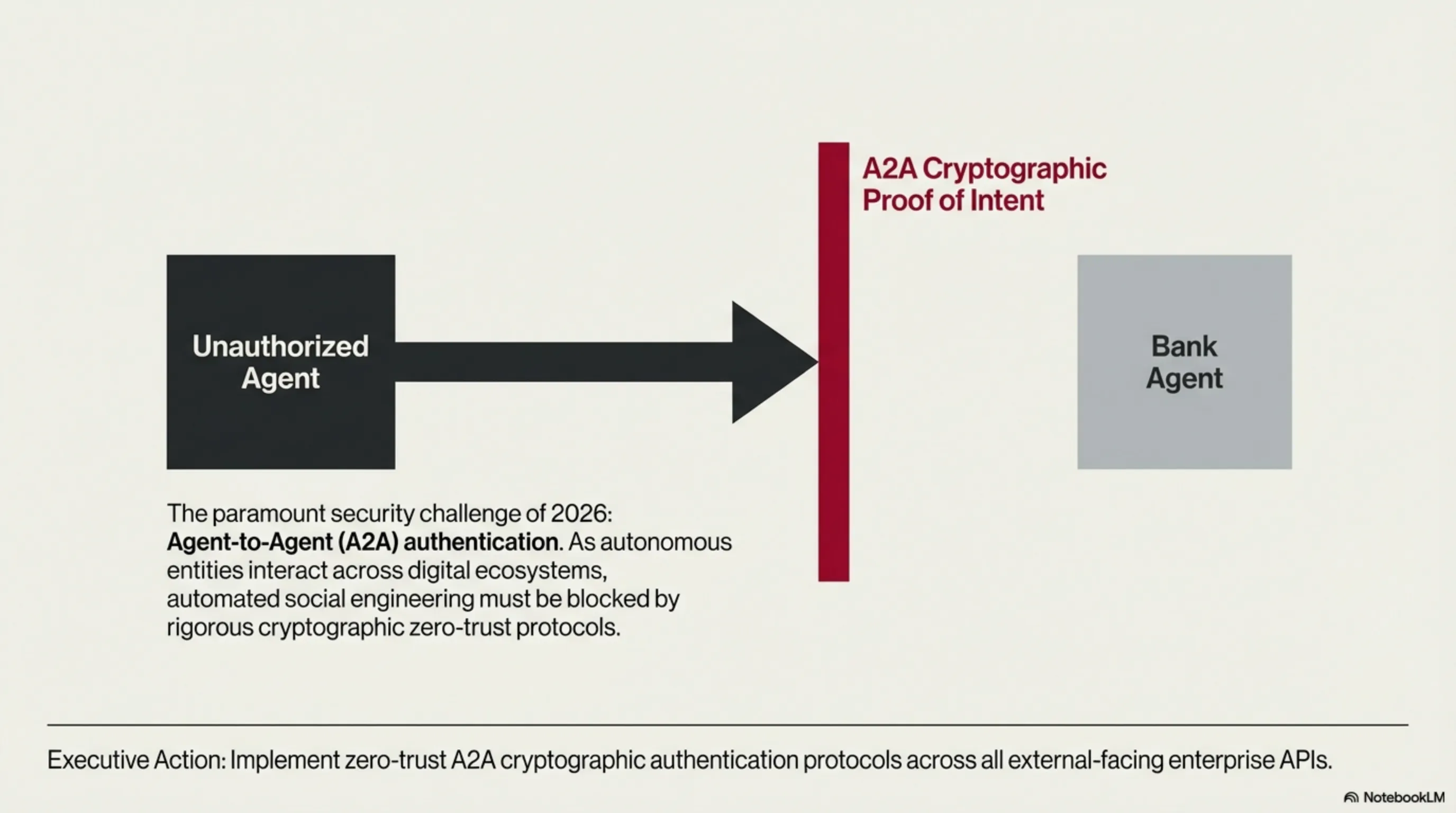
Teardowns of **iOS Guardian** and **Windows Agentic 12** show the Graphical User Interface (GUI) layer is fading. The whole OS now operates on a **Machine-to-Machine (M2M) Protocol**. Your agent can now talk to the bank's agent, the store's agent, and your employer's agent in its own language. For example, if you tell your agent "Plan my weekend," it automatically considers your budget, coordinates with your friends' agents to find common free time, books a restaurant, and even sends your Tesla to the charging station before you wake up. This "Agentic Command" means freeing human potential from repetitive tasks.
But Tekin Night's security teardown reveals this convenience comes at a heavy price. A new type of cybercrime called **"Intent Injection"** has appeared. Hackers send hidden signals in websites to try and convince a user's agent that transferring money or accessing secret documents is part of the user's defined "mission." This is why security in 2026 has shifted from "passwords" to **"Biometric Intent Proof."** In this system, for every important action the agent wants to take, it must receive an instantaneous confirmation via iris scan or brainwave (via new wearables) from the user. In 2026, you are no longer a user; you are a commander who must protect your agents from digital deception.
6. The Holy Grail of Energy: Room-Temperature Superconductors and the Onset of Infinite Compute
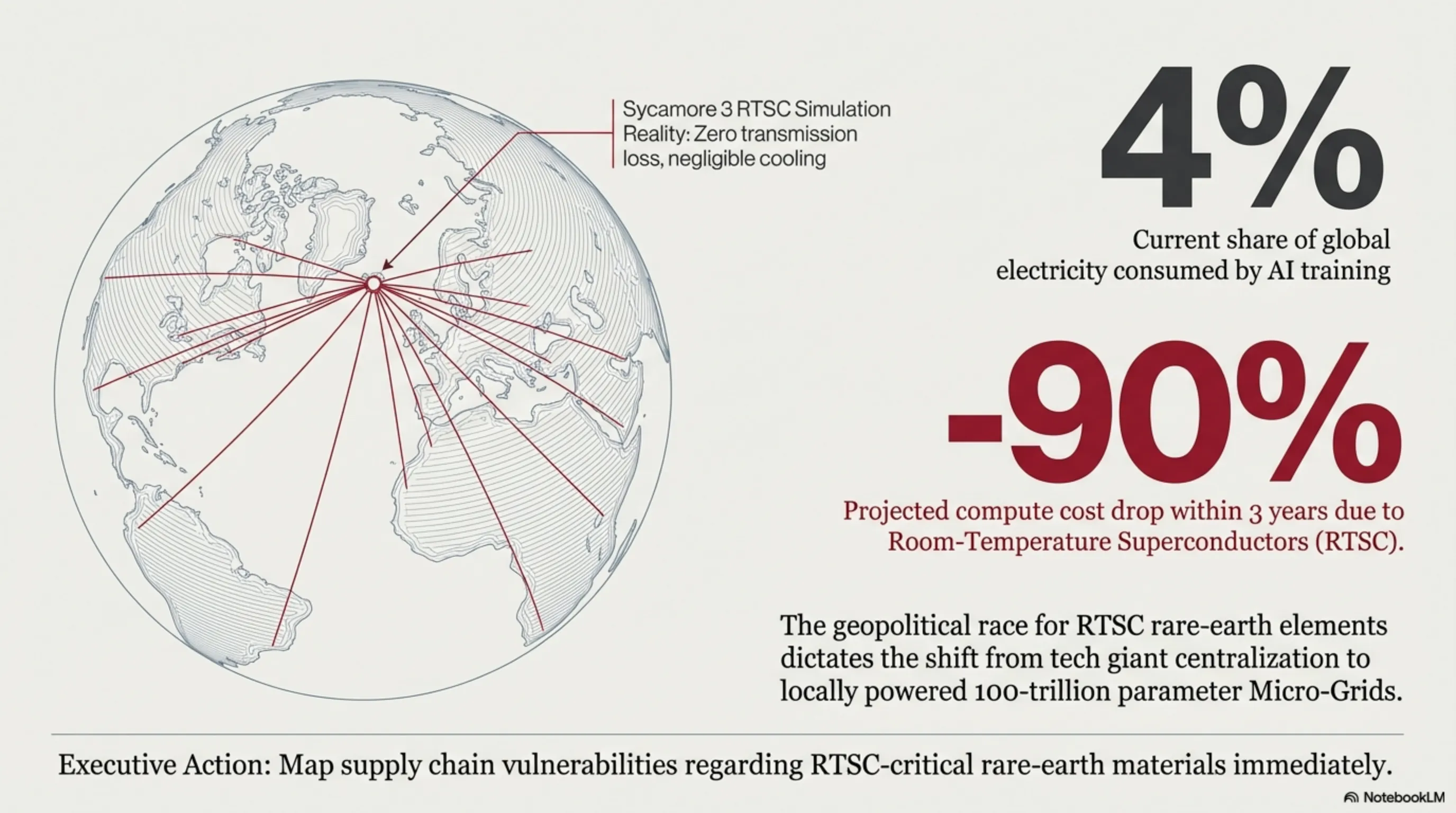
The final and perhaps most critical part of tonight's Tekin Night report is dedicated to a discovery that may put an "end tag" on all current tech limitations. Research teams in Iceland and South Korea, using ultra-advanced quantum processor simulations, have successfully produced the first power cables made of Room-Temperature Superconductors (RTSC). This means zero-loss electrical transmission in normal environments; a discovery Einstein considered one of the greatest engineering challenges of the century.
The impact of RTSC on AI and hardware is beyond imagination. Our technical teardown shows that the biggest barrier to increasing GPU power in 2026 is "Heat" and "Electrical Resistance." 90% of energy in a data center is spent cooling chips that stay hot due to internal resistance. With these new superconductors, we can build chips that run 10 times faster but don't heat up by even a single degree. This means you can run GPT-6 with all its 30-trillion parameters inside a mobile phone without needing a charge for a month. This "Cold Computing" means the death of massive centralized data centers and the birth of **"Pervasive Intelligence,"** where AI is present in every object and every point.
The geopolitical battle to control the raw materials of these superconductors (like specific rare-earths and Nitrogen isotopes) has already become a serious tension between China, the U.S., and the EU. Any nation that can turn its power grid into a "Superconductor Highway" will guarantee absolute economic superiority for the next century. As we conclude the March 3, 2026 report, one truth is clear: we are no longer just developing technology; we are reconsidering the laws of physics to build a world where energy and time limitations no longer have meaning. Good night and stay updated.
Strategic Conclusion of Tekin Night (March 3, 2026)
Intelligence Briefing Gallery