
1. Strategic Pivot: Analyzing Phil Spencer's Official Confirmation of the "Xbox Handheld"
The speculation ends today. In a move that has sent shockwaves through the gaming industry, Phil Spencer, CEO of Microsoft Gaming, dropped the diplomatic act during the official Xbox Podcast. His words were precise and deliberate: "We are absolutely building unique hardware form factors, and a handheld device is a critical part of our future strategy."
Why is this a "Red Alert" moment for the industry?
To understand the gravity of this confirmation, we must look at the battlefield of 2026. Nintendo is poised to dominate with the Switch 2. Valve has successfully carved out the PC enthusiast niche with the Steam Deck 2. Sony is rumored to be re-entering the fray with Project Trinity. Until today, Microsoft was the only giant missing from the pocket-gaming sector, relying solely on cloud streaming via mobile phones.
Spencer’s admission confirms that Microsoft has realized a hard truth: Cloud streaming (xCloud) is not enough. Latency issues and global internet infrastructure gaps (something we know all too well) mean that for a console to be truly global, it needs local compute power.
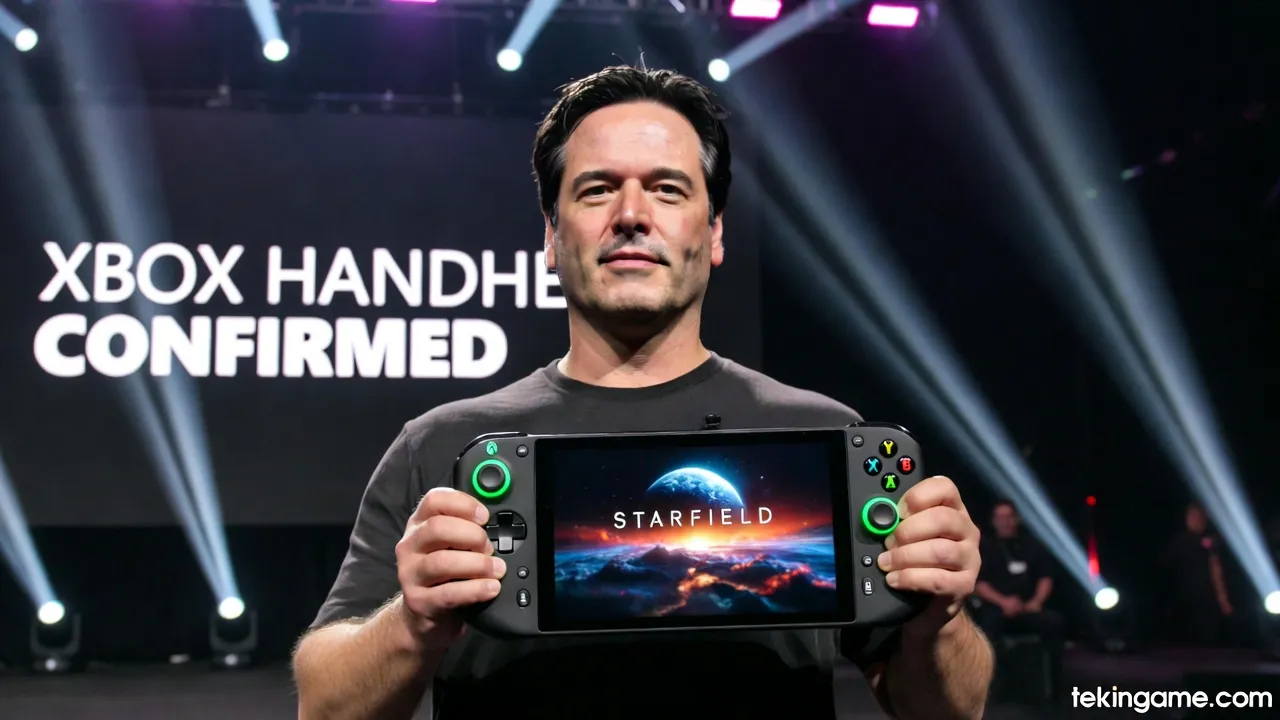
Technical Expectations (TekinGame Analysis):
- The Architecture: Unlike the Steam Deck’s x86 structure, insiders suggest Microsoft is partnering with Qualcomm to utilize a custom ARM-based Snapdragon chipset. This would allow for battery life that rivals Nintendo, rather than the power-hungry Steam Deck.
- The OS: This device will likely debut the "Windows 12 Gaming Edition" we reported on yesterday—a stripped-down, controller-friendly OS that runs Game Pass natively.
- The Ecosystem Play: The "Play Anywhere" initiative will be the killer feature. Imagine pausing Starfield 2 on your Series X living room console and instantly resuming it on your handheld while on the subway, with local save states synced instantly.
2. Project Arrakis Wakes Up: Can OpenAI's GPT-5 Reclaim the Throne from China's DeepSeek?
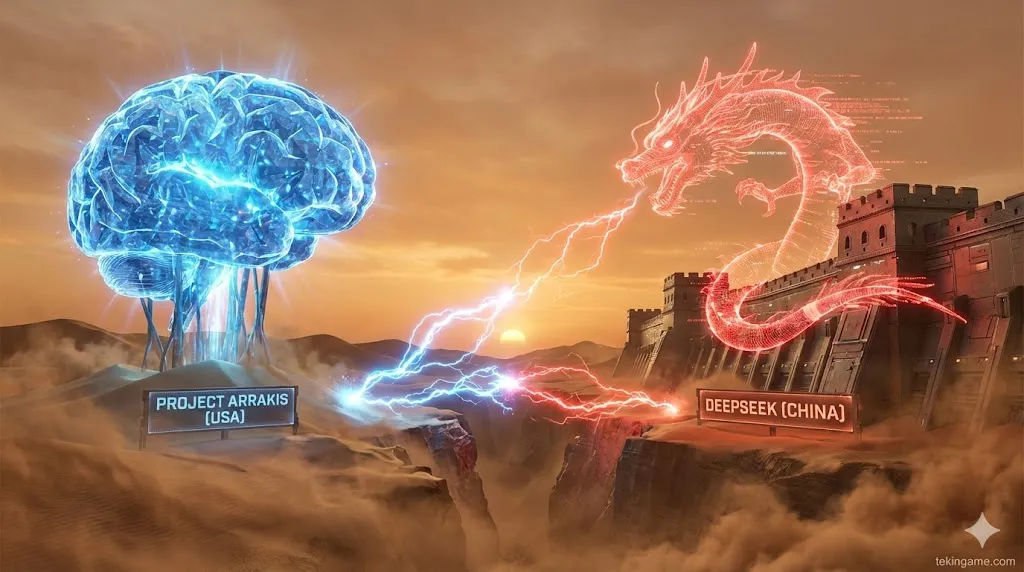
Two days ago, the tech world was humbled. The Chinese open-source model DeepSeek-V4 proved that high-performance AI could be built for a fraction of the cost of American models. Silicon Valley’s stock prices dipped. But the empire is striking back.
Last night, Sam Altman tweeted a phrase that ignited the developer community: "Arrakis is waking up."
Decoding Project Arrakis
The name is a reference to the desert planet in Frank Herbert’s Dune, the only source of "Spice"—a substance that expands human consciousness and enables interstellar travel. The metaphor is arrogant, but accurate. Project Arrakis (suspected to be GPT-5) is rumored to feature architectural breakthroughs that go beyond simple text prediction:
- Multi-Hop Reasoning (System 2 Thinking): Current LLMs guess the next word. Arrakis is designed to "think" before it speaks. For complex math or coding problems, it generates an internal monologue, critiques its own logic, explores multiple paths, and only then outputs the final answer.
- Infinite Context: Early leaks suggest a context window so large it is effectively infinite for human users. You could feed it the entire history of a legal case, and it would recall a footnote from page 4,000 with perfect accuracy.
- Autonomous Agency: Arrakis is not just a chatbot; it is an operator. It is designed to interface with your computer’s OS to perform tasks—booking flights, writing code in your IDE, and sending emails—without constant hand-holding.
If Arrakis delivers on these promises, the victory of DeepSeek on January 20th will be remembered as a brief skirmish before the real heavy artillery arrived.
3. The Death of Short-Form? Instagram "Super Reels" and the 10-Minute Video Strategy
For years, Instagram has been chasing TikTok, obsessed with 15-second viral clips. But today, Meta executed a strategic 180-degree turn. They are no longer looking at TikTok; they are aiming their guns at YouTube.
Effective immediately, the "Super Reels" feature has rolled out to select creators in the US and EU, allowing for single-file video uploads of up to 10 minutes. This is not just a tweak; it is a fundamental shift in the platform's "Economy of Attention."
Why the shift to Long-Form?
- Ad Revenue (Monetization): You cannot place a mid-roll ad in a 30-second video. But in a 10-minute video, you can. This allows Meta to offer higher revenue shares to creators, tempting them away from YouTube.
- TikTok Fatigue: Data suggests that Gen Z and Alpha are burning out on dopamine-heavy, short-form content. They are seeking "depth"—travel vlogs, detailed tech reviews, and educational content.
- Search Engine Optimization (SEO): Longer videos mean more spoken words, which means more metadata for Instagram’s algorithms to index. Meta wants Instagram to become a search engine for video, challenging Google directly.
4. Silicon Autopsy: Nvidia RTX 5080, Blackwell Architecture, and GDDR7 Memory
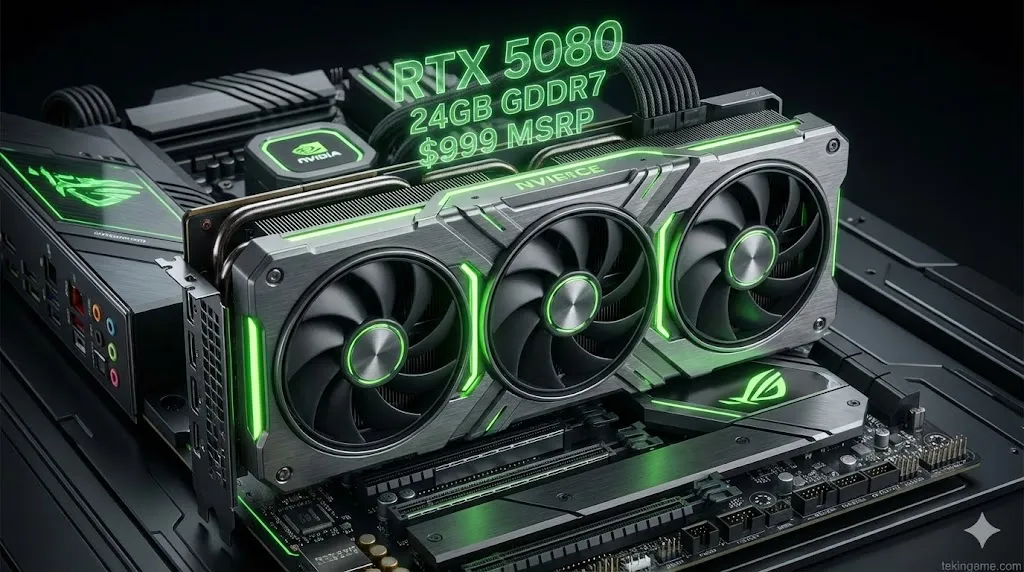
Nvidia knows that the pricing of the RTX 40-series alienated a large portion of its user base. New leaks from board partners (ASUS, MSI) suggest that the upcoming RTX 5080 is positioned to be the "People's Champion" of the Blackwell generation.

The Technical Breakdown:
- Architecture: Built on the Blackwell GB203 die using TSMC’s 3nm process. This node shrink allows for higher clock speeds with better thermal efficiency.
- Memory Upgrade: The jump to 24GB of GDDR7 memory is critical. GDDR7 offers a massive increase in memory bandwidth (up to 32 Gbps per pin). This eliminates the "texture pop-in" bottlenecks seen in 4K gaming on current cards.
- Performance vs. Price: Early benchmarks indicate the RTX 5080 is 15-20% faster than the current RTX 4090 in rasterization, and up to 40% faster in Ray Tracing tasks.
- The Price Tag: The leaked MSRP is $999. If true, this aggressive pricing is designed to destroy AMD's high-end market share and collapse the resale value of the RTX 4090.
5. Security Alert: The WhatsApp Synchronization Bug Exposing Your Edited Messages
WhatsApp prides itself on End-to-End Encryption, but a new bug discovered in Beta version 2.26.3 has exposed a flaw in how the app handles "Message Synchronization" across unstable networks.
The Anatomy of the Glitch:
When you "Edit" a sent message, WhatsApp sends a specific "correction packet" to the recipient's device to overwrite the original text. However, the new bug occurs when the recipient has high latency or packet loss (a scenario familiar to many of us).
In this specific state, the recipient's phone receives and displays the original (unedited) message in the notification tray. The "correction packet" arrives too late or is dropped by the background process. This means the recipient reads your typo, your angry outburst, or your accidental leak, even though your screen shows the "Edited" version. Tekin Advisory: Until a patch is confirmed, do not trust the Edit button. Use "Delete for Everyone" to ensure the message is scrubbed from the server and the recipient's device.
6. Samsung's Power Play: Technical Analysis of the S26 Ultra's 200x AI Zoom
With only 10 days left until the Unpacked event, Samsung has decided to stop hiding its cards. The official camera samples released today, showcasing 200x Zoom capabilities, have ignited a fierce debate in photography circles.
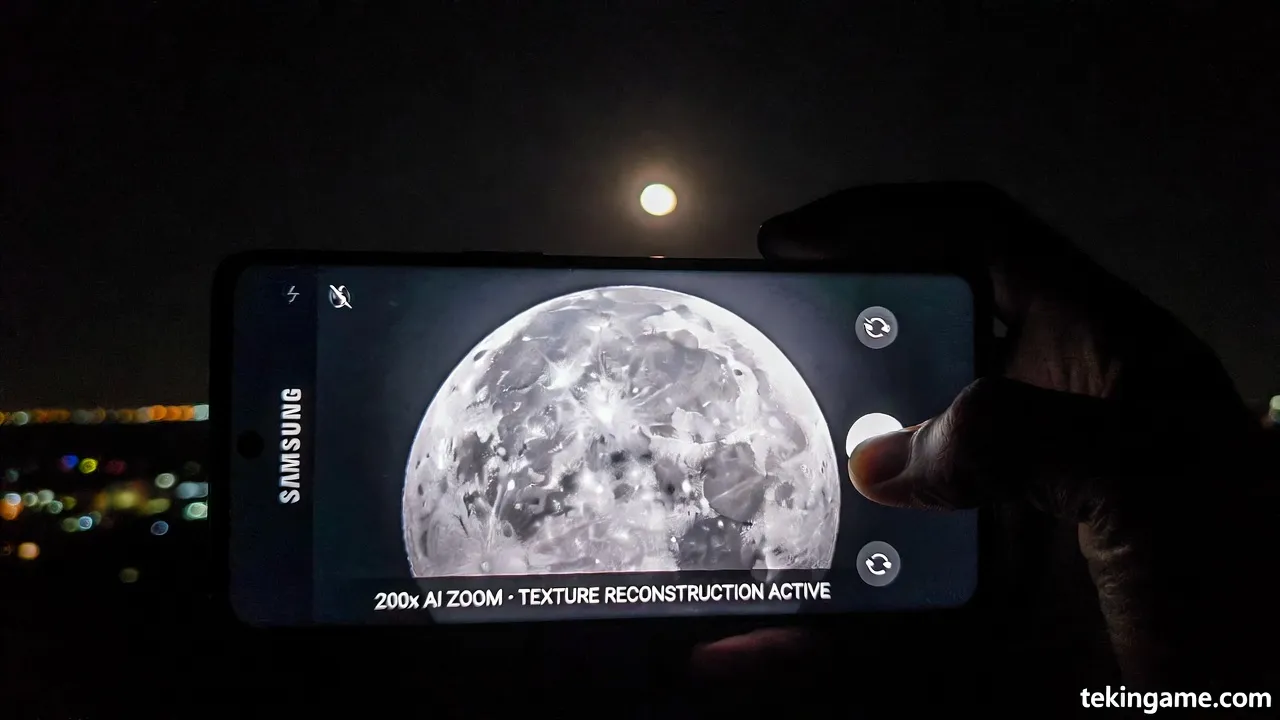
Magic or Fabrication? The "AI Photon Logic" Engine
Previously, digital zoom meant "cropping and blurring." Samsung's S26 Ultra uses a hybrid approach of new hardware (a larger periscope lens) and aggressive software (Galaxy AI).
- Texture Reconstruction: When you zoom into a distant building, the AI recognizes the material (e.g., concrete, brick) and reconstructs the lost texture detail based on a database of millions of images. It is painting in the missing pixels.
- Predictive OIS: The biggest challenge at 200x zoom is hand shake. The S26 uses AI to predict your hand movements milliseconds before they happen, shifting the lens element in the opposite direction to lock the frame.
Purists argue this isn't "photography," but "computational imagery." However, for the average user standing in the back row of a concert, the ability to capture a crisp image of the performer is all that matters—and Samsung seems to have perfected it.
🛑 Command Center: Final Analysis
Today, January 23, marks a turning point. We are seeing hardware giants like Microsoft pivoting to handhelds, and software giants like OpenAI pushing the boundaries of machine reasoning.
At TekinGame, we are committed to delivering this level of deep analysis, regardless of our location or infrastructure challenges. We are moving to Dubai to ensure we never miss a beat again.
💬 Which development changes your 2026 plans? The Xbox Handheld or the power of Project Arrakis? Let us know in the comments.