1. Introduction: When the Dust Settles
It is Sunday afternoon, December 14, 2025. The glitz of the red carpet has faded, the acceptance speeches are over, and the initial wave of social media hot takes has begun to cool.
Sundays in the tech world are for analysis. It is the time when engineers, market analysts, and hardcore enthusiasts stop asking "Who won?" and start asking "How does this work?" and "What does this cost?"
This weekend left us with three distinct narratives that will define the rest of December: a hardware leak that changes the handheld hierarchy, a cultural clash that was settled by raw player data, and a looming economic threat for PC gamers. In today's briefing, we cut through the noise and look at the numbers.
2. Hardware Autopsy: Dissecting the Xbox Handheld Display
Late Saturday, leaks emerged regarding a partnership between Microsoft and Samsung Display. While the headlines shouted "OLED," the technical details buried in the Korean reports point to something much more significant: Tandem Structure.
2.1. Understanding "Tandem OLED" Architecture
Standard OLED panels (like those found in the original Switch OLED or older phones) use a single layer of organic light-emitting material. While beautiful, they suffer from two flaws: they struggle to get very bright without overheating, and they degrade over time (burn-in).
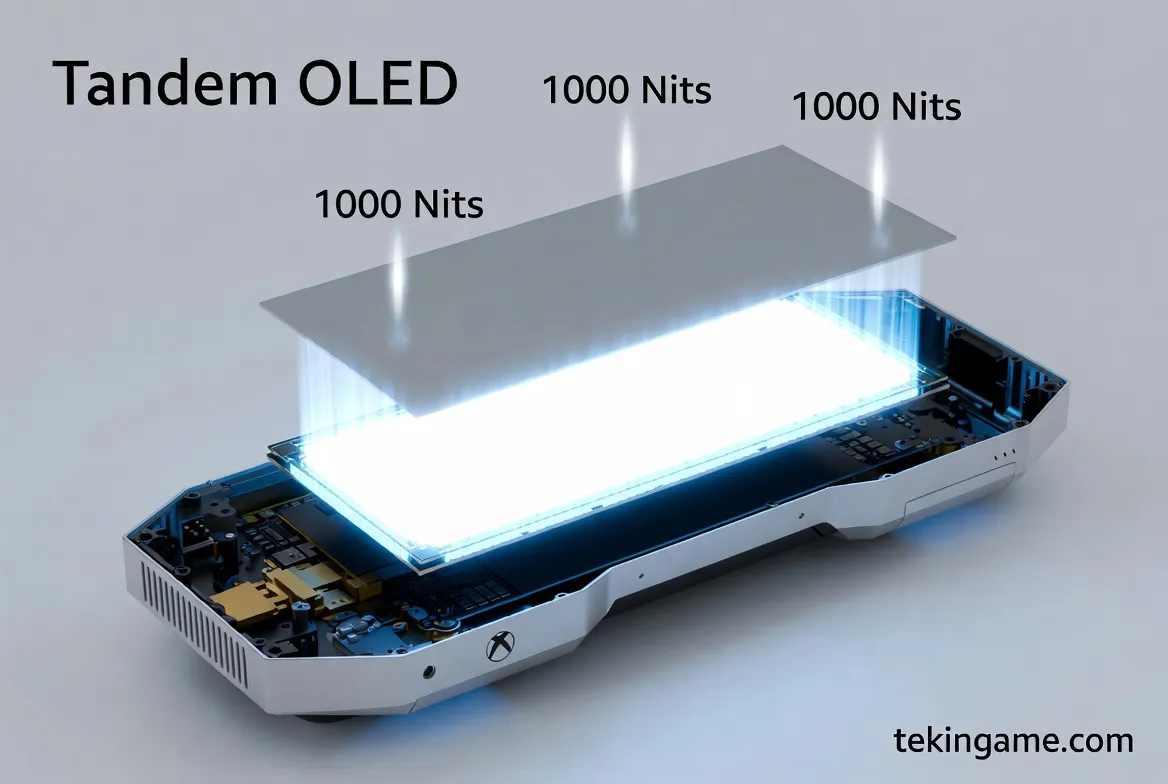
The leaked specs for the Xbox Handheld indicate a Two-Stack Tandem OLED. This technology, popularized by Apple's M4 iPad Pro earlier this year, literally stacks two emissive layers on top of each other.
The Engineering Implication: By splitting the electrical load across two layers, the screen can achieve higher brightness at lower voltage. For a handheld device dependent on battery life, this is the holy grail. It means Microsoft isn't just buying "off-the-shelf" phone screens; they are commissioning premium, automotive-grade panels.
2.2. The 1000 Nit Benchmark
The leak cites a sustained full-screen brightness of 1000 nits (with peak HDR highlights likely higher). To put this in perspective:
The biggest complaint about current handhelds is that they become invisible mirrors when used outside or on a bright train. If the Xbox Handheld hits 1000 nits sustained, it becomes the first true "anywhere" console. You could play Halo Infinite at the beach, and the blacks would still look inky while the highlights pierce through the ambient light.
2.3. Why VRR is More Critical than Resolution
The report also confirms 120Hz LTPO with VRR (Variable Refresh Rate).
In the handheld space, VRR is not a luxury; it is a necessity. Next-gen games like GTA VI or Fable are unlikely to run at a locked 60fps on a portable chip. They will likely hover in the 40-50fps range.
Without VRR (like on the Steam Deck), 45fps feels stuttery and introduces screen tearing. With VRR, the screen matches the GPU's output instantly. A game running at 45fps with VRR feels significantly smoother than a game running at 50fps without it. This feature alone suggests the Xbox Handheld will offer a perceived fluidity that competitors cannot match.
3. Gaming Reality Check: Data vs. Narrative
3.1. SteamDB Analysis
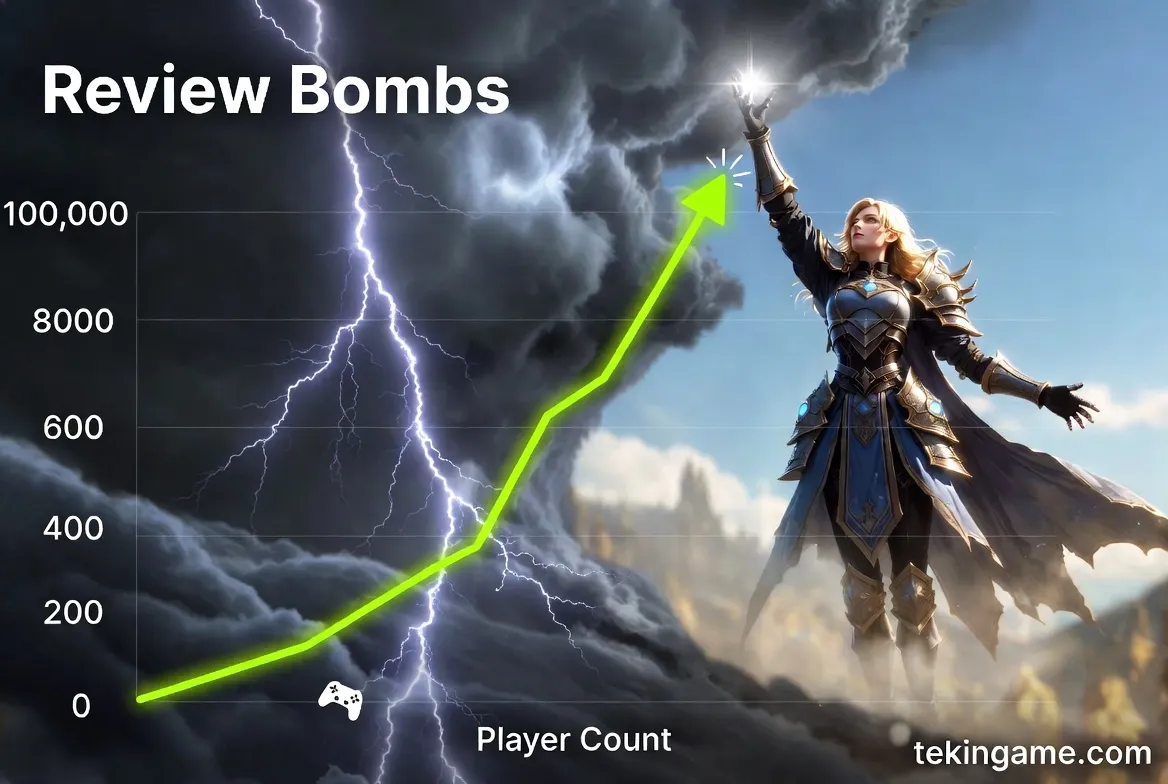
Yesterday, we reported on the "Review Bombing" campaign against Clair Obscur: Expedition 33, fueled by angry fans of other franchises. Social media would have you believe the game is rejected by the masses.
However, SteamDB (Steam Database) tells the true story.
As of 12:00 PM today, the concurrent player count for Clair Obscur peaked at 850,000 players. This is a staggering number for a turn-based RPG, rivaling the launch numbers of Elden Ring or Baldur's Gate 3.
The Takeaway: The "Silent Majority" of gamers do not care about Twitter drama. They saw a game with great reviews and deep mechanics, and they bought it. The review score is already recovering as legitimate players log hours and leave positive ratings.
3.2. The Triumph of Mechanics
This success cements a trend we have watched develop since 2023. The era of the "Interactive Movie"—games where you walk slowly while characters talk at you—is waning. Players are voting with their wallets for Mechanical Depth.
Clair Obscur requires strategy, timing, and build optimization. Its success proves that the mainstream audience is smarter and more demanding than publishers often assume. We expect this to influence the greenlight process for future AAA titles, moving budgets away from celebrity voice actors and toward gameplay designers.
4. CES 2026 Forecast: The Nvidia Price Shock
4.1. The "AI Tax" on Gaming Silicon
We are weeks away from CES in Las Vegas, where Nvidia is expected to reveal its mid-cycle refresh (likely the RTX 50-series Super cards). However, supply chain rumors from Taiwan (TSMC) paint a grim picture for PC builders.
The issue is Allocation.
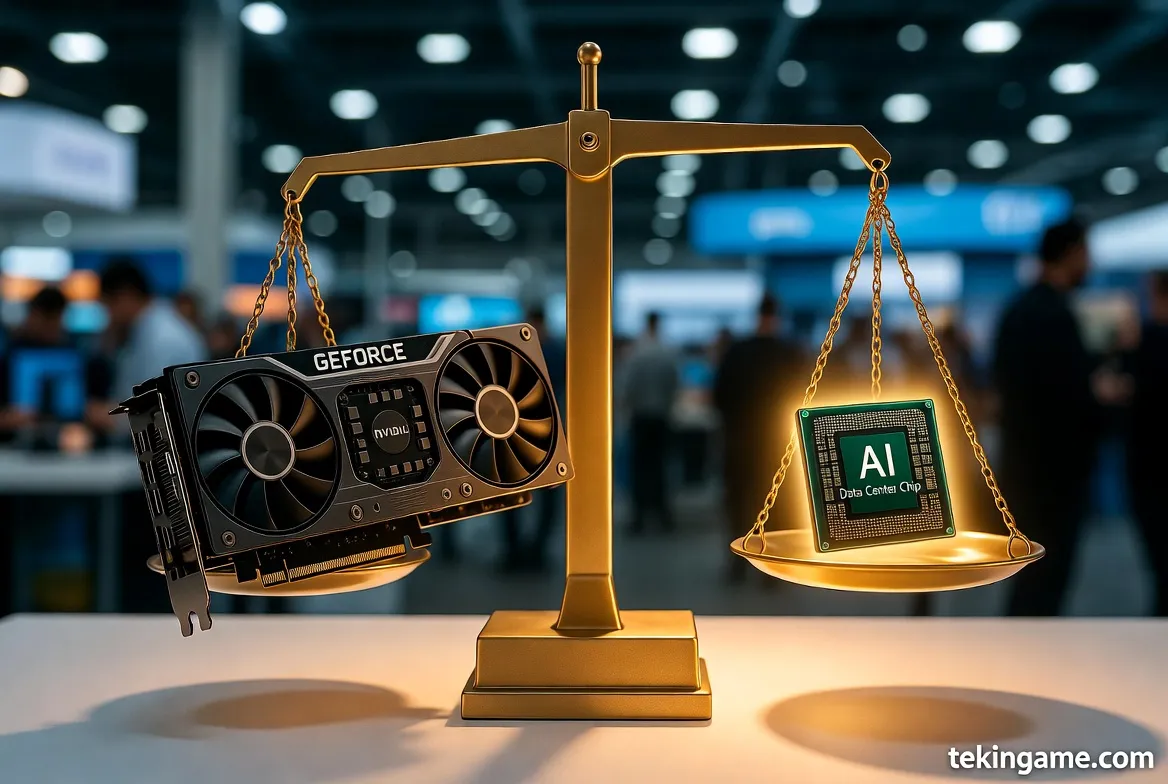
Nvidia makes significantly more profit selling H200 or Blackwell AI chips to data centers than it does selling GeForce cards to gamers. Every silicon wafer allocated to a gaming GPU is a wafer not allocated to an AI GPU.
This opportunity cost is creating what analysts are calling the "AI Tax." To justify making gaming cards, Nvidia must raise prices to offset the "lost" potential revenue from the AI sector.
4.2. Rumor: RTX 5070 Super Pricing
Legacy pricing models suggested the RTX 5070 Super would launch at $599. New insider reports today suggest a target MSRP of $699 or even $749.
If true, this prices the "mid-range" PC market out of reach for many.
Strategic Consequence: This creates a massive opening for consoles. If a PC GPU alone costs $700, a complete $499 Xbox Handheld or PS5 Pro becomes the only logical choice for the average consumer. The "PC Master Race" is becoming an exclusive luxury club, shrinking the total addressable market for PC gaming.
5. The Post-Security Crisis Landscape
5.1. GitHub's Clean-Up
Following Saturday evening's panic regarding malicious AI agents injecting code into repositories, GitHub has stabilized the situation.
Their security team announced this morning that 94% of identified malicious packages have been purged. They have also introduced a new "Human-in-the-Loop" verification step for Copilot Workspace when it attempts to modify critical dependency files (like `package.json`). It is a band-aid, but it stops the bleeding.
5.2. The Shift to "Local" AI
An interesting trend emerging from this weekend's chaos is the sudden spike in downloads for Local LLM tools like Ollama and LM Studio.
Developers are realizing that cloud-based agents are a security liability. By running smaller, specialized models (like Llama 4-8B) locally on their own machines (utilizing those NPUs we talked about), they can get coding assistance without exposing their codebase to the internet. We predict 2026 will be the year of "Sovereign AI"—intelligence that lives entirely on your own hardware.
6. Conclusion & The Week Ahead
As we wrap up this Sunday analysis, the landscape for the coming week is clear:

- Hardware: The bar has been raised. If the Xbox Handheld specs are real, the Steam Deck 2 needs to be announced sooner rather than later.
- Software: Gameplay is king. Publishers pushing "cinematic experiences" without depth are losing ground.
- Economy: PC gaming is facing an inflation crisis driven by the AI boom.
Stay tuned to Tekin Plus for the facts, not just the hype.