
1. Starship V3 and the Mechazilla Waltz: Status Report 2026
The year 2025 will go down in history as the year SpaceX mastered the "catch." The successful recovery of the Super Heavy booster by the Mechazilla tower arms fundamentally changed the economics of spaceflight. Now, in early 2026, the focus has shifted entirely to the upper stage: the Starship itself.
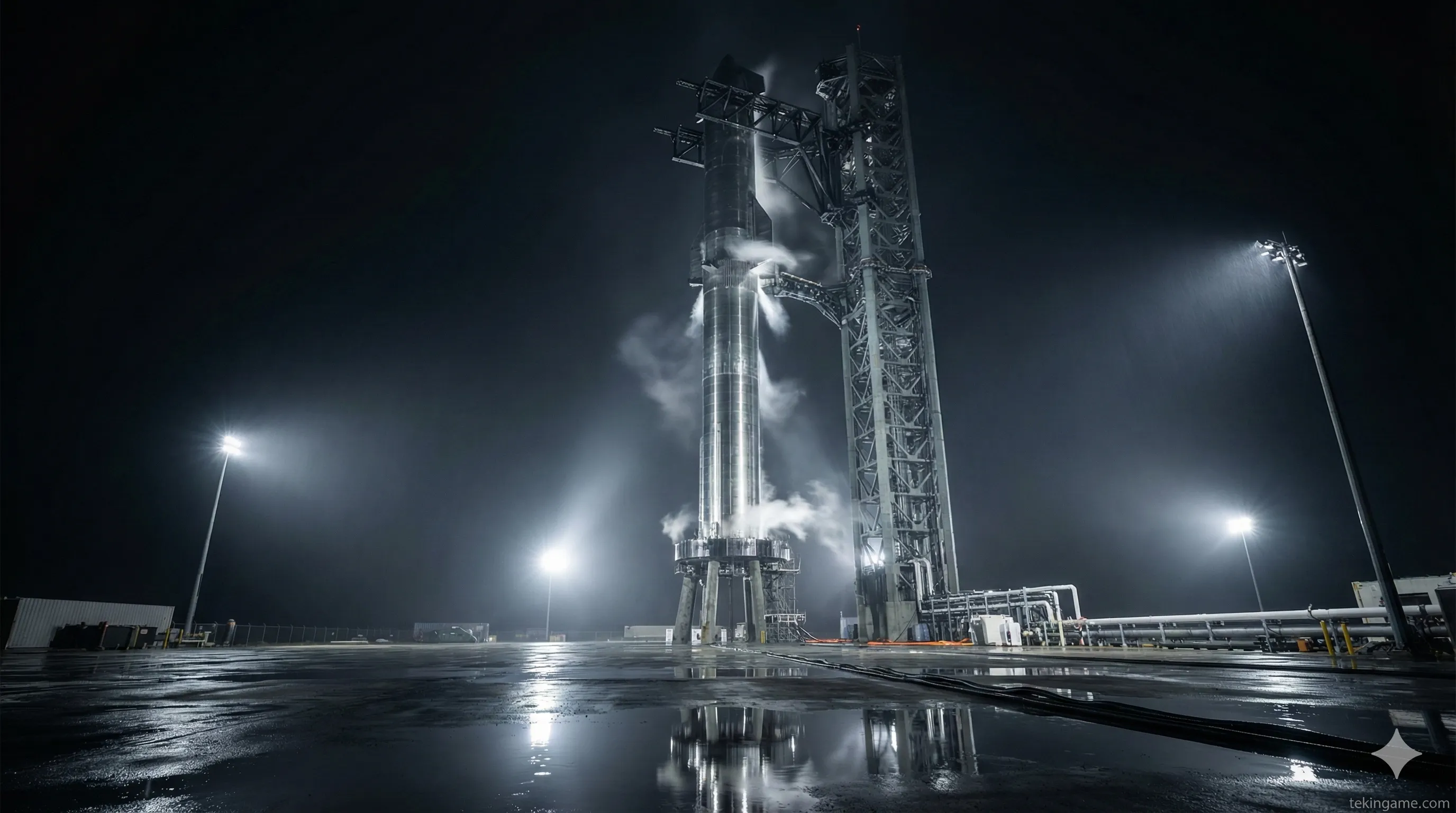
The current iteration sitting on the pad at Boca Chica is the Starship V3. Standing significantly taller than its predecessors, this leviathan is designed to push the payload capacity well beyond 100 tons to Mars. The engineering refinements are palpable. The thermal protection system (TPS) tiles are now more uniform and resilient, designed to withstand the punishment of entering the Martian atmosphere at interplanetary velocities.
Perhaps the most critical upgrade is in the propulsion. The Raptor 3 engines, now stripped of the heavy heat shielding required by previous generations due to integral cooling channels, are lighter and more powerful. For the TekinGame audience who loves specs: we are looking at a specific impulse (Isp) that is pushing the theoretical limits of methalox (methane-oxygen) combustion. The goal for this year is perfecting orbital refuelling—the "tanker" flights that are the absolute prerequisite for any Mars mission. Without the ability to refill the Starship in Low Earth Orbit (LEO), the ship arrives at Mars as an empty tin can.
2. The Musk Mandate: Updated Launch Windows (2029 vs. 2031)
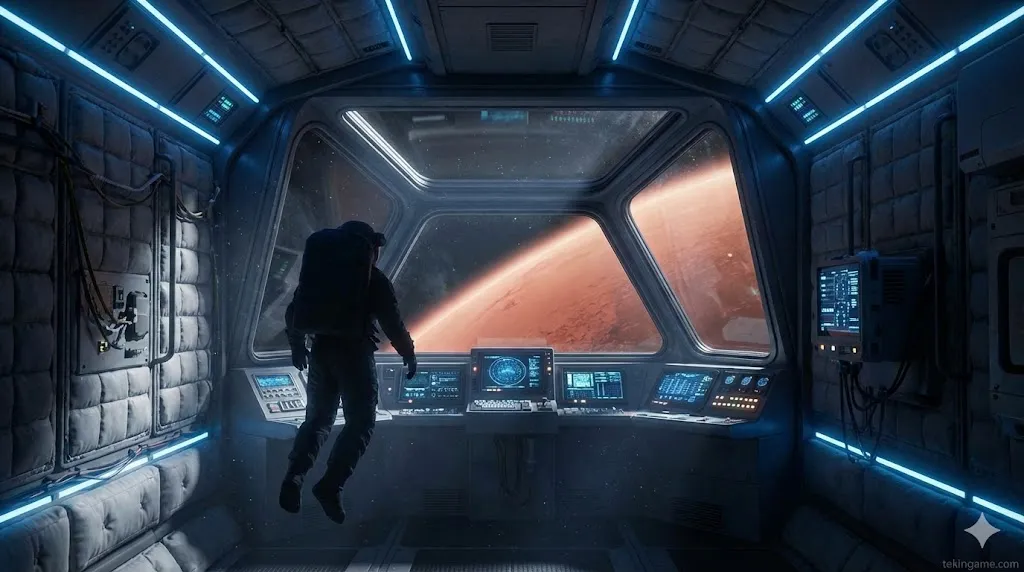
Celestial mechanics are unforgiving. Earth and Mars only align for an energy-efficient transfer (the Hohmann Transfer Window) roughly every 26 months. Missing a window means a two-year delay. Elon Musk’s latest update reflects a maturation of strategy, moving away from "aspirational" dates to "engineering-probable" dates.
The Updated Roadmap:
- Late 2027 (The Cargo Window): This is the "Pathfinder" mission. A fleet of uncrewed Starships will launch to verify the descent profile and land autonomous mining rovers, power generation units (massive solar arrays), and the initial fuel plant precursors. Success here is non-negotiable.
- 2029 (The Aggressive Target): If, and only if, the 2027 cargo landings are 100% successful and the return-fuel synthesis is automated, the first humans could launch in this window.
- 2031 (The Realistic Target): Given the complexities of human life support for a 6-month voyage, 2031 is emerging as the "Golden Window." This allows for a synchronized arrival of infrastructure and crew.
Musk has been starkly honest about the risks: "The first journey is not a vacation. It is dangerous, cramped, and you might not come back. But it is glorious."
3. Shedding the Michelin Man: The Rise of MCP "Second Skin" Suits
For decades, space suits (EVA suits) have been essentially human-shaped balloons. Gas-pressurized suits are stiff, heavy, and exhausting to work in. Fighting the internal pressure of the suit just to bend your fingers is a workout. On the Moon, where you might walk a few hours, this is manageable. On Mars, where colonists need to build a city 12 hours a day, it is a dealbreaker.
Enter the Mechanical Counter-Pressure (MCP) Suit, often dubbed the "Bio-Suit."
Instead of using gas to keep your fluids from boiling in a vacuum, MCP suits use tight, elastic materials to apply mechanical pressure directly to the skin. This technology, which SpaceX is aggressively researching alongside partners like MIT, is a paradigm shift.
Why MCP is a Game Changer for Mars:
- Mobility: Without the balloon effect, mobility is almost natural. A colonist can kneel, climb, and repair machinery with the dexterity of a mechanic on Earth.
- Safety (The Rip Factor): In a gas suit, a puncture is a catastrophic decompression event. In an MCP suit, a tear results in localized bruising (hickeys) because the rest of the suit maintains pressure. It is easily patchable in the field.
- Weight: By removing the complex air circulation ducts required for cooling a gas bubble, the suit becomes significantly lighter—crucial in Mars' 38% gravity where every kilogram counts.
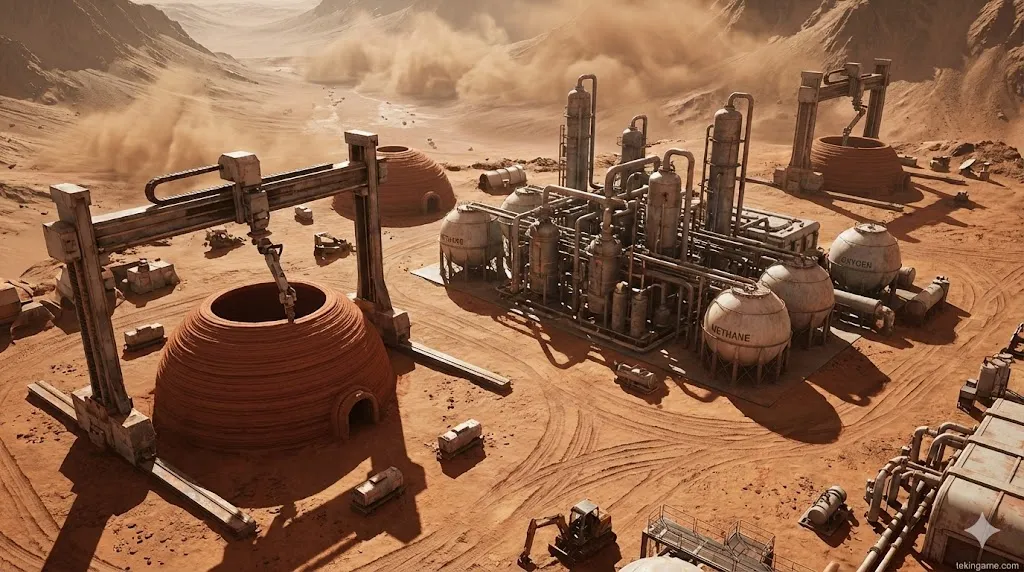
These suits will likely incorporate "shape-memory alloys" (like Nickel-Titanium) that contract when heated electrically, shrinking the suit onto the wearer’s body for a perfect seal before they step out of the airlock.
4. Biological Hardships: Radiation, Perchlorates, and Gravity
Mars is a planet that tries to kill you the moment you arrive. While Starship gets us there, biology keeps us there.
- The Radiation Nemesis: Unlike Earth, Mars lacks a global magnetosphere. The surface is bombarded by Galactic Cosmic Rays (GCRs) and Solar Particle Events. Living on the surface in glass domes is a sci-fi fantasy, not a reality. The first colonies will likely be subterranean, utilizing natural lava tubes or covering habitats with meters of Martian regolith (soil) to act as shielding.
- The Toxic Dust: The soil of Mars is rich in Perchlorates—salts that are toxic to the human thyroid. Martian dust is also incredibly fine and electrostatically charged; it sticks to everything. Strict decontamination protocols and "suitports" (where the suit stays outside the habitat attached to the wall) will be essential to prevent this toxic dust from entering the living quarters.
- The Gravity Trap: We still do not know if humans can conceive or gestate fetuses safely in 0.38g. If not, the colony cannot grow naturally. This implies that the early years will require massive centrifuges to simulate 1g for sleeping or exercise, or perhaps genetic engineering will eventually play a role in adapting humans to the Red Planet.
5. Building the City: ISRU, Sabatier Reactors, and Regolith Printing
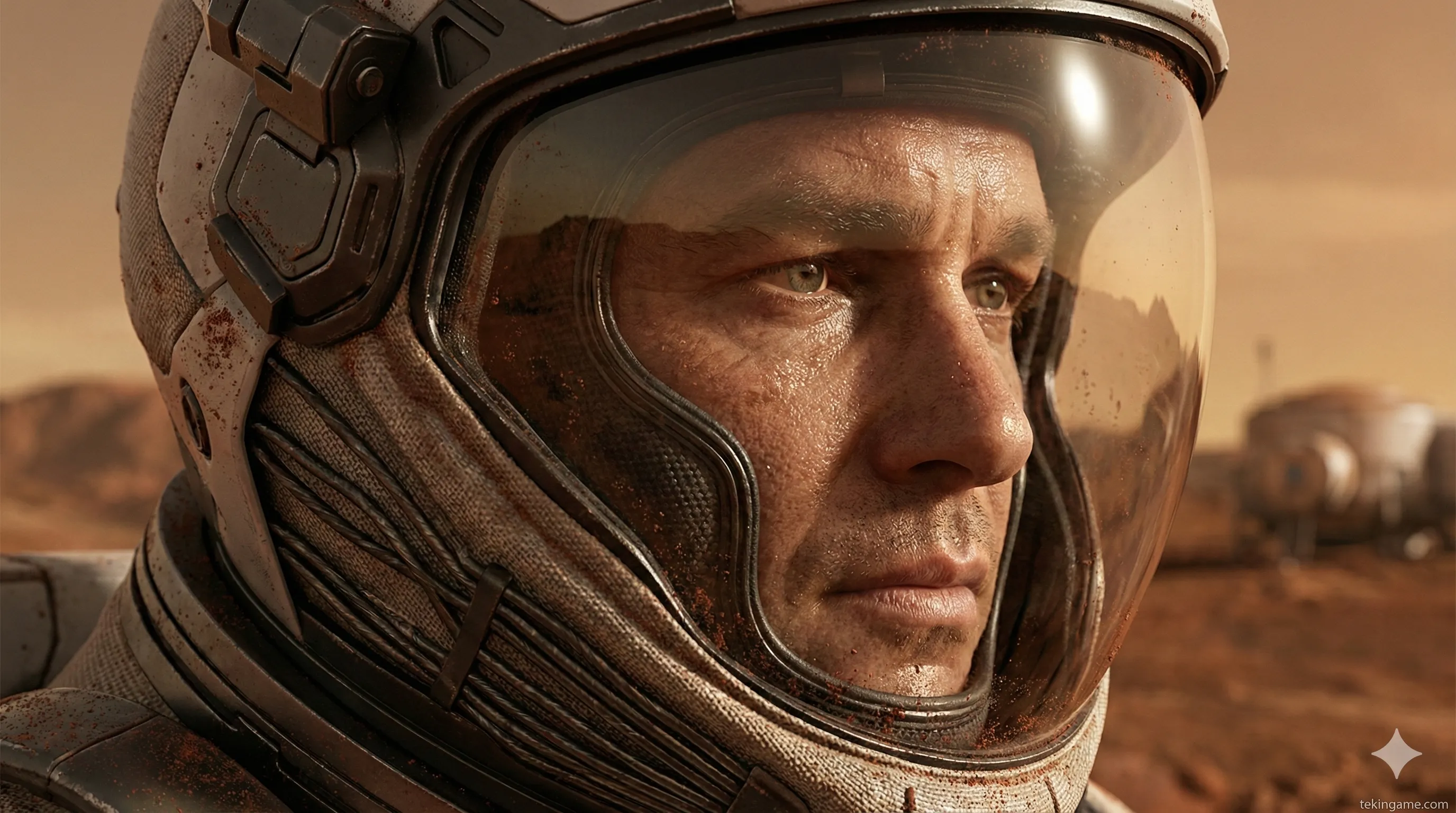
The acronym that rules Mars is ISRU (In-Situ Resource Utilization). You cannot bring everything from Earth.
The core of the colony’s survival is the Sabatier Reaction. Colonists must mine water ice (H2O) from the Martian poles or subsurface glaciers and capture Carbon Dioxide (CO2) from the atmosphere.
- Electrolysis splits water into Hydrogen and Oxygen.
- The Sabatier reactor combines Hydrogen with CO2 to create Methane (CH4) and Water.
This Methane is the fuel for the Starship’s return journey. If the Sabatier plant fails, the colonists are stranded forever. Furthermore, automated 3D printers will use the regolith mixed with binding agents to print radiation shields, landing pads, and storage warehouses before humans even wake up from cryo-sleep (or long-haul boredom).
6. Conclusion: The Great Filter and the One-Way Ticket
The Starship project represents the apex of current human ambition. In 2026, we are standing on the precipice of the "Great Filter." If we can establish a self-sustaining colony on Mars, the long-term survival of human consciousness is all but guaranteed, independent of what calamities might befall Earth.
The updated timeline, the brute force of the Raptor engines, and the elegance of the new Bio-Suits are the tools. But the spirit required is ancient. The first Martians will be the ultimate explorers, trading the blue skies of Earth for the dusty, salmon-colored twilight of a new world.
🚀 Commander, is your seat reserved?
Are you ready to board the Starship and leave Earth forever?
Share your thoughts on this one-way journey in the comments below.