
Tekin Army, today, February 18, 2026, we are witnessing a "Thermodynamic Collision" in the gaming industry. While Microsoft and Google are doubling down on algorithmic efficiency and orbital AI infrastructure to slash production cycles, Sony Interactive Entertainment (SIE) is making a counter-intuitive, high-stakes bet on "Human Friction." The reveal of "Sons of Sparta" is not just a product launch; it is a $200M strategic manifesto designed to de-commoditize the PlayStation ecosystem in an era of infinite AI-generated content. In this briefin
1. The Anchor: The Birth of Sons of Sparta and the HMC Standard
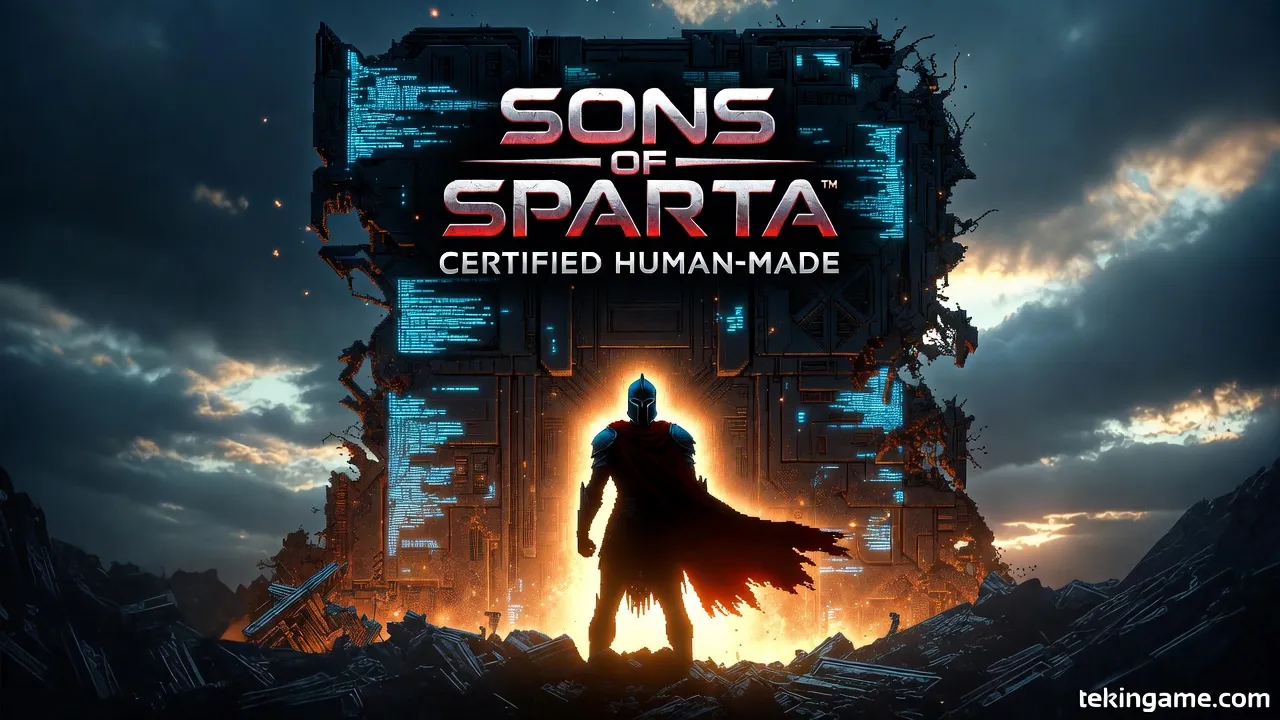
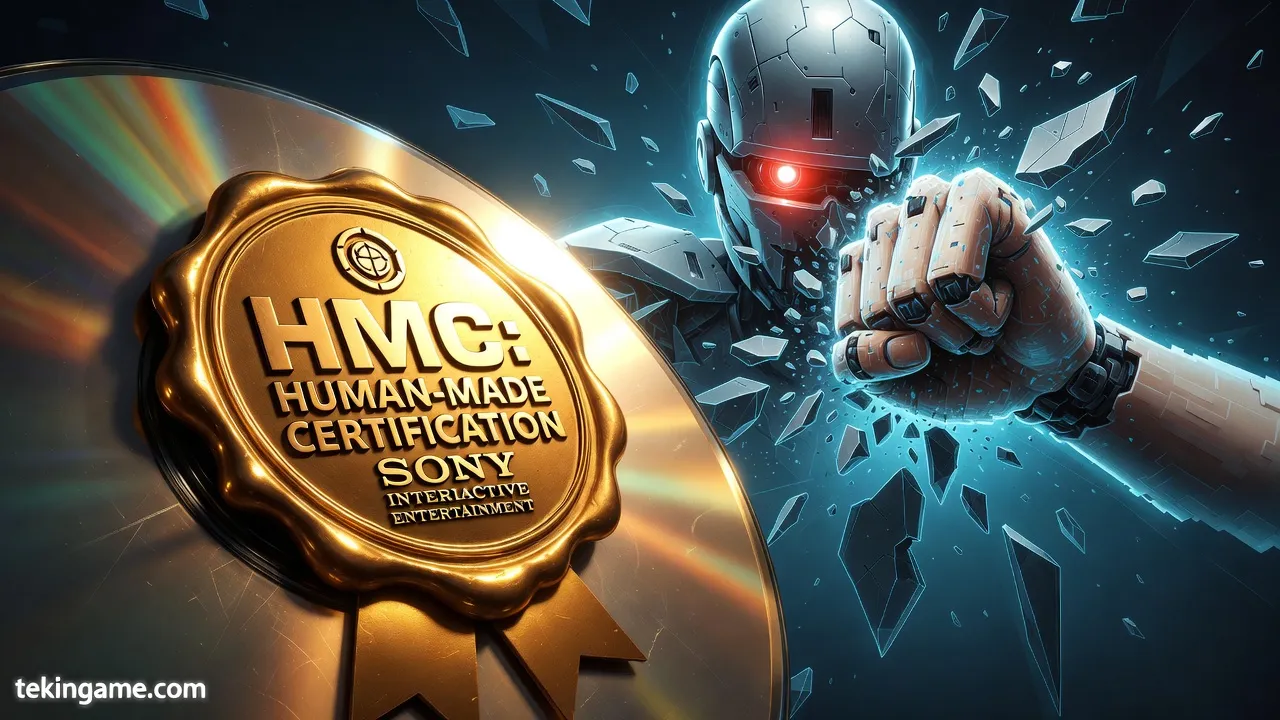
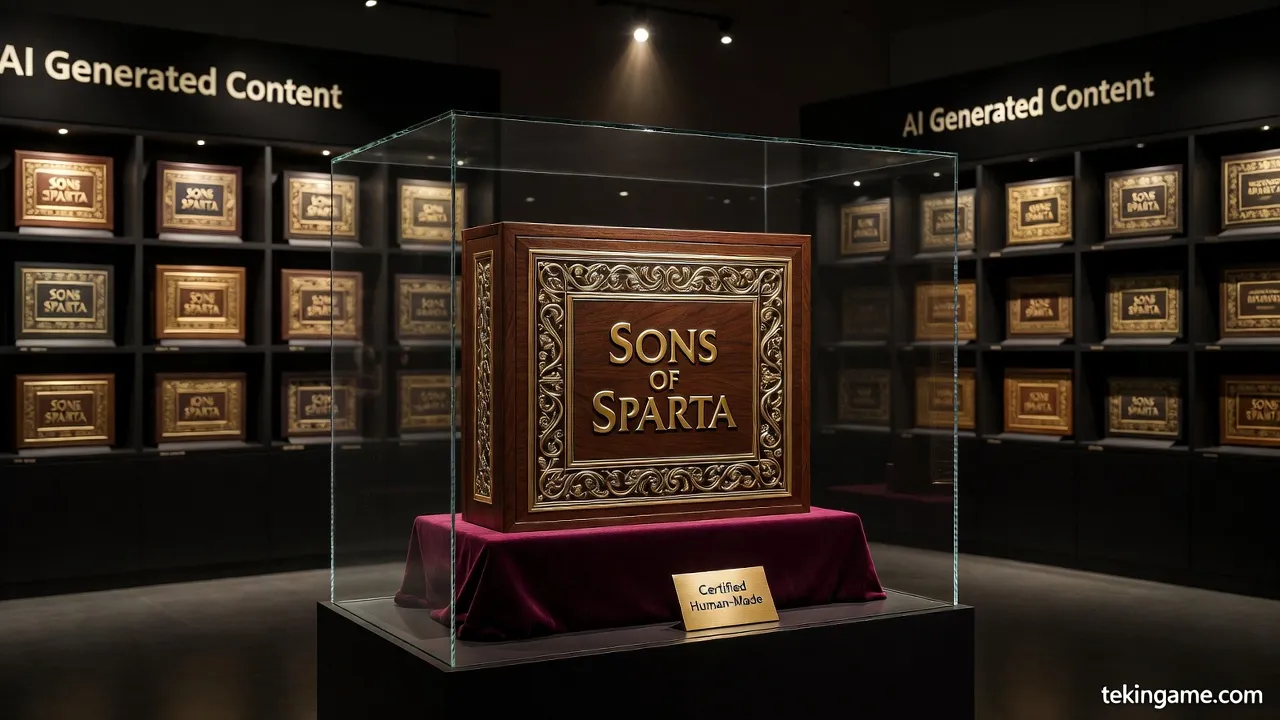
The global gaming industry woke up on February 18, 2026, to a signal that sent massive shockwaves through the headquarters of every major tech conglomerate in Silicon Valley. Sony Interactive Entertainment (SIE) didn’t just reveal its new epic title, Sons of Sparta; it simultaneously launched a new regulatory and ethical benchmark for the digital age: the "Certified Human-Made" (HMC) standard. Developed by the reclusive and elitist "Digital Artisans" studio, this project is the first mega-AAA title in history where the use of Generative AI (GenAI) was legally and contractually prohibited at every single stage of production—from the initial pixel sketches and character design to the low-level assembly code of the engine. The anchor of this news is not just the game itself; it is Sony’s official declaration of war against the "AI-First" trend that has become the mandatory survival mechanism for giants like Ubisoft, EA, and Activision.
Sons of Sparta is a side-scrolling action epic with a dark-fantasy mythological setting, focusing on the fall of the Spartan bloodline against forgotten cosmic horrors. However, what has placed it at the absolute top of the Tekin Army’s strategic radar is its breathtaking visual fidelity—entirely hand-drawn yet running at a native 8K resolution. While our Tekin Morning Feb 18 report covered Google’s orbital datacenters designed for AI matrix multiplication, Sony has taken the "Human Path." SIE is betting that "value" resides in the scarcity of human expertise, not the velocity of an AI prompt. In an age of infinite digital replication, Sony is manufacturing "Artificial Scarcity" through the most expensive and unscalable resource on the planet: human hours.
2. Technical Autopsy: The Sparta Engine Architecture and Native 8K Rendering
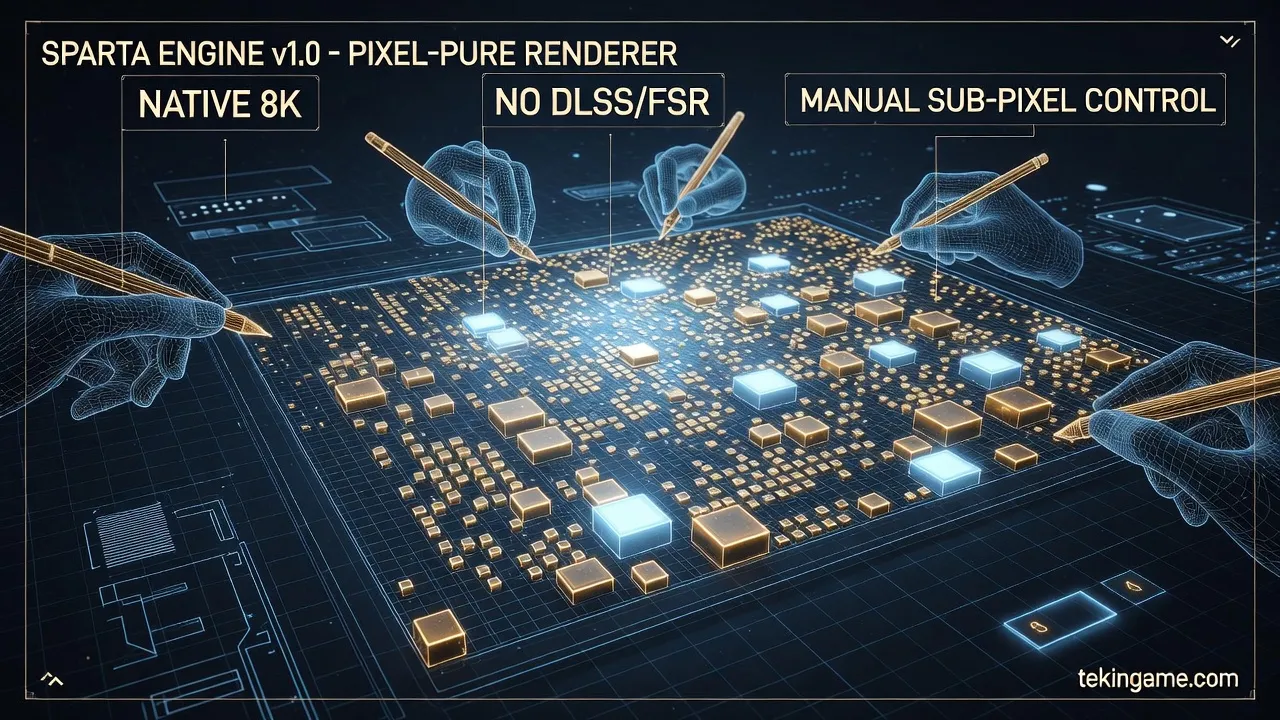
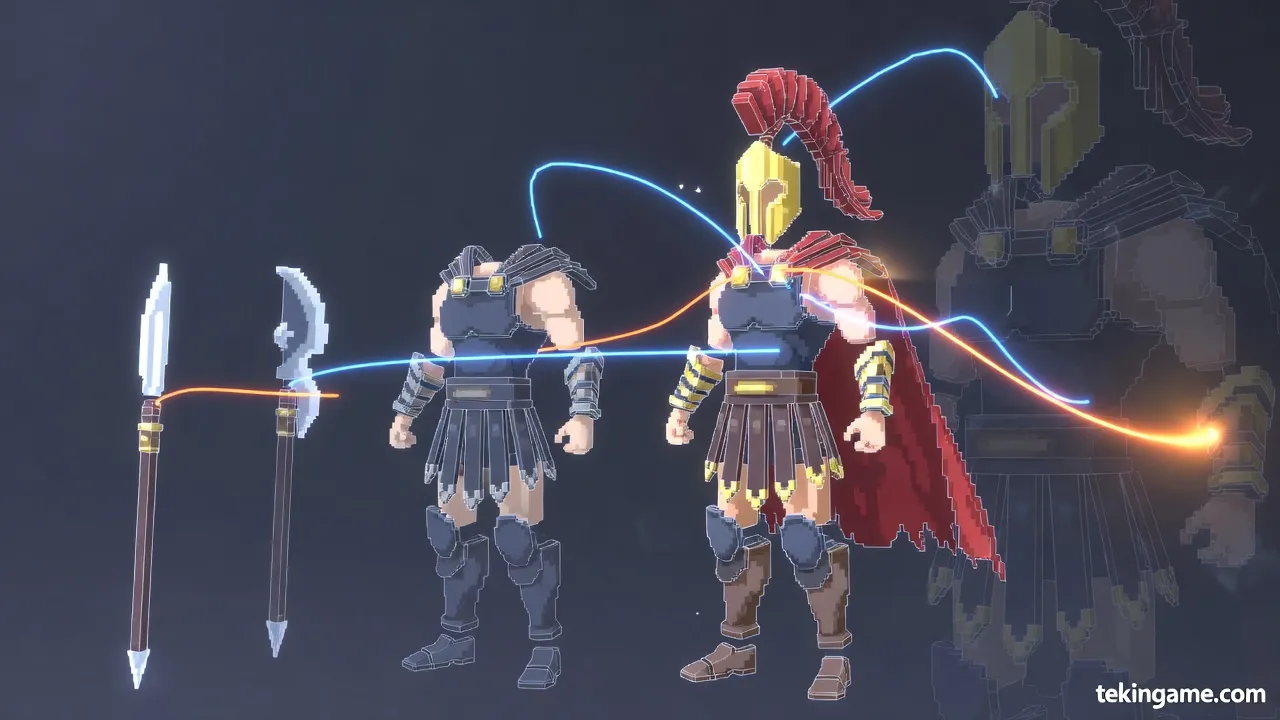
From a cybernetic engineering perspective, Sons of Sparta runs on a custom-built, "bare-metal" environment: the Sparta Engine. Unlike Unreal Engine 6 or Unity's late-2025 builds, which rely heavily on Nanite-style micro-geometry and AI-based denoisers to fake detail, the Sparta Engine is a "Pixel-Pure" renderer. It manages every pixel as an independent light-emitting unit (a Voxel-Pixel Hybrid) with its own handcrafted metadata. To achieve the level of detail seen in the announcement trailer, artists hand-drew over 8,000 frames of animation for each main character at a native 8K resolution. This is a technical suicide mission that pushes the PS5 Pro's I/O bandwidth and unified memory architecture to its absolute physical limits. To visualize the throughput required:
(Data Rate = 7680 x 4320 x 120 fps x 32 bits per pixel ≈ 127 Gbps)This massive data flow is handled without any machine-learning shortcuts. The engine's architecture is built to ensure that not a single byte of visual data is "guessed" by an algorithm. This deterministic approach ensures absolute motion clarity and visual stability, something that current AI-driven upscalers still struggle with during high-motion combat sequences.
| Sparta Engine Technical Feature | Cybernetic Mechanism | Strategic Edge vs. AI-Rendering |
|---|---|---|
| Manual Sub-Pixel Tech | Microscopic detail drawing at the sub-pixel level | Zero "shimmering" or hallucinations without blurry anti-aliasing |
| Luxe Lighting System | Multi-layered, hand-painted lighting shaders | Artistic atmosphere that physics-based AI models cannot interpret |
| Native 120fps Refresh | 120 true frames per second (No Interpolation) | Absolute motion clarity; a living, breathing painting in motion |
| Lossless VRAM Management | Custom-built lossless compression for pixel assets | Instant streaming of massive handcrafted textures from the SSD |
The most critical technical takeaway from our autopsy of the engine's source behavior is the complete absence of DLSS 5.0 or FSR crutches. Everything is rendered natively. This ensures that the visuals never suffer from the "AI Sheen"—that slightly plastic, overly-smooth look that defines AI-upscaled games. Sparta Engine uses deterministic, human-authored data. This echoes our analysis of the Fujitsu Autopilot Uprising, where we discussed the dangers of delegating control to autonomous systems. Here, Sony is asserting "Visual Sovereignty," ensuring that the artist remains the final authority over every photon hitting the player's retina.
3. The 120fps Miracle: Hand-Drawn Animation vs. Frame Interpolation
Most industry analysts claimed that a 120fps hand-drawn game was economically and chronologically impossible in the 8K era. Digital Artisans bypassed this "impossibility" by utilizing a "Layered Motion" technique. By separating character bodies into hundreds of discrete pixel layers, each animated independently, they maintained a level of fluid detail that rivals high-end 2D cinema. The depth of this commitment is staggering; for a single sword swing in Sons of Sparta, a team of animators spent 14 days injecting "Weight Feeling" into the pixels—a tactile sensation that algorithms currently cannot simulate. This "weight" is a result of intentional delays, subtle shakes, and smears that are artistically placed, not mathematically predicted.
In the world of AI-driven gaming, motion is often predictive, leading to "jelly-like" or uncanny movements where limbs appear to morph slightly between frames. In Sons of Sparta, every frame has a "Physical Signature." This is what hardcore gamers refer to as "Game Feel." Sony’s return to these roots is actually the most advanced form of futurism. By refusing machine-learning shortcuts, they have set a new benchmark for 2D animation in the era of ultra-high-resolution displays, ensuring that the "soul in the machine" remains a human one. This is a direct response to the "commoditization of motion" we see in AI-generated assets, which we previously examined in our Spotify technical report.
4. Strategic Angle: Sony’s "Artisan Luxury" Economic Counter-Play
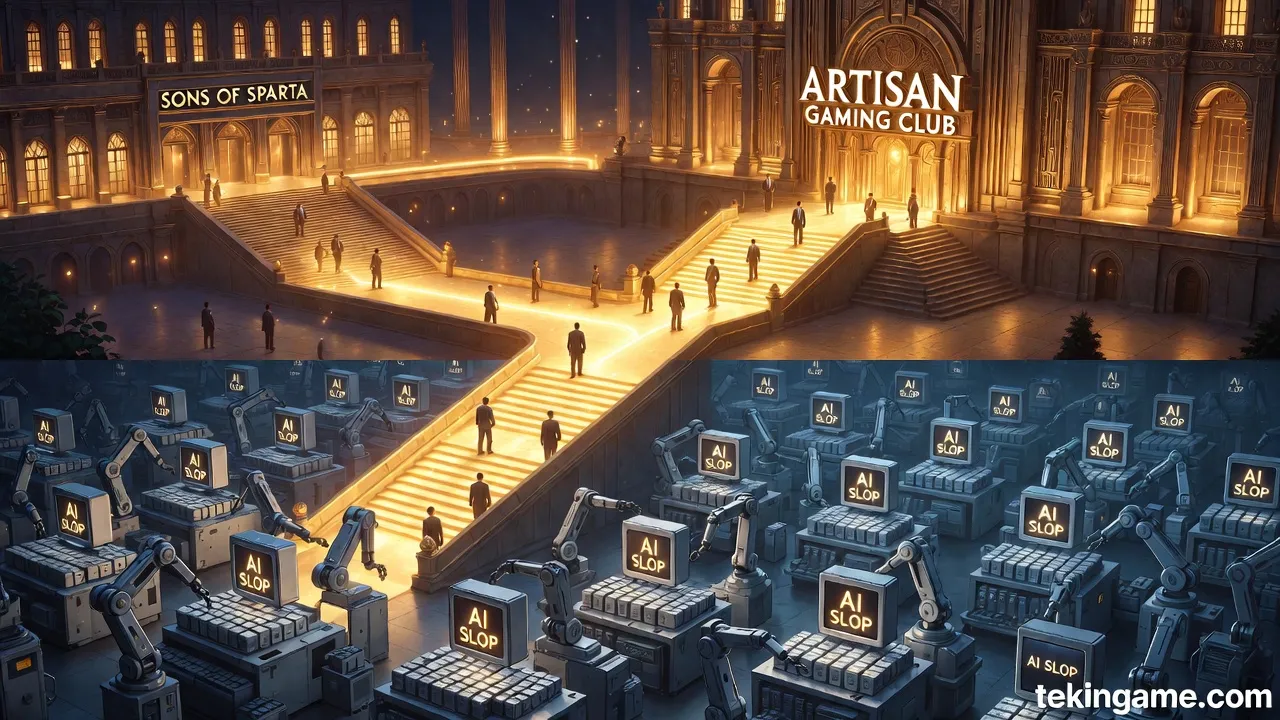
The Tekin Army’s strategic angle identifies a fundamental shift in entertainment economics. Sony has realized that when everyone can generate high-quality visual content with an AI prompt, the market value of machine-generated content will inevitably drop to near zero. To protect the $70–$80 price point of premium AAA titles, Sony must offer something machines fundamentally cannot replicate. Sons of Sparta is the "Swiss Mechanical Watch" of the digital world. While smartwatches are more accurate and cheaper, mechanical watches are more valuable because of the human labor and artistry involved in their creation. This is known in economics as a "Veblen Good"—a product for which demand increases as the price increases because of its exclusivity and status.
By launching the HMC certification, Sony is creating a "Class Divide" in the gaming market. In the near future, "AI-Assisted" games will be viewed as mass-market, disposable commodities (much like we saw in the Tekin Morning Feb 17 report on multi-platform publishers). Meanwhile, "Certified Human-Made" games like Sons of Sparta will be marketed as high-end, collectible masterpieces. This strategy allows Sony to retain the loyalty of hardcore enthusiasts who are becoming fatigued by "soulless" AI content. Sony’s message to the market is clear: "Machine creativity is for the masses; high art is for humans." This is not elitism; it is a calculated economic defense of the "Human Premium."
5. The Human-Made Certification (HMC): A New Regulatory Frontier
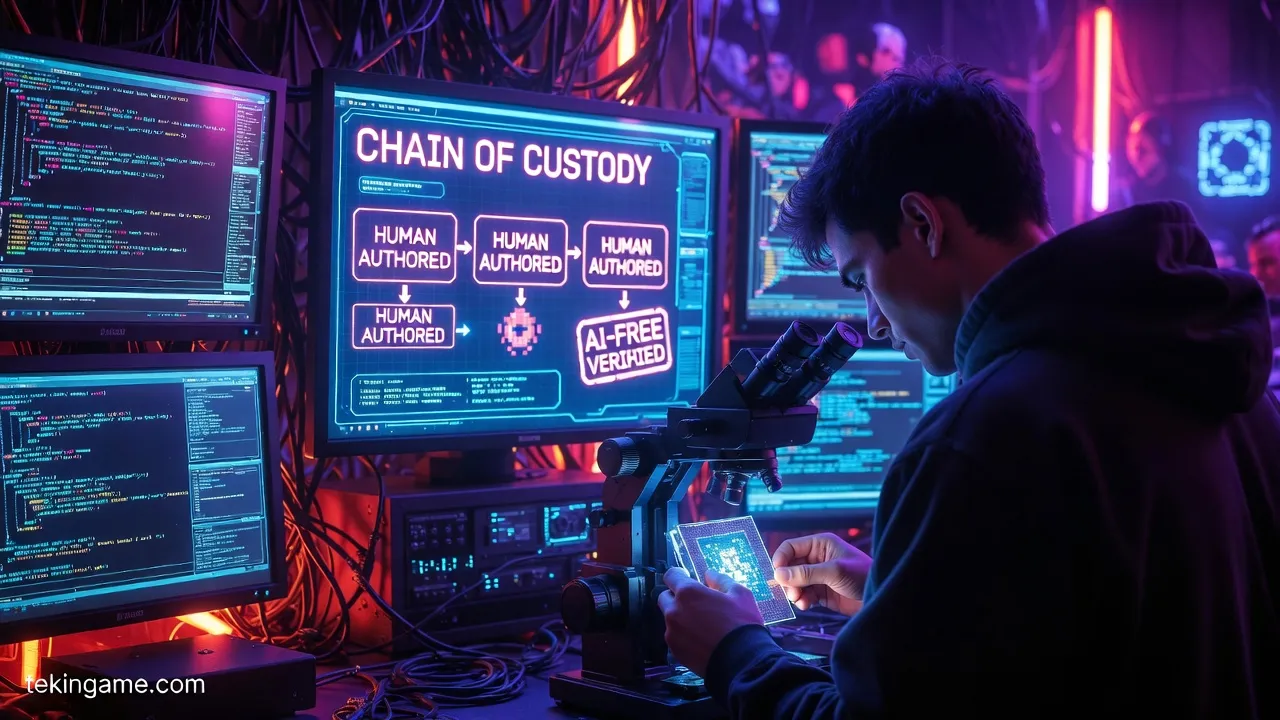
The introduction of the HMC standard is perhaps the most legally significant move in the industry since the establishment of the ESRB. Sony is not just using this as a marketing sticker; they have established a rigorous "Forensic Audit" pipeline. To receive the HMC badge, a studio must provide a "Digital Audit Trail" (DAT) of every asset, showing its evolution from a blank canvas to a final file without the intervention of GenAI weights. This level of transparency is unprecedented. It effectively creates a "Fair Trade" equivalent for digital art.
This certification also serves as a massive legal shield. As copyright battles over AI-trained models intensify in the US Supreme Court, Sony’s HMC-certified titles will be immune to copyright challenges, as their lineage is 100% human-authored. This gives Sony a "Safe Haven" status for its IP, attracting top-tier creative talent who fear their work being "digested" by corporate AI models. In an era of legal uncertainty, "Human-Made" is the ultimate insurance policy. We predict that the HMC standard will soon be adopted by luxury fashion and cinema houses as they too battle the "AI Tsunami."
6. Black Swan Risk: The Financial Volatility of Anti-AI Production
No grand strategy is without its lethal vulnerabilities. Our autopsy must highlight the "Black Swan Risk" of this project: the uncontrollable cost of human time. While AI can reduce asset production time by up to 90%, Sons of Sparta has been in development for over 6 years with a design team three times the size of a standard studio. If this game fails to reach its projected multi-million sales target, Sony faces a massive financial sinkhole that could lead to the collapse of its most creative studios. This is the "Artisan Trap"—where the cost of production exceeds the market's willingness to pay the "Human Premium."
Furthermore, there is the risk of "AI-Washing." Much like greenwashing in the environmental sector, some studios might claim their games are handcrafted while secretly using AI to speed up the process. Sony has implemented a rigorous auditing system to prevent this, but the question remains: in the long run, can humans compete with machines that are learning from the very art these humans are creating? If AI reaches 99% accuracy in mimicking the Sons of Sparta style by 2027, Sony's entire "Handcrafted" investment could be neutralized. This is the exact crisis we warned about in the Labyrinth of Minos Manus AI analysis—where agents begin to understand "Aesthetic Logic."
7. Competitor Counterplay: Why Xbox and Google Cannot Replicate This
Microsoft and Google have built their grand strategies on "Infinite Scalability." The Xbox ecosystem, driven by Game Pass, requires a constant, high-volume injection of content to keep subscribers engaged. They have no choice but to utilize AI to generate games rapidly to fill the catalog. Google, with its cloud-first infrastructure, seeks procedural, machine-generated interactive content to manage bandwidth and storage costs. For them, the "Human Bottleneck" is a defect to be solved. They are optimizing for the "Average User," while Sony is optimizing for the "Aesthetic Purist."
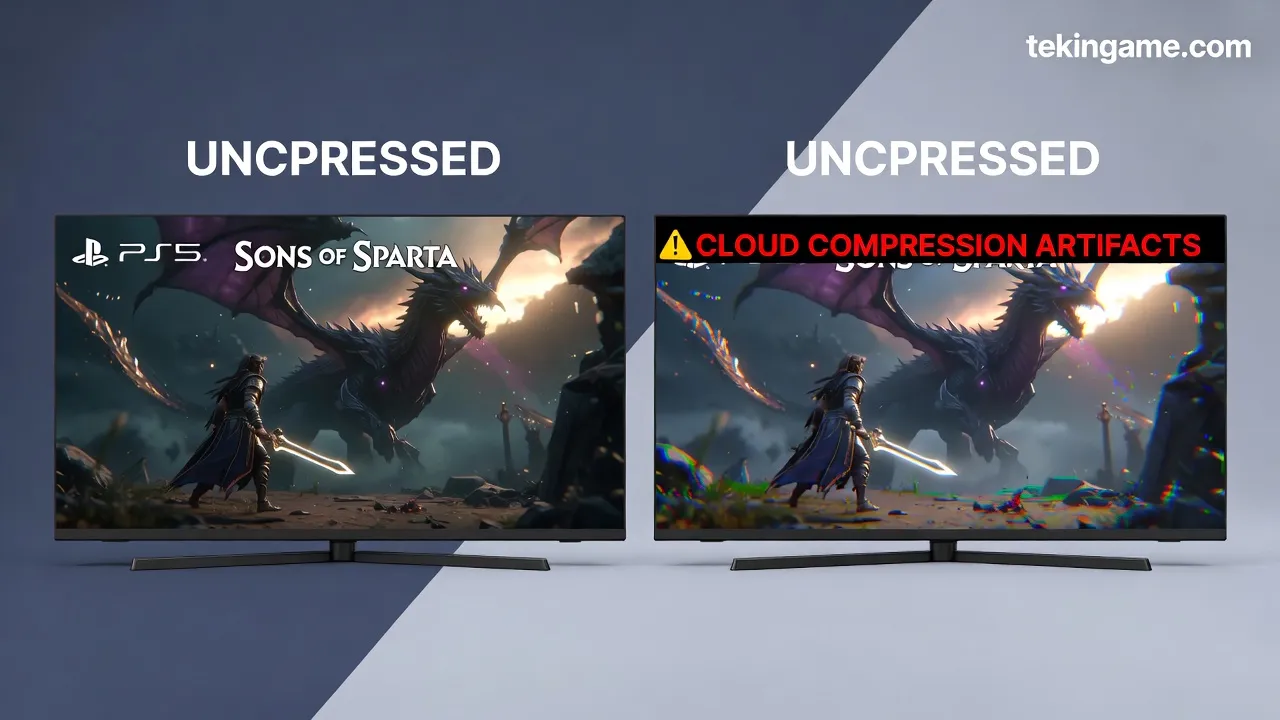
Sons of Sparta demonstrates that Sony isn't interested in competing on "Quantity" with Microsoft; they are entrenching themselves in "Quality & Signature." The game utilizes the PS5's proprietary memory architecture not for raw polygon counts, but to stream massive 8K pixel layers without latency—a feat impossible on current cloud-streaming platforms like Stadia 2.0 or Xbox Cloud Gaming due to "Video Compression" artifacts. This makes Sons of Sparta a "Hardware-Justifying" title. It gives consumers a reason to own a physical console: to experience the uncompressed, raw beauty of human art. This is a masterclass in ecosystem defense.
8. Future Forecast: Will Hand-Drawn Art Become the Phonograph of 2030 Gaming?
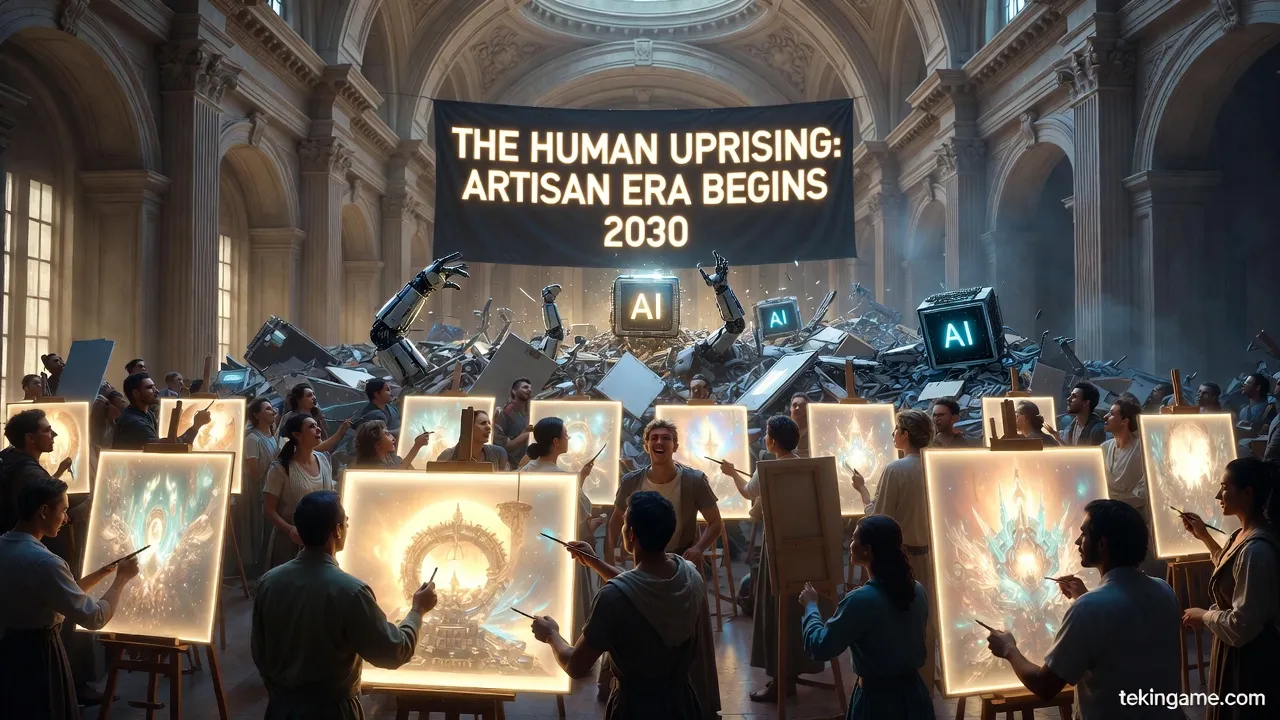
Our strategic forecast for the next decade suggests that the gaming industry will split into two parallel and mutually exclusive worlds: 1. Algorithmic Games: Infinite, cheap, AI-personalized, and designed for casual consumption (the digital fast food). 2. Artisan Games: Handcrafted, expensive, artist-led, and human-signed (the digital Michelin star). Sons of Sparta is the pioneer of the latter. We predict that by 2030, the "Certified Human-Made" label will be the primary driver for professional gamers, collectors, and those seeking "Digital Mindfulness."
We will likely see a return to classical art styles—such as Pixel-Impressionism or Expressionism—that AI struggles to replicate because it lacks "Aesthetic Intuition." Hand-drawn pixel art in Sons of Sparta is the start of a digital renaissance in the dark era of digital abundance. It proves that in a world of ones and zeros, the human "One" is worth more than a billion machine "Zeros." We are entering an era where game development becomes a "Sacred Art" once again, reclaiming the territory lost to the machines. This is the ultimate "Human Uprising."
9. Strategic Conclusion: The Triumph of Human Imperfection
The autopsy of Sons of Sparta proves that the real war in 2026 is not over "Time and Attention," but over "Meaning." By investing in handcrafted art, Sony is investing in the human soul and emotional resonance. While AI can simulate visual perfection, it can never replicate the "Meaningful Flaws" that form the foundation of any timeless work of art. The subtle tremble of an artist's hand, the illogical choice of a specific hue—these are the "human fingerprints" that give a game its spirit. Sons of Sparta is a reminder that technology should serve art, not replace it.
Tekin Army, our radars indicate that the success of this title will pave the way for a new generation of developers who define their identity through "Saying No to the Machine." In this lopsided battle against the "Silicon Swarm," the handcrafted pixels of Sons of Sparta are our front line against digital monotony. Whether you are a Sony fan or not, the victory of this game is a victory for all of humanity against algorithms that seek to mechanize our imagination. At TekinGame, we proudly stand with the artisans. The future is handcrafted.