1. Introduction: Breaking the Cycle of Rust
For twenty years, Konami tried to chase the shadow of Silent Hill 2. Every sequel tried to replicate James Sunderland’s guilt, the Pyramid Head trope, and the rusty Otherworld. They failed because they were imitating a memory.
Silent Hill f succeeds because it stops trying to be Silent Hill 2. It boldly asks: "What if the town isn't a place, but a phenomenon?"
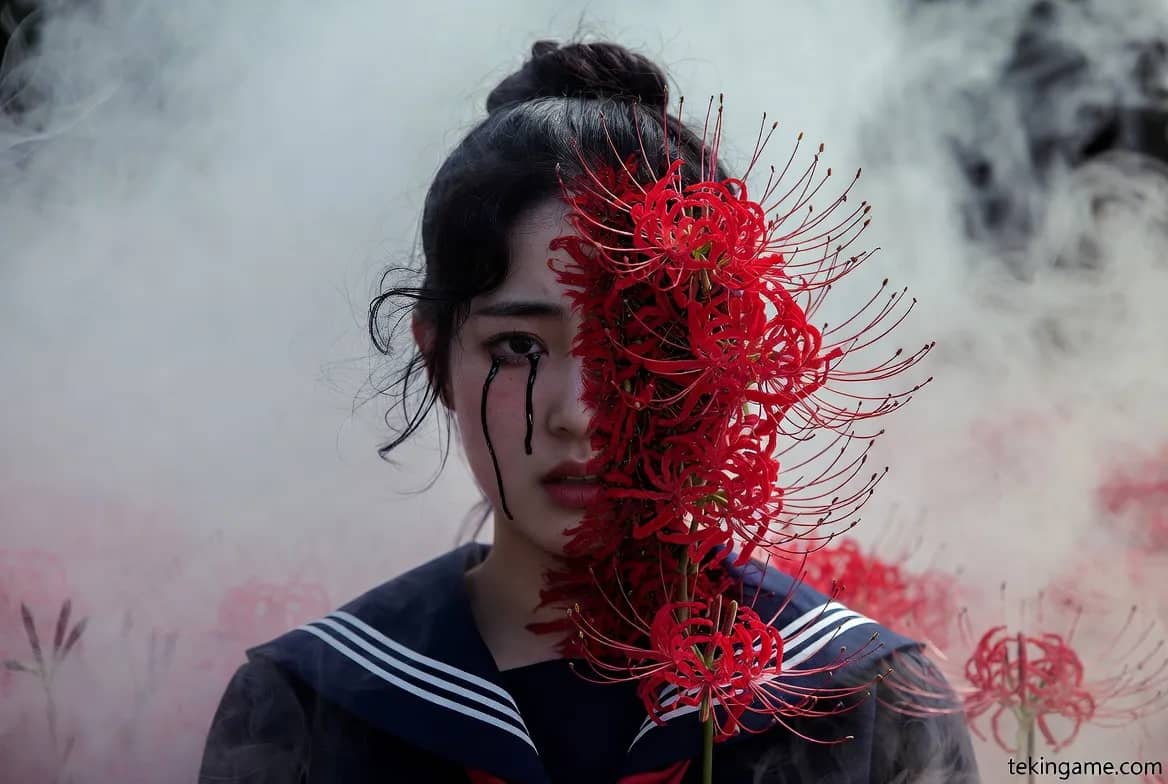
Set in Japan during the 1960s—a time of rapid modernization clashing with ancient tradition—the game feels completely distinct yet spiritually connected to the core of the franchise. It is a slow-burn horror that gets under your skin, literally. The fear here isn’t a jump scare; it’s a creeping realization that something is growing inside you.
2. The Narrative: When Beauty Tears Your Skin
The writing credit of Ryukishi07 (creator of When They Cry / Higurashi) was the first sign that this game would be different. He is known for stories that start with nostalgic rural peace and end in paranoid bloodbaths. He delivers exactly that here.
The Village of Kagerou
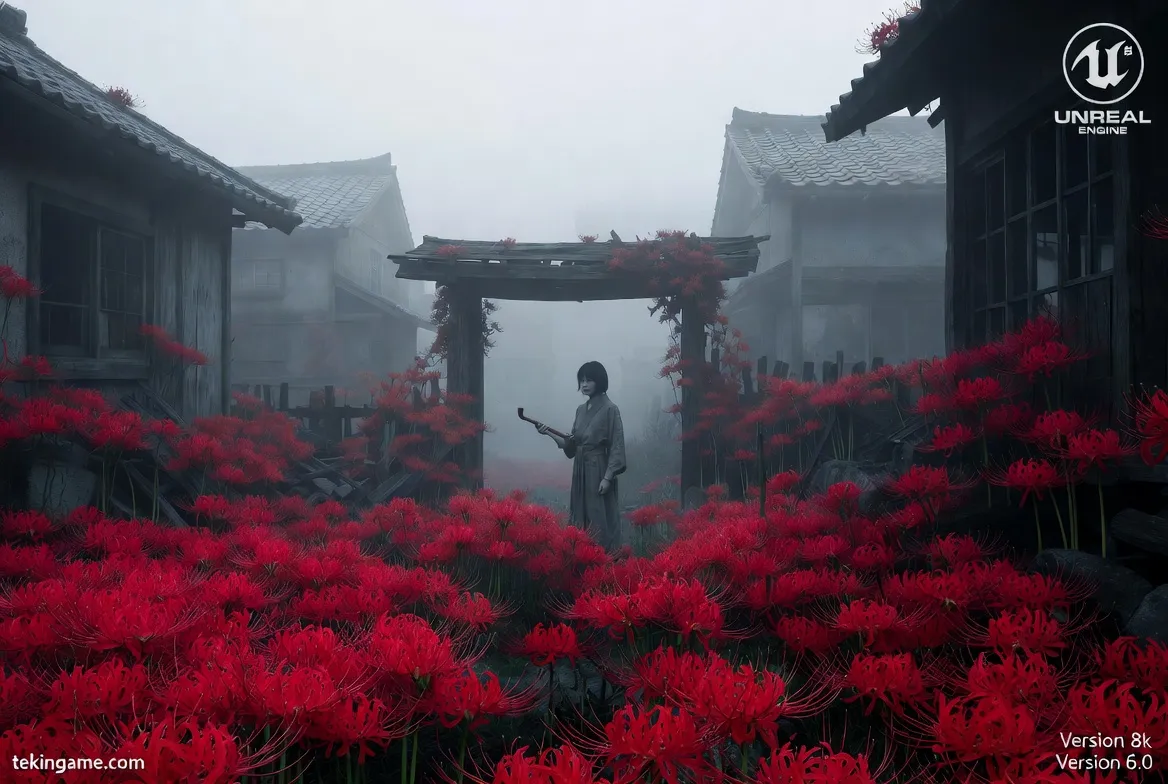
You play as a young woman searching for her vanished brother in Kagerou, a mountain village isolated from the world. Unlike the empty streets of the American Silent Hill, Kagerou feels watched. The villagers are present, but they are... wrong. They stare. They whisper.
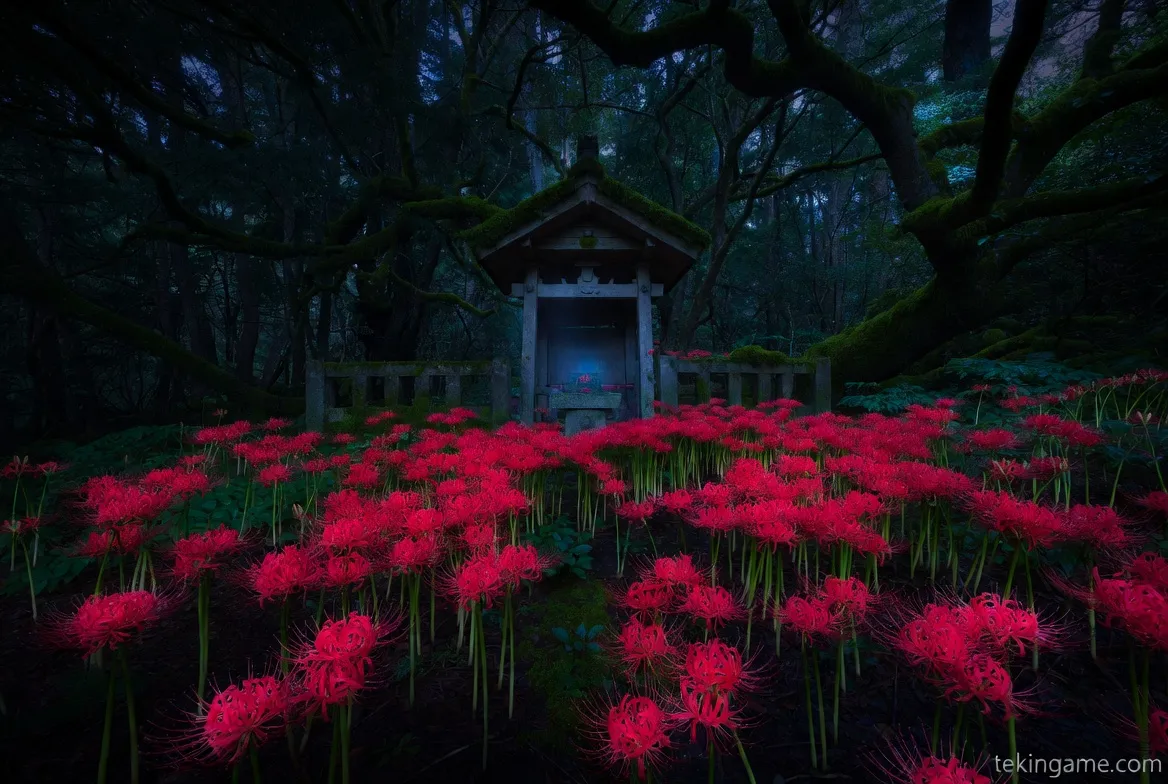
The central motif is the Red Spider Lily (Higanbana). In Japanese folklore, these flowers guide the dead to the afterlife. In Silent Hill f, they are an invasive species. They don't just grow on the ground; they grow on buildings, on livestock, and eventually, on people. The narrative explores themes of grief, the suffocating pressure of rural communities, and the inability to let go of the dead.
Collective Horror vs. Personal Guilt
While Western horror often focuses on the individual's sin, Silent Hill f focuses on "Collective Karma." The village shares a dark secret, a pact made generations ago. The horror feels older, deeper, and more inescapable. Ryukishi07’s script is poetic and cruel. There are moments of genuine tragedy that will leave you staring at the screen in silence, followed by scenes of body horror so intense you’ll want to look away.
3. Gameplay: Survival in the Age of Decay
The developers have modernized the "Tank Controls" era without losing the feeling of vulnerability. You are not a soldier; you are a terrified civilian.
Combat: Desperate, Clunky, and Visceral
Combat is deliberately heavy. Your weapons are improvised farming tools—a rusted sickle, a heavy iron pipe, a wooden mallet.
When you swing a weapon, you feel the weight. If you miss, you are left wide open. The enemies are not zombies; they are "The Blossomed." Humanoid figures consumed by flowers and fungi. They move with jerky, unnatural twitches. Hitting them feels sickeningly wet, accompanied by the sound of crunching stems and bursting pods.
Ammo for the rare firearms (like the Nambu pistol) is scarce. You will count every bullet. Often, running away is the only viable option, but the narrow alleyways of the village make escape difficult.
The "Bloom" Mechanic: A New Layer of Stress
This is the game's defining innovation. Similar to the "Sanity" systems in other games, but with a physical consequence.
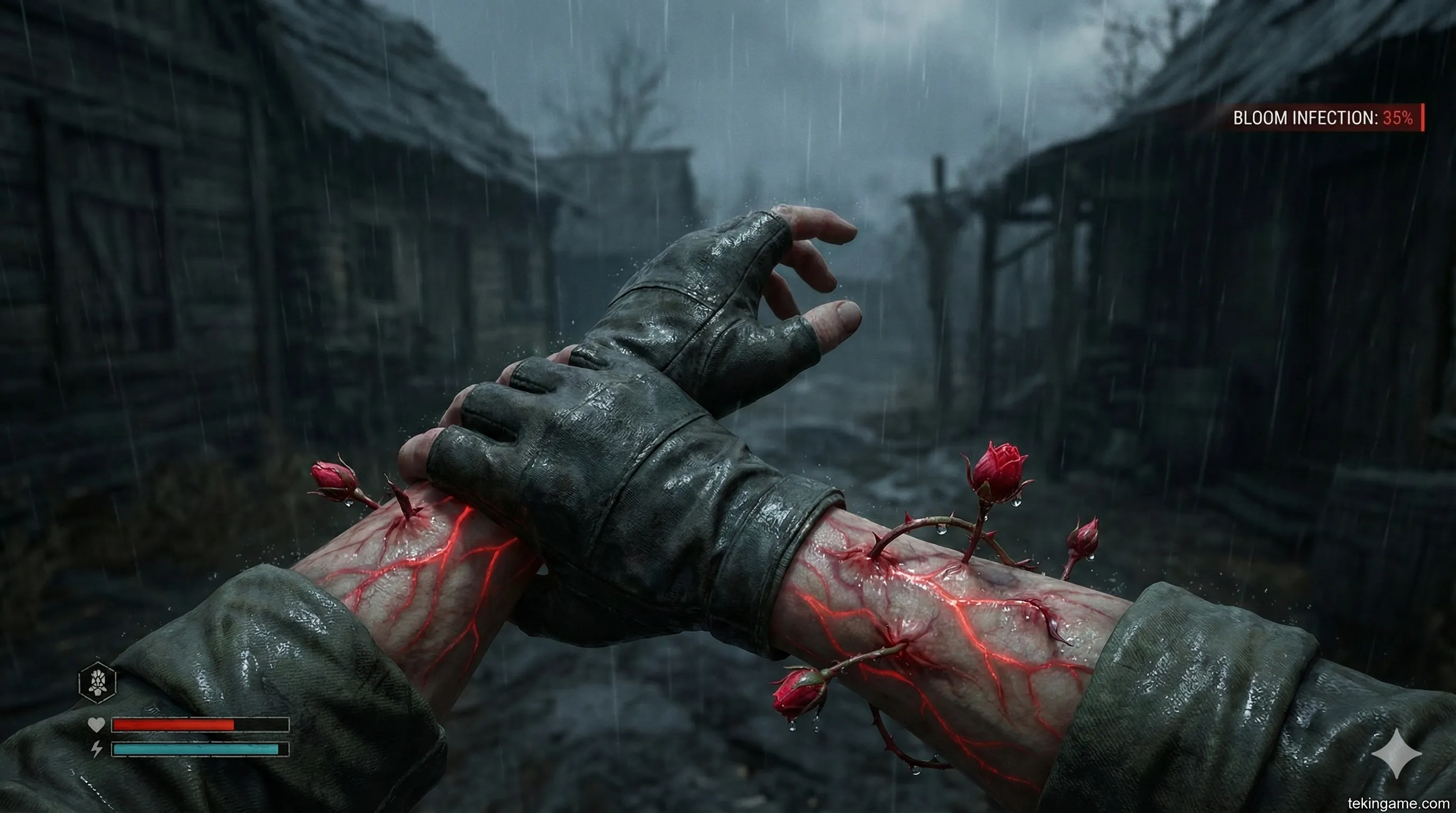
If you spend too long in the "Otherworld" or take damage from spore-based attacks, your character begins to Bloom.
– Stage 1: Red veins appear on the screen edges. Audio becomes distorted.
– Stage 2: Flowers physically grow on your character’s arms. Movement speed slows down. You cannot aim precisely.
– Stage 3: Game Over (The character is fully consumed and becomes a statue of flowers).
To cure this, you must find "Pure Water" at Shinto shrines, which acts as a save point and a cleansing ritual. This mechanic adds a layer of frantic urgency to exploration.
4. Art Direction: The Grotesque Garden
Visually, Silent Hill f is a contender for the best-looking game of the generation. Powered by Unreal Engine 5.2, it utilizes Nanite geometry to render millions of individual flower petals without performance loss.
The New Otherworld
We all know the classic transition: the siren sounds, and the world peels away to reveal rust and fire.
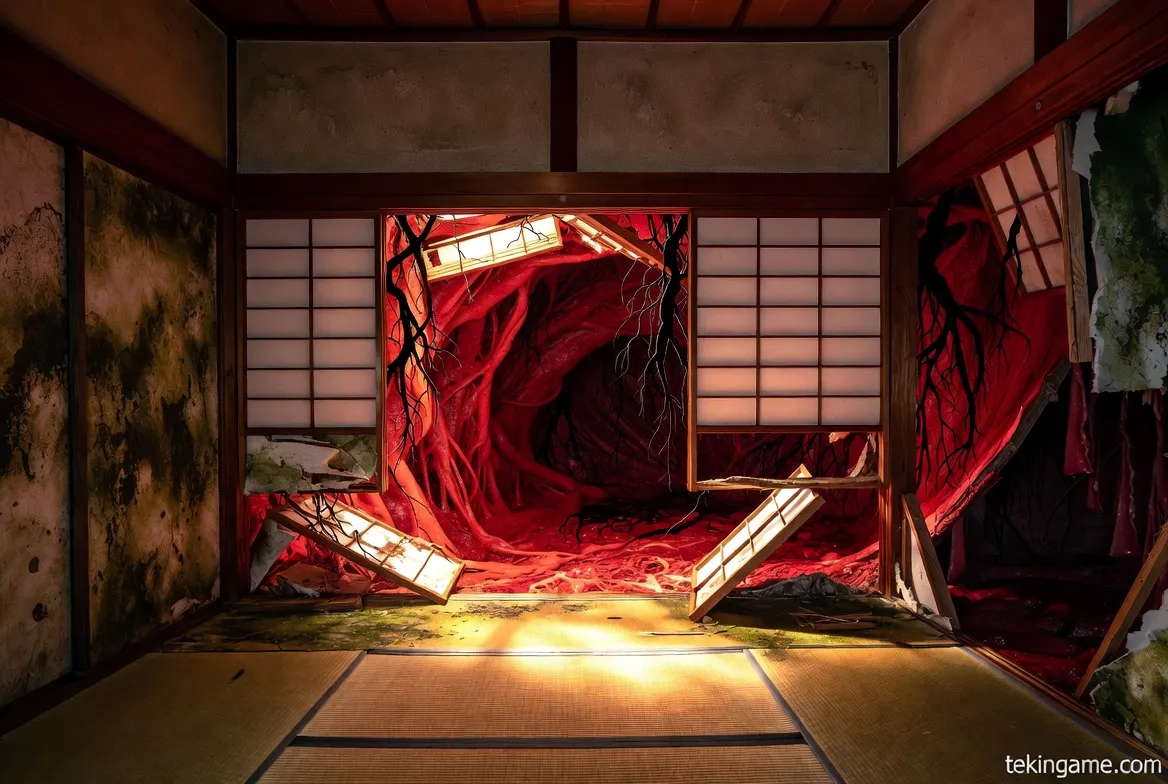
In Silent Hill f, the transition is organic. Mold spreads across the tatami mats in real-time. Walls burst open to reveal pulsating red floral tissue. The floor becomes a field of screaming faces.
It is vibrant, colorful, and utterly nauseating. The contrast between the bright red flowers and the dark, rotting wood of the village creates a visual language we call "Beautiful Nightmare."
⚠️ Trypophobia Warning
We must issue a warning: If you suffer from Trypophobia (fear of clusters of small holes), this game will be extremely difficult for you. The creature designs heavily feature porous textures, seed pods, and honeycomb-like patterns on human skin. It is effective, but it is intense.
5. Sound & Music: The Sound of Wilting
Akira Yamaoka returns, and he has reinvented his sound. Gone are the industrial grinding noises of the early 2000s.
The soundtrack of Silent Hill f is built on dissonance using traditional Japanese instruments.
– The screech of a Shamisen (three-stringed lute) mimics the sound of a scream.
– Deep, rhythmic Taiko drums simulate a heartbeat during chase sequences.
– The silence is weaponized. The ambient sound design is masterful. You hear the wet slithering of roots under the floorboards, the buzzing of insects, and the distant, mournful ringing of wind chimes.
The voice acting (we played with Japanese audio and English subtitles) is phenomenal. The localized English dub is also surprisingly good, capturing the eerie, detached tone of the original script.
6. Technical Performance (PS5 Pro vs. PC)
We tested the game on both platforms to give you the full picture.
PlayStation 5 Pro
The game is clearly optimized for the Pro console.
– Quality Mode: Native 4K at 30fps with full Ray Tracing (Reflections and Global Illumination). The lighting in the rainy scenes is photorealistic.
– Performance Mode: Uses PSSR (PlayStation Spectral Super Resolution) to upscale to 4K from 1440p, maintaining a rock-solid 60fps. We recommend this mode for the combat responsiveness.
PC (Steam Version)
On our test rig (RTX 4080, i9-14900K):
The game is demanding. To run at 4K Ultra with Ray Tracing, you absolutely need DLSS 3.5 (Frame Generation). With everything maxed out, the game looks better than the PS5 version, particularly in shadow resolution and texture filtering. However, there is some minor shader compilation stutter in new areas, a common issue with UE5 titles.
7. The Verdict: Is it Worth the Trauma?
Silent Hill f is a triumph. It respects the legacy of the franchise while fearlessly charting a new path. It proves that Konami is finally treating its IP with the respect it deserves.
It is not a fun game. It is oppressive, sad, and disturbing. It will leave you feeling exhausted. But that is exactly what a survival horror game should do. It is a journey into a beautiful hell that you won't be able to forget.
Pros ✅
- Ryukishi07's Story: A complex, layered mystery that sticks the landing.
- Art Direction: The "Flower Horror" aesthetic is unique and visually stunning.
- Atmosphere: The sound design creates unbearable tension.
- The Bloom System: Adds meaningful stakes to gameplay without being annoying.
Cons ❌
- Pacing: The middle chapter drags slightly with too much backtracking.
- Boss Fights: Some bosses are "bullet sponges" and lack puzzle elements.
- Accessibility: No "Safe Mode" for Trypophobia sufferers might alienate some players.
TekinGame Score
9.5 / 10
"Masterpiece"
Silent Hill f is the best horror game of 2025 and the best Silent Hill since the original trilogy. It is a haunting, heartbreaking work of art.
Have you entered the village of Kagerou yet? Let us know your theories in the comments. Up next at 18:30 PM: Our deep dive into the dangerous world of Uncensored AI hacking.