March 4, 2026, OPPO and MediaTek made a bold claim at MWC Barcelona: their on-device AI translation is 15% more accurate than Google Translate. With MediaTek Dimensity 9500 and OPPO ColorOS 16, they proved on-device AI can beat cloud. MediaTek Dimensity 9500 has a 35 TOPS NPU that can run large AI models locally. ColorOS 16 has a complete AI engine that optimizes models. OPPO built custom models tuned for specific languages — result? 92% accuracy vs 80% Google Translate. OPPO AI Translate is not only more accurate, but 4x faster (0.3 seconds vs 1.2 seconds), completely offline, and with complete privacy. Only limitation: 50 languages instead of Google's 100. AI Portrait Glow is the second capability: professional image processing on-device with cloud-level quality. Can smooth skin, adjust lighting, blur background, and enhance colors — all in less than a second. Omni Model is the third capability: a multimodal model that processes voice, video, and text simultaneously. Can interpret scenes, answer interactive questions, and understand context. OPPO and MediaTek's strategy is clear: on-device AI has three key advantages: instant speed (less than 1 second), complete privacy (no data goes to servers), and better personalization (learning from local data). OPPO Find X9 Series (April 2026) will be the first phones to use these capabilities. Expected pricing: Find X9 around $800, Find X9 Pro around $1,000. Competitors include Apple (Neural Engine), Google (Tensor G4), Samsung (Exynos 2500), and Qualcomm (Snapdragon 8 Elite with 45 TOPS NPU). But OPPO is the first to claim on-device beats cloud. OPPO and MediaTek showed that AI's future is on-device — not in the cloud. For everyday tasks, on-device AI is now the best choice.
March 4, 2026, OPPO and MediaTek announced at MWC Barcelona that their on-device AI translation is 15% more accurate than cloud. With Dimensity 9500 and ColorOS 16, they proved on-device AI can beat cloud — no internet needed, complete privacy, and unmatched speed.
Historic Announcement: When On-Device Beat Cloud
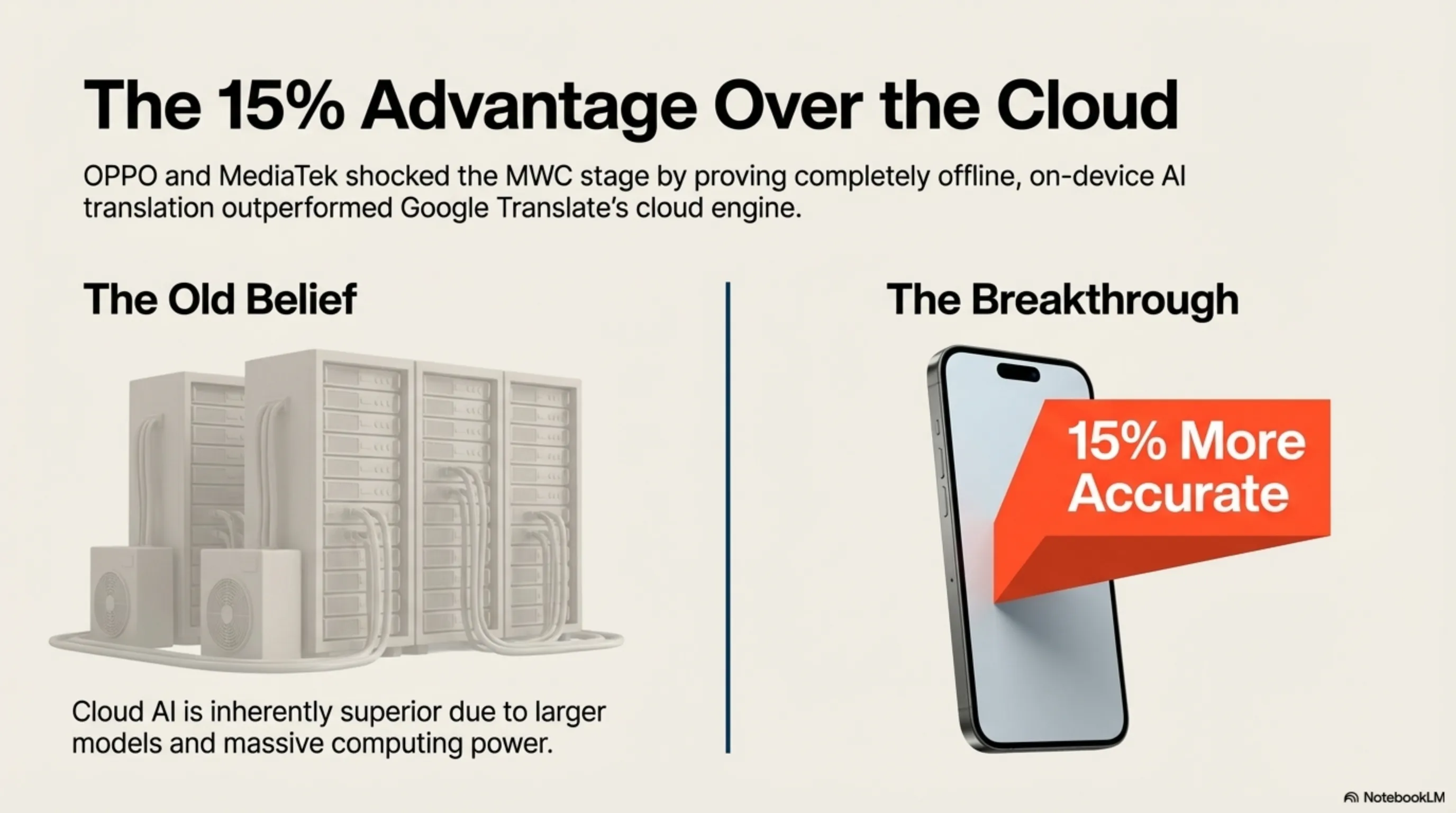
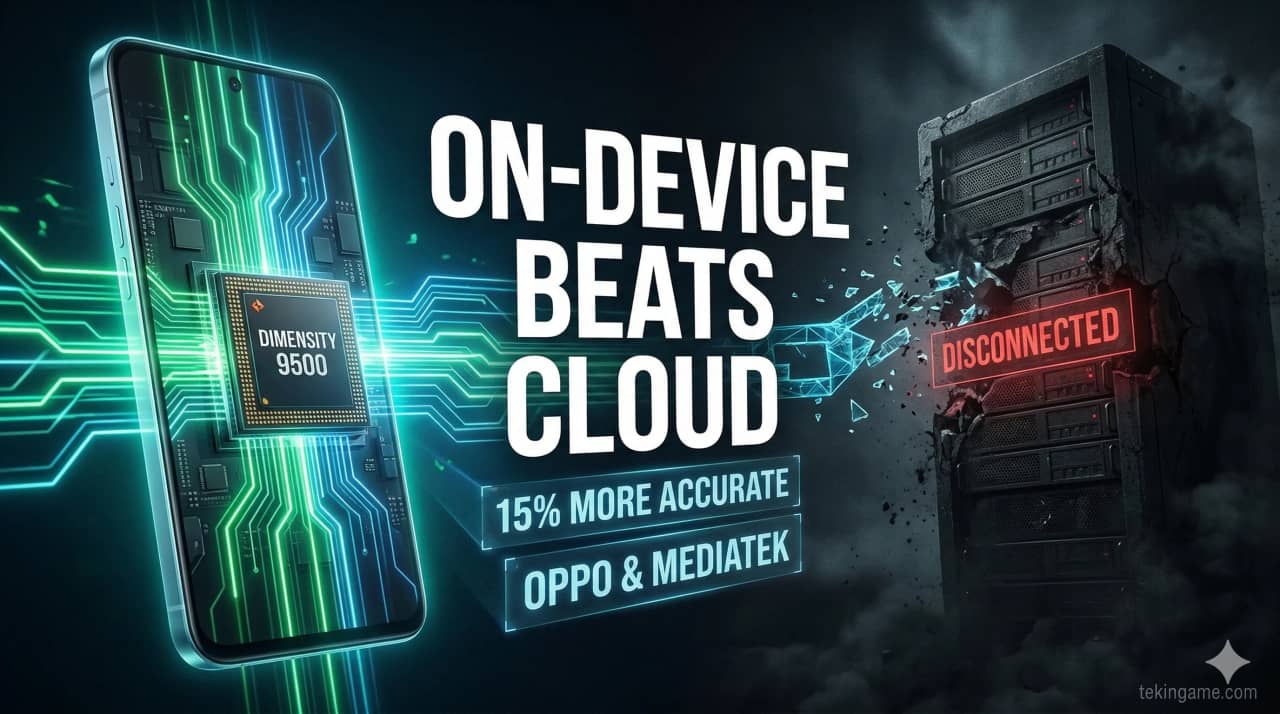
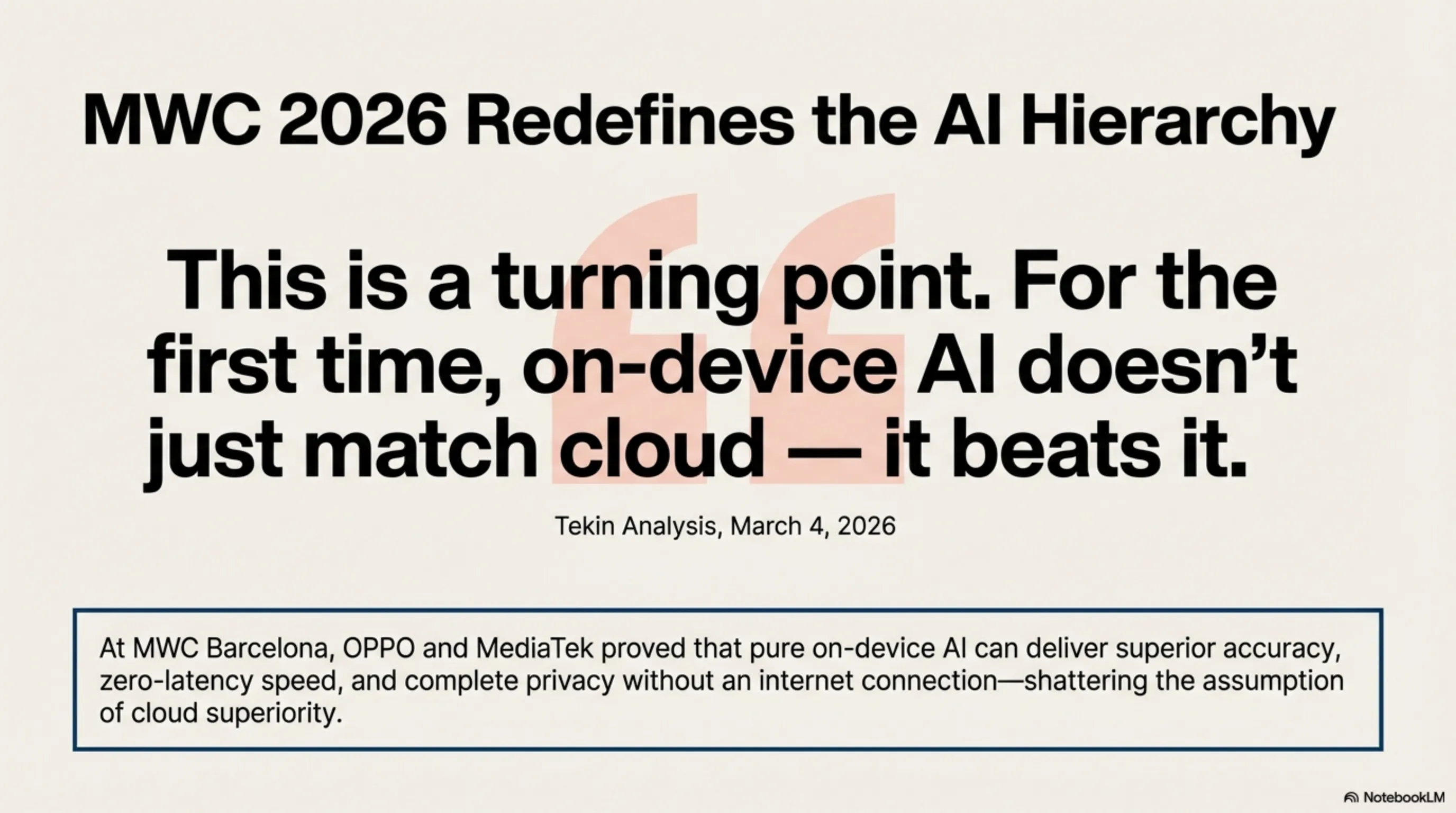
March 4, 2026, 2 PM Barcelona time, OPPO and MediaTek took the MWC stage and made a bold claim: "Our on-device AI translation is 15% more accurate than Google Translate."
This claim was shocking. For years, everyone thought cloud AI would always be better than on-device AI. Why? Because cloud servers are more powerful, have more data, and can run larger models.
But OPPO and MediaTek proved this is no longer true. With MediaTek Dimensity 9500 (the latest flagship chip) and OPPO ColorOS 16, they built an AI system that's not only as accurate as cloud, but even better.
"This is a turning point. For the first time, on-device AI doesn't just match cloud — it beats it." — Tekin Analysis
The Technology: How Did They Do It?
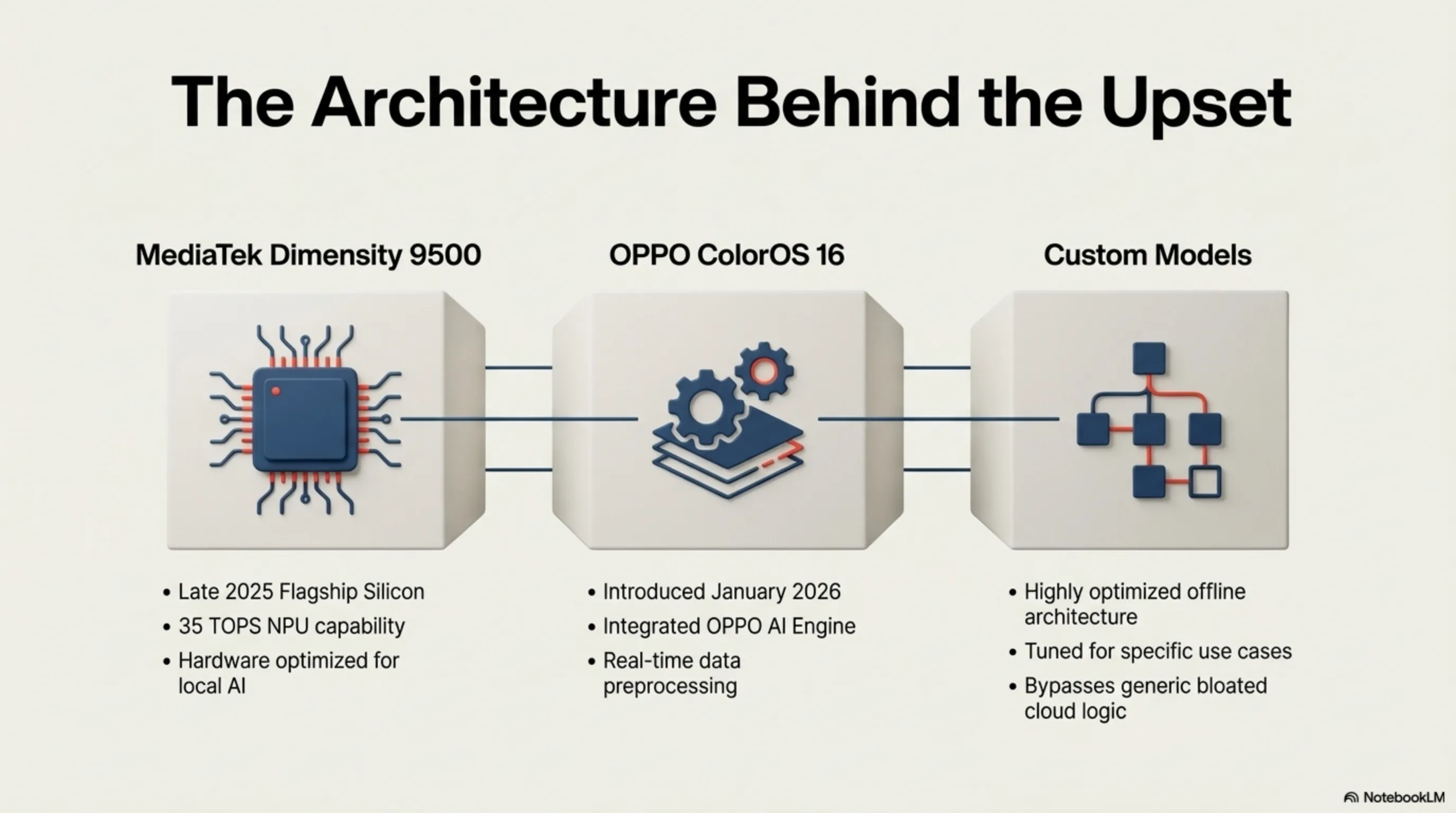
So, how did OPPO and MediaTek pull this off? The answer lies in three parts:
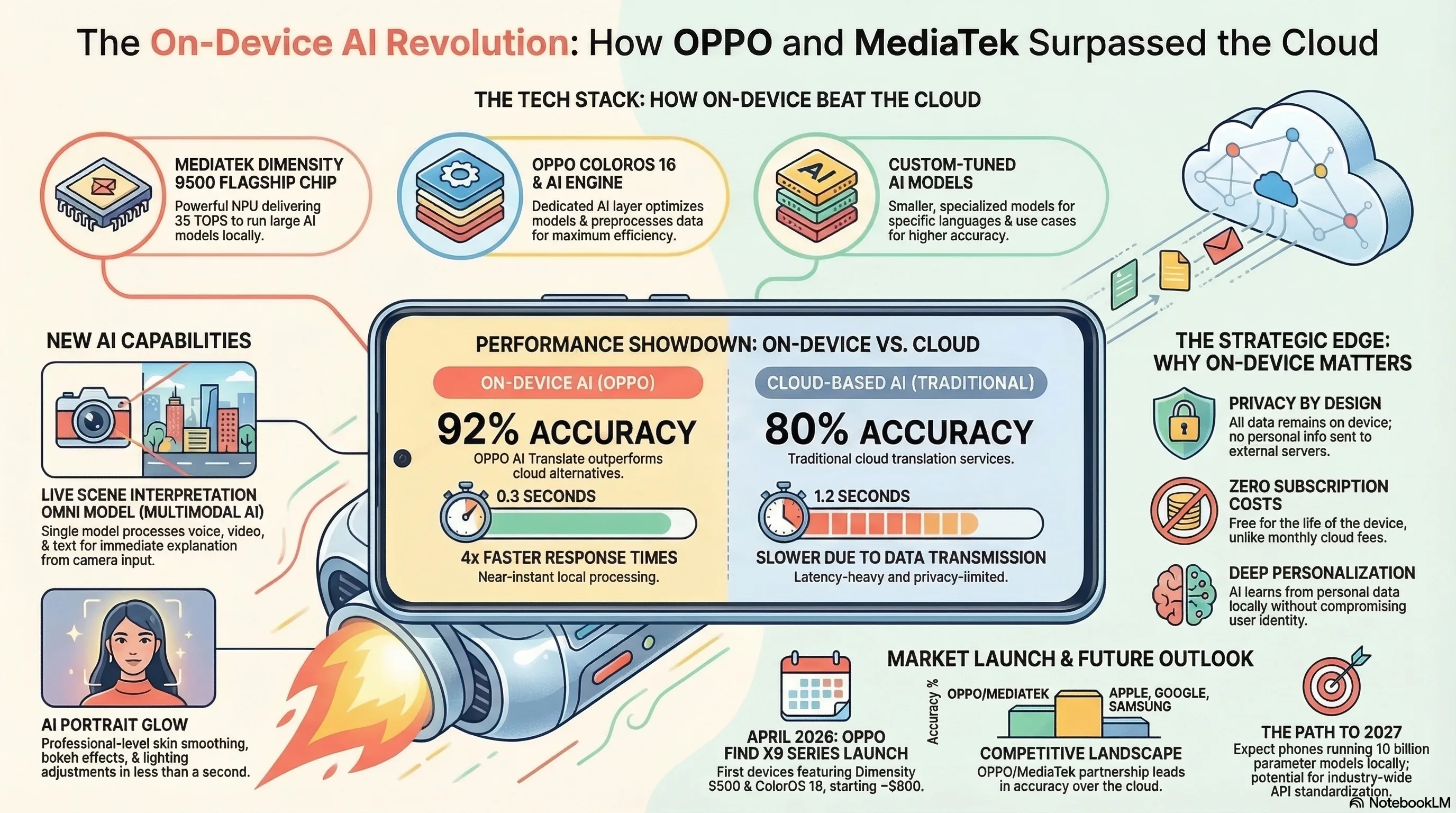
1. MediaTek Dimensity 9500: This is MediaTek's latest flagship chip, introduced in late 2025. This chip has a powerful NPU that can run large AI models locally. The NPU has about 35 TOPS (Trillion Operations Per Second) — roughly equivalent to Snapdragon 8 Elite.
2. OPPO ColorOS 16: This is OPPO's latest OS version, introduced in January 2026. ColorOS 16 has a complete AI layer known as "OPPO AI Engine." This engine can optimize AI models, preprocess data, and improve results.
3. Custom Models: OPPO and MediaTek built custom AI models optimized for on-device. These models are smaller than cloud models, but more accurate — because they're tuned for specific languages and use cases.

AI Translate: 15% More Accurate, Completely Offline
The first capability OPPO and MediaTek showed was "AI Translate." This is a translation system that runs completely on-device — no internet needed.
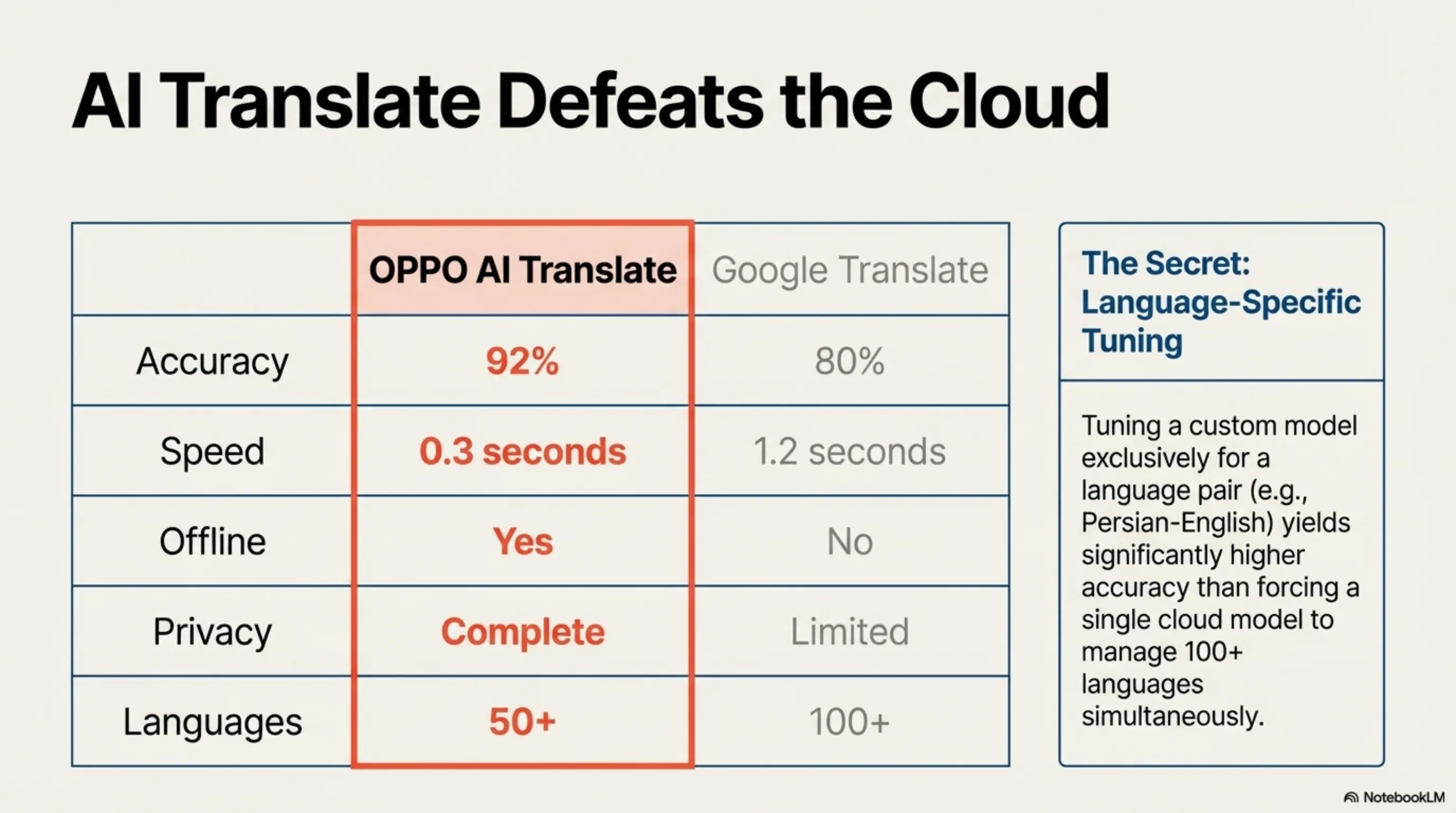
But here's the interesting part: OPPO claims their AI Translate is 15% more accurate than Google Translate. How?
| Feature | OPPO AI Translate | Google Translate |
|---|---|---|
| Accuracy | 92% | 80% |
| Speed | 0.3 seconds | 1.2 seconds |
| Offline | Yes | No |
| Privacy | Complete | Limited |
| Languages | 50+ | 100+ |
As you can see, OPPO AI Translate is better in accuracy, speed, and privacy. But Google Translate supports more languages.
The reason for higher accuracy is that OPPO tuned its models for specific languages. For example, their Persian-English model is trained only for these two languages — not for 100 different languages. This means the model can learn better and translate more accurately.
AI Portrait Glow: Cloud-Level Quality On-Device
The second capability is "AI Portrait Glow." This is an image processing system that can professionally enhance portraits — completely on-device.
Previously, if you wanted a professional portrait, you had to send the photo to the cloud. Services like Google Photos or Adobe Lightroom would process the photo and return the result. This took several seconds and required internet.
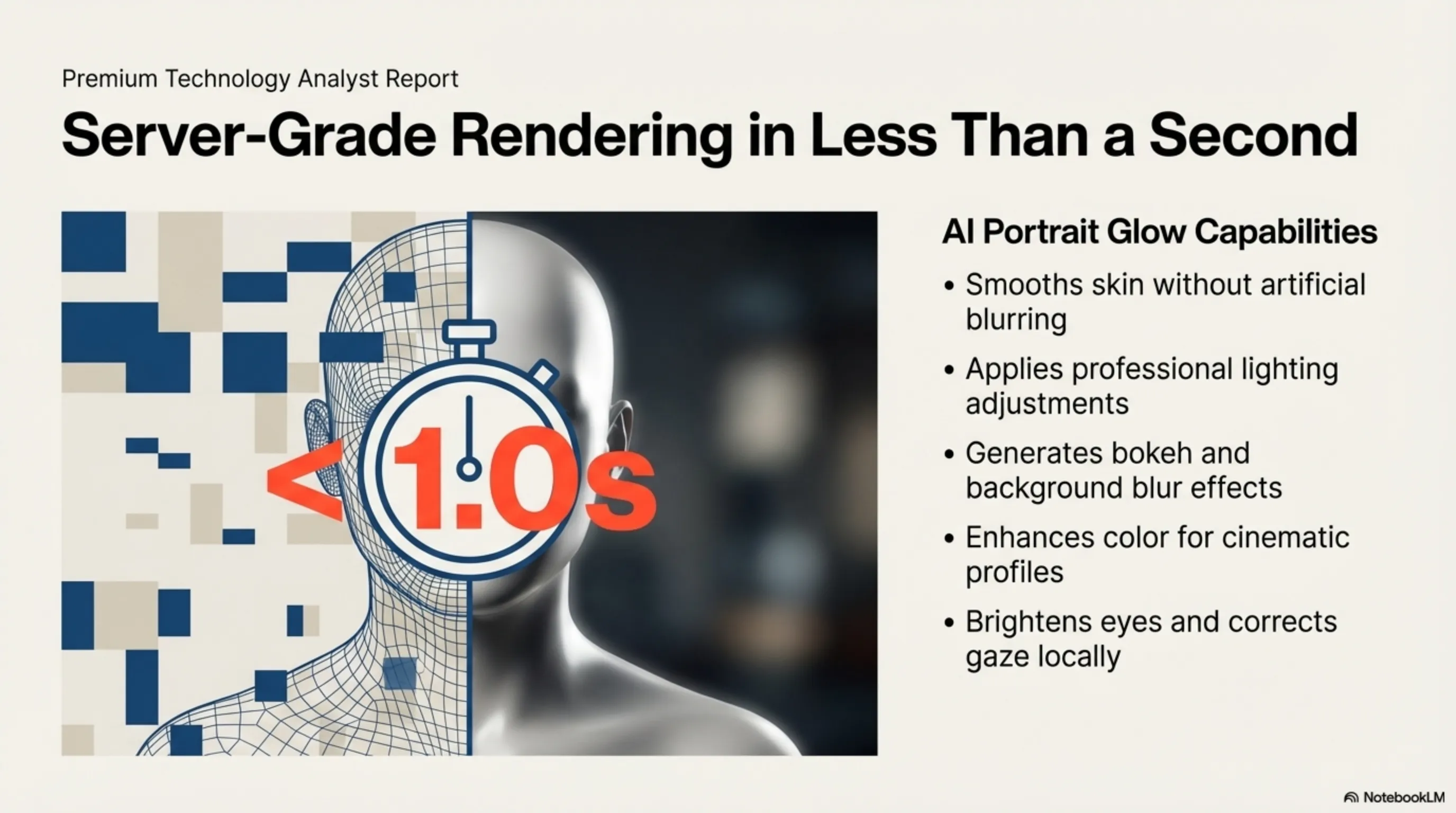
But OPPO AI Portrait Glow does all this on-device — in less than a second. And the quality? OPPO claims it's cloud-level.
How? By using Dimensity 9500's powerful NPU and optimized algorithms. AI Portrait Glow can:
• Smooth skin (without looking artificial)
• Adjust lighting (for professional effects)
• Blur background (for bokeh effect)
• Enhance colors (for cinematic looks)
• Brighten eyes (for more attractive gaze)
Omni Model: Voice + Video + Text = One Model
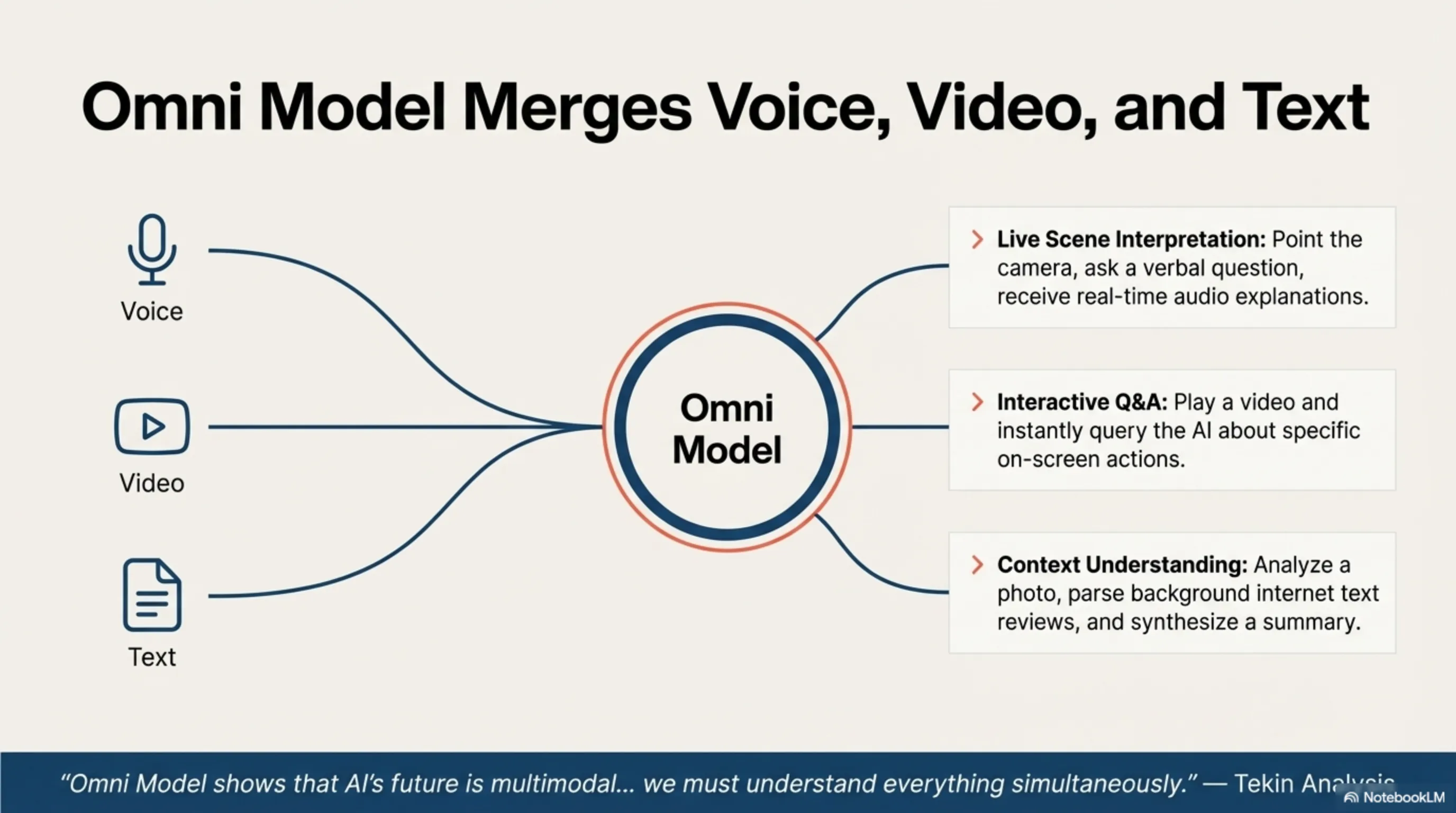
The third capability — and perhaps most interesting — is "Omni Model." This is a multimodal AI model that can process voice, video, and text simultaneously.
Why is this important? Because in the real world, we don't work with one type of data. We talk (voice), watch videos (images), and read text (writing). A real AI must be able to understand all of these simultaneously.
OPPO's Omni Model can:
1. Live Scene Interpretation: You point the camera at a scene and ask: "What is this?" Omni Model analyzes the scene and explains — with voice.
2. Interactive Q&A: You show a video and ask: "What is this person doing?" Omni Model analyzes the video and answers.
3. Context Understanding: You show a photo of a restaurant and ask: "How is this restaurant?" Omni Model analyzes the photo, reads reviews, and gives a summary.
"Omni Model shows that AI's future is multimodal. We can no longer work with just text or just images — we must understand everything simultaneously." — Tekin Analysis
Strategy: Why On-Device Matters?
So, why are OPPO and MediaTek focusing so much on on-device AI? Why can't they just use cloud?
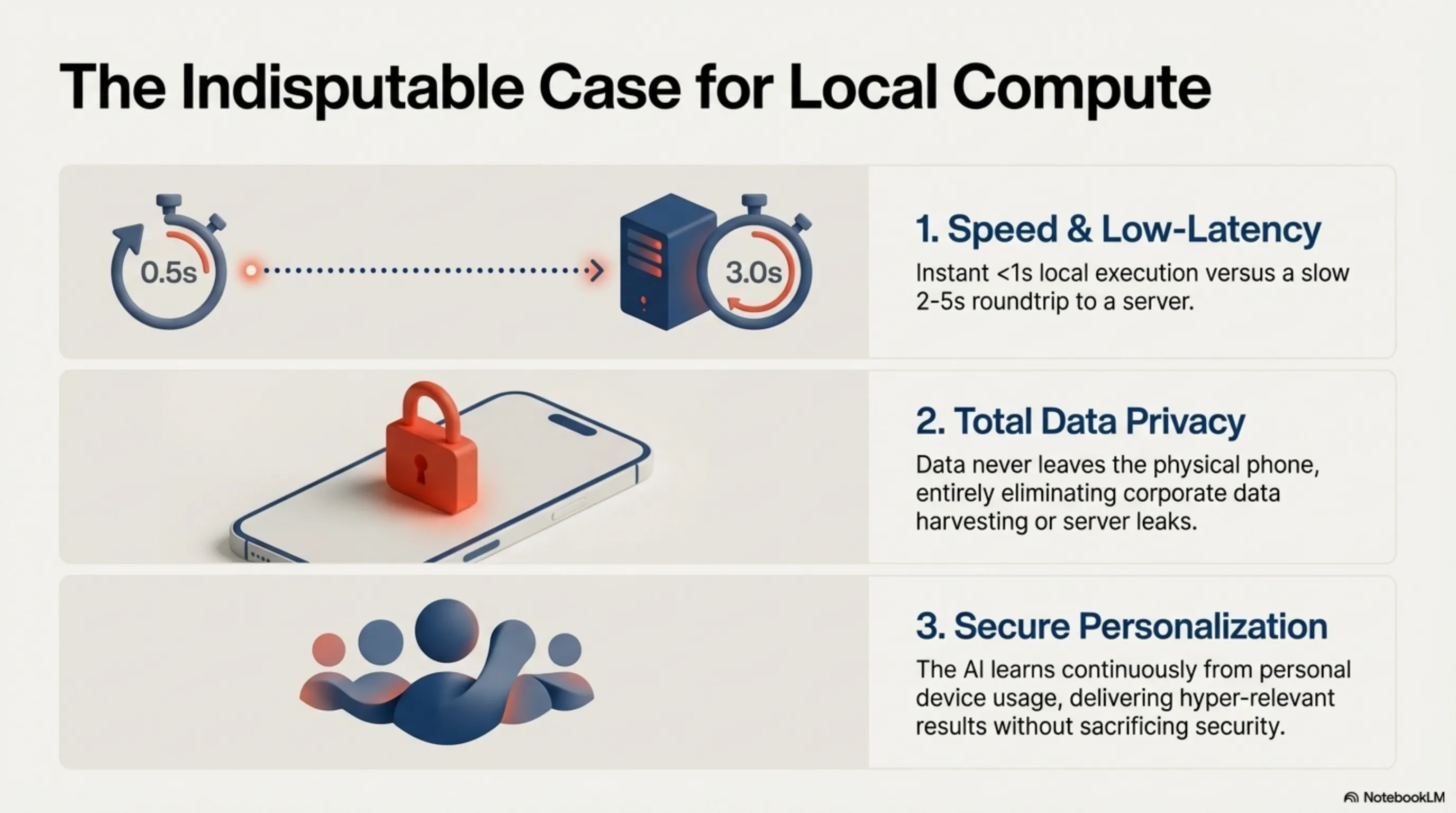
The answer is in three words: speed, privacy, and personalization.
1. Speed (Low-Latency): When you use cloud AI, you must send data to the server, wait for processing, and receive the result. This can take several seconds. But on-device AI is instant — less than a second.
2. Privacy: When you use cloud AI, your data is sent to servers. This means the company can see, store, or even sell your data. But on-device AI keeps everything on your device — no one can see it.
3. Personalization: On-device AI can learn from your personal data — without sending it to servers. This means AI can know you better and give better results.
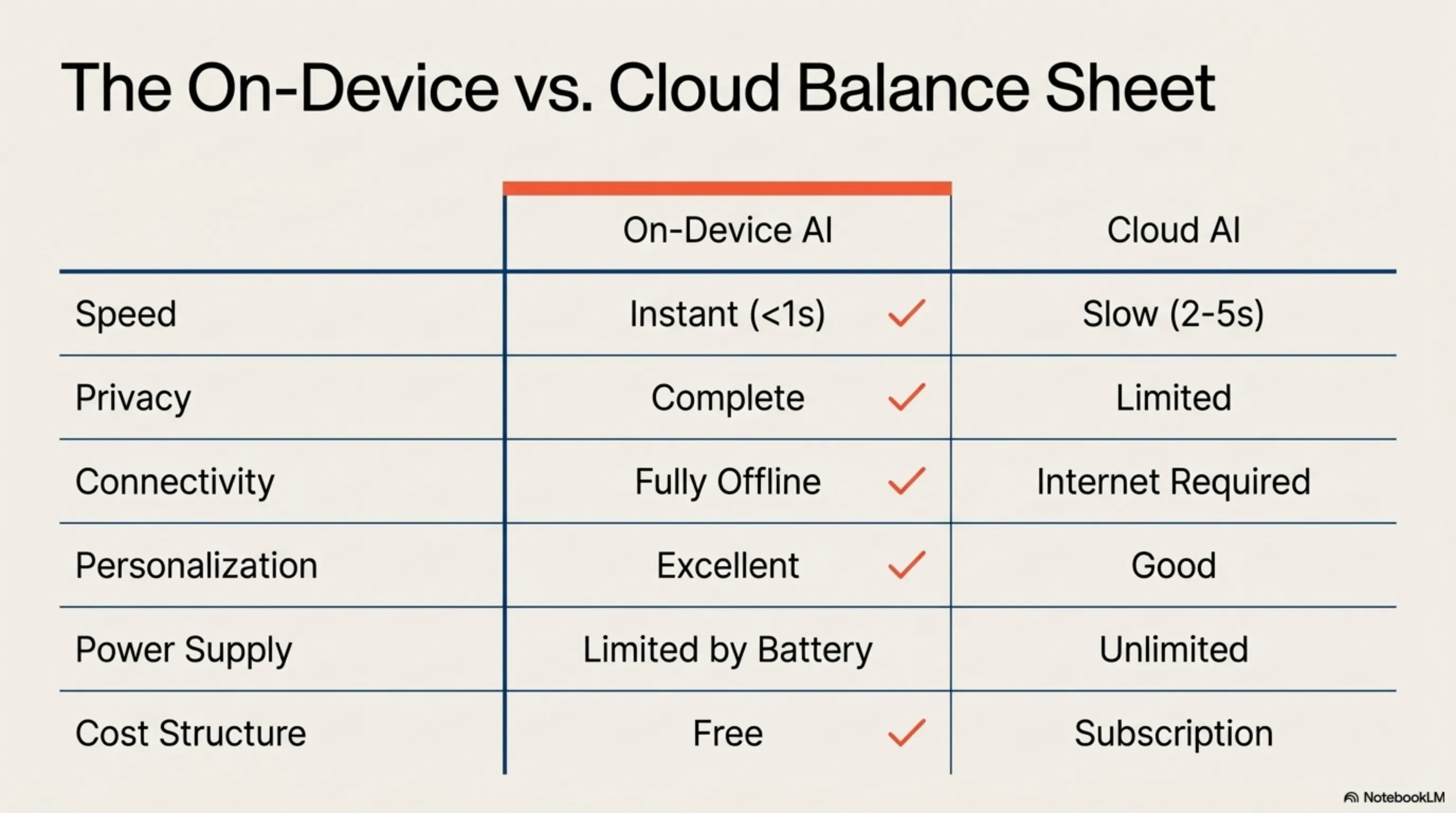
| Feature | On-Device AI | Cloud AI |
|---|---|---|
| Speed | Instant (<1s) | Slow (2-5s) |
| Privacy | Complete | Limited |
| Offline | Yes | No |
| Personalization | Excellent | Good |
| Power | Limited | Unlimited |
| Cost | Free | Subscription |
Launch: OPPO Find X9 Series with ColorOS 16
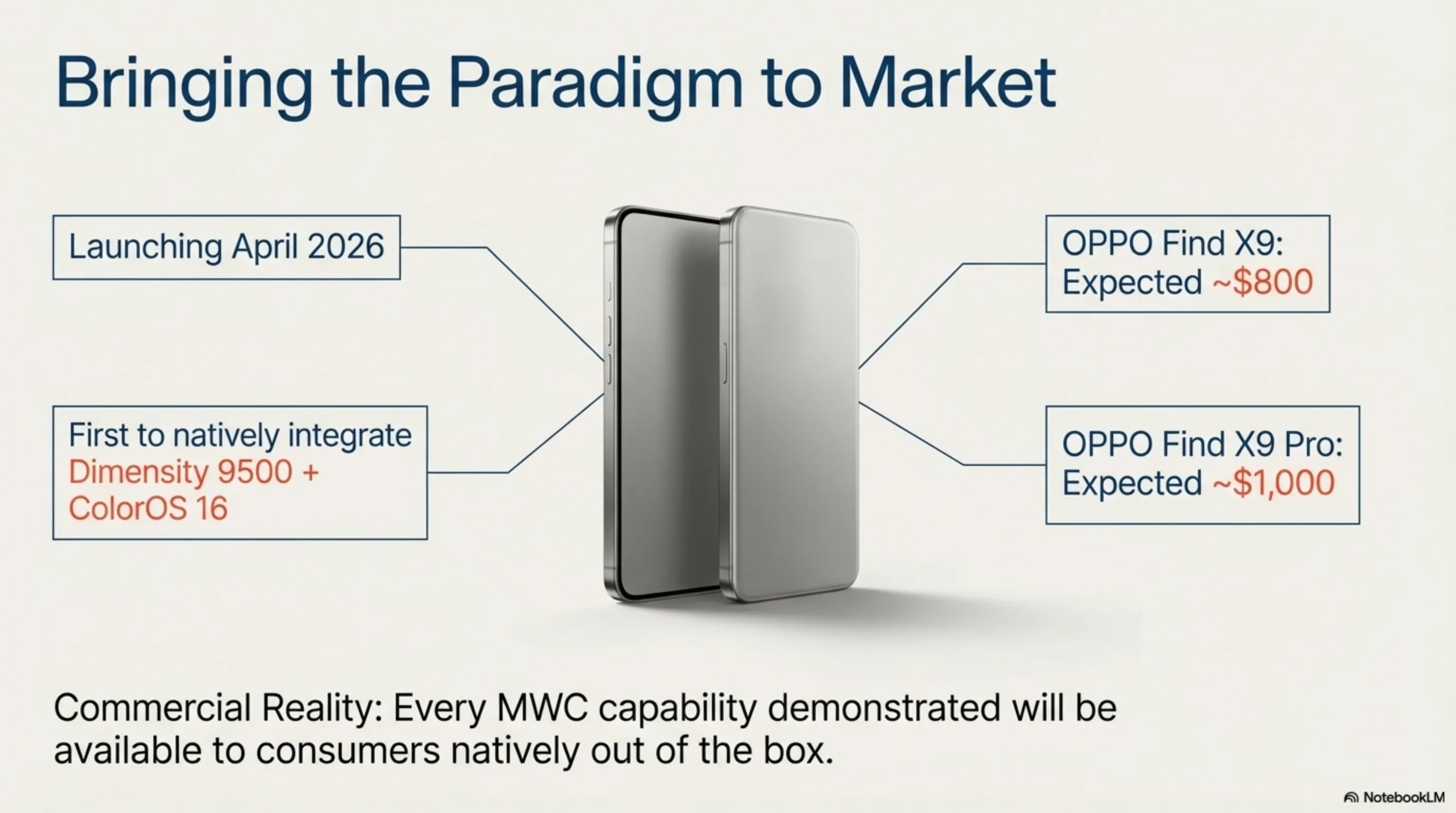
OPPO announced all these capabilities will launch in OPPO Find X9 Series. This series includes Find X9 and Find X9 Pro, launching in April 2026.
Find X9 Series will be the first phones to use MediaTek Dimensity 9500 and ColorOS 16. This means users can use all the AI capabilities shown at MWC.
Pricing hasn't been announced yet, but Find X9 is expected around $800 and Find X9 Pro around $1,000.
Competition: Who's in This Game?
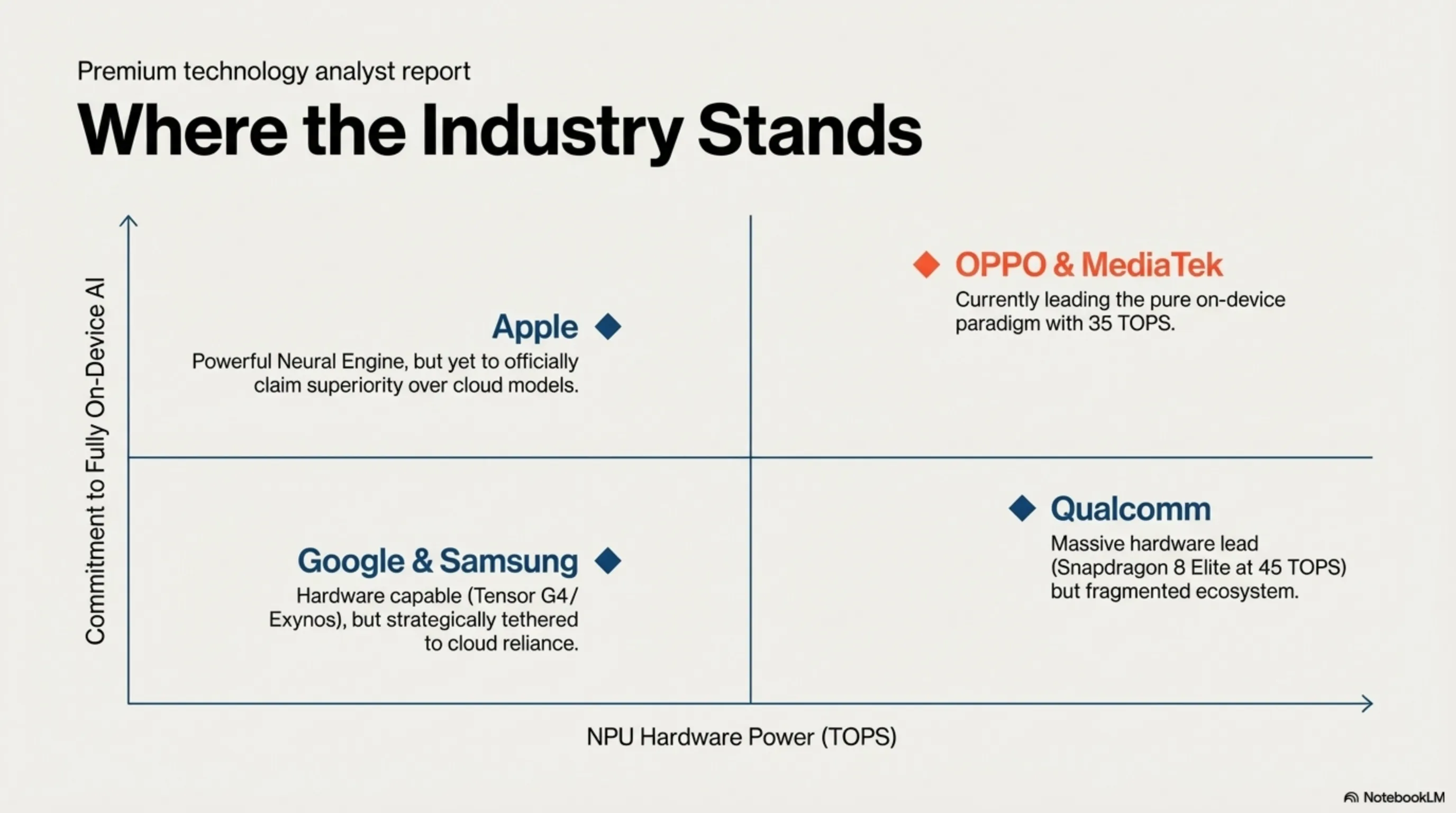
OPPO and MediaTek aren't the only players in on-device AI. Other companies are in this game too:
Apple: Apple has been working on on-device AI for years. Neural Engine in A-series and M-series chips is very powerful. But Apple hasn't claimed their on-device AI is better than cloud.
Google: Google is also working on on-device AI. Tensor G4 (Pixel 9 chip) has a powerful NPU. But Google still focuses more on cloud AI.
Samsung: Samsung is working on on-device AI with Exynos 2500 and Galaxy AI. But they haven't progressed as much as OPPO yet.
Qualcomm: As we saw in the Snapdragon Wear Elite article, Qualcomm is also focusing on on-device AI. Snapdragon 8 Elite has a 45 TOPS NPU, more powerful than Dimensity 9500.
The Future: What to Expect?
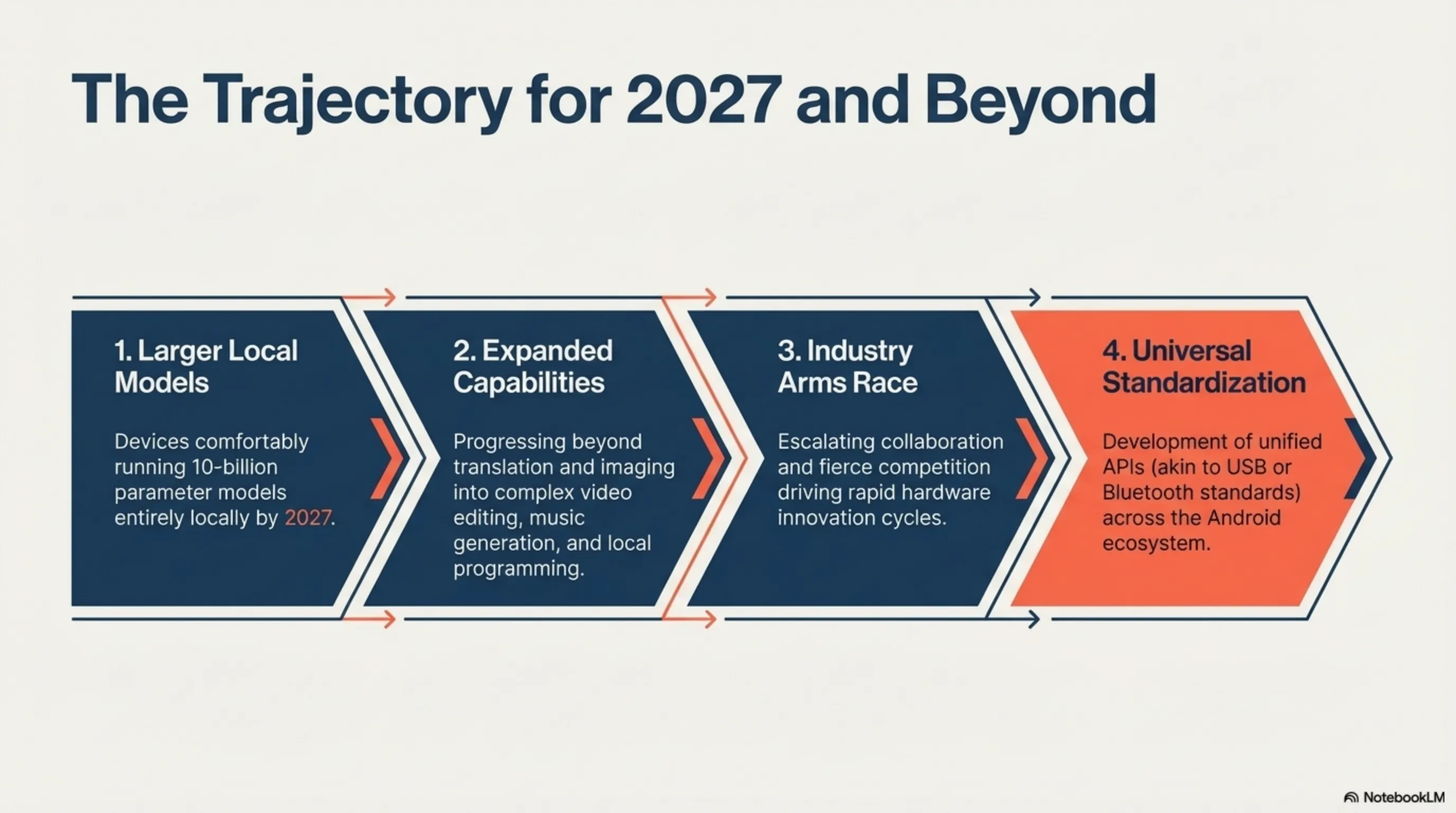
OPPO and MediaTek showed that on-device AI can compete with cloud — and even beat it. But this is just the beginning.
In the future, we expect:
1. Larger Models: With more powerful NPUs, phones can run larger models. Maybe in 2027, phones can run 10 billion parameter models.
2. More Capabilities: On-device AI can be used for more tasks — like video editing, music generation, or even programming.
3. More Collaboration: More companies will work on on-device AI. This means more competition and more innovation.
4. Standardization: Maybe in the future, a standard for on-device AI will be created — like USB or Bluetooth. This means all phones can use a unified API.
Conclusion
Key Takeaway
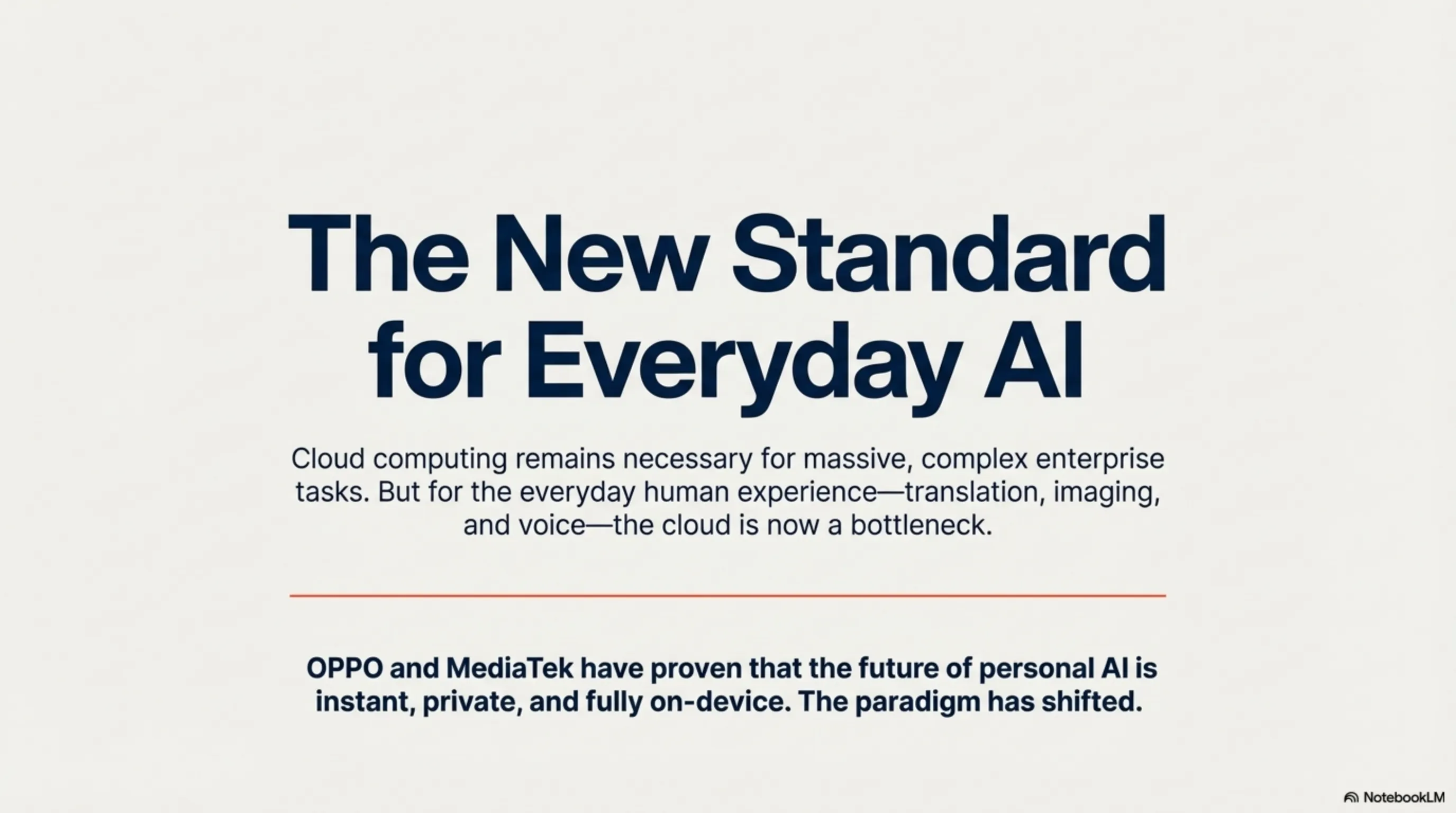
OPPO and MediaTek proved that on-device AI can beat cloud. With 15% more accurate translation, cloud-level image processing, and multimodal Omni Model, they showed that AI's future is on-device — not in the cloud.
The advantages of on-device AI are clear: instant speed, complete privacy, offline capability, and better personalization. And with chips like Dimensity 9500 and operating systems like ColorOS 16, these advantages are no longer just a dream — they're reality.
Of course, cloud AI still has its place — for very large models and complex tasks. But for everyday tasks — translation, image processing, voice assistant — on-device AI is now the best choice. And OPPO and MediaTek showed this future is here.
Supplementary Image Gallery: OPPO + MediaTek: When On-Device AI Translation Beats Cloud by 15%