1. Introduction: The Sheriff Has Arrived
Until this morning, the definition of "Safe AI" was vague. Was it a model that didn't use bad language? Was it a model that didn't leak user emails? The definitions varied from company to company.
With the release of the NIST AI RMF 2.0 (Risk Management Framework) and the accompanying Cyber AI Profile, the ambiguity is gone. Washington has effectively drawn a line in the sand. The dip we saw in AI stocks this morning wasn't just panic; it was the market realizing that the cost of doing business just went up. Developing AI is no longer just about hiring data scientists; it's about hiring adversarial engineers.
2. Decoding the "Cyber AI Profile"
The core of today's release is the Cyber AI Profile. Think of this as a "Building Code" for algorithms. Just as you can't build a skyscraper without following fire safety codes, you will soon find it impossible to deploy high-stakes AI without this profile.
2.1. Beyond Standard Cybersecurity
Traditional cybersecurity protects the container (the servers, the cloud buckets, the API keys). The Cyber AI Profile protects the contents (the logic, the weights, the decision-making process).
NIST argues that an AI model can be on a perfectly secure server and still be "hacked" if it has been taught to make wrong decisions via manipulated data. This shift from "Network Security" to "Cognitive Security" is the biggest paradigm shift in the document.
2.2. The Three Pillars of Defense
The profile mandates defense in depth:
- Secure the Supply Chain: You must know the provenance of every dataset used. "Scraping the internet" is no longer an acceptable answer for critical models.
- Secure the Training: Ensuring no malicious actors injected bad data during the learning phase.
- Secure the Inference: Protecting the model from input attacks once it is live.
3. Meet Dioptra: The "Wind Tunnel" for AI
Perhaps the most tangible takeaway from today's news is the official release of Dioptra.
Named after the classical astronomical instrument, Dioptra is an open-source testbed that allows developers to assess how their models hold up against "Adversarial Attacks."
Think of Dioptra as a wind tunnel for aircraft. You wouldn't fly a plane that hasn't been tested against strong winds. Similarly, Dioptra bombards your AI with noise, confusing patterns, and "poisoned" inputs to see if it breaks.
Prediction: By mid-2026, a "Dioptra Safety Score" will likely be a standard metric on product datasheets, right next to accuracy and latency.
4. The "Big Three" Adversarial Threats
Why do we need all this? The NIST document highlights three specific categories of attacks that traditional firewalls cannot see.
4.1. Data Poisoning (The Trojan Horse)
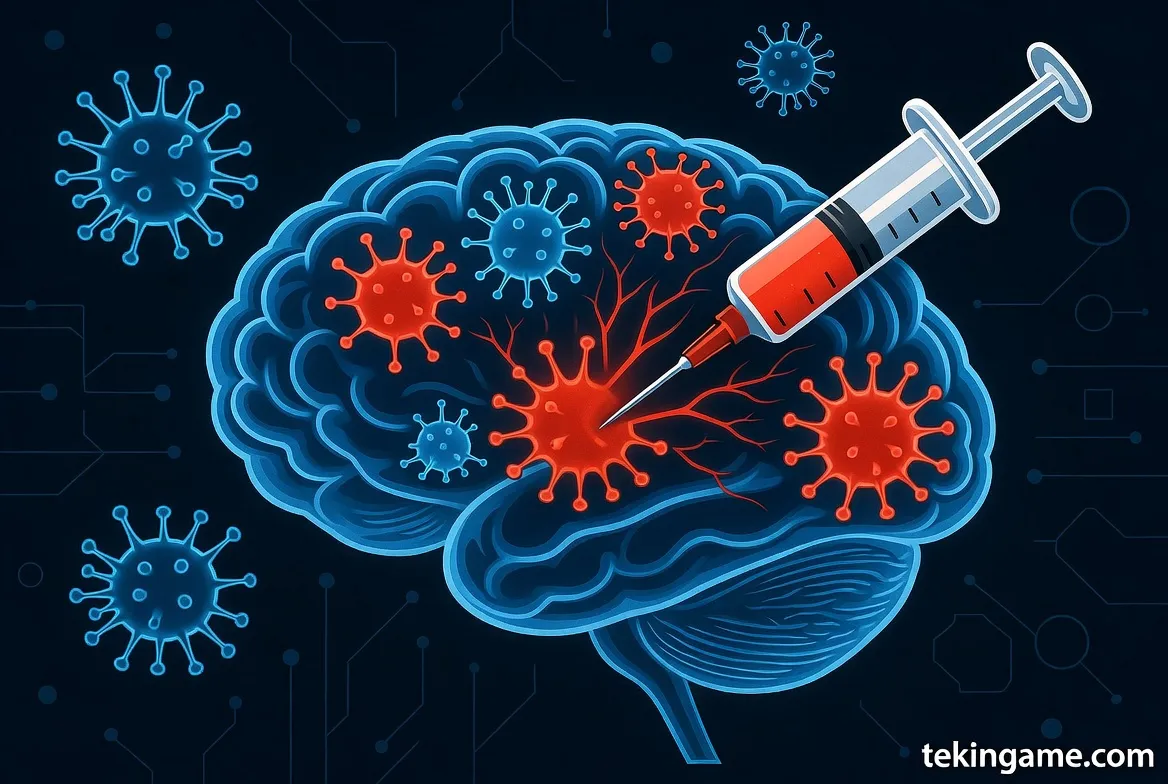
Data poisoning happens before the AI is even built. An attacker subtly alters a tiny fraction of the training data. For example, in a self-driving car dataset, they might take images of "Stop" signs and subtly mark them as "Speed Limit" signs in the metadata.
The AI learns this wrong association. It sleeps like a Trojan Horse until the car is on the road, sees a specific Stop sign, and speeds up instead of stopping. NIST identifies this as the highest-severity risk for 2026.
4.2. Evasion Attacks (The Digital Camouflage)

This occurs during runtime. An attacker modifies an input—like adding a specifically designed sticker to a pair of glasses—that makes a facial recognition system identify a stranger as the CEO. To a human, it looks like a sticker. To the AI, the math dictates that this is a completely different person. This "mathematical camouflage" is terrifying for security systems.
4.3. Model Inversion (The Privacy Heist)
Also known as "Model Stealing" or "Inference Attacks." By asking an AI model thousands of specific questions and analyzing the confidence of the answers, a hacker can reverse-engineer the training data.
If an AI was trained on medical records, a skilled attacker could potentially extract specific patient names and conditions just by querying the public API. The new guidelines demand "Differential Privacy" techniques to make this mathematically impossible.
5. The Business Verdict: Adapt or Die
For the Tekin Game community—whether you are an investor or a developer—the message is clear: Compliance is the new moat.
The "wild speculation" phase of AI is cooling down. We are entering the "industrialization" phase. In this phase, boring things like safety certifications, audit logs, and NIST compliance are what win contracts.
Startups that ignore this document will find themselves locked out of the lucrative enterprise and government markets. The market dip today isn't the end of AI; it's the market pricing in the cost of growing up.
6. The 2026 Checklist for CTOs
Based on the NIST guidelines, here is what technical leaders need to implement immediately:
- Establish a Red Team: Dedicate resources solely to attacking your own models using tools like Dioptra.
- Data Bill of Materials (BOM): Document the source of every pixel and text snippet in your training set.
- Human-in-the-Loop: Ensure there is a manual override for all high-stakes AI decisions.
- Versioning: Never update a live model without re-running the full security suite.