
1. Miracle or Nightmare? How the "Telepathy" Chip Actually Works
Let’s strip away the hype and talk engineering. Your brain is essentially a biological electrical grid. Every thought, every movement, every memory is a storm of electrical signals firing between neurons. Neuralink claims it can not only "read" this storm but eventually "write" into it.
The Hardware: The N1 Implant
The device itself is surprisingly small—about the size of a large coin. But the real magic lies in the 64 ultra-thin threads attached to it.
Each thread is thinner than a human red blood cell and contains 1,024 electrodes capable of detecting neural action potentials. To put that in perspective, previous medical grade implants had fewer than 100 channels. Neuralink has increased the bandwidth by an order of magnitude.
The Surgeon: The R1 Robot
Why can’t a human surgeon install this? Because human hands are too shaky.
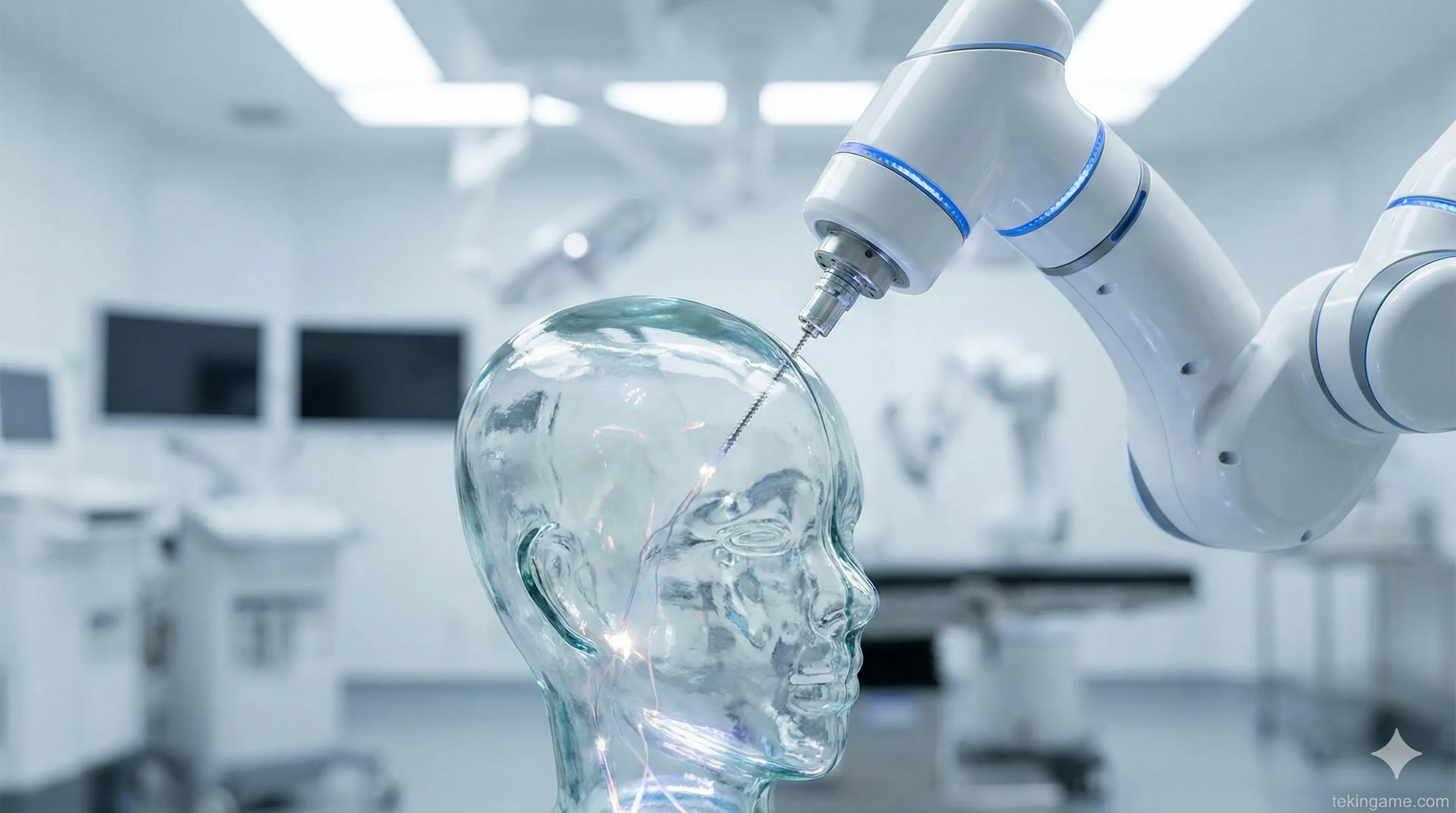
Musk’s team had to invent the R1 Robot. It operates like a high-tech sewing machine. It uses cameras and optics to detect blood vessels on the surface of the brain and inserts the threads between them to avoid bleeding. The robot performs the surgery in under an hour, leaving only a small scar hidden under the hair.
The goal? To make brain surgery as routine and automated as LASIK eye surgery.
2. Gaming at the Speed of Thought: The End of "Input Lag"
We gamers spend thousands of dollars on 360Hz monitors, ultra-light mice, and mechanical keyboards just to shave off 5 milliseconds of input lag.
Neuralink proposes to reduce that number to zero.
Case Study: Noland Arbaugh
In early 2024, the world watched in awe as Noland Arbaugh, a quadriplegic patient, played *Chess* on his laptop while joking with the livestream chat.
Later, he revealed he had stayed up until 6 AM playing *Civilization VI*.
"I had given up on playing that game," Arbaugh said. "Neuralink gave that back to me."
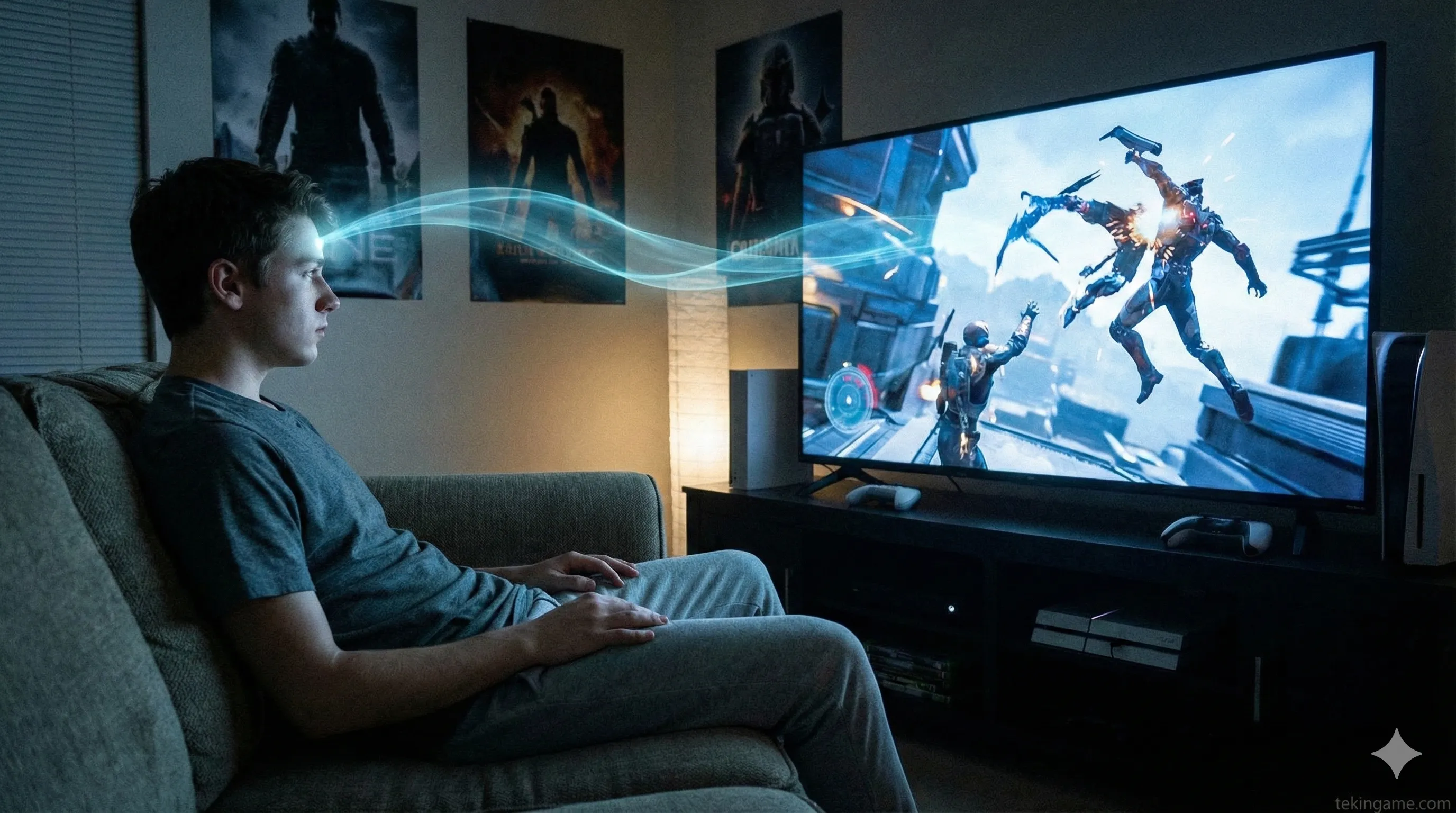
Before the chip, he needed a mouth stick or a cumbersome eye-tracker. With the chip, he simply *intended* to move the cursor, and it moved. The "bandwidth" of his interaction exceeded anything previously seen in Brain-Computer Interfaces (BCI).
The Future of Esports: Cheating or Evolving?
Fast forward to 2030. The implications for competitive gaming are staggering.
If a player with a chip can react 100ms faster than a biological player, is that fair?
We predict the formation of two distinct leagues:
1. The Natural League: Strict bio-scans to ensure no implants. Pure biological reaction time.
2. The Augmented League (Unlimited): A Cyberpunk arena where chips, stimulants, and tech-assisted reflexes are the norm. This is where the limits of human potential will be broken.
3. Beyond Gaming: The Internet of Brains
Elon Musk’s endgame isn't just curing paralysis; it is "AI Symbiosis."
He argues that as Artificial Intelligence grows exponentially smarter, humans will be left behind—treated like "house cats" by super-intelligent machines. His solution? If you can't beat them, join them.
The Death of the Smartphone
Why carry a brick of glass and metal in your pocket when you can have the interface directly in your visual cortex?
In a Neuralink future, you won't look at a screen to read a text message; the text will simply appear in your field of vision. You won't need to type a query into Google; you will simply *wonder* about a fact, and the answer will be downloaded into your short-term memory.
It sounds like science fiction, but the "Telepathy" chip is the foundational hardware for this reality.
The "Matrix" Moment
Can we download skills? Theoretically, yes. If the chip can stimulate the motor cortex in specific patterns, it could potentially accelerate muscle memory learning for playing the piano—or kung fu. We are decades away from this, but the physics allows it.
4. The Danger Zone: When Your Brain Gets "Hacked"
This is where the discussion enters the "Forbidden Zone."
Everything connected to the internet can be hacked. Your pacemaker can be hacked. Your smart fridge can be hacked. Why would your brain be an exception?
The Nightmare Scenario: Brain Ransomware
Imagine waking up to a deafening noise in your head that won't stop. Or finding yourself unable to move your legs.
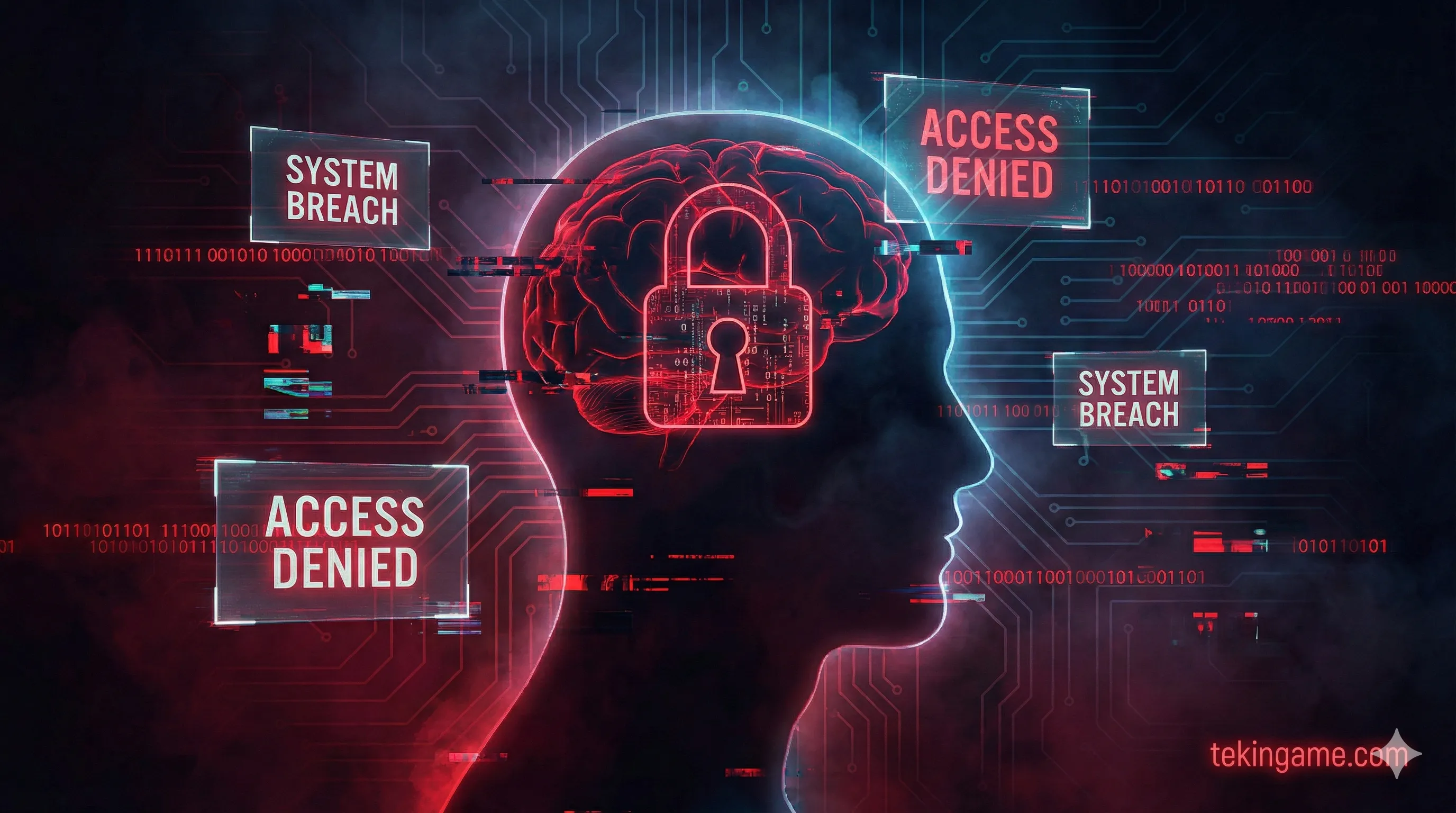
A message projects onto your visual field: "Your motor cortex has been encrypted. Transfer 5 Bitcoin to unlock your body."
This is Brain Ransomware. Security experts warn that without military-grade encryption, BCI devices could become the ultimate hostage tool.
Neuro-Rights and Privacy
Today, corporations track your clicks and likes to build a profile of you.
Tomorrow, they could track your neuro-data.
If Neuralink knows when you are excited, afraid, or aroused, that data is gold for advertisers. Imagine seeing a commercial for a burger and your chip registering a "hunger" spike—Neuralink could sell that confirmation to McDonald's.
We need a new bill of human rights: Neuro-Privacy. The right to keep your thoughts offline.

5. The Competition: Musk is Not Alone
While Musk grabs the headlines, other companies are quietly winning the race with different approaches.
- Synchron: They beat Neuralink to FDA approval. Their device, the Stentrode, doesn't require drilling into the skull. It is pushed up through the jugular vein into the brain—like a heart stent. It is safer, less invasive, but offers lower bandwidth (fewer electrodes).
- Blackrock Neurotech: The veterans. They have had patients controlling robotic arms with their thoughts for over a decade.
The race is on. Neuralink is the "Apple" of this world—flashy, consumer-focused, and integrated. But the "Androids" of the BCI world are catching up.
6. Conclusion: The Forced Evolution
Commanders, we stand at the precipice of a new species.
Neuralink has the potential to end human suffering—to make the blind see and the paralyzed walk. It is the most beautiful promise of technology.
But simultaneously, it opens a door that can never be closed. A door to a world where our biological privacy is extinct, and our minds are merged with the cloud.
The question is not "Will this technology happen?" It is already happening.
The question is:
When the "Beta Test" is over, and the **Neuralink Gamer Edition** (complete with RGB lighting, of course) hits the shelves... Will you be first in line?
If you were offered a free Neuralink chip that guaranteed you would never miss a headshot in any FPS game, but it carried a 1% risk of being hacked...
Would you take the deal? Tell us in the comments: #TeamCyborg or #TeamHuman.