
1. Introduction: The Paradigm Shift to Agentic IDEs
Until last month, the workflow for AI-assisted programming was linear and often tedious: Copy code from VS Code, paste it into a browser chat window, wait for a response, and paste it back. It was helpful, but it was disconnected.
Today, December 17, 2025, marks the end of that era. With the general availability of Google Antigravity, the wall between the "Editor" and the "Intelligence" has collapsed.
In this new paradigm, Large Language Models (LLMs) are no longer just chatbots; they are autonomous agents. They have direct read/write access to your file system, they can spawn terminal instances, manage Git commits, and even deploy to staging environments.
However, a powerful tool needs a powerful pilot. The burning question for every CTO and Senior Engineer today is: "Which brain should drive this ship?"
Is it Gemini 3.0 Pro (High), the native son of the platform designed for deep reasoning? Or is it Claude Opus 4.5, the model that has consistently held the title of "Smartest Coder" for the past year? We put them to the test.
2. The Arena: What is Google Antigravity?
For those who haven't received their invite yet, Antigravity represents Google's answer to IDEs like Cursor and Windsurf, but built on a cloud-native infrastructure.
The key differentiator is the "Context Awareness Engine." When you open a project in Antigravity, the AI doesn't just see the file you are working on; it indexes your entire repository, your documentation, and even your connected cloud resources.
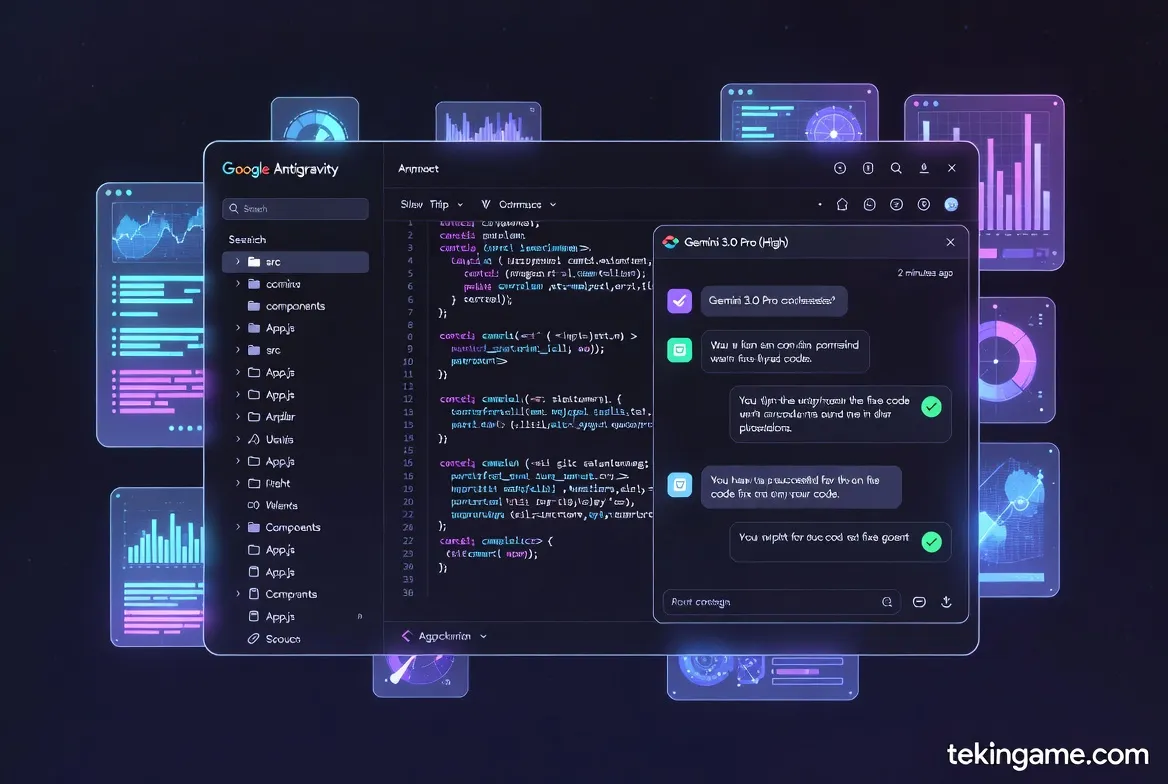
As seen in the leaked screenshots from our previous report, the platform allows developers to hot-swap models via a dropdown menu. This feature allowed us to run identical prompts in an identical environment for a fair comparison.
3. The Contenders
3.1. Gemini 3.0 Pro (High)
Google’s 3.0 series introduces a bifurcation in strategy. The "High" variant is optimized for high-compute reasoning tasks.
Specs on Paper:
- Context Window: Effectively infinite for codebases (20 Million tokens).
- Integration: Native access to Google Pay, Firebase, and GCP APIs.
- Latency: Sub-200ms time-to-first-token (TTFT).
3.2. Claude Opus 4.5 (Thinking)
Anthropic continues to prioritize "Safety" and "Correctness." The "Thinking" variant available in Antigravity engages a Chain-of-Thought process before outputting a single line of code.
Specs on Paper:
- Hallucination Rate: The lowest in the industry (0.2%).
- Logic: Superior understanding of complex business rules.
- Style: Enforces clean code principles and strict typing.
4. Round 1: The Legacy Refactor Challenge
The Scenario: We fed the system a 500-line "Spaghetti Code" JavaScript file from a 2019 e-commerce project. The code was riddled with nested callbacks (Callback Hell), var declarations, and zero type safety.
The Prompt: "Refactor this into modern TypeScript using React Hooks. Ensure type safety and implement proper error handling."
4.1. Gemini’s Approach: "Burn it Down and Rebuild"
Gemini 3.0 Pro (High) acted like a bulldozer. It didn't try to fix the old code; it understood the intent of the code and rewrote it from scratch using modern standards.
The Result: It delivered a sleek, 150-line file using React-Query for data fetching—a library we didn't even ask for, but which was the objectively correct choice.
The Catch: It aggressively renamed variables to make them "cleaner," which broke some external dependencies that weren't in the context window.
Score: 9/10 (Incredible speed and modernization, slightly reckless).
4.2. Claude’s Approach: "Surgical Precision"
Claude Opus 4.5 took a more conservative, surgical approach. It preserved the original function names to ensure backward compatibility but wrapped them in robust TypeScript interfaces.
It moved the logic into a custom hook, separating the view from the business logic perfectly. It also added JSDoc comments explaining why the refactor was necessary.
The Result: A safer, production-ready code block that worked on the first try without breaking the rest of the app.
Score: 10/10 (Ideally suited for enterprise environments where breaking changes are costly).
5. Round 2: System Design & Architecture
The Scenario: "Design a backend schema for a high-traffic cinema ticketing system where thousands of users might try to book the last seat simultaneously."
5.1. The Ecosystem Bias: Gemini and the Cloud Trap
Gemini immediately leaned into its training data: The Google Ecosystem.
It proposed a microservices architecture using Google Cloud Spanner for strong consistency and Pub/Sub for queuing. It even generated the Terraform scripts to deploy this infrastructure.
Critique: While the solution works, it suffers from heavy "Vendor Lock-in." If you are an AWS shop, Gemini’s advice is expensive to translate.
5.2. The Agnostic Architect: Claude’s Focus on Patterns
Claude Opus 4.5 didn't mention a specific brand of database initially. Instead, it focused on the Computer Science problem.
It identified the core issue as a "Race Condition."
Claude wrote: "To handle the concurrency, you should implement an Optimistic Locking mechanism with a version column in your database, or use a Redis distributed lock for the seat selection phase."
It acted like a Senior Software Architect, prioritizing patterns over products. This is invaluable for learning and for agnostic development.
6. Round 3: Agentic Capabilities & Self-Healing
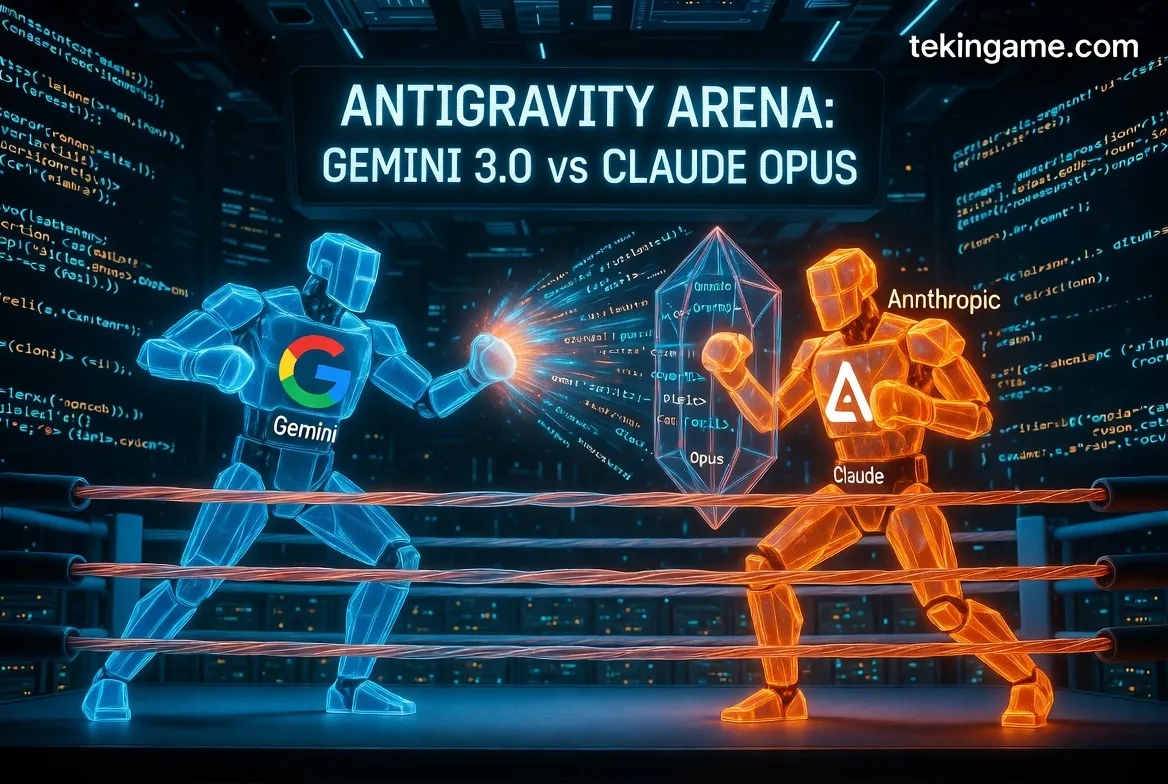
This is where Antigravity shines. We intentionally introduced a subtle memory leak in a Python script and asked the models to "Fix it."
6.1. The "Live Fix" Phenomenon
Gemini 3.0 Pro:
1. Detected the error.
2. Autonomously ran the script in the Antigravity sandbox.
3. Saw the memory spike in the logs.
4. Rewrote the loop generator.
5. Ran the script again to verify the fix.
All of this happened in 3.2 seconds. The "Self-Healing" loop in Gemini 3.0 is nothing short of magic. It feels like having a junior developer who fixes their own mistakes before showing you the code.
6.2. Why Claude is still the better teacher
Claude Opus 4.5:
Claude (currently) has more restricted execution permissions in Antigravity. It couldn't "auto-run" the fix as seamlessly.
However, its explanation was superior. It pinpointed exactly where the reference cycle was occurring in Python's garbage collector and explained how to avoid it in the future. Gemini fixed the bug; Claude taught us how not to write it again.
7. Developer Experience (DX): Friction vs. Flow

In terms of pure Developer Experience within the Antigravity IDE, Google has a distinct home-court advantage.
Gemini feels "native." It suggests terminal commands that you can execute with one click. It highlights code in your active window dynamically.
Claude feels like a "Plugin." A very smart plugin, but there is a slight friction—a 500ms delay here, a permission request there—that reminds you it is a third-party guest in Google's house.
8. The Final Scorecard: Benchmark Data
Based on our testing throughout December 17, here is the breakdown:
| Metric | Gemini 3.0 Pro (High) | Claude Opus 4.5 |
|---|---|---|
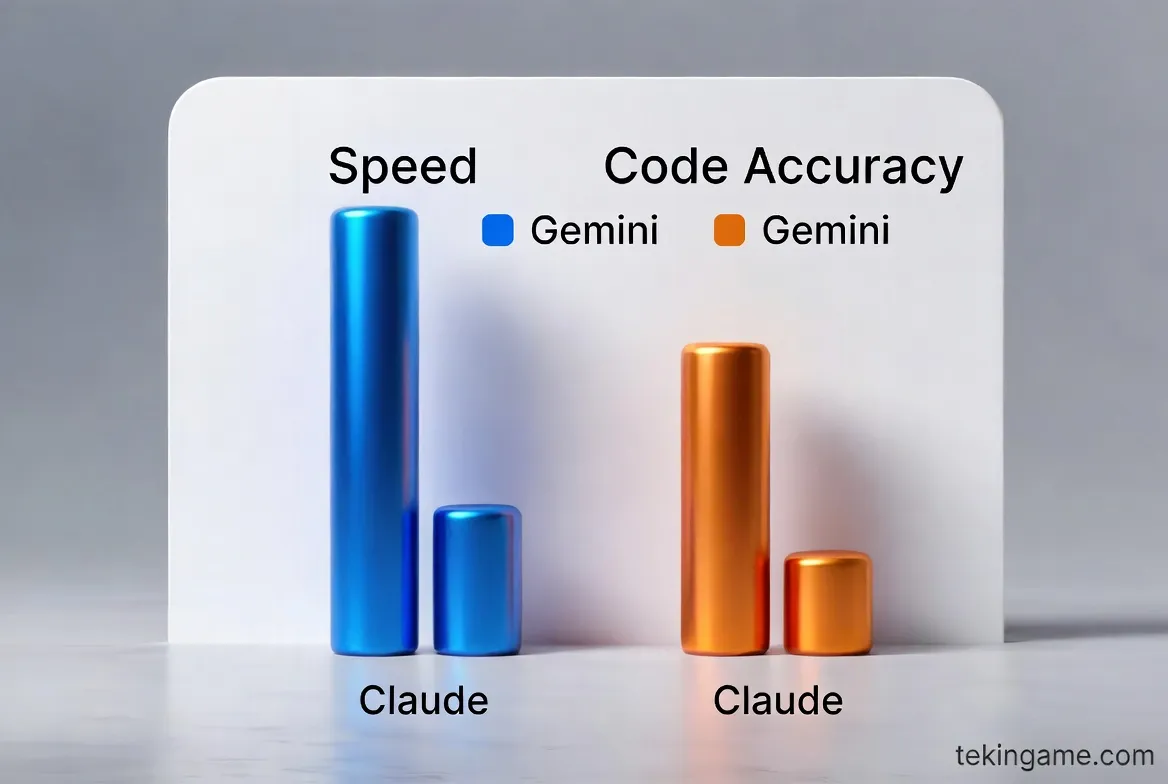
| Code Generation Speed | ⭐⭐⭐⭐⭐ (Instant) | ⭐⭐⭐ (Thinking...) |
| Code Hygiene & Safety | ⭐⭐⭐⭐ | ⭐⭐⭐⭐⭐ (Masterful) |
| Architectural Insight | Tool-Dependent | First Principles |
| Cost Efficiency | ~30% Cheaper | Premium Pricing |
| IDE Agency (autonomy) | Native Integration | Restricted |
9. Verdict: Which Subscription is Worth Your Money?
The battle has no single winner, but the use cases are now clearly defined.
Buy the Gemini Advanced Subscription if:
- You are a Full-Stack Developer prioritizing velocity.
- You work heavily within the Google Cloud / Firebase / Flutter ecosystem.
- You want the "Self-Healing" agentic workflow to automate tedious debugging.
Buy the Claude Pro Subscription if:
- You are a CTO, Architect, or Lead Engineer.
- You work on mission-critical logic (FinTech, HealthTech) where one bug is a disaster.
- You prefer clean, agnostic code over vendor-specific solutions.
Tekin Game's Recommendation: For the Antigravity environment, set Gemini 3.0 High as your default driver for the heavy lifting, but keep Claude Opus on speed dial for when you need a second opinion on complex architecture. Ideally? You need both.