
1. The Scary Stats of 2026: When 80% of AAA Output is Recycled
Let's speak in numbers. According to a Q1 2026 analytical report by Newzoo, out of the top 10 best-selling games on PlayStation 5 Pro and Xbox, 7 were "Remakes," "Remasters," or "Numbered Sequels." Only 3 were new IPs, and two of those were failed Live Service attempts.
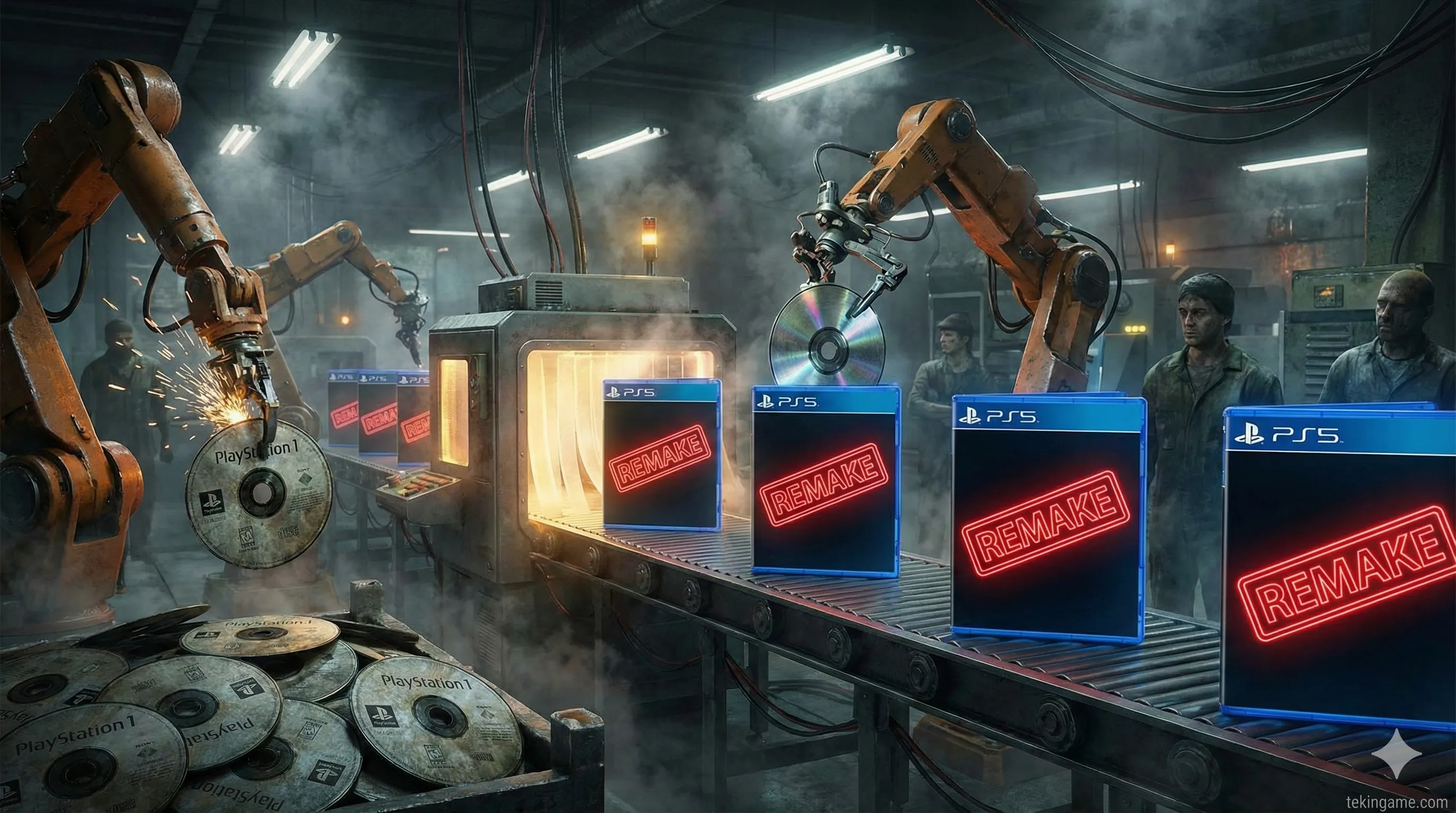
Companies like Konami, which were dormant for years, have returned solely with remakes of *Metal Gear Solid* and *Silent Hill*. Sony, which once took risks with *Horizon* and *Ghost of Tsushima*, is now laser-focused on remastering its PS4 catalog for the PS6. The gaming industry has become Hollywood: a place where no one is willing to bet on a new script unless the name "Batman" or "Star Wars" is stamped on the cover.
2. The $500 Million Rule: Why Failure is No Longer an "Option"
The root cause of this cancer is "Budget Inflation."
In 2010, making a masterpiece like *Gears of War* cost around $60 million. If the game flopped, the studio would bleed, but it wouldn't die.
In 2026, the cost of developing a standard AAA game (like *GTA VI* or *Elder Scrolls VI*) easily exceeds $300 to $500 million (excluding marketing costs).
When you spend half a billion dollars, you need a "guarantee" that the game will sell at least 10 million copies just to break even. What guarantees 10 million sales?
A) A new, unknown IP where you have to teach players the mechanics?
B) Or a remake of *Resident Evil 4*, which everyone loves and grew up with?
The answer for Chief Financial Officers (CFOs) is obvious. Risking money on a New IP in 2026 is fiscal suicide. One failure (like *Forspoken* or *Immortals of Aveum* in previous years) leads to the immediate closure of the studio and the layoff of 1,000 employees.
3. The "Grey Gamer" Economy: Why Studios Only Build for 35-Year-Olds
Another bitter truth: "Gen Z and Gen Alpha kids don't have money." Or if they do, they spend it on *Fortnite* skins and *Roblox*.
The primary purchasing power in the narrative Single Player market lies with Millennials (born in the 80s and 90s). These individuals are now 30 to 45 years old. They have jobs, they have income, but they have no "Time."
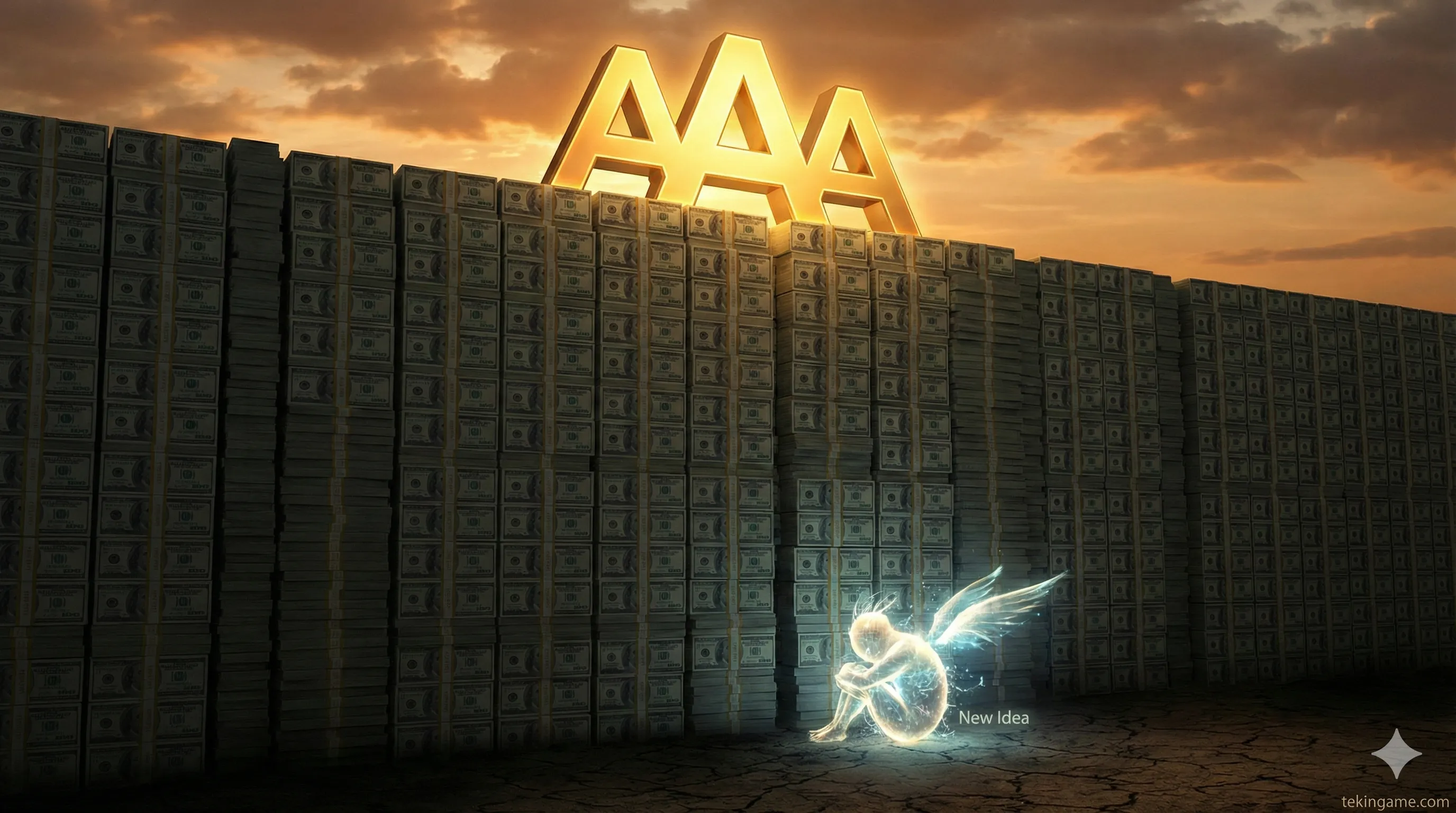
When a 38-year-old gamer has only 2 hours a week to play, they prefer to spend it on a title they "know is good." They don't want to risk learning a new game. They want to relive the feeling they had 20 years ago with *Silent Hill 2*, but with 4K graphics. The industry has realized this: Selling lost childhoods back to adults is the most profitable business in the world.
4. The Death of AA Games: The Missing Laboratory of Creativity
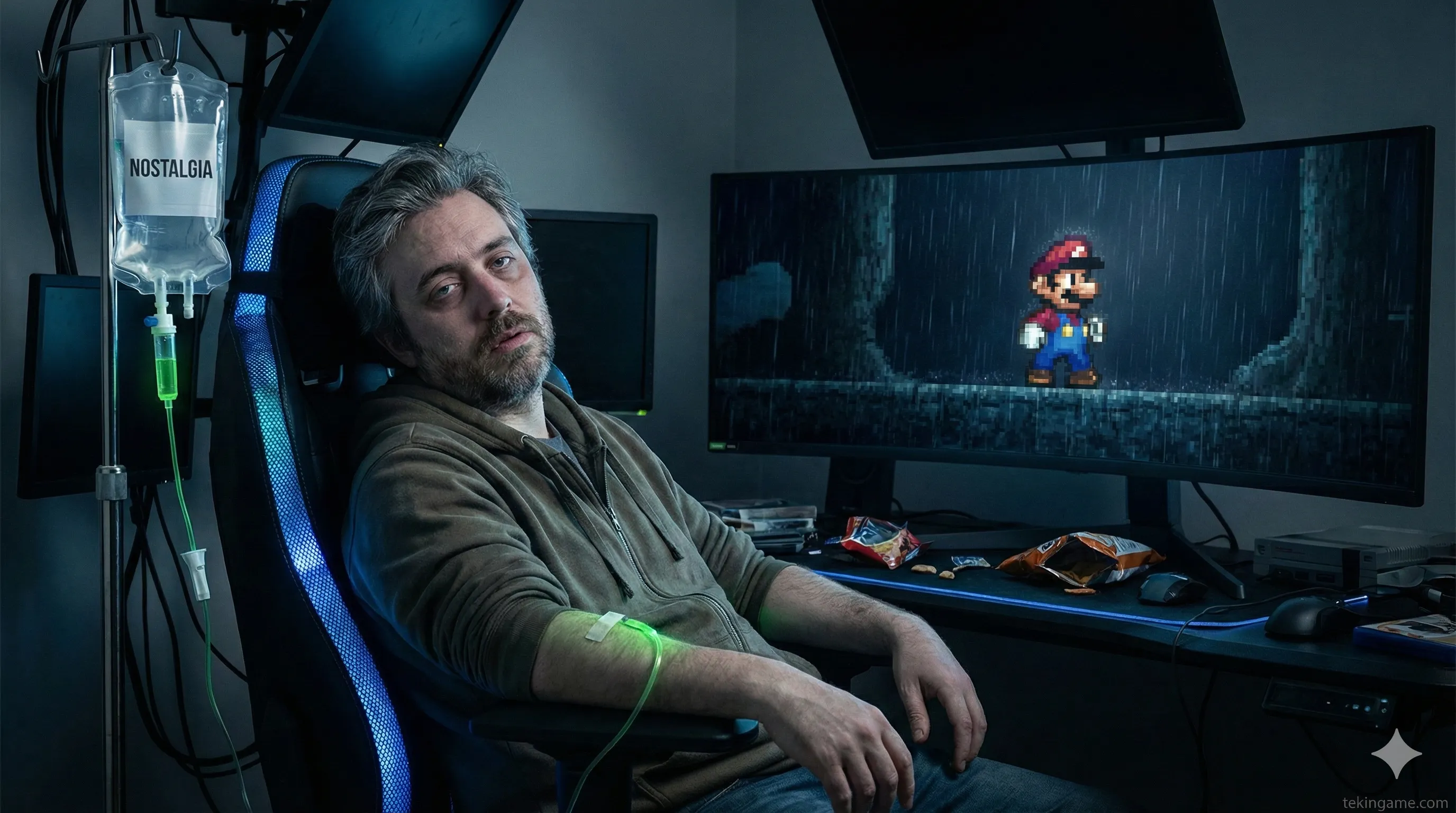
In the past, we had "AA" or B-tier games. Titles with moderate budgets that weren't graphical masterpieces but had "crazy ideas" (like *Psychonauts* or *Mirror's Edge*). If these games succeeded, they graduated to AAA status.
In 2026, the middle class of the gaming industry has been obliterated. You are either a two-person Indie team or a $500 million project. The middle ground, which served as the "Laboratory of Creativity," is gone. Studios that used to make AA games (like THQ or Sony Japan) have either shut down or been swallowed by giants to work on texture assets for *Call of Duty*.
5. The Wall Street Effect: When Shareholders Demand "Guaranteed Profit," Not Art
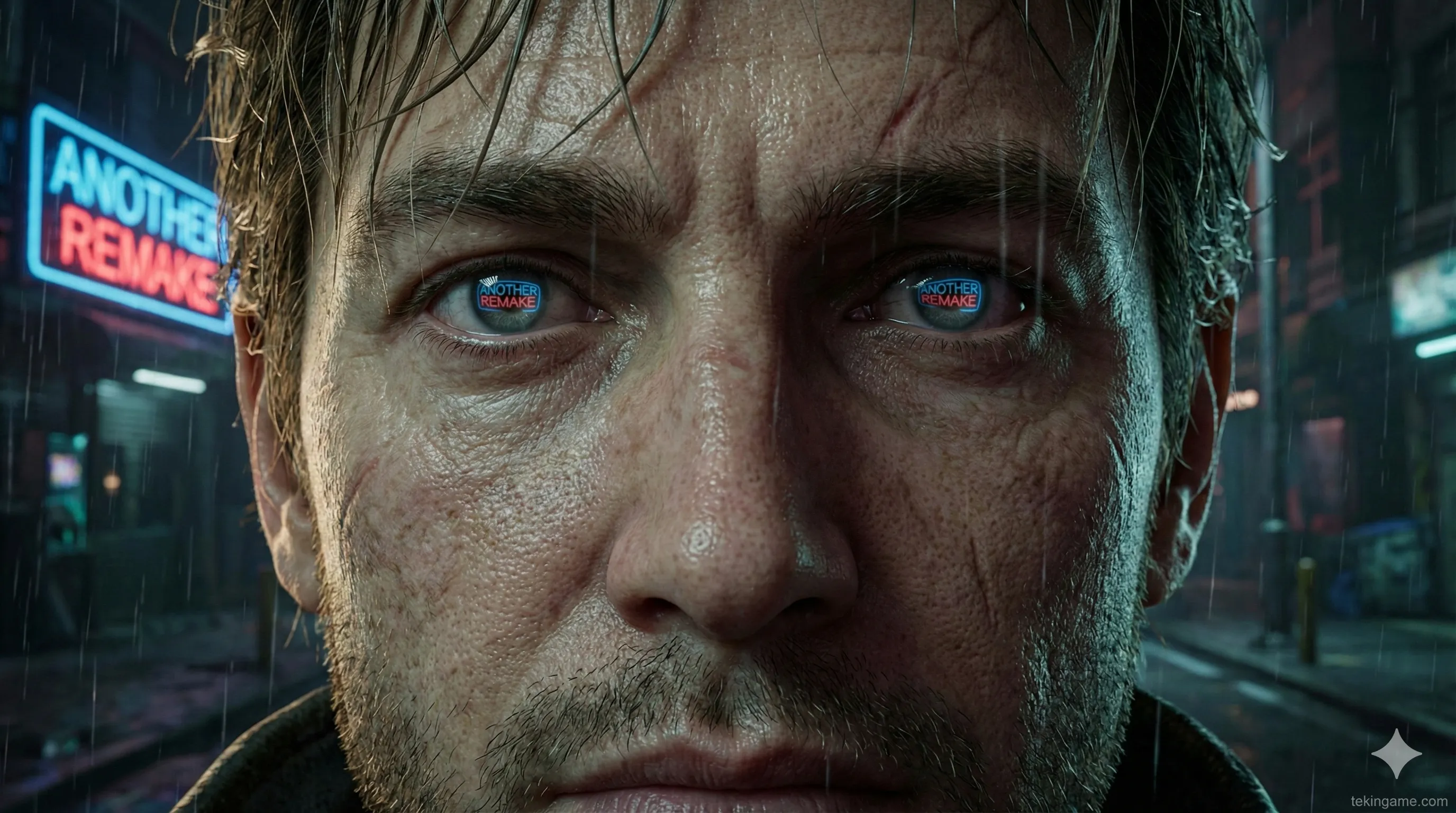
The gaming industry is no longer run by game developers; it is run by shareholders.
Publicly traded companies like EA, Activision (Microsoft), and Take-Two are obligated to report growth to shareholders every quarter. Shareholders do not care about "Art"; they want green charts.
A New IP means "Unknown." Wall Street hates the unknown. But when you write in a financial report: "We plan to remake the *Mass Effect* trilogy with Unreal Engine 5," shareholders smile because historical sales data exists, and profit is predictable. This stock market pressure strangles creativity in the crib.
6. The Illusion of Safety: Why Even Remakes Are Starting to Fail
But the story of 2026 has a Plot Twist: Even remakes are starting to fail.
The market is saturated. When three horror game remakes are released in a single month, gamers cannot buy them all. The recent commercial failure of the *Splinter Cell Remake* (which sold poorly despite good reviews) was a wake-up call. It showed that "Nostalgia" is not an infinite resource. Gamers are becoming smarter, asking: "Why should I pay $70 for a game whose story I already memorized?"
7. The Brain Drain: The Exodus of Top Creators to Indie Studios
What is the result of this pressure? Top creators are not staying at big studios.
The former directors of *The Witcher*, *GTA*, and *Uncharted* have all left major studios to found their own independent teams. They are seeking smaller budgets but more "Creative Freedom."
The real hope for the gaming industry in 2026 lies with studios like *Supergiant Games* (creators of Hades) or Kojima Productions, who still dare to be weird. Creativity has packed its bags and left the glass towers of California for small garages and remote teams.
8. Conclusion: Can AI Lower the Cost of Risk?
Perhaps the only salvation is the very thing many fear: Artificial Intelligence.
If AI tools can drive the cost of game development down from $500 million back to $50 million (by automating dialogue, textures, and environment generation), maybe studios will find the courage to risk again.
Until then, we are stuck in "Remake Purgatory." 2026 is the year where game graphics have peaked, but the industry's heart has stopped beating. As gamers, what is our duty? Perhaps it is time to stop buying the 10th version of *Skyrim* and spend our money on a weird, new game to signal to the market: "We are still alive, and we want something new."